
NFT Gaming and the Creator Economy: Empowering Artists and Game Developers

Welcome to Blockchain Trends, your guide to the revolutionary world of blockchain technology!
Dive deep into the burgeoning NFT gaming creator economy and discover how blockchain is empowering artists and game developers like never before. Uncover the innovative models, emerging trends, and potential pitfalls shaping this exciting new landscape. Ready to explore how NFTs are redefining ownership and value in the gaming world? Let's begin!
NFT Gaming and the Creator Economy: Empowering Artists and Game Developers
- Introduction: The Rise of NFT Gaming and the Creator-Centric Model
- The Creator Economy Revolution in NFT Games
- Benefits of NFT Gaming for Artists
- Benefits of NFT Gaming for Game Developers
- Key Components of a Successful NFT Gaming Creator Economy
- Case Studies: NFT Games Empowering Creators
- Overcoming Challenges in the NFT Gaming Creator Economy
- The Future of NFT Gaming and the Creator Economy
- Conclusion: Embracing the Potential of NFT Gaming for Creators
-
Frequently Asked Questions
- What is the relationship between NFT gaming and the creator economy?
- How do NFTs benefit artists and game developers in the gaming industry?
- What are some examples of how NFT gaming is changing the traditional gaming model?
- What regulatory challenges are associated with NFT gaming and the creator economy?
- What is the future outlook for the NFT gaming creator economy?
- Final Reflection: The Dawn of Decentralized Creativity
- Ignite Your NFT Game Journey!
Introduction: The Rise of NFT Gaming and the Creator-Centric Model
Understanding the Intersection of NFTs, Gaming, and the Creator Economy
Non-Fungible Tokens (NFTs) have emerged as a revolutionary force, particularly within the digital realm of gaming. In essence, an NFT is a unique digital asset representing ownership of a specific item, be it a piece of art, a collectible, or in this context, an in-game item. When applied to gaming, NFTs transform digital assets into verifiable and tradable commodities.
This shift directly intersects with the burgeoning creator economy, a system where individuals can earn a livelihood from their creative work, often directly engaging with their audience. The convergence of these two trends – NFT gaming and the creator economy – is creating a paradigm shift, empowering artists and game developers in unprecedented ways.
The creator economy in gaming, amplified by NFTs, moves away from the traditional centralized model where game publishers hold absolute control over in-game assets and their economies. Instead, it fosters a decentralized approach where creators, including artists who design in-game items and developers who build game mechanics, can directly benefit from their creations. NFTs provide the technological backbone for this new model, allowing creators to tokenize their in-game assets, establish ownership, and participate in secondary markets, thereby unlocking new revenue streams and fostering a more equitable ecosystem.
Why Blockchain Gaming is Disrupting Traditional Game Development
Traditional game development has long been dominated by a centralized structure. Publishers typically own all in-game assets, dictate the game's economy, and control the distribution and monetization strategies. Game developers and artists, while crucial to the creative process, often operate under fixed contracts, with limited potential for ongoing revenue beyond their initial agreements. Players, in turn, purchase in-game items with no real ownership; these digital assets are confined to the game's ecosystem and cannot be traded or sold outside of it. This system, while profitable for publishers, often leaves both creators and players with limited agency and financial upside.
Blockchain gaming, particularly through the integration of NFTs, directly challenges this status quo. By tokenizing in-game assets as NFTs on a blockchain, game developers can offer players true ownership of their digital items. This fundamental shift dismantles the publisher-centric model, fostering a more decentralized and player-centric ecosystem. Creators, empowered by NFTs, can now design and sell unique in-game assets, directly engaging with players and participating in a vibrant secondary market. This disruption not only provides new revenue opportunities for creators but also enhances player engagement and creates more sustainable game economies.
The Creator Economy Revolution in NFT Games
Shifting Power to Game Developers and Artists through NFTs
NFTs are instrumental in redistributing power within the gaming industry, placing more control and potential revenue directly into the hands of game developers and artists. In traditional gaming, once an artist creates an in-game asset or a developer designs a game mechanic, their direct financial benefit is often capped by their initial contract or salary. The long-term value generated by their creations primarily accrues to the game publisher. NFTs change this dynamic by granting creators the ability to tokenize their work, essentially transforming digital creations into tradable assets with provable ownership.
This tokenization process allows developers and artists to establish direct relationships with players and collectors. They can sell NFTs representing unique characters, weapons, virtual land, or cosmetic items directly to the player base. Furthermore, the smart contract functionality inherent in NFTs enables creators to program in royalty structures.
This means that every time an NFT asset is resold on a secondary market, the original creator can automatically receive a percentage of the transaction. This continuous revenue stream, tied directly to the ongoing value and demand for their creations, represents a significant shift in power, empowering creators in a way that traditional gaming models simply could not.
How NFTs Enable Direct Monetization for Creators in Gaming
NFTs unlock direct monetization pathways for creators within the gaming ecosystem, bypassing the traditional reliance on publishers as intermediaries. In the conventional gaming model, artists and developers are typically compensated through upfront fees or salaries, while the primary revenue generation occurs through game sales, in-app purchases, and other publisher-controlled channels. NFTs introduce a new paradigm where creators can directly generate revenue by selling their digital creations as unique assets.
This direct monetization can manifest in various forms. Creators can launch initial sales of their NFT game assets, similar to initial coin offerings (ICOs) in the cryptocurrency world, directly to their community. These initial sales can provide crucial funding for game development and artist projects.
Beyond initial sales, the royalty mechanisms embedded in NFT smart contracts ensure that creators continue to earn a percentage of every subsequent transaction of their NFTs on secondary marketplaces. This provides a continuous and passive income stream directly tied to the popularity and demand for their in-game creations, fundamentally altering the creator monetization landscape in gaming.
Benefits of NFT Gaming for Artists
Royalties and Revenue Streams for NFT Game Assets
One of the most significant advantages of NFT gaming for artists is the introduction of perpetual royalty revenue streams. In the traditional art world, artists typically do not benefit from the resale of their artwork after the initial sale. NFTs, however, change this paradigm for digital art within games.
When an artist tokenizes their in-game creations as NFTs, they can program a royalty percentage into the smart contract that governs the NFT. This means that every time the NFT is traded on a secondary marketplace, a predefined percentage of the sale price is automatically distributed back to the original artist.
For example, if an artist creates a unique sword skin as an NFT in a game and sets a 5% royalty, they will receive 5% of the sale price every time that sword skin is bought and sold on platforms like OpenSea or dedicated in-game marketplaces. This creates a continuous revenue stream directly linked to the ongoing demand and value of their artistic creations within the game.
Estimates suggest that royalty percentages in NFT marketplaces often range from 2.5% to 10%, providing a potentially substantial long-term income for artists whose work becomes highly sought after in the NFT gaming space.
Ownership and Control of Digital Art in Blockchain Games
NFTs empower artists with verifiable ownership and control over their digital art in blockchain games, a stark contrast to the traditional gaming industry. In conventional game development, artists create assets that become the property of the game publisher upon completion. The artist relinquishes control and ownership once the asset is integrated into the game. With NFTs, artists retain verifiable ownership of their digital creations, even after they are integrated into a game. The blockchain acts as an immutable ledger, permanently recording the artist as the creator and initial owner of the NFT.
This ownership extends beyond mere attribution. Artists can decide how their art is used, licensed, and distributed within the NFT gaming ecosystem. They can choose to limit the number of copies, control the usage rights, and even potentially remove their art from a game if desired (though this is less common in practice and depends on the specific game's implementation). This level of control and ownership provides artists with greater autonomy over their digital creations, fostering a more equitable and artist-centric environment within the gaming industry.
Building a Community Around Your Art in NFT Gaming
NFT gaming facilitates the development of direct artist-to-community relationships, fostering a stronger connection between creators and their audience. In traditional gaming, artists often operate behind the scenes, with limited direct interaction with players. NFTs, however, enable artists to engage directly with players who collect and trade their digital art. Artists can use NFT platforms and in-game marketplaces to showcase their work, interact with collectors, and build a dedicated community around their creations.
This direct interaction can be incredibly valuable for artists. They can receive direct feedback on their art, understand what resonates with players, and even collaborate with their community on future creations. Furthermore, a strong community of collectors can drive demand for an artist's NFTs, increasing their value and generating more revenue. NFT gaming provides artists with the tools and platforms to cultivate a loyal fanbase, turning players into active participants in the artist's creative journey and fostering a more vibrant and engaged artistic ecosystem within gaming.
Benefits of NFT Gaming for Game Developers
New Funding Models and Revenue Generation Through NFTs
NFTs introduce novel funding models and diversified revenue streams for game developers, moving beyond traditional game sales and in-app purchases. Historically, game developers relied heavily on securing funding from publishers or venture capitalists, often relinquishing significant control over their projects in the process. NFTs offer an alternative funding route: developers can sell NFTs representing early access passes, unique in-game items, or even virtual land parcels to generate capital before or during the game development process. These initial NFT sales can act as a form of crowdfunding, allowing developers to retain more ownership and creative control.
Beyond initial funding, NFTs enable developers to create more dynamic and player-driven game economies. Instead of solely relying on in-app purchases of consumable items, developers can integrate NFTs representing valuable in-game assets that players can own, trade, and sell. A percentage of transaction fees from these secondary market trades can be programmed to flow back to the game developers, creating a continuous revenue stream that aligns developer incentives with the long-term health and engagement of the game ecosystem. This shift towards player-owned assets and decentralized economies can lead to more sustainable and profitable game business models.
Enhanced Player Engagement and Retention with NFT Rewards
NFTs contribute to enhanced player engagement and retention by introducing the concept of true digital ownership and the potential for financial rewards. In traditional games, players invest time and money into acquiring in-game items that ultimately hold no real-world value and are confined to the game's ecosystem. NFTs change this by granting players verifiable ownership of their in-game assets, which can be traded, sold, or even potentially used across different games or metaverses in the future. This sense of ownership creates a stronger emotional connection between players and the game, increasing engagement and loyalty.
Furthermore, the potential to earn cryptocurrency or other valuable assets by playing NFT games, often referred to as "play-to-earn" mechanics, can significantly boost player retention. Players are incentivized to actively participate in the game ecosystem not only for entertainment but also for the potential financial rewards associated with collecting, trading, or utilizing their NFT assets. This creates a more compelling value proposition for players, fostering longer play sessions, stronger community participation, and ultimately, increased game longevity.
Creating Decentralized Game Economies with NFT Integration
NFT integration empowers game developers to create decentralized game economies, shifting control from centralized entities to players themselves. Traditional game economies are typically managed and controlled entirely by the game publisher. They dictate the supply of in-game items, set prices, and control the flow of virtual currency. NFTs facilitate the creation of more open and player-driven economies where players have a greater degree of agency and influence. By tokenizing in-game assets as NFTs, developers can distribute ownership among players, allowing them to participate in the game's economy as owners and traders, not just consumers.
This decentralization can manifest in various ways. Players can freely trade NFT game assets on open marketplaces, with market forces of supply and demand influencing prices rather than publisher-imposed valuations. Decentralized Autonomous Organizations (DAOs) can even be integrated to allow players to participate in game governance decisions, further distributing control and fostering a more community-driven game ecosystem. This shift towards decentralized game economies can lead to more transparent, equitable, and engaging gaming experiences for players.
Key Components of a Successful NFT Gaming Creator Economy
Blockchain Technology and NFT Standards for Gaming
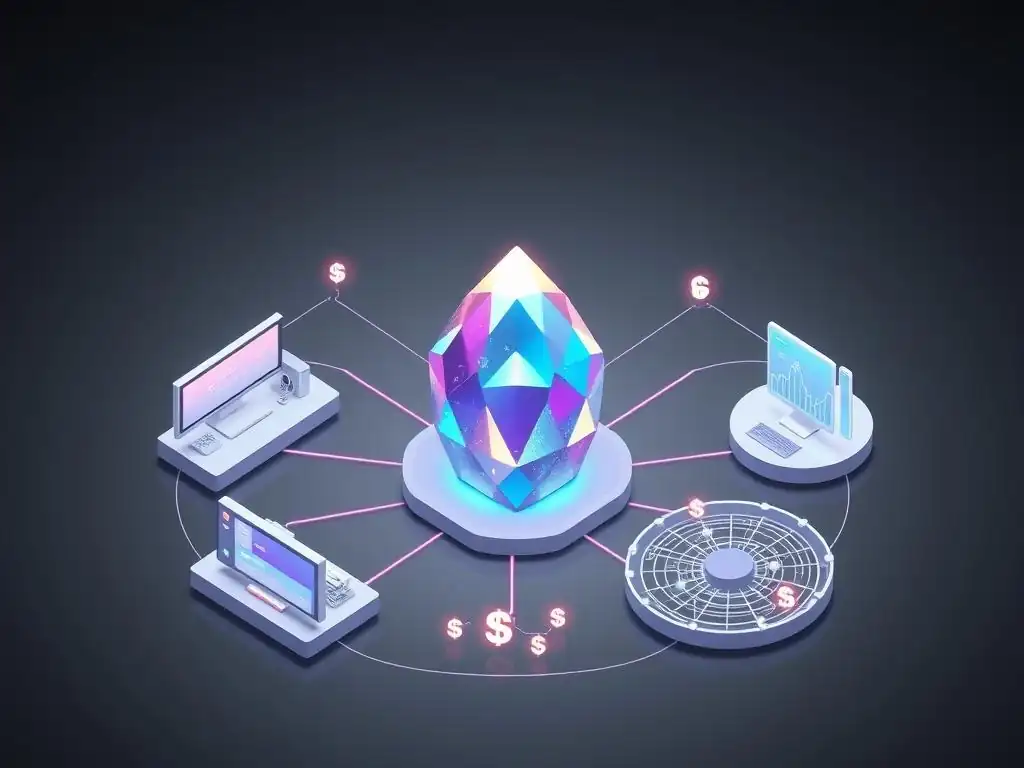
The foundation of any successful NFT gaming creator economy rests upon robust blockchain technology and standardized NFT protocols. Blockchain provides the decentralized and secure infrastructure necessary to verify ownership and facilitate the trading of NFT game assets. Various blockchains are utilized for NFT gaming, each with its own characteristics in terms of transaction speed, fees, and ecosystem support. Ethereum was initially the dominant blockchain for NFTs, but alternatives like Polygon, Solana, and Flow have gained traction due to their lower transaction fees and faster processing times, addressing scalability concerns in gaming.
NFT standards, such as ERC-721 for unique tokens and ERC-1155 for semi-fungible tokens, provide the technical blueprints for creating and managing NFTs. These standards ensure interoperability and compatibility across different platforms and marketplaces, allowing for seamless trading and integration of NFT game assets. Choosing the right blockchain and adhering to established NFT standards are critical for developers to build a functional and scalable NFT gaming creator economy. The selection often depends on the game's specific needs, target audience, and economic model.
Smart Contracts and Automated Royalty Distribution
Smart contracts are the backbone of automated royalty distribution and transparent transactions within NFT gaming creator economies. A smart contract is essentially a self-executing contract with the terms of the agreement directly written into code. In the context of NFT gaming, smart contracts are used to define the properties of NFTs, manage ownership transfers, and, crucially, automate royalty payments to creators. When an NFT is sold or traded, the smart contract automatically executes the predefined royalty distribution rules, ensuring that creators receive their designated percentage of the transaction.
This automation eliminates the need for manual royalty tracking and payment, reducing administrative overhead and fostering trust and transparency. Creators can be confident that they will automatically receive their royalties whenever their NFT assets are traded on secondary markets. Smart contracts ensure that royalty payments are immutable and verifiable on the blockchain, providing a level of security and accountability that is often lacking in traditional royalty systems. The use of smart contracts is essential for building a fair and sustainable NFT gaming creator economy.
NFT Marketplaces and Trading Platforms for Game Assets
NFT marketplaces and trading platforms are vital infrastructure components for a thriving NFT gaming creator economy, providing the venues where players and collectors can buy, sell, and trade NFT game assets. These marketplaces act as the central hubs for the secondary market of NFT game items, facilitating liquidity and price discovery. Various types of NFT marketplaces exist, ranging from general marketplaces like OpenSea and Rarible that host NFTs from various categories, including gaming, to game-specific marketplaces that are dedicated to a particular game or game ecosystem.
Game-specific marketplaces often offer deeper integration with the game itself, allowing players to directly buy and sell NFTs within the game's interface. General marketplaces provide broader exposure and liquidity, but may lack game-specific features. The existence of robust and user-friendly NFT marketplaces is crucial for the success of the NFT gaming creator economy, as they provide the necessary infrastructure for creators to monetize their assets and for players to participate in the game's economy. Transaction fees on these marketplaces are also a factor to consider, as they can impact the profitability of trading NFT game assets.
Case Studies: NFT Games Empowering Creators
Axie Infinity: Empowering Players Through Play-to-Earn Mechanics
Axie Infinity stands as a prominent example of an NFT game that has successfully empowered players, and indirectly creators, through its innovative play-to-earn mechanics. In Axie Infinity, players collect, breed, and battle digital creatures called Axies, which are represented as NFTs. Players earn Smooth Love Potion (SLP) tokens, another cryptocurrency, by playing the game, which can then be traded on cryptocurrency exchanges for fiat currency or other cryptocurrencies. This play-to-earn model has created significant economic opportunities, particularly in regions like Southeast Asia.
While the primary beneficiaries of the play-to-earn mechanics are the players, the creators of Axie assets also benefit from the game's ecosystem. Artists who design Axie bodies and game assets indirectly participate in the creator economy, as the demand for Axies and the overall game economy drive value to their creations.
Axie Infinity demonstrated the potential of NFT gaming to provide real economic opportunities for players and creators, showcasing a successful implementation of a player-centric and creator-supportive gaming model. At its peak in 2021, Axie Infinity reportedly generated hundreds of millions of dollars in NFT trading volume, highlighting the economic scale achievable in NFT gaming.
The Sandbox: User-Generated Content and Virtual Land Ownership
The Sandbox is another leading example of an NFT metaverse game that empowers creators through user-generated content and virtual land ownership. In The Sandbox, users can create, own, and monetize virtual experiences using NFTs and the game's native token, SAND. Users can purchase LAND NFTs, which represent parcels of virtual land within The Sandbox metaverse, and then build experiences on their LAND, ranging from games and interactive environments to art galleries and virtual shops. These user-generated experiences can then be monetized, allowing creators to earn revenue from their virtual creations.
The Sandbox empowers creators by providing them with the tools and platform to build and monetize their own virtual worlds. The game also features a creator fund that supports artists and game developers in building high-quality experiences within The Sandbox metaverse. By granting users ownership of virtual land and assets as NFTs, and providing tools for content creation and monetization, The Sandbox exemplifies a creator-centric approach to NFT gaming, fostering a vibrant ecosystem of user-generated content and economic opportunities. As of 2023, The Sandbox has partnered with numerous brands and celebrities, further expanding its reach and creator opportunities.
Overcoming Challenges in the NFT Gaming Creator Economy
Addressing Concerns about Scalability and Transaction Fees
Scalability and transaction fees pose significant challenges to the widespread adoption and sustainability of NFT gaming creator economies. Many popular blockchains, particularly Ethereum, have faced scalability issues, leading to network congestion and high transaction fees, often referred to as "gas fees." These high fees can be prohibitive for players engaging in frequent NFT trading or in-game transactions, particularly for lower-value assets. For instance, during periods of high network activity on Ethereum, gas fees for a simple NFT transaction can exceed $50 or even $100, making microtransactions in games economically unviable.
To address these challenges, various scaling solutions are being developed and implemented. Layer-2 scaling solutions, such as Polygon and Immutable X, operate on top of the main blockchain, offering faster transaction speeds and significantly lower fees. These solutions are becoming increasingly popular for NFT gaming projects, providing a more user-friendly and cost-effective experience. Furthermore, newer blockchains specifically designed for gaming and NFTs, like Flow and Wax, are engineered for higher throughput and lower transaction costs from the outset. Overcoming scalability and high transaction fees is crucial for ensuring accessibility and widespread adoption of NFT gaming.
Ensuring Intellectual Property Rights and Copyright Protection
Intellectual property (IP) rights and copyright protection present complex challenges in the decentralized and often pseudonymous world of NFT gaming. While NFTs provide a mechanism for proving ownership of digital assets, enforcing copyright and preventing infringement can be difficult, particularly across decentralized platforms and global marketplaces. Issues such as unauthorized copying, minting of counterfeit NFTs, and plagiarism of game assets can arise, requiring robust legal frameworks and community-driven enforcement mechanisms.
Ensuring IP rights in NFT gaming requires a multi-faceted approach. Clear terms of service and legal agreements are essential to define ownership, usage rights, and copyright protections within specific game ecosystems. Technological solutions, such as watermarking and digital signatures, can help verify the authenticity of NFT assets. Community reporting mechanisms and platform moderation are also crucial for identifying and addressing instances of copyright infringement. Furthermore, ongoing legal developments and regulatory clarity in the NFT space are needed to provide stronger IP protection for creators in NFT gaming.
Combating Scams and Fraud in NFT Gaming
The NFT gaming space, like the broader cryptocurrency and NFT markets, is unfortunately susceptible to scams and fraudulent activities. Players and creators need to be vigilant and educated about common scams to protect themselves. "Rug pulls," where developers abandon a project after raising funds through NFT sales, are a significant risk. Fake NFT listings, phishing scams targeting cryptocurrency wallets, and pump-and-dump schemes are also prevalent threats. Estimates suggest that millions of dollars have been lost to NFT scams across various platforms.
Combating scams and fraud requires a combination of user education, platform security measures, and community vigilance. Players should conduct thorough research before investing in NFT gaming projects, verify the legitimacy of NFT marketplaces, and be cautious of unsolicited offers or suspicious links. NFT platforms and game developers need to implement robust security measures to protect user accounts and assets, and actively monitor for and address fraudulent activities. Building a culture of trust and transparency within the NFT gaming community is crucial for mitigating scams and fostering a safer environment for creators and players alike.
The Future of NFT Gaming and the Creator Economy
Predictions for the Growth of Creator-Owned NFT Games
The future of NFT gaming is poised for significant growth, particularly in the realm of creator-owned games. As artists and independent game developers increasingly recognize the empowering potential of NFTs, we are likely to see a surge in games built from the ground up with creator-centric economies. These games will prioritize player ownership, creator monetization, and community governance, challenging the traditional publisher-dominated model of the gaming industry. Predictions suggest that the NFT gaming market could reach tens of billions of dollars in value in the coming years, with a substantial portion attributed to creator-owned and decentralized projects.
This growth will be fueled by several factors, including the increasing accessibility of blockchain technology, the development of user-friendly NFT creation tools, and the growing demand from players for more ownership and control within gaming ecosystems. Creator-owned NFT games have the potential to foster more diverse and innovative gaming experiences, as they are less constrained by traditional publisher mandates and can more directly cater to the desires of their communities. The rise of creator-owned NFT games represents a significant shift towards a more decentralized and equitable gaming industry.
The Role of DAOs in Shaping the Future of Gaming
Decentralized Autonomous Organizations (DAOs) are likely to play an increasingly prominent role in shaping the future of NFT gaming, particularly in fostering community governance and creator empowerment. DAOs are community-led organizations governed by rules encoded on a blockchain, enabling decentralized decision-making and collective ownership. In NFT gaming, DAOs can be used to manage game economies, govern in-game assets, and even participate in the development and direction of the game itself.
DAOs can empower players and creators by giving them a voice in game governance decisions. Token holders within a DAO can vote on proposals related to game mechanics, economic parameters, and future development roadmaps. This level of community involvement can lead to more player-centric and sustainable game ecosystems. Furthermore, DAOs can facilitate the distribution of revenue and resources within the game community, ensuring that creators and active participants are rewarded for their contributions. The integration of DAOs into NFT gaming represents a move towards more democratic and community-driven game development and governance models.
Exploring New Use Cases for NFTs in the Gaming Industry
Beyond asset ownership and play-to-earn mechanics, new and innovative use cases for NFTs in the gaming industry are continually emerging. NFTs can be utilized for verifiable game identity, allowing players to carry their reputation and achievements across different games and platforms. NFT-based avatars and profiles can provide a persistent digital identity for players within the metaverse and across various gaming experiences. Interoperable NFTs, designed to function across multiple games or platforms, are also being explored, potentially creating a more interconnected and open gaming ecosystem.
Furthermore, NFTs can be used to represent in-game access keys, event tickets, or even digital collectibles that extend beyond gameplay. NFT-based ticketing for esports events or virtual concerts within games could create new revenue streams and fan engagement opportunities. The potential for NFTs to revolutionize various aspects of the gaming industry, from player identity and interoperability to new forms of digital collectibles and experiences, is vast and largely still untapped. Continued innovation and experimentation will undoubtedly unlock even more novel and impactful use cases for NFTs in gaming in the years to come.
Conclusion: Embracing the Potential of NFT Gaming for Creators
NFT gaming and the creator economy are intertwined forces reshaping the landscape of digital entertainment. NFTs empower artists and game developers by providing new avenues for monetization, ownership, and community building. For artists, NFTs unlock perpetual royalty streams and verifiable ownership of their digital creations, fostering a more equitable and sustainable artistic practice within gaming. For game developers, NFTs introduce innovative funding models, enhance player engagement, and facilitate the creation of decentralized game economies.
While challenges related to scalability, IP protection, and scams need to be addressed, the potential benefits of NFT gaming for creators are undeniable. As the technology matures and adoption grows, we can expect to see a flourishing ecosystem of creator-owned NFT games, driven by empowered artists, engaged players, and community-centric governance models. Embracing the potential of NFT gaming is crucial for fostering a more innovative, equitable, and vibrant future for the gaming industry, where creators are rightfully recognized and rewarded for their contributions.
Frequently Asked Questions
What is the relationship between NFT gaming and the creator economy?
NFT gaming empowers creators by allowing them to tokenize in-game assets, providing new revenue streams and direct engagement with their audience, thus fostering a robust creator economy.
How do NFTs benefit artists and game developers in the gaming industry?
NFTs offer artists and developers ownership and control over their creations, enabling them to earn royalties on secondary sales and build stronger communities around their work. This promotes a more equitable and sustainable ecosystem.
What are some examples of how NFT gaming is changing the traditional gaming model?
NFT gaming is moving away from centralized control by giving players ownership of in-game items and allowing them to participate in the game's economy, shifting power from developers to the community.
What regulatory challenges are associated with NFT gaming and the creator economy?
The lack of clear regulations surrounding NFTs raises concerns about consumer protection, intellectual property rights, and the potential for fraud and scams within the NFT gaming creator economy.
What is the future outlook for the NFT gaming creator economy?
The future is bright, with potential for increased adoption, greater interoperability between games, and the development of more sophisticated tools and platforms to support creators and players in the decentralized gaming space.
Final Reflection: The Dawn of Decentralized Creativity
The convergence of NFT gaming and the creator economy represents more than just a technological advancement; it signifies a fundamental shift in power dynamics. This paradigm shift, where artists and developers gain direct control over their creations and revenue streams, is not a future possibility, but a present reality reshaping the gaming landscape. The potential for true ownership and community-driven development is finally within reach, promising a more equitable and innovative future for the entire industry.
This burgeoning ecosystem has profoundly impacted the cultural landscape, fostering a sense of ownership and participation previously unseen in traditional gaming. The ability to directly support and benefit from the success of creators resonates deeply, fostering a stronger connection between artists, developers, and players. This connection transcends mere consumption, transforming individuals into active stakeholders. The future of gaming isn't just about playing; it's about owning, creating, and participating in a shared digital world.
This sentiment captures the essence of the NFT gaming creator economy, a space where creativity and community intertwine.
As we stand at the cusp of this decentralized revolution, let us embrace the opportunities it presents. Consider how you can support artists and developers who are pioneering this new frontier. Reflect on the power of ownership and the potential for collaborative creation. The NFT gaming creator economy is not just about technology; it's about empowering individuals and building a more equitable and vibrant future for all. Let us all contribute to shaping this future, one digital asset at a time.
Ignite Your NFT Game Journey!
Thank you for exploring the world of NFT gaming and the creator economy. We hope you've uncovered new opportunities for artists and developers to thrive in this evolving landscape. Now is the time to take action and be part of the revolution.
Here's how you can contribute:
- Launch your first NFT collectible within your favorite game. Experiment with different rarities and utilities to see what resonates with players.
- Share this article with a game developer friend who might be interested in leveraging NFTs to empower their work. Spread the word about this exciting shift!
- Brainstorm three innovative ways NFTs could revolutionize a genre you love that hasn't yet embraced blockchain technology.
What’s one truly unconventional NFT use case you believe could take off in gaming over the next year? Share your thoughts in the comments!
Leave a Reply