
Improving Drug Safety with Blockchain: Case Study Examples of Traceability


Welcome to Blockchain Trends, your compass in the rapidly evolving landscape of decentralized technology. Beyond the hype of cryptocurrencies lies a world of transformative potential.
Are you ready to discover how blockchain is revolutionizing industries beyond finance? Our latest deep dive explores a critical application with our Blockchain drug traceability case study. Uncover how this technology is being deployed to enhance patient safety and combat counterfeit drugs, offering a glimpse into the future of secure and transparent supply chains. Read on to explore real-world examples and see the tangible impact of blockchain on the pharmaceutical industry.
- Introduction to Blockchain Drug Traceability Case Study and Its Importance in Healthcare Safety
- The Role of Blockchain in Improving Drug Safety and Traceability
- Detailed Blockchain Drug Traceability Case Study Examples
- Technologies and Methods Used in Blockchain Drug Traceability Systems
- Challenges and Limitations of Implementing Blockchain in Drug Safety
- Future Trends and Innovations in Blockchain Drug Traceability and Safety
- Conclusion: The Transformative Impact of Blockchain Drug Traceability Case Studies on Healthcare Safety
-
Frequently Asked Questions
- What is the main focus of the article on blockchain and drug traceability?
- How does blockchain improve drug traceability?
- What are some examples of blockchain applications in drug traceability?
- Can blockchain be used for other applications beyond drug traceability?
- What is the future of blockchain in drug safety?
- Final Reflection: Securing Health Through Transparency
- Unveil Secure Healthcare: Start Tracing Today!
Introduction to Blockchain Drug Traceability Case Study and Its Importance in Healthcare Safety
The pharmaceutical supply chain is a complex network spanning manufacturers, distributors, pharmacies, and patients. Ensuring the safety and authenticity of drugs within this intricate system is paramount to public health. Counterfeit drugs, diverted medications, and errors in handling pose significant risks, potentially leading to ineffective treatments, adverse health outcomes, and even fatalities.
The World Health Organization (WHO) estimates that around 10% of medical products in low- and middle-income countries are substandard or falsified, highlighting a global crisis that demands robust solutions for tracking and verifying pharmaceuticals. A key strategy in combating these threats is enhancing traceability throughout the supply chain.
Traditional tracking methods often rely on siloed databases and manual processes, creating vulnerabilities where falsified products can enter the system or legitimate products can be mishandled. This lack of end-to-end visibility makes it difficult to pinpoint the origin of issues or verify a drug's journey from production to patient.
The need for a more secure, transparent, and immutable system has become increasingly urgent. Exploring a blockchain drug traceability case study reveals how this distributed ledger technology offers a promising path forward by providing a tamper-proof record of every transaction and handling event, thereby significantly improving drug safety and supply chain integrity.
Understanding Blockchain Technology in Drug Supply Chain Management
Blockchain technology, at its core, is a decentralized, distributed ledger that records transactions across many computers. Each transaction is grouped into a block, and these blocks are linked together chronologically using cryptographic hashes, forming a chain. Once a block is added, it is extremely difficult to alter the data within it without changing subsequent blocks and alerting the network, making the ledger highly secure and immutable. In the context of drug supply chain management, this means every movement, transfer of ownership, temperature reading, or verification check can be recorded on the blockchain, creating an unalterable history.
Implementing blockchain in the pharmaceutical supply chain involves creating a network of participants (manufacturers, wholesalers, pharmacies, regulators) who share access to this distributed ledger. When a drug moves from one entity to another, or undergoes a critical check, a transaction is recorded on the blockchain.
This record includes details like the drug's unique identifier, batch number, location, timestamp, and the parties involved. The transparency comes from all authorized participants having access to view this shared ledger (though privacy mechanisms can control who sees what data), while the security is inherent in the cryptographic linking of blocks and the distributed nature of the network, making it resistant to fraud and manipulation.
Overview of Drug Safety Challenges and the Need for Enhanced Traceability
The pharmaceutical industry faces persistent challenges that compromise drug safety. Counterfeiting is a major threat; estimates vary, but some reports suggest the global counterfeit drug market could be worth hundreds of billions of dollars annually. These fake medications often contain incorrect ingredients, wrong dosages, or harmful substances, posing direct health risks. Diversion, where legitimate drugs are channeled illegally, and theft also contribute to supply chain insecurity. Furthermore, issues like improper storage conditions (e.g., temperature excursions for sensitive vaccines or biologics) can degrade drug efficacy and safety, yet tracking these conditions accurately throughout the journey is difficult with traditional methods.
The complexity of modern drug supply chains, with multiple intermediaries operating across international borders, exacerbates these problems. Lack of interoperability between different tracking systems used by various stakeholders creates blind spots. When a safety issue arises, such as a recall or a report of a counterfeit batch, tracing the affected products quickly and accurately through the entire chain is often a slow and arduous process.
Enhanced traceability, ideally end-to-end from manufacturer to patient, is crucial. This requires a system that provides a single, verifiable source of truth about a drug's history, enabling rapid identification of fraudulent products, verification of authenticity, monitoring of handling conditions, and efficient recalls – capabilities that a well-implemented blockchain drug traceability case study demonstrates are achievable.
The Role of Blockchain in Improving Drug Safety and Traceability
Blockchain technology offers a paradigm shift in how pharmaceutical supply chains can be managed, moving from fragmented, trust-based systems to a trustless, verifiable ledger. Its inherent properties of immutability, transparency (to authorized parties), and decentralization are directly applicable to overcoming long-standing drug safety challenges. By creating a shared, unalterable record of a drug's journey, blockchain provides unprecedented visibility and accountability across the entire network. This makes it significantly harder for illicit products to infiltrate the supply chain and easier to verify the legitimacy and handling of authentic ones.
Beyond tracking location and ownership, blockchain can record critical data points associated with a drug's journey, such as temperature logs from IoT sensors, quality control checks, and regulatory compliance steps. This comprehensive data trail ensures that drugs have been handled correctly and meet required standards at every stage.
The distributed nature means no single entity has complete control over the data, reducing the risk of data manipulation or loss. Ultimately, blockchain transforms traceability from a siloed, reactive process into a proactive, transparent, and highly secure system, fundamentally improving drug safety for patients worldwide, as highlighted by various blockchain drug traceability case study examples.
How Blockchain Ensures Transparency and Security in Pharmaceutical Supply Chains
Blockchain's architecture inherently promotes transparency and security. Transparency is achieved through the shared, distributed ledger, where all authorized participants can view the history of transactions relevant to them. While sensitive commercial data can be permissioned or stored off-chain with hashes on-chain, the core traceability data – like product identifiers, movements, and timestamps – is visible across the network. This shared visibility creates accountability; every entity handling the drug knows their actions are being recorded and are verifiable by others on the network.
Security is built into the cryptographic foundations of blockchain. Each block is cryptographically linked to the previous one, making it virtually impossible to alter data in an old block without invalidating the entire chain that follows.
The distributed nature of the network means that copies of the ledger are held by multiple participants; for an attacker to tamper with the data, they would need to compromise a majority of the network nodes simultaneously, which is computationally infeasible for a well-designed blockchain. This tamper-evident and tamper-resistant nature is crucial for preventing the insertion of counterfeit products or the falsification of handling records, forming the basis for a robust blockchain drug traceability case study.
Benefits of Blockchain for Tracking and Verifying Drug Authenticity
The primary benefit of using blockchain for drug tracking is the ability to create a definitive, immutable record of a drug's origin and journey. When a drug is manufactured, its unique identifier (like a serial number) and batch information can be registered on the blockchain. Every subsequent transfer of ownership, from manufacturer to wholesaler, to distributor, to pharmacy, is recorded as a transaction on the ledger. This creates a complete, verifiable history that can be accessed by any authorized party.
Pharmacies or even patients (via secure applications) could potentially scan a drug's unique identifier and instantly verify its authenticity by checking its history against the blockchain record. They can see where it came from, the route it took, and who handled it, ensuring it followed the legitimate supply chain path. This capability directly combats counterfeiting and diversion.
For example, if a product scanned at a pharmacy does not have a corresponding, legitimate history on the blockchain, it is immediately flagged as potentially counterfeit. This real-time verification capability, central to any blockchain drug traceability case study, empowers stakeholders to trust the products they handle and dispense.
Regulatory Compliance and Blockchain’s Impact on Drug Safety Standards
Regulatory bodies worldwide are increasingly implementing stringent requirements for drug traceability to combat counterfeiting and improve patient safety. In the United States, the Drug Supply Chain Security Act (DSCSA) mandates an electronic, interoperable system to identify and trace certain prescription drugs as they are distributed within the country by 2023 (though deadlines have been extended for some requirements). The European Union has similar regulations under the Falsified Medicines Directive (FMD). These regulations require stakeholders to exchange transaction information and history, and to verify product identifiers.
Blockchain technology is uniquely positioned to help pharmaceutical companies meet and exceed these regulatory requirements. A blockchain-based system can provide the necessary end-to-end visibility and immutable record-keeping that regulations like DSCSA and FMD demand. It facilitates the secure exchange of transaction data between trading partners and enables rapid verification of product identifiers against a trusted source.
Furthermore, smart contracts on the blockchain can automate compliance checks, ensuring that drugs only move to authorized parties or that required data is recorded at each step. This proactive approach to compliance, demonstrated in various blockchain drug traceability case study initiatives, not only helps avoid penalties but fundamentally raises the standard of drug safety across the industry.
Detailed Blockchain Drug Traceability Case Study Examples
Exploring specific examples provides concrete evidence of blockchain's potential in enhancing drug safety. While large-scale, fully implemented global systems are still evolving, several pilot programs and consortia have demonstrated the technology's feasibility and benefits. These initiatives serve as valuable blockchain drug traceability case study benchmarks, showcasing how different approaches can address specific challenges within the pharmaceutical supply chain. They highlight the technical hurdles, the collaborative efforts required, and the tangible improvements in transparency and security achieved through blockchain adoption.
These case studies often involve multiple stakeholders from different parts of the supply chain collaborating on a shared network. They typically focus on tracking high-value or high-risk medications, like certain prescription drugs or biologics, where the risk of counterfeiting or improper handling is particularly high. The insights gained from these pilots are crucial for understanding the practical implications of implementing blockchain technology and scaling these solutions across the broader pharmaceutical industry, further solidifying the concept of a blockchain drug traceability case study as a model for future deployments.
Case Study 1: Enhancing Pharmaceutical Supply Chain Transparency with Blockchain
One notable blockchain drug traceability case study involves a consortium of major pharmaceutical companies, distributors, and technology providers piloting a blockchain network for drug tracking. The goal was to create a shared, transparent ledger accessible to all authorized participants, allowing them to trace the movement of specific drug packages from the point of manufacture through distribution centers to pharmacies. The pilot focused on a limited set of prescription drugs to test the system's viability.
In this pilot, each drug package was assigned a unique serial number. When a package changed hands – for instance, from manufacturer to wholesaler – a transaction was recorded on the blockchain, including the package identifier, the parties involved, the date, and location. This created a transparent, immutable history accessible to all network members.
Results from this blockchain drug traceability case study indicated a significant reduction in the time required to trace a product's journey compared to traditional methods, from potentially days or hours to mere seconds. It also provided a single source of truth for product location and ownership, drastically improving visibility and trust among supply chain partners.
Case Study 2: Preventing Counterfeit Drugs through Blockchain Drug Traceability Solutions
A separate blockchain drug traceability case study focused specifically on combating the influx of counterfeit drugs into the supply chain. This initiative often involves integrating serialization data with a blockchain platform. Manufacturers serialize drug packages at the point of production, and this unique identifier, along with batch information, is anchored to a blockchain record. As the product moves through the supply chain, each legitimate handler updates the blockchain record.
At the point of dispensing (e.g., a pharmacy or hospital), the unique serial number on the drug package can be scanned. This scan triggers a query to the blockchain network to verify the product's legitimacy. The system checks if the serial number exists on the blockchain, if it has a valid history originating from the manufacturer, and if its current status and location match the expected parameters.
For example, if a serial number appears in two different locations simultaneously, or if its history doesn't show the required transfers, it's immediately flagged as suspicious. This proactive verification mechanism, a core component of this type of blockchain drug traceability case study, provides a powerful defense against counterfeit products reaching patients. Pilot programs using this approach have reported a significant increase in the detection rate of potentially illicit products at the point of care.
Case Study 3: Real-time Monitoring and Verification of Drug Shipments Using Blockchain
A third type of blockchain drug traceability case study integrates blockchain with Internet of Things (IoT) devices to provide real-time monitoring of drug shipments, particularly for temperature-sensitive medications like vaccines or insulin. In these pilots, IoT sensors are placed within shipping containers to monitor conditions like temperature and humidity. These sensors are connected to the blockchain network.
As the shipment progresses, the sensors continuously record environmental data. This data, or cryptographic hashes of the data, is periodically uploaded and immutably recorded on the blockchain. Smart contracts can be programmed to automatically flag shipments if conditions deviate from acceptable ranges (e.g., temperature exceeds a specific threshold for too long).
This creates a verifiable log of the drug's environmental journey, ensuring its quality and efficacy are maintained. Upon arrival, stakeholders can verify the entire environmental history on the blockchain, providing confidence in the product's integrity. This blockchain drug traceability case study demonstrates how combining blockchain's immutable ledger with real-time sensor data enhances not just location tracking but also the verification of critical handling conditions.
Technologies and Methods Used in Blockchain Drug Traceability Systems
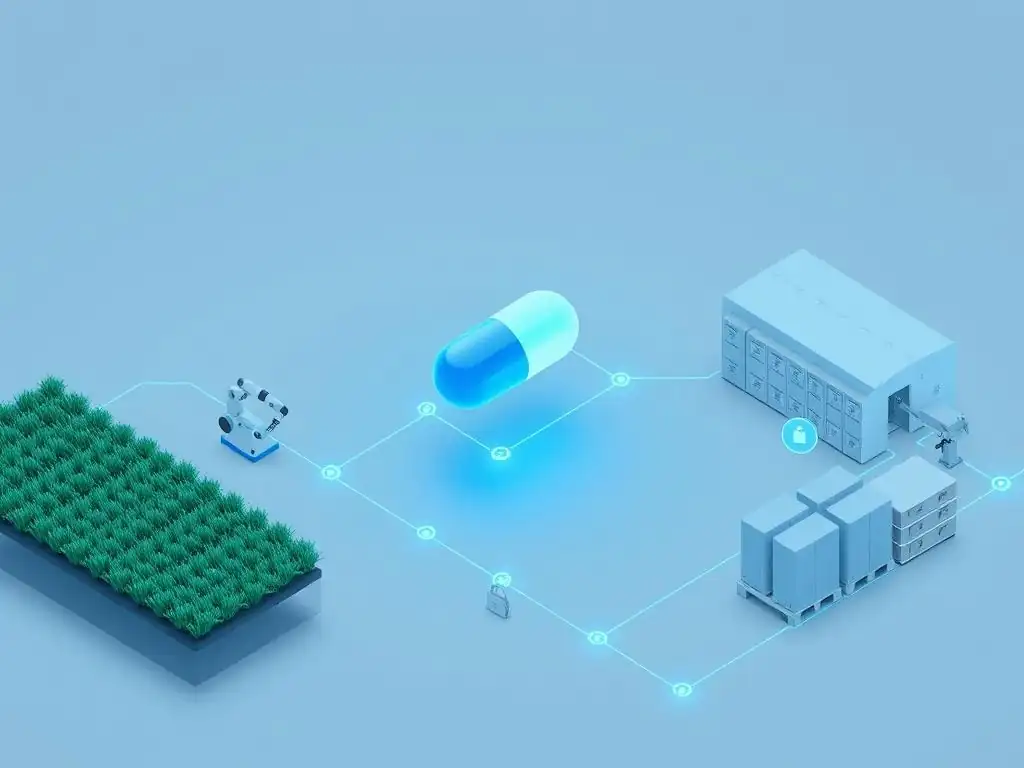
Implementing a robust blockchain drug traceability system requires integrating various technologies and applying specific methods to ensure security, efficiency, and regulatory compliance. Blockchain serves as the foundational layer, providing the shared, immutable ledger. However, it needs to work in concert with other technologies to capture data, automate processes, and protect sensitive information. Understanding these components is key to appreciating the technical depth of a blockchain drug traceability case study.
Key technologies include smart contracts for automating business logic, IoT devices for real-time data capture, and sophisticated data privacy protocols to balance transparency with the need to protect commercially sensitive or patient-related information. The careful integration of these elements is what transforms a basic blockchain into a functional, secure, and compliant drug traceability solution capable of meeting the complex demands of the pharmaceutical industry.
Smart Contracts for Automated Compliance and Verification in Drug Distribution
Smart contracts are self-executing contracts with the terms of the agreement directly written into code. They run on the blockchain, automatically executing predefined actions when specific conditions are met. In drug traceability systems, smart contracts play a vital role in automating compliance checks and verification processes. For example, a smart contract can be set up to automatically verify that a pharmaceutical distributor is licensed in a specific region before allowing a transaction (transfer of ownership) to be recorded on the blockchain for a drug entering that region.
Another application involves automating payment or transfer processes only after a shipment's conditions (verified by IoT data on the blockchain) meet required standards. Smart contracts can also automate reporting to regulatory bodies based on the immutable data recorded on the ledger. This automation reduces manual effort, minimizes the risk of human error, and enforces business rules and regulatory requirements consistently across the supply chain. This is a powerful feature highlighted in many a blockchain drug traceability case study, streamlining operations while enhancing safety.
Integration of IoT and Blockchain for Real-time Drug Tracking and Traceability
The integration of Internet of Things (IoT) devices with blockchain is crucial for capturing real-world data about a drug's journey beyond just location and ownership. IoT sensors, such as temperature loggers, humidity sensors, and even tamper-evident seals with embedded sensors, can collect critical data about the conditions a drug experiences during transit and storage.
By connecting these sensors to the blockchain network, the collected data can be automatically and immutably recorded onto the distributed ledger. This provides a continuous, verifiable log of conditions like temperature throughout the supply chain. For instance, a vaccine shipment equipped with an IoT temperature sensor can have its temperature logged every hour on the blockchain.
If the temperature goes out of range, this event is recorded. This real-time, verifiable data is invaluable for ensuring product quality, proving compliance with storage requirements, and quickly identifying if a product's integrity has been compromised, as demonstrated in a practical blockchain drug traceability case study involving cold chain management.
Data Privacy and Security Protocols in Blockchain Drug Traceability Applications
While transparency is a benefit of blockchain, not all data in a pharmaceutical supply chain can be public. Information like proprietary manufacturing processes, commercial agreements, and patient data must remain private and secure. Therefore, blockchain drug traceability solutions must incorporate robust data privacy and security protocols. This is often achieved through various methods depending on the type of blockchain network used (permissioned vs. public).
In permissioned blockchains, access to the network and specific data can be restricted to authorized participants. Techniques like hashing can be used, where sensitive data is stored off-chain in secure databases, and only a cryptographic hash (a unique digital fingerprint) of the data is stored on the blockchain. This hash proves the data's integrity without revealing the data itself.
Zero-knowledge proofs are another advanced cryptographic technique that allows one party to prove to another that a statement is true without revealing any information beyond the validity of the statement itself. Implementing these protocols ensures that while the traceability chain is transparent and secure, sensitive information remains protected, addressing critical concerns in any enterprise blockchain drug traceability case study.
Challenges and Limitations of Implementing Blockchain in Drug Safety
Despite its significant potential, the path to widespread adoption of blockchain in drug safety and traceability is not without its challenges. Implementing such a transformative technology across a complex, highly regulated global industry involves overcoming technical, operational, and organizational hurdles. These challenges need careful consideration and strategic planning to ensure successful deployment and realize the full benefits highlighted in a blockchain drug traceability case study.
Addressing these limitations requires collaboration among all stakeholders – from technology providers and pharmaceutical companies to regulators and healthcare providers. It involves developing standards, investing in infrastructure, and managing the change required to transition from legacy systems to a decentralized, blockchain-based approach. Understanding these challenges is crucial for realistic expectations and effective implementation strategies.
Technical and Operational Barriers in Blockchain Adoption for Drug Traceability
One significant technical barrier is integrating blockchain systems with existing legacy IT infrastructure within pharmaceutical companies and their partners. Many established systems for inventory management, enterprise resource planning (ERP), and serialization were not designed to interact with decentralized ledgers. Building interfaces and ensuring seamless data flow between these disparate systems can be complex and costly.
Operationally, implementing blockchain requires changes to established business processes and workflows. Training personnel across the supply chain – from warehouse staff scanning products to pharmacists verifying authenticity – is necessary. There's also the challenge of managing the blockchain network itself, including governance, access control, and dispute resolution mechanisms among participants. Ensuring data accuracy at the point of entry is paramount, as incorrect data recorded on an immutable ledger can create persistent issues. These operational shifts are critical considerations in any large-scale blockchain drug traceability case study.
Addressing Scalability and Interoperability Issues in Pharmaceutical Blockchain Networks
Scalability is another key technical challenge. The pharmaceutical supply chain processes billions of drug packages annually. A blockchain network must be capable of handling a massive volume of transactions efficiently and at a reasonable cost. Early blockchain platforms sometimes faced limitations in transaction speed and throughput. While newer generations of blockchain technology offer improved performance, ensuring a network can scale to meet the demands of a global pharmaceutical supply chain is a significant engineering task.
Interoperability is equally important. The pharmaceutical industry is not monolithic; it comprises numerous companies using different systems and potentially participating in different blockchain networks or consortia. For true end-to-end traceability, these disparate networks need to be able to communicate and exchange data seamlessly. Developing standards and protocols for interoperability between different blockchain platforms and traditional systems is essential to avoid creating new data silos. A successful blockchain drug traceability case study must demonstrate a viable path toward scaling and connecting with other systems.
Overcoming Regulatory and Industry Resistance to Blockchain Drug Tracking
While regulators are increasingly supportive of enhanced traceability, the adoption of a novel technology like blockchain presents its own set of regulatory considerations. Questions around data ownership, privacy (especially regarding patient data potentially linked to drug identifiers), and the legal status of smart contracts on the blockchain need clarification. Regulatory frameworks may need to evolve to fully accommodate blockchain-based systems.
Industry resistance can stem from various factors, including the cost of implementation, concerns about sharing data (even in a permissioned environment), and the inherent disruption of existing business models and power structures within the supply chain. Convincing multiple, often competitive, entities to collaborate on a shared ledger requires significant effort in building trust and demonstrating clear return on investment. Addressing these human and organizational factors is as critical as solving the technical challenges in driving the adoption showcased in a blockchain drug traceability case study.
Future Trends and Innovations in Blockchain Drug Traceability and Safety
The field of blockchain in pharmaceutical supply chains is rapidly evolving. As pilot programs mature and technological capabilities advance, several key trends and innovations are emerging that promise to further enhance drug traceability and safety. These developments are pushing the boundaries of what's possible with decentralized systems and are shaping the future landscape of healthcare supply chain management.
These future trends encompass not only improvements in the core blockchain technology but also its integration with other cutting-edge fields like artificial intelligence and advanced data analytics. They suggest a future where drug supply chains are not only transparent and secure but also highly efficient, predictive, and resilient, building upon the foundations laid by current blockchain drug traceability case study initiatives.
Emerging Blockchain Solutions and Their Potential Impact on Healthcare Supply Chains
Newer blockchain platforms are being developed with specific enterprise needs in mind, focusing on improved scalability, speed, and privacy features compared to earlier public blockchains. Solutions built on platforms like Hyperledger Fabric, R3 Corda, or specialized healthcare blockchains offer features like permissioning, private channels, and enhanced data security protocols that are crucial for the pharmaceutical industry.
Beyond core platforms, innovation is happening in areas like decentralized identifiers (DIDs) for uniquely identifying entities and devices in the supply chain, and verifiable credentials for securely sharing attestations (e.g., proof of license, quality certification) on the blockchain. These emerging solutions have the potential to create a more robust, secure, and efficient healthcare supply chain ecosystem, moving beyond basic tracking to encompass identity management, automated credential verification, and streamlined compliance workflows, as explored in advanced blockchain drug traceability case study concepts.
The Role of Decentralized Systems in Shaping the Future of Drug Safety and Traceability
Blockchain is a foundational technology for decentralized systems, and its application in drug traceability is part of a broader shift towards decentralized supply chain management. In a fully decentralized pharmaceutical supply chain, trust is placed in the network's consensus mechanisms and cryptographic security rather than relying on central authorities or intermediaries. This reduces single points of failure and increases resilience against disruptions or malicious activities.
Decentralized autonomous organizations (DAOs) could potentially govern aspects of a future blockchain-based drug network, allowing participants to collectively manage rules and updates. Furthermore, the principles of decentralization can extend to data storage (using decentralized storage solutions) and identity management, creating a more secure and privacy-preserving ecosystem. This move towards decentralized architectures, exemplified by forward-looking blockchain drug traceability case study research, promises a future where drug safety is ensured through distributed trust and collective oversight.
Predictions for Blockchain Integration in Global Pharmaceutical Regulations
As blockchain technology matures and its benefits become more evident through successful pilots and blockchain drug traceability case study implementations, it is highly probable that regulatory bodies will increasingly recognize and potentially mandate its use for certain aspects of drug traceability and safety. Regulations like DSCSA already push towards electronic, interoperable systems, and blockchain fits this description well.
Future regulations might specify blockchain as a preferred or required technology for recording transaction history, verifying product authenticity, or managing recalls. Regulators could also become nodes on permissioned blockchain networks, gaining direct, real-time visibility into the supply chain for oversight and enforcement purposes. Harmonization of regulations across different countries regarding blockchain use in pharma is also likely to become a focus, facilitating global trade and ensuring consistent safety standards worldwide. The trajectory suggests blockchain will transition from an experimental technology to a standard tool for regulatory compliance and enhanced drug safety.
Conclusion: The Transformative Impact of Blockchain Drug Traceability Case Studies on Healthcare Safety
The exploration of blockchain drug traceability case study examples clearly demonstrates the profound potential of this technology to revolutionize pharmaceutical supply chain management and significantly enhance drug safety. By providing an immutable, transparent, and decentralized ledger, blockchain addresses critical vulnerabilities in traditional systems, offering robust defenses against counterfeiting, diversion, and handling errors. The cases reviewed highlight practical applications, from improving overall supply chain visibility and enabling rapid authenticity verification to ensuring proper handling conditions through integration with IoT.
While challenges related to technical integration, scalability, interoperability, and regulatory adaptation remain, ongoing innovation and increasing collaboration across the industry are paving the way for wider adoption. The future promises even more sophisticated blockchain-based solutions, potentially integrated with AI and operating within increasingly decentralized frameworks, further strengthening the integrity and security of drug distribution networks. The insights gleaned from every blockchain drug traceability case study serve as a vital roadmap for the industry's journey towards a safer and more trustworthy pharmaceutical ecosystem, ultimately benefiting patients worldwide.
Summary of Key Insights from Blockchain Drug Traceability Case Studies
The various blockchain drug traceability case study initiatives reveal several key insights. Firstly, blockchain effectively creates a single, immutable source of truth for drug product history, drastically improving transparency and accountability among supply chain partners. Secondly, integrating serialization with blockchain enables rapid and reliable verification of drug authenticity at any point in the chain, providing a powerful tool against counterfeiting. Thirdly, combining blockchain with IoT allows for verifiable, real-time monitoring of critical conditions like temperature, essential for maintaining the quality of sensitive medications.
Furthermore, these case studies underscore the importance of industry collaboration and the need for permissioned networks to balance transparency with data privacy requirements. They also highlight that successful implementation requires addressing integration with legacy systems and developing clear governance models for the blockchain network. Ultimately, the most significant insight is that blockchain moves drug safety from a reactive, investigation-heavy process to a proactive, verifiable system.
Final Thoughts on Blockchain’s Role in Advancing Drug Safety and Patient Protection
Blockchain technology is not a silver bullet, but it represents a fundamental technological shift with the potential to profoundly impact drug safety. By enabling unprecedented levels of traceability and verification, it empowers stakeholders across the supply chain – including patients – with the information needed to trust the medicines they produce, handle, dispense, and consume. As regulatory landscapes evolve and technology matures, blockchain is poised to become an indispensable tool in the global fight against falsified and substandard medical products.
The continued development and implementation of blockchain-based solutions, informed by the lessons learned from each blockchain drug traceability case study, will play a crucial role in building more resilient, secure, and transparent pharmaceutical supply chains. This will directly contribute to advancing patient protection by ensuring that the medicines reaching consumers are safe, effective, and legitimate, ultimately saving lives and building greater public trust in the healthcare system.
Frequently Asked Questions
What is the main focus of the article on blockchain and drug traceability?
The article discusses how blockchain technology can enhance drug safety by providing traceability in the supply chain, showcasing several case study examples.
How does blockchain improve drug traceability?
Blockchain offers a secure, immutable ledger that allows for real-time tracking of drugs, ensuring that all transactions are recorded and easily accessible, which helps prevent fraud.
What are some examples of blockchain applications in drug traceability?
The article highlights various case studies where companies have successfully implemented blockchain to track pharmaceuticals, ensuring compliance and enhancing patient safety.
Can blockchain be used for other applications beyond drug traceability?
Yes, blockchain has transformative potential in sectors like DeFi, enterprise applications, and more, indicating its versatility beyond just cryptocurrency.
What is the future of blockchain in drug safety?
The future looks promising as regulations evolve and more companies adopt blockchain for traceability, ultimately contributing to a more efficient and safe pharmaceutical supply chain.
Okay, here's a final reflection you can use for your article "Improving Drug Safety with Blockchain: Case Study Examples of Traceability," optimized for the keyword "Blockchain drug traceability case study":
Final Reflection: Securing Health Through Transparency
The journey through these blockchain drug traceability case studies reveals a powerful truth: transparency is paramount in safeguarding public health. The examples presented highlight how blockchain technology, far from being a mere buzzword, offers a tangible solution to the pervasive problem of counterfeit drugs and supply chain vulnerabilities. By providing an immutable and auditable record of a drug's journey, from manufacturer to patient, blockchain empowers us to build a safer and more trustworthy pharmaceutical ecosystem.
This exploration has underscored the profound impact that technology can have on our lives, influencing not only the efficiency of supply chains but also the very foundation of trust in our healthcare systems. The potential to eradicate counterfeit drugs and ensure the authenticity of medications is a moral imperative, one that resonates deeply with the desire for safety and well-being. The beauty of blockchain isn't just in its technology, but in its ability to restore trust in systems where trust has been eroded.
This quote perfectly encapsulates the transformative power of blockchain in the context of drug safety.
As we conclude this examination of blockchain drug traceability, I invite you to consider your own role in fostering a safer and more transparent healthcare landscape. How can you, as a patient, a healthcare professional, or a technology enthusiast, advocate for the adoption of these innovative solutions? Let us embrace the potential of blockchain to build a future where every medication is verifiably authentic, and where the health and well-being of all are protected.
Unveil Secure Healthcare: Start Tracing Today!
Thank you for exploring the power of blockchain in revolutionizing drug safety. You've gained valuable insights into how traceability can protect patients and improve the pharmaceutical industry. Now, let's put that knowledge into action!
Here's how you can contribute to a safer healthcare future:
- Investigate how blockchain can be applied to track medications in your own community. This hands-on research will help you understand the practical implications and potential benefits locally.
- Share this article with healthcare professionals and technology enthusiasts to spark conversations about implementing blockchain solutions.
- Consider attending or participating in webinars and conferences focusing on blockchain applications in healthcare to further your knowledge and network with industry leaders.
What specific challenges do you see blockchain addressing in your local pharmacy or healthcare system? Share your thoughts in the comments below!
Leave a Reply