
The Role of Stablecoins in Asset Tokenization: Facilitating Transactions and Market Stability

Welcome to Blockchain Trends, your guide to understanding the revolutionary power of blockchain beyond the hype. Are you ready to unlock the potential of asset tokenization?
In this article, we delve into the crucial role of stablecoins in this groundbreaking process, exploring their unique asset tokenization benefits and how they're paving the way for more efficient and stable markets. Curious to learn how stablecoins are transforming traditional assets into digital opportunities? Keep reading to discover the future of finance!
- Understanding Asset Tokenization and its Potential
- Stablecoins: A Cornerstone of Tokenized Asset Transactions
- Stablecoins Asset Tokenization Benefits: Streamlining the Process
- Stablecoins and Market Stability in the Tokenized Asset Ecosystem
- Use Cases: Stablecoins Powering Real-World Asset Tokenization
- Risks and Challenges of Using Stablecoins in Asset Tokenization
- The Future of Stablecoins and Asset Tokenization: Trends and Predictions
- Conclusion: Stablecoins as Catalysts for the Growth of Asset Tokenization
-
Frequently Asked Questions
- What role do stablecoins play in asset tokenization?
- How do stablecoins contribute to market stability in the context of asset tokenization?
- What are the key benefits of using stablecoins for transactions involving tokenized assets?
- How does asset tokenization combined with stablecoins impact the accessibility of traditional assets?
- What are some regulatory considerations surrounding the use of stablecoins in asset tokenization?
- Final Reflection: Unlocking Value Through Stability
- Unlock the Power of Tokenization: Start Building Your Future Today!
Understanding Asset Tokenization and its Potential
Asset tokenization represents the process of converting rights to an asset into a digital token on a blockchain. This digital representation can then be easily stored, transferred, and recorded securely on a decentralized ledger. The underlying asset can be tangible, like real estate, gold, or art, or intangible, such as intellectual property, company equity, or carbon credits. Tokenization breaks down ownership into smaller, divisible units, potentially unlocking access to previously illiquid markets for a wider range of investors.
This technological shift is poised to reshape various industries by enhancing efficiency and accessibility. By leveraging blockchain technology, tokenization offers a transparent and immutable record of ownership and transaction history, reducing reliance on traditional intermediaries. This can lead to significant cost savings and faster settlement times compared to conventional asset management and trading systems. The potential applications span finance, supply chain, real estate, and beyond, creating new paradigms for value exchange and ownership.
What is Asset Tokenization? A Deep Dive
Asset tokenization involves creating a digital token on a blockchain that represents a share or full ownership of an underlying asset. Think of it as creating a digital certificate of ownership that lives on a distributed ledger. This process typically involves legal frameworks to ensure the token confers legitimate rights to the asset, as well as technical standards (like ERC-20 or ERC-721 on Ethereum) to govern the token's creation and management.
The technical process usually begins with identifying the asset and its value, establishing the legal rights tied to the token, and then minting the corresponding number of tokens on a chosen blockchain network. For instance, a $10 million building could be tokenized into 10 million tokens, each representing $1 of value or a fractional share of ownership.
These tokens can then be traded on secondary markets, allowing investors to buy or sell small portions of the asset without the complexities and costs associated with traditional property transactions. Security tokens, which represent ownership in assets like real estate or equity, are a prime example of this, requiring compliance with securities regulations.
Benefits of Asset Tokenization: Unlocking Liquidity and Efficiency
One of the primary benefits of asset tokenization is the potential to unlock significant liquidity for traditionally illiquid assets. Assets like real estate or private equity are difficult and slow to trade due to high transaction costs, legal complexities, and the need to find a single buyer for the entire asset or a large portion. Tokenization allows these assets to be divided into smaller, more affordable units, enabling fractional ownership and making them accessible to a broader investor base. This increased accessibility naturally leads to a larger potential market and thus, enhanced liquidity.
Beyond liquidity, tokenization drives efficiency by streamlining processes. Traditional asset transfers often involve multiple intermediaries—brokers, lawyers, clearinghouses—each adding time and cost. Tokenization on a blockchain can automate many of these steps through smart contracts, potentially reducing settlement times from days or weeks (like the T+2 settlement for many stocks) to minutes or even seconds (T+0). This reduction in friction can lead to lower transaction fees, increased trading volume, and greater overall market efficiency. For example, a report by the World Economic Forum in 2020 estimated that tokenization could unlock $24 trillion in illiquid assets by 2030.
Challenges in Asset Tokenization Adoption
Despite the compelling benefits, the widespread adoption of asset tokenization faces several significant challenges. Regulatory uncertainty remains a major hurdle globally. The legal status of tokenized assets, particularly security tokens, varies significantly across jurisdictions, creating ambiguity for issuers and investors. Governments and financial regulators are still developing frameworks to govern tokenized assets, which can slow down innovation and cross-border transactions. Ensuring compliance with existing securities laws, anti-money laundering (AML), and know-your-customer (KYC) regulations for token issuance and trading platforms is complex and costly.
Technical and operational challenges also persist. While blockchain technology offers security and transparency, the platforms and smart contracts used for tokenization must be robust and free from vulnerabilities. The integration of tokenized assets with existing financial infrastructure is another complex task. Furthermore, ensuring the secure custody of both the digital tokens and the underlying physical or intangible assets requires specialized solutions and expertise. Establishing clear legal enforceability of tokenized ownership rights in the event of disputes or asset liquidation is also critical for investor confidence and market growth.
Stablecoins: A Cornerstone of Tokenized Asset Transactions
Stablecoins are a type of cryptocurrency designed to minimize price volatility, typically by pegging their market value to a stable asset like a fiat currency (e.g., USD), a commodity (e.g., gold), or a basket of assets. Their stability makes them ideal for use as a medium of exchange and a store of value within the volatile cryptocurrency market and emerging blockchain-based ecosystems. Unlike volatile cryptocurrencies such as Bitcoin or Ether, which can experience significant price swings daily, stablecoins aim to maintain a consistent value, making them suitable for everyday transactions, payments, and accounting.
The core function of stablecoins is to provide a bridge between the traditional financial world and the decentralized digital economy. They allow users to transact on blockchain networks without the risk of their funds losing significant value between the start and end of a transaction. This stability is crucial for facilitating various activities within the blockchain space, from trading and lending in Decentralized Finance (DeFi) to enabling efficient payments for tokenized assets.
What are Stablecoins and How Do They Work?
Stablecoins operate through various mechanisms designed to maintain their peg to a target asset. The most common method involves maintaining reserves of the pegged asset equal to or exceeding the number of stablecoins in circulation. For example, a fiat-backed stablecoin like USDC or USDT aims to hold one U.S. dollar or equivalent in reserves for every token issued. These reserves are typically held in traditional financial institutions and are subject to audits, although the transparency and frequency of these audits can vary.
Other stablecoin models use different approaches. Crypto-backed stablecoins, like Dai, maintain their peg by being overcollateralized with other cryptocurrencies. If the value of the underlying crypto collateral falls below a certain threshold, the system automatically liquidates the collateral to maintain the stablecoin's value. Algorithmic stablecoins, on the other hand, use complex algorithms and smart contracts to manage supply and demand, expanding or contracting the stablecoin supply automatically to maintain the peg. While innovative, algorithmic stablecoins have proven more challenging to maintain stability, as demonstrated by the collapse of the TerraUSD (UST) stablecoin in 2022.
Different Types of Stablecoins: Fiat-backed, Crypto-backed, and Algorithmic
The stablecoin landscape is primarily categorized into three types based on their collateralization mechanism. Fiat-backed stablecoins are the most prevalent, with tokens like Tether (USDT) and USD Coin (USDC) dominating the market. These stablecoins maintain reserves of fiat currency, cash equivalents, or other traditional assets like commercial paper to back the value of the issued tokens. They are generally perceived as relatively stable, provided the reserves are adequate and transparently managed. As of late 2023, the combined market capitalization of USDT and USDC alone exceeded $100 billion, highlighting their significant role in the digital asset space.
Crypto-backed stablecoins, such as MakerDAO's Dai (DAI), use volatile cryptocurrencies as collateral. To counteract the volatility of the collateral, these stablecoins are typically overcollateralized, meaning the value of the locked-up crypto is significantly higher than the value of the stablecoins issued. For instance, $150 worth of Ether might be locked to mint $100 worth of Dai.
This buffer helps absorb price fluctuations in the underlying collateral. Algorithmic stablecoins attempt to maintain stability without direct asset collateralization, relying instead on programmatic rules to adjust supply. While theoretically decentralized, their stability is highly dependent on market conditions and the robustness of the underlying algorithm, making them the riskiest type.
The Crucial Role of Stablecoins in DeFi and Tokenization
Stablecoins have become the bedrock of the Decentralized Finance (DeFi) ecosystem, serving as the primary medium of exchange, lending, and borrowing. Because DeFi applications operate on public blockchains where transactions are often settled rapidly and autonomously via smart contracts, users need assets that don't fluctuate wildly in value during these operations. Stablecoins provide this necessary stability, enabling activities like decentralized lending (e.g., on platforms like Aave or Compound) where users can borrow or lend stablecoins, or decentralized trading on Automated Market Makers (AMMs) like Uniswap, where stablecoin pairs are frequently used for liquidity provision and trading against other assets.
Their importance extends directly to asset tokenization. When real-world assets are tokenized and traded on blockchain platforms, participants need a reliable unit of account and a stable medium for transactions. Trading a tokenized share of real estate directly for Bitcoin, for example, would introduce significant price risk due to Bitcoin's volatility.
Stablecoins remove this variable, allowing buyers and sellers of tokenized assets to transact with confidence that the value of the payment currency will remain consistent during the transaction process. This makes stablecoins essential infrastructure for building functional and attractive markets for tokenized assets, facilitating everything from initial token offerings to secondary market trading and dividend payouts.
Stablecoins Asset Tokenization Benefits: Streamlining the Process
The integration of stablecoins into the asset tokenization process unlocks a range of significant advantages. These benefits directly address some of the inefficiencies and limitations inherent in traditional asset markets and even in early forms of tokenization that relied solely on volatile cryptocurrencies. By providing a stable, digital medium of exchange, stablecoins enhance the practicality and appeal of tokenized assets for both institutional and retail participants. Exploring the stablecoins asset tokenization benefits reveals how this synergy is driving forward the adoption of digital assets.
The use of stablecoins simplifies the financial layer of tokenization. Instead of dealing with the complexities and risks of converting between fiat currency and volatile cryptocurrencies for every transaction, participants can use stablecoins directly. This streamlines payments, settlements, and distributions within the tokenized ecosystem. The stability offered by stablecoins also makes pricing tokenized assets simpler and more intuitive, as their value is pegged to familiar fiat currencies, removing a layer of complexity for investors accustomed to traditional markets.
Faster and More Efficient Transactions with Stablecoins
One of the key stablecoins asset tokenization benefits is the dramatic increase in transaction speed and efficiency. Traditional asset transactions, especially for illiquid assets like real estate or private equity, can take days or even weeks to settle due to manual processes, verification steps, and reliance on traditional banking hours. Even within cryptocurrency markets, trading between two volatile assets adds complexity and risk.
When tokenized assets are traded using stablecoins on a blockchain, the transaction and settlement can occur almost instantaneously, limited only by the blockchain's confirmation time. For instance, a transaction on the Ethereum network can settle within minutes, while on faster chains like Solana or Polygon, it can be seconds. This near-instantaneous settlement reduces counterparty risk and allows for 24/7 market operations, unlike traditional markets that adhere to strict trading hours. This speed and efficiency are crucial for creating liquid secondary markets for tokenized assets.
Reduced Transaction Costs in Asset Tokenization Using Stablecoins
Another significant advantage among the stablecoins asset tokenization benefits is the potential for substantially reduced transaction costs. Traditional asset transfers involve numerous fees, including brokerage fees, legal fees, escrow fees, and clearing and settlement fees charged by intermediaries. These costs can be particularly high for smaller transactions, making fractional ownership less viable.
By leveraging blockchain technology and stablecoins, many of these intermediary layers can be removed or automated. Transaction fees on blockchain networks (gas fees) are typically much lower than traditional fees, especially for peer-to-peer transfers facilitated by stablecoins. While gas fees can fluctuate, particularly on networks like Ethereum, using more scalable blockchains or Layer 2 solutions significantly lowers costs.
Furthermore, eliminating the need for multiple intermediaries reduces the cumulative fees associated with verification, clearing, and settlement processes, leading to more cost-effective trading and management of tokenized assets. Estimates suggest that blockchain-based settlements could reduce transaction costs by 30-50% compared to traditional methods for certain asset classes.
Increased Liquidity for Tokenized Assets via Stablecoin Integration
The integration of stablecoins is paramount to realizing the goal of increased liquidity for tokenized assets. Liquidity is the ease with which an asset can be converted into cash without significantly impacting its price. Traditionally illiquid assets suffer from limited buyer pools and high transaction costs that deter frequent trading. Stablecoins address these issues in several ways.
Firstly, by providing a stable medium of exchange, stablecoins remove the volatility risk associated with using other cryptocurrencies, making it easier for investors to enter and exit positions in tokenized assets. Secondly, stablecoins facilitate fractional ownership by enabling transactions of very small value, opening up investment opportunities to a much larger pool of potential buyers globally.
This wider market access, combined with faster and cheaper transactions enabled by stablecoins on blockchain networks, creates the conditions necessary for robust secondary markets to develop, thereby increasing the overall liquidity of tokenized assets. For example, a tokenized real estate asset that might only attract a few potential buyers in a traditional market could potentially be traded among thousands of investors using stablecoins on a global platform.
Enhanced Transparency and Auditability in Tokenized Asset Transactions with Stablecoins
Blockchain technology inherently offers transparency and auditability, and the use of stablecoins in asset tokenization leverages these features. Every transaction involving a stablecoin on a public blockchain is recorded on an immutable, distributed ledger that can be viewed by anyone. This includes the transfer of stablecoins for tokenized assets, dividend payments in stablecoins, and other related financial movements.
This level of transparency allows for easy verification of transaction history, ownership trails, and the flow of funds within the tokenized ecosystem. Regulators, auditors, and participants can independently verify transactions without relying on potentially opaque central databases. While transaction participants might be pseudonymized, the transaction details themselves are public. This enhanced auditability reduces the potential for fraud and increases trust in the market for tokenized assets, providing a clear and verifiable record of all financial interactions facilitated by stablecoins.
Stablecoins and Market Stability in the Tokenized Asset Ecosystem
Market stability is crucial for attracting mainstream investors, especially institutions, to the world of tokenized assets. Volatility is a major deterrent for many traditional investors accustomed to the relatively stable movements of conventional markets. Stablecoins play a vital role in mitigating this volatility within the tokenized asset ecosystem, contributing to overall market confidence and growth. They act as a bridge currency that allows participants to move between volatile blockchain assets and stable value representations without leaving the blockchain environment.
By providing a stable point of reference, stablecoins enable more predictable pricing and valuation of tokenized assets. This is particularly important for assets that are not typically subject to rapid price swings in the physical world, like real estate or debt. The use of stablecoins in trading pairs for tokenized assets helps to anchor their value relative to fiat currencies, making investment decisions more straightforward and reducing the speculative risk associated with the payment or settlement currency itself.
How Stablecoins Mitigate Volatility in Tokenized Asset Markets
The primary way stablecoins contribute to stability in tokenized asset markets is by serving as a stable medium of exchange and store of value within a potentially volatile blockchain environment. When investors trade tokenized assets, they can do so using stablecoins pegged to major fiat currencies like the USD or EUR. This removes the price risk that would be present if they were forced to use volatile cryptocurrencies like Bitcoin or Ether for every transaction.
For example, if you were to sell a tokenized bond for Bitcoin, the value received in fiat terms would fluctuate constantly with Bitcoin's price. Selling it for USDC or USDT provides a much more predictable outcome.
Furthermore, stablecoins allow participants to "cash out" of volatile tokenized asset positions into a stable asset without needing to exit the blockchain ecosystem entirely and convert back to traditional fiat currency through a bank. This ability to quickly move into a stable asset reduces the impact of sudden market downturns or price corrections, providing a form of risk management within the digital asset space. The availability of highly liquid stablecoin trading pairs for tokenized assets also helps to absorb market shocks and maintain smoother price discovery.
Stablecoins as a Safe Haven Asset in Tokenized Portfolios
Within the context of a portfolio containing various tokenized assets and potentially other cryptocurrencies, stablecoins often function as a digital safe haven asset. During periods of high market volatility or uncertainty, investors can convert more speculative or volatile holdings into stablecoins to preserve capital. This is analogous to traditional investors moving funds into cash or short-term government bonds during market downturns.
The ease and speed with which this conversion can happen on-chain, facilitated by stablecoins, provide investors with flexibility and control over their exposure to market fluctuations. Holding stablecoins within a tokenized asset portfolio allows investors to remain within the blockchain ecosystem, ready to reinvest when market conditions improve, without incurring the delays and costs of repeatedly moving funds to and from traditional banking systems. This function enhances the overall risk management capabilities available to participants in the tokenized asset space.
The Impact of Stablecoin Regulation on Asset Tokenization Market Stability
The regulatory landscape surrounding stablecoins has a direct and significant impact on the stability and growth of the asset tokenization market. Clear and consistent regulations can instill confidence among institutional investors and the broader public, encouraging greater participation. Conversely, regulatory uncertainty or adverse actions can introduce significant risk and hinder adoption. For instance, increased scrutiny and potential regulation requiring stablecoin issuers to hold high-quality, liquid reserves could enhance the perceived safety and reliability of stablecoins, making them more attractive for use in tokenized asset transactions.
However, overly restrictive or fragmented regulations across different jurisdictions could fragment the market, limit the interoperability of stablecoins, and increase compliance costs for platforms and issuers involved in asset tokenization. The collapse of algorithmic stablecoins like UST highlighted the need for robust regulatory frameworks, particularly concerning reserve requirements and transparency for fiat-backed stablecoins. As regulators globally work towards establishing clearer rules, the stability and future trajectory of using stablecoins for asset tokenization will be heavily influenced by the resulting legal and operational frameworks.
Use Cases: Stablecoins Powering Real-World Asset Tokenization
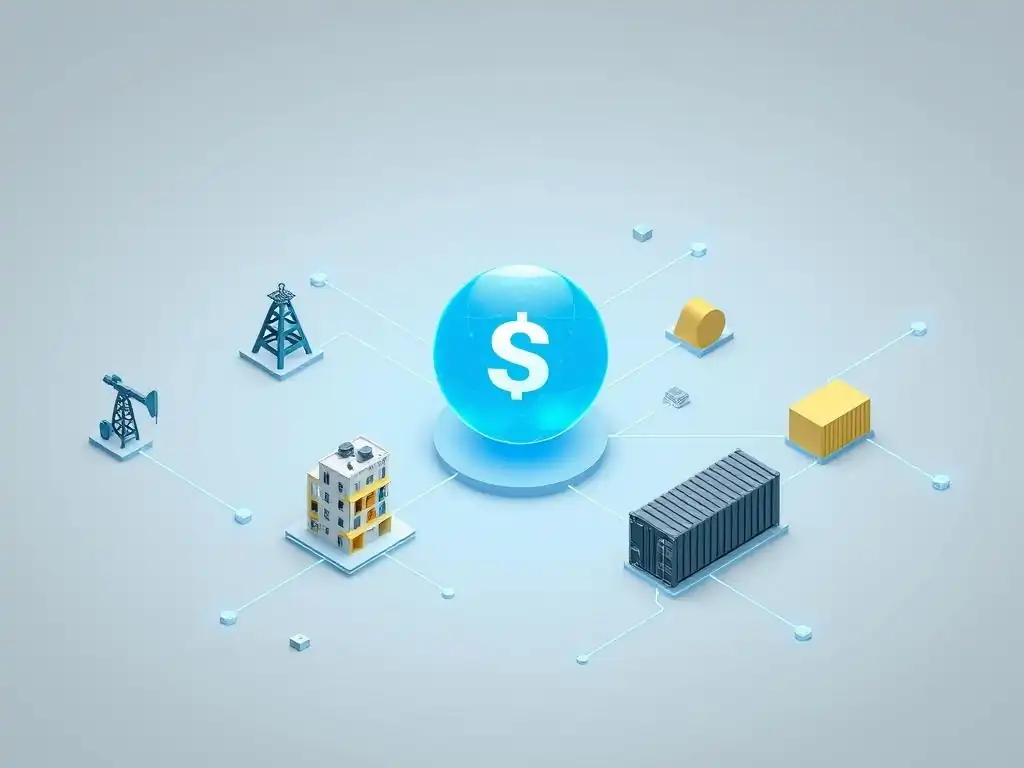
The practical application of stablecoins in asset tokenization is already emerging across various sectors, demonstrating the tangible benefits they bring. These real-world use cases highlight how stablecoins facilitate transactions, enhance liquidity, and improve efficiency when combined with the tokenization of diverse asset classes. From fractionalizing real estate to enabling faster trading of tokenized securities, stablecoins are proving to be essential components of the digital asset infrastructure.
Examining specific examples reveals the transformative potential. Projects are leveraging stablecoins to allow investors worldwide to buy and sell small stakes in properties, trade tokenized precious metals instantly, or settle securities transactions outside traditional market hours. These examples underscore the stablecoins asset tokenization benefits in action, making previously inaccessible or cumbersome investment opportunities more attainable and efficient.
Real Estate Tokenization: Fractional Ownership and Stablecoin Payments
Real estate is a prime candidate for tokenization due to its high value, illiquidity, and complex transaction processes. Tokenizing a property allows its ownership to be divided into hundreds or thousands of digital tokens, each representing a fraction of the property's value. Stablecoins are crucial in this process, facilitating both the initial purchase of these tokens and subsequent trading on secondary markets. An investor wanting to buy a $100 tokenized share of a property can easily do so using $100 worth of a stablecoin like USDC, rather than needing to acquire volatile crypto first.
Furthermore, rental income or sale proceeds from the tokenized property can be distributed automatically to token holders via smart contracts, often paid out in stablecoins. This simplifies the distribution process and provides investors with predictable income in a stable currency. Platforms like Elevated Returns (which tokenized the St. Regis Aspen Resort using stablecoins) have demonstrated the feasibility of using stablecoins for facilitating fractional ownership and managing distributions, showcasing significant stablecoins asset tokenization benefits in the property sector.
Tokenized Commodities: Linking Physical Assets to Digital Finance with Stablecoins
Tokenizing commodities like gold, silver, or rare earth minerals allows investors to gain exposure to these physical assets without the complexities of physical storage, insurance, and transfer. Each token represents a specific quantity of the underlying commodity (e.g., 1 token = 1 gram of gold). Trading these tokens using stablecoins provides a stable and efficient way to invest in commodities digitally.
Instead of paying for tokenized gold using a volatile cryptocurrency whose value might change between the time of trade and settlement, investors can use stablecoins. This ensures that the amount paid accurately reflects the current market price of the commodity without introducing additional currency risk.
Companies like Paxos offer gold-backed tokens (PAX Gold - PAXG) where each token is backed by one fine troy ounce of London Good Delivery gold stored in secure vaults. While PAXG itself is not a stablecoin (its value fluctuates with gold), it is often traded against stablecoins, demonstrating how stablecoins enable liquid and stable trading pairs for tokenized physical assets.
Tokenized Securities: Streamlining Trading and Settlement with Stablecoins
Tokenizing traditional securities like stocks, bonds, or private equity can dramatically improve their trading and settlement infrastructure. This allows for 24/7 trading, fractional ownership of high-value securities, and potentially faster settlement times (T+0 or T+1) compared to the standard T+2 or T+3 in many traditional markets. Stablecoins are essential for making this vision a reality.
When tokenized securities are traded on a blockchain platform, stablecoins can be used as the settlement currency. This allows for atomic swaps where the tokenized security and the stablecoin payment are exchanged simultaneously via a smart contract, eliminating settlement risk. For example, a tokenized share of a company could be bought and sold on a platform using USDC, with the transfer of the token and the USDC happening near-instantly upon trade execution.
This use case highlights significant stablecoins asset tokenization benefits by increasing efficiency and reducing counterparty risk in securities trading. Projects exploring this include platforms aiming to tokenize private equity or debt instruments, using stablecoins to facilitate investment and secondary trading.
Risks and Challenges of Using Stablecoins in Asset Tokenization
While stablecoins offer numerous advantages for asset tokenization, their use is not without risks and challenges. Addressing these issues is crucial for the long-term success and widespread adoption of stablecoin-powered tokenized asset markets. These challenges span regulatory, technical, and infrastructural domains, requiring careful consideration and robust solutions.
Navigating the complexities of stablecoin usage involves understanding potential points of failure or uncertainty. From evolving government stances on digital currencies to the inherent risks in smart contract code, participants must be aware of the landscape. The scalability of underlying blockchain networks and stablecoin infrastructure also poses a challenge as the volume of tokenized asset transactions grows.
Regulatory Uncertainty Surrounding Stablecoins and Tokenized Assets
One of the most significant risks is the ongoing regulatory uncertainty surrounding both stablecoins and tokenized assets globally. The lack of clear, harmonized rules can create legal and operational hurdles for issuers, platforms, and investors. Different jurisdictions classify stablecoins differently (e.g., as payments instruments, securities, or commodities), which impacts licensing requirements, compliance obligations (AML/KYC), and oversight.
Similarly, the regulatory treatment of tokenized assets, particularly security tokens, is still evolving. Issuing and trading security tokens requires compliance with existing securities laws, which can be complex to adapt to a blockchain context. The intersection of stablecoin regulations and tokenized asset regulations adds another layer of complexity.
Unforeseen regulatory changes or enforcement actions could disrupt markets, impact the value of stablecoins, and affect the legality of tokenized asset transactions, creating uncertainty for all participants. For instance, a major stablecoin being deemed an unregistered security in a key market could severely impact its usability for tokenized asset trading in that region.
Security Risks and Smart Contract Vulnerabilities in Stablecoin-Based Tokenization Platforms
The reliance on blockchain technology and smart contracts introduces security risks. While blockchain is inherently secure, smart contracts are pieces of code that can contain bugs or vulnerabilities. If a smart contract governing the tokenization process, the distribution of stablecoin payments, or the stablecoin itself contains an error, it could lead to loss of funds, incorrect asset distribution, or failure to maintain the stablecoin peg. High-profile incidents, such as the DAO hack in 2016 or various DeFi exploits resulting in millions of dollars lost, underscore these risks.
Platforms built for stablecoin-based asset tokenization must implement rigorous security audits of their smart contracts and underlying infrastructure. Custody solutions for both the stablecoins and the tokenized assets must be secure. Participants also face risks related to phishing attacks, private key compromise, and other digital security threats common in the crypto space. Ensuring the integrity and security of the entire technology stack is paramount for building trust in tokenized asset markets powered by stablecoins.
Scalability Limitations of Current Stablecoin and Blockchain Infrastructure for Asset Tokenization
While some blockchain networks offer high throughput, the scalability of existing stablecoin and blockchain infrastructure can still be a limitation as asset tokenization grows. Processing a massive volume of tokenized asset transactions, potentially involving millions of fractional owners and frequent trading, requires a network that can handle a high number of transactions per second at a low cost.
Current limitations in blockchain scalability can lead to network congestion, high transaction fees (gas costs), and slower processing times during peak demand. This can undermine the benefits of speed and cost reduction that stablecoins and tokenization promise. While Layer 2 scaling solutions and more performant blockchain networks are being developed and adopted, ensuring that stablecoin transfers and tokenized asset trades can scale efficiently to meet the demands of large-scale markets, such as global real estate or public equities, remains an ongoing challenge that needs continuous technological advancement and infrastructure development.
The Future of Stablecoins and Asset Tokenization: Trends and Predictions
The symbiotic relationship between stablecoins and asset tokenization is poised to deepen, driving innovation and potentially transforming global financial markets. Several key trends and predictions point towards a future where stablecoins are integral to the infrastructure enabling the widespread adoption of tokenized assets. The convergence of technological advancements, increasing institutional interest, and the evolution of regulatory clarity are shaping this future landscape.
Anticipated developments include more sophisticated stablecoin designs, greater participation from traditional financial players, and the blurring lines between decentralized and traditional finance facilitated by tokenized assets and stablecoins. These trends collectively suggest a future where stablecoins asset tokenization benefits become even more pronounced and accessible.
The Evolution of Stablecoin Technology and its Impact on Asset Tokenization
Stablecoin technology is continuously evolving, with ongoing efforts to improve stability mechanisms, transparency, and scalability. Future stablecoins may incorporate enhanced reserve management practices, potentially including real-time auditing on-chain, or explore new collateralization models. There is also significant research into Central Bank Digital Currencies (CBDCs) and regulated stablecoins issued by banks, which could offer even greater stability and regulatory clarity, potentially accelerating institutional adoption of tokenized assets.
Technological advancements in blockchain scalability, such as sharding, rollups, and more efficient consensus mechanisms, will also directly benefit stablecoin transactions and, by extension, asset tokenization. As blockchain networks become faster and cheaper, the cost and speed advantages of using stablecoins for tokenized asset transactions will increase, making them even more attractive compared to traditional methods. This technological evolution is set to enhance the fundamental stablecoins asset tokenization benefits.
The Growth of Institutional Adoption of Stablecoins for Tokenized Asset Investments
Institutional interest in both stablecoins and asset tokenization is growing rapidly. Major financial institutions, including banks, asset managers, and investment firms, are exploring or actively piloting the use of blockchain technology for issuing and managing tokenized assets like bonds, real estate funds, and private equity. Stablecoins are seen as a critical component for settling transactions involving these tokenized institutional assets.
The stability and regulatory compliance potential of certain stablecoins make them appealing to institutions that require predictability and adherence to financial regulations. As regulatory clarity improves and robust infrastructure develops, more traditional financial players are expected to leverage stablecoins to facilitate investment, trading, and settlement in tokenized assets. This institutional adoption will bring significant capital and liquidity to the tokenized asset market, further highlighting the stablecoins asset tokenization benefits on a larger scale. For example, firms like JPMorgan have explored using blockchain and stablecoins for internal settlement purposes, a step that could extend to tokenized assets.
The Convergence of DeFi and Traditional Finance Through Stablecoin-Powered Asset Tokenization
Stablecoin-powered asset tokenization is acting as a key catalyst for the convergence of decentralized finance (DeFi) and traditional finance (TradFi). By tokenizing real-world assets and making them available on blockchain networks, investors can potentially access and trade these assets using DeFi protocols. Stablecoins provide the necessary stable bridge currency for this interaction.
Imagine being able to use tokenized real estate or tokenized private equity as collateral in a DeFi lending protocol, with loans disbursed in stablecoins. Or trading tokenized shares of a major company on a decentralized exchange using stablecoin trading pairs. This convergence, facilitated by stablecoins and tokenized assets, promises to unlock new financial products, increase market efficiency, and provide greater access to investment opportunities for both traditional and crypto-native investors. The future likely involves hybrid models where regulated entities issue tokenized assets and stablecoins that can interact with certain permissioned or public blockchain environments.
Conclusion: Stablecoins as Catalysts for the Growth of Asset Tokenization
Stablecoins are not merely another type of cryptocurrency; they are foundational infrastructure enabling the next wave of digital asset innovation, particularly in the realm of asset tokenization. By providing a stable, efficient, and transparent medium of exchange and store of value within blockchain networks, stablecoins directly address many of the limitations that have historically hindered the liquidity and accessibility of traditional assets. Their role in facilitating faster, cheaper, and more transparent transactions is a key driver behind the increasing interest and adoption of tokenized assets across various industries.
The stablecoins asset tokenization benefits are clear and compelling: enhanced liquidity for illiquid assets, significant reductions in transaction costs and settlement times, improved transparency and auditability, and increased market stability. These advantages are critical for building robust and appealing markets for tokenized real estate, securities, commodities, and other asset classes. As the technology matures and regulatory frameworks evolve, the synergy between stablecoins and asset tokenization is set to unlock trillions of dollars in value, democratize access to investment opportunities, and reshape the future of finance and ownership.
The Transformative Potential of Stablecoins in Reshaping Asset Ownership and Trading
The transformative potential of stablecoins in reshaping asset ownership and trading is immense. By enabling the fractional ownership of high-value assets through tokenization and providing a stable currency for these transactions, stablecoins are making investment in assets like prime real estate or rare art accessible to a much wider global audience. This democratization of access has the potential to unlock capital and create new investment opportunities for individuals previously excluded from these markets due to high entry costs or geographical barriers.
Furthermore, stablecoins facilitate 24/7 trading and near-instantaneous settlement of tokenized assets, revolutionizing traditional trading paradigms that are often limited by business hours and multi-day settlement cycles. This increased efficiency and speed can lead to more dynamic and liquid markets. The ability to use stablecoins for seamless cross-border transactions also opens up global pools of capital for tokenized asset projects, fundamentally changing how assets are owned, traded, and managed worldwide.
Realizing the full potential of stablecoins in asset tokenization requires navigating several significant challenges, including regulatory uncertainty, technological risks, and scalability limitations. Addressing these issues necessitates collaboration between technology providers, regulators, financial institutions, and legal experts to establish clear frameworks, robust security standards, and scalable infrastructure. Proactive engagement with policymakers to shape sensible regulations will be crucial for fostering a safe and innovative environment for stablecoin-powered tokenization.
Despite these challenges, the stablecoins asset tokenization benefits offer a compelling vision for the future. By focusing on building secure, compliant, and user-friendly platforms, and by educating participants about the technology and its risks, the ecosystem can work towards maximizing the advantages stablecoins bring to asset tokenization. As the market matures and infrastructure improves, stablecoins are set to play an even more critical role as catalysts for the widespread adoption and success of tokenized assets, driving efficiency, liquidity, and innovation across global markets.
Frequently Asked Questions
What role do stablecoins play in asset tokenization?
Stablecoins act as a stable and efficient medium of exchange in the asset tokenization process. They facilitate seamless transactions by bridging the gap between traditional finance and the blockchain. They are a key component in unlocking the potential of digital assets.
How do stablecoins contribute to market stability in the context of asset tokenization?
Stablecoins, being pegged to a stable asset like the US dollar, help mitigate price volatility often associated with cryptocurrencies. This stability encourages greater participation and investment in tokenized assets, making the market more resilient. They foster a more predictable investment environment.
What are the key benefits of using stablecoins for transactions involving tokenized assets?
Using stablecoins for asset tokenization offers benefits such as reduced transaction fees, faster settlement times, and increased transparency. They also enable fractional ownership and greater accessibility to a wider range of investors.
How does asset tokenization combined with stablecoins impact the accessibility of traditional assets?
Asset tokenization powered by stablecoins democratizes access to traditionally illiquid assets like real estate or artwork. It allows for fractional ownership, making these assets more affordable and accessible to a broader range of investors. This significantly expands market participation.
What are some regulatory considerations surrounding the use of stablecoins in asset tokenization?
Regulatory bodies are actively evaluating the use of stablecoins and their impact on financial stability. Key considerations include compliance with AML/KYC regulations, consumer protection, and the need for clear regulatory frameworks governing stablecoin issuance and use in asset tokenization.
Final Reflection: Unlocking Value Through Stability
The exploration of stablecoins within the realm of asset tokenization reveals a powerful synergy, and its potential for democratizing access to previously illiquid assets is more relevant than ever. As traditional financial systems grapple with inefficiencies and limited accessibility, the integration of stablecoins offers a tangible pathway toward a more inclusive and efficient financial future, promising to reshape how we perceive and interact with value.
This convergence of stablecoins and asset tokenization has not only influenced the technological landscape but also continues to shape the cultural perception of ownership and investment. The ability to fractionalize ownership and facilitate seamless transactions is fundamentally altering how we think about asset management, making it more accessible to a wider audience. The future of finance is decentralized, and stablecoins are the bridge that will take us there.
This quote encapsulates the transformative potential of this technology, highlighting its role in bridging the gap between traditional finance and the emerging digital economy.
Now, consider the implications of this newfound accessibility. How can you, as an individual, leverage the benefits of stablecoins and asset tokenization to diversify your portfolio, support innovative projects, or participate in a more equitable financial ecosystem? The power to shape the future of finance lies not just in the hands of institutions, but in the collective choices we make today. Embrace the opportunity to explore, learn, and contribute to a world where value is more accessible, transparent, and stable for all.
Unlock the Power of Tokenization: Start Building Your Future Today!
Thank you for exploring the essential role that stablecoins play in asset tokenization! You now have valuable insights into how these digital currencies are transforming transactions and promoting market stability. It's time to take that knowledge and apply it to real-world opportunities.
Here are some steps to deepen your understanding and get involved in this exciting field:
- Consider a specific asset that could benefit from tokenization. Reflect on its current challenges and how stablecoin-backed tokens might provide a practical solution.
- Research emerging stablecoin projects and analyze how they maintain stability. Share your insights with the community.
- Engage with others: Brainstorm innovative applications for stablecoins beyond simple transactions. Think about their potential in fractional ownership of art, real estate, or intellectual property.
Which asset do you find most promising for tokenization, and how do you envision stablecoins contributing to its success? Share your thoughts in the comments below!
Leave a Reply