
Navigating the Challenges: Implementing Blockchain for Environmental Conservation

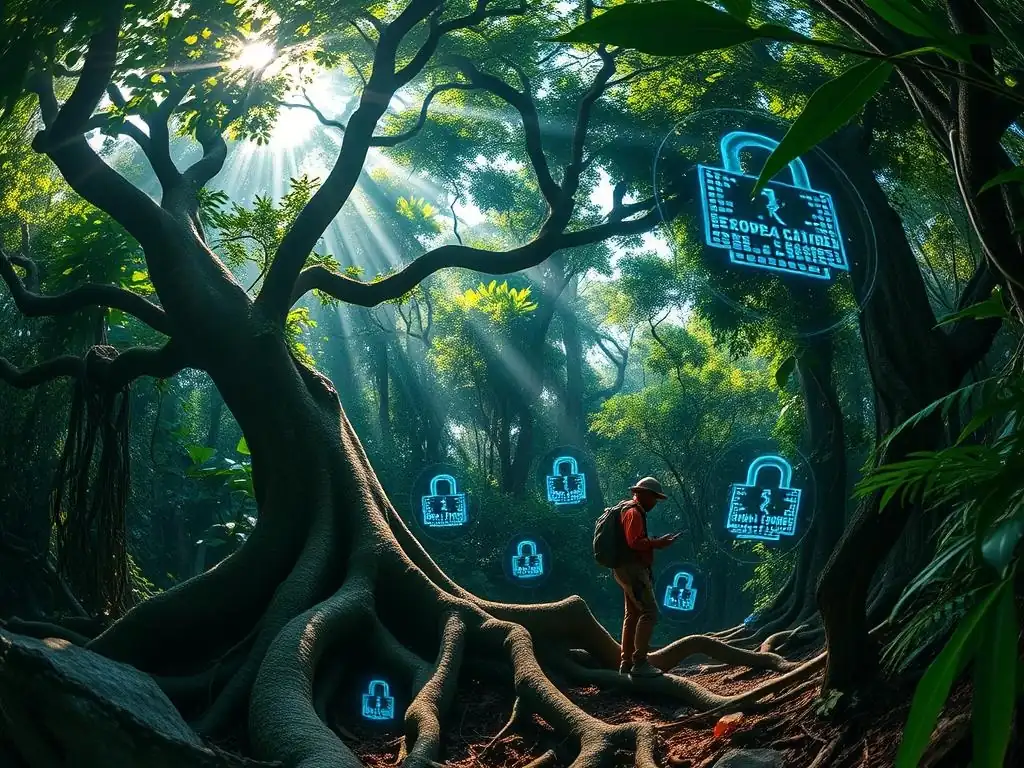
Welcome to Blockchain Trends, your guide to understanding the revolutionary power of blockchain beyond the hype. Delve into the world where decentralized technology is reshaping industries and redefining possibilities.
Are you ready to discover how blockchain can address some of our planet's most pressing issues? This week, we're navigating the intricate landscape of using blockchain for conservation challenges. Uncover the innovative solutions and hurdles involved in leveraging this technology to protect our environment, and explore how it can truly make a difference. What are the limitations and opportunities? Read on to find out!
Navigating the Challenges: Implementing Blockchain for Environmental Conservation
- Introduction: Blockchain Technology and Environmental Sustainability
- Understanding the Core Challenges of Blockchain for Conservation
- Data Integrity and Transparency: A Critical Hurdle
- Governance and Collaboration: Key to Success
- Regulatory and Legal Considerations for Environmental Blockchain
- Financial Sustainability and Funding Mechanisms
- Real-World Examples and Case Studies: Overcoming Obstacles
- Addressing the Energy Consumption of Blockchain Networks
- Educating and Empowering Local Communities
- Future Trends and Opportunities in Blockchain for Conservation
- Conclusion: Overcoming Blockchain for Conservation Challenges and Realizing its Potential
-
Frequently Asked Questions
- What are some key environmental conservation challenges that blockchain technology can address?
- How can blockchain enhance transparency in environmental conservation projects?
- What role can decentralized finance (DeFi) play in funding conservation efforts through blockchain?
- What are the regulatory considerations when implementing blockchain solutions for environmental conservation?
- What are the potential limitations of using blockchain for environmental conservation, and how can they be overcome?
- Final Reflection: Blockchain's Promise for a Greener Future
- Unearth the Power of Blockchain for Our Planet!
Introduction: Blockchain Technology and Environmental Sustainability
Exploring the Potential of Blockchain for Conservation Efforts
Blockchain technology, renowned for its decentralized, immutable, and transparent nature, holds significant promise for revolutionizing environmental conservation efforts. Beyond its origins in cryptocurrency, its core features address fundamental issues like trust, data integrity, and accountability, which are paramount in complex conservation projects involving multiple stakeholders. By providing a secure and verifiable ledger, blockchain can track environmental assets, monitor resource usage, and ensure the provenance of sustainable products, potentially unlocking new pathways for funding and collaboration.
The potential applications are vast, ranging from supply chain transparency for sustainable goods like timber or seafood to managing carbon credits and verifying environmental compliance. Imagine tracking every piece of certified sustainable wood from forest to consumer, ensuring no illegal logging occurred, or verifying carbon offsets with cryptographic certainty. These capabilities are crucial for building trust among consumers, investors, and governments, paving the way for more effective and impactful conservation initiatives globally.
The Growing Need for Innovative Environmental Solutions
The scale and urgency of global environmental challenges, such as climate change, deforestation, biodiversity loss, and pollution, demand innovative solutions that go beyond traditional approaches. Existing systems often suffer from a lack of transparency, fragmented data, and difficulties in coordinating diverse actors, hindering effective action and making it difficult to measure impact accurately. This is where the unique attributes of blockchain technology can offer a compelling advantage.
Traditional methods for environmental monitoring and enforcement can be slow, expensive, and prone to corruption or error. For instance, verifying the status of protected areas or tracking pollutant emissions across large regions is a logistical nightmare. The need for systems that can provide real-time, tamper-proof data and facilitate secure, multi-stakeholder collaboration is more critical than ever. Addressing the inherent Blockchain for conservation challenges requires exploring and adopting technologies that can build trust and efficiency at scale.
Understanding the Core Challenges of Blockchain for Conservation
Technical Obstacles in Blockchain Implementation for Environmental Projects
Implementing blockchain technology in environmental conservation projects faces several significant technical hurdles. One primary challenge is the complexity of integrating blockchain systems with existing legacy infrastructure used by conservation organizations, government agencies, and businesses. Many environmental monitoring systems, databases, and reporting tools are built on older technologies and lack the necessary APIs or compatibility for seamless blockchain integration, requiring substantial development effort and cost.
Furthermore, the technical expertise required to design, deploy, and maintain blockchain networks is often scarce within conservation organizations. Developing robust smart contracts for specific environmental use cases—such as automated payments for ecosystem services based on verified data or tokenizing biodiversity assets—requires specialized knowledge in blockchain development and security. Ensuring these smart contracts are bug-free and function as intended in complex real-world scenarios adds another layer of technical difficulty.
Scalability Limitations of Blockchain Networks in Conservation Applications
Scalability remains a significant challenge for many public blockchain networks when considering large-scale environmental applications. Conservation efforts often involve processing vast amounts of data from sensors, satellite imagery, and on-the-ground monitoring across expansive geographic areas. Current blockchain architectures, particularly those relying on Proof-of-Work consensus mechanisms, can have limited transaction throughput (e.g., Bitcoin processes around 7 transactions per second, Ethereum currently around 15-30, though newer versions aim for much higher).
While newer protocols like Proof-of-Stake or Layer 2 solutions offer improved scalability, deploying these in a stable and cost-effective manner for conservation remains an ongoing challenge. For instance, tracking millions of individual trees in a reforestation project or monitoring pollutant levels from thousands of sources in real-time would generate a massive volume of data that could overwhelm less scalable networks. Overcoming these technical Blockchain for conservation challenges is crucial for widespread adoption.
Interoperability Issues Between Different Blockchain Platforms for Environmental Data
The blockchain ecosystem is diverse, with numerous platforms and protocols available, each with its own strengths and weaknesses. Environmental conservation projects might find themselves needing to utilize data or assets stored on different blockchain networks. For example, carbon credits might be issued on one platform, while supply chain provenance data for a sustainable product is recorded on another. The lack of seamless interoperability between these disparate blockchain platforms presents a significant hurdle.
Exchanging data or assets between different chains often requires complex cross-chain bridges or middleware, which can introduce security risks and increase technical complexity. Standardizing environmental data formats and protocols across different blockchain implementations is also challenging. Without robust interoperability solutions, the potential for creating a unified, transparent ecosystem for environmental data and assets is limited, fragmenting efforts and reducing the overall impact of blockchain technology in conservation.
Data Integrity and Transparency: A Critical Hurdle
Ensuring Immutable Environmental Data on the Blockchain
While blockchain is lauded for its immutability, ensuring that the data entering the blockchain is accurate and reliable is a critical challenge in environmental conservation. The blockchain guarantees that once data is recorded, it cannot be altered, but it does not inherently verify the truthfulness of the initial input. This is often referred to as the "oracle problem" – how do you securely and reliably get real-world environmental data onto the blockchain?
For example, sensor readings measuring air quality, reports on deforestation from field agents, or data on fish catches must be accurate before being added to the ledger. If inaccurate or fraudulent data is recorded, the immutability of the blockchain simply preserves the incorrect information, leading to flawed decisions and potentially undermining trust in the system. Developing robust mechanisms for data collection and validation before blockchain entry is paramount to tackle these Blockchain for conservation challenges effectively.
Verifying Data Sources and Preventing Fraudulent Information
A major hurdle is verifying the source and authenticity of environmental data inputs to prevent fraudulent information from entering the blockchain. In conservation, data can come from diverse sources: satellite imagery, ground sensors, human observers, scientific studies, and governmental reports. Establishing trust in each of these sources and implementing rigorous verification processes is complex, especially in remote or politically unstable regions.
Consider a project tracking carbon sequestration in forests based on reported tree growth. Without independent verification mechanisms, a participant could easily inflate growth figures. Solutions involve combining multiple data sources, using decentralized oracles, employing third-party auditors, and leveraging technologies like remote sensing and AI for cross-verification. Building these verification layers is essential to ensure the data recorded on the blockchain accurately reflects the real-world environmental conditions it purports to represent.
Addressing Concerns about Data Privacy and Security in Conservation Blockchain Projects
While transparency is a key benefit of blockchain, certain environmental data may require privacy or restricted access, posing a challenge. For example, sensitive ecological data about endangered species locations could be vulnerable if fully public on a blockchain. Similarly, proprietary data from companies involved in sustainable supply chains might need protection. Balancing the need for transparency and immutability with requirements for data privacy and security is crucial.
Implementing privacy-preserving techniques like zero-knowledge proofs, homomorphic encryption, or using permissioned blockchains where access is restricted to authorized parties can help address these concerns. However, these solutions add complexity and can potentially reduce the level of public transparency depending on their implementation. Designing blockchain systems that are both secure and appropriately handle sensitive environmental data is a critical aspect of navigating the Blockchain for conservation challenges.
Governance and Collaboration: Key to Success
Establishing Decentralized Governance Models for Conservation Initiatives
Implementing blockchain for conservation often involves multiple stakeholders with differing interests, including NGOs, governments, local communities, researchers, and private sector entities. Establishing effective decentralized governance models for these initiatives is a significant challenge. Traditional conservation projects are often managed hierarchically, while blockchain's strength lies in distributed control.
Designing governance structures that are fair, inclusive, and efficient for decision-making within a blockchain framework requires careful consideration. This might involve token-based voting mechanisms, multi-signature requirements for critical actions, or decentralized autonomous organizations (DAOs). Ensuring that these models are accessible and understandable to all participants, including those with limited technical literacy, is vital for fostering broad participation and trust.
Overcoming Resistance from Traditional Organizations and Stakeholders
Another major hurdle is overcoming resistance to adopting blockchain technology from traditional organizations and stakeholders within the environmental sector. Many established institutions, accustomed to centralized systems and processes, may be skeptical of decentralized technologies or perceive them as a threat to their existing roles and authority. Lack of understanding about how blockchain works and its benefits for conservation can also lead to inertia.
Educating these stakeholders about the practical applications and advantages of blockchain, demonstrating successful pilot projects, and involving them early in the design and implementation process are crucial steps. Highlighting how blockchain can enhance their existing efforts – for example, by improving data reliability for reporting or increasing efficiency in managing funds – can help build acceptance and facilitate collaboration. Addressing this human element is key to tackling the practical Blockchain for conservation challenges.
Fostering Collaboration Between NGOs, Governments, and the Private Sector Using Blockchain
Effective environmental conservation requires seamless collaboration across NGOs, government bodies, research institutions, and the private sector. Blockchain can act as a neutral, transparent platform to facilitate this collaboration, but bringing these diverse groups together to agree on common standards, data sharing protocols, and governance rules is inherently difficult. Each entity may have different priorities, legal frameworks, and levels of technological readiness.
Creating shared incentives for collaboration through blockchain-based mechanisms, such as tokenizing contributions or outcomes, can help align interests. Developing standardized APIs and data models that work for different organizational structures is also essential. Successful implementation requires strong leadership, clear communication channels, and a willingness among all parties to adapt and compromise to build a shared decentralized infrastructure for conservation.
Regulatory and Legal Considerations for Environmental Blockchain
The legal and regulatory landscape surrounding blockchain technology is still evolving globally, creating uncertainty for environmental conservation projects that seek to utilize it. Laws concerning data ownership, digital assets (including tokens representing environmental value), smart contracts, and the legal standing of decentralized autonomous organizations (DAOs) vary significantly between jurisdictions. This lack of clear legal frameworks can make it difficult to deploy cross-border conservation initiatives using blockchain.
Projects need to carefully consider which jurisdiction's laws apply and ensure compliance, which can be a complex and time-consuming process. For instance, issuing tokens linked to environmental outcomes might fall under securities regulations in some countries, requiring extensive legal consultation. Navigating this legal complexity is a significant part of the Blockchain for conservation challenges.
Addressing Regulatory Uncertainty and Compliance Requirements
Beyond the general legal landscape, specific environmental regulations add another layer of complexity. Integrating blockchain solutions with existing environmental compliance and reporting requirements can be difficult. For example, if a project uses blockchain to track emissions, it must still comply with governmental reporting standards, which may not be designed to accept blockchain-based data directly.
Ensuring that blockchain implementations meet or exceed existing regulatory requirements is vital for gaining acceptance from authorities and ensuring the project's legitimacy. This often involves close collaboration with regulatory bodies during the design phase and potentially advocating for updated regulations that accommodate innovative technologies like blockchain for environmental management. The uncertainty around future regulations also poses a risk for long-term project sustainability.
Ensuring Environmental Protection Laws are Upheld in Blockchain-Based Solutions
A critical legal consideration is ensuring that the implementation of blockchain technology itself does not inadvertently lead to non-compliance with environmental protection laws or exacerbate environmental harm. While blockchain aims to support conservation, certain aspects, like energy consumption (discussed later), must be managed responsibly. Furthermore, smart contracts must be carefully designed to ensure they uphold, rather than circumvent, environmental regulations.
For instance, a smart contract automating payments based on resource extraction data must be programmed to respect legal limits and reporting requirements. There's also a need to consider the legal enforceability of smart contracts in environmental contexts, particularly across borders. Projects must demonstrate that their blockchain solutions contribute positively to environmental protection and operate within the bounds of relevant laws and international agreements.
Financial Sustainability and Funding Mechanisms
Securing Long-Term Funding for Blockchain-Based Conservation Projects
A significant challenge for any conservation initiative is securing long-term, sustainable funding, and this is particularly true for projects incorporating blockchain technology, which can have high initial development and implementation costs. Demonstrating the return on investment (ROI) or the cost-effectiveness of using blockchain compared to traditional methods can be difficult, especially in early-stage projects.
Funding sources for conservation are diverse, including grants from foundations, government aid, corporate social responsibility budgets, and individual donations. Convincing these traditional funders of the value and reliability of blockchain-based approaches requires clear communication, proven use cases, and robust financial planning. Many funders may be hesitant to invest in technology they do not fully understand, adding to the Blockchain for conservation challenges.
Exploring Innovative Funding Models, such as Tokenization and Carbon Credits
Blockchain technology opens up possibilities for innovative funding models that were previously difficult to implement, such as the tokenization of environmental assets or outcomes. Tokenizing forest carbon, biodiversity credits, or even specific ecosystem services allows for fractional ownership and easier trading, potentially unlocking new streams of capital from impact investors and the broader market. For example, projects like Toucan Protocol aim to bring carbon credits onto the blockchain, facilitating a more liquid market; they have reportedly 'bridged' millions of tonnes of tokenized carbon.
Similarly, issuing utility or security tokens linked to project activities or future revenues could provide upfront capital. However, these models come with their own set of challenges, including regulatory compliance (as discussed), market volatility for tokens, and the need to build sufficient market demand and liquidity. Successfully implementing these models requires expertise in tokenomics, legal compliance, and market development.
Demonstrating the Economic Viability of Blockchain for Environmental Conservation
Ultimately, the long-term success and adoption of blockchain in conservation depend on demonstrating its economic viability. This means showing that the benefits – such as increased transparency, efficiency, reduced corruption, and access to new funding sources – outweigh the costs of development, implementation, and maintenance. Calculating these costs and benefits accurately in complex environmental projects is not straightforward.
Projects need to develop clear economic models and metrics to track performance and impact. This could involve quantifying the reduction in costs due to automated processes, the increase in funding unlocked through tokenization, or the economic value of improved resource management. Providing concrete data and case studies that showcase cost savings or revenue generation is essential for convincing potential funders and partners of the value proposition of using blockchain for environmental conservation.
Real-World Examples and Case Studies: Overcoming Obstacles
Analyzing Successful Blockchain Implementations in Conservation
Despite the challenges, several real-world projects have successfully implemented blockchain technology in environmental conservation, offering valuable lessons. Analyzing these cases provides insights into overcoming obstacles. For instance, the High Seas Alliance explored using blockchain for tracking fishing vessel activity on the high seas, aiming to improve transparency and combat illegal fishing. While complex, initial pilots demonstrated the potential for immutable tracking logs.
Another example is the use of blockchain for tracking sustainable supply chains, such as initiatives piloting the technology for tracing minerals like cobalt from mines to manufacturers to ensure ethical sourcing and environmental standards. While still in early stages for many environmental applications, these pilots showcase the feasibility of using blockchain to build trust and accountability in complex ecosystems, offering blueprints for addressing specific Blockchain for conservation challenges.
Lessons Learned from Past Failures and Challenges Faced
It is equally important to learn from projects that have faced difficulties or failed. Some early blockchain for conservation initiatives struggled with overly ambitious scope, technical immaturity of platforms, lack of stakeholder buy-in, or insufficient funding. For example, a project attempting to use blockchain for land registry in a region might have faced insurmountable legal and political hurdles.
Key lessons include the necessity of starting with clear, well-defined use cases, ensuring strong local community involvement from the outset, choosing appropriate and scalable blockchain technology, and developing robust governance frameworks. Underestimating the complexity of integrating technology with on-the-ground conservation realities has been a common pitfall. Understanding these past challenges informs future strategies for navigating the Blockchain for conservation challenges.
Blockchain for Fisheries Management: Provenance and Sustainability
Blockchain technology has shown particular promise in fisheries management, primarily for tracking seafood provenance. Projects like those using platforms such as Trace register or IBM Food Trust have demonstrated how blockchain can record data points from the moment a fish is caught (location, vessel, time) through processing, distribution, and sale. This creates an immutable history accessible to regulators, businesses, and consumers.
This enhanced transparency helps combat illegal, unreported, and unregulated (IUU) fishing by making it harder to introduce illegally caught fish into the supply chain. It also allows consumers to verify the sustainability certifications of the seafood they purchase. While challenges remain in getting all actors in the complex global supply chain to adopt the technology and ensure data entry accuracy at the point of catch, successful pilots tracking seafood from hundreds of vessels show the potential to improve sustainability and market access for verified products.
Blockchain for Carbon Offset Verification: Enhancing Transparency
The voluntary carbon market, estimated to be worth billions of dollars annually, has long faced issues of double-counting, lack of transparency, and questionable project quality. Blockchain is being applied to address these issues by tokenizing carbon credits and creating transparent, immutable registries. Platforms like Flowcarbon or Toucan Protocol aim to bring verified carbon credits onto the blockchain, making their ownership, trading, and retirement publicly verifiable.
By linking tokenized credits directly to verifiable environmental data and project activities recorded on a distributed ledger, blockchain enhances trust and reduces the risk of fraud. For instance, a company purchasing tokenized carbon offsets can verify the project's details and confirm that the specific credit has been retired and cannot be resold. While challenges exist in standardizing verification methodologies and ensuring the quality of underlying projects, this application directly tackles significant Blockchain for conservation challenges related to market integrity.
Addressing the Energy Consumption of Blockchain Networks
Exploring Energy-Efficient Blockchain Protocols for Environmental Applications
One of the most significant criticisms leveled against blockchain technology, particularly public networks like Bitcoin, is its high energy consumption due to the Proof-of-Work (PoW) consensus mechanism. This poses a clear contradiction for technology aiming to support environmental conservation. Addressing this requires prioritizing energy-efficient blockchain protocols for environmental applications.
Protocols like Proof-of-Stake (PoS), Delegated Proof-of-Stake (DPoS), or Proof-of-Authority (PoA) consume significantly less energy than PoW. For example, Ethereum's transition from PoW to PoS reportedly reduced its energy consumption by over 99%. Environmental blockchain projects should actively choose or develop solutions based on these more sustainable consensus mechanisms to minimize their environmental footprint and align with conservation goals.
Utilizing Renewable Energy Sources to Power Blockchain Infrastructure
Even with energy-efficient protocols, blockchain networks require computing power, which consumes energy. To further mitigate the environmental impact, blockchain infrastructure supporting conservation projects should ideally be powered by renewable energy sources. This includes the servers, data centers, and nodes that run the blockchain network.
While individual node operators may not always have control over their energy source, large-scale environmental blockchain initiatives can partner with infrastructure providers committed to using renewable energy or even establish their own renewable-powered infrastructure. Promoting the use of green energy within the broader blockchain ecosystem is crucial for ensuring that the technology is a net positive for the environment when addressing the Blockchain for conservation challenges.
Minimizing the Carbon Footprint of Blockchain-Based Conservation Initiatives
Beyond the core network consensus, the entire lifecycle of a blockchain-based conservation initiative needs to consider its carbon footprint. This includes the energy used for data collection (e.g., powering sensors), data transmission, data storage, and user interfaces. While these might seem minor compared to PoW mining, cumulatively, they contribute to the project's overall environmental impact.
Designing efficient data architectures, utilizing decentralized storage solutions with lower energy profiles, and optimizing data processing can help minimize this footprint. Projects should also consider the carbon cost of developing and deploying hardware components if applicable. A holistic approach to minimizing energy consumption across all aspects of a blockchain for conservation project is essential to truly embody sustainability.
Educating and Empowering Local Communities
Providing Training and Resources for Local Communities to Use Blockchain
For blockchain technology to be effectively used in conservation, particularly for initiatives involving community-based natural resource management, it is crucial to educate and empower local communities. Many communities living in or near conservation areas may have limited access to technology, digital literacy, or understanding of complex concepts like blockchain. Providing accessible training and necessary resources is a significant challenge.
This involves developing educational materials in local languages, offering hands-on training sessions, and providing access to the necessary hardware and internet connectivity. The training should focus on the practical benefits and how the technology can directly support their livelihoods and conservation efforts, such as tracking ownership of communal resources, verifying sustainable practices, or receiving payments for ecosystem services.
Empowering Communities to Participate in Conservation Efforts Through Blockchain Technology
Blockchain can serve as a powerful tool for empowering local communities by giving them a direct stake and verifiable role in conservation efforts. For example, blockchain can facilitate direct payments to communities for monitoring forests or protecting wildlife corridors, using smart contracts that trigger payments upon verified data input. This contrasts with traditional aid flows that may not always reach the intended beneficiaries transparently.
By providing transparent records of resource usage, land rights (in regions with unclear tenure), and conservation activities, blockchain can increase accountability and reduce conflicts. For instance, a community managing a forest could use a blockchain ledger to transparently record timber harvesting or non-timber forest product collection, demonstrating sustainable practices to buyers and regulators. This direct involvement and transparency help address long-standing power imbalances and make addressing Blockchain for conservation challenges a collaborative effort.
Bridging the Digital Divide and Ensuring Equitable Access to Blockchain Solutions
Implementing blockchain for conservation in remote or underserved areas requires directly addressing the digital divide. Lack of reliable internet access, electricity, and affordable devices are significant barriers to participation. Even with training, communities cannot utilize blockchain tools if they lack the basic infrastructure.
Projects must invest in bridging this gap, potentially through providing satellite internet access, solar power solutions, and low-cost hardware. Designing user interfaces that are intuitive and accessible, even on basic mobile devices, is also important. Ensuring equitable access is not just a technical challenge but a social imperative to ensure that blockchain empowers, rather than further marginalizes, the communities most directly involved in and affected by conservation initiatives.
Future Trends and Opportunities in Blockchain for Conservation
Emerging Technologies and Innovations in the Field
The field of blockchain technology is rapidly evolving, with continuous innovation presenting new opportunities for conservation. Advancements in scalability solutions (like sharding or Layer 2 rollups) promise higher transaction throughput and lower costs, making large-scale data recording more feasible. Developments in privacy-preserving technologies (like zero-knowledge proofs) offer ways to handle sensitive data while maintaining verification.
Furthermore, the maturation of decentralized identity solutions could improve the verification of individuals and entities involved in conservation projects. Interoperability protocols are also improving, potentially allowing for more seamless interaction between different environmental blockchain initiatives. Staying abreast of these emerging technologies is crucial for designing future-proof and more effective Blockchain for conservation solutions.
The Role of Blockchain in Achieving Global Environmental Goals
Blockchain technology is poised to play a significant role in supporting global environmental goals, such as those outlined in the UN Sustainable Development Goals (SDGs) or the Paris Agreement. Its ability to provide transparent, verifiable data on emissions, resource management, and conservation activities can enhance reporting and accountability mechanisms at national and international levels.
For instance, blockchain could underpin decentralized platforms for tracking progress towards nationally determined contributions (NDCs) under the Paris Agreement or verifying corporate sustainability claims. By creating shared, trusted sources of environmental data, blockchain can facilitate better-informed policy decisions and mobilize finance towards impactful conservation projects, helping to overcome systemic Blockchain for conservation challenges on a global scale.
Integration with Satellite Monitoring for Deforestation Detection
A powerful future trend is the integration of blockchain with remote sensing technologies, particularly satellite monitoring, for applications like deforestation detection. Satellites provide vast amounts of data on land use change. Combining this data with blockchain can create immutable records of forest cover changes.
For example, satellite imagery processed by AI algorithms could automatically trigger alerts or record verified deforestation events on a blockchain ledger. This data could then be used to verify compliance with forest protection agreements, trigger smart contracts for payments related to avoided deforestation (e.g., REDD+ programs), or provide transparent data for supply chain monitoring of forest products. Companies like SpaceChain are exploring how blockchain can interact with satellite data, highlighting a promising area for future Blockchain for conservation efforts.
AI-Powered Predictive Analytics for Ecosystem Management on the Blockchain
Another exciting future opportunity lies in combining blockchain's data integrity with AI-powered predictive analytics for improved ecosystem management. Environmental data recorded on a blockchain – such as climate patterns, biodiversity observations, and human activity – can be used to train AI models to predict future ecological changes or identify areas at high risk of degradation.
These AI-driven insights could then be recorded or referenced on the blockchain, providing a transparent and auditable basis for proactive conservation interventions. For instance, AI could analyze blockchain-recorded sensor data to predict water scarcity in a region, triggering smart contracts to manage water distribution or incentivize conservation practices. This integration of AI and blockchain offers sophisticated tools for addressing complex and dynamic Blockchain for conservation challenges.
Conclusion: Overcoming Blockchain for Conservation Challenges and Realizing its Potential
Summarizing the Key Challenges and Solutions
Implementing blockchain technology for environmental conservation presents a multifaceted set of challenges, spanning technical hurdles like scalability and interoperability, data integrity issues requiring robust verification, governance complexities involving diverse stakeholders, legal and regulatory uncertainties, and the need for sustainable financial models. Furthermore, addressing the energy consumption of certain blockchain types and ensuring equitable access for local communities are critical considerations.
However, as explored, potential solutions and strategies exist for each of these challenges. These include adopting energy-efficient protocols, developing rigorous data verification mechanisms, designing inclusive decentralized governance structures, navigating the legal landscape with expert guidance, exploring innovative funding models like tokenization, and crucially, investing in education and infrastructure to empower local communities. Overcoming these specific Blockchain for conservation challenges is essential.
Emphasizing the Importance of Collaboration and Innovation
Successfully deploying blockchain for environmental conservation is not solely a technological task; it requires significant collaboration and continuous innovation. No single entity can overcome these challenges alone. Partnerships between technology developers, conservation organizations, governments, research institutions, and local communities are vital to design, pilot, and scale effective solutions.
Innovation is needed not just in the core blockchain technology but also in how it is applied to real-world conservation problems, how data is collected and verified, how governance models are adapted, and how financial mechanisms are structured. Embracing a collaborative and iterative approach, learning from both successes and failures, is key to navigating the complex path ahead.
The Future of Blockchain Technology in Environmental Conservation
Despite the hurdles, the future of blockchain technology in environmental conservation is promising. As the technology matures, becomes more energy-efficient, and is better understood by stakeholders, its potential to enhance transparency, build trust, facilitate collaboration, and unlock new funding streams will become increasingly realizable.
From tracking sustainable supply chains and verifying carbon offsets to empowering local guardians of nature and providing immutable data for scientific research and policy-making, blockchain offers powerful tools to address some of the most pressing environmental issues of our time. By systematically addressing the Blockchain for conservation challenges, we can harness this transformative technology to build a more sustainable and equitable future for the planet.
Frequently Asked Questions
What are some key environmental conservation challenges that blockchain technology can address?
Blockchain can help address challenges like supply chain transparency in eco-friendly products, tracking carbon credits, and improving data integrity in environmental monitoring efforts.
How can blockchain enhance transparency in environmental conservation projects?
Blockchain's immutable ledger allows for transparent tracking of funding, resource allocation, and project progress, fostering trust and accountability among stakeholders in conservation initiatives.
What role can decentralized finance (DeFi) play in funding conservation efforts through blockchain?
DeFi platforms can enable innovative funding mechanisms for conservation, such as tokenized carbon offsets or micro-loans for sustainable agriculture, connecting investors directly with conservation projects.
What are the regulatory considerations when implementing blockchain solutions for environmental conservation?
Regulations surrounding data privacy, carbon markets, and digital assets need careful consideration to ensure compliance and avoid unintended consequences when using blockchain for conservation.
What are the potential limitations of using blockchain for environmental conservation, and how can they be overcome?
Scalability, energy consumption (for some blockchains), and a lack of technical expertise can be limitations. Solutions include using more energy-efficient blockchains, and investing in education and training.
Final Reflection: Blockchain's Promise for a Greener Future
The journey through the challenges of implementing blockchain for environmental conservation reveals a crucial truth: technology alone is not a silver bullet, but a powerful tool when wielded with intention and collaboration. While the hurdles are significant – scalability, energy consumption, regulatory uncertainty, and the need for widespread adoption – the potential rewards for our planet are too great to ignore. The promise of transparency, traceability, and secure data management offered by blockchain can revolutionize how we monitor, protect, and restore our natural resources.
This exploration has underscored how deeply intertwined technology and environmental stewardship have become. The success of blockchain in conservation hinges not just on technical advancements, but on fostering trust and building bridges between diverse stakeholders, from governments and NGOs to local communities and individual citizens. We do not inherit the earth from our ancestors; we borrow it from our children.
This ancient proverb resonates deeply with the core principles of blockchain – accountability and transparency – reminding us that our actions today will shape the world our future generations inherit.
Now, as you reflect on the possibilities and challenges presented, consider your own role in this unfolding narrative. How can you contribute to the responsible and ethical implementation of blockchain for conservation? Whether through supporting innovative projects, advocating for sustainable policies, or simply educating yourself and others, your actions can help unlock the transformative potential of this technology and pave the way for a truly greener and more sustainable future.
Unearth the Power of Blockchain for Our Planet!
Thank you for exploring how blockchain technology can support environmental conservation. We hope you now have a clearer understanding of its potential benefits and the challenges involved. It's time to turn that knowledge into action!
- Identify one local environmental initiative you can support with a blockchain-based solution, even if it's just an idea.
- Research existing blockchain projects dedicated to sustainability. Consider how you might contribute your skills or offer support.
- Share this article with your network to inspire a conversation about how blockchain can help protect our planet.
What is the most significant barrier to adopting blockchain for environmental conservation that you're passionate about overcoming? Share your thoughts in the comments!
Leave a Reply