
Architecting DApps for IoT: Integrating Decentralized Technology with the Internet of Things


Welcome to Blockchain Trends, your compass navigating the ever-evolving landscape of blockchain technology!
Dive into the transformative world beyond cryptocurrencies and discover how blockchain is reshaping industries. Curious about how these secure, decentralized systems are being applied in surprising ways? This week, we're unlocking the secrets of integrating blockchain with the Internet of Things. Get ready to embark on a journey through Blockchain IoT application development, starting with our comprehensive tutorial on architecting DApps for IoT. Intrigued? Let's explore the future, one decentralized application at a time...
Architecting DApps for IoT: Integrating Decentralized Technology with the Internet of Things
- Introduction to Blockchain and IoT Integration
- Understanding the Architectural Challenges of DApps for IoT
-
Core Components of a Blockchain-Based IoT Architecture
- IoT Devices and Data Acquisition
- Blockchain Selection for IoT Applications: Considerations for Choosing the Right Blockchain
- Smart Contracts for IoT: Automating Processes and Agreements
- Oracles for Bridging the Gap Between IoT Data and Blockchain
- Data Storage and Management in Decentralized IoT Systems
-
Blockchain IoT Application Development Tutorial: A Step-by-Step Guide
- Step 1: Defining the Use Case and Requirements for Your IoT DApp
- Step 2: Selecting the Appropriate Blockchain Platform
- Step 3: Designing the Smart Contract Logic for IoT Data Handling
- Step 4: Developing the IoT Device Integration Layer
- Step 5: Implementing Data Security and Privacy Measures
- Step 6: Testing and Deploying the Blockchain IoT Application
- Use Cases and Examples of DApps in IoT
- Addressing Scalability Issues in IoT DApps
- Security Best Practices for Blockchain-Based IoT Systems
- The Future of Decentralized IoT: Trends and Predictions
- Conclusion: Embracing the Potential of Blockchain and IoT Integration.
-
Frequently Asked Questions
- What are the main benefits of using blockchain in IoT applications?
- How does a DApp interact with IoT devices in a blockchain-integrated system?
- What are some common challenges in Blockchain IoT application development?
- What role does regulation play in the development of Blockchain IoT applications?
- Can you provide a simplified Blockchain IoT application development tutorial for beginners?
- Final Reflection: Bridging the Physical and Digital Realms
- Unleash the Potential: Your IoT Revolution Starts Now!
Introduction to Blockchain and IoT Integration
The Convergence of Blockchain and the Internet of Things (IoT)
The Internet of Things (IoT), a vast network of interconnected devices collecting and exchanging data, is rapidly expanding. Experts predict there could be over 25-30 billion connected IoT devices globally by 2025, generating exabytes of data daily. While offering immense potential for automation and insight, this distributed nature presents significant challenges related to security, trust, data integrity, and management. Centralized systems often become bottlenecks and single points of failure, vulnerable to hacks and data manipulation.
Blockchain technology, with its decentralized ledger, cryptographic security, and consensus mechanisms, offers a compelling solution to many of these inherent IoT challenges. By providing a tamper-proof, transparent, and distributed record of transactions and interactions between devices, blockchain can fundamentally enhance trust and security in IoT ecosystems. This convergence paves the way for decentralized applications (DApps) that can operate autonomously and securely among IoT devices, unlocking new possibilities for automation, data monetization, and peer-to-peer interactions without relying on intermediaries.
Understanding the Potential of Decentralized IoT Applications
Decentralized IoT applications leverage the strengths of both technologies to create systems that are more robust, secure, and efficient than traditional centralized models. Imagine smart devices that can authenticate each other, share data securely, and execute actions based on predefined rules embedded in smart contracts, all without a central server or authority. This enables use cases ranging from automated supply chain tracking where sensors record events directly onto a ledger to peer-to-peer energy trading between smart grids and homes.
The potential lies in creating trusted environments for device-to-device communication and transaction. A DApp built on a blockchain can manage identities of IoT devices, record their data streams immutably, and trigger automated responses via smart contracts. This eliminates reliance on potentially vulnerable cloud platforms for critical functions, reducing latency and improving resilience. Exploring blockchain IoT application development is crucial for businesses looking to build the next generation of secure, autonomous IoT solutions.
Key Benefits of Integrating Blockchain with IoT Devices
Integrating blockchain with IoT brings several distinct advantages that address critical limitations of traditional IoT deployments. Firstly, it significantly enhances security by providing a decentralized, immutable ledger that is highly resistant to tampering. Data recorded from IoT sensors can be cryptographically signed and timestamped on the blockchain, ensuring its integrity and provenance. This is vital in sectors like healthcare or industrial IoT where data accuracy is paramount.
Secondly, blockchain enables trust among distrusted parties or devices. Devices can interact and transact directly using smart contracts without needing a central broker, fostering peer-to-peer interactions in areas like microgrids or shared mobility. This disintermediation can reduce operational costs and increase efficiency. Finally, blockchain offers improved transparency and auditability; every transaction and data entry is recorded on the shared ledger, providing a clear, verifiable history accessible to authorized participants, which is invaluable for compliance and regulatory requirements.
Understanding the Architectural Challenges of DApps for IoT
Specific Requirements for Decentralized Applications in IoT Environments
Developing DApps for IoT environments presents unique architectural requirements compared to typical web or mobile DApps. IoT devices often have limited computational power, memory, and battery life, meaning they cannot run full blockchain nodes or complex cryptographic operations directly. The architecture must accommodate these resource constraints, perhaps by employing lightweight clients, edge computing, or off-chain processing solutions.
Furthermore, IoT networks can be vast and dynamic, with devices frequently joining or leaving the network. The DApp architecture needs to handle this dynamic topology and ensure seamless, reliable communication and data flow. Real-time data processing is also critical for many IoT applications, requiring low latency interactions between devices and the blockchain layer, which can be challenging given typical blockchain transaction confirmation times. Designing a robust blockchain IoT application development process must factor in these device and network specificities.
Scalability Challenges in Blockchain IoT Application Development
Scalability remains one of the most significant hurdles in blockchain IoT application development. Public blockchains like Ethereum, while offering decentralization, can process a limited number of transactions per second (TPS) – historically around 15-30 TPS for Ethereum 1.0. With billions of IoT devices potentially generating millions of data points or transactions per minute, traditional blockchain throughput is insufficient.
This throughput limitation affects both the volume of data that can be immutably recorded and the speed at which devices can interact or execute smart contracts. A scalable architecture is paramount for any widespread IoT DApp deployment. Solutions often involve exploring alternative consensus mechanisms, using specialized IoT-focused blockchains, or implementing Layer-2 scaling solutions to handle the high volume of low-value transactions off-chain before settling them on the main chain.
Security Considerations for IoT DApps: Common Vulnerabilities
While blockchain enhances security, the integration point and the IoT devices themselves introduce new vulnerabilities that must be addressed during blockchain IoT application development. IoT devices are notoriously susceptible to physical tampering, unauthorized access, and malware infections due to weak default credentials or lack of patching. If a compromised device feeds malicious data into the blockchain, the immutability of the ledger becomes a record of bad data.
Smart contracts themselves can contain bugs or vulnerabilities that attackers can exploit, leading to loss of funds or system disruption. The interaction layer between the IoT device network and the blockchain (often involving gateways or oracles) is another potential attack vector. Ensuring end-to-end security requires securing the devices, the communication channels, the smart contracts, and the infrastructure connecting them to the blockchain.
Data Privacy and Compliance in Decentralized IoT Systems
Handling sensitive IoT data within a decentralized system raises complex data privacy and compliance challenges, especially with regulations like GDPR. While blockchain provides transparency, recording personally identifiable information (PII) or sensitive operational data directly on a public, immutable ledger is often not permissible or advisable. Designing the architecture to ensure data privacy while leveraging blockchain's benefits is crucial.
This often involves storing sensitive data off-chain in secure, encrypted databases, with only hashes or proofs of the data stored on the blockchain. Access control mechanisms managed by smart contracts can govern who can access the off-chain data. Furthermore, complying with regional data residency laws and the 'right to be forgotten' (which conflicts with blockchain's immutability) requires careful architectural design, potentially utilizing permissioned blockchains or zero-knowledge proofs to verify data properties without revealing the underlying information.
Core Components of a Blockchain-Based IoT Architecture
IoT Devices and Data Acquisition
At the foundation of any blockchain-based IoT architecture are the physical IoT devices themselves. These range from simple sensors (temperature, humidity, location) and actuators (valves, switches) to more complex embedded systems and gateways. Their primary function is to collect data from the physical world or perform actions based on received commands. The heterogeneity of IoT devices in terms of hardware capabilities, communication protocols (like MQTT, CoAP, HTTP), and processing power is a major consideration in the blockchain IoT application development process.
The data acquired by these devices is the lifeblood of the system. Ensuring the integrity and trustworthiness of this data at the source is paramount. Devices must be securely provisioned and authenticated onto the network. Data acquisition needs to be reliable, and mechanisms should be in place to detect faulty or malicious data streams before they interact with the blockchain layer. Lightweight data formatting and transmission protocols are often preferred to minimize device load.
Blockchain Selection for IoT Applications: Considerations for Choosing the Right Blockchain
Selecting the appropriate blockchain platform is a critical decision in architecting IoT DApps. The choice impacts scalability, transaction costs (gas fees), consensus mechanism, smart contract capabilities, and the level of decentralization. Public blockchains like Ethereum (especially with Layer 2 solutions) or newer platforms optimized for speed and low cost (e.g., Polygon, Solana, Hedera) are options, but may have high transaction fees or less proven stability for enterprise use cases.
Permissioned blockchains such as Hyperledger Fabric, R3 Corda, or private Ethereum instances (like Quorum) offer higher throughput, lower transaction costs, and more control over network participants, making them suitable for enterprise IoT applications where participants are known and regulated. The specific requirements of the IoT application – such as the need for high transaction volume, low latency, data privacy, and the desired level of decentralization – will dictate the most suitable blockchain platform. Evaluating the platform's maturity, developer community, and cost-effectiveness is also key for successful blockchain IoT application development.
Smart Contracts for IoT: Automating Processes and Agreements
Smart contracts are self-executing agreements with the terms directly written into code on the blockchain. In an IoT context, smart contracts act as the business logic and automation layer for device interactions. They can define rules for device authentication, data validation, triggering actions based on sensor readings, managing device identities, and handling micropayments between devices. For example, a smart contract could automatically pay a charging station based on the energy consumed by an electric vehicle, verified by the vehicle's onboard sensor data.
Designing robust and secure smart contracts is vital. They must be capable of handling potentially noisy or incomplete data from IoT devices and include mechanisms for error handling and upgrades (if the blockchain platform allows). Due to their immutability, bugs in smart contracts can be costly and difficult to fix, emphasizing the need for rigorous testing and auditing during the blockchain IoT application development lifecycle.
Oracles for Bridging the Gap Between IoT Data and Blockchain
Blockchains are deterministic systems that cannot directly access real-world data from IoT devices or external systems. Oracles serve as essential bridges, securely feeding external information, such as sensor readings, location data, or weather conditions, onto the blockchain for smart contracts to use. A trustworthy oracle network is crucial because the security and reliability of a smart contract's execution depend entirely on the accuracy of the data it receives.
Oracles for IoT must be designed to handle potentially high volumes of data feeds from numerous devices. Decentralized oracle networks, like Chainlink, aggregate data from multiple sources to reduce the risk of single points of failure or data manipulation. These oracles need secure mechanisms to authenticate data origin and prove data integrity before relaying it to the smart contract, ensuring that the "real world" data interacting with the blockchain is reliable.
Data Storage and Management in Decentralized IoT Systems
Storing raw, high-volume IoT data directly on a blockchain is often impractical and expensive due to storage limitations and transaction costs. A typical blockchain might store only hashes or metadata related to the IoT data transactions. The actual raw data needs to be stored off-chain, in a system that is still secure, accessible, and ideally decentralized or distributed.
Solutions for off-chain storage include decentralized storage systems like IPFS (InterPlanetary File System) or Swarm, traditional databases (relational or NoSQL) with encrypted data, or distributed file systems. The blockchain then stores immutable pointers (hashes) to this off-chain data, ensuring that if the off-chain data is altered, the hash on the blockchain will no longer match, providing a mechanism for verifying data integrity without storing the data on the chain. Access control to this off-chain data can be managed via permissions recorded or controlled by smart contracts on the blockchain.
Blockchain IoT Application Development Tutorial: A Step-by-Step Guide
Step 1: Defining the Use Case and Requirements for Your IoT DApp
The initial and most critical step in any blockchain IoT application development tutorial is clearly defining the problem you are trying to solve and the specific requirements of your application. What physical devices are involved? What data will they collect? What interactions or transactions need to occur between devices or parties? Who are the users (devices, people, organizations)? What level of trust, security, and privacy is required?
For instance, if building a supply chain tracking DApp, the requirements might include tracking location and temperature data from refrigerated containers, ensuring data immutability, allowing multiple parties (shipper, carrier, receiver) to view the data, and triggering automated payments upon successful delivery. Defining these aspects precisely helps determine the necessary features, the type of data handled, and the performance requirements, which are essential inputs for subsequent architectural and platform decisions.
Step 2: Selecting the Appropriate Blockchain Platform
Based on the requirements defined in Step 1, select the blockchain platform that best fits your needs. Consider factors like:
- Scalability: Can the platform handle the expected volume and velocity of IoT data and transactions? (e.g., millions of sensor readings per hour).
- Cost: What are the transaction fees (gas costs) for recording data or executing smart contracts?
- Consensus Mechanism: Does it meet your requirements for speed and security? (e.g., Proof-of-Work vs. Proof-of-Stake vs. others).
- Smart Contract Language: Is it suitable for your development team? (e.g., Solidity for Ethereum-based platforms, Chaincode for Hyperledger Fabric).
- Permissioning: Do you need a public, permissionless network or a private/permissioned one where participants are known?
- Ecosystem & Tooling: Is there a strong developer community and available tools for blockchain IoT application development on this platform?
For high-throughput enterprise use cases, a permissioned chain might be preferred, while a public chain with Layer 2 solutions might suit consumer-focused or peer-to-peer applications.
Step 3: Designing the Smart Contract Logic for IoT Data Handling
Once the platform is chosen, design the smart contracts that will govern the IoT DApp's logic. This involves defining:
- Data Structures: How will IoT data be represented on-chain (or referenced)? This might involve defining structs for sensor readings, device states, or transaction records.
- Functions: What actions can the smart contract perform? Examples include registering new devices, receiving data hashes, verifying data integrity using oracles, triggering events based on data thresholds, or handling payments.
- Permissions: Who can call which functions? This ensures only authorized devices or users can interact with specific parts of the contract.
- Event Emission: Define events that the smart contract will emit (e.g.,
newDataRecorded,thresholdAlert,paymentProcessed) that can be monitored by off-chain applications.
Write the smart contract code using the platform's language (e.g., Solidity). Focus on making the code efficient to minimize transaction costs and secure to prevent exploits. This is a core part of the blockchain IoT application development process.
Step 4: Developing the IoT Device Integration Layer
This step involves developing the software or middleware that runs on or alongside the IoT devices to interact with the blockchain. This layer is responsible for:
- Data Acquisition: Collecting data from sensors or device state.
- Data Preprocessing: Formatting, filtering, or aggregating data if necessary.
- Security: Encrypting data, signing transactions with the device's private key, and securely transmitting data.
- Blockchain Interaction: Communicating with the blockchain node or gateway to send transactions (e.g., recording data hashes, calling smart contract functions) and receive information (e.g., monitoring events, querying state).
- Connectivity: Managing network connections and handling intermittent connectivity issues common in IoT environments.
This layer might run directly on capable edge devices or on a gateway device that aggregates data from multiple less capable sensors before interacting with the blockchain. Lightweight communication protocols and efficient cryptographic libraries are crucial here.
Step 5: Implementing Data Security and Privacy Measures
Security and privacy are paramount in blockchain IoT application development. Implement robust measures across all layers:
- Device Security: Secure device boot, strong authentication, regular firmware updates, and physical tamper resistance.
- Communication Security: Use encrypted protocols (TLS/SSL) for data transmission between devices, gateways, and the blockchain node/oracle.
- Smart Contract Security: Conduct thorough testing, formal verification, and professional security audits of your smart contract code before deployment.
- Data Privacy: Store sensitive raw data off-chain in encrypted storage. Store only hashes or metadata on the blockchain. Implement access control mechanisms (potentially managed by smart contracts) for off-chain data.
- Identity Management: Implement a secure system for managing the identities and credentials of IoT devices interacting with the blockchain.
Consider using hardware security modules (HSMs) or trusted execution environments (TEEs) on devices for key management and secure processing.
Step 6: Testing and Deploying the Blockchain IoT Application
Thorough testing is essential before deploying your IoT DApp. This includes:
- Unit Testing: Testing individual smart contract functions and device integration modules.
- Integration Testing: Testing the interaction between devices, the integration layer, oracles, and smart contracts.
- Performance Testing: Evaluating the system's performance under expected load (e.g., transaction throughput, latency) and testing scalability solutions.
- Security Testing: Penetration testing, vulnerability scanning, and fuzz testing of the smart contracts and integration points.
- User Acceptance Testing (UAT): Testing the end-to-end application with representative users and devices in realistic environments.
Deployment involves deploying the smart contracts to the chosen blockchain network, deploying the device integration layer software to the IoT devices or gateways, setting up oracles, and configuring any off-chain storage or services. Monitoring the system post-deployment for performance, security, and anomalies is also critical.
Use Cases and Examples of DApps in IoT
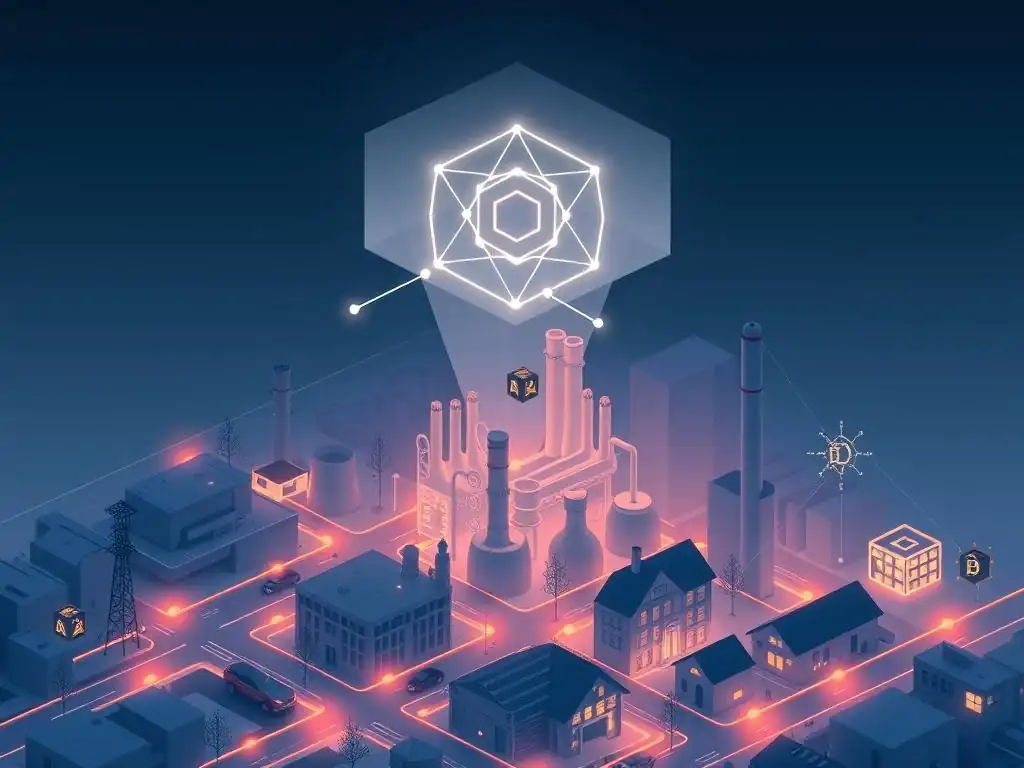
Supply Chain Management with Blockchain-Enabled IoT
Blockchain-enabled IoT is transforming supply chain management by providing unprecedented transparency, traceability, and efficiency. IoT sensors attached to goods, containers, or vehicles can record critical data points such as location, temperature, humidity, and shock events in real-time. This data is then immutably recorded on a blockchain ledger, often via a gateway or oracle. Participants in the supply chain – manufacturers, logistics providers, customs, retailers, and even consumers – can access this trusted, shared record based on their permissions.
Real-world examples include tracking high-value pharmaceuticals or sensitive food items. Companies like IBM (with Food Trust built on Hyperledger Fabric) and Maersk (with TradeLens, also on Hyperledger Fabric) have piloted solutions where sensor data is linked to blockchain transactions representing goods movement. This allows for instant verification of conditions (e.g., was the cold chain maintained? ), reduces disputes, speeds up customs processes, and enables faster identification of the source of issues, potentially saving millions in reduced waste and improved logistics.
Smart Agriculture and Precision Farming Applications
In smart agriculture, DApps powered by blockchain and IoT can enhance transparency, optimize resource usage, and improve food safety. IoT sensors monitor soil conditions, weather, crop health, and livestock vital signs. This data can be recorded on a blockchain, providing an immutable history of farming practices – from planting and fertilization to harvesting and transportation. Smart contracts can automate processes like triggering irrigation systems based on soil moisture data or managing payments to farmers based on verified yield data.
Projects are exploring using blockchain for provenance tracking of produce, allowing consumers to scan a QR code and see the entire history of their food item, including where and how it was grown, verified by IoT data on the ledger. This builds trust and supports premium pricing for sustainably or organically produced goods. Furthermore, decentralized insurance DApps could use verifiable IoT weather data on the blockchain to automatically trigger payouts to farmers in case of crop damage due to adverse conditions, streamlining the claims process.
Healthcare IoT: Secure and Decentralized Patient Monitoring
Blockchain and IoT offer a powerful combination for secure and privacy-preserving patient monitoring in healthcare. Wearable IoT devices can collect continuous patient data (heart rate, blood pressure, activity levels). Storing this sensitive data securely and sharing it appropriately among healthcare providers, patients, and potentially insurers is a major challenge under regulations like HIPAA.
A DApp architecture can use blockchain to manage patient consent and control access permissions for this IoT data, which is stored encrypted off-chain. Smart contracts can automate access based on predefined rules (e.g., grant temporary access to an emergency room doctor). The blockchain provides an immutable audit trail of who accessed the data and when. While still in early stages, pilots are exploring using blockchain for managing electronic health records (EHR) and secure sharing of data from remote patient monitoring devices, significantly enhancing data security and patient control over their information.
Smart City Infrastructure and Management using DApps
Smart cities rely heavily on vast networks of IoT devices monitoring everything from traffic flow and air quality to waste levels and energy consumption. Managing this complex infrastructure efficiently and securely requires robust, trustworthy systems. DApps can provide decentralized solutions for various city services, enabling automated, transparent interactions between different city systems and citizens.
Examples include decentralized energy grids where smart meters (IoT devices) record energy production and consumption on a blockchain, enabling peer-to-peer energy trading via smart contracts. Another application is decentralized waste management, where sensors in bins report fullness levels to a DApp that automates collection scheduling and payments based on verified service delivery recorded on the ledger. Blockchain provides the trusted layer for data sharing and automated processes across disparate city departments and private service providers.
Energy Management and Grid Optimization with Blockchain IoT
The energy sector is a prime candidate for blockchain and IoT integration, particularly in managing decentralized renewable energy sources and optimizing grid efficiency. Smart meters and IoT sensors in solar panels, wind turbines, and battery storage systems collect data on energy generation, consumption, and grid conditions. This data can be recorded on a blockchain to create a transparent and immutable record of energy flows.
DApps can facilitate peer-to-peer energy trading, allowing households with rooftop solar panels to sell excess energy directly to neighbors via smart contracts, bypassing traditional utilities for these specific transactions. Companies like Power Ledger have developed platforms enabling such energy trading markets. Blockchain also helps manage distributed energy resources (DERs) and microgrids more efficiently, ensuring grid stability and enabling automated demand-response mechanisms based on real-time, verifiable data from IoT sensors on the network.
Addressing Scalability Issues in IoT DApps
Layer-2 Scaling Solutions for Blockchain IoT Applications
To overcome the throughput limitations of main blockchains, Layer-2 scaling solutions are critical for high-volume blockchain IoT application development. These solutions process transactions off the main blockchain (Layer 1) and only settle the final state or results periodically on the main chain. Examples include payment channels (like Lightning Network for Bitcoin or Raiden for Ethereum), state channels, and optimistic or zero-knowledge rollups.
For IoT, Layer-2 solutions can handle millions of micro-transactions from devices (e.g., small data updates, micropayments) off-chain at high speed and low cost. Only summarized or aggregated transactions are then committed to the Layer 1 blockchain. This significantly reduces the load on the main chain and makes it economically feasible to process the vast amounts of data generated by IoT devices, enabling scalable IoT DApps.
Sharding is another scalability technique being explored for blockchain networks that could benefit IoT DApps. Sharding divides the blockchain network into smaller, more manageable segments called "shards." Each shard processes its own set of transactions and maintains its own state independently. This allows the network to process many transactions in parallel across different shards, dramatically increasing overall throughput.
While complex to implement, sharding could allow different sets of IoT devices or different types of IoT data streams to be processed on separate shards, increasing the transaction capacity of the underlying blockchain network. Ethereum 2.0 is implementing sharding as part of its upgrade path. For large-scale decentralized IoT networks, sharding could provide the necessary infrastructure to handle the immense volume of device interactions.
Off-Chain Data Processing for Increased Efficiency
Processing the vast majority of raw IoT data off-chain is a fundamental strategy for making blockchain-based IoT systems scalable and efficient. Not every single sensor reading needs to be immutably recorded on the blockchain. Instead, data can be processed, filtered, aggregated, or analyzed off-chain, closer to the data source (e.g., using edge computing).
Only critical events, aggregated summaries, or data hashes that need to be verified or trigger smart contract execution are sent to the blockchain. This reduces the amount of data stored on-chain and minimizes the number of transactions required, thereby lowering costs and increasing processing speed. Designing which data goes on-chain versus off-chain is a key architectural consideration in blockchain IoT application development.
Edge Computing Integration with Blockchain for IoT
Edge computing involves processing data closer to where it is generated – at the 'edge' of the network, often on the IoT device itself or a local gateway – rather than sending it all to a centralized cloud or blockchain node. Integrating edge computing with blockchain further enhances the scalability and efficiency of IoT DApps.
Edge devices can perform initial data processing, filtering out irrelevant data, aggregating readings, and performing local analysis. They can also execute lightweight blockchain operations like signing transactions or maintaining a partial state. This reduces the data volume sent over the network and the computational load on the main blockchain, enabling faster response times and more efficient use of network resources. Secure edge nodes can also act as mini-gateways, handling the interaction with the blockchain on behalf of less capable devices.
Security Best Practices for Blockchain-Based IoT Systems
Securing IoT Devices from Cyber Threats
Securing the IoT devices themselves is the first line of defense in a blockchain-based IoT system. Devices are often the most vulnerable component. Best practices include using secure boot processes to ensure only trusted firmware runs, implementing strong authentication mechanisms (certificates, secure element chips) instead of default passwords, and encrypting data stored on the device.
Regularly updating device firmware is crucial to patch known vulnerabilities – a challenge given the scale and distribution of IoT networks. Physical security measures are also important to prevent tampering or theft of devices that might hold cryptographic keys. Designing devices with security in mind from the ground up is paramount for robust blockchain IoT application development.
Smart Contract Security Audits for IoT DApps
Smart contracts are immutable once deployed, making security audits absolutely essential. Vulnerabilities in smart contracts can lead to significant financial losses or system failures. Before deploying smart contracts that manage critical IoT data or trigger valuable actions, they must undergo rigorous security audits by experienced third parties specializing in smart contract security.
Audits involve reviewing the code line by line, looking for common vulnerabilities (reentrancy attacks, integer overflows, access control issues), and testing the contract's behavior under various scenarios, including malicious inputs. Formal verification techniques, which use mathematical proofs to verify the correctness of code, are also increasingly used for critical smart contracts. Including security audits as a mandatory step in the blockchain IoT application development process is non-negotiable.
Data Encryption and Access Control in Decentralized IoT
Ensuring data privacy and security in decentralized IoT requires robust encryption and access control. Data collected by IoT devices, especially sensitive information, should be encrypted both in transit (using TLS/SSL) and at rest (in off-chain storage). Encryption ensures that even if data is intercepted or accessed without authorization, it remains unintelligible.
Access control mechanisms, often managed by smart contracts, determine which parties are authorized to decrypt and view specific sets of data. Permissions can be granted or revoked dynamically based on predefined rules or user actions recorded on the blockchain. Using decentralized key management systems can further enhance the security and resilience of the encryption and access control layers.
Identity Management and Authentication for IoT Devices
Securely managing the identities of potentially billions of IoT devices and authenticating their interactions with the blockchain is a significant challenge. Each device interacting with the blockchain needs a unique identity and a secure way to prove that identity when sending transactions or data. Public Key Infrastructure (PKI) using digital certificates is a common approach.
Blockchain can serve as a decentralized registry for device identities and public keys. Devices can use their private keys to sign transactions or data, allowing the smart contract or other network participants to verify the authenticity using the public key stored on the blockchain. Implementing robust device onboarding, key management, and revocation processes is crucial to prevent unauthorized devices from joining the network or compromised devices from interacting maliciously.
The Future of Decentralized IoT: Trends and Predictions
Emerging Technologies in Blockchain and IoT
The convergence of blockchain and IoT is still relatively nascent, and several emerging technologies are poised to accelerate its adoption. New blockchain platforms specifically designed for high throughput and low latency, potentially with built-in support for IoT data streams, are under development. Lightweight cryptographic algorithms and protocols tailored for resource-constrained IoT devices are also evolving.
Furthermore, advancements in decentralized identifiers (DIDs) and verifiable credentials could provide more robust and privacy-preserving ways for IoT devices and their owners to manage identities and share data permissions across different platforms and services. The development of secure hardware components, such as dedicated blockchain chips for IoT devices, could also significantly improve the security and efficiency of on-device cryptographic operations and transaction signing. These advancements will streamline future blockchain IoT application development efforts.
The Role of AI and Machine Learning in Decentralized IoT Systems
Artificial intelligence (AI) and machine learning (ML) have a significant role to play in future decentralized IoT systems. AI can be used at the edge or off-chain to process and analyze the massive amounts of data generated by IoT devices, identifying patterns, anomalies, and insights. These insights or predictions can then be used to trigger actions via smart contracts on the blockchain.
For example, ML models analyzing sensor data could detect potential equipment failures, and a smart contract could automatically order maintenance parts and schedule a technician, with the entire process recorded immutably. Furthermore, AI could potentially be used to optimize the operation of decentralized networks themselves, for instance, by predicting network congestion to route transactions more efficiently or identifying malicious device behavior. Combining the analytical power of AI/ML with the trust and automation capabilities of blockchain and IoT creates powerful possibilities.
Regulatory Landscape and Compliance for Blockchain IoT Applications
The regulatory landscape for both IoT and blockchain is still evolving, and their intersection adds another layer of complexity. Regulations concerning data privacy (like GDPR, CCPA), data security, device certification, and specific industry regulations (e.g., in healthcare, energy, finance) all apply. Blockchain's immutability can pose challenges for regulations requiring data deletion or modification.
Future trends will likely involve clearer guidelines and standards for blockchain IoT applications. This might include regulations around the legal status of smart contracts, data storage requirements for blockchain-recorded data, and compliance frameworks for decentralized identity systems used by devices. Developers undertaking blockchain IoT application development must stay abreast of these evolving regulations to ensure their applications are compliant.
The Evolution of DApp Architecture for IoT Environments
The architecture of DApps for IoT will continue to evolve to address current limitations and leverage new technologies. We can expect to see architectures that are even more distributed, with increased processing and intelligence pushed to the edge. Hybrid architectures combining public and permissioned blockchains or using Layer-2 solutions will become more common to balance decentralization, scalability, and cost.
Standardization of protocols for how IoT devices interact with blockchain networks and oracles will improve interoperability. Furthermore, the development of more user-friendly tools and frameworks will make blockchain IoT application development more accessible to a wider range of developers. The focus will be on creating resilient, secure, and highly scalable systems capable of supporting billions of interconnected devices operating autonomously and reliably.
Conclusion: Embracing the Potential of Blockchain and IoT Integration.
Frequently Asked Questions
What are the main benefits of using blockchain in IoT applications?
Blockchain brings enhanced security, data immutability, and increased transparency to IoT systems. This helps to address common vulnerabilities in traditional IoT architectures and fosters greater trust.
How does a DApp interact with IoT devices in a blockchain-integrated system?
DApps utilize smart contracts to define the logic for interacting with IoT devices. These contracts can automatically execute actions based on data received from the devices, triggering events and transactions.
What are some common challenges in Blockchain IoT application development?
Challenges include scalability limitations of some blockchains, device resource constraints, and ensuring data privacy within a decentralized environment. Careful architecture design is crucial.
What role does regulation play in the development of Blockchain IoT applications?
Regulatory frameworks are still evolving, impacting aspects like data governance, security standards, and compliance requirements for IoT devices and blockchain implementations. Businesses must stay informed.
Can you provide a simplified Blockchain IoT application development tutorial for beginners?
While a full tutorial is extensive, beginners should start with understanding smart contract development, choosing a suitable blockchain platform, and learning how to securely connect IoT devices to the blockchain network.
Final Reflection: Bridging the Physical and Digital Realms
The exploration of architecting DApps for IoT, as detailed in this article, underscores the critical intersection of blockchain technology and the Internet of Things. While the "Blockchain IoT application development tutorial" provided a practical roadmap, its true significance lies in its potential to revolutionize how we interact with the physical world, fostering greater transparency, security, and efficiency in countless applications. This isn't just about code; it's about building a more trustworthy and interconnected future.
The integration of decentralized technology with IoT has profoundly influenced, and continues to influence, the cultural and social landscape. The ability to create secure, tamper-proof data streams from IoT devices unlocks unprecedented opportunities for innovation across industries, from supply chain management to smart cities. The future of IoT lies in its ability to seamlessly integrate with blockchain technology, creating a decentralized ecosystem where trust and security are paramount.
This quote encapsulates the transformative power of this convergence, highlighting its potential to reshape our world in profound ways.
As you consider the possibilities outlined in this article, I invite you to reflect on how you can contribute to this exciting frontier. How can you leverage the power of blockchain and IoT to solve real-world problems, create innovative solutions, and build a more secure and transparent future? The journey of "Blockchain IoT application development" is not just a technical pursuit; it's an opportunity to shape the world around us. Embrace the challenge, explore the possibilities, and become an architect of the future.
Unleash the Potential: Your IoT Revolution Starts Now!
Thanks for exploring the exciting world of decentralized applications and the Internet of Things! You've uncovered the key concepts for building a more connected and secure future. Now, it's time to put that knowledge into practice and become a leader in this innovative field.
Here are some ways to get started:
- Begin prototyping your first IoT application, focusing on a small, achievable goal to gain practical experience.
- Explore existing open-source frameworks designed for IoT applications and contribute to the community by sharing your insights and improvements.
- Join industry forums and share a compelling use case for IoT applications that excites you the most—let's inspire innovation together!
What groundbreaking IoT application are you envisioning with the power of decentralized technology? Share your ideas in the comments below!
Leave a Reply