
Real Estate and Web3: The Decentralized Future of Property Ownership


Welcome to Blockchain Trends, where we delve into the transformative potential of blockchain technology that extends far beyond cryptocurrencies. Today, we invite you to explore the intriguing world of Blockchain Real Estate Investment Trusts. As we uncover how decentralized systems are reshaping property ownership, you’ll discover the revolutionary changes occurring in real estate through Web3. Are you ready to embark on a journey that could redefine how we invest in and own property? Join us as we unravel the future of real estate in the digital age!
Real Estate and Web3: The Decentralized Future of Property Ownership
- Introduction: Web3 and the Evolution of Real Estate
- Blockchain Technology's Impact on Real Estate Investment
- Smart Contracts: Automating and Securing Real Estate Transactions
- Decentralized Autonomous Organizations (DAOs) in Real Estate
- NFTs and the Future of Digital Real Estate Ownership
- Challenges and Considerations for Blockchain Real Estate
- The Potential of Blockchain Real Estate Investment Trust (REIT) in the Future
- Conclusion: Embracing the Decentralized Future of Property
-
Frequently Asked Questions
- What is a Blockchain Real Estate Investment Trust (REIT)?
- How does blockchain technology improve traditional REITs?
- What are the benefits of tokenizing real estate assets in a REIT?
- What are the current regulatory challenges facing Blockchain REITs?
- What is the future outlook for Blockchain REITs and the real estate industry?
- Final Reflection: Embracing the Decentralized Horizon
- Revolutionize Your Real Estate Vision!
Introduction: Web3 and the Evolution of Real Estate
Understanding Web3: The Foundation for Decentralized Property
Web3 represents the next evolution of the internet, moving towards decentralization, openness, and greater user utility. Built upon technologies like blockchain, smart contracts, and decentralized autonomous organizations (DAOs), Web3 aims to shift power from centralized entities back to individual users and communities. In the context of real estate, this translates to potential shifts in how properties are owned, managed, bought, and sold, moving away from traditional intermediaries like banks, brokers, and title companies.
This decentralized paradigm promises significant changes to the real estate landscape. By leveraging blockchain's immutable ledger, transactions can be recorded transparently and securely. Smart contracts can automate complex legal agreements, reducing reliance on manual processes and third parties. Furthermore, concepts like tokenization allow for fractional ownership, making real estate investment more accessible to a broader range of investors globally, potentially democratizing access to high-value assets previously out of reach.
The Current State of Real Estate: Challenges and Opportunities
The traditional real estate market, while stable, faces several inherent challenges. These include high transaction costs (often 5-6% in brokerage fees alone, plus legal and title expenses), lack of liquidity compared to other asset classes, opaque processes, and significant time delays in closing transactions (often taking 30-60 days or longer). These barriers limit participation and can make investing in real property cumbersome and expensive.
However, these challenges also present significant opportunities for technological disruption. The inefficiencies and high costs of the current system make it a prime candidate for innovation. Web3 technologies offer potential solutions to these problems by streamlining processes, reducing costs, increasing transparency, and creating new investment models. The global real estate market is vast, estimated to be worth hundreds of trillions of dollars, indicating the immense potential impact of even small efficiency gains brought about by Web3 adoption.
Blockchain Technology's Impact on Real Estate Investment
Tokenization of Real Estate Assets: A New Era of Fractional Ownership
Tokenization involves converting real-world assets, such as a piece of property or a share in a development, into digital tokens on a blockchain. Each token represents a verifiable, fractional ownership stake in the underlying asset. This process breaks down large, illiquid assets into smaller, more manageable units that can be easily bought, sold, and traded, similar to shares in a company. For instance, a property valued at $1 million could be represented by 1,000,000 tokens, each worth $1, allowing investors to purchase fractions of the property.
This fractionalization has profound implications for real estate investment. It lowers the entry barrier significantly, allowing individuals to invest with smaller amounts than traditionally required for a down payment or full purchase. This increased accessibility can attract a wider pool of investors, potentially increasing demand and liquidity for real estate assets. Furthermore, the blockchain provides a transparent and immutable record of ownership for each token, enhancing trust and reducing disputes over who owns what percentage of the asset.
Exploring Blockchain Real Estate Investment Trusts (REITs)
A Blockchain Real Estate Investment Trust (REIT) is an innovative structure that leverages blockchain technology to offer investments in real estate portfolios. Traditional REITs allow investors to buy shares in companies that own, operate, or finance income-producing real estate, providing a way to invest in real estate without the burdens of direct ownership. A blockchain real estate investment trust takes this concept further by tokenizing shares or fractional ownership of the properties held within the trust.
The primary difference lies in the underlying technology and structure. Instead of traditional shares traded on stock exchanges, a blockchain real estate investment trust issues security tokens on a blockchain. These tokens represent ownership in the trust's real estate holdings. This approach aims to combine the regulatory structure and income-generating potential of a traditional REIT with the advantages of blockchain, such as enhanced liquidity, transparency, and potentially lower administrative costs.
Benefits of Blockchain REITs: Increased Liquidity and Accessibility
One of the most significant advantages of a blockchain real estate investment trust is the potential for increased liquidity. Traditional real estate investments are notoriously illiquid; selling a property can take months. Tokenized shares in a blockchain REIT, however, can be traded on secondary digital asset marketplaces, offering investors the ability to buy and sell their stake much more quickly and easily, potentially within minutes or hours rather than months.
Beyond liquidity, blockchain REITs enhance accessibility. By lowering the minimum investment threshold through fractional ownership, they open up real estate investment opportunities to a global audience who might not have the capital or geographical access to invest in traditional properties or REITs. This democratization of access allows more people to participate in the wealth-building potential of real estate, while the blockchain provides a transparent ledger of all token transactions, increasing investor confidence in the ownership records and fund management.
Smart Contracts: Automating and Securing Real Estate Transactions
How Smart Contracts Simplify Property Management
Smart contracts are self-executing contracts with the terms of the agreement directly written into code. They reside on a blockchain and automatically execute when predefined conditions are met. In property management, smart contracts can automate various processes that are currently manual and time-consuming. For example, a smart contract could automatically release rental payments from a tenant's digital wallet to the landlord's wallet on a specific date, provided certain conditions (like successful identity verification) are met.
Further applications include automating maintenance requests and payments. A smart contract could be programmed to release funds to a verified contractor upon completion of a repair, triggered by a digital confirmation from the tenant or a property manager. This automation reduces administrative overhead, minimizes the potential for human error, and ensures timely execution of contractual obligations, leading to more efficient and potentially lower-cost property management operations.
Reducing Fraud and Enhancing Transparency with Blockchain
Blockchain technology inherently enhances transparency and reduces the potential for fraud in real estate transactions. Every transaction recorded on a public or permissioned blockchain is immutable and transparently viewable by authorized parties. This means that the entire history of a property's ownership, including all transfers and associated data, can be verified independently. This stands in stark contrast to traditional systems where records might be siloed, incomplete, or susceptible to manipulation.
By using blockchain for recording deeds and ownership (as explored in initiatives like the Republic of Georgia's pilot program with Bitfury in 2016, which registered over 100,000 land titles on blockchain), the risk of forged titles or fraudulent transfers is significantly reduced. Smart contracts can also enforce escrow agreements, automatically holding funds until all parties fulfill their obligations (like title transfer and property inspection sign-off), removing the need for a trusted third-party escrow agent and mitigating the risk of funds being released prematurely or fraudulently.
Decentralized Autonomous Organizations (DAOs) in Real Estate
DAOs: Democratizing Real Estate Investment Decisions
Decentralized Autonomous Organizations (DAOs) are organizations whose rules are encoded as a computer program that is transparent, controlled by the organization members, and not influenced by a central government. In real estate, DAOs can be formed to pool capital for property acquisition and collectively govern the management and disposition of those assets. Members of a real estate DAO typically hold tokens that grant them voting rights proportional to their stake.
This structure allows for a more democratic approach to real estate investment decisions. Instead of a small group of fund managers or executives making all the choices, major decisions—such as which properties to buy, sell, or develop, or how to manage rental income—can be put to a vote among the token holders. This model aligns the interests of the investors directly with the operational decisions of the real estate portfolio, fostering greater transparency and community involvement in the investment process.
Case Study: The RealT DAO – Tokenizing Detroit Properties for Global Investors
RealT provides a compelling real-world example of a DAO structure applied to real estate. RealT tokenizes individual U.S. properties, primarily in Detroit, Michigan, and offers these tokens to global investors. Each token represents fractional, deeded ownership in a specific property, stored on the Gnosis Chain (formerly xDai). Investors receive rental income distribution directly to their digital wallets, proportional to their token holdings.
RealT has also implemented a DAO, known as the RealT DAO or RMM (RealT Management Marketplace), allowing token holders to vote on property-level decisions. For instance, token holders for a specific property might vote on whether to approve a major repair, select a property manager, or even decide on the sale of the property. This model has allowed RealT to attract a diverse pool of over 10,000 investors from more than 140 countries, demonstrating the global reach and community governance potential of DAOs in real estate.
NFTs and the Future of Digital Real Estate Ownership
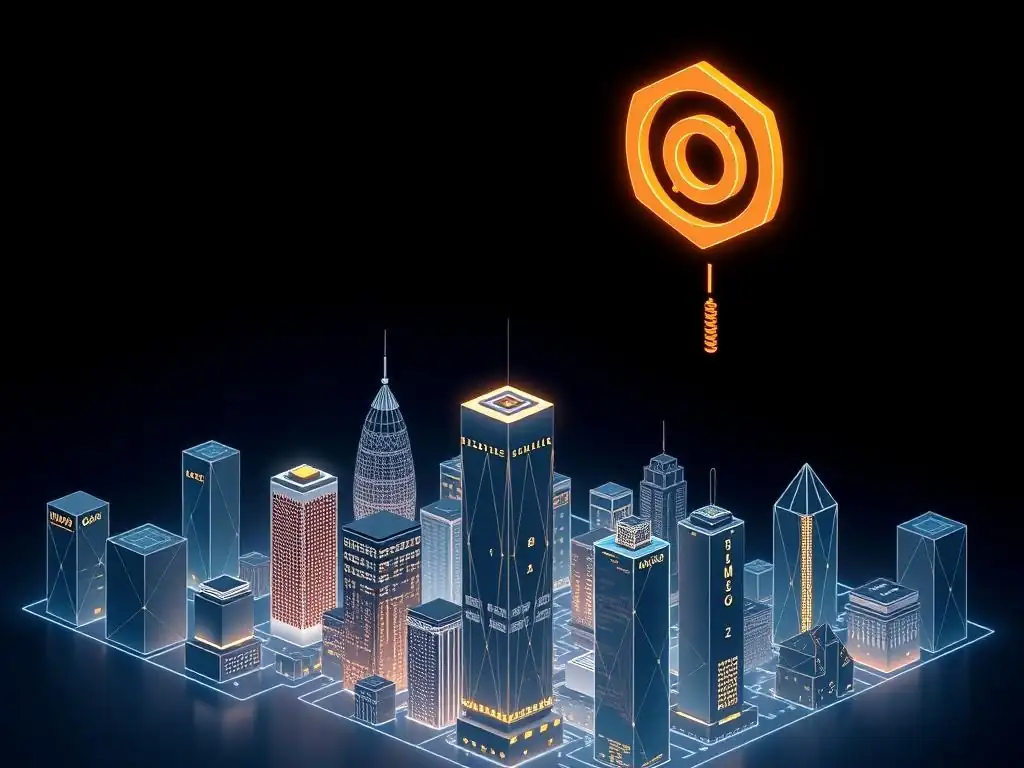
Representing Property Rights with Non-Fungible Tokens (NFTs)
While security tokens are used for fractional ownership of physical real estate assets (like a blockchain real estate investment trust might use), Non-Fungible Tokens (NFTs) can represent unique, indivisible assets or rights. In real estate, an NFT could potentially represent the deed or title to an entire property. Each NFT would be unique and cryptographically linked to a specific physical address, serving as a digital certificate of ownership recorded on the blockchain.
The potential of using NFTs for property titles lies in streamlining the transfer process. Instead of navigating complex, multi-step traditional closing procedures involving paper deeds and multiple intermediaries, transferring ownership could, in theory, become as simple as transferring an NFT from one digital wallet to another, subject to legal and regulatory frameworks catching up. This could drastically reduce transaction times and costs, though significant legal and technical hurdles remain before this becomes commonplace for physical property.
Metaverse Real Estate: Virtual Land and Its Potential in Decentraland and The Sandbox
Beyond physical property, NFTs are already the primary means of ownership for virtual land in metaverse platforms. Projects like Decentraland and The Sandbox have created digital worlds where users can buy, develop, and monetize parcels of virtual land, represented as NFTs. These virtual land parcels have real-world value, with transactions recorded and verified on blockchains, typically Ethereum.
The market for metaverse real estate saw significant growth, particularly in 2021 and early 2022, with individual parcels selling for hundreds of thousands or even millions of dollars. While highly speculative, this trend demonstrates the potential for blockchain technology (specifically NFTs) to create and manage ownership rights over digital assets that resemble real-world property. It also highlights the emergence of entirely new forms of "real estate" investment facilitated by Web3 technologies, distinct from traditional physical property or a blockchain real estate investment trust.
Challenges and Considerations for Blockchain Real Estate
Regulatory Hurdles and Legal Frameworks
One of the most significant challenges for the widespread adoption of blockchain in real estate is the lack of clear and consistent regulatory frameworks. Real estate is heavily regulated at local, national, and international levels, with complex laws governing property ownership, transfers, land use, and investment structures like REITs. Integrating blockchain and tokenization requires legal clarity on how digital tokens are classified (e.g., as securities, property, or something new) and how blockchain-based transfers interact with existing land registry systems.
Jurisdictions around the world are in various stages of addressing these issues. Some, like Dubai, have explored blockchain for land registration, while others are taking a more cautious approach. For a blockchain real estate investment trust to operate effectively and legally, it must navigate diverse securities regulations (like those from the SEC in the U.S.) and property laws, which were not designed with decentralized digital assets in mind. Establishing legal certainty is crucial for attracting institutional investment and ensuring consumer protection.
Security Risks and Mitigation Strategies
While blockchain is often lauded for its security, the broader ecosystem faces risks. Smart contract vulnerabilities, for instance, have led to significant losses in other Web3 sectors. If a smart contract governing property rights or fund distribution in a real estate tokenization project or blockchain real estate investment trust contains a bug, it could be exploited, potentially leading to loss of assets or control.
Mitigation strategies involve rigorous smart contract auditing by independent security firms before deployment. Secure key management is also paramount; loss or compromise of private keys controlling digital wallets holding property tokens or associated funds could lead to irreversible loss. Implementing multi-signature wallets and robust cybersecurity practices is essential. Furthermore, integrating with the physical world requires secure processes for verifying real-world identity and property ownership, bridging the gap between the digital token and the physical asset it represents.
Scalability Issues and Potential Solutions
Some blockchain networks, particularly older ones like Ethereum (prior to its move to Proof-of-Stake), have faced scalability issues, resulting in high transaction fees (gas costs) and slow processing times during periods of high network congestion. While significant improvements have been made (e.g., Ethereum's upgrades, Layer 2 solutions), processing the potentially massive volume of transactions required for a global real estate market could still strain network capacity.
Solutions being explored include using more scalable blockchain platforms designed for higher transaction throughput (like Solana, Algorand, or enterprise-grade blockchains), implementing Layer 2 scaling solutions (like rollups on Ethereum), and optimizing smart contract design to minimize computational complexity and cost. For a blockchain real estate investment trust dealing with potentially frequent token trades or rental income distributions, efficient and cost-effective transaction processing is a critical technical requirement.
The Potential of Blockchain Real Estate Investment Trust (REIT) in the Future
Predictions for the Adoption of Web3 in Real Estate
Predictions vary, but there is a general consensus that Web3 technologies will increasingly impact the real estate sector over the next decade. Early adoption is likely to focus on specific niches and processes where the benefits of efficiency and transparency are most pronounced, such as fractional ownership, streamlined property management, and potentially cross-border transactions where traditional systems are particularly complex.
Experts suggest that while full tokenization of all property titles may be a long-term goal, the growth of tokenized real estate assets and structures like the blockchain real estate investment trust is more immediate. Consultancy firms have projected significant growth in the tokenized real estate market. For instance, a report by MarketsandMarkets in 2021 projected the global security tokenization market to grow from USD 2.3 billion in 2020 to USD 24.1 billion by 2026, with real estate expected to be a major driver of this growth.
Blockchain Real Estate: A Paradigm Shift in Property Ownership
The integration of blockchain and Web3 is not just an incremental improvement; it represents a potential paradigm shift in how property ownership is perceived and managed. It moves towards a system that is potentially more transparent, more liquid, more accessible, and more efficient than the traditional model. By enabling fractional ownership through tokens and streamlining transactions via smart contracts, blockchain can fundamentally alter who can invest in real estate and how quickly and cheaply transactions can occur.
Consider the impact on global investment. An investor in Southeast Asia could easily purchase fractional ownership in a property portfolio in Europe or a blockchain real estate investment trust holding assets in the Americas, diversifying their portfolio with unprecedented ease. This democratization of access and increased global liquidity could unlock significant value in the real estate market, making it a truly global and more dynamic asset class.
Conclusion: Embracing the Decentralized Future of Property
Key Takeaways: The Transformative Power of Web3 in Real Estate
Web3 technologies, powered by blockchain, hold immense potential to transform the real estate industry. Key takeaways include the ability of tokenization to enable fractional ownership, lowering investment barriers and increasing liquidity. Smart contracts offer automation and enhanced security for transactions and property management. DAOs can democratize investment decisions, allowing communities of token holders to govern real estate assets. Furthermore, concepts like the blockchain real estate investment trust offer novel structures for pooled investment with improved accessibility and liquidity compared to traditional models.
While challenges related to regulation, security, and scalability remain, the progress already made in areas like tokenized property platforms and metaverse real estate demonstrates the tangible impact of Web3. The future of real estate is increasingly likely to involve decentralized technologies, offering a more efficient, transparent, and globally accessible market for property ownership and investment.
The Future of Real Estate: Decentralization and Innovation
The trajectory of real estate is clearly pointing towards greater integration with digital technologies, with Web3 at the forefront of this evolution. As regulatory frameworks mature, technology becomes more robust and user-friendly, and real-world adoption increases, the vision of a decentralized real estate market becomes more attainable. Structures like the blockchain real estate investment trust are likely to become more common, offering new avenues for investors to participate in the market.
The journey towards a fully decentralized real estate ecosystem is ongoing, requiring collaboration between technologists, regulators, real estate professionals, and investors. However, the foundation is being laid for a future where property ownership and investment are more open, accessible, and efficient, fundamentally changing the landscape of one of the world's oldest and largest asset classes through the power of blockchain and Web3 innovation.
Frequently Asked Questions
What is a Blockchain Real Estate Investment Trust (REIT)?
A Blockchain REIT is a real estate investment trust that leverages blockchain technology to streamline operations, enhance transparency, and potentially offer fractional ownership of properties through tokenization.
How does blockchain technology improve traditional REITs?
Blockchain offers enhanced security and transparency through its immutable ledger, reduces transaction costs by eliminating intermediaries, and enables fractional ownership through tokenization, making REITs more accessible.
What are the benefits of tokenizing real estate assets in a REIT?
Tokenization allows for fractional ownership, making real estate investment more accessible to smaller investors. It also improves liquidity by facilitating easier trading of tokens and enhances transparency in asset management.
What are the current regulatory challenges facing Blockchain REITs?
Regulatory frameworks for tokenized securities are still evolving globally. Compliance with existing securities laws and varying regional regulations present significant hurdles for the widespread adoption of Blockchain REITs.
What is the future outlook for Blockchain REITs and the real estate industry?
The future holds potential for increased efficiency and democratization of real estate investment. Wider adoption hinges on regulatory clarity, technological advancements, and increased investor awareness of the benefits of blockchain.
Final Reflection: Embracing the Decentralized Horizon
The exploration of Blockchain Real Estate Investment Trusts (REITs) reveals more than just a technological innovation; it unveils a fundamental shift in how we perceive and interact with property ownership. The potential for increased transparency, fractional ownership, and global accessibility is not a futuristic fantasy, but a tangible possibility reshaping the real estate landscape even now. This convergence of real estate and Web3 promises to democratize investment opportunities and empower individuals in unprecedented ways.
The impact of this decentralized approach extends far beyond mere financial transactions. It challenges traditional power structures within the real estate industry and fosters a more inclusive ecosystem. The ability to participate in property ownership, regardless of geographical location or financial status, is a powerful force for social and economic equity. As the saying goes: The future is already here – it's just not evenly distributed.
This sentiment underscores the urgency of understanding and embracing the potential of Blockchain REITs to bridge the gap and create a more equitable future for all.
Now, as you consider the possibilities presented by Blockchain REITs, I invite you to reflect on your own role in shaping this decentralized future. How can you leverage this technology to empower yourself and others? How can you contribute to a more transparent and accessible real estate market? The future of property ownership is being written now, and your understanding and engagement will play a crucial role in defining its trajectory. Embrace the opportunity to learn, innovate, and build a future where real estate truly belongs to everyone.
Revolutionize Your Real Estate Vision!
Thank you for exploring the innovative intersection of real estate and Web3 with us. We hope you've gained valuable insights into the potential of decentralized property ownership. Now, it's time to turn that knowledge into action:
- Begin researching fractional ownership platforms: Explore the available options and find one that matches your investment goals. This is your first step toward experiencing the future of real estate firsthand.
- Join Web3 communities focused on property. Engage in discussions, learn from others, and discover opportunities for collaboration.
- Consider how you would design a Web3 real estate platform to solve current industry challenges. Share your ideas!
What is one small step you can take today to start exploring the decentralized future of real estate?
Leave a Reply