
Virtual Machine Vanguard: EVM vs. WASM – The Engine Room of Ethereum and Polkadot


Welcome to Blockchain Trends, your guide to navigating the ever-evolving landscape of decentralized innovation.
Ever wondered what truly powers the engine room of blockchain technology? In this article, we delve into a crucial comparison: the Ethereum Virtual Machine (EVM) and its potential successor, WASM (WebAssembly). Discover how these virtual machines shape the functionality and future of platforms like Ethereum and Polkadot, and uncover the key differences that could redefine the entire blockchain ecosystem. Intrigued? Keep reading to unlock the secrets of this vital technological battleground!
Virtual Machine Vanguard: EVM vs. WASM – The Engine Room of Ethereum and Polkadot
- Introduction: Understanding Virtual Machines in Blockchain Ecosystems
- Ethereum Virtual Machine (EVM): The Foundation of Ethereum
- WebAssembly (WASM): A New Paradigm for Blockchain Virtual Machines
- EVM vs. WASM: A Detailed Comparison
- The Shift Towards WASM in Blockchain: Polkadot's Approach
- Ethereum's Response: EVM Evolution and WASM Integration
- Use Cases and Applications: EVM and WASM in Action
- The Future of Virtual Machines in Blockchain: Predictions and Trends
- Conclusion: Choosing the Right Engine for Your Blockchain Application
-
Frequently Asked Questions
- What is the Ethereum Virtual Machine (EVM) and why is it important?
- What is WebAssembly (WASM) and how does it relate to blockchain technology?
- How does the performance of EVM compare to WASM in blockchain applications?
- What are the key advantages and disadvantages of using EVM versus WASM for smart contract development?
- What is the potential future of EVM and WASM in the blockchain space, particularly concerning interoperability?
- Final Reflection: Bridging Chains, Building Futures
- Ignite Your Blockchain Journey: Discover the Power Within!
Introduction: Understanding Virtual Machines in Blockchain Ecosystems
The Critical Role of Virtual Machines in Decentralized Applications
Virtual Machines (VMs) are the unsung heroes of blockchain technology, acting as the computational engines that power decentralized applications (dApps) and smart contracts. In essence, a VM provides a secure and isolated environment where code can be executed deterministically across a distributed network of nodes. This determinism is paramount in blockchain, ensuring that every node in the network arrives at the same result when executing a transaction, maintaining consensus and the integrity of the ledger.
Without VMs, blockchains would be mere databases, lacking the crucial functionality to process complex logic and enable the rich ecosystem of decentralized applications we see today. They abstract away the complexities of the underlying hardware and operating systems, allowing developers to write smart contracts in higher-level languages and deploy them across diverse blockchain networks.
The significance of VMs extends beyond simple code execution. They are instrumental in managing state transitions within the blockchain. When a smart contract is executed, the VM updates the blockchain's state based on the contract's logic and input data. This state management is critical for tracking balances, ownership, and other vital information within the decentralized system.
Furthermore, VMs play a crucial role in security. By operating in a sandboxed environment, they prevent malicious or poorly written smart contracts from compromising the entire blockchain network. This isolation is a cornerstone of blockchain security, protecting the network from unintended consequences and vulnerabilities in smart contract code. The efficiency and capabilities of the VM directly impact the scalability, security, and overall functionality of a blockchain platform.
Ethereum and Polkadot: A Tale of Two Blockchains
Ethereum and Polkadot represent two distinct yet highly influential approaches to blockchain technology, each with its own philosophy and architectural design. Ethereum, the pioneer of smart contract platforms, introduced the Ethereum Virtual Machine (EVM) and popularized the concept of decentralized applications. Its success has fostered a vast ecosystem of DeFi, NFTs, and various other dApps, making it the leading platform for blockchain innovation. Ethereum's strength lies in its first-mover advantage, its large community of developers, and its established network effects. However, it has also faced challenges related to scalability and transaction fees, particularly during periods of high network activity.
Polkadot, on the other hand, emerged as a next-generation blockchain platform designed to address some of the limitations of earlier blockchains like Ethereum. Conceived by Dr. Gavin Wood, a co-founder of Ethereum, Polkadot emphasizes interoperability and scalability through its unique parachain architecture. Unlike Ethereum's monolithic design, Polkadot operates as a network of interconnected blockchains, known as parachains, that are secured by a central Relay Chain.
Polkadot made a significant architectural decision by adopting WebAssembly (WASM) as its smart contract execution environment, diverging from Ethereum's EVM. This choice reflects Polkadot's focus on performance, flexibility, and future-proofing its platform. The contrasting choices of EVM and WASM by Ethereum and Polkadot highlight different priorities and technological visions for the future of blockchain technology.
EVM vs. WASM: Why This Matters
The choice between the Ethereum Virtual Machine (EVM) and WebAssembly (WASM) as the virtual machine for a blockchain platform is not merely a technical detail; it is a fundamental architectural decision with far-reaching implications. This decision impacts everything from the performance and security of smart contracts to the developer experience and the overall ecosystem's growth potential. Understanding the nuances of EVM and WASM is crucial for developers, blockchain architects, and anyone seeking to grasp the underlying technology driving decentralized applications.
The performance characteristics of a VM directly influence transaction throughput and gas costs, affecting the scalability and usability of the blockchain. Security vulnerabilities in the VM can expose the entire network to risks, necessitating robust and well-vetted virtual machine designs.
Moreover, the choice of VM dictates the programming languages and development tools available to smart contract developers. EVM's dominance initially led to the widespread adoption of Solidity, while WASM opens the door to a broader range of languages like Rust, C++, and Go. This language diversity can significantly impact developer productivity and the accessibility of blockchain development.
The debate between EVM and WASM is not just about comparing two technologies in isolation; it is about understanding the trade-offs and strategic choices that shape the evolution of blockchain platforms. As blockchain technology matures and seeks wider adoption, the efficiency, security, and developer-friendliness of the underlying virtual machines will become increasingly critical factors in determining the success and long-term viability of different blockchain ecosystems.
Ethereum Virtual Machine (EVM): The Foundation of Ethereum
EVM Architecture: A Deep Dive
The Ethereum Virtual Machine (EVM) is a stack-based, 256-bit virtual machine designed specifically for the Ethereum blockchain. Its architecture is intentionally simplified to ensure deterministic execution across a decentralized network. Being stack-based means that the EVM uses a stack data structure for computation, where operations are performed on the top items of the stack.
This design choice, while contributing to determinism, can sometimes lead to less efficient code execution compared to register-based VMs used in traditional computing. The 256-bit word size of the EVM is another key architectural feature, chosen to accommodate the cryptographic operations and address sizes prevalent in blockchain applications.
The EVM operates within a sandboxed environment, meaning it has limited access to the external world and the underlying node's resources. This isolation is crucial for security, preventing smart contracts from interfering with the node's operating system or other processes. The EVM's execution model is based on gas, a unit of computation that measures the computational effort required to execute operations.
Each operation in the EVM has a predefined gas cost, and users must pay gas to execute smart contracts. This gas mechanism serves as a deterrent against denial-of-service attacks and incentivizes efficient contract coding. The EVM's architecture, though initially designed for Ethereum, has become a de facto standard in the blockchain space, with numerous other blockchains adopting or emulating the EVM to leverage its established ecosystem and tooling.
Smart Contract Execution on the EVM
Smart contract execution on the EVM follows a precise and deterministic process. When a transaction invoking a smart contract is submitted to the Ethereum network, it is propagated to all nodes. Each node then executes the smart contract code within its own EVM instance. The EVM interprets the bytecode of the smart contract, which is typically compiled from high-level languages like Solidity.
The execution proceeds step-by-step, with each operation consuming a specific amount of gas. The EVM maintains the state of the Ethereum blockchain, including account balances, contract storage, and other relevant data. As the contract executes, the EVM modifies this state according to the contract's logic.
Determinism is a core principle of EVM execution. For the same input and initial state, the EVM will always produce the same output and resulting state, regardless of the node executing the contract. This determinism is essential for maintaining consensus across the decentralized network. If different nodes produced different results, the blockchain would quickly become inconsistent and unusable.
The EVM achieves determinism through its carefully defined instruction set and execution environment, ensuring that all operations are predictable and reproducible. Once a transaction is executed and validated by the network, the state changes are permanently recorded on the blockchain, making the execution results immutable and auditable. This process forms the bedrock of trust and reliability in Ethereum's smart contract platform.
EVM Limitations: Scalability and Security Challenges
Despite its pivotal role in the blockchain ecosystem, the EVM is not without its limitations, particularly in terms of scalability and security. Scalability challenges arise from the EVM's design and Ethereum's global consensus mechanism. Every transaction on Ethereum, including smart contract executions, must be processed by every full node in the network.
This "world computer" approach, while ensuring high security and decentralization, inherently limits transaction throughput. The EVM's stack-based architecture and 256-bit word size, while contributing to determinism, can also be less performant compared to more modern virtual machine designs when handling complex computations. As the Ethereum network grew in popularity, these scalability bottlenecks became increasingly apparent, leading to high gas fees and slower transaction processing times, especially during periods of network congestion.
Security concerns related to the EVM have also been a recurring theme. While the EVM's sandboxed environment provides a degree of protection, vulnerabilities in smart contract code, and sometimes in the EVM itself, have led to significant security breaches. The DAO hack in 2016, for example, exploited a reentrancy vulnerability in a smart contract deployed on the EVM, resulting in the theft of millions of dollars worth of Ether.
While this was primarily a smart contract vulnerability, it highlighted the need for more robust security practices and potentially more secure virtual machine designs. Furthermore, the complexity of Solidity and the EVM bytecode can make auditing smart contracts challenging, increasing the risk of undetected vulnerabilities. These scalability and security limitations have motivated the search for alternative virtual machine technologies and architectural improvements for blockchain platforms, paving the way for the exploration of WASM and other solutions.
WebAssembly (WASM): A New Paradigm for Blockchain Virtual Machines
What is WebAssembly (WASM)? Origins and Evolution
WebAssembly (WASM) is a binary instruction format for a stack-based virtual machine, initially designed as a compilation target for web browsers to enable near-native performance for web applications. Unlike JavaScript, which is interpreted at runtime, WASM code is pre-compiled into bytecode that can be executed much faster by web browsers. WASM's origins lie in the need to bridge the performance gap between web applications and native desktop applications, enabling richer and more complex web experiences. Its development was a collaborative effort involving major browser vendors like Mozilla, Google, Microsoft, and Apple, ensuring broad industry support and standardization.
Over time, WASM's potential extended beyond web browsers. Its key features – performance, portability, security, and language neutrality – made it an attractive technology for various other use cases, including server-side applications, embedded systems, and, significantly, blockchain technology. WASM's portability stems from its platform-agnostic design; it can run on different operating systems and hardware architectures. Its security is enhanced by its sandboxed execution environment, similar to the EVM, preventing malicious code from accessing system resources.
Furthermore, WASM's language neutrality is a major advantage. It is not tied to a specific programming language; compilers can be built to target WASM from languages like C, C++, Rust, Go, and many others, offering developers greater flexibility in choosing their preferred development tools. This evolution from a browser technology to a general-purpose virtual machine has positioned WASM as a compelling alternative to the EVM in the blockchain space.
WASM's Advantages: Performance, Portability, and Security
WebAssembly (WASM) offers several compelling advantages over the Ethereum Virtual Machine (EVM) and other earlier virtual machine designs, making it an increasingly attractive choice for blockchain platforms. Performance is a key differentiator. WASM's design emphasizes speed and efficiency. Being a binary format and designed for ahead-of-time compilation (though it can also be just-in-time compiled), WASM code generally executes much faster than EVM bytecode, which is interpreted. Benchmarks have shown WASM achieving execution speeds significantly closer to native code performance, potentially leading to higher transaction throughput and lower gas costs in blockchain networks.
Portability is another significant advantage. WASM is designed to be platform-independent, meaning that WASM code can run consistently across different operating systems and hardware architectures without modification. This portability simplifies cross-platform development and deployment, making it easier to build blockchain applications that can run on diverse node infrastructures. Security is also a core strength of WASM.
It operates within a secure, sandboxed environment, isolating smart contract execution and preventing malicious code from compromising the host system or other contracts. WASM's security model is constantly being refined and benefits from the scrutiny of the web browser security community, further enhancing its robustness. These combined advantages of performance, portability, and security position WASM as a powerful and versatile virtual machine for the next generation of blockchain platforms.
WASM and Blockchain: A Natural Fit
The characteristics of WebAssembly (WASM) align remarkably well with the requirements of blockchain technology, making it a natural fit for powering decentralized applications and smart contracts. WASM's performance advantage directly addresses the scalability challenges faced by many blockchains. Faster execution times translate to higher transaction processing capacity, enabling blockchains to handle a greater volume of transactions without significant performance degradation.
This is crucial for supporting mass adoption and complex decentralized applications that demand high throughput. WASM's portability simplifies the deployment and operation of blockchain nodes. The ability to run WASM code consistently across different platforms reduces the complexity of managing a heterogeneous network of nodes, which is often the reality in decentralized systems.
Furthermore, WASM's language neutrality is a significant boon for blockchain development. By supporting multiple programming languages, WASM broadens the pool of developers who can contribute to the blockchain ecosystem. Developers are no longer limited to niche smart contract languages like Solidity; they can use familiar and widely adopted languages like Rust, C++, and Go, along with their existing toolchains and expertise. This increased accessibility can accelerate innovation and attract a wider range of talent to the blockchain space.
The security features of WASM, inherited from its browser-centric design, are also paramount for blockchain, where security is paramount. The sandboxed execution environment and ongoing security enhancements make WASM a robust foundation for building secure and reliable decentralized applications. In essence, WASM addresses many of the limitations of earlier blockchain virtual machines and provides a powerful platform for building more scalable, versatile, and developer-friendly blockchain ecosystems.
EVM vs. WASM: A Detailed Comparison
Performance Benchmarks: EVM vs. WASM Execution Speed
When comparing the performance of the Ethereum Virtual Machine (EVM) and WebAssembly (WASM), benchmarks consistently demonstrate WASM's superior execution speed. In controlled environments, WASM often exhibits performance several times faster than the EVM for computationally intensive tasks. For example, cryptographic operations, which are common in blockchain applications, execute significantly faster in WASM compared to the EVM.
While precise figures vary depending on the specific benchmark and implementation, studies have indicated performance improvements ranging from 2x to 50x in favor of WASM for certain types of computations. This performance difference stems from WASM's optimized binary format and its design for near-native execution speed, contrasting with the EVM's interpreted bytecode and stack-based architecture.
Real-world blockchain performance is complex and influenced by factors beyond just VM execution speed, such as network latency, consensus mechanisms, and data access patterns. However, a faster VM like WASM can contribute to overall network scalability by reducing the computational bottleneck of smart contract execution. For instance, Polkadot, which utilizes WASM, aims for significantly higher transaction throughput compared to Ethereum.
While direct comparisons are challenging due to different architectural designs, the choice of WASM as the execution engine is a key factor in Polkadot's performance aspirations. Ethereum's ongoing efforts to improve scalability, including layer-2 solutions and potential EVM upgrades, also implicitly acknowledge the need for enhanced performance beyond the current EVM capabilities. The performance gap between EVM and WASM highlights a significant advantage for WASM-based blockchains, particularly for applications demanding high computational throughput.
Security Considerations: Vulnerabilities and Mitigation Strategies
Both the Ethereum Virtual Machine (EVM) and WebAssembly (WASM) employ sandboxed environments to enhance security, but they have different security characteristics and histories. The EVM, being a mature technology, has undergone extensive security scrutiny and has a well-understood security model. However, its complexity and the nature of Solidity, the primary language used for EVM smart contracts, have contributed to various security vulnerabilities in deployed dApps.
Reentrancy attacks, integer overflows, and other common smart contract vulnerabilities have been exploited on the EVM, leading to significant financial losses. Mitigation strategies for EVM-based smart contracts often involve rigorous auditing, formal verification, and the use of security best practices in smart contract development.
WASM, while newer in the blockchain context, also benefits from a strong security focus, partly due to its origins in web browsers, where security is paramount. WASM's sandboxing is designed to prevent memory corruption and unauthorized access to system resources. Furthermore, the availability of languages like Rust for WASM development offers advantages in terms of memory safety and reduced risk of common vulnerabilities like buffer overflows. However, WASM is not immune to security issues.
Vulnerabilities can still arise in smart contract logic or in the WASM virtual machine implementation itself. As WASM gains wider adoption in blockchain, ongoing security research and community vigilance are crucial to identify and mitigate potential risks. Both EVM and WASM require careful attention to security best practices in smart contract development and continuous monitoring for vulnerabilities in the virtual machine implementations to ensure the safety of blockchain applications.
Development Ecosystem: Languages and Tooling Support
The development ecosystem around the Ethereum Virtual Machine (EVM) is mature and extensive, largely due to Ethereum's first-mover advantage and widespread adoption. Solidity is the dominant language for EVM smart contract development, and it benefits from a rich set of tools, including compilers, IDEs (Integrated Development Environments) like Remix and Truffle, testing frameworks, and debugging tools. The Ethereum developer community is large and active, providing ample resources, tutorials, and support for developers learning to build on the EVM. This established ecosystem is a significant advantage for developers choosing to build on EVM-compatible blockchains.
WebAssembly (WASM), while newer to the blockchain space, is rapidly developing its ecosystem. One of WASM's key strengths is its language neutrality, allowing developers to use a wider range of programming languages. Rust is gaining significant traction for WASM-based smart contract development, particularly within the Polkadot ecosystem, and it offers excellent tooling and strong memory safety features. Other languages like C++, C, and Go can also be used to target WASM.
Tooling for WASM in blockchain is evolving quickly, with frameworks like Substrate (for Polkadot) providing comprehensive development environments. While the WASM blockchain ecosystem is still maturing compared to the EVM ecosystem, its flexibility in language support and growing community are attracting increasing developer interest and investment. The choice between EVM and WASM development ecosystems often depends on developer preferences, project requirements, and the desired programming languages and tools.
Smart Contract Language Support: Solidity vs. Rust
The primary smart contract language for the Ethereum Virtual Machine (EVM) is Solidity, a language specifically designed for developing smart contracts on Ethereum. Solidity is a high-level, statically typed, contract-oriented programming language that resembles JavaScript and C++. While Solidity is purpose-built for EVM and has a large community and extensive tooling, it has also been criticized for its complexity and some of its design choices that can contribute to security vulnerabilities if not handled carefully. The learning curve for Solidity can be steep for developers unfamiliar with blockchain concepts and its specific syntax and semantics.
WebAssembly (WASM) offers a fundamentally different approach to smart contract language support. Instead of being tied to a single, specialized language, WASM is designed to be a compilation target for multiple languages. Rust has emerged as a leading language for WASM smart contract development in blockchain platforms like Polkadot.
Rust is a systems programming language known for its performance, memory safety, and strong concurrency features. Using Rust for WASM smart contracts offers advantages in terms of security, performance, and developer productivity for those familiar with Rust. However, learning Rust can also be challenging for developers without prior experience in systems programming languages.
Beyond Rust, WASM also supports other languages like C++, C, and Go, providing developers with greater flexibility in choosing languages they are already proficient in or that best suit their project needs. The language landscape for EVM is largely dominated by Solidity, while WASM offers a more diverse and evolving set of language options, with Rust currently being a prominent choice.
The Shift Towards WASM in Blockchain: Polkadot's Approach
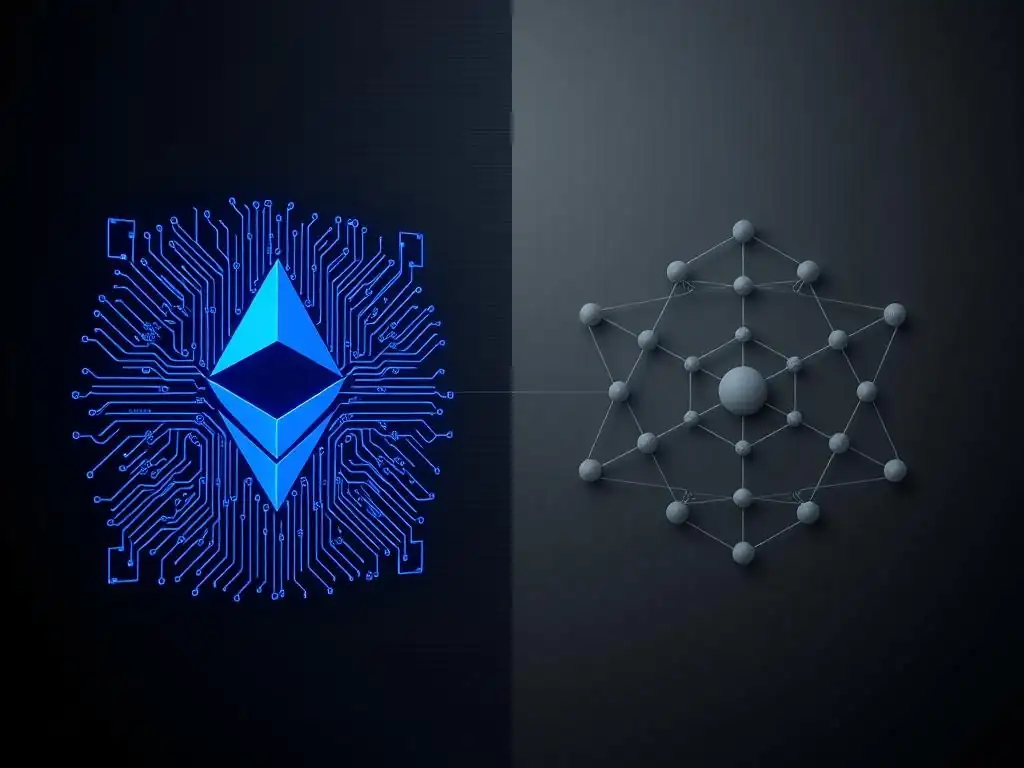
Polkadot's Parachain Architecture: Embracing WASM
Polkadot's architecture is fundamentally designed around interoperability and scalability, and its embrace of WebAssembly (WASM) is a key strategic decision to achieve these goals. Polkadot is not a single monolithic blockchain like Ethereum; instead, it is a network of interconnected blockchains called parachains, all secured by a central Relay Chain. Each parachain can be customized and optimized for specific use cases, and they can communicate and transact with each other through Polkadot's cross-chain messaging system. This parachain architecture inherently promotes scalability by distributing transaction processing across multiple chains, rather than burdening a single chain with all network activity.
WASM plays a crucial role in Polkadot's parachain model. Polkadot's Relay Chain, as well as its parachains, utilizes WASM as its smart contract execution environment. This unified virtual machine across the Polkadot network offers several advantages. Firstly, it ensures consistent and performant smart contract execution across all parachains.
Secondly, it simplifies cross-chain interoperability, as smart contracts running on different parachains can interact more seamlessly due to the common WASM runtime. Polkadot's choice of WASM is a deliberate departure from Ethereum's EVM, reflecting a commitment to performance, flexibility, and future-proofing its platform. By embracing WASM, Polkadot aims to provide a more scalable and developer-friendly blockchain ecosystem compared to EVM-centric platforms.
Ink! and Substrate: Building on WASM in the Polkadot Ecosystem
Polkadot's ecosystem provides developers with powerful tools and frameworks for building WASM-based smart contracts and parachains. Substrate is a modular blockchain framework that allows developers to easily create custom blockchains, including parachains that can connect to Polkadot. Substrate provides a comprehensive set of components and libraries for building blockchain functionalities, such as consensus mechanisms, networking, and runtime environments, significantly simplifying the process of blockchain development.
Ink! is a smart contract programming language specifically designed for Substrate and Polkadot. Ink! is a Rust-based eDSL (embedded Domain Specific Language) that allows developers to write smart contracts in Rust and compile them to WASM for execution on Polkadot parachains. Ink! leverages Rust's strong memory safety and performance characteristics, providing a secure and efficient environment for smart contract development.
The combination of Substrate and Ink! offers a robust and developer-friendly platform for building on Polkadot. Substrate handles the complexities of blockchain infrastructure, while Ink! provides a high-level language and tooling for writing secure and performant WASM smart contracts. This ecosystem empowers developers to leverage WASM's advantages and build innovative decentralized applications within the Polkadot network.
Why Polkadot Chose WASM over EVM for Smart Contracts
Polkadot's decision to adopt WebAssembly (WASM) over the Ethereum Virtual Machine (EVM) for smart contracts was a strategic choice driven by several key considerations. Performance was a primary factor. Polkadot aimed to build a highly scalable blockchain platform, and WASM's superior execution speed compared to the EVM was a significant advantage. WASM's near-native performance promised to improve transaction throughput and reduce computational bottlenecks within the Polkadot network.
Flexibility and language neutrality were also crucial considerations. Polkadot wanted to attract a broader range of developers and avoid being locked into a single smart contract language. WASM's support for multiple languages, particularly Rust, aligned with this goal, offering developers more choices and leveraging existing programming skills.
Future-proofing was another important aspect. WASM is a relatively new and actively evolving technology with strong industry backing. Polkadot's adoption of WASM was seen as a forward-looking decision, positioning the platform to benefit from future advancements and optimizations in WASM technology. Furthermore, Polkadot's architecture, being designed for parachains and interoperability, benefited from WASM's portability and consistent execution across different environments.
The unified WASM runtime across Polkadot's network simplifies cross-chain interactions and ensures a consistent developer experience. In contrast, the EVM, while well-established, was perceived as having limitations in terms of performance and scalability, and its language ecosystem was largely confined to Solidity. Polkadot's choice of WASM was a deliberate move to build a next-generation blockchain platform that addressed these limitations and embraced a more performant, flexible, and future-proof virtual machine technology.
Ethereum's Response: EVM Evolution and WASM Integration
eWASM: Ethereum's Attempt to Integrate WebAssembly
Recognizing the performance and flexibility advantages of WebAssembly (WASM), Ethereum has also explored integrating WASM into its ecosystem through the eWASM (Ethereum WebAssembly) project. eWASM was conceived as a potential replacement for the existing Ethereum Virtual Machine (EVM), aiming to bring WASM's performance benefits to the Ethereum platform. The vision for eWASM was to create a next-generation virtual machine for Ethereum that would offer significantly faster smart contract execution and support a wider range of programming languages beyond Solidity.
The eWASM project involved extensive research and development efforts, including designing a WASM-based execution environment compatible with Ethereum's existing infrastructure and smart contract standards. However, the path to fully replacing the EVM with eWASM proved to be complex and challenging. Concerns arose regarding backward compatibility with existing EVM smart contracts and the potential disruption to Ethereum's vast ecosystem.
While eWASM development made progress, its adoption as a complete EVM replacement has faced significant hurdles. As of recent updates, the focus within the Ethereum community has shifted towards more incremental improvements to the EVM and exploring other scalability solutions, rather than a wholesale replacement with eWASM. Despite the challenges in fully replacing the EVM, the eWASM project reflects Ethereum's acknowledgment of WASM's potential and its exploration of integrating WASM technologies into its ecosystem to enhance performance and developer experience.
The Future of EVM: Upgrades and Enhancements
While Ethereum's initial plans for a complete transition to eWASM have evolved, the Ethereum Virtual Machine (EVM) continues to be actively developed and upgraded. Recognizing the need for improved performance and scalability, Ethereum's roadmap includes various enhancements and optimizations for the EVM. These upgrades aim to address some of the limitations of the original EVM design and enhance its efficiency without requiring a radical architectural shift.
One area of focus is EVM improvements related to gas efficiency and execution speed. Proposals for EVM upgrades often include new opcodes or modifications to existing opcodes to optimize gas consumption and reduce execution costs for certain operations. Furthermore, research into just-in-time (JIT) compilation techniques for the EVM is ongoing, aiming to improve runtime performance by dynamically compiling EVM bytecode to native machine code.
These incremental EVM upgrades are designed to provide performance gains while maintaining backward compatibility with existing EVM smart contracts and tooling. Ethereum's commitment to EVM evolution demonstrates a pragmatic approach to improving its virtual machine, balancing the need for performance enhancements with the stability and continuity of its established ecosystem.
EVM Compatibility vs. WASM Performance: Finding the Right Balance
The ongoing evolution of virtual machines in blockchain highlights a fundamental trade-off between EVM compatibility and WASM performance. Ethereum's vast ecosystem of existing smart contracts, tooling, and developer expertise is built around the EVM. Maintaining EVM compatibility is crucial for ensuring a smooth transition and avoiding fragmentation of the Ethereum ecosystem. However, clinging solely to EVM compatibility may limit Ethereum's ability to fully leverage the performance advantages offered by WASM and other newer virtual machine technologies.
Polkadot's approach, by adopting WASM from the outset, prioritizes performance and flexibility, potentially at the cost of EVM ecosystem compatibility. While Polkadot can bridge to EVM-compatible chains, it does not inherently support running EVM smart contracts natively. Ethereum's strategy seems to be evolving towards finding a balance between EVM evolution and WASM integration. The eWASM project, while not a complete replacement, explored WASM integration.
Future Ethereum developments might involve incorporating WASM components or features into the EVM ecosystem in a more gradual and interoperable manner. The ideal path forward may involve hybrid approaches that leverage the strengths of both EVM and WASM, perhaps through interoperability solutions or selective WASM integration, allowing blockchain platforms to benefit from WASM's performance while preserving compatibility with the established EVM ecosystem where beneficial. The optimal balance between compatibility and performance is a key consideration for the future development of virtual machines in blockchain.
Use Cases and Applications: EVM and WASM in Action
DeFi Applications on Ethereum: Leveraging EVM's Capabilities
The Ethereum Virtual Machine (EVM) has been instrumental in the explosive growth of Decentralized Finance (DeFi) applications. Ethereum's first-mover advantage and the capabilities of the EVM have made it the dominant platform for DeFi protocols. Virtually all major DeFi applications, including decentralized exchanges (DEXs) like Uniswap and Sushiswap, lending platforms like Aave and Compound, and yield aggregators like Yearn Finance, are built and deployed on the EVM. These applications leverage the EVM's smart contract functionality to create complex financial instruments and automated market mechanisms.
The EVM's ability to execute arbitrary code within smart contracts has enabled the creation of sophisticated DeFi protocols that replicate and, in some cases, surpass traditional financial services. For example, DEXs on Ethereum, powered by EVM smart contracts, facilitate peer-to-peer trading of cryptocurrencies without intermediaries, offering greater transparency and accessibility compared to centralized exchanges. Lending platforms utilize EVM smart contracts to automate lending and borrowing processes, enabling users to earn interest on their crypto assets or borrow against them in a decentralized manner.
The EVM's mature ecosystem, extensive tooling, and large developer community have further fueled the innovation and proliferation of DeFi applications on Ethereum. Despite scalability challenges, the EVM remains the engine driving the vast majority of DeFi activity, showcasing its practical capabilities in powering complex and impactful decentralized financial systems.
Enterprise Blockchain Solutions on Polkadot: Utilizing WASM's Versatility
While Ethereum dominates the DeFi space, Polkadot, with its WASM-based architecture, is gaining traction in enterprise blockchain solutions, leveraging WASM's versatility and performance. Polkadot's parachain model and WASM execution environment are well-suited for building customized blockchain solutions tailored to specific enterprise needs. Enterprises are exploring Polkadot for use cases such as supply chain management, digital identity, and data management, where performance, scalability, and interoperability are critical requirements.
For example, in supply chain applications, parachains on Polkadot can be designed to track goods across different stages of the supply chain, enhancing transparency and efficiency. WASM's performance advantages can handle the high transaction volume and complex computations often required in supply chain tracking. In digital identity solutions, Polkadot's interoperability allows for secure and verifiable identity management across different enterprise systems.
WASM's language neutrality enables enterprises to utilize developers with diverse programming backgrounds to build and maintain these solutions. Furthermore, Substrate, Polkadot's blockchain framework, provides enterprises with the tools to build permissioned or private parachains within the Polkadot ecosystem, catering to enterprise-specific security and compliance needs. The versatility and performance of WASM, combined with Polkadot's architecture, are positioning it as a compelling platform for enterprise blockchain adoption in various industries.
Cross-Chain Interoperability: How WASM Facilitates Communication Between Blockchains
WebAssembly (WASM) is emerging as a facilitating technology for cross-chain interoperability in the blockchain space. WASM's platform-agnostic nature and consistent execution across different environments make it easier to build bridges and communication protocols between different blockchains. Blockchains utilizing WASM as their virtual machine can potentially achieve smoother and more efficient cross-chain interactions compared to blockchains with disparate virtual machine architectures.
Polkadot, with its WASM-based parachain architecture, exemplifies this advantage. The unified WASM runtime across Polkadot's network simplifies cross-chain messaging and data exchange between parachains. Parachains can communicate with each other using Polkadot's XCMP (Cross-Chain Messaging Protocol), enabling the transfer of assets and data between different blockchains within the Polkadot ecosystem.
While WASM itself does not directly solve all interoperability challenges, its consistent execution environment and portability simplify the development of cross-chain communication layers. Furthermore, as more blockchains adopt WASM, the potential for WASM-based interoperability solutions to connect diverse blockchain ecosystems increases. The trend towards WASM in blockchain virtual machines could contribute to a more interconnected and interoperable blockchain landscape, fostering greater collaboration and value transfer across different blockchain networks.
The Future of Virtual Machines in Blockchain: Predictions and Trends
The Rise of Optimized Virtual Machines
The future of virtual machines in blockchain is likely to be characterized by a continued focus on optimization and specialization. As blockchain technology matures and seeks to address diverse use cases, there will be increasing demand for virtual machines that are not only performant and secure but also tailored to specific application domains. We can expect to see the development of optimized virtual machines that are designed for particular types of smart contracts or computational tasks.
For example, virtual machines optimized for cryptographic computations could enhance the efficiency of privacy-preserving blockchain applications. Virtual machines tailored for machine learning workloads could facilitate the integration of AI and blockchain technologies. Specialized virtual machines could also emerge for specific industries or use cases, such as supply chain management or IoT (Internet of Things) applications, where particular computational patterns and security requirements prevail.
This trend towards optimized virtual machines will likely involve advancements in VM architecture, instruction sets, and compilation techniques, aiming to maximize performance and efficiency for targeted applications. The future may see a departure from the "one-size-fits-all" virtual machine approach towards a more diverse and specialized landscape of virtual machines in blockchain, catering to the increasingly varied needs of the decentralized ecosystem.
The Impact of WASM on Blockchain Adoption
WebAssembly (WASM) is poised to have a significant impact on blockchain adoption, potentially accelerating its growth and broadening its appeal to a wider range of developers and industries. WASM's performance advantages, language neutrality, and portability address key challenges that have hindered wider blockchain adoption.
WASM's performance improvements can enhance the scalability and usability of blockchain platforms, making them more suitable for mainstream applications that demand high throughput and low latency. Its language neutrality can attract a larger pool of developers to the blockchain space, as developers can utilize familiar programming languages and tools to build smart contracts, lowering the barrier to entry and fostering innovation.
WASM's portability simplifies cross-platform development and deployment, making it easier to build blockchain solutions that can run on diverse infrastructures. As WASM gains wider adoption in blockchain platforms like Polkadot and potentially Ethereum in the future, it could become a unifying technology that promotes interoperability and reduces fragmentation within the blockchain ecosystem.
The growing momentum behind WASM in blockchain suggests that it will play a crucial role in shaping the future of decentralized computing, driving wider adoption across various industries and use cases. WASM's potential to enhance performance, accessibility, and interoperability positions it as a key enabler for the next wave of blockchain innovation and adoption.
Virtual Machine Security: A Growing Concern
As blockchain technology becomes increasingly integrated into critical infrastructure and financial systems, virtual machine security will become an even more paramount concern. The security of the virtual machine is foundational to the overall security of a blockchain platform. Vulnerabilities in the VM can have catastrophic consequences, potentially leading to network-wide failures, financial losses, and erosion of trust. Therefore, ensuring the robustness and security of blockchain virtual machines will be a growing priority.
We can expect to see increased investment in virtual machine security research, including formal verification, fuzzing, and penetration testing, to identify and mitigate potential vulnerabilities. The development of more secure programming languages and smart contract development practices will also be crucial. Furthermore, the ongoing evolution of virtual machine architectures will need to prioritize security considerations, incorporating features that enhance isolation, prevent memory corruption, and mitigate attack vectors.
The blockchain community will need to remain vigilant and proactive in addressing virtual machine security challenges, fostering collaboration between researchers, developers, and security experts to ensure the long-term security and reliability of decentralized systems. Virtual machine security will be a critical factor in building trust and confidence in blockchain technology as it matures and expands its reach.
Conclusion: Choosing the Right Engine for Your Blockchain Application
EVM vs. WASM: Key Takeaways
The comparison between the Ethereum Virtual Machine (EVM) and WebAssembly (WASM) reveals fundamental differences in their design philosophies, strengths, and weaknesses. The EVM, as the pioneering virtual machine for smart contracts, boasts a mature ecosystem, extensive tooling, and a vast community, primarily centered around Solidity. Its limitations, however, lie in scalability and performance, and security vulnerabilities have been a recurring concern. WASM, on the other hand, emerges as a modern alternative offering superior performance, language neutrality, and enhanced portability. Its adoption by platforms like Polkadot signals a shift towards more performant and versatile virtual machine technologies in blockchain.
Key takeaways from the EVM vs. WASM comparison include:
- Performance: WASM generally outperforms EVM in execution speed, potentially leading to higher transaction throughput and lower gas costs.
- Language Support: EVM is primarily tied to Solidity, while WASM supports multiple languages, including Rust, C++, and Go, offering greater developer flexibility.
- Ecosystem Maturity: EVM has a more mature and extensive ecosystem due to Ethereum's first-mover advantage, while WASM's blockchain ecosystem is rapidly growing.
- Security: Both offer sandboxed environments, but WASM benefits from modern security features and memory-safe languages like Rust.
- Interoperability: WASM's portability can facilitate cross-chain communication and interoperability between different blockchain platforms.
The choice between EVM and WASM, or potentially hybrid approaches, depends on the specific requirements and priorities of a blockchain project.
The Future of Decentralized Computing
The evolution of virtual machines like EVM and WASM is central to the future of decentralized computing. Virtual machines are the engines that power decentralized applications and smart contracts, and their capabilities directly influence the scalability, security, and functionality of blockchain platforms. As blockchain technology continues to evolve, we can expect to see further advancements in virtual machine design, driven by the need for improved performance, enhanced security, and greater developer accessibility.
The trend towards optimized and specialized virtual machines suggests a future where blockchain platforms can cater to a wider range of use cases and industries, from DeFi and enterprise solutions to IoT and AI integration. The rise of WASM signals a move towards more performant and language-neutral virtual machine technologies, potentially democratizing blockchain development and attracting a broader pool of talent.
Interoperability between different virtual machine architectures and blockchain platforms will also be a key focus, enabling seamless communication and value transfer across diverse decentralized networks. The future of decentralized computing will be shaped by the ongoing innovation and evolution of virtual machine technologies, driving towards more scalable, secure, and user-friendly blockchain ecosystems.
Virtual Machine Selection: Considerations for Developers
For developers embarking on blockchain projects, the selection of the virtual machine is a critical decision that should be carefully considered based on project requirements and priorities. When choosing between EVM and WASM, or other virtual machine options, developers should consider several key factors:
- Performance Requirements: If high transaction throughput and low latency are critical, WASM's performance advantages may be a significant factor.
- Language Preferences: Developers comfortable with Solidity and seeking to leverage the mature EVM ecosystem may opt for EVM-compatible platforms. Developers preferring languages like Rust or seeking greater language flexibility may favor WASM-based platforms.
- Ecosystem and Tooling: The maturity and richness of the development ecosystem, including tooling, libraries, and community support, should be evaluated for both EVM and WASM platforms.
- Security Considerations: The security characteristics of the virtual machine and the available security best practices for smart contract development should be carefully assessed.
- Interoperability Needs: If cross-chain interoperability is a key requirement, WASM-based platforms may offer advantages in facilitating communication with other WASM-compatible blockchains.
- Long-Term Vision: Developers should consider the long-term roadmap and future evolution of the virtual machine and the blockchain platform they choose, assessing their commitment to innovation and addressing future challenges.
Ultimately, the optimal virtual machine selection depends on a careful evaluation of these factors in the context of the specific project goals and constraints. Understanding the strengths and weaknesses of different virtual machine technologies, like EVM and WASM, is essential for making informed decisions and building successful decentralized applications.
Frequently Asked Questions
What is the Ethereum Virtual Machine (EVM) and why is it important?
The EVM is the runtime environment for smart contracts on the Ethereum blockchain. It's crucial because it executes code in a decentralized and secure manner, enabling the functionality of decentralized applications (dApps).
What is WebAssembly (WASM) and how does it relate to blockchain technology?
WASM is a binary instruction format originally designed for web browsers. In blockchain, it offers performance improvements and support for multiple programming languages, making it an attractive alternative to the EVM.
How does the performance of EVM compare to WASM in blockchain applications?
WASM generally offers faster execution speeds compared to EVM due to its lower-level nature and optimized design. This can lead to more efficient and scalable blockchain applications.
What are the key advantages and disadvantages of using EVM versus WASM for smart contract development?
EVM has a larger developer ecosystem and established security practices, but can be slower. WASM provides better performance and language flexibility but may have a steeper learning curve and less mature tooling.
What is the potential future of EVM and WASM in the blockchain space, particularly concerning interoperability?
The future may involve EVM and WASM coexisting, with WASM potentially being used for specialized tasks or sidechains. Interoperability solutions could allow seamless communication between EVM-based and WASM-based blockchains.
Final Reflection: Bridging Chains, Building Futures
The exploration of the Ethereum Virtual Machine (EVM) and WebAssembly (WASM) as the engine rooms of Ethereum and Polkadot reveals more than just technical differences; it highlights the ongoing quest for interoperability and scalability in the blockchain space. The contrasting architectures and functionalities underscore the diverse approaches being taken to build the next generation of decentralized applications, each striving to overcome the limitations of its predecessors.
This technological tug-of-war profoundly influences the future of blockchain development. The choice between EVM and WASM, or perhaps even their eventual convergence, will shape the landscape of decentralized applications for years to come. The future belongs to those who learn more skills and combine them in creative ways.
- Robert Greene. This quote resonates deeply as we consider the potential for developers to leverage the strengths of both virtual machines to create truly innovative and powerful applications.
As you navigate the evolving world of blockchain technology, consider the implications of these virtual machine choices. How can you, as a developer, investor, or simply an interested observer, contribute to a future where blockchains seamlessly interact and empower a truly decentralized world? Reflect on the lessons learned from the EVM and WASM comparison, and let them guide you in building a more connected and efficient future for all.
Ignite Your Blockchain Journey: Discover the Power Within!
Thank you for exploring the fascinating world of virtual machines and their crucial roles in blockchain platforms. We hope this article has clarified how different virtual machines operate and their unique strengths and applications. Now, it’s time to turn this knowledge into action.
Here are some ways to continue your exploration of the blockchain revolution:
- Dive deeper: Launch your own small-scale blockchain project.: Try deploying a simple smart contract or module on a test network to gain a hands-on understanding of how virtual machines influence blockchain functionality.
- Explore related topics such as blockchain scalability and decentralized finance. Read articles on layer 2 solutions and an introduction to DeFi.
- Share what you've learned! Discuss this article with fellow blockchain enthusiasts, start a conversation on relevant forums, or share it with someone who would find it insightful.
Are you ready to help build the future of decentralized technology?
Leave a Reply