
Decentralized Identity: A Catalyst for Innovation Across Industries


Welcome to Blockchain Trends, your compass in the rapidly evolving world of decentralized technologies!
Delve into how blockchain is reshaping industries far beyond cryptocurrencies. Today, we unravel the transformative potential of blockchain identity solutions benefits, exploring how these innovations are not just enhancing security, but also unlocking new possibilities for efficiency and user empowerment. Ready to discover the future of digital identity and its impact on your world?
Decentralized Identity: A Catalyst for Innovation Across Industries
- Introduction: The Rise of Decentralized Identity (DID)
- What is Decentralized Identity (DID)?
- Decentralized Identity Benefits: A Deep Dive
- Decentralized Identity Use Cases Across Industries
- The Technical Underpinnings of Decentralized Identity
- Overcoming Challenges in Decentralized Identity Implementation
- The Future of Decentralized Identity: Predictions and Trends
- Conclusion: Embracing the Transformative Potential of Decentralized Identity
-
Frequently Asked Questions
- What are the primary benefits of using blockchain identity solutions compared to traditional identity management systems?
- How can blockchain identity solutions be applied in industries beyond finance, particularly in the context of enterprise applications?
- What role does decentralization play in enhancing the benefits of blockchain identity solutions?
- How does the regulatory landscape impact the development and adoption of blockchain identity solutions, and what are the potential benefits?
- What is the future outlook for blockchain identity solutions and what potential benefits can we expect in the coming years?
- Final Reflection: Embracing the Power of Self-Sovereignty
- Unlock the Power of Decentralized Identity
Introduction: The Rise of Decentralized Identity (DID)
Understanding the Need for Self-Sovereign Identity
In the current digital landscape, our identities are fragmented across countless centralized databases, each controlled by different entities like social media platforms, banks, or government agencies. This model creates significant vulnerabilities; a single data breach can expose millions of records, as seen in incidents like the 2017 Equifax breach affecting approximately 147 million people or the 2018 Marriott breach impacting around 500 million guests.
Users have minimal control over how their personal data is stored, shared, or secured, leading to a pervasive lack of privacy and security concerns. The traditional approach treats identity as a commodity owned and managed by third parties, rather than an intrinsic attribute of the individual.
This systemic fragility highlights the urgent need for a paradigm shift towards self-sovereign identity (SSI), where individuals hold the primary control and ownership of their digital identity. SSI aims to empower users to manage their credentials and decide who they share them with and under what conditions. This move away from siloed, centralized systems is crucial for building a more secure, private, and user-centric digital future. The concept addresses not only security flaws but also the fundamental right of individuals to control their own information in an increasingly digital world.
Blockchain Trends and the Future of Digital Identity
Blockchain technology, initially popularized by cryptocurrencies, has emerged as a foundational layer for building decentralized systems that can address the shortcomings of traditional identity management. The inherent properties of blockchain—immutability, transparency (when public), and distributed consensus—make it a compelling technology for anchoring identity information and verifiable credentials. The growing trend towards decentralization across various sectors, from finance (DeFi) to supply chain, necessitates a corresponding shift in how identity is managed.
The future of digital identity is increasingly intertwined with blockchain trends. As Web3 technologies gain traction, emphasizing user ownership and decentralized applications, the need for a decentralized identity layer becomes paramount. Blockchain identity solutions benefits include enhanced security, improved privacy, and greater user control, aligning perfectly with the principles of Web3. This evolution is not just theoretical; pilot programs and production systems are demonstrating the viability of using blockchain to manage identity, paving the way for widespread adoption in the coming years as digital interactions become more complex and integrated.
What is Decentralized Identity (DID)?
Defining Key Concepts: DIDs, Verifiable Credentials, and Decentralized Identifiers
Decentralized Identity (DID) refers to a system that enables individuals, organizations, and things to create and control their own digital identifiers without relying on a centralized authority. At its core, DID relies on a few key concepts. A DID is a unique, persistent identifier that is globally resolvable and designed to be owned and controlled by the DID subject. An example might look like did:example:12345ABCDEFG. These DIDs are typically stored on a decentralized ledger or network, ensuring their availability and immutability.
Verifiable Credentials (VCs) are another critical component. These are tamper-evident digital credentials that cryptographically prove claims made about a DID subject. For instance, a university could issue a VC stating that a specific DID subject earned a degree, or a government could issue a VC for a driver's license.
VCs consist of a claim, a subject, an issuer, and cryptographic proof. The issuer signs the credential, allowing the holder (the DID subject) to present it to a verifier, who can cryptographically verify its authenticity using the issuer's public key, often anchored or discoverable via a DID. Decentralized Identifiers (DIDs) is also the name of the W3C specification that standardizes the format and methods for creating and resolving these identifiers, ensuring interoperability across different systems and blockchain networks.
How DIDs Differ from Traditional Identity Management Systems
The fundamental difference between DIDs and traditional identity management systems lies in the architecture and control model. Traditional systems, like enterprise directories (e.g., Active Directory) or social logins (e.g., "Login with Facebook"), are inherently centralized. A single entity manages the database of identities, credentials, and access controls. This creates single points of failure, makes users dependent on the service provider, and leads to privacy issues as users' data is aggregated and controlled by the provider.
In contrast, DID systems are built on decentralized networks, often blockchain or distributed ledgers. The identity identifier (the DID) is controlled by the user, not an intermediary. While the DID itself or a pointer to associated data might be on a public or permissioned ledger, sensitive personal information within Verifiable Credentials is held by the user, typically in a secure digital wallet.
The user decides which credentials to share and with whom, employing techniques like selective disclosure to reveal only the necessary information. This model shifts control from the service provider back to the individual, significantly enhancing privacy and security, which are key blockchain identity solutions benefits.
Decentralized Identity Benefits: A Deep Dive
Enhanced Security and Privacy
One of the most compelling blockchain identity solutions benefits is the significant enhancement of security and privacy compared to traditional systems. By decentralizing identity data and anchoring it on a blockchain or distributed ledger, the risk associated with centralized honeypots of user data is drastically reduced. Instead of storing vast amounts of sensitive personal information in a single database, DIDs typically link to decentralized storage or contain minimal public information, with private data held securely by the user.
Furthermore, Verifiable Credentials leverage strong cryptography to ensure data integrity and authenticity. When a user presents a VC, the verifier can cryptographically confirm that the credential was issued by a trusted entity and has not been tampered with. Users can also utilize zero-knowledge proofs or selective disclosure to prove a claim (e.g., being over 18) without revealing the underlying sensitive data (e.g., their birth date). This granular control over information disclosure minimizes the attack surface for identity theft and significantly improves user privacy, making decentralized identity a powerful tool for protecting personal data.
Increased User Control and Ownership of Personal Data
A core principle of decentralized identity is empowering the individual with control and ownership over their digital identity and associated data. In traditional models, users are often required to create separate accounts and profiles for every online service, duplicating personal information across numerous platforms. This leads to data fragmentation and makes it difficult for users to track or manage their digital footprint. When a user leaves a service, their data often remains, outside of their control.
With DIDs, the user holds their identity and credentials in a secure digital wallet. They become the central point of control. Instead of relying on third parties to manage their identity, they can use their DID to authenticate and selectively share specific Verifiable Credentials with relying parties. This shifts the power dynamic, allowing users to grant or revoke access to their data as needed. This increased agency and ownership are fundamental blockchain identity solutions benefits, fostering trust and transparency in online interactions.
Reduced Identity Theft and Fraud
Identity theft and fraud are rampant issues in the digital age, costing individuals and businesses billions annually. The centralized nature of traditional identity systems makes them prime targets for attackers. Once a database is breached, attackers gain access to vast amounts of personal information that can be used for fraudulent activities. The difficulty in verifying the authenticity of digital identities exacerbates this problem.
Decentralized identity systems, leveraging blockchain technology, offer robust mechanisms to combat identity theft and fraud. By anchoring DIDs and Verifiable Credentials on an immutable ledger, it becomes significantly harder for malicious actors to forge credentials or impersonate users. The cryptographic proofs associated with VCs ensure that only valid, issuer-signed credentials can be presented and verified.
Furthermore, the ability for users to control their own private keys associated with their DID adds another layer of security, making it extremely difficult for unauthorized parties to compromise an identity. These inherent security features are major blockchain identity solutions benefits, contributing to a more secure digital ecosystem.
Decentralized Identity Use Cases Across Industries
Financial Services: Streamlining KYC/AML Compliance
Financial institutions face significant regulatory burdens and costs associated with Know Your Customer (KYC) and Anti-Money Laundering (AML) compliance. Traditional processes involve collecting and verifying numerous documents from customers, a process that is often manual, time-consuming, and expensive. Estimates suggest that the average cost of KYC compliance per new customer can range from tens to hundreds of dollars, depending on the complexity and region. This process also creates a significant data management challenge for banks, requiring secure storage of sensitive customer information.
Decentralized identity offers a transformative solution for KYC/AML. Customers could obtain verified credentials from trusted issuers (e.g., government agencies for identity verification, utility companies for address proof) and store them in their digital wallet.
When onboarding with a financial institution, the customer could selectively share only the required VCs, allowing the bank to cryptographically verify the information without needing to collect and store copies of sensitive documents themselves. This streamlines the onboarding process, reduces operational costs, enhances data privacy for the customer, and improves the integrity of the verification process, showcasing significant blockchain identity solutions benefits for the financial sector.
Secure and Efficient Transactions
Beyond initial compliance, decentralized identity can enhance the security and efficiency of financial transactions. Users could use their DID to authenticate themselves for online banking or payments, providing a more secure alternative to password-based systems which are vulnerable to phishing and breaches. Verifiable Credentials could also be used to prove eligibility for certain financial products or services (e.g., a VC proving creditworthiness or income level) without sharing the underlying sensitive financial statements.
Furthermore, in decentralized finance (DeFi), DIDs can enable reputation systems and identity verification without relying on centralized authorities. This allows for more complex interactions and potentially lending or borrowing based on verifiable reputation or credentials, while maintaining user privacy. The ability to securely link a digital identity to a transaction on a blockchain provides enhanced auditability and non-repudiation, contributing to a more trustworthy financial ecosystem.
Healthcare: Empowering Patients with Control Over Medical Records
Healthcare systems worldwide struggle with data silos, interoperability issues, and patient privacy concerns. Patients often lack easy access to their complete medical history, which is scattered across different providers and institutions. Sharing records between providers is often cumbersome and insecure. Data breaches in healthcare are particularly damaging due to the sensitive nature of the information; for example, the 2015 Anthem breach exposed the records of nearly 79 million individuals.
Decentralized identity can empower patients by giving them control over their medical records. Healthcare providers could issue Verifiable Credentials for diagnoses, treatments, lab results, and prescriptions. Patients would store these VCs in their secure digital wallet. When visiting a new doctor or specialist, the patient could grant temporary, granular access to specific parts of their medical history stored as VCs. This model ensures that the patient is the custodian of their data, deciding who sees what and when, dramatically improving privacy and control – a key blockchain identity solutions benefit in healthcare.
Secure Data Sharing and Interoperability
DID systems facilitate secure and consent-based data sharing between healthcare providers, researchers, and patients. Instead of relying on complex, often insecure, and proprietary data exchange protocols, providers can request specific VCs from a patient's wallet. The patient approves the request, and the verified credential is cryptographically shared. This approach enhances interoperability by standardizing the way medical information is shared (via VCs) regardless of the underlying electronic health record (EHR) system used by the provider.
For research purposes, patients could issue VCs proving they meet certain criteria for a study without revealing their full identity or medical history until they explicitly consent. This accelerates recruitment while preserving privacy. The use of DIDs ensures that data provenance is clear and that sharing is always authorized by the data subject, building a more privacy-preserving and efficient healthcare data ecosystem.
Supply Chain Management: Enhancing Transparency and Traceability
Supply chains are complex, global networks involving multiple parties, making transparency and traceability challenging. Issues like counterfeiting, unethical sourcing, and inefficient tracking cost industries billions annually. Verifying the authenticity and provenance of goods at each step of the supply chain is critical but difficult with traditional paper-based or siloed digital systems. For instance, the global cost of counterfeiting was estimated to reach $1.82 trillion in 2020 according to some reports.
Decentralized identity can be applied to products, components, and even locations within a supply chain. Each item or entity could be assigned a unique DID. As a product moves through the chain, each handler (manufacturer, transporter, distributor) could issue Verifiable Credentials associated with the product's DID, attesting to its processing, location, or condition at that stage. These VCs, anchored on a blockchain, create an immutable and transparent history of the product's journey.
Verifying Product Authenticity and Provenance
Consumers and businesses can use this DID-based system to verify the authenticity and provenance of goods. By scanning a QR code linked to a product's DID, a consumer could access a verifiable history of the item, seeing VCs issued by trusted parties proving its origin, manufacturing details, and transit history. This directly combats counterfeiting by making it easy to distinguish genuine items with verifiable histories from fakes.
For businesses, DIDs and VCs streamline audits, improve recall management, and enable more efficient tracking. Proving compliance with regulations (e.g., ethical sourcing, organic certification) becomes simpler as these claims can be represented by verifiable credentials issued by auditors or certification bodies. These blockchain identity solutions benefits lead to increased trust among supply chain participants and with end consumers.
Government and Public Sector: Improving Citizen Services
Governments handle vast amounts of sensitive citizen data and provide numerous services, from issuing identity documents to managing social benefits and voting. Traditional government systems are often characterized by bureaucracy, data silos between departments, and security vulnerabilities, making citizen interactions cumbersome and risking data exposure.
Decentralized identity offers a path towards more efficient, secure, and citizen-centric government services. Governments could issue official identity credentials (like digital IDs, birth certificates, or driver's licenses) as Verifiable Credentials. Citizens could store these VCs in their digital wallets and use them to securely access various government services online without needing to repeatedly present physical documents or enter personal information. For example, applying for a permit could involve sharing only the necessary VCs proving identity, address, and eligibility, streamlining the process.
Secure and Transparent Digital Interactions
Using DIDs for government interactions enhances security by leveraging cryptographic verification and reducing the need for sensitive data transmission over insecure channels. It also improves transparency by providing citizens with an auditable record of who they shared their credentials with. Secure digital voting, where a VC proves eligibility without revealing the voter's identity alongside their ballot, is another potential application.
Furthermore, inter-departmental data sharing could be improved. Instead of transferring entire databases, one department could request specific verified attributes from another, with the citizen's consent mediated by their DID. This reduces data duplication, minimizes security risks, and improves the efficiency of public services, demonstrating significant blockchain identity solutions benefits for the public sector.
The Technical Underpinnings of Decentralized Identity
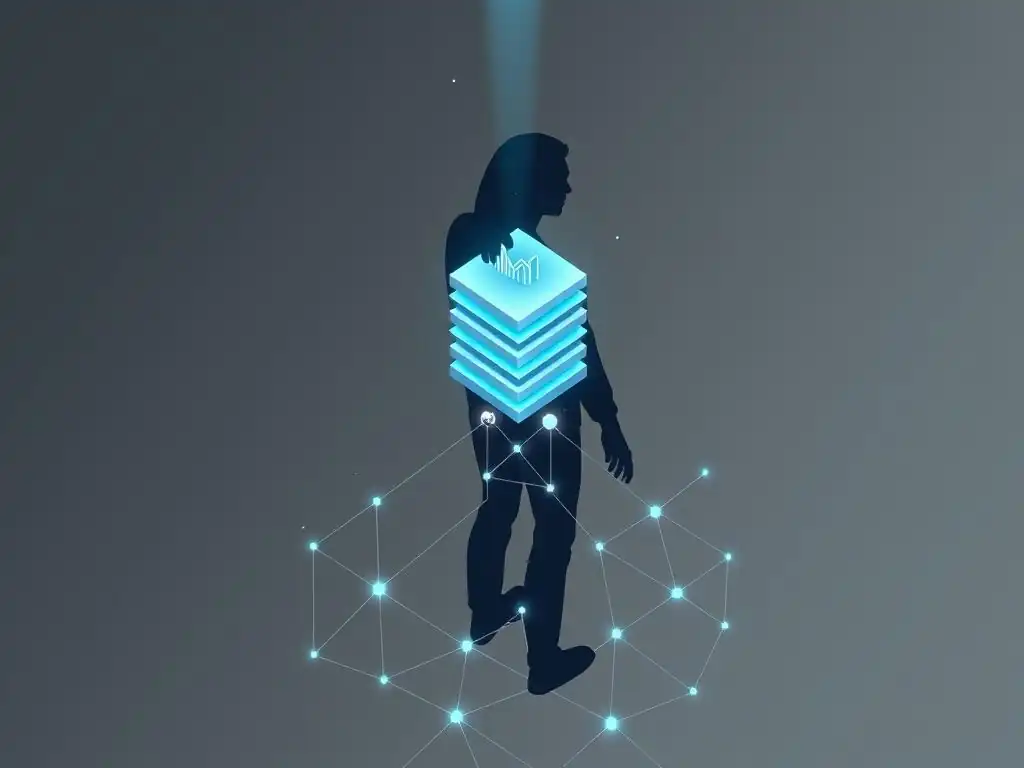
Exploring Different Platforms for DIDs
Implementing decentralized identity requires underlying infrastructure capable of supporting DIDs and Verifiable Credentials. Various platforms and networks have emerged to provide this functionality, often built on blockchain or distributed ledger technology (DLT). These platforms provide the necessary mechanisms for creating, resolving, and managing DIDs, as well as anchoring or registering public keys and other metadata associated with DIDs.
The choice of platform can depend on factors like performance requirements, governance models (public, permissioned), and specific features offered. Some platforms are general-purpose blockchains that can be adapted for identity, while others are specifically designed with identity in mind. Understanding the capabilities and trade-offs of different platforms is crucial for successful DID deployment.
Using Sovrin for Decentralized Identity
Sovrin is a prominent example of a distributed ledger network specifically built for self-sovereign identity. It operates as a global, permissioned ledger, governed by a non-profit foundation and stewarded by diverse organizations. Sovrin uses its own protocol and consensus mechanism optimized for identity transactions. It provides core functions for managing DIDs, public keys, and endpoints where information related to DIDs can be found (like schemas for Verifiable Credentials).
Sovrin's design focuses on privacy, security, and user control, aiming to provide a public utility layer for identity. It supports the W3C DID and Verifiable Credentials standards, facilitating interoperability. The network is designed to handle a high volume of identity operations, making it suitable for large-scale deployments across various industries. Its governance model aims to prevent any single entity from controlling the network, reinforcing the decentralized nature of the identities managed upon it.
Using Blockcerts for Decentralized Identity
Blockcerts is another approach focused specifically on issuing and verifying blockchain-anchored credentials, which are a form of Verifiable Credentials. Developed initially by MIT Media Lab, Blockcerts provides an open standard and tools for issuing, viewing, and verifying certificates (like academic degrees, professional certifications, or training records) on a blockchain, typically Bitcoin or Ethereum.
While not a full DID network like Sovrin, Blockcerts serves a crucial function within the decentralized identity ecosystem by providing a robust method for anchoring the integrity of credentials. An issuer creates a certificate, hashes it, and places the hash (or a hash of a batch of hashes) onto a blockchain transaction. The recipient receives the certificate and the transaction ID.
A verifier can then use the transaction ID to find the hash on the blockchain and compare it to a hash of the certificate presented by the holder, cryptographically proving its authenticity and that it existed at the time of the transaction. This method is particularly useful for high-value, long-lived credentials.
The Role of Standards and Interoperability
For decentralized identity to achieve widespread adoption and realize its full potential, interoperability between different platforms, wallets, and relying parties is essential. Without common standards, an identity issued on one platform might not be verifiable on another, or a credential from one issuer might not be readable by a verifier using different software. This is where the development and adoption of open standards play a critical role.
Standards ensure that the core components of a DID system – the identifiers themselves, the format of verifiable credentials, and the methods for resolving DIDs – are consistent and universally understood. This allows different entities to build compatible systems and applications, enabling a truly interconnected ecosystem where users can manage their identity and credentials across various services and platforms seamlessly.
W3C Standards for Decentralized Identifiers
The World Wide Web Consortium (W3C) has been instrumental in developing foundational standards for decentralized identity, providing a common framework for the entire ecosystem. The W3C Decentralized Identifiers (DIDs) v1.0 specification defines the syntax and data model for DIDs, as well as the requirements for DID methods (specifications for how DIDs are created, resolved, updated, and deactivated on a specific network or system). This standard allows for the creation of different DID methods tailored to various underlying distributed ledgers or networks, ensuring flexibility while maintaining a common identifier format.
Complementing the DID standard is the W3C Verifiable Credentials Data Model v1.1 specification. This standard defines a common format for representing claims as cryptographically verifiable credentials. It specifies the structure of a VC, including the issuer, holder, subject, claim, and proof. By adhering to these W3C standards, different identity wallets, issuers, and verifiers can interact with each other, enabling the secure exchange and verification of credentials across disparate systems and significantly boosting the practical blockchain identity solutions benefits.
Overcoming Challenges in Decentralized Identity Implementation
Scalability and Performance Considerations
While the potential of decentralized identity is vast, its widespread implementation faces several technical challenges, particularly regarding scalability and performance. Many early blockchain networks, while robust for their original purposes (like cryptocurrency transactions), may struggle to handle the potentially massive volume of identity-related operations – creating DIDs, registering public keys, anchoring credential hashes, and resolving DIDs – required for a global identity system.
Different underlying technologies have varying throughput capabilities. Public, permissionless blockchains like Bitcoin or early Ethereum versions can be slow and expensive for frequent identity updates. Permissioned ledgers or purpose-built DID networks like Sovrin are designed for higher transaction volumes and lower costs but may introduce different trust considerations. Scaling DID resolution and ensuring low latency for verification processes across diverse networks remains an active area of development. Future solutions may involve layer 2 scaling techniques or specialized identity-focused distributed ledgers to meet the performance demands of mass adoption.
User Experience and Adoption Barriers
Adoption of decentralized identity hinges significantly on providing a user experience that is as simple, or ideally simpler, than existing centralized solutions. Current identity systems, despite their flaws, are often familiar and relatively easy for the average user to interact with (e.g., creating an account with an email and password). DID systems, involving concepts like digital wallets, private keys, and managing verifiable credentials, can appear complex to non-technical users.
Developing intuitive and user-friendly digital wallets is crucial. These wallets must securely store private keys and credentials while making it easy for users to understand and manage their data and consent. Educating users about the benefits of self-sovereignty and how to safely manage their digital identity is also necessary. Overcoming the inertia of existing systems and building trust in new decentralized alternatives requires significant effort in design, education, and creating compelling use cases that clearly demonstrate the blockchain identity solutions benefits to the end-user.
Regulatory Landscape and Compliance Requirements
The regulatory landscape for decentralized identity is still evolving, presenting challenges for implementation, particularly for entities operating in regulated industries like finance and healthcare. Existing laws and regulations regarding identity verification, data protection (such as GDPR in Europe or CCPA in California), and digital signatures were primarily designed with centralized systems in mind. Applying these regulations to decentralized, self-sovereign models requires careful interpretation and potentially updated legal frameworks.
Questions arise regarding liability when data breaches occur in a system where the user controls their keys, or how to handle identity recovery if a user loses access to their wallet. Ensuring that DID systems can meet compliance requirements, such as providing mechanisms for data subject rights (e.g., right to erasure, though challenging with immutable ledgers, solutions like data minimization and off-chain storage are relevant), and navigating the legal status of Verifiable Credentials across different jurisdictions are ongoing challenges that require collaboration between technologists, legal experts, and regulators.
The Future of Decentralized Identity: Predictions and Trends
The Convergence of DID and Web3 Technologies
The future of decentralized identity is deeply intertwined with the broader evolution of the internet towards Web3. Web3 envisions a decentralized web where users have greater control over their data and digital interactions, powered by technologies like blockchain, cryptocurrencies, and decentralized applications (dApps). A self-sovereign identity layer is arguably a prerequisite for a fully functional and trustworthy Web3 ecosystem.
As Web3 matures, we can expect to see increased convergence. DIDs will likely become the standard way for users to authenticate and interact with dApps, enabling personalized experiences without relying on centralized logins or sharing excessive personal data. Verifiable Credentials could represent ownership of digital assets (like NFTs), reputation within decentralized communities, or access rights to decentralized services. This convergence will amplify the blockchain identity solutions benefits, creating a more user-centric and privacy-preserving online experience.
The Impact of DIDs on the Metaverse and Digital Ownership
The concept of the metaverse, a persistent, interconnected set of virtual worlds, highlights the critical need for robust and user-controlled digital identity. As individuals spend more time and conduct more activities (socializing, working, trading) in virtual environments, their digital identity in these spaces becomes increasingly important. Traditional, platform-specific avatars and profiles are siloed and controlled by the platform provider.
Decentralized identity offers a path towards portable, persistent, and user-owned identities in the metaverse. A user's DID could serve as their universal identifier across different virtual worlds. Verifiable Credentials could represent ownership of digital assets (avatars, clothing, virtual land), achievements, reputation, or even proof of real-world identity attributes needed for age verification or participation in regulated activities within the metaverse. This would allow users to take their identity, reputation, and digital possessions with them across different virtual environments, fundamentally changing the nature of digital ownership and presence and showcasing powerful blockchain identity solutions benefits.
Increased Adoption Across Industries
While still in relatively early stages, decentralized identity is poised for increased adoption across a variety of industries beyond the initial pilot programs. As the technical challenges are addressed, standards mature, and user-friendly solutions emerge, the compelling blockchain identity solutions benefits will drive implementation.
We can anticipate broader adoption in financial services for streamlined onboarding and transaction security, in healthcare for patient data control and interoperability, in supply chain for transparency and anti-counterfeiting, and in government for efficient and secure citizen services. New use cases are also likely to emerge in areas like education (verifiable academic records), employment (verifiable professional credentials), and the gig economy (verifiable reputation and skills). This widespread adoption will gradually shift the digital landscape towards a more secure, private, and user-controlled model of identity.
Conclusion: Embracing the Transformative Potential of Decentralized Identity
Key Takeaways: Decentralized Identity Benefits Summary
Decentralized Identity (DID) represents a fundamental shift in how we manage and interact with our digital identities. Moving away from fragile, centralized systems, DID empowers individuals with control and ownership over their personal data and credentials. The core blockchain identity solutions benefits are clear and impactful:
- Enhanced Security and Privacy: Reducing reliance on centralized databases minimizes the risk of large-scale data breaches and identity theft, while cryptographic proofs and selective disclosure protect sensitive information.
- Increased User Control: Individuals gain unprecedented control over their digital identity, deciding what data to share, with whom, and under what conditions, fostering true self-sovereignty.
- Reduced Fraud: Cryptographically verifiable credentials and immutable ledger anchors make it significantly harder to forge identities and credentials, combating fraud across various domains.
- Streamlined Processes: Industries like finance, healthcare, and supply chain can leverage DIDs to automate verification processes, reduce costs, and improve efficiency.
- Improved Interoperability: Adherence to open standards like W3C DIDs and VCs enables seamless interaction between different identity systems and applications.
These benefits collectively paint a picture of a digital future that is more secure, private, and equitable for users.
Decentralized Identity as a Foundation for a More Secure and Trustworthy Digital Future
Decentralized identity is more than just a technological innovation; it is a foundational element for building a more trustworthy digital society. By placing the individual at the center of their digital identity management, DID systems can restore trust that has been eroded by years of data breaches, privacy violations, and lack of control. As digital interactions become increasingly integrated into every aspect of our lives, from work and finance to social connections and virtual worlds, a secure and reliable identity layer is paramount.
Embracing the principles and technologies of decentralized identity is crucial for unlocking the full potential of decentralized web architectures and emerging digital environments like the metaverse. It provides the essential link between the digital and physical worlds, enabling verifiable interactions and transactions while protecting user privacy and security. While challenges remain in terms of scalability, user adoption, and regulatory clarity, the transformative potential of decentralized identity solutions benefits positions them as a critical component in shaping a safer, more efficient, and truly user-centric digital future.
Frequently Asked Questions
What are the primary benefits of using blockchain identity solutions compared to traditional identity management systems?
Blockchain identity solutions offer enhanced security and privacy due to their decentralized nature. They also improve user control over personal data and reduce reliance on centralized authorities, minimizing single points of failure.
How can blockchain identity solutions be applied in industries beyond finance, particularly in the context of enterprise applications?
Beyond finance, blockchain identity is crucial for supply chain tracking, healthcare data management, and verifiable credentials in education. It enables secure data sharing and authentication across various enterprise systems.
What role does decentralization play in enhancing the benefits of blockchain identity solutions?
Decentralization eliminates central points of failure and control, fostering greater transparency and trust. This leads to a more resilient and secure identity ecosystem, reducing the risk of data breaches and censorship.
How does the regulatory landscape impact the development and adoption of blockchain identity solutions, and what are the potential benefits?
Regulatory clarity is crucial for fostering trust and widespread adoption. Clear regulations can provide a framework for data privacy and security, encouraging innovation and ensuring compliance for blockchain identity solutions.
What is the future outlook for blockchain identity solutions and what potential benefits can we expect in the coming years?
The future holds the promise of seamless digital identity management across various platforms. We can expect improved data portability, enhanced user control, and increased security, leading to a more trustworthy and efficient digital world thanks to blockchain identity.
Final Reflection: Embracing the Power of Self-Sovereignty
The exploration of decentralized identity and its potential as a catalyst for innovation across industries underscores a crucial point: the future of digital interaction hinges on empowering individuals with control over their own data. The benefits of blockchain identity solutions extend far beyond mere convenience; they represent a fundamental shift in power dynamics, fostering trust, security, and unprecedented opportunities for growth in sectors ranging from healthcare to finance.
This movement towards self-sovereign identity is not just a technological advancement; it's a cultural evolution. It's about reclaiming ownership in a digital world where our personal information has become a commodity. The implications are profound, impacting everything from how we access services to how we participate in democratic processes. Identity is not just a piece of information; it's the essence of who we are.
This quote encapsulates the importance of protecting and controlling our digital selves, a principle at the heart of the decentralized identity revolution.
As we stand on the cusp of this transformative era, I invite you to reflect on your own digital footprint. Consider the power you currently relinquish to centralized entities and envision a future where you are the master of your own identity. Embrace the potential of blockchain identity solutions and become an active participant in shaping a more secure, transparent, and empowering digital landscape for all.
Unlock the Power of Decentralized Identity
Thank you for exploring the potential of decentralized identity and its ability to transform industries. Now that you understand its significance, it's time to take the next step and discover how it can be practically applied. Are you ready to be part of this exciting future?
Here are a few ways you can get involved:
- Learn more: Start exploring existing decentralized identity solutions and frameworks to see how they are implemented in real-world scenarios. This is the most impactful step you can take now.:
- Join the discussion: Share this article with your network and initiate conversations about the future of decentralized identity across various sectors.
- Stay updated: Subscribe to our newsletter for the latest insights, trends, and real-world applications of blockchain technology and decentralized identity.
What innovative application of decentralized identity are you most eager to see come to life? Share your thoughts in the comments below!
Leave a Reply