
ZeroKnowledge Proofs: Enhancing Privacy and Security in Blockchain Identity Systems


Welcome to Blockchain Trends, your hub for understanding the revolutionary impact of blockchain beyond the hype. This week, we delve into a groundbreaking concept poised to redefine digital identity: Zero Knowledge Proofs. But how exactly can these powerful cryptographic tools enhance both privacy and security within blockchain-based identity systems? Prepare to uncover the potential of this technology and explore its implications for the future of decentralized governance. Intrigued? Read on to discover how Zero Knowledge Proofs are shaping the next generation of blockchain applications.
Zero-Knowledge Proofs: Enhancing Privacy and Security in Digital Identity Systems
- Introduction: The Imperative of Privacy in Digital Identity Management
- Understanding Zero-Knowledge Proofs (ZKPs)
- How Zero-Knowledge Proofs Function in Digital Identity
- Advantages of Zero-Knowledge Proofs for Digital Identity
- Use Cases of Zero-Knowledge Proofs in Digital Identity Systems
- Implementing Zero-Knowledge Proofs in Digital Identity Solutions
- The Future of Zero-Knowledge Proofs and Digital Identity
- Conclusion: Zero-Knowledge Proofs - A Cornerstone for Secure and Private Digital Identity
-
Frequently Asked Questions
- What are Zero-Knowledge Proofs (ZKPs) and how do they relate to blockchain identity?
- How can ZKPs be used to improve privacy in blockchain-based identity systems?
- What are some potential real-world applications of using ZKPs for blockchain identity?
- What are the main challenges associated with implementing ZKPs in blockchain identity solutions?
- How might regulations impact the adoption of ZKPs in blockchain identity systems?
- Final Reflection: Embracing Trustless Verification
- Unlock the Power of Privacy: Your Journey with Zero-Knowledge Begins Now!
Introduction: The Imperative of Privacy in Digital Identity Management
Digital Identity Solutions: Balancing Transparency and Privacy
In an increasingly interconnected digital world, the management of digital identities has become paramount. Solutions for digital identity aim to provide individuals and organizations with secure, efficient, and user-centric ways to manage and verify identity online. However, the quest for efficient identity solutions often clashes with the fundamental right to privacy.
Traditional identity systems frequently require users to disclose excessive personal information, creating vulnerabilities and raising concerns about data exploitation. The challenge lies in striking a delicate balance: providing sufficient transparency for verification and security while rigorously protecting sensitive personal data. This balance is not merely a technical problem but also a societal imperative, as the erosion of privacy can have profound implications for individual autonomy and trust in digital systems.
The demand for privacy-preserving technologies in digital identity is not just theoretical; it's a growing practical necessity driven by both user expectations and regulatory pressures. Consumers are becoming more aware of data breaches and the potential misuse of their personal information, leading to a greater demand for control over their digital footprint.
Simultaneously, regulations like GDPR in Europe, CCPA in California, and similar laws worldwide are mandating stronger data protection measures and empowering individuals with more rights regarding their personal data. Therefore, any viable digital identity solution must prioritize privacy as a core design principle, moving beyond mere compliance to offer genuine user empowerment and data security.
Limitations of Traditional Identity Systems in a Digital World
Traditional identity systems, often reliant on centralized databases and credential-based authentication, present several limitations in the modern digital landscape. These systems frequently require users to share sensitive information repeatedly with various service providers, creating numerous points of vulnerability. For example, a typical online transaction might necessitate providing names, addresses, dates of birth, and even financial details, exposing this data to potential interception or storage in insecure databases. This reliance on broad data disclosure not only increases the risk of data breaches but also creates a honeypot effect, attracting malicious actors seeking to exploit centralized identity repositories.
Furthermore, traditional systems struggle to offer selective disclosure and user control over identity attributes. Users often have to provide all-or-nothing access to their personal data, even when only a limited piece of information is required. Consider the scenario of verifying age for accessing age-restricted content online; traditional systems might require sharing a full date of birth, revealing more information than necessary.
This lack of granularity in data sharing is not only privacy-intrusive but also inefficient. In contrast, a privacy-centric approach would allow users to prove specific attributes, like "being over 18," without revealing the underlying sensitive data, such as their actual birth date. This need for greater control and minimal data disclosure underscores the limitations of traditional identity systems and the urgent need for privacy-enhancing alternatives.
Understanding Zero-Knowledge Proofs (ZKPs)
What are Zero-Knowledge Proofs? A Concise Explanation
Zero-Knowledge Proofs (ZKPs) are cryptographic protocols that allow one party (the prover) to convince another party (the verifier) that a statement is true, without revealing any information beyond the truth of the statement itself. Imagine proving you know the solution to a puzzle without showing the solution itself, or demonstrating you possess a key without revealing the key.
This is the essence of zero-knowledge: proving knowledge without knowledge transfer. In the context of digital identity, this means a user can prove they possess certain attributes – like being of legal age or holding a specific certification – without divulging the actual data that constitutes that proof, such as their date of birth or certificate details.
The power of zero-knowledge proofs lies in their ability to decouple verification from information disclosure. Traditional verification methods often require sharing the underlying data to prove a claim. For example, showing a driver's license to prove age requires revealing your name, address, and photo along with your birth date.
ZKPs break this paradigm by enabling verification based purely on cryptographic evidence. This is achieved through complex mathematical techniques that allow the prover to generate a proof that convinces the verifier of the statement's validity without revealing any of the sensitive data used to create that proof. This revolutionary approach has profound implications for enhancing privacy and security in various digital applications, especially in blockchain-based identity systems.
Core Properties of Zero-Knowledge Proofs: Completeness, Soundness, and Zero-Knowledge
Zero-Knowledge Proofs are defined by three fundamental properties that ensure their effectiveness and security: Completeness, Soundness, and Zero-Knowledge. Completeness dictates that if the statement is true, an honest prover can always convince an honest verifier. In simpler terms, if you genuinely possess the knowledge you are trying to prove, a ZKP protocol will allow you to successfully demonstrate it to someone who is honestly trying to verify. This ensures the protocol is functional and reliable for legitimate proofs.
Soundness ensures that if the statement is false, no cheating prover can convince an honest verifier that it is true, except with a negligible probability. This is crucial for security. It means that even with malicious intent, it is computationally infeasible to forge a valid proof for a false claim. Soundness protects against fraudulent proofs and maintains the integrity of the verification process.
Finally, the Zero-Knowledge property, the defining characteristic, guarantees that the verifier learns nothing beyond the validity of the statement itself. During the proof exchange, no additional information about the underlying secret or data is revealed to the verifier. This property is paramount for privacy, ensuring that sensitive data remains confidential while still enabling secure and verifiable claims. These three properties collectively make ZKPs a powerful tool for privacy-preserving authentication and verification.
Types of Zero-Knowledge Proofs: zk-SNARKs, zk-STARKs, Bulletproofs [Brief Explanation of Each]
The field of Zero-Knowledge Proofs has evolved into various specific constructions, each with its own trade-offs in terms of efficiency, security assumptions, and complexity. Among the most prominent are zk-SNARKs, zk-STARKs, and Bulletproofs. zk-SNARKs, which stands for "Zero-Knowledge Succinct Non-Interactive Argument of Knowledge," are known for their succinctness and non-interactivity.
"Succinct" means the proof size is very small and quickly verifiable, and "non-interactive" implies the prover and verifier only need to exchange a single message, making them highly efficient for automated systems. zk-SNARKs are widely used in privacy-focused cryptocurrencies and applications requiring fast and efficient verification, but they often rely on a trusted setup, which can be a point of concern for some applications.
zk-STARKs, or "Zero-Knowledge Scalable Transparent Argument of Knowledge," address the trusted setup issue of zk-SNARKs by being "transparent," meaning they do not require a trusted setup. They rely on simpler cryptographic assumptions and are considered more scalable and potentially more secure in the long run. While zk-STARKs proofs are generally larger and verification slightly slower than zk-SNARKs, their transparency and scalability make them attractive for applications where security and long-term robustness are paramount.
Bulletproofs are another type of ZKP known for their efficiency in proving range proofs – statements about a number falling within a certain range – and for their relatively simple construction. They are particularly useful in applications requiring confidential transactions and are often used in blockchain contexts for privacy-preserving transactions and identity verification. Each of these ZKP types offers different advantages and trade-offs, making them suitable for various use cases within digital identity and beyond.
How Zero-Knowledge Proofs Function in Digital Identity
Verifying Identity Claims Without Data Exposure
Zero-Knowledge Proofs revolutionize digital identity verification by allowing individuals to prove claims about their identity without revealing the underlying sensitive data. Instead of sharing personal information directly, a user, acting as the prover, generates a ZKP demonstrating the validity of a specific claim to a verifier. For instance, to prove they are over 18, a user could generate a ZKP based on their birth date.
This proof is then presented to the verifier. The verifier can cryptographically check the proof's validity, confirming that the user is indeed over 18, without ever learning the user's actual birth date. This process ensures that only the necessary information – the validity of the claim – is shared, while the sensitive data remains securely in the user's control.
This approach contrasts sharply with traditional identity verification methods where data exposure is often unavoidable. In conventional systems, verifying age might involve presenting a government-issued ID, which reveals not only the birth date but also name, address, and potentially other personal details. With ZKPs, the verification process becomes significantly more privacy-preserving. The cryptographic nature of ZKPs ensures that the verifier only receives confirmation of the claim, not the data itself. This fundamental shift from data sharing to proof sharing is key to enhancing privacy in digital identity systems and building trust in online interactions.
The Generation and Verification Workflow for ZKPs in Identity Contexts
The workflow for utilizing Zero-Knowledge Proofs in identity verification typically involves two main phases: proof generation and proof verification. In the proof generation phase, the user, possessing the private identity data (e.g., birth date, passport details, professional certification), utilizes a ZKP algorithm to create a proof for a specific claim (e.g., "I am over 18," "I am a citizen of country X," "I hold a valid medical license").
This proof is mathematically constructed in such a way that it inherently demonstrates the truth of the claim without revealing the underlying data. The complexity of this process is handled by specialized software and cryptographic libraries, making it user-friendly even for those without deep cryptographic knowledge.
In the proof verification phase, the verifier receives the ZKP from the user. Using a corresponding verification algorithm and potentially some public parameters, the verifier cryptographically validates the proof. This verification process is computationally efficient, especially with zk-SNARKs and zk-STARKs, allowing for rapid and scalable verification.
Crucially, the verification process only confirms the validity of the claim; it does not extract or reveal any of the sensitive data used to generate the proof. Once the proof is successfully verified, the verifier can confidently proceed based on the proven claim, knowing it is cryptographically sound and privacy-preserving. This streamlined workflow enables secure and privacy-respecting identity interactions across various digital platforms and services.
Examples of Verifiable Identity Attributes with ZKPs: Age, Citizenship, Professional Licenses
Zero-Knowledge Proofs are versatile tools for verifying a wide range of identity attributes while safeguarding sensitive personal data. Consider verifying age for accessing age-restricted online content or services. Using ZKPs, a user can prove they are above a certain age threshold without revealing their exact date of birth. They could generate a proof stating "My age is greater than 18," which a website can verify without ever knowing the user's precise age. This is significantly more privacy-preserving than traditional methods that require full date of birth disclosure.
Similarly, citizenship verification can be enhanced with ZKPs. Instead of submitting a copy of a passport or ID card, which contains extensive personal information, a user could generate a ZKP to prove "I am a citizen of country Y." This allows for secure and private nationality verification for online services, international transactions, or accessing country-specific content, without exposing passport numbers, addresses, or other unnecessary details. Furthermore, professional licenses and certifications are ideal use cases for ZKPs.
A doctor could prove they hold a valid medical license without revealing the license number, issuing authority, or other potentially sensitive information. The ZKP would simply assert, "I possess a valid medical license," allowing for secure and privacy-respecting professional credential verification in healthcare, finance, and other regulated industries. These examples illustrate the broad applicability of ZKPs in creating privacy-focused digital identity systems across various sectors.
Advantages of Zero-Knowledge Proofs for Digital Identity
Enhanced Privacy and Robust Data Protection for Users
The most significant advantage of Zero-Knowledge Proofs in digital identity is the profound enhancement of user privacy and data protection. By design, ZKPs minimize data exposure, allowing users to control what information is shared and when. Unlike traditional identity systems that often require broad data disclosure, ZKPs enable selective attribute verification. Users can prove specific aspects of their identity without revealing the underlying sensitive data, significantly reducing their digital footprint and minimizing the risk of data breaches and misuse. This principle of minimal disclosure is crucial in building user trust and fostering a more privacy-respecting digital environment.
This enhanced privacy translates directly into robust data protection for individuals. With ZKPs, sensitive personal information, such as birth dates, addresses, social security numbers, or license details, can remain securely stored on the user's device or within their personal data vault. This decentralization of data control empowers users and reduces the vulnerability associated with centralized identity databases, which are prime targets for cyberattacks. By limiting the spread of personal data and giving users greater control over their identity information, ZKPs create a more secure and privacy-centric model for digital identity management.
Improved Security Against Identity Theft and Fraudulent Activities
Zero-Knowledge Proofs not only enhance privacy but also significantly bolster security against identity theft and fraudulent activities. Traditional identity systems, relying on passwords and shared secrets, are susceptible to phishing attacks, credential stuffing, and database breaches. ZKPs offer a more robust security paradigm by eliminating the need to transmit or store sensitive authentication credentials.
Since verification is based on cryptographic proofs rather than shared secrets, the risk of credential compromise is drastically reduced. Even if a malicious actor were to intercept a ZKP, they would gain no useful information to impersonate the user, as the proof is only valid for a specific claim and cannot be reused or reverse-engineered to extract sensitive data.
Furthermore, ZKPs can help mitigate various forms of identity fraud. For example, in online transactions, ZKPs can verify payment details or financial eligibility without revealing credit card numbers or bank account information. In access control scenarios, ZKPs can prove authorization without exposing usernames or passwords. By reducing reliance on vulnerable credentials and enabling privacy-preserving verification, ZKPs create a more secure and resilient digital identity ecosystem, making it significantly harder for fraudsters to perpetrate identity theft or engage in other malicious activities. The inherent cryptographic security of ZKPs offers a substantial upgrade over traditional security mechanisms.
Simplified Identity Verification Processes for Organizations
Beyond enhanced privacy and security, Zero-Knowledge Proofs can also simplify identity verification processes for organizations. Traditional KYC (Know Your Customer) and AML (Anti-Money Laundering) compliance procedures, for example, often involve cumbersome and time-consuming data collection and verification processes. Organizations must collect, store, and process vast amounts of sensitive customer data, increasing their regulatory burden and security risks.
ZKPs can streamline these processes by enabling organizations to verify customer identities and comply with regulations without directly handling or storing sensitive personal data. Organizations can request ZKPs from users to prove compliance with specific requirements, such as age, residency, or source of funds, without needing to collect and verify the underlying documents themselves.
This simplification not only reduces operational costs and compliance burdens for organizations but also improves the user experience. Customers can undergo identity verification more quickly and easily, without the need to repeatedly submit personal documents or fill out lengthy forms. The efficiency of ZKP-based verification can lead to faster onboarding processes, smoother transactions, and improved customer satisfaction. By abstracting away the complexities of data handling and verification, ZKPs offer a more streamlined and user-friendly approach to identity management for both organizations and individuals.
Facilitating Compliance with Data Privacy Regulations (GDPR, CCPA, HIPAA)
Zero-Knowledge Proofs are particularly valuable in facilitating compliance with increasingly stringent data privacy regulations like GDPR (General Data Protection Regulation), CCPA (California Consumer Privacy Act), and HIPAA (Health Insurance Portability and Accountability Act). These regulations emphasize data minimization, user consent, and the protection of sensitive personal information.
ZKPs align perfectly with these principles by enabling organizations to verify identity and access rights while minimizing the collection and processing of personal data. By reducing data exposure and empowering users with greater control over their information, ZKPs help organizations meet the requirements of these regulations and demonstrate a commitment to privacy-centric practices.
For example, GDPR's principle of data minimization dictates that organizations should collect only the data that is strictly necessary for a specific purpose. ZKPs enable organizations to verify specific attributes – like age or eligibility – without collecting and storing the underlying sensitive data, thus adhering to data minimization principles. Similarly, CCPA grants consumers greater control over their personal information, including the right to access, delete, and control the sharing of their data.
ZKPs empower users by giving them control over what aspects of their identity are revealed and to whom. In healthcare, HIPAA mandates the protection of patient health information.
ZKPs can facilitate secure data sharing for research or treatment purposes while preserving patient privacy by verifying necessary attributes without exposing sensitive medical records. By inherently promoting privacy and data minimization, ZKPs are becoming an essential tool for organizations seeking to navigate the complex landscape of modern data privacy regulations.
Use Cases of Zero-Knowledge Proofs in Digital Identity Systems
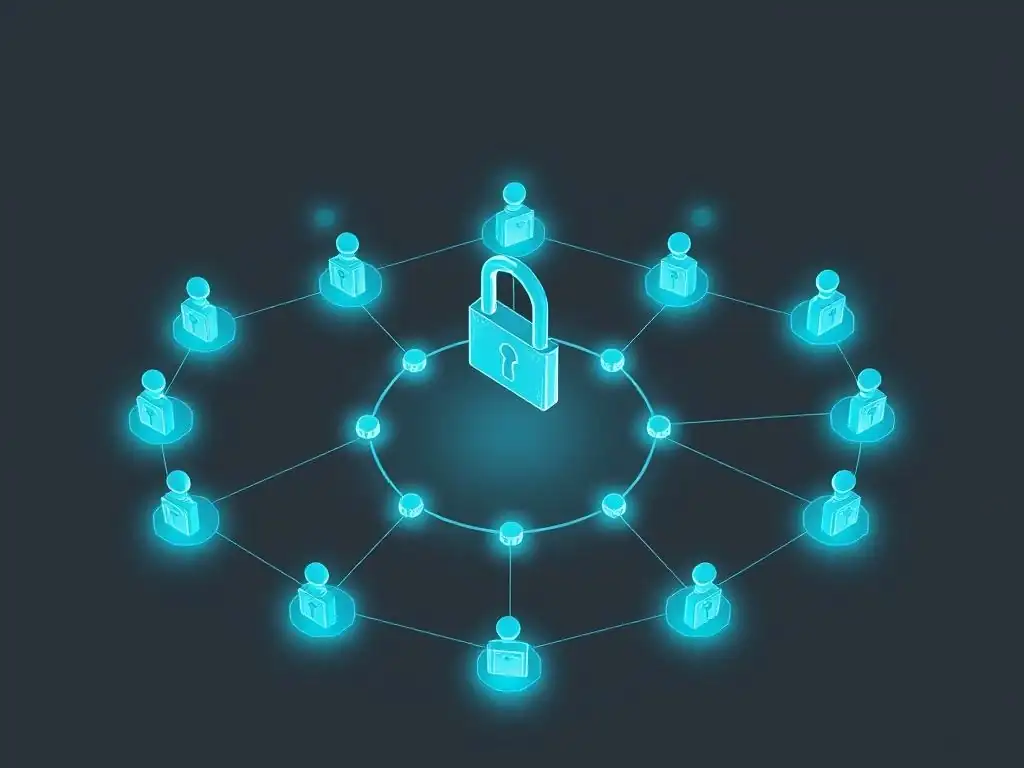
Secure and Private KYC/AML Compliance
Zero-Knowledge Proofs offer a transformative approach to KYC (Know Your Customer) and AML (Anti-Money Laundering) compliance in the financial industry and beyond. Traditional KYC/AML processes are often cumbersome, requiring individuals to repeatedly submit sensitive personal information to various financial institutions and service providers. This not only creates a privacy risk but also leads to inefficiencies and a poor user experience. ZKPs can streamline and secure these processes by allowing users to prove their compliance status – such as age, residency, or source of funds – without revealing the underlying sensitive documents or data to each institution.
For example, in a ZKP-based KYC system, a user could generate a proof demonstrating they are over 18 and a resident of a specific country, based on their government-issued ID. This proof can then be presented to multiple financial institutions for verification, without each institution needing to collect and store copies of the user's ID. The institutions only verify the cryptographic proof, gaining assurance of compliance without accessing the user's sensitive data.
This significantly enhances user privacy, reduces the risk of data breaches associated with centralized KYC databases, and streamlines the compliance process for both users and organizations. Financial institutions benefit from reduced operational costs, faster customer onboarding, and improved security, while users gain greater control over their personal information and a more seamless KYC experience.
Decentralized Identity (DID) Management with Enhanced Privacy
Zero-Knowledge Proofs are perfectly suited for enhancing the privacy aspects of Decentralized Identity (DID) systems. DIDs aim to give individuals greater control over their digital identities by allowing them to manage their identity data and credentials without relying on centralized authorities.
While DIDs inherently offer more user control, ZKPs can further enhance privacy by enabling selective disclosure and verifiable credentials without revealing sensitive attribute data. In a DID system integrated with ZKPs, users can create verifiable credentials for various aspects of their identity – such as educational qualifications, professional certifications, or membership statuses – and selectively share proofs of these credentials without disclosing the full credential details.
For instance, a university could issue a verifiable credential to a graduate using a DID system. When the graduate needs to prove their degree to a potential employer, they can generate a ZKP based on this credential, proving they hold the degree without revealing the university name, graduation date, or other credential specifics. The employer can verify the proof, confirming the graduate’s qualification without gaining access to the full credential.
This approach aligns with the principles of self-sovereign identity and minimizes data exposure. ZKPs empower users within DID ecosystems to control their identity attributes granularly and share only the necessary proofs, fostering a more privacy-respecting and user-centric digital identity landscape.
Protecting User Credentials and Reputation in Online Platforms
Online platforms, ranging from social media to e-commerce sites, often rely on user credentials and reputation systems. These systems can be vulnerable to credential theft and reputation manipulation. Zero-Knowledge Proofs can enhance the security and privacy of these systems.
For user credentials, ZKPs can replace traditional password-based authentication with more secure and privacy-preserving methods. Instead of storing and transmitting passwords, platforms can use ZKPs to verify user login attempts without ever handling or storing the actual passwords. A user can prove they know the correct password (or possess the private key associated with their account) without revealing the password itself.
For reputation systems, ZKPs can enable users to prove their reputation or ratings without exposing their full user history or revealing sensitive details about their past interactions. For example, on an e-commerce platform, a seller could prove they have a high seller rating without revealing the specific number of positive reviews or transaction history. Buyers can verify this reputation proof, gaining confidence in the seller's credibility without compromising the seller's privacy. By integrating ZKPs into online platform authentication and reputation management, platforms can enhance security, protect user privacy, and build more trustworthy online environments.
Healthcare Data Sharing with Privacy Preservation
The healthcare sector handles highly sensitive patient data, making privacy preservation paramount. Zero-Knowledge Proofs offer significant potential for secure and privacy-preserving healthcare data sharing and verification.
In scenarios where healthcare data needs to be shared for research, diagnostics, or inter-institutional collaboration, ZKPs can enable the verification of patient attributes or medical conditions without revealing the underlying sensitive health records. For instance, researchers conducting a study on a specific disease could verify that a patient cohort meets certain criteria – such as age range, specific symptoms, or genetic markers – using ZKPs, without gaining access to the patients' complete medical histories.
Similarly, in patient identity verification within healthcare systems, ZKPs can ensure patient privacy. When a patient seeks medical services, they can prove their identity and insurance coverage using ZKPs without revealing their full name, social security number, or other sensitive identifiers unnecessarily. Healthcare providers can verify these proofs, ensuring accurate patient identification and insurance validation while minimizing data exposure. By enabling privacy-preserving data sharing and verification, ZKPs can facilitate more secure and collaborative healthcare ecosystems, promoting data-driven medical advancements while upholding patient privacy rights and regulatory compliance like HIPAA.
Implementing Zero-Knowledge Proofs in Digital Identity Solutions
Challenges and Considerations for Developers and Implementers
Implementing Zero-Knowledge Proofs in digital identity solutions presents several challenges and considerations for developers and implementers. One significant challenge is the complexity of ZKP cryptography. Understanding and correctly implementing ZKP protocols requires specialized cryptographic expertise. Developers need to be familiar with the underlying mathematics and cryptographic primitives to ensure the security and correctness of their ZKP-based systems. Incorrect implementations can lead to vulnerabilities and compromise the privacy and security benefits of ZKPs. Therefore, thorough cryptographic audits and expert reviews are crucial during the development process.
Another consideration is the computational overhead associated with ZKP generation and verification. While zk-SNARKs and zk-STARKs offer succinct proofs and efficient verification, the proof generation process can still be computationally intensive, especially for complex claims. Developers need to optimize ZKP implementations to ensure acceptable performance and user experience, particularly on resource-constrained devices like mobile phones. Furthermore, interoperability is a key challenge. Different ZKP implementations and frameworks may not be compatible with each other, potentially hindering the widespread adoption of ZKP-based identity solutions.
Standardization efforts and the development of interoperable ZKP libraries are essential to address this challenge and facilitate seamless integration across different systems and platforms. Finally, user education is crucial. Users need to understand the benefits of ZKP-based identity systems and how to use them effectively. Clear and user-friendly interfaces are necessary to make ZKPs accessible to a wider audience and overcome potential user adoption barriers.
Tools and Frameworks for Building ZKP-Based Identity Systems: Circom, ZoKrates, Libsnark
Fortunately, developers are not starting from scratch when implementing Zero-Knowledge Proofs. Several powerful tools and frameworks are available to simplify the development of ZKP-based identity systems. Circom is a popular circuit compiler specifically designed for zk-SNARKs. It allows developers to describe cryptographic circuits in a high-level language, which are then compiled into efficient code for ZKP generation and verification. Circom is widely used for building privacy-preserving applications, including identity solutions, and has a strong community support.
ZoKrates is another framework focused on zk-SNARKs, offering a more developer-friendly environment with a high-level programming language and a comprehensive toolchain. ZoKrates simplifies the process of creating and verifying ZKPs, making it accessible to developers with varying levels of cryptographic expertise. It also provides features for integrating ZKPs with smart contracts and blockchain applications.
Libsnark is a widely used C++ library that provides a robust and efficient implementation of zk-SNARKs. While Libsnark requires more technical expertise to use directly compared to Circom or ZoKrates, it offers a highly optimized and flexible platform for building high-performance ZKP applications. These tools and frameworks significantly lower the barrier to entry for developers wanting to leverage Zero-Knowledge Proofs in their digital identity solutions, accelerating the development and adoption of privacy-preserving technologies.
Integrating ZKPs with Existing Identity Infrastructure
Integrating Zero-Knowledge Proofs into existing identity infrastructure requires careful planning and a phased approach. A crucial first step is to identify suitable use cases within the existing infrastructure where ZKPs can provide the most significant privacy and security benefits. For example, organizations could start by implementing ZKPs for specific verification processes, such as age verification or KYC/AML compliance, before expanding to broader identity management functions. Gradual integration is often preferable to a complete system overhaul. Organizations can begin by piloting ZKP-based components alongside their existing systems, allowing them to test and refine the implementation before full deployment.
Interoperability with existing identity protocols and standards is also essential. ZKPs should be designed to work seamlessly with established identity frameworks and authentication mechanisms to minimize disruption and ensure compatibility. This might involve developing ZKP wrappers or adapters for existing APIs and protocols. Furthermore, user experience considerations are paramount during integration.
The transition to ZKP-based identity systems should be as transparent and user-friendly as possible. Organizations need to provide clear guidance and support to users during the adoption process to ensure a smooth transition and realize the full benefits of ZKP-enhanced identity solutions. Successful integration requires a balance between technological innovation and practical considerations, ensuring that ZKPs enhance, rather than complicate, existing identity infrastructure.
The Future of Zero-Knowledge Proofs and Digital Identity
Potential Advancements in ZKP Technology and Usability
The future of Zero-Knowledge Proofs in digital identity is bright, with ongoing research and development poised to further enhance ZKP technology and usability. One key area of advancement is improving the efficiency of ZKP algorithms. Researchers are continuously working on developing faster proof generation and verification methods, reducing the computational overhead and making ZKPs more practical for resource-constrained environments and high-volume applications. Advances in hardware acceleration, such as specialized cryptographic processors, could also significantly boost ZKP performance.
Another area of progress is enhancing ZKP usability for developers. Efforts are underway to create more developer-friendly tools and frameworks, abstracting away the complexities of ZKP cryptography and making it easier for developers to integrate ZKPs into their applications. The development of higher-level programming languages, more intuitive APIs, and comprehensive documentation will lower the barrier to entry and accelerate the adoption of ZKPs.
Furthermore, standardization efforts are crucial for the widespread adoption of ZKPs. Standardized ZKP protocols and interfaces will promote interoperability and facilitate seamless integration across different systems and platforms, fostering a more cohesive and interconnected ZKP ecosystem. These advancements in efficiency, usability, and standardization will pave the way for broader application of ZKPs in digital identity and beyond.
Increased Adoption of ZKP-Based Identity Solutions Across Sectors
As ZKP technology matures and becomes more accessible, we can expect increased adoption of ZKP-based identity solutions across various sectors. The financial industry is likely to be an early adopter, leveraging ZKPs for enhanced KYC/AML compliance, secure financial transactions, and privacy-preserving digital currencies. The demand for stronger data privacy and regulatory pressures in finance will drive the adoption of ZKP-based solutions. The healthcare sector is another promising area for ZKP adoption. ZKPs can enable secure and privacy-preserving healthcare data sharing, patient identity verification, and verifiable medical credentials, improving patient care and facilitating medical research while upholding patient privacy.
Government and public sector applications are also emerging. ZKPs can enhance digital government services, such as secure online voting, privacy-preserving citizen identification, and verifiable digital IDs. The need for secure and privacy-respecting digital citizen services will drive government adoption of ZKP technologies. Furthermore, the e-commerce and online platform sectors will increasingly utilize ZKPs to enhance user privacy, secure user credentials, and build more trustworthy online environments. As user awareness of privacy concerns grows and regulations become stricter, the demand for ZKP-based identity solutions will continue to rise across diverse sectors, making privacy-preserving identity a mainstream requirement.
The Role of ZKPs in Shaping the Future of Privacy-Preserving Identity
Zero-Knowledge Proofs are poised to play a pivotal role in shaping the future of privacy-preserving identity. As digital interactions become increasingly pervasive, the need for secure and privacy-respecting identity solutions will only intensify. ZKPs offer a fundamental shift from data-centric to proof-centric identity verification, empowering individuals with greater control over their personal information and minimizing data exposure. This paradigm shift is crucial for building a more trustworthy and user-centric digital world, where privacy is not just an afterthought but a core design principle.
ZKPs are not merely a niche technology; they represent a fundamental building block for self-sovereign identity and decentralized identity ecosystems. By enabling verifiable credentials and selective disclosure, ZKPs empower individuals to manage their digital identities on their own terms, without relying on centralized intermediaries. This aligns with the growing movement towards user empowerment and data sovereignty in the digital age.
Moreover, ZKPs are essential for fostering trust and transparency in digital interactions. By enabling verifiable claims without data disclosure, ZKPs build confidence in online transactions, digital services, and online communities, promoting a more secure and trustworthy digital society. As ZKP technology evolves and adoption expands, they will undoubtedly become a cornerstone of privacy-preserving identity, shaping a future where digital identity is both secure and respectful of individual privacy rights.
Conclusion: Zero-Knowledge Proofs - A Cornerstone for Secure and Private Digital Identity
Zero-Knowledge Proofs stand as a powerful cryptographic innovation, offering a transformative approach to digital identity systems. By enabling the verification of identity claims without revealing sensitive underlying data, ZKPs address the critical need for enhanced privacy and security in an increasingly digital world.
From streamlining KYC/AML compliance to empowering decentralized identity solutions and protecting user credentials, the applications of ZKPs in digital identity are vast and impactful. As technology advances and adoption grows, Zero-Knowledge Proofs are set to become a cornerstone for building secure, private, and user-centric digital identity ecosystems, shaping a future where individuals can confidently navigate the digital landscape with enhanced privacy and control over their personal information.
Frequently Asked Questions
What are Zero-Knowledge Proofs (ZKPs) and how do they relate to blockchain identity?
ZKPs are cryptographic protocols allowing one party to prove something to another without revealing the underlying information. In blockchain identity, this means a user can prove they meet certain criteria (e.g., age) without disclosing their actual age, enhancing privacy.
How can ZKPs be used to improve privacy in blockchain-based identity systems?
ZKPs allow users to selectively disclose information. They can prove they possess certain attributes or qualifications without revealing the sensitive details, protecting user privacy in decentralized identity solutions.
What are some potential real-world applications of using ZKPs for blockchain identity?
ZKPs can be applied in areas like KYC/AML compliance, where users can prove they've been verified by a trusted authority without disclosing their personal details to every service. Another use case is age verification for online content or services.
What are the main challenges associated with implementing ZKPs in blockchain identity solutions?
Challenges include the computational complexity of generating and verifying ZKPs, the potential for increased transaction sizes, and the need for standardized protocols to ensure interoperability between different systems.
How might regulations impact the adoption of ZKPs in blockchain identity systems?
Regulations could either encourage or hinder adoption. Clear guidelines on data privacy and user control could drive adoption. However, overly restrictive regulations or a lack of understanding could stifle innovation.
Final Reflection: Embracing Trustless Verification
The promise of Zero-Knowledge Proofs (ZKPs) in revolutionizing blockchain identity systems is no longer a distant dream, but a tangible reality. The ability to verify information without revealing the underlying data is poised to reshape how we interact with digital identities, offering unprecedented levels of privacy and security in an increasingly interconnected world. This potential, once confined to theoretical discussions, is now actively being implemented and refined, impacting everything from secure voting to confidential financial transactions.
The integration of ZKPs into blockchain technology represents a fundamental shift in how we approach trust. This shift towards verifiable computation, where proof replaces blind faith, resonates deeply with the growing demand for data sovereignty and individual control over personal information. Privacy is not secrecy. Privacy is the power to protect our own information and to decide who has access to it.
- Bruce Schneier. This quote encapsulates the essence of ZKPs: empowering individuals to control their data while participating in a trustless ecosystem.
As we move forward, let us embrace the transformative power of Zero-Knowledge Proofs. Consider how you can champion the adoption of these technologies in your own sphere of influence, advocating for solutions that prioritize privacy and security in the digital age. The future of identity is being written now, and it is our collective responsibility to ensure that it is a future built on trust, transparency, and, above all, respect for individual privacy.
Unlock the Power of Privacy: Your Journey with Zero-Knowledge Begins Now!
Thank you for exploring the fascinating world of Zero-Knowledge Proofs and their potential to revolutionize identity security on the blockchain. We hope you've gained valuable insights into how this technology can enhance privacy and control in the digital age. Now, it's time to put that knowledge into action.
Ready to dive deeper? Here's how you can contribute to the future of blockchain identity:
- Start building! Explore and experiment with readily available Zero-Knowledge Proof libraries and frameworks to understand their practical applications in identity management.
- Join the conversation. Engage in discussions on blockchain forums, sharing your thoughts on how Zero-Knowledge Proofs can address specific privacy challenges.
- Discover innovative applications. Research how Zero-Knowledge Proofs are being used in areas like decentralized voting or verifiable computation, uncovering new opportunities for innovation.
How will you leverage Zero-Knowledge Proofs to build a more private and secure future on the blockchain? Share your thoughts and ideas in the comments below!
Leave a Reply