
Blockchain's Hidden Cost: Unpacking the Real Energy Footprint


Welcome to Blockchain Trends, your go-to source for understanding the real-world impact of blockchain technology. Beyond the hype, lies a complex landscape of innovation and challenges.
Delve into the transformative potential of decentralized systems, from DeFi to enterprise applications, and explore the evolving regulatory landscape. But what about the hidden costs? Our latest piece, " Blockchain's Hidden Cost: Unpacking the Real Energy Footprint," cuts through the noise to examine the critical blockchain energy consumption challenges. Is the future of blockchain sustainable? Read on and discover the surprising truths.
- Introduction: Understanding Blockchain's Environmental Impact
- Energy Consumption Drivers: Analyzing Blockchain's Power Requirements
- Challenges: Unveiling the Environmental Costs
- Mitigation Strategies: Innovative Solutions for a Greener Blockchain
- Regulation and Policy: Shaping a Sustainable Blockchain Ecosystem
- Future Outlook: Sustainability and Decentralization
- Conclusion: Towards a Sustainable Blockchain Future
-
Frequently Asked Questions
- How does blockchain technology contribute to energy consumption challenges?
- What are alternative consensus mechanisms to address blockchain energy consumption challenges?
- Are there any blockchain applications specifically designed to improve energy efficiency?
- What regulatory measures are being considered to mitigate blockchain energy consumption challenges?
- What is the future outlook for addressing blockchain energy consumption challenges?
- Final Reflection: Confronting Blockchain's Energy Shadow
- Take Charge: Reduce Your Blockchain Footprint Now!
Introduction: Understanding Blockchain's Environmental Impact
Blockchain Adoption and the Need for Sustainable Solutions
The rapid proliferation of blockchain technology across various sectors, from finance and supply chain management to healthcare and gaming, has underscored its transformative potential. As more businesses and individuals embrace decentralized ledger technologies (DLTs), the scale of their operations and the infrastructure required to support them have grown exponentially. This widespread adoption, while promising significant efficiencies and new paradigms, inherently increases the overall resource footprint associated with blockchain activities. The initial phases of blockchain evolution were heavily focused on functionality and security, with less emphasis placed on the environmental implications of the underlying technology.
This surge in adoption necessitates a critical examination of blockchain's environmental impact and drives the urgent need for sustainable solutions. As blockchain networks process millions of transactions daily and secure vast amounts of data, the energy required to power these operations becomes a significant consideration. Addressing the Blockchain energy consumption challenges is no longer a peripheral issue but a central concern for the industry's long-term viability and public perception. Developing and implementing energy-efficient practices, protocols, and infrastructure is crucial to ensure that the benefits of decentralization do not come at an unsustainable environmental cost.
Concerns Surrounding Blockchain Energy Use and Carbon Emissions
Significant concerns have been raised regarding the substantial energy consumption of certain blockchain networks, particularly those relying on Proof-of-Work (PoW) consensus mechanisms. The process of mining in PoW networks involves powerful computers solving complex mathematical problems to validate transactions and secure the network, consuming vast amounts of electricity. Estimates have placed the annual energy consumption of the Bitcoin network, the largest PoW blockchain, at levels comparable to or exceeding that of medium-sized countries, such as Argentina or Norway. This high energy demand translates directly into a considerable carbon footprint, especially when the electricity is generated from fossil fuels.
The carbon emissions linked to blockchain energy use contribute to climate change and raise questions about the technology's alignment with global sustainability goals. Studies have attempted to quantify this impact, with some suggesting that the carbon emissions from major PoW networks could be substantial enough to hinder efforts to limit global warming.
These Blockchain energy consumption challenges extend beyond just the raw power usage; they encompass the sourcing of that energy, the electronic waste generated by outdated mining hardware, and the potential strain on local energy grids in areas with concentrated mining activity. Addressing these multifaceted concerns is vital for the blockchain industry to mature responsibly.
Energy Consumption Drivers: Analyzing Blockchain's Power Requirements
Proof-of-Work (PoW) vs. Proof-of-Stake (PoS): Energy Efficiency Comparison
The primary driver of high energy consumption in many early and prominent blockchain networks is the Proof-of-Work (PoW) consensus mechanism. PoW requires participants (miners) to expend significant computational resources to solve cryptographic puzzles. The first miner to solve the puzzle gets to add the next block of transactions to the chain and receives a reward.
This competitive process, designed to ensure security and prevent malicious activity, inherently demands enormous amounts of electricity to power the necessary hardware (often specialized Application-Specific Integrated Circuits or ASICs). The energy expenditure serves as the "work" that proves the miner's effort and secures the network.
In stark contrast, Proof-of-Stake (PoS) consensus mechanisms offer a vastly more energy-efficient alternative. Instead of competing through computational power, validators in a PoS system are chosen to create new blocks based on the amount of cryptocurrency they "stake" or hold in the network. This process does not require solving complex mathematical problems through brute force computation.
The energy consumption of a PoS network is typically orders of magnitude lower than a comparable PoW network, often reduced to the energy needed to run standard computing equipment and network infrastructure. For example, following its transition from PoW to PoS in September 2022, the Ethereum network's energy consumption reportedly dropped by approximately 99.95%, demonstrating the dramatic difference in energy footprints between the two models and highlighting a key strategy for addressing Blockchain energy consumption challenges.
Computational Power Required for Transaction Validation and Security
In PoW blockchains, the computational power, often referred to as hash rate, is directly linked to the network's security. The more computing power dedicated to mining, the more difficult and expensive it becomes for a single entity to gain control of the majority of the network's hash rate (a "51% attack"). This arms race for computational power among miners drives the demand for increasingly powerful and energy-hungry hardware. Each transaction validated and each block added requires this significant computational effort across the network to ensure decentralization and immutability.
This intense computational requirement means that validating transactions and maintaining network security in PoW is inherently energy-intensive. Miners operate large facilities filled with thousands of machines running continuously at full capacity. The electricity consumed is not just for the computation itself but also for cooling the hardware, which generates substantial heat. While essential for the security model of PoW, this reliance on high computational power represents a core Blockchain energy consumption challenge that alternative consensus mechanisms and technological advancements aim to mitigate.
Mining Operations and Their Global Energy Consumption Contribution
Blockchain mining operations, particularly for major PoW cryptocurrencies like Bitcoin, have evolved into large-scale industrial enterprises. These operations often cluster in regions with access to cheap electricity, historically including areas with significant hydropower or subsidized fossil fuel power. While the geographic distribution has shifted over time, large mining farms consisting of warehouses filled with mining rigs are common. These facilities can consume megawatts of power, equivalent to the energy needs of small towns.
The cumulative effect of these global mining operations contributes significantly to overall energy demand. While precise, real-time figures are difficult to ascertain and constantly fluctuate with network difficulty and price, estimates frequently place Bitcoin's annual energy consumption in the range of 100 to 200 terawatt-hours (TWh). To put this in perspective, this range is comparable to the annual energy consumption of entire countries. This substantial global energy footprint is a primary focus when discussing the environmental impact and Blockchain energy consumption challenges facing the industry.
Challenges: Unveiling the Environmental Costs
Quantifying the Carbon Footprint: Emissions from Various Blockchain Activities
Quantifying the precise carbon footprint of blockchain activities is a complex task, primarily due to the varying energy sources used across different mining operations and the decentralized nature of the networks. However, numerous studies have attempted to estimate the greenhouse gas emissions resulting from the electricity consumed by PoW blockchains. These estimates depend heavily on assumptions about the energy mix used by miners in different locations. If mining operations rely heavily on fossil fuels, the carbon emissions per unit of energy consumed are significantly higher compared to renewable sources.
Beyond the direct energy consumption for transaction validation and mining, other blockchain activities also have environmental considerations, though typically on a much smaller scale. These include the energy used by nodes to run the network software, the manufacturing and disposal of mining hardware (which can contribute to electronic waste), and the energy required for data centers hosting blockchain infrastructure. While PoW mining remains the dominant factor in Blockchain energy consumption challenges and associated emissions, a comprehensive environmental assessment should ideally consider the full lifecycle impact.
Impact on Local Energy Grids and Resource Strain
The concentration of large-scale blockchain mining operations in specific geographic areas can place considerable strain on local energy grids. Mining facilities require a stable and substantial power supply, which can increase demand significantly in the surrounding area. This surge in demand can lead to higher electricity prices for local residents and businesses, potentially destabilizing the grid, or requiring the activation of less efficient or more polluting power plants during peak loads.
In regions already facing water scarcity, some mining operations also consume significant amounts of water, primarily for cooling purposes, adding another layer to the resource strain. The localized impact of these energy-intensive operations highlights a specific facet of Blockchain energy consumption challenges that affects communities directly. Ensuring that blockchain infrastructure development considers the capacity and sustainability of local resources is crucial for harmonious integration.
Contribution to Climate Change: Examining the Evidence and Projections
The contribution of blockchain energy consumption to climate change is a subject of ongoing debate and research. While the total global carbon emissions from PoW networks are still a fraction of overall global emissions, their rapid growth trajectory and potential reliance on carbon-intensive energy sources raise concerns. Evidence suggests that in periods of high cryptocurrency prices and increased mining activity, the energy demand and associated emissions can increase substantially.
Projections regarding blockchain's future contribution to climate change vary widely, depending on assumptions about technological advancements, the adoption of cleaner energy sources by the industry, and regulatory interventions. However, without a significant shift towards more energy-efficient consensus mechanisms and renewable energy integration, the growing scale of blockchain adoption could exacerbate climate change challenges. Addressing these Blockchain energy consumption challenges is essential for the technology to be considered a sustainable part of the future digital economy.
Mitigation Strategies: Innovative Solutions for a Greener Blockchain
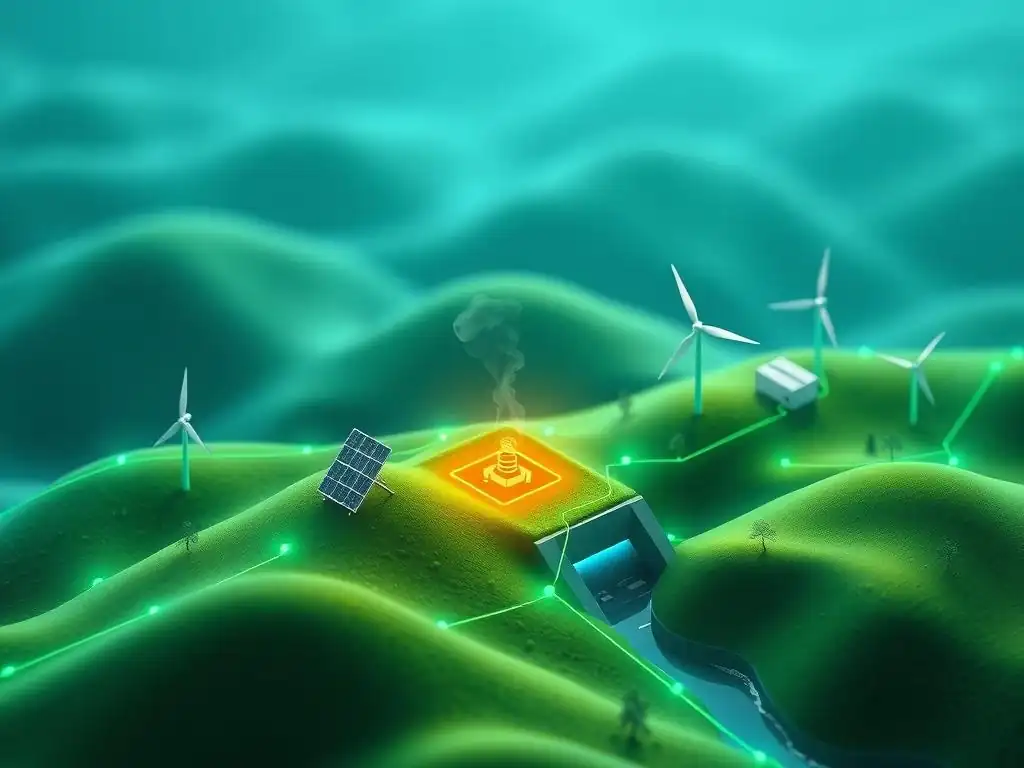
Exploring Energy-Efficient Consensus Mechanisms: Alternatives to Proof-of-Work
One of the most impactful strategies for reducing blockchain's energy footprint is the adoption of energy-efficient consensus mechanisms as alternatives to Proof-of-Work (PoW). As discussed earlier, Proof-of-Stake (PoS) is the most prominent example, reducing energy consumption dramatically by replacing computational competition with economic stake. Many newer blockchain networks are built on PoS from inception, while established networks like Ethereum have successfully transitioned. This shift represents a fundamental change in how blockchain security is achieved, moving away from energy-intensive computation.
Beyond standard PoS, other consensus mechanisms also offer improved energy efficiency compared to PoW. These include Delegated Proof-of-Stake (DPoS), Proof-of-Authority (PoA), and various hybrid models. Exploring and implementing these alternatives is a key pathway to overcoming Blockchain energy consumption challenges. For instance, DPoS allows token holders to elect delegates who validate transactions, requiring far less energy than open competition. PoA relies on a limited set of pre-approved validators, often used in private or consortium blockchains where identity is known, also consuming minimal energy.
Delegated Proof-of-Stake (DPoS) and Proof-of-Authority (PoA) Analysis
Delegated Proof-of-Stake (DPoS) is a consensus mechanism where token holders vote for a set number of delegates (or witnesses/block producers) who are responsible for validating transactions and producing blocks. Examples include networks like EOS, TRON, and Tezos (which uses a variation called Liquid Proof-of-Stake). This system centralizes block production to a smaller, elected group, significantly reducing the computational overhead and energy required compared to PoW. The energy consumption is limited to running the nodes operated by these delegates and the voting process.
Proof-of-Authority (PoA) is another energy-efficient model often used in enterprise or permissioned blockchain environments. In PoA, new blocks are created by a limited number of approved validators, whose identities are known and verified. This mechanism prioritizes trust in the validators' identities and reputation over computational proof.
Networks like the POA Network and aspects of the Binance Smart Chain (now BNB Chain) have utilized PoA or variations. Since it doesn't rely on solving complex computational puzzles or staking large amounts of capital, PoA consumes minimal energy, making it suitable for applications where efficiency and throughput are prioritized, further illustrating solutions to Blockchain energy consumption challenges.
Renewable Energy Integration for Blockchain Mining and Operations
While transitioning to energy-efficient consensus mechanisms is crucial, improving the sustainability of existing PoW networks largely depends on the energy sources powering their operations. Integrating renewable energy sources such as solar, wind, hydroelectric, and geothermal power into blockchain mining and data center operations can significantly reduce the carbon footprint, even if the total energy consumption remains high. Some mining companies and pools are actively pursuing strategies to source renewable energy, either by relocating to areas with abundant clean power or by directly investing in renewable energy projects.
Efforts are being made within the industry to track and report on the use of renewable energy in mining. Initiatives aim to incentivize the use of clean energy and potentially differentiate "green" blocks or transactions. While challenges remain, including the intermittency of some renewable sources and the difficulty in verifying energy origins in a decentralized network, the move towards renewables is a vital component in addressing Blockchain energy consumption challenges and mitigating environmental impact.
Carbon Offset Programs: Assessing Effectiveness and Implementation
Carbon offset programs represent another strategy employed by some blockchain projects and companies to mitigate their environmental impact. These programs involve investing in projects that reduce greenhouse gas emissions elsewhere, such as reforestation initiatives, renewable energy projects, or energy efficiency improvements, to compensate for the emissions generated by blockchain activities. The goal is to achieve carbon neutrality by balancing emitted carbon with an equivalent amount of carbon removed or avoided.
The effectiveness and implementation of carbon offset programs in the blockchain space are subject to scrutiny. Critics point to challenges in ensuring the additionality (that the emission reduction would not have happened anyway) and permanence of offset projects, as well as the potential for greenwashing.
However, when implemented rigorously with high-quality, verifiable offset projects, they can play a role as a supplementary measure to reduce the net carbon footprint. While not a replacement for reducing energy consumption at the source, well-executed offset programs can be part of a broader strategy to address Blockchain energy consumption challenges and move towards sustainability.
Regulation and Policy: Shaping a Sustainable Blockchain Ecosystem
Government Initiatives Promoting Green Blockchain Technologies
Governments and regulatory bodies worldwide are increasingly recognizing the environmental implications of blockchain technology and are exploring ways to promote more sustainable practices. Some jurisdictions are offering incentives or grants for the development and adoption of energy-efficient blockchain solutions. Others are considering policies that favor networks using renewable energy or less energy-intensive consensus mechanisms. These initiatives reflect a growing global awareness that the growth of the digital economy, including blockchain, must align with environmental sustainability goals.
Policy discussions often involve encouraging research into new green blockchain technologies, supporting pilot projects for sustainable blockchain applications, and fostering collaboration between the blockchain industry and the energy sector. The aim is to leverage policy tools to guide the industry towards environmentally responsible innovation and operation. Addressing Blockchain energy consumption challenges through policy signals the importance of this issue on a national and international level.
Energy Audits and Transparency Requirements in the Blockchain Industry
Increasing transparency regarding the energy consumption of blockchain networks and related operations is seen as a crucial step towards accountability and fostering sustainable practices. Some regulatory proposals and industry standards advocate for mandatory energy audits and public reporting of energy usage and carbon emissions by large-scale blockchain operators, particularly mining farms. This would provide clearer data on the actual environmental footprint and allow for better-informed decision-making by investors, users, and policymakers.
Transparency requirements could also extend to disclosure about the energy mix used by mining operations, enabling differentiation between those powered by renewables and those relying on fossil fuels. Such measures would make the Blockchain energy consumption challenges more visible and quantifiable, potentially driving market forces and consumer pressure towards greener alternatives. While implementation details remain under discussion, the push for greater transparency is gaining momentum.
European Union's Crypto-Assets Regulation (MiCA) and Energy Efficiency
The European Union's comprehensive Markets in Crypto-Assets (MiCA) regulation is a significant example of how major jurisdictions are beginning to address the environmental impact of crypto-assets and blockchain technology through legislation. While MiCA primarily focuses on market integrity, consumer protection, and financial stability, it also includes provisions related to the environmental impact of crypto-assets. The regulation mandates that large crypto-asset service providers disclose information on the environmental and climate-related impact of the consensus mechanisms used, particularly concerning energy consumption.
MiCA requires the European Securities and Markets Authority (ESMA) to issue a report on the environmental impact of crypto-assets and potentially propose further measures. This regulatory approach signals a clear intent to monitor and potentially regulate Blockchain energy consumption challenges within the EU. It sets a precedent for integrating sustainability considerations into broader regulatory frameworks for digital assets, potentially influencing approaches taken by other regions globally.
Future Outlook: Sustainability and Decentralization
Layer-2 Scaling Solutions and Sharding for Energy Reduction Potential
Future developments in blockchain technology, particularly scaling solutions, hold significant potential for reducing energy consumption per transaction. Layer-2 scaling solutions, such as rollups (Optimistic and Zero-Knowledge), state channels, and sidechains, process transactions off the main blockchain (Layer-1) and then bundle them into a single transaction or small proof that is submitted to the main chain. This dramatically reduces the load on the energy-intensive Layer-1, decreasing the overall energy required to process a large volume of transactions.
Similarly, sharding, a technique planned for implementation in some blockchains like Ethereum, involves splitting the network into smaller, more manageable segments called "shards." Each shard can process transactions and smart contracts independently and in parallel. This increases the network's throughput without requiring every node to process every transaction, potentially leading to greater overall energy efficiency as the network scales. These scaling technologies are crucial for addressing Blockchain energy consumption challenges at a fundamental architectural level.
Emerging Technologies Minimizing Environmental Impact
Innovation in the blockchain space is not limited to scaling; new consensus mechanisms and network designs are continuously being explored to minimize environmental impact. Beyond PoS, DPoS, and PoA, emerging concepts like Proof-of-Space-and-Time (PoST), Proof-of-History (PoH), and others aim to provide secure and decentralized consensus with significantly lower energy footprints than PoW. PoST, used by networks like Chia, relies on storage space rather than computational power. PoH, used by Solana, creates a historical record that proves an event occurred at a specific moment in time, aiding in fast consensus without high energy cost.
Research is also ongoing into novel cryptographic techniques and network architectures that could further enhance efficiency. The focus is on designing protocols where the "cost" of participation and security is decoupled from massive energy expenditure. These emerging technologies are vital for ensuring that the future growth and adoption of blockchain technology are sustainable and do not exacerbate Blockchain energy consumption challenges.
Chia Network and Algorand: Sustainable Blockchain Project Examples
Several blockchain projects are specifically designed with sustainability and low energy consumption as core principles. The Chia Network, for instance, utilizes a Proof-of-Space-and-Time (PoST) consensus mechanism. Instead of using computational power to mine blocks, participants "farm" blocks using available hard drive space ("plots"). The energy consumption of farming is significantly lower than PoW mining, primarily involving the energy needed for storage drives and basic computing. This approach aims to leverage existing storage infrastructure, presenting a different model for decentralized consensus.
Algorand is another example of a blockchain platform built with energy efficiency in mind, utilizing a Pure Proof-of-Stake (PPoS) consensus mechanism. Algorand's PPoS selects block proposers and validators randomly and secretly based on their stake, requiring minimal computation and energy. The Algorand Foundation has also committed to being carbon negative, working with partners to measure their carbon footprint and implement carbon offset initiatives. These projects serve as concrete examples of how blockchain technology can be developed with sustainability as a foundational element, providing models for addressing Blockchain energy consumption challenges.
Conclusion: Towards a Sustainable Blockchain Future
Prioritizing Energy Efficiency in Blockchain Development and Innovation
Addressing the environmental impact of blockchain technology, particularly its energy consumption, is paramount for its long-term success and acceptance. Prioritizing energy efficiency must be a central theme in future blockchain development and innovation. This involves continued research and implementation of energy-efficient consensus mechanisms, optimizing network protocols to reduce computational load, and designing hardware and software with power consumption in mind. The industry needs to move decisively away from energy-wasteful models where viable alternatives exist.
Developers, researchers, and entrepreneurs in the blockchain space have a responsibility to build sustainable solutions. This means evaluating the environmental footprint of new protocols and applications from the outset and favoring designs that minimize energy use. Prioritizing energy efficiency is not just an environmental concern but also contributes to the scalability and cost-effectiveness of blockchain networks, directly tackling Blockchain energy consumption challenges through technological advancement.
Supporting Sustainable Blockchain Initiatives and Responsible Practices
Supporting initiatives focused on developing and promoting sustainable blockchain solutions is crucial for fostering a greener ecosystem. This includes investing in projects built on energy-efficient consensus mechanisms, funding research into low-carbon blockchain technologies, and supporting companies that adopt renewable energy sources for their operations. Users and investors can also play a role by choosing to interact with or support networks and projects that demonstrate a commitment to environmental responsibility.
Responsible practices extend beyond energy consumption to include minimizing electronic waste from hardware and ensuring transparency about environmental performance. Industry collaboration to establish best practices and standards for sustainability can accelerate the transition to a more environmentally friendly blockchain landscape. Collectively supporting these initiatives is key to overcoming Blockchain energy consumption challenges and building a sustainable future for decentralized technologies.
Reporting on Sustainable Blockchain Practices and Future Trends
Increased reporting and transparency on sustainable blockchain practices are essential for tracking progress, holding the industry accountable, and informing stakeholders. This involves clear and verifiable reporting on energy consumption, the proportion of renewable energy used, and the carbon footprint of blockchain networks and related operations. Standardized reporting frameworks could help compare the environmental performance of different technologies and projects.
Looking ahead, future trends will likely involve further advancements in Layer-2 scaling, widespread adoption of PoS and other efficient consensus mechanisms, and potentially new paradigms yet to be discovered. Continuous monitoring and reporting on these trends, alongside their environmental implications, will be vital. Openly discussing Blockchain energy consumption challenges and highlighting successful strategies for mitigation will contribute to a more informed public and drive the industry towards a truly sustainable decentralized future.
Frequently Asked Questions
How does blockchain technology contribute to energy consumption challenges?
Blockchain, particularly proof-of-work systems like Bitcoin, require significant computational power for transaction validation and security, leading to high energy demands. This stems from the need for constant mining efforts to maintain the network.
What are alternative consensus mechanisms to address blockchain energy consumption challenges?
Proof-of-stake and delegated proof-of-stake are energy-efficient alternatives. They replace energy-intensive mining with stake-based validation, reducing the overall energy footprint.
Are there any blockchain applications specifically designed to improve energy efficiency?
Yes, blockchain is used for decentralized energy grids and smart contracts that optimize energy distribution. These applications promote transparency and efficiency in energy management and consumption.
What regulatory measures are being considered to mitigate blockchain energy consumption challenges?
Governments are exploring regulations to incentivize sustainable blockchain practices. This includes promoting renewable energy sources for mining and implementing energy efficiency standards for blockchain operations.
What is the future outlook for addressing blockchain energy consumption challenges?
The future involves continued innovation in consensus mechanisms and adoption of renewable energy by blockchain networks. The goal is to achieve a sustainable and environmentally friendly blockchain ecosystem.
Final Reflection: Confronting Blockchain's Energy Shadow
The exploration of blockchain's energy footprint, as detailed throughout this article, reveals a critical truth: the promise of decentralized innovation cannot come at the expense of environmental sustainability. While blockchain technology offers transformative potential across various sectors, its current energy consumption challenges demand immediate and concerted action. Ignoring this reality risks undermining the very principles of progress and responsibility that blockchain aims to uphold.
The ongoing debate surrounding blockchain's energy use highlights the urgent need for innovative solutions and a shift in perspective. This isn't just about numbers and statistics; it's about the future we're building, a future where technology and environmental consciousness coexist harmoniously. We are the first generation to feel the effect of climate change and the last generation who can do something about it.
– Barack Obama. This quote underscores the weight of our responsibility to address these challenges head-on, ensuring that blockchain's potential is realized without exacerbating the climate crisis.
As you reflect on the information presented, consider your own role in shaping a more sustainable future for blockchain. What steps can you take, whether as a developer, investor, or simply an informed citizen, to advocate for energy-efficient solutions and responsible innovation? The future of blockchain, and indeed, the future of our planet, depends on our collective commitment to confronting these challenges with creativity, collaboration, and a unwavering dedication to sustainability.
Take Charge: Reduce Your Blockchain Footprint Now!
Thank you for exploring the important issue of blockchain's energy consumption with us. You now have a better understanding of the environmental challenges involved. It's time to move from awareness to action!
Here are some steps you can take immediately to help build a more sustainable blockchain ecosystem:
- Explore Eco-Friendly Blockchains: Investigate alternative blockchain platforms that use energy-efficient consensus mechanisms like Proof-of-Stake. Consider supporting projects built on these platforms to promote greener technology.
- Offset Your Blockchain Activities: Calculate the carbon footprint of your transactions or mining activities, and explore reputable carbon offset programs to neutralize your environmental impact.
- Share Your Insights: Join the conversation by commenting below! What are your thoughts on reducing blockchain's energy consumption, and have you come across innovative solutions?
Are you ready to champion a greener blockchain and encourage others to join your efforts?
Leave a Reply