
Beyond Trading: Beginner Crypto Exchange Features You Should Know About


Welcome to Blockchain Trends, your guide to understanding the revolutionary impact of blockchain technology. Beyond the hype of cryptocurrencies, blockchain is reshaping industries. Are you new to the world of trading? Dive into our exploration of crypto exchange user interface features, uncovering the essential tools and functionalities that empower both beginners and seasoned traders alike. Discover how these seemingly simple features are unlocking new possibilities and shaping the future of decentralized finance. Intrigued? Keep reading to learn more.
- Understanding Crypto Exchange User Interface Features for Beginners
- Essential Crypto Exchange User Interface Features Beginners Should Know
- Comparing Crypto Exchange User Interfaces: A Beginner's Perspective
- Enhancing Your Trading Experience with Additional Features
- Future Trends in Crypto Exchange User Interfaces
- Conclusion: Choosing the Right Crypto Exchange for Your Needs
- Call to Action: Start Your Crypto Trading Journey Today!
-
Frequently Asked Questions
- How important are user-friendly interfaces for beginners in crypto exchanges?
- What are some essential security features beginners should look for in a crypto exchange?
- Besides buying and selling, what other beginner-friendly features should a crypto exchange offer?
- How can beginners assess the reliability and reputation of a crypto exchange?
- What are the key elements of a good crypto exchange user interface (UI) for newcomers to the crypto space?
- Final Reflection: Navigating the Future of Finance
- Unlock Your Crypto Potential: Start Exploring Today!
Understanding Crypto Exchange User Interface Features for Beginners
What is a Crypto Exchange and Why Does the User Interface Matter?
A crypto exchange serves as a digital marketplace where users can buy, sell, and trade cryptocurrencies. Think of it as a stock exchange, but for digital assets like Bitcoin, Ethereum, and countless others. These platforms provide the necessary infrastructure for users to interact with the volatile crypto market, offering various tools for trading, managing assets, and sometimes even earning yield on holdings.
The primary function is to facilitate transactions between buyers and sellers, determining market prices based on supply and demand. Without exchanges, accessing and trading cryptocurrencies would be significantly more complex, relying on peer-to-peer transactions which are less efficient and scalable for the average user. The evolution of these platforms has been rapid, moving from simple buy/sell interfaces to sophisticated trading environments.
For beginners navigating the often-intimidating world of cryptocurrency trading, the user interface (UI) of an exchange is paramount. It's the first point of contact and dictates how easily a new user can understand market data, execute trades, manage their portfolio, and access support. A poorly designed user interface can lead to confusion, errors, and even financial losses.
Data suggests that complex onboarding processes or confusing trading interfaces can result in significant user drop-off rates, sometimes exceeding 40% for novice users who feel overwhelmed. Conversely, an intuitive and well-structured crypto exchange user interface features clear navigation, understandable terminology, and accessible tools, significantly lowering the barrier to entry and empowering beginners to trade with confidence. The quality of the UI directly impacts user experience (UX), which is critical for retention and successful trading outcomes, especially when dealing with the inherent risks of crypto markets.
Essential Crypto Exchange User Interface Features Beginners Should Know
Easy navigation is arguably the most critical of all crypto exchange user interface features for beginners. When you first log in to a platform, you should be able to quickly locate essential sections like your wallet balance, the trading interface, deposit/withdrawal options, and security settings. A cluttered or confusing menu structure can make simple tasks feel daunting, increasing the likelihood of mistakes or frustration.
Exchanges that prioritize intuitive design often group related functions logically and use clear, universally recognized icons. For instance, finding where to buy Bitcoin should be a straightforward click from the dashboard, not buried several layers deep in sub-menus. This ease of access to core functionalities ensures that beginners can focus on learning about trading rather than struggling with the platform itself.
Leading platforms like Coinbase and Binance demonstrate strong examples of user-friendly navigation, though they cater to slightly different user levels. Coinbase is renowned for its extremely simple interface, making it one of the most accessible for absolute beginners. Its dashboard typically shows a clear overview of your portfolio and prominent buttons for buying and selling.
Binance, while offering a vast array of advanced features, also provides a "Lite" mode specifically designed to simplify the user interface for newcomers, streamlining the trading experience to basic buy/sell functions. Kraken balances a more professional trading environment with a relatively clean layout, ensuring that while powerful tools are available, finding basic account information or navigating to the spot trading section remains intuitive. A well-designed navigation flow significantly reduces the learning curve associated with using a new crypto exchange.
Charting Tools and Market Analysis Features
Understanding market trends is crucial for making informed trading decisions, and robust charting tools are essential crypto exchange user interface features that facilitate this. Most exchanges provide charting capabilities, often integrating with services like TradingView or offering their own custom solutions. Beginners will typically encounter line charts, which show price movement over time, and candlestick charts, which provide more detailed information including open, high, low, and closing prices within specific timeframes.
Volume indicators, showing the amount of cryptocurrency traded during a period, are also standard and help gauge market interest. While advanced traders use complex indicators, beginners can start by simply observing price trends and volume to get a feel for market momentum.
Effective market analysis features are presented in a way that is not overwhelming. A good crypto exchange user interface allows users to easily switch between different chart types and timeframes (e.g., 1 hour, 1 day, 1 week). Beginners can use these tools to identify basic patterns, such as whether the price is generally trending upwards or downwards.
For example, spotting a consistent upward trend on a daily candlestick chart might suggest a good time to buy, while a sharp downward trend might indicate a need for caution. Some platforms also offer basic drawing tools to mark potential support or resistance levels. While complex technical analysis requires significant study, the user interface should make basic charting and volume data accessible and understandable, allowing beginners to perform fundamental visual analysis of price action.
Order Types and Execution Interfaces
Executing trades effectively requires understanding different order types, and the user interface plays a critical role in making these options clear and easy to use. The most basic order type is a Market order, which executes immediately at the current best available price. Limit orders allow users to set a specific price at which they want to buy or sell; the order only executes if the market reaches that price.
Stop-Loss orders are crucial risk management tools, designed to sell an asset automatically if its price drops to a predefined level, limiting potential losses. A clear crypto exchange user interface features distinct options for each order type, often with simple explanations or tooltips for beginners.
The design of the order execution interface directly impacts the speed and accuracy of trades. A well-designed interface will clearly show the chosen order type, the price (for Limit/Stop-Loss), the amount, and the estimated cost or proceeds before confirmation. Sliders or simple input fields make it easy to specify quantities.
On volatile markets, milliseconds can matter, especially for market orders. While the underlying exchange engine handles execution speed, a responsive and intuitive UI ensures that the user can quickly and confidently place their order without confusion or delay. For instance, placing a Stop-Loss order should be a simple process of selecting the asset, choosing "Stop-Loss," entering the trigger price, and confirming the amount, minimizing the chance of error in a critical risk management step.
Wallet Integration and Security Features
A key function of a crypto exchange is holding users' funds in digital wallets, and the user interface must provide clear access to wallet information and robust security features. Beginners need to easily see their balances for each cryptocurrency, understand how to deposit and withdraw funds, and know the status of pending transactions. A well-designed wallet section within the user interface will show a detailed breakdown of assets, their current value, and transaction history.
It should also make it simple to generate deposit addresses or initiate withdrawal requests. Clarity in this area helps beginners manage their portfolio effectively and avoid common mistakes like sending crypto to the wrong network.
Beyond managing funds, critical security features must be prominent and easy to configure within the crypto exchange user interface. Two-Factor Authentication (2FA), typically via an app like Google Authenticator or Authy, adds a crucial layer of security beyond just a password. Exchanges often make enabling 2FA a mandatory or highly recommended step during onboarding, integrated seamlessly into the UI settings.
Information about how the exchange stores funds (e.g., using cold storage, where private keys are kept offline) provides reassurance. While users don't directly interact with cold storage, the UI can communicate these security practices. Clearly visible options for managing trusted devices, withdrawal whitelists, and security logs are also vital crypto exchange user interface features that empower users to protect their accounts against unauthorized access.
Comparing Crypto Exchange User Interfaces: A Beginner's Perspective
Top Crypto Exchanges for User-Friendly Interfaces
When it comes to user-friendly interfaces, several exchanges stand out for beginners, each with a slightly different approach to their crypto exchange user interface features.
- Coinbase: Often cited as the easiest exchange for newcomers, Coinbase boasts an exceptionally clean and minimalist design. Its primary focus is on simplifying the buying and selling process, making it feel much like a standard online brokerage account. The dashboard provides a clear overview of your portfolio's performance, and navigating to buy, sell, or convert crypto is straightforward. While it may lack some of the advanced trading features found elsewhere, its ease of use makes it ideal for those taking their first steps in crypto.
- Binance: As the world's largest exchange by trading volume, Binance offers a massive range of features, which could be overwhelming for beginners. However, its introduction of "Binance Lite" provides a significantly simplified user interface, stripping away complex charts and order types to offer a basic buy/sell/convert experience. This dual-interface approach allows beginners to start simple and transition to the full "Pro" version as they gain confidence, offering a pathway to advanced crypto exchange user interface features when ready.
- Kraken: Kraken strikes a balance between offering professional trading tools and maintaining a relatively accessible user interface. While slightly more complex than Coinbase, its UI is well-organized, providing clear access to spot trading, futures (for eligible users), staking, and portfolio management. The charting tools are robust, and the order book is presented clearly. Kraken's interface feels professional without being overly cluttered, making it a good choice for beginners who anticipate wanting access to more advanced features relatively quickly.
Key Differences in User Interface Features Across Exchanges
The differences in crypto exchange user interface features across platforms cater to varying user needs and experience levels. While basic functions like buying and selling are universal, the presentation and availability of other features vary significantly.
Consider a simplified comparison:
- Ease of Navigation: Coinbase (Excellent) vs. Binance Lite (Excellent) vs. Kraken (Good)
- Charting Depth: Coinbase (Basic) vs. Binance Pro (Excellent) vs. Kraken (Good)
- Available Order Types: Coinbase (Basic Market/Limit) vs. Binance Pro (Extensive) vs. Kraken (Good range including Stop-Loss, Take-Profit)
- Wallet Clarity: Coinbase (Excellent) vs. Binance (Good, detailed) vs. Kraken (Good, professional view)
- Educational Resources Integrated: Coinbase (Some) vs. Binance (Extensive via Binance Academy) vs. Kraken (Some guides)
This simplified view highlights that while Coinbase prioritizes simplicity in its crypto exchange user interface features, Binance offers a scalable UI (Lite to Pro), and Kraken provides a more professional, yet still manageable, trading environment from the start. Beginners prioritizing ease of entry might lean towards Coinbase or Binance Lite. Those who want more charting power or order types without excessive complexity might prefer Kraken.
Users planning to delve deep into diverse trading strategies and altcoins will find Binance's full platform eventually necessary, navigating its more complex UI as they learn. Ultimately, the "best" crypto exchange user interface features depend on individual learning style and trading goals.
Enhancing Your Trading Experience with Additional Features
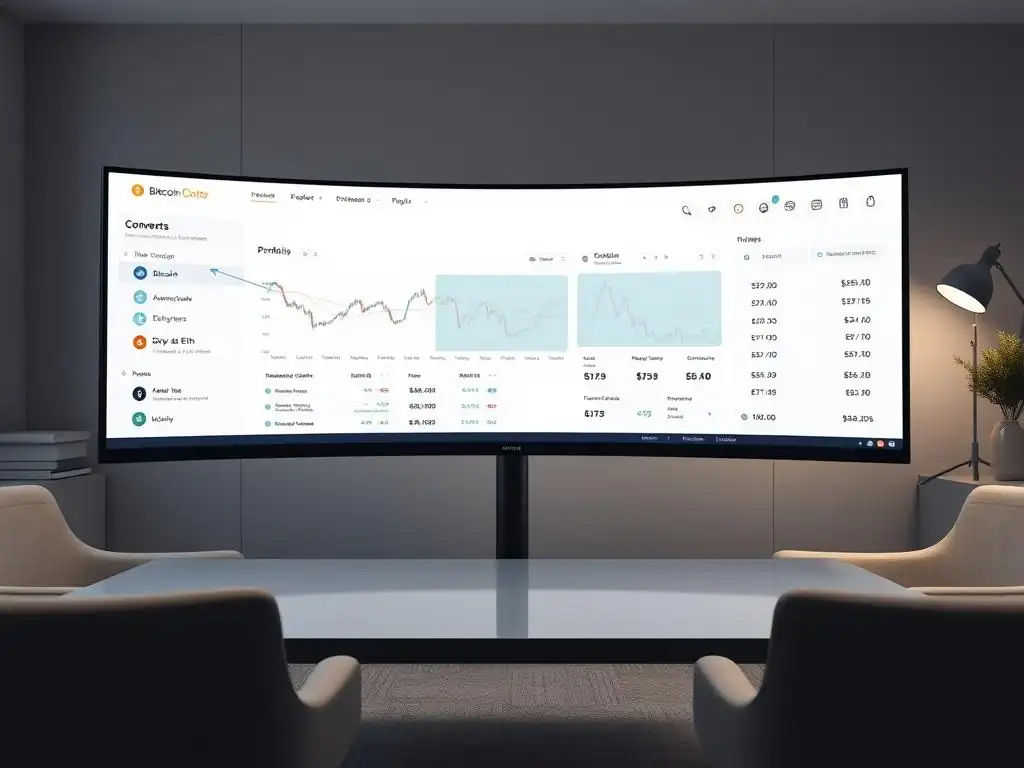
Mobile App Usability for Crypto Exchanges
In today's fast-paced world, the ability to manage investments on the go is crucial, making mobile app usability a significant component of effective crypto exchange user interface features. A well-designed mobile app replicates the core functionality of the web platform in a format optimized for smaller screens and touch interaction. This includes easy access to portfolio balances, real-time market data, charting tools, and the ability to place buy and sell orders quickly.
The benefits of trading on a mobile app are numerous: it allows users to monitor the market and react to price changes instantly, regardless of their location, provided they have internet access. This is particularly valuable in the 24/7 crypto market where opportunities can arise at any hour.
Leading exchanges have invested heavily in developing robust and user-friendly mobile applications. eToro, for instance, is well-regarded for its intuitive mobile interface that mirrors its web platform's social trading focus, making it easy to view and copy other traders' portfolios. Gemini's mobile app is praised for its clean design and focus on security, providing a seamless experience for buying and selling major cryptocurrencies.
The best mobile crypto exchange user interface features prioritize clarity, responsiveness, and security, ensuring that users can confidently manage their funds and execute trades without the limitations sometimes associated with mobile browsing. Features like push notifications for price alerts or order execution status are also invaluable for staying informed.
Educational Resources and Support within the User Interface
Entering the cryptocurrency market can be overwhelming due to its complexity and volatility. Therefore, integrated educational resources and accessible support are invaluable crypto exchange user interface features for beginners. Many exchanges now provide extensive learning materials directly within their platform or easily accessible from the UI. This can range from simple guides explaining basic concepts like blockchain and different order types to comprehensive courses on technical analysis and trading strategies. Having these resources readily available within the platform context allows beginners to learn as they trade, reinforcing concepts with practical application.
Binance Academy is a prime example of an exchange offering extensive, free educational content, easily navigable from the main Binance platform. It covers a wide range of topics suitable for absolute beginners to more advanced traders. Similarly, Coinbase offers educational content and even rewards users with small amounts of crypto for learning about specific projects through its "Coinbase Earn" program, seamlessly integrated into its user interface.
Beyond formal education, robust customer support options – such as live chat, detailed FAQs, or ticketing systems – integrated into the UI are crucial. Knowing that help is easily accessible when encountering an issue or having a question about a specific crypto exchange user interface feature provides significant peace of mind for new users.
The social aspect of trading is increasingly being integrated into crypto exchange user interface features, offering beginners opportunities to learn from and interact with more experienced traders. Social trading platforms allow users to follow other traders, view their portfolios, and sometimes even automatically copy their trades (known as copy trading). This can be a powerful learning tool for beginners, providing insights into different trading strategies and portfolio management approaches. While not every exchange offers full social trading, many are incorporating community-focused features like forums, chat rooms, or news feeds directly into their platforms.
eToro is a prominent example of an exchange built around social trading, with its CopyTrading feature being a central part of its user interface. This allows users to browse profiles of successful traders and, with a few clicks, allocate funds to automatically mirror their trading activity. Other exchanges might offer less direct social trading but include community forums or integrated news feeds to keep users informed and connected.
These community-focused crypto exchange user interface features foster a sense of connection and provide informal learning opportunities. Beginners can observe how others react to market movements, ask questions, and gain confidence by being part of a community, supplementing formal educational resources.
Future Trends in Crypto Exchange User Interfaces
The Role of Artificial Intelligence in Trading Interfaces
Artificial Intelligence (AI) is poised to significantly transform crypto exchange user interface features, making platforms smarter, more personalized, and potentially more helpful for traders of all levels. AI can be used to analyze vast amounts of market data more quickly and effectively than humans, identifying trends, patterns, and potential trading opportunities.
Future UIs might incorporate AI-powered assistants that offer personalized insights based on a user's trading history and risk tolerance. For instance, an AI could alert a beginner to a potential trading signal for an asset they hold or suggest a suitable risk management strategy based on current market conditions, presented clearly within the user interface.
AI could also simplify complex tasks, such as portfolio rebalancing or identifying potential scams. Some platforms are already beginning to integrate AI for enhanced security monitoring or to provide automated trading bots accessible through a simplified interface.
The goal is not to replace human decision-making but to augment it, providing users with powerful tools and data analysis capabilities presented in an easily digestible format. As AI technology advances, we can expect crypto exchange user interface features to become more dynamic, responsive, and tailored to individual user needs, potentially lowering the barrier to entry further by automating some of the more complex analysis traditionally required.
Regulatory Considerations Affecting User Interface Design
The evolving global regulatory landscape for cryptocurrencies has a direct and significant impact on crypto exchange user interface features, particularly concerning user onboarding and compliance. Regulations such as Know Your Customer (KYC) and Anti-Money Laundering (AML) require exchanges to collect and verify user identity information. The UI must facilitate this process smoothly and securely, guiding users through steps like submitting identification documents and proof of address. A clunky or confusing KYC process within the user interface can be a major point of friction for new users, potentially leading them to abandon the signup process.
Anticipated changes in regulation, such as stricter rules around stablecoins, derivatives trading, or even specific types of marketing, will necessitate further adjustments to user interface design. Exchanges must adapt their platforms to comply with local laws, which might involve restricting certain features based on user location, displaying specific risk warnings prominently, or providing detailed reporting tools for tax purposes.
For example, regulations requiring clearer disclosure of fees or potential risks would necessitate changes to how this information is presented in the trading interface. The user interface serves as the primary channel for exchanges to communicate compliance requirements and risk information to users, making its design crucial for both regulatory adherence and user understanding.
Conclusion: Choosing the Right Crypto Exchange for Your Needs
Navigating the world of cryptocurrency trading begins with selecting the right platform, and understanding essential crypto exchange user interface features is paramount for beginners. We've explored how intuitive navigation simplifies access to tools, how charting features aid basic market analysis, and how clear order types and execution interfaces are vital for trading effectively.
Furthermore, we highlighted the importance of accessible wallet management, robust security features like 2FA, and the growing significance of mobile app usability for trading on the go. Additional features like integrated educational resources and community engagement options can further enhance the learning and trading experience for newcomers.
Choosing the best crypto exchange user interface involves assessing your own needs and comfort level. If absolute simplicity is your priority, platforms like Coinbase or Binance Lite are excellent starting points. If you anticipate wanting access to more advanced charting and order types relatively soon but still value a clean interface, Kraken might be a better fit.
For those interested in social trading or extensive educational content, platforms like eToro or Binance (with Binance Academy) offer compelling crypto exchange user interface features. It is advisable for beginners to explore the demo or basic versions of a few exchanges to see which interface feels most comfortable and understandable before committing funds.
Call to Action: Start Your Crypto Trading Journey Today!
Ready to explore the exciting world of cryptocurrency? Understanding the crypto exchange user interface features is your first step to confident trading.
Don't wait – find the platform that best suits your learning style and start building your crypto portfolio today! Explore different interfaces and see which one feels right for you. The journey into crypto trading is an educational one, and a user-friendly exchange makes all the difference.
Frequently Asked Questions
How important are user-friendly interfaces for beginners in crypto exchanges?
A user-friendly interface is crucial for beginner crypto users. It simplifies navigation, reduces confusion, and boosts adoption by making complex processes more accessible.
What are some essential security features beginners should look for in a crypto exchange?
Beginners should prioritize exchanges with two-factor authentication (2FA), cold storage of funds, and regular security audits. These features help protect against unauthorized access and potential hacks.
Besides buying and selling, what other beginner-friendly features should a crypto exchange offer?
Look for features like educational resources, demo accounts, and simple conversion tools. These can help beginners learn about crypto and practice trading before risking real money.
How can beginners assess the reliability and reputation of a crypto exchange?
Check for reviews, security certifications, and the exchange's regulatory compliance. A long track record and positive community feedback are also good indicators of reliability.
What are the key elements of a good crypto exchange user interface (UI) for newcomers to the crypto space?
A good UI should be intuitive, with clear navigation, easy-to-understand charts, and accessible customer support. It should also avoid jargon and prioritize simplicity.
The exploration of crypto exchange user interface features has revealed more than just the mechanics of digital asset trading; it has highlighted the democratization of finance itself. As we've seen, intuitive design and accessible tools are crucial for empowering individuals to participate in this evolving landscape, moving beyond the realm of specialists and into the hands of everyday users.
The impact of these user-friendly features extends far beyond simple transactions. They represent a shift in how we interact with our finances, fostering greater understanding and control. The best way to predict the future is to create it.
This quote perfectly encapsulates the role of accessible crypto exchange interfaces in shaping a future where financial literacy and participation are no longer privileges, but fundamental rights.
Now, as you navigate the world of cryptocurrency, remember that knowledge is your most powerful asset. Take the time to explore the features discussed, understand their purpose, and utilize them to make informed decisions. The future of finance is being built today, and your active participation, guided by understanding and empowered by accessible tools, will shape the landscape for generations to come.
Unlock Your Crypto Potential: Start Exploring Today!
Thanks for exploring the world of crypto exchanges with us! We hope you now feel more confident navigating the landscape and leveraging these platforms beyond basic trading. Now, it's time to put your knowledge into practice.
Ready to take the next step? Here's how:
- Begin experimenting with staking or yield farming to see how your crypto holdings can work for you!
- Check out our educational resources to deepen your understanding of features like limit orders and stop-losses.
- Share this article with a friend who's also interested in maximizing their crypto exchange experience. Let's learn together!
What’s the first new feature you plan to try, and what are your initial thoughts? Share your experiences in the comments below!
Leave a Reply