
The Role of Oracles in Decentralized Gaming DApps: Ensuring Fair Play


Welcome to Blockchain Trends, your compass in the ever-evolving landscape of decentralized technologies.
Dive into a world where blockchain's potential stretches far beyond cryptocurrencies. In this article, we're unraveling a critical piece of the decentralized gaming puzzle: decentralized gaming oracle solutions. How do they ensure fair play and transparency in DApps? Discover how these vital components are shaping the future of gaming and setting new standards for trust in the digital realm. Curious to learn more about how oracles are revolutionizing the gaming experience? Let's explore.
The Role of Oracles in Decentralized Gaming DApps: Ensuring Fair Play
- Introduction: Decentralized Gaming and the Need for Oracles
- Understanding Oracles in the Context of Decentralized Gaming
- Ensuring Fair Play with Oracles
- Benefits of Using Oracles in Decentralized Gaming DApps
- Implementing Oracles: A Practical Guide
- Examples of Successful Decentralized Gaming DApps Using Oracles
- The Future of Decentralized Gaming and Oracle Technology
- Conclusion: Embracing Oracles for a Fairer Gaming Ecosystem
-
Frequently Asked Questions
- What is the primary role of an oracle in a decentralized gaming application (DApp)?
- How do oracles contribute to ensuring fair play in decentralized gaming?
- What are some examples of real-world data that oracles might provide to a decentralized gaming DApp?
- What are the potential challenges associated with using oracles in decentralized gaming DApps?
- How might decentralized gaming oracle solutions impact the future of the gaming industry?
- Final Reflection: Bridging Trust in Decentralized Worlds
- Unleash the Future of Fair Gaming!
Introduction: Decentralized Gaming and the Need for Oracles
The Rise of Decentralized Gaming DApps: A New Era of Play
Decentralized gaming applications, or DApps, represent a significant evolution in the gaming industry, shifting power and ownership from centralized entities to the players themselves. Built on blockchain technology, these games offer verifiable digital asset ownership, transparent game mechanics, and often, player-driven economies. The appeal lies in the ability to truly own in-game items as non-fungible tokens (NFTs) and potentially earn cryptocurrency or other valuable assets through gameplay, often referred to as "play-to-earn."
The growth in this sector has been substantial. While exact market figures fluctuate rapidly, the blockchain gaming market was valued at over $4.6 billion in 2022 and is projected to grow significantly, with millions of unique active wallets interacting with gaming DApps monthly. This surge indicates a strong appetite for games that offer transparency, provable ownership, and economic opportunities, fundamentally altering the traditional gaming model where assets are merely licensed and game logic is often opaque.
The Challenge of Randomness and Data Integrity in Blockchain Games
Blockchain smart contracts are deterministic by nature; given the same input, they will always produce the same output. This determinism is crucial for security and verifiability on the blockchain but presents a significant challenge for games that rely on unpredictable elements like random chance, external real-world data, or complex computations that are too expensive or impossible to run directly on the blockchain.
For a game to be engaging and fair, it needs elements like random loot drops, unpredictable critical hits, card shuffling, or dynamic economies influenced by external market prices. Smart contracts alone cannot securely access truly random numbers or external data feeds without risking manipulation. Bringing this off-chain data or non-deterministic outcomes onto the deterministic blockchain environment reliably and securely is known as the "oracle problem."
Introducing Oracles: Bridging the Gap for Fair and Verifiable Gaming
Oracles act as intermediaries, securely fetching information from the off-chain world and delivering it to smart contracts on the blockchain. In the context of decentralized gaming, oracles are vital for providing the external data and non-deterministic inputs that smart contracts need to execute complex and fair game logic. They bridge the gap between the deterministic, on-chain environment and the dynamic, unpredictable world required for rich game experiences.
By using oracles, decentralized gaming DApps can incorporate elements like verifiable random outcomes for loot boxes, dynamic pricing for in-game items based on market value, or even integrate real-world sports scores into fantasy sports DApps. This integration is critical not just for functionality but fundamentally for ensuring that games are fair, transparent, and resistant to cheating, building essential trust with the player base. Reliable decentralized gaming oracle solutions are paramount for this bridge.
Understanding Oracles in the Context of Decentralized Gaming
What are Oracles and How Do They Function?
Blockchain oracles are services that enable smart contracts to interact with data and systems outside the blockchain. They are essential because blockchains, by design, are isolated environments and cannot inherently access external information like website data, real-world events, or complex computations. An oracle retrieves this off-chain data, verifies its accuracy (depending on the oracle type and design), and then securely transmits it to the smart contract, usually through a transaction.
The functioning of an oracle typically involves several steps: a smart contract sends a request for specific data, the oracle node (or a network of nodes) listens for this request, fetches the requested data from a reliable source (e.g., a data API, a random number generator service), processes and formats the data, and then sends it back to the smart contract via a transaction. The security and reliability of this process are critical, as the smart contract's execution depends entirely on the data provided by the oracle.
Oracle Types for DApps: RNG, Price Feeds, and Proof of External Computation
Different types of oracles serve distinct purposes crucial for decentralized gaming DApps. Random Number Generation (RNG) oracles provide verifiable, unpredictable random outcomes needed for events like card draws, dice rolls, or determining item drops. Unlike pseudo-random generators, secure RNG oracles use cryptographic methods to ensure that the outcome cannot be predicted or manipulated by players or even the oracle provider itself.
Price Feed oracles deliver real-time or near real-time market data, such as the price of cryptocurrencies, NFTs, or even real-world assets. These are essential for games with dynamic economies, allowing in-game asset values, crafting costs, or rewards to adjust based on external market conditions. Proof of External Computation oracles handle complex calculations or simulations off-chain that would be too gas-intensive or complex to run within a smart contract's limitations, providing a verifiable result back to the chain. These diverse decentralized gaming oracle solutions enable richer gameplay.
The Crucial Role of Oracles in Ensuring Fair Play and Transparency
The core value proposition of decentralized gaming is often centered on fairness and transparency, contrasting with the "black box" nature of traditional games. Oracles are fundamental to delivering on this promise. By providing verifiable external data and random outcomes, they allow players to trust that the game mechanics are operating as designed and are not being secretly manipulated.
For instance, if a game uses a verifiable RNG oracle for loot box drops, players can be confident that the drop rates are genuinely random and adhere to the stated probabilities, rather than being potentially adjusted server-side. Similarly, using price feed oracles for an in-game marketplace ensures that asset values reflect real-world supply and demand, preventing developers or malicious actors from arbitrarily setting prices. This transparency, facilitated by reliable decentralized gaming oracle solutions, builds essential player confidence and forms the bedrock of a trustworthy gaming ecosystem.
Ensuring Fair Play with Oracles
Random Number Generation (RNG) Oracles for Unpredictable Game Outcomes
Randomness is a cornerstone of many engaging game mechanics, from shuffling a deck of cards to determining the success rate of a critical attack or the contents of a treasure chest. In traditional games, the server handles this randomness, which players must trust is truly random and not manipulated. In decentralized gaming, generating secure, verifiable randomness on-chain is difficult and expensive.
RNG oracles, such as Chainlink VRF (Verifiable Random Function), solve this by providing a random number and cryptographic proof that the number was generated in a provably fair and unpredictable manner. The smart contract can verify this proof, ensuring the randomness is legitimate. This is crucial for preventing exploits where players might try to predict future game outcomes based on previous results or timing, ensuring that every dice roll, card draw, or loot drop is genuinely random and fair for all participants.
Price Feed Oracles for Dynamic In-Game Economies
Many decentralized games feature player-owned assets and economies that interact with external markets. The value of in-game items, NFTs, or even the native game token might be influenced by real-world supply and demand or the price of underlying cryptocurrencies. To create dynamic and responsive in-game economies, smart contracts need access to accurate, up-to-date price information.
Price feed oracles provide this vital link, delivering reliable market data from various exchanges or data aggregators to the blockchain. This allows game smart contracts to perform actions based on real-time values, such as dynamically adjusting crafting costs based on token prices, setting the value of in-game items for trading, or determining rewards based on the market value of assets. Utilizing robust decentralized gaming oracle solutions for price feeds prevents exploits like flash loan attacks attempting to manipulate in-game values based on stale data.
Proof of External Computation Oracles for Complex Game Logic
While smart contracts are excellent for managing ownership and simple logic, they are limited in computational power and expensive to run complex calculations due to gas costs. Many sophisticated game mechanics, such as complex physics simulations, pathfinding for AI opponents, or determining the outcome of large-scale battles involving many units, require significant processing power that is not feasible on-chain.
Proof of External Computation oracles allow decentralized games to execute these complex calculations off-chain and then securely bring the verifiable result back onto the blockchain. The oracle performs the computation and provides cryptographic proof that the calculation was done correctly according to predefined rules. This enables developers to build more complex and sophisticated game logic without sacrificing the security and verifiability that blockchain provides, opening up new possibilities for game genres and mechanics in decentralized gaming.
Benefits of Using Oracles in Decentralized Gaming DApps
Enhanced Trust and Transparency for Players
One of the most significant advantages of incorporating oracles into decentralized gaming DApps is the substantial boost in player trust and transparency. Unlike traditional games where core mechanics like random number generation or server-side calculations are opaque, the use of verifiable oracles means that critical game outcomes can be publicly audited on the blockchain. Players can verify that random events were genuinely unpredictable or that external data used in the game logic was accurate at the time of use.
This level of transparency builds confidence in the fairness of the game. When players know that the underlying systems determining their success or failure are provably fair and not subject to arbitrary developer intervention or hidden manipulation, they are more likely to invest their time and resources into the game. This is a fundamental shift from traditional gaming and a core appeal of the decentralized model, heavily reliant on reliable decentralized gaming oracle solutions.
Preventing Cheating and Manipulation in Blockchain Games
Oracles play a critical role in preventing various forms of cheating and manipulation that could undermine the integrity of decentralized games. Without secure oracles, players might exploit vulnerabilities related to predictable randomness, manipulate external data feeds, or interfere with off-chain calculations.
By using verifiable RNG oracles, games can prevent players from timing transactions or using other methods to predict future random outcomes. Price feed oracles protect against attempts to exploit stale or inaccurate price data to gain an unfair advantage in in-game economies. Proof of external computation oracles ensure that complex game logic executed off-chain cannot be tampered with before the result is recorded on the blockchain. Robust decentralized gaming oracle solutions are therefore essential security components.
Improved Game Mechanics and User Experience
Beyond just ensuring fairness, oracles enable developers to implement more sophisticated and dynamic game mechanics that would be impossible or impractical on-chain alone. The ability to securely access real-world data allows for games with economies that react to external events, sports games that integrate real-world scores, or simulation games that use external environmental data.
Furthermore, offloading complex computations via oracles allows for richer gameplay elements like advanced AI, realistic physics, or complex strategic calculations without hitting blockchain gas limits or computation ceilings. This leads to a more engaging and enjoyable user experience, moving decentralized games beyond simple mechanics towards parity with, or even surpassing, the complexity of traditional titles, all powered by effective decentralized gaming oracle solutions.
Cost-Effectiveness and Scalability of Oracle Integration
Performing complex computations or storing large amounts of external data directly on a blockchain can be prohibitively expensive due to gas fees and storage costs. Oracles provide a cost-effective alternative by handling these tasks off-chain. The smart contract only pays for the transaction needed to request data from the oracle and another to receive the verified result, which is significantly cheaper than performing the entire computation or storing all data on-chain.
Decentralized oracle networks are also designed to be scalable, capable of handling a large volume of data requests from numerous DApps simultaneously. This scalability is crucial as decentralized gaming grows and the demand for external data and computation increases. Implementing well-designed decentralized gaming oracle solutions allows game developers to build complex, data-rich games while keeping operational costs manageable and ensuring the game can handle a growing player base.
Implementing Oracles: A Practical Guide
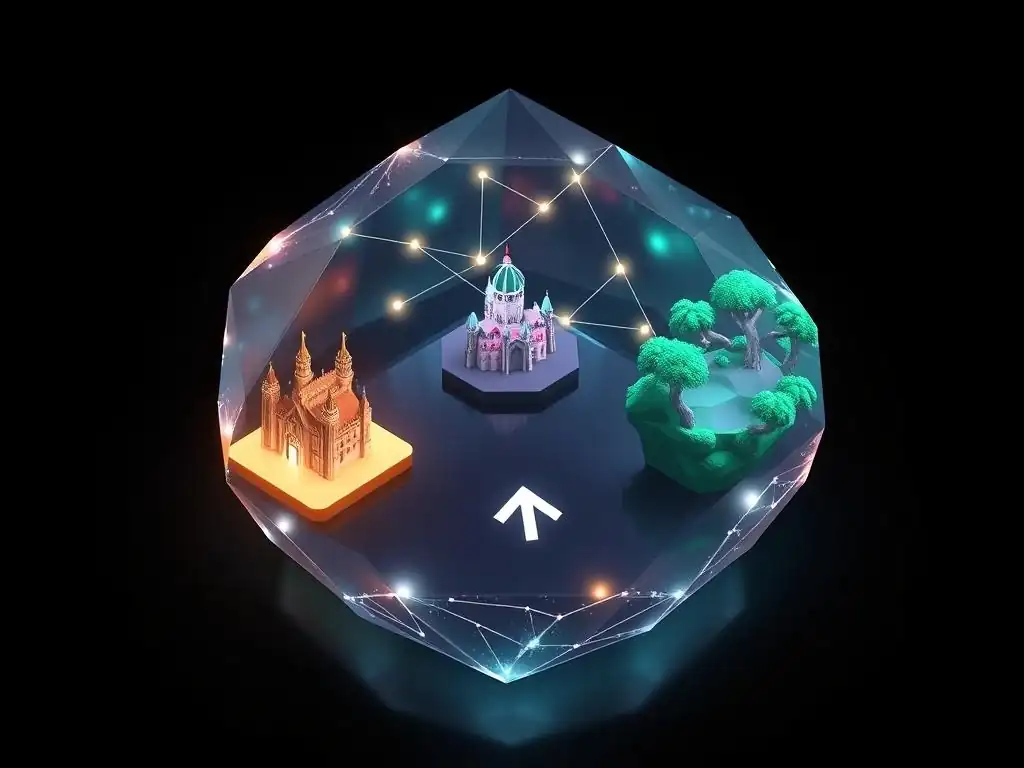
Choosing the Right Oracle Provider Based on Security and Cost
Selecting an appropriate oracle provider is a critical decision for any decentralized gaming DApp developer. The primary considerations should be security, reliability, cost, and the specific data needs of the game. A secure oracle should ideally be decentralized, meaning it relies on a network of independent nodes rather than a single point of failure, reducing the risk of data manipulation or downtime.
Developers should evaluate providers based on their track record, the cryptographic guarantees they offer (e.g., for RNG or computation proofs), the quality and diversity of their data sources, and their supported blockchains. Cost models vary, often based on the number of requests or the complexity of the data, so developers must choose a provider whose pricing aligns with their game's expected usage patterns. Prioritizing battle-tested, decentralized gaming oracle solutions is paramount for long-term viability.
Integrating Oracles into Smart Contracts: Security Considerations
Integrating oracle calls into smart contracts requires careful planning and adherence to security best practices. Smart contracts that rely on external data are vulnerable if the oracle is compromised or provides inaccurate information. Developers must design their contracts to handle potential oracle failures or delays gracefully, perhaps using fallback mechanisms or time limits for responses.
Using established and audited oracle smart contract libraries or frameworks is highly recommended, as they incorporate built-in security features and patterns for interacting with oracle networks. It is also crucial to validate the data received from the oracle within the smart contract where possible, perhaps by checking if the value falls within an expected range or requiring multiple oracle nodes to agree on a result (threshold signatures). Securing the interaction between your game's smart contracts and decentralized gaming oracle solutions is non-negotiable.
Testing and Auditing Oracle Integration for Security
Thorough testing and security audits are indispensable steps before deploying a decentralized gaming DApp that uses oracles. Testing should cover various scenarios, including successful data requests, delayed responses, failed requests, and testing with potentially malicious or malformed data from the oracle (in a controlled environment).
Security audits by reputable third parties specializing in smart contract security are vital to identify potential vulnerabilities in the oracle integration logic. Auditors can help uncover issues such as reentrancy attacks triggered by oracle callbacks, incorrect handling of data formats, or reliance on insufficiently decentralized data sources. Investing in rigorous testing and auditing for your decentralized gaming oracle solutions is an investment in the game's long-term security and player trust.
Examples of Successful Decentralized Gaming DApps Using Oracles
Case Study 1: Axie Infinity - Leveraging Oracles for Land Sales and Breeding
Axie Infinity, a prominent play-to-earn game, features complex mechanics including land ownership (Lunacia) and breeding Axie creatures. While specifics of their oracle usage aren't always publicly detailed at a granular level for every feature, the principles behind the need for oracles are evident in such systems. For instance, determining the specific traits inherited during breeding often involves elements of randomness. A verifiable RNG oracle would be crucial to ensure breeding outcomes are provably random and fair, preventing players from predicting or manipulating the genetic results of their Axies.
Similarly, aspects related to land sales or the distribution of resources on land could potentially benefit from oracle-driven mechanisms. While the primary land sales occurred via a smart contract, future dynamics, such as integrating real-world weather data into land productivity or introducing random in-game events tied to external factors, would necessitate oracle solutions. The core requirement is bringing unpredictable or external data into the deterministic blockchain environment securely, a task decentralized gaming oracle solutions are designed for.
Case Study 2: Decentraland - Ensuring Fairness with Price Feeds for LAND Valuation
Decentraland is a virtual world where users can buy, sell, and develop virtual parcels of LAND (ERC-721 tokens). The value of LAND, as well as other in-world assets and collectibles, is largely driven by market forces on platforms like the Decentraland Marketplace or OpenSea. While the marketplace itself handles the trading, the perception of value and potential for future economic interactions within the world can be tied to external market data.
Using price feed oracles could enable features within Decentraland like displaying the current estimated market value of a LAND parcel directly within the game interface, or potentially facilitating smart contract interactions (like rentals or automated sales) based on real-time market price thresholds. While Decentraland's core transactions happen on-chain, reliable decentralized gaming oracle solutions providing accurate, aggregated price data are essential for users to understand the real-world value of their assets and make informed decisions within the virtual economy, fostering a sense of fairness in valuation.
Analyzing the Impact of Oracles on User Engagement and Retention
The successful integration of oracles in DApps like Axie Infinity and Decentraland, or in the broader decentralized gaming ecosystem, directly impacts user engagement and retention. By ensuring critical game mechanics are fair and transparent, oracles build a foundation of trust. Players are more likely to remain engaged with a game they believe is operating honestly and where the outcomes are not rigged.
Furthermore, the ability of oracles to enable more complex and dynamic gameplay mechanics leads to a richer, more compelling user experience. Games that can incorporate real-world data, dynamic economies, or sophisticated AI opponents are inherently more interesting and replayable than simpler, deterministic games. This enhanced gameplay, underpinned by reliable decentralized gaming oracle solutions, contributes significantly to player satisfaction and encourages long-term participation and community building within the game's ecosystem.
The Future of Decentralized Gaming and Oracle Technology
Emerging Trends in Decentralized Gaming Oracle Solutions
The field of decentralized gaming oracle solutions is continuously evolving to meet the increasing demands of more complex blockchain games. One significant trend is the development of more sophisticated and efficient verifiable randomness functions that can handle a higher volume of requests with lower latency and cost. Another is the expansion of data types available through oracles, moving beyond simple price feeds to include more granular or real-world data relevant to gaming, such as weather data, sports statistics, or complex event triggers.
Cross-chain oracle solutions are also gaining prominence, allowing games deployed on one blockchain to securely access data or trigger actions on another chain. This is vital for a multi-chain future where game assets or logic might reside on different networks. Furthermore, integration with Layer 2 scaling solutions is crucial for reducing the transaction costs associated with oracle calls, making oracle-dependent mechanics more economically viable for players in high-transaction games.
The Evolution of Oracle Technology for Enhanced Game Development
Oracle technology itself is advancing, offering game developers more powerful tools. Beyond standard data feeds and RNG, we are seeing developments in areas like trusted execution environments (TEEs) and zero-knowledge proofs (ZKPs) being applied to oracles. TEEs can execute off-chain computations in a secure, isolated environment, providing strong guarantees about the integrity of the execution. ZKPs can allow an oracle to prove that an off-chain computation was performed correctly without revealing the inputs or the computation process itself, offering both security and privacy.
These technological advancements enable developers to build games with even more complex off-chain logic and data interactions while maintaining high levels of security and verifiability on-chain. This will unlock new genres and mechanics in decentralized gaming that were previously impossible, pushing the boundaries of what's achievable within a blockchain-based framework. Robust decentralized gaming oracle solutions will be key enablers of this innovation.
Potential Challenges and Opportunities in the Decentralized Gaming Space
Despite the rapid advancements, challenges remain. Ensuring the security and liveness of decentralized oracle networks is an ongoing effort. The cost and latency of oracle calls, although improving, can still be a barrier for games requiring very frequent updates or rapid responses. Integrating complex oracle solutions also adds development complexity and potential points of failure if not done correctly. Furthermore, educating players about the role and importance of oracles in ensuring fairness is necessary to build broader trust in the ecosystem.
However, the opportunities are vast. Oracles are fundamental to realizing the full potential of decentralized gaming, enabling truly fair, transparent, and engaging experiences. As oracle technology matures and becomes more accessible, we can expect to see increasingly sophisticated games that leverage real-world data, complex simulations, and verifiable randomness to create unique and compelling gameplay loops. Decentralized gaming oracle solutions are not just a technical necessity; they are a key driver of innovation and adoption in the space.
Conclusion: Embracing Oracles for a Fairer Gaming Ecosystem
The Importance of Oracles in the Long-Term Success of Decentralized Gaming
Oracles are not merely an optional component for decentralized gaming DApps; they are a foundational necessity for building games that are fair, transparent, and truly engaging. Without reliable mechanisms to bring unpredictable randomness, real-world data, and complex off-chain computations onto the blockchain securely, decentralized games would be limited to very simple, deterministic mechanics, failing to capture the richness and excitement of traditional gaming.
By bridging the gap between the on-chain and off-chain worlds, decentralized gaming oracle solutions enable developers to create games where outcomes are provably fair, economies reflect real-world dynamics, and complex logic can be executed efficiently. This capability is essential for building player trust, preventing cheating, and ultimately driving the long-term success and mass adoption of decentralized gaming.
Key Takeaways: Maximizing the Potential of Oracles
- Oracles are crucial for providing decentralized games with verifiable randomness, external data feeds, and off-chain computation results.
- They are fundamental to ensuring fairness, transparency, and preventing cheating in blockchain-based games.
- Different oracle types (RNG, Price Feeds, Computation Proofs) serve specific needs for various game mechanics.
- Using oracles enables more complex, dynamic, and engaging gameplay experiences.
- Choosing robust, decentralized oracle providers and implementing integrations securely is critical for DApp security and reliability.
- Successful decentralized gaming DApps often rely on oracles for core functionalities like asset valuation or determining random outcomes.
- The future of decentralized gaming will be shaped by advancements in decentralized gaming oracle solutions, enabling even more sophisticated game designs.
Call to Action: Explore and Support Decentralized Gaming Development
The decentralized gaming space is vibrant and rapidly evolving, largely thanks to the foundational technology provided by blockchain and the crucial bridge built by oracles. If you are a player, explore decentralized games that emphasize fairness and transparency, often highlighting their use of verifiable oracles. If you are a developer, understand the power and necessity of decentralized gaming oracle solutions and integrate them securely to build the next generation of trustworthy and engaging blockchain games. Supporting projects that prioritize robust oracle implementations helps foster a fairer and more innovative gaming ecosystem for everyone.
Frequently Asked Questions
What is the primary role of an oracle in a decentralized gaming application (DApp)?
Oracles provide external data to the blockchain, enabling smart contracts within the DApp to access real-world information and ensure fair and unpredictable outcomes in games.
How do oracles contribute to ensuring fair play in decentralized gaming?
By supplying verifiable and tamper-proof data, oracles prevent manipulation and cheating by providing random number generation (RNG) and other inputs that are essential for trustworthy game mechanics.
What are some examples of real-world data that oracles might provide to a decentralized gaming DApp?
Oracles can provide random numbers for loot box generation, weather data for in-game events, or even sports scores for betting games, all contributing to a more dynamic and unpredictable gaming experience.
What are the potential challenges associated with using oracles in decentralized gaming DApps?
Oracle reliance introduces a centralization risk if a single oracle is compromised. Ensuring data accuracy and security is crucial to avoid exploiting the game's mechanics.
How might decentralized gaming oracle solutions impact the future of the gaming industry?
Decentralized oracles can foster greater transparency and trust in gaming, leading to more engaging and equitable experiences for players and potentially revolutionizing the traditional gaming ecosystem.
Final Reflection: Bridging Trust in Decentralized Worlds
The exploration of decentralized gaming oracle solutions underscores a critical truth: trust must be verifiable, not assumed, especially in nascent digital ecosystems. The intricate mechanisms we've discussed, from data sourcing to consensus protocols, are not mere technicalities; they are the bedrock upon which fair play and player confidence in decentralized gaming are built. Without robust oracle solutions, the promise of truly transparent and equitable gaming experiences remains just that – a promise.
The impact of reliable oracles extends beyond just preventing cheating; it shapes the very culture of decentralized gaming. The ability to independently verify game outcomes and asset values fosters a sense of ownership and empowerment among players, transforming them from passive consumers to active participants in a transparent and accountable system. Trust is the foundation of any successful relationship, and in the digital world, that trust is built on verifiable data.
This quote encapsulates the essence of why decentralized gaming oracle solutions are not just beneficial, but essential for the long-term health and growth of the industry.
As we look to the future of decentralized gaming, let us remember that technology alone is not enough. It is our collective responsibility to champion the development and adoption of robust and transparent oracle solutions. Consider how you can contribute to this evolution, whether through supporting innovative projects, advocating for industry standards, or simply demanding greater transparency from the games you play. The future of fair play in decentralized gaming rests on our commitment to building a trustworthy and verifiable ecosystem.
Okay, I will create a Call to Action (CTA) for the end of the web article "The Role of Oracles in Decentralized Gaming DApps: Ensuring Fair Play" for Blockchain Trends (blockchaintrends.org), following all instructions.
Unleash the Future of Fair Gaming!
Thank you for exploring the vital role of oracles in maintaining fairness within decentralized gaming DApps. We hope you now have a deeper understanding of how these systems work to ensure transparent and trustworthy gaming experiences. Ready to take your knowledge a step further?
Here's how you can get involved:
- Dive into developing your own decentralized game using oracle services! Start small, experiment with different oracle solutions, and build a game that truly embodies fair play.
- Share this article with fellow gamers and developers who are interested in the future of blockchain gaming and the importance of verifiable randomness.
- Research emerging oracle solutions beyond the ones mentioned in the article. Uncover hidden gems that can further improve the transparency of gaming DApps.
What innovative gaming concept could you build with the power of oracles, ensuring a completely fair and trustless experience for players? Share your ideas in the comments below!
Leave a Reply