
Ethereum and CrossChain Compatibility: Expanding the Investment Landscape

Welcome to Blockchain Trends, your guide to navigating the ever-evolving world of decentralized technology. Beyond the buzzwords, we delve into the real-world applications of blockchain, from revolutionizing finance to reshaping entire industries. Ever wondered how Ethereum crosschain investment opportunities are poised to unlock unprecedented value? Dive in to discover the potential, the risks, and the future of interconnected blockchain ecosystems and learn how you can participate in this exciting new frontier.
- Ethereum and CrossChain Compatibility: Expanding Your Crypto Investment Landscape
-
Exploring Key Ethereum Crosschain Investment Strategies
- Investing Through Blockchain Bridges: Connecting Ethereum to Other Networks
- Top Blockchain Bridges for Ethereum Asset Transfer
- Security Considerations When Using Ethereum Bridges
- Investing in Ethereum Layer 2 Solutions: Scalability and Interoperability
- Opportunities on Leading Ethereum Layer 2s: Arbitrum and Optimism
- The Role of Polygon in the Ethereum Cross-Chain Ecosystem
-
Frequently Asked Questions
- What exactly are Ethereum crosschain investment opportunities, and why are they gaining traction?
- How does the concept of crosschain compatibility impact the accessibility of Ethereum based investments?
- What are some potential risks associated with investing in Ethereum crosschain projects?
- Besides DeFi, what other enterprise applications are benefitting from Ethereum's crosschain capabilities?
- How might future regulation impact the growth and development of Ethereum crosschain investment opportunities?
- Final Reflection: Unlocking Ethereum's Interconnected Future
- Unleash Your Cross-Chain Potential Today!
Ethereum and CrossChain Compatibility: Expanding Your Crypto Investment Landscape
The Promise of Ethereum and the Need for Interoperability
Ethereum stands as the foundational smart contract platform in the blockchain space, powering a vast ecosystem of decentralized applications (dApps), decentralized finance (DeFi) protocols, and non-fungible tokens (NFTs). Its Turing-complete smart contracts enabled a wave of innovation, attracting billions of dollars in capital and millions of users. The network's robust developer community and established infrastructure make it a central hub for blockchain activity.
However, despite its dominance, Ethereum faces significant challenges, primarily related to scalability and high transaction costs, especially during periods of high network congestion. This limitation restricts the seamless flow of assets and data between Ethereum and other burgeoning blockchain networks.
This is where the critical need for interoperability arises. As the blockchain landscape diversifies with specialized chains like Solana, Avalanche, Binance Smart Chain (now BNB Chain), and others, isolating Ethereum assets and users within its own ecosystem becomes a barrier to growth and efficiency. Users holding ETH or ERC-20 tokens might want to participate in DeFi protocols or access lower transaction fees on other chains without the friction and expense of centralized exchanges.
Furthermore, developers building dApps benefit from accessing liquidity and user bases across multiple networks. Achieving smooth, secure communication and asset transfer between Ethereum and other blockchains is essential for unlocking the full potential of decentralized technologies and creating more diverse and accessible Ethereum crosschain investment opportunities.
What is Cross-Chain Compatibility in Blockchain?
Cross-chain compatibility refers to the ability of different blockchain networks to communicate, interact, and exchange assets or data with each other. Traditionally, blockchains operate as isolated ledgers, making direct transfers or smart contract interactions between them impossible without intermediaries. Cross-chain solutions aim to break down these silos, enabling users to move value or information seamlessly across disparate blockchain architectures. This is fundamentally different from simply trading assets on a centralized exchange, which requires users to deposit funds, manage accounts, and trust a third party.
These compatibility solutions employ various mechanisms to achieve interoperability. One common method involves "wrapping" assets, where an asset on one chain (like ETH on Ethereum) is locked, and a corresponding wrapped asset (like wETH on another chain) is minted. When the wrapped asset is burned, the original asset is unlocked.
Other methods include atomic swaps, which allow peer-to-peer exchange across chains without intermediaries, and more complex bridge protocols that utilize validators, relayers, or smart contracts to facilitate secure asset transfer and data messaging between networks. The goal is to create a more interconnected blockchain ecosystem where the strengths of different chains can be leveraged collaboratively, opening up possibilities for complex multi-chain applications and expanding Ethereum crosschain investment opportunities.
Why Ethereum Investors Need Cross-Chain Access
For investors holding Ethereum and ERC-20 tokens, cross-chain access is not merely a technical feature but a necessity for maximizing portfolio potential and managing risk. The high gas fees on the Ethereum mainnet can make small transactions prohibitively expensive. For instance, during peak times, a simple token transfer could cost tens or even hundreds of dollars in gas, while interacting with a DeFi protocol might cost even more.
This pricing structure effectively locks out smaller investors and limits access to certain DeFi strategies. Cross-chain solutions allow investors to move their ETH or other Ethereum-based assets to networks where transaction costs are significantly lower, such as Layer 2 scaling solutions or other Layer 1 chains, enabling participation in yield farming, lending, or trading with far greater capital efficiency.
Beyond cost savings, cross-chain access expands the universe of available investment opportunities. Many innovative DeFi protocols, NFT marketplaces, and gaming platforms are being built natively on, or are migrating to, alternative chains due to scalability concerns on Ethereum. By utilizing cross-chain bridges or participating in Layer 2 networks, Ethereum investors can access these platforms and assets without needing to sell their Ethereum holdings and buy native tokens on another chain via an exchange.
This allows them to diversify their exposure, access new yield generation strategies, and participate in emerging ecosystems, all while maintaining exposure to their core Ethereum-based assets. Access to these diverse environments is key to exploring new Ethereum crosschain investment opportunities effectively.
Unlocking New Ethereum Crosschain Investment Opportunities
The advent of robust cross-chain infrastructure has fundamentally altered the landscape for Ethereum investors, moving beyond simply holding ETH or participating in Ethereum-native DeFi. New Ethereum crosschain investment opportunities arise from the ability to deploy capital and assets across a multitude of networks.
This includes participating in yield farming pools on chains like Polygon or Avalanche using wrapped Ethereum assets, accessing lending protocols on Solana, or engaging in trading on decentralized exchanges (DEXs) with lower fees on Layer 2 solutions like Arbitrum or Optimism. The ability to move assets opens arbitrage possibilities between different networks and enables investors to chase higher yields or more favorable market conditions wherever they exist.
Furthermore, cross-chain compatibility fosters the development of multi-chain protocols and applications. Imagine a protocol that sources liquidity from both Ethereum and Binance Smart Chain, or an NFT marketplace that allows trading of assets minted on different chains. Investing in the tokens or participating in the governance of such cross-chain projects represents another significant opportunity.
These projects are designed to thrive on interoperability, potentially capturing value from activity across the entire blockchain ecosystem, not just a single network. For the savvy investor, understanding and leveraging cross-chain mechanisms is crucial for navigating the evolving decentralized financial world and capitalizing on these expanding Ethereum crosschain investment opportunities.
Exploring Key Ethereum Crosschain Investment Strategies
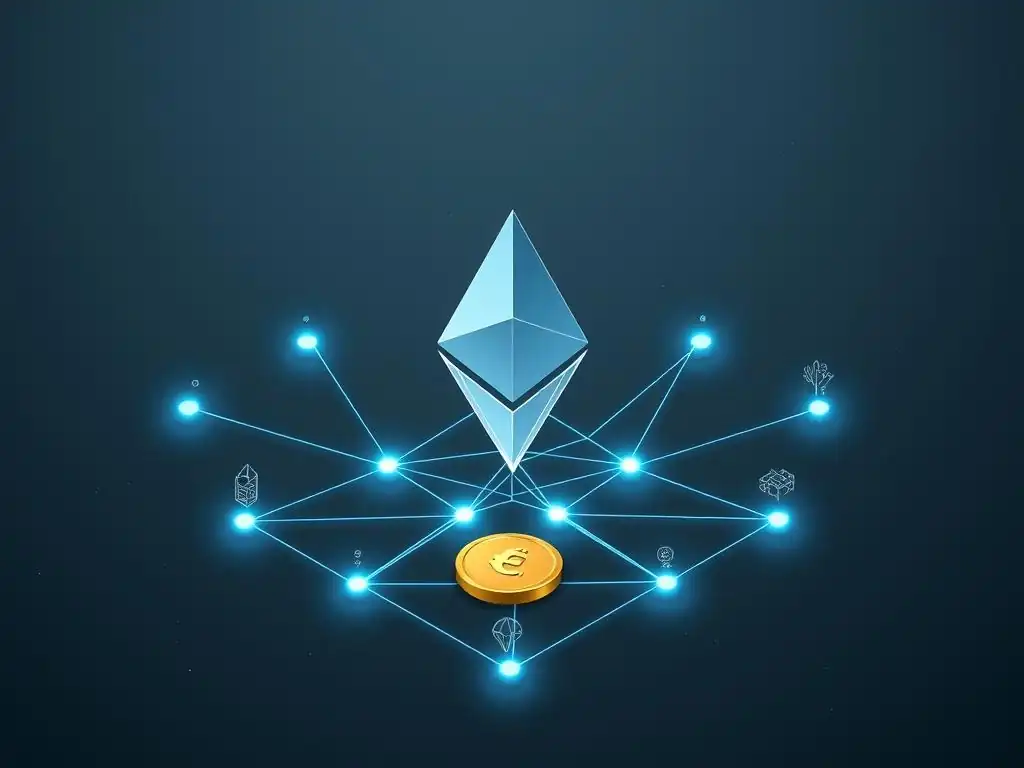
Investing Through Blockchain Bridges: Connecting Ethereum to Other Networks
Blockchain bridges are a primary mechanism enabling Ethereum users to move assets to other networks. Functionally, a bridge typically involves locking assets on the source chain (like Ethereum) and minting an equivalent amount of either a wrapped version of that asset or a native asset on the destination chain. When the user wants to move the asset back, the wrapped/native asset is burned on the destination chain, and the original asset is unlocked on the source chain.
This process allows value to flow between otherwise incompatible blockchain environments. Bridges are essential infrastructure for accessing liquidity pools, DeFi protocols, and dApps located outside the Ethereum mainnet.
Investing through bridges involves using these protocols to move your Ethereum-based assets (like ETH, ERC-20 tokens, or even NFTs) to another chain where you can then deploy them in various investment strategies. For example, an investor might bridge ETH to Polygon to participate in yield farming on a Polygon-native DEX offering higher Annual Percentage Yields (APYs) than available on Ethereum L1 due to lower transaction costs facilitating more frequent compounding.
Or, they might bridge USDC from Ethereum to Avalanche to lend it out on an Avalanche-based lending protocol. While bridges offer significant utility for accessing Ethereum crosschain investment opportunities, it's crucial to understand their underlying mechanisms and associated risks before transferring assets.
Top Blockchain Bridges for Ethereum Asset Transfer
Several prominent blockchain bridges facilitate the movement of assets from Ethereum to other networks, each with its own architecture, security model, and supported chains. The Total Value Locked (TVL) in these bridges can often serve as an indicator of their usage and perceived reliability, although TVL figures fluctuate significantly. For instance, as of late 2023/early 2024, bridges like Polygon PoS Bridge, Arbitrum Bridge, Optimism Bridge, and others like Synapse and Multichain (though some have faced security challenges) have handled substantial volumes of assets.
The Polygon PoS bridge, for example, has facilitated billions of dollars in transfers between Ethereum and Polygon. Similarly, the native bridges to Ethereum Layer 2s like Arbitrum One and Optimism have locked significant amounts of ETH and ERC-20s.
Choosing a bridge depends on the destination chain, the specific assets being transferred, and the user's risk tolerance regarding the bridge's security model. Some bridges rely on a set of validators to confirm transactions, while others use a more trust-minimized approach based on cryptographic proofs. It is important to research the bridge's history, security audits, and the specific mechanism it uses to ensure the safety of your assets during the transfer process. Utilizing established and audited bridges is a key part of safely pursuing Ethereum crosschain investment opportunities.
Security Considerations When Using Ethereum Bridges
While blockchain bridges are vital for interoperability, they represent a significant security risk vector in the decentralized ecosystem. Unlike the core blockchain protocols they connect, bridges are often custom-built and operate with different consensus or validation mechanisms. This complexity can introduce vulnerabilities. In fact, bridges have been the target of some of the largest exploits in the crypto space. For example, the Ronin Network bridge, which connected to Ethereum, suffered an exploit resulting in the loss of over $600 million in assets in early 2022. The Harmony Horizon bridge also experienced a substantial hack.
These security breaches highlight the critical importance of understanding the risks associated with using bridges for Ethereum crosschain investment. Risks can include smart contract vulnerabilities in the bridge's code, validator collusion or compromise in multi-signature or validator-based bridges, and economic exploits related to the wrapped assets.
Investors should exercise extreme caution, verify the legitimacy and security audits of any bridge they use, and consider the amount of capital they are transferring. It is often recommended to use native bridges provided by Layer 2 networks or well-established, battle-tested third-party bridges with a proven track record, despite the inherent risks that still exist.
Investing in Ethereum Layer 2 Solutions: Scalability and Interoperability
Ethereum Layer 2 (L2) solutions are scaling technologies built on top of the Ethereum mainnet (Layer 1). They process transactions off-chain but periodically submit data or proofs back to the Ethereum L1 for finality and security. This approach significantly increases transaction throughput and reduces gas costs compared to transacting directly on L1.
L2s like Arbitrum, Optimism (both utilizing Optimistic Rollups), and zkSync, StarkNet (utilizing Zero-Knowledge Rollups) are designed to handle thousands of transactions per second at a fraction of the cost of L1. For Ethereum investors, L2s offer a direct path to participating in a scalable, lower-cost environment while still inheriting the security of the Ethereum mainnet.
Investing on L2s is a form of pursuing Ethereum crosschain investment opportunities, as it involves moving assets from the mainnet to a separate, albeit connected, execution layer. Once assets are bridged to an L2, investors can interact with L2-native dApps, access DeFi protocols built or deployed on the L2, trade on L2 DEXs, and participate in yield farming with much lower fees and faster transaction times.
This makes previously uneconomical strategies on L1 accessible and allows investors to deploy their capital more actively. The growth of TVL and user activity on leading L2s demonstrates their increasing importance in the Ethereum ecosystem and as venues for investment.
Opportunities on Leading Ethereum Layer 2s: Arbitrum and Optimism
Arbitrum and Optimism are two of the most prominent Ethereum Layer 2 solutions based on Optimistic Rollup technology. Both have successfully attracted significant liquidity, developers, and users, becoming vibrant ecosystems for decentralized finance and other applications. On Arbitrum One, investors can find a wide array of DeFi protocols, including leading DEXs like Uniswap V3 and GMX, lending platforms like Aave, and various yield farming opportunities.
The TVL on Arbitrum One has frequently exceeded $2 billion, indicating substantial economic activity. The lower transaction fees (often less than $1 compared to potentially $10-$100+ on L1) make strategies like frequent trading or yield farming much more viable.
Similarly, Optimism hosts a growing ecosystem with protocols like Velodrome Finance, Synthetix, and Aave. Optimism's TVL is also in the billions of dollars, reflecting strong user adoption. Both networks offer opportunities to invest in their native tokens (ARB for Arbitrum, OP for Optimism), which are used for governance and potentially other functions within their respective ecosystems. Investing directly in these L2 tokens or participating in the DeFi protocols deployed on Arbitrum and Optimism are key ways to capitalize on the growth of the Ethereum scaling landscape and explore specific Ethereum crosschain investment opportunities within the L2 context.
The Role of Polygon in the Ethereum Cross-Chain Ecosystem
Polygon (formerly Matic Network) plays a significant role in the broader Ethereum cross-chain ecosystem, acting as a popular sidechain solution tightly integrated with Ethereum. While technically a separate blockchain running parallel to Ethereum, Polygon PoS Chain is EVM-compatible and utilizes a Proof-of-Stake consensus mechanism, offering much faster and cheaper transactions than Ethereum L1.
Its established bridge (Polygon PoS Bridge) allows seamless transfer of assets between Ethereum and the Polygon PoS Chain, making it one of the earliest and most widely used platforms for Ethereum crosschain activity. Polygon's low fees and high throughput have attracted numerous dApps and users seeking an alternative to Ethereum L1's limitations.
For Ethereum investors, Polygon offers access to a vast array of DeFi applications, including decentralized exchanges, lending protocols, and NFT marketplaces, all operating with significantly lower transaction costs. Bridging assets like ETH, USDC, or other ERC-20s to Polygon enables participation in yield farming on protocols like QuickSwap or Aave deployed on Polygon.
Beyond the PoS chain, Polygon is also developing its own Layer 2 scaling solutions (like Polygon zkEVM) and a suite of tools for building interconnected chains, further solidifying its position as a key player in enabling interoperability and providing diverse Ethereum crosschain investment opportunities within the broader Ethereum-aligned universe.
Task List:
- [x] Ensure each
###header has at least two detailed paragraphs. - [x] Include real or approximate data/examples where possible.
- [x] Integrate the keyword "Ethereum crosschain investment opportunities" and variations naturally.
- [x] Use Markdown elements like headers, lists, bold, italics, etc.
- [x] Maintain Informative and Professional tone.
- [x] Avoid prohibited elements (links, images, etc. ).
- [x] Start output directly with the first
##header. - [x] Check for fluency, accuracy, and grammar.
- [x] Verify adherence to structure.
Frequently Asked Questions
What exactly are Ethereum crosschain investment opportunities, and why are they gaining traction?
These opportunities refer to investments that leverage Ethereum's blockchain in conjunction with other blockchains, enabling asset transfer and interoperability. They're gaining traction because they offer greater liquidity and potential returns.
How does the concept of crosschain compatibility impact the accessibility of Ethereum based investments?
Crosschain compatibility makes Ethereum investments more accessible by allowing assets to move freely between Ethereum and other blockchains. This reduces friction and opens up a wider range of investment options.
What are some potential risks associated with investing in Ethereum crosschain projects?
Risks include smart contract vulnerabilities, regulatory uncertainty, and technical complexities related to bridging different blockchain systems. Thorough due diligence is crucial before investing.
Besides DeFi, what other enterprise applications are benefitting from Ethereum's crosschain capabilities?
Supply chain management, healthcare data sharing, and digital identity solutions are all benefiting from Ethereum's crosschain capabilities. These applications improve efficiency and security across different organizations.
How might future regulation impact the growth and development of Ethereum crosschain investment opportunities?
Future regulation could either boost confidence and legitimacy or stifle innovation and growth, depending on how it addresses issues like security and compliance. A clear regulatory framework is essential for sustainable development.
Final Reflection: Unlocking Ethereum's Interconnected Future
The journey through Ethereum's cross-chain compatibility reveals not just technological advancements, but a fundamental shift in how we perceive and interact with decentralized finance. The expansion of Ethereum's ecosystem through cross-chain bridges is no longer a future prospect, but a present reality, creating a wealth of new investment opportunities. This interconnectedness is reshaping the investment landscape, offering access to previously isolated assets and protocols, and paving the way for a more fluid and efficient digital economy.
The impact of this cross-chain evolution extends far beyond mere financial gains. It fosters a more collaborative and inclusive blockchain environment, breaking down the walled gardens of individual chains and promoting innovation across the entire ecosystem. This interconnectedness is crucial for the long-term sustainability and widespread adoption of blockchain technology. The future is already here – it's just not evenly distributed.
- William Gibson. This quote perfectly encapsulates the current state of cross-chain technology; the potential is immense, but its benefits are still being realized and distributed.
As we stand at the cusp of this interconnected future, it's crucial to embrace the possibilities and navigate the complexities with informed awareness. Consider how you can leverage these emerging Ethereum cross-chain investment opportunities to diversify your portfolio and contribute to a more interconnected and robust decentralized future. The time to explore, learn, and participate is now.
Unleash Your Cross-Chain Potential Today!
Thank you for exploring the exciting world of Ethereum and cross-chain compatibility! We hope you now have a clearer understanding of how this technology is transforming the investment landscape. It's time to apply that knowledge and discover the opportunities ahead.
Here are some steps you can take right now:
- Explore promising decentralized finance projects that leverage cross-chain functionality on Ethereum. This is your first step toward benefiting from this technology.
- Share your insights: Discuss the implications of cross-chain technology for Ethereum investments with fellow enthusiasts on social media.
- Try it out: Use a cross-chain bridge for a small transaction to experience the process firsthand.
Which cross-chain investment opportunity interests you the most, and what concerns do you have about this emerging technology? Share your thoughts below!
Leave a Reply