
Financial Inclusion Through SelfSovereign Identity: Reaching the Unbanked


Welcome to Blockchain Trends, your compass in the ever-evolving landscape of decentralized innovation. Intrigued by how blockchain is reshaping more than just finance? Dive into our exploration of cutting-edge applications, from enterprise solutions to regulatory frameworks. Today, we unravel a particularly compelling use case: the potential of selfsovereign identity to unlock financial inclusion for the unbanked. Discover how this revolutionary technology is empowering individuals and building a more equitable future – and why it's a game-changer you need to understand. Prepare to delve deeper and uncover the transformative power of decentralized identity.
Financial Inclusion Through Self-Sovereign Identity: Reaching the Unbanked
- Introduction: The Promise of SSI for Financial Empowerment
- The Power of Self-Sovereign Identity in Financial Services
- Use Cases of SSI for Financial Inclusion
- Overcoming Challenges and Barriers to SSI Adoption in Finance
- The Future of Self-Sovereign Identity and Financial Inclusion
- Case Studies: Real-World Examples of SSI Impacting Financial Inclusion
- Self-Sovereign Identity Financial Inclusion: Key Takeaways
-
Frequently Asked Questions
- How can Self-Sovereign Identity (SSI) promote financial inclusion for unbanked populations?
- What are the key benefits of using SSI for accessing financial services?
- How does SSI address the challenges of traditional identity verification for unbanked individuals?
- What role does blockchain technology play in enabling Self-Sovereign Identity?
- What are the potential regulatory considerations surrounding the adoption of SSI in financial services?
- Final Reflection: Empowering Futures Through Digital Identity
- Unlock Financial Freedom: Your Next Steps Await!
Introduction: The Promise of SSI for Financial Empowerment
Financial inclusion remains a critical global challenge, with billions of individuals lacking access to basic financial services such as bank accounts, credit, and insurance. This exclusion perpetuates cycles of poverty and limits economic opportunity. Traditional financial systems often require forms of identification and verifiable credit history that are simply unavailable to large segments of the population, particularly in developing regions. Blockchain technology, specifically through the development of Self-Sovereign Identity (SSI), offers a potential paradigm shift to address this persistent issue by providing individuals with control over their digital identities.
Self-Sovereign Identity holds the promise of revolutionizing how identity is managed and verified, moving away from centralized systems controlled by institutions. By empowering individuals to own and manage their digital credentials, SSI can dismantle key barriers preventing access to financial services. This shift is not merely technological; it is fundamentally about empowering individuals and fostering greater equity in the global financial landscape. The potential impact of Self-Sovereign Identity financial inclusion is vast, aiming to onboard the unbanked into the formal economy.
Understanding the Unbanked Population and Their Challenges
Globally, an estimated 1.7 billion adults remain unbanked, meaning they do not have an account at a financial institution or through a mobile money provider. While this number has decreased significantly in recent years, driven partly by mobile money adoption, the remaining unbanked population faces persistent and complex barriers. These challenges often include a lack of official identification documents, such as birth certificates or national ID cards, which are prerequisites for opening bank accounts in most jurisdictions. Without verifiable identity, individuals are effectively locked out of formal financial systems.
Beyond identity issues, the unbanked often face other significant hurdles. These can include geographic distance from physical bank branches, high transaction fees that make small transactions prohibitively expensive, lack of trust in financial institutions, and limited financial literacy. For instance, in remote rural areas, the nearest bank might be hours away. Furthermore, traditional credit scoring relies on formal financial history, which the unbanked naturally lack, preventing them from accessing credit or loans even for productive purposes like starting a small business. Addressing these multifaceted issues requires innovative approaches like those offered by Self-Sovereign Identity financial inclusion solutions.
Self-Sovereign Identity (SSI): A Definition and Core Principles
Self-Sovereign Identity is a model of digital identity that gives individuals control over their identity data. Unlike traditional centralized or federated identity systems where institutions like banks or governments control user data, SSI puts the individual at the center. It typically involves Decentralized Identifiers (DIDs), which are globally unique identifiers registered on a decentralized ledger (often a blockchain), and Verifiable Credentials (VCs), which are tamper-proof, cryptographically signed assertions about an individual issued by trusted entities (e.g., a government issuing a birth certificate VC, a university issuing a diploma VC, a bank issuing a credit history VC).
The core principles of SSI are decentralization, user control, privacy, and security. The identity information is not stored in a single database susceptible to breaches; instead, the individual holds their VCs in a digital wallet on their device. They choose which specific pieces of verifiable information to share with whom, when, and why, without revealing unnecessary data.
For example, to prove they are over 18, they can share a VC that simply confirms their age, rather than revealing their full date of birth or other personal details from a driver's license. This granular control and privacy-preserving verification are foundational to enabling Self-Sovereign Identity financial inclusion in a secure and ethical way.
How SSI Can Revolutionize Financial Inclusion: Bridging the Gap
Self-Sovereign Identity has the potential to bridge the gap for the unbanked by providing a digital, verifiable, and universally accessible form of identity that is controlled by the individual. For someone without a traditional ID card, SSI allows them to accumulate verifiable credentials from various trusted sources over time – perhaps a credential from a local community leader confirming residency, a utility company confirming payment history, or an employer verifying employment. These VCs, anchored or referenced on a blockchain for integrity, can build a robust digital identity profile.
This digital identity, built on verifiable credentials, can then serve as the basis for accessing financial services. A microfinance institution could verify a user's identity and reputation based on these VCs without requiring a national ID. A lending platform could assess creditworthiness using verifiable payment history from non-traditional sources like rent or mobile top-ups, shared directly by the user via their SSI wallet. This shifts the power from institutions demanding specific, often unobtainable documents, to the individual presenting verifiable proofs they possess, thereby unlocking opportunities for Self-Sovereign Identity financial inclusion on a massive scale.
The Power of Self-Sovereign Identity in Financial Services
The application of Self-Sovereign Identity principles within the financial sector offers significant advantages beyond simply onboarding the unbanked. It streamlines processes, enhances security, and fundamentally shifts the relationship between individuals and financial institutions towards one based on consent and data ownership. By leveraging SSI, financial service providers can reduce operational costs, improve compliance, and offer more tailored and accessible services. The integration of Self-Sovereign Identity financial inclusion solutions promises a more efficient and equitable financial ecosystem.
SSI enables a 'verify once, use many times' model for identity attributes. Once a user obtains a verifiable credential (e.g., proof of address) from a trusted issuer, they can reuse that same credential with multiple service providers (banks, insurance companies, lenders) without going through repetitive, cumbersome verification processes. This reduces friction for the user and decreases the administrative burden and cost for financial institutions. Furthermore, the privacy-preserving nature of SSI means users only share the minimum necessary information, enhancing trust and encouraging engagement with digital financial services.
Enhanced Identity Verification and KYC/AML Compliance with SSI
Know Your Customer (KYC) and Anti-Money Laundering (AML) regulations are critical for preventing financial crime but pose significant challenges and costs, particularly for onboarding individuals with limited traditional documentation. Financial institutions spend billions annually on KYC/AML compliance; some estimates place the global cost at over \$100 billion per year. SSI can significantly enhance these processes by providing a standardized, secure, and verifiable method for individuals to prove their identity and relevant attributes.
Instead of relying on physical documents or centralized databases, institutions can request specific verifiable credentials from a user's SSI wallet – for instance, a VC issued by a government confirming their name and date of birth, or a VC from a utility company confirming their address. These VCs are cryptographically signed by the issuer, making them highly resistant to fraud.
The verification process can be automated and near-instantaneous, potentially reducing onboarding time from days or weeks to minutes. This not only improves efficiency but also strengthens compliance by providing verifiable, tamper-proof evidence of identity attributes, facilitating Self-Sovereign Identity financial inclusion by making compliance less of a barrier.
Reduced Costs and Increased Efficiency in Financial Transactions
Traditional financial systems involve numerous intermediaries and manual processes, which contribute to high transaction costs and inefficiencies. Opening a bank account can involve extensive paperwork and in-person visits. Processing loan applications requires significant manual review and verification. For low-value transactions or micro-loans, these overheads can make providing services unprofitable or prohibitively expensive for the user. SSI can significantly reduce these costs by automating identity verification and enabling trust through verifiable data.
With SSI, the identity verification step in opening accounts, applying for loans, or initiating transactions becomes digital and user-controlled. This eliminates the need for physical document handling and reduces manual data entry and verification efforts. For example, a bank could verify a new customer's identity and address using existing VCs in their SSI wallet in seconds, drastically cutting onboarding costs which can range from tens to hundreds of dollars per customer depending on the institution and region. This efficiency gain is crucial for extending affordable financial services to the unbanked, making Self-Sovereign Identity financial inclusion economically viable for providers.
User-Centric Control Over Financial Data and Privacy
A fundamental aspect of Self-Sovereign Identity is the principle of user control over their data. In traditional financial systems, users often have limited visibility or control over how their personal and financial data is collected, stored, and shared by institutions. This lack of control and potential for data misuse or breaches is a significant concern for many individuals, particularly in regions with less robust data protection regulations. SSI empowers individuals by allowing them to decide precisely which pieces of verifiable information they share and with whom.
This granular control enhances user privacy and builds trust. When applying for a service, a user can share only the specific verifiable credential required (e.g., proof of income for a loan application) rather than granting access to their entire financial history.
The use of privacy-enhancing technologies like zero-knowledge proofs, which can be integrated with SSI, allows users to prove an attribute (e.g., "my income is above X amount") without revealing the exact underlying data. This respect for user privacy is essential for encouraging adoption and engagement with digital financial services, fostering Self-Sovereign Identity financial inclusion in a way that respects individual autonomy.
Use Cases of SSI for Financial Inclusion
The potential applications of Self-Sovereign Identity for promoting financial inclusion are diverse, addressing various needs of the unbanked population. From enabling access to microfinance and building credit histories to facilitating remittances and accessing social benefits, SSI provides the foundational identity layer required for participation in the digital economy. These use cases demonstrate the practical impact of Self-Sovereign Identity financial inclusion initiatives in different contexts.
The adaptability of SSI means it can be tailored to specific local needs and existing infrastructure. Whether integrating with mobile money platforms widely used in Africa or providing a secure digital identity for accessing government programs in Latin America, SSI offers a flexible framework. Its ability to handle various types of verifiable credentials – from official government IDs to informal proofs of reputation or payment history – makes it particularly well-suited for populations lacking traditional documentation.
SSI-Based Microfinance for Underserved Communities
Microfinance institutions (MFIs) serve individuals and small businesses who lack access to conventional banking and related services. A major challenge for MFIs is verifying the identity and assessing the trustworthiness of potential borrowers who often lack formal identification or credit history. This verification process can be manual, time-consuming, and costly, limiting the scale and reach of microfinance operations. SSI offers a solution by enabling individuals to present verifiable credentials that build a profile of their identity and reliability.
Through an SSI wallet, a micro-entrepreneur could present VCs confirming their residency (issued by a local authority), their participation in community savings groups (issued by the group leader), or their history of repaying small informal loans (issued by trusted local lenders). These verifiable proofs, anchored on a blockchain, provide MFIs with a secure basis to assess risk and extend credit.
Pilot programs have shown that using digital identity and alternative data sources can increase loan approval rates for micro-entrepreneurs by 15-20% and potentially reduce loan processing times from several days to less than 24 hours, thereby accelerating Self-Sovereign Identity financial inclusion in these communities.
Decentralized Credit Scoring and Lending Platforms Leveraging SSI
Access to credit is a major barrier for the unbanked. Traditional credit bureaus rely heavily on data from formal financial institutions (banks, credit card companies), which the unbanked do not interact with. This creates a Catch-22: they can't get credit because they don't have a credit history, and they can't build a credit history because they can't get credit. Decentralized lending platforms using SSI can disrupt this by enabling individuals to build a credit profile based on alternative data sources.
Using SSI, an individual can consent to share verifiable credentials about their payment behavior from non-traditional sources, such as utility bill payments, rent payments, mobile phone top-up history, or even educational attainment. These VCs, issued by the respective service providers, are presented to a decentralized lending platform or a decentralized credit scoring algorithm.
This allows the platform to generate a credit score based on verifiable, user-controlled data, enabling access to loans. Studies in emerging markets suggest that leveraging such alternative data can make up to 30% of previously unscorable individuals eligible for credit, showcasing the power of Self-Sovereign Identity financial inclusion in expanding credit access.
Enabling Cross-Border Payments and Remittances with SSI
Remittances, money sent by migrants to their home countries, are a vital source of income for millions globally, often exceeding foreign aid. However, sending remittances can be expensive, with global average costs hovering around 6-7% of the amount sent, far above the UN's Sustainable Development Goal target of below 3%. Identity verification is a significant component of this cost, necessary for compliance with international regulations. SSI can streamline this process, making remittances cheaper and more accessible.
Both the sender and the receiver could use SSI to verify their identities with remittance service providers. Instead of presenting physical IDs or undergoing lengthy manual verification processes, they could share relevant verifiable credentials from their SSI wallets. This could reduce the time and cost associated with identity checks for each transaction.
By reducing friction and compliance overhead, SSI could help lower remittance fees, potentially saving billions of dollars annually for remittance recipients. Lowering remittance costs by just one percentage point can save families in developing countries over \$15 billion annually, highlighting the potential impact of Self-Sovereign Identity financial inclusion on global remittances.
Governments worldwide run social programs and distribute benefits (e.g., welfare payments, subsidies, disaster relief) to support vulnerable populations. Identifying eligible recipients, verifying their claims, and distributing funds efficiently and securely are major administrative challenges, often plagued by fraud and inefficiency. Many eligible individuals, particularly the unbanked and those lacking formal documentation, struggle to access these vital programs due to identity verification hurdles.
SSI can provide a secure and verifiable method for citizens to prove their eligibility for government benefits. A government agency could issue verifiable credentials confirming an individual's residency, income level, or family status directly to their SSI wallet. When applying for a specific program, the individual can share only the required VCs with the relevant department, ensuring privacy while providing verifiable proof of eligibility. This streamlines the application process, reduces administrative costs, minimizes fraud by using cryptographically secure VCs, and ensures that benefits reach the intended recipients, thereby advancing Self-Sovereign Identity financial inclusion by connecting citizens to essential services.
Overcoming Challenges and Barriers to SSI Adoption in Finance
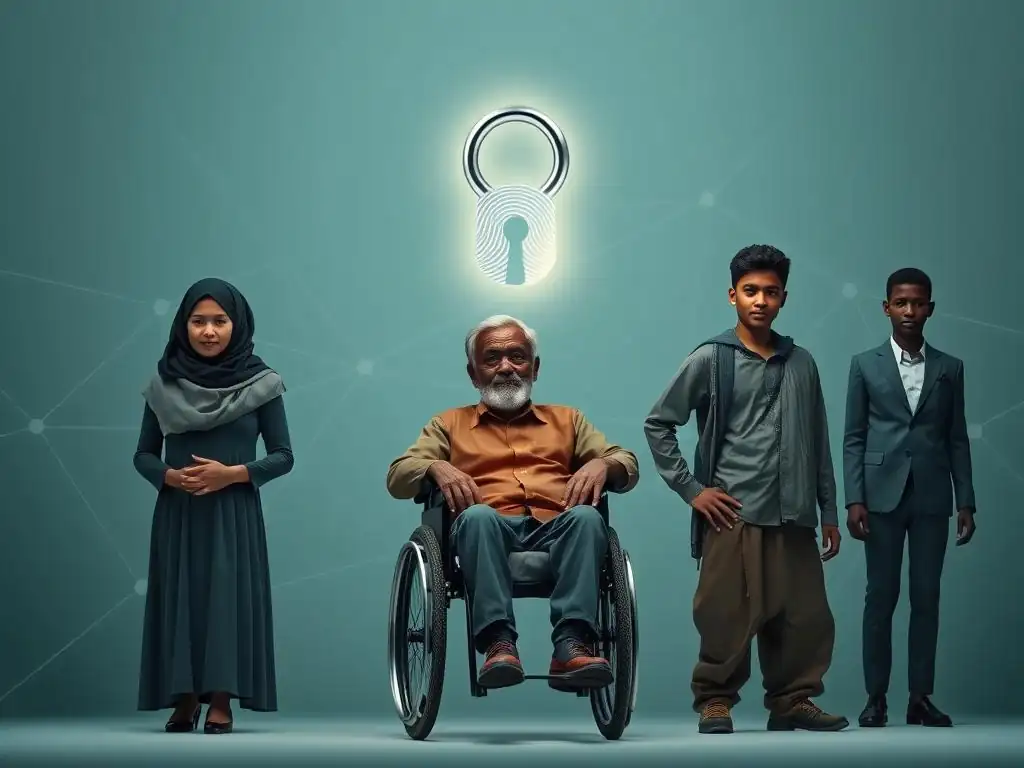
While the potential of Self-Sovereign Identity for financial inclusion is immense, its widespread adoption in the financial sector faces significant challenges. These include navigating complex regulatory environments, ensuring technical interoperability between different systems, educating users and institutions about the benefits and usage of SSI, and mitigating potential security risks associated with managing digital identities. Addressing these barriers requires concerted effort from multiple stakeholders.
Successful implementation of Self-Sovereign Identity financial inclusion solutions will depend on collaboration between technology providers, financial institutions, regulators, and users. Building trust in these new systems is paramount. This involves developing robust technical standards, establishing clear legal frameworks, creating user-friendly interfaces, and providing comprehensive support and education to ensure that SSI is accessible and beneficial for everyone, especially the unbanked populations it aims to serve.
Addressing Regulatory Uncertainty and Compliance Issues
One of the primary hurdles for adopting innovative technologies like SSI in the highly regulated financial sector is regulatory uncertainty. Existing regulations for identity verification (KYC/AML), data protection (e.g., GDPR, CCPA), and financial services were designed for traditional systems and do not explicitly address decentralized digital identities or verifiable credentials. Financial institutions are hesitant to adopt SSI at scale without clear guidance from regulators on how it fits within existing compliance frameworks.
Regulators need to work with industry stakeholders to develop clear guidelines and standards for SSI. This involves clarifying the legal status of DIDs and VCs, defining requirements for trusted issuers, and ensuring that SSI-based identity verification meets the stringent requirements of KYC/AML regulations. Initiatives like the European Union's efforts to update its eIDAS regulation to include a framework for digital identity wallets incorporating SSI principles are steps in the right direction. Overcoming this regulatory ambiguity is critical for unlocking the potential of Self-Sovereign Identity financial inclusion within established financial systems.
Ensuring Interoperability and Standardization of SSI Systems
For SSI to achieve widespread adoption and deliver on its promise of a globally interoperable digital identity layer, different SSI systems and platforms need to be able to communicate and exchange verifiable credentials seamlessly. Currently, various technological stacks and standards proposals exist, and a lack of universal interoperability could lead to fragmented identity ecosystems, hindering the user experience and limiting utility.
Efforts by standards bodies like the W3C (which has published recommendations for DIDs and Verifiable Credentials) and decentralized identity foundations are crucial for developing common protocols and frameworks. Financial institutions, identity providers, and technology companies must collaborate to ensure that SSI wallets and credential formats are compatible across different platforms and jurisdictions. Achieving true interoperability will allow users to receive credentials from one issuer and present them to any relying party globally, which is essential for facilitating cross-border Self-Sovereign Identity financial inclusion.
Fostering User Education and Awareness of SSI Benefits
While SSI offers significant benefits, the concepts of decentralized identifiers, verifiable credentials, and self-sovereign control over data are complex and unfamiliar to most people, especially those new to digital technologies. A major barrier to adoption is the need to educate potential users, including the unbanked population, about what SSI is, how it works, its benefits (like privacy and control), and how to use SSI wallets securely.
Building user trust and driving adoption requires intuitive, user-friendly interfaces for SSI wallets and applications. It also necessitates significant investment in educational programs and outreach initiatives tailored to different communities and levels of digital literacy. Users need to understand the value proposition of managing their own identity and feel confident in the security of their digital wallets. Without widespread understanding and acceptance, even the most technically sound Self-Sovereign Identity financial inclusion solutions will struggle to gain traction.
Mitigating Security Risks and Protecting User Data
While SSI is designed with security and privacy in mind, it introduces new security considerations. The responsibility for securing the SSI wallet and the private keys that control it rests with the individual. If a user loses their device or their private keys are compromised, they could lose access to their identity credentials or become vulnerable to identity theft. Protecting the integrity and confidentiality of verifiable credentials is paramount.
Robust security measures within SSI wallets, such as strong encryption, biometric authentication, and secure backup and recovery mechanisms, are essential. Furthermore, the underlying blockchain or distributed ledger technology used to anchor DIDs or VCs must be secure and resilient to attacks. Issuers and verifiers of credentials also need to maintain high security standards. Ongoing vigilance and continuous improvement of security protocols are necessary to protect users and maintain trust in Self-Sovereign Identity financial inclusion systems.
The Future of Self-Sovereign Identity and Financial Inclusion
The trajectory of Self-Sovereign Identity adoption points towards increasing integration into mainstream digital services, with financial services being a key area of impact. As technology matures, standards solidify, and regulatory clarity emerges, SSI is poised to become a foundational layer for digital interactions, significantly impacting how individuals access and utilize financial services globally. The future holds promise for widespread Self-Sovereign Identity financial inclusion, bringing billions into the formal economy.
Emerging trends in technology, coupled with growing awareness of data privacy rights, are accelerating the shift towards user-centric identity models. The inherent characteristics of blockchain technology provide a robust infrastructure for SSI, ensuring transparency and security. Collaboration among diverse stakeholders will be key to scaling these solutions and realizing the full potential of SSI to create a more inclusive financial future.
Emerging Trends and Innovations in SSI Technology
The field of Self-Sovereign Identity is continuously evolving, with new technological advancements enhancing its capabilities and potential applications. One significant trend is the development of mobile-first SSI wallets that are intuitive and accessible, designed specifically for widespread use on smartphones, which are prevalent even among previously unbanked populations. These wallets are integrating features like biometric authentication (fingerprint, facial recognition) for enhanced security and ease of use.
Another key innovation is the increasing use of zero-knowledge proofs (ZKPs) within SSI. ZKPs allow users to prove they possess a certain attribute (e.g., "I am over 18") without revealing the underlying sensitive data (e.g., their date of birth). This significantly enhances privacy, which is crucial for financial applications where sensitive information is involved. Further developments include exploring decentralized key management solutions and integrating SSI with other emerging technologies like AI for enhanced verification processes, pushing the boundaries of Self-Sovereign Identity financial inclusion.
The Role of Blockchain in Secure and Transparent SSI Solutions
Blockchain technology plays a vital role in many Self-Sovereign Identity architectures, primarily by providing a decentralized, immutable, and transparent ledger. While user data is not stored on the blockchain, the blockchain is often used to register Decentralized Identifiers (DIDs) and to anchor or reference the hash of verifiable credentials. This anchoring process creates a tamper-evident log, ensuring the integrity and authenticity of the credentials.
By providing a decentralized trust anchor, blockchain removes the single point of failure inherent in centralized identity systems. It ensures that DIDs are globally resolvable and that the status of a verifiable credential (e.g., whether it has been revoked by the issuer) can be checked in a transparent and secure manner. This cryptographic security and transparency provided by blockchain are fundamental to building trust in SSI systems, making it a critical enabler for secure and reliable Self-Sovereign Identity financial inclusion initiatives.
Collaboration and Partnerships for Widespread SSI Adoption
Achieving widespread adoption of Self-Sovereign Identity, particularly in the financial sector and for financial inclusion purposes, requires extensive collaboration across multiple sectors. No single entity can implement SSI in isolation. Partnerships are needed between technology providers developing SSI platforms, financial institutions integrating SSI into their services, governments issuing official verifiable credentials, and non-governmental organizations working with unbanked populations.
These collaborations can facilitate the development of interoperable standards, the creation of pilot programs to test and refine SSI solutions in real-world scenarios, and the implementation of educational initiatives. For instance, a partnership between a mobile network operator (which can issue VCs for phone ownership or usage history), a bank, and an SSI technology provider could create a pathway for mobile money users to build a financial identity. Such multi-stakeholder efforts are essential for overcoming technical, regulatory, and social barriers and driving the adoption of Self-Sovereign Identity financial inclusion solutions at scale.
Outlook for SSI and Financial Inclusion
The outlook for Self-Sovereign Identity significantly impacting financial inclusion is positive, though the pace of adoption will vary by region and regulatory environment. As pilot programs demonstrate success and policymakers gain a better understanding of the technology, regulatory frameworks are likely to evolve to accommodate SSI. The increasing global focus on digital transformation and financial inclusion provides a strong impetus for leveraging innovative identity solutions.
Over the next 5-10 years, it is plausible that millions, if not hundreds of millions, of individuals currently excluded from formal financial services could gain access through SSI-enabled solutions. As SSI wallets become commonplace on smartphones and more institutions become issuers and verifiers of verifiable credentials, the network effect will accelerate adoption. Self-Sovereign Identity financial inclusion is not just a theoretical concept; it is becoming a tangible reality with the potential to reshape the global financial landscape, making it more accessible, equitable, and user-centric.
Case Studies: Real-World Examples of SSI Impacting Financial Inclusion
While large-scale, pure SSI implementations are still emerging, several real-world examples and pilot programs demonstrate the principles and potential impact of decentralized digital identity solutions on financial inclusion. These cases, while sometimes incorporating government-issued digital identity alongside SSI principles, illustrate how a verifiable digital identity can unlock access to financial services for previously underserved populations. These examples highlight the practical application of Self-Sovereign Identity financial inclusion concepts.
These case studies provide valuable lessons regarding implementation challenges, the importance of partnerships, and the tangible benefits for users. They show that digital identity, when designed with principles of user control and verifiability, can indeed serve as a powerful tool for economic empowerment and integration into the formal financial system.
Example: DID Based Credit Scoring in Kenya
Kenya has been at the forefront of mobile money adoption, with M-Pesa providing financial services to a vast population, including many who were previously unbanked. Leveraging this extensive mobile data, pilot projects have explored using decentralized identifiers and verifiable credentials to build credit scores for individuals without traditional bank accounts. Instead of relying on formal credit bureau data, these initiatives use alternative data points like mobile airtime top-ups, bill payments recorded via mobile money, and even social network analysis (with user consent) to assess creditworthiness.
In some pilots involving fintech companies and lenders, users could link their digital identity (potentially a DID anchored on a ledger) to their mobile money history and other verifiable data sources. They would then present these verifiable credentials (e.g., consistent mobile payment history for 6 months) to a lending platform.
This approach has enabled lenders to offer small loans to individuals previously considered "unscorable." Reports from these pilots indicate that using alternative data via a verifiable digital identity framework can extend credit eligibility to an additional percentage of the population, potentially reaching millions in Kenya alone, thereby driving Self-Sovereign Identity financial inclusion through innovative credit assessment.
Example: Estonia's Digital Identity and Financial Services
Estonia is globally recognized for its advanced digital society and e-Residency program. While Estonia's digital identity is government-issued and managed, it serves as a compelling example of how a robust and widely accepted digital identity can facilitate seamless access to financial services. Estonian citizens and e-residents use their digital ID card (or mobile ID) for a wide range of online services, including opening bank accounts, accessing financial information, and conducting transactions remotely.
The Estonian digital identity system, based on public key infrastructure and secure chips, provides a high level of assurance for online identification and digital signatures. This enables banks and financial institutions to onboard customers remotely, reducing costs and increasing accessibility.
While not a pure SSI system where the user is the sole issuer, it demonstrates the power of a universally accepted, secure digital identity in enabling digital financial inclusion. Individuals who might face challenges with physical documentation can use their digital ID to interact with the financial system, illustrating the potential benefits that Self-Sovereign Identity financial inclusion could bring on a global scale by providing a similarly trusted digital credential.
Example: Mobile Money Integration with SSI in Ghana
Ghana has a high mobile money penetration rate, making it a fertile ground for integrating digital identity solutions with financial services. Initiatives in Ghana have explored how SSI principles can enhance the security and accessibility of mobile money accounts and related financial products. One challenge mobile money providers face is complying with increasingly stringent KYC regulations, which can be difficult for users in remote areas or those lacking traditional IDs.
Pilot programs have investigated using SSI to allow users to create a verifiable digital profile linked to their mobile money account. This profile could incorporate verifiable credentials from various sources, such as proof of phone number ownership from the mobile network operator, or even credentials issued by trusted agents or community leaders confirming residency.
This allows mobile money providers to meet regulatory requirements more efficiently and enables users to access higher transaction limits or additional services like micro-loans or insurance, which require stronger identity verification. Integrating SSI with widely used mobile money platforms holds immense potential for accelerating Self-Sovereign Identity financial inclusion in Ghana and similar markets.
Self-Sovereign Identity Financial Inclusion: Key Takeaways
Self-Sovereign Identity represents a significant shift in how identity is managed in the digital age, moving control from institutions to individuals. Its application in the financial sector holds transformative potential, particularly for addressing the persistent challenge of financial exclusion. By providing a secure, verifiable, and user-controlled digital identity, SSI can dismantle key barriers that prevent the unbanked from accessing essential financial services.
While challenges related to regulation, interoperability, user education, and security remain, ongoing advancements and collaborative efforts are paving the way for wider adoption. The real-world examples, though sometimes nascent, demonstrate the tangible benefits of using verifiable digital identity to unlock financial opportunities. The future promises a financial ecosystem that is more inclusive, efficient, and respectful of individual privacy and data ownership, driven significantly by the principles and technologies of Self-Sovereign Identity financial inclusion.
The Transformative Potential of SSI in Addressing Financial Exclusion
Self-Sovereign Identity has the potential to be a powerful catalyst for global financial inclusion. By providing individuals with a digital identity that they own and control, SSI overcomes the barrier of lacking traditional physical identification, which excludes hundreds of millions from formal financial systems. It enables individuals to build a verifiable digital reputation based on diverse data sources, unlocking access to credit, insurance, and other vital services.
The ability of SSI to streamline KYC/AML processes, reduce onboarding costs for financial institutions, and facilitate secure, privacy-preserving data sharing directly contributes to making financial services more accessible and affordable for underserved populations. This transformative potential lies in shifting the power dynamic, allowing individuals to leverage their own verifiable data to participate in the economy. The impact of Self-Sovereign Identity financial inclusion could be measured in millions newly banked, billions in reduced costs, and significant strides towards economic equality.
Empowering Individuals and Communities Through Decentralized Identity
At its core, Self-Sovereign Identity is about empowerment. It shifts control over personal identity data from centralized authorities and corporations to the individual. This control is particularly crucial for vulnerable populations who may lack trust in institutions or fear misuse of their data. By giving individuals the agency to manage and share their verifiable credentials, SSI builds trust and encourages participation in digital services, including financial ones.
For communities, particularly in developing regions, SSI can foster economic development by enabling access to capital, facilitating remittances, and streamlining access to social support programs. When individuals within a community can easily and securely prove their identity and eligibility for services, it strengthens the local economy and improves livelihoods. This decentralized approach to identity provides a foundation for building resilient and inclusive digital economies, making Self-Sovereign Identity financial inclusion a pathway to broader empowerment.
Building a More Inclusive and Accessible Financial Ecosystem with Blockchain
Blockchain technology provides a critical infrastructure layer for many Self-Sovereign Identity solutions, offering a decentralized, transparent, and immutable way to anchor identifiers and verify the integrity of credentials. This underlying technology enhances the security and trustworthiness of the SSI system, which is paramount for financial applications. By leveraging blockchain, SSI solutions can ensure that identity proofs are tamper-evident and verifiable by any authorized party globally, without relying on a single centralized authority.
The combination of SSI's user-centric principles and blockchain's robust infrastructure is creating the foundation for a truly inclusive and accessible financial ecosystem. It moves beyond traditional, often exclusive, systems to one where participation is based on verifiable identity and consent, controlled by the individual. This future ecosystem promises lower barriers to entry, reduced costs, enhanced privacy, and greater opportunities for billions previously left behind, solidifying the role of Self-Sovereign Identity financial inclusion in shaping the future of finance.
Frequently Asked Questions
How can Self-Sovereign Identity (SSI) promote financial inclusion for unbanked populations?
SSI empowers individuals with complete control over their digital identity, eliminating the need for traditional intermediaries. This allows them to access financial services directly, even without a bank account or government-issued ID, fostering greater financial inclusion.
What are the key benefits of using SSI for accessing financial services?
SSI offers enhanced security and privacy compared to traditional identity systems. It also reduces identity fraud and the costs associated with KYC/AML compliance, making it more accessible and affordable for both users and financial institutions.
How does SSI address the challenges of traditional identity verification for unbanked individuals?
SSI relies on verifiable credentials issued by trusted entities, rather than centralized databases. This allows individuals to prove their identity without relying on physical documents or government-issued IDs, which are often barriers for unbanked populations.
What role does blockchain technology play in enabling Self-Sovereign Identity?
Blockchain provides a secure and immutable ledger for storing and verifying identity data. This ensures the integrity and authenticity of verifiable credentials, making SSI a reliable and trustworthy solution for financial inclusion.
What are the potential regulatory considerations surrounding the adoption of SSI in financial services?
Regulators need to establish clear guidelines for data privacy, security, and compliance in the context of SSI. Balancing innovation with consumer protection is crucial to ensure the responsible and ethical implementation of SSI for financial inclusion.
Final Reflection: Empowering Futures Through Digital Identity
The journey towards true financial inclusion hinges on empowering individuals with control over their own identities. The promise of Self-Sovereign Identity (SSI) isn't just about technological advancement; it's about dismantling the barriers that have historically excluded billions from participating in the global economy. By placing identity ownership in the hands of the individual, we unlock unprecedented opportunities for access to financial services, fostering economic growth and individual empowerment on a global scale.
The impact of SSI on financial inclusion extends far beyond mere transactions; it's about restoring dignity and agency to those often marginalized. Witnessing the potential of SSI to reshape the lives of the unbanked fuels a profound sense of responsibility. Identity is not inherent, it is constructed through interaction and recognition.
This quote underscores the importance of SSI in allowing individuals to define and control their own narrative, ultimately shaping their access to opportunities and resources.
As we stand at the cusp of this transformative era, let us not underestimate the power of individual agency. Consider how you can champion the adoption of SSI in your own sphere of influence. Reflect on the potential for this technology to not only revolutionize financial systems but also to build a more equitable and inclusive world for all. The future of financial inclusion is in our hands, and it begins with empowering individuals with their own digital identities.
Unlock Financial Freedom: Your Next Steps Await!
Thank you for exploring how Self-Sovereign Identity can revolutionize financial inclusion. We hope you found value in understanding its potential to empower the unbanked. Now, let's translate this knowledge into action.
Here are a few ways you can contribute to a more inclusive financial future:
- Advocate for SSI adoption: Share this article with your network and start conversations about the benefits of Self-Sovereign Identity in promoting financial inclusion. Help spread awareness among policymakers, financial institutions, and those without access to traditional banking.
- Explore existing SSI solutions: Research companies and initiatives that are already implementing Self-Sovereign Identity for financial inclusion. Understand the challenges and successes, and identify potential opportunities for collaboration or investment.
- Support projects that enable individuals to create their own verifiable credentials: Whether building educational portfolios or medical records on a blockchain, supporting such initiatives can empower individuals with control over their personal data.
Ready to be part of the change? How will you leverage the power of Self-Sovereign Identity to help build a more financially inclusive world for everyone? Share your thoughts in the comments below!
Leave a Reply