
DApp Backend Architecture Explained: Smart Contracts and Decentralized Data Management


Welcome to Blockchain Trends, your guide to understanding the revolutionary impact of blockchain technology beyond the hype.
Dive in and explore the transformative potential that blockchain offers to various industries. Are you ready to unlock the secrets of a future built on trust and transparency?
In this article, we'll demystify decentralized app backend architecture, revealing how smart contracts and decentralized data management are reshaping the landscape of application development. Discover how to build truly decentralized applications that are secure, scalable, and resilient. What does the future hold for DApp development? Let's find out...
DApp Backend Architecture: Smart Contracts and Decentralized Data
- Understanding DApp Backend Architecture
- Smart Contracts: The DApp's Logic Layer
- Decentralized Data Management
- Connecting Smart Contracts and Data Storage
- Building a Scalable DApp Backend
- DApp Backend Architecture Examples
- Future Trends in DApp Backend Development
-
Frequently Asked Questions
- What is the primary purpose of a decentralized app (DApp) backend architecture?
- How do smart contracts function within a DApp's backend architecture?
- What are the key considerations when choosing a decentralized data management solution for a DApp?
- How does a decentralized app backend architecture enhance security compared to traditional server-based systems?
- What are some of the current challenges and future trends in decentralized app backend architecture?
- Final Reflection: Embracing the Decentralized Future
- Ignite Your DApp Development Journey!
Understanding DApp Backend Architecture
What is a DApp Backend?
A DApp backend, in contrast to traditional web application backends hosted on centralized servers, represents the decentralized infrastructure and logic that powers a decentralized application. This core functionality relies primarily on smart contracts deployed on a blockchain network, serving as the immutable, transparent, and trustless execution environment for the application's core logic. Unlike a traditional backend that manages databases, handles business logic on servers, and processes user requests through APIs, a decentralized app backend architecture distributes these functions across a network of nodes, eliminating single points of failure and central control.
The purpose of a DApp backend is to enable peer-to-peer interactions and automate processes without relying on a trusted intermediary. This is achieved by encoding application rules directly into smart contracts, which are executed by the blockchain network's consensus mechanism. Data crucial for the DApp's operation is often stored in a decentralized manner, either within the smart contract state itself (for critical, small data points like token balances) or, more commonly, referenced from decentralized storage systems for larger or more dynamic content. This fundamental shift in architecture is key to achieving censorship resistance and enhanced user control.
Key Components
The fundamental components of a decentralized app backend architecture typically include the blockchain network itself, smart contracts, and decentralized data storage solutions. The blockchain provides the foundational layer for consensus, transaction processing, and immutable state changes. Smart contracts represent the application's business logic, defining how users interact with the DApp and how data is processed and updated on-chain. These contracts handle everything from token transfers and asset management to complex protocol rules.
Decentralized data storage components are essential for managing data that is too large, too dynamic, or too privacy-sensitive to reside directly on the blockchain. Solutions like IPFS or Arweave store off-chain data, and smart contracts store references (hashes or IDs) to this data, ensuring that the on-chain logic is linked to specific, verifiable versions of the off-chain information. Additionally, oracles play a vital role in connecting the on-chain smart contracts with real-world data or off-chain systems, which is often necessary for DApps that require external information, such as price feeds for a DeFi application.
Smart Contracts: The DApp's Logic Layer
Smart Contract Definition
A smart contract is essentially a self-executing digital contract with the terms of the agreement directly written into lines of code. This code resides on a blockchain network, making it transparent, verifiable, and immutable once deployed. The smart contract code automatically executes when predefined conditions are met, ensuring that agreements are enforced without the need for intermediaries or manual intervention. This programmatic execution provides a high degree of trust and predictability in a decentralized app backend architecture.
The power of smart contracts lies in their deterministic nature and execution within a trustless environment. For example, in a simple escrow smart contract, funds could be held until both parties digitally sign off or an external oracle confirms a specific event (like delivery of goods). Once the conditions are met, the contract automatically releases the funds. This eliminates the risk associated with relying on a third party to hold and distribute assets, as the logic is transparent and executed by the decentralized network itself.
Smart Contract Platforms: Ethereum, Solana, NEAR
Ethereum is the pioneering and currently the most widely used blockchain platform for deploying smart contracts and building decentralized applications. It introduced the Ethereum Virtual Machine (EVM), a Turing-complete runtime environment that executes smart contract code written primarily in Solidity.
Ethereum hosts a vast ecosystem, including the majority of Decentralized Finance (DeFi) protocols, which collectively hold billions of dollars in locked value (e.g., over $50 billion in TVL across various protocols as of recent market data). Its robust developer community and established tooling make it a popular choice for many DApp backends, despite challenges related to scalability and transaction costs on its mainnet.
Other platforms like Solana and NEAR offer alternative environments for smart contract deployment, often focusing on higher transaction throughput and lower costs. Solana, for instance, boasts theoretical transaction speeds upwards of 65,000 transactions per second, utilizing a unique Proof-of-History consensus mechanism alongside Proof-of-Stake.
NEAR Protocol focuses on developer and user friendliness, employing sharding to scale its network capacity. These platforms support different programming languages (Rust for Solana and NEAR, AssemblyScript for NEAR) and present different trade-offs in terms of decentralization, performance, and ecosystem maturity, influencing the choice of blockchain for a decentralized app backend architecture based on the application's specific needs.
Smart Contract Languages: Solidity, Rust, AssemblyScript
Solidity is the most popular programming language for writing smart contracts on Ethereum and other EVM-compatible blockchains (like Polygon, Binance Smart Chain, Avalanche C-Chain). Its syntax is similar to JavaScript, making it relatively accessible to a large pool of web developers. Solidity is specifically designed for writing decentralized applications and includes features relevant to blockchain programming, such as address types, mapping data structures, and mechanisms for handling value transfers (Ether, tokens). A significant portion of existing DApp backends are built using Solidity.
Rust and AssemblyScript are prominent languages used on newer, non-EVM chains. Rust is favored by platforms like Solana, NEAR, Polkadot, and Cosmos due to its focus on memory safety, performance, and concurrency – features crucial for building highly efficient and secure blockchain applications. AssemblyScript compiles to WebAssembly (Wasm), which is used by platforms like NEAR and Polkadot (via Substrate). Wasm support allows developers to potentially write smart contracts in various languages that can compile to Wasm, broadening the development landscape for decentralized app backend architecture beyond EVM-specific languages.
Secure and Efficient Smart Contract Development
Given that smart contracts often manage significant value and are immutable once deployed, security is paramount in their development. Vulnerabilities can lead to devastating financial losses; notable incidents like the DAO hack in 2016 (exploiting a reentrancy bug) or numerous DeFi exploits in recent years resulting in hundreds of millions of dollars lost underscore this risk. Common vulnerabilities include reentrancy, integer overflows/underflows, access control issues, and improper handling of external calls. Developing a secure decentralized app backend architecture starts with secure smart contract design.
Best practices for secure and efficient smart contract development include rigorous testing (unit tests, integration tests, fuzzing), formal verification to mathematically prove the correctness of critical code sections, and professional code audits by reputable security firms. An audit for a complex protocol can cost anywhere from $10,000 to over $100,000, reflecting the specialized expertise required. Using established and audited libraries (like OpenZeppelin contracts) and following community standards (like ERC token standards) also significantly reduces the risk of introducing bugs, contributing to a more robust decentralized app backend architecture.
Decentralized Data Management
Challenges of Traditional Data Storage
Integrating traditional, centralized databases (like PostgreSQL, MongoDB, etc.) into a decentralized application backend architecture presents significant challenges that undermine the core principles of decentralization. Centralized databases create a single point of failure; if the server hosting the database goes down or is compromised, the entire DApp's data layer becomes inaccessible or vulnerable. Furthermore, the data within centralized databases is controlled by a single entity, which can lead to censorship, data silos, and a lack of transparency regarding data access and modification.
The mutable nature of traditional databases also conflicts with the immutability often desired in a decentralized context. While smart contracts provide immutable logic on-chain, linking them to mutable data off-chain requires careful consideration to maintain data integrity and trust. Relying on a centralized database for critical application data introduces a dependency that reintroduces central control and potential points of censorship or manipulation, diminishing the decentralized nature of the overall application and its backend architecture.
Decentralized Storage Solutions: IPFS, Arweave, Sia
Decentralized storage solutions address the limitations of traditional data storage by distributing data across a network of participants, removing reliance on a single server. IPFS (InterPlanetary File System) is a peer-to-peer network for storing and accessing files, widely used in DApps, particularly for storing NFT metadata. It uses content addressing, meaning data is retrieved based on a hash of its content (Content Identifier or CID) rather than a location. This ensures data integrity – if the content changes, the CID changes. However, IPFS itself doesn't guarantee data persistence; files must be "pinned" by participants to remain available.
Arweave and Sia offer different models for incentivizing data persistence. Arweave aims for permanent, one-time payment data storage. Users pay a single fee upfront, and the network's economic model is designed to fund data replication and storage indefinitely. This is ideal for archiving or permanent asset storage, like the art files for NFTs. Sia is a marketplace where users rent storage space from hosts on the network using the Siacoin cryptocurrency. It focuses on creating a decentralized cloud storage market, offering competitive pricing and redundancy through erasure coding, providing alternatives for managing data within a decentralized app backend architecture.
Choosing a Decentralized Storage Solution
Selecting the appropriate decentralized storage solution for a DApp backend architecture depends heavily on the specific requirements of the application's data. Factors to consider include the required level of data persistence (permanent vs. temporary), the cost model (one-time payment vs. rental/subscription), the size and type of data being stored (small metadata vs. large files/streams), and the performance needs (speed of upload and retrieval). Integration complexity with the chosen blockchain and smart contract platform is also a practical consideration.
For applications requiring permanent, immutable links to data, such as storing the image and property metadata for an NFT collection, Arweave or IPFS with reliable pinning services are common choices. If the DApp needs to store large user-generated content or application data that might change over time, solutions like Sia or Filecoin (another decentralized storage network) might be more suitable, offering more flexible storage models. Understanding these trade-offs is crucial for designing an efficient and sustainable decentralized app backend architecture.
Decentralized Databases: Ceramic, OrbitDB
While decentralized storage solutions like IPFS are excellent for static or semi-static file storage, many DApps require more dynamic, structured data management capabilities akin to databases. Decentralized databases emerge to fill this gap, enabling DApps to manage mutable state, user profiles, social graphs, or application-specific data streams in a decentralized manner without relying on a centralized database server. They provide structures for querying and updating data that goes beyond simple file retrieval.
Ceramic Network is a decentralized, open-source platform for managing mutable data streams. It uses IPFS for data storage and anchors data updates to blockchains, providing verifiable, tamper-proof data streams suitable for decentralized identities, social feeds, and application state. OrbitDB is another example, a peer-to-peer database built on top of IPFS. It uses IPFS Pubsub for database synchronization and IPFS as its data store. These technologies enable DApps to build backends that manage complex, evolving data sets in a decentralized way, supporting features like decentralized identity management or collaborative applications within a decentralized app backend architecture.
Connecting Smart Contracts and Data Storage
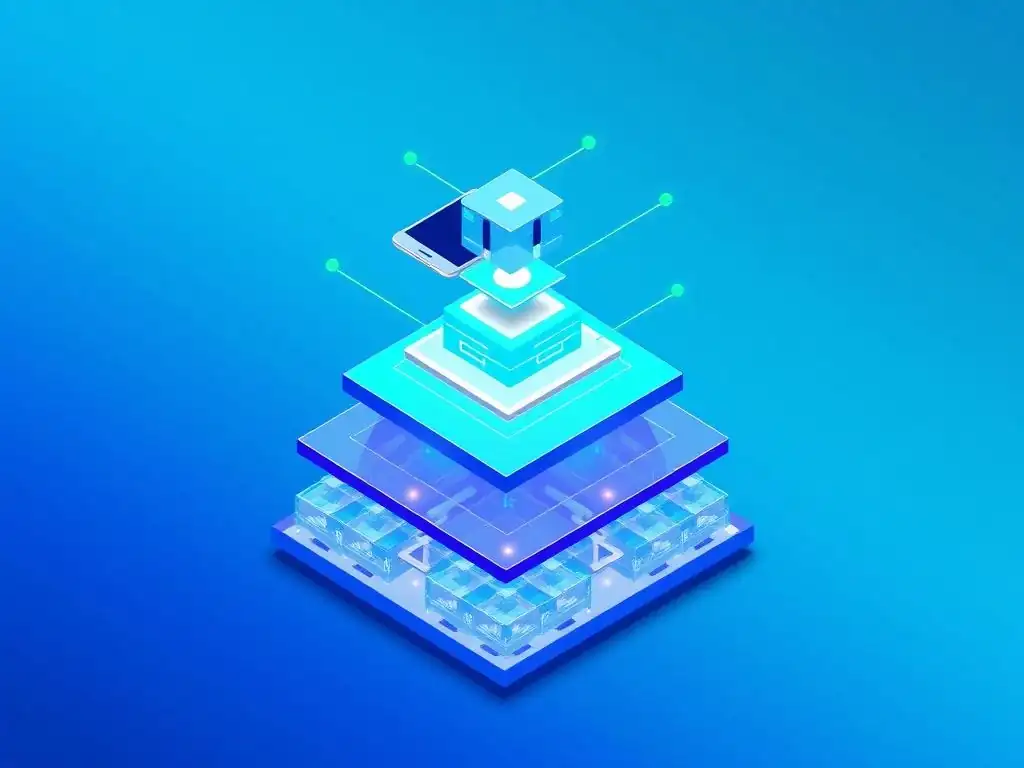
Smart Contract Interaction with Decentralized Storage
Smart contracts on a blockchain cannot directly read arbitrary data from decentralized storage networks like IPFS or Arweave. This limitation stems from the deterministic nature required for consensus; every node executing the smart contract must arrive at the exact same result, which wouldn't be possible if the contract depended on fetching data from external, potentially unavailable or changing sources. Therefore, smart contracts typically interact with decentralized storage by storing and referencing identifiers of the data, such as an IPFS Content Identifier (CID) or an Arweave transaction ID.
When a DApp needs to use data stored off-chain, the smart contract doesn't retrieve the data itself. Instead, the smart contract function might take a data ID as an input parameter, or it might store an ID in its state that points to relevant data.
The actual data retrieval is handled by the DApp's frontend or an intermediary service (like an oracle or indexing layer) which fetches the data from the decentralized storage network using the ID provided by the smart contract. This separation of concerns keeps the on-chain computation minimal and cost-effective while leveraging decentralized storage for larger data payloads in a decentralized app backend architecture.
Data Integrity and Security
The use of content addressing in decentralized storage solutions like IPFS is crucial for ensuring data integrity when linking off-chain data to on-chain logic. A Content Identifier (CID) is a cryptographic hash of the data it represents. If even a single byte of the stored data is altered, the resulting CID will be completely different. By storing the CID in a smart contract, the DApp guarantees that the data retrieved using that specific CID is the exact, untampered version of the data that the smart contract logic intends to reference.
While content addressing guarantees that data retrieved via a specific ID is correct, the security and availability of the data depend on the decentralized storage network itself. For instance, on IPFS, data must be actively "pinned" by nodes to remain available. If no one is pinning the data, it might eventually become inaccessible. Solutions like Arweave address this by aiming for permanent storage. Therefore, ensuring data persistence and implementing checks (potentially via oracles) for data availability are important considerations for the overall security and reliability of the decentralized app backend architecture.
Off-Chain Computation for Scalability
Performing complex or data-intensive computations directly within smart contracts on a blockchain can be prohibitively expensive and slow due to gas costs and network latency. Off-chain computation involves executing these tasks outside the blockchain environment and only submitting the necessary results or proofs back on-chain for verification or state updates. This approach significantly improves the scalability and performance of a decentralized app backend architecture.
Layer-2 scaling solutions like Optimistic Rollups and Zero-Knowledge (ZK) Rollups are prime examples of off-chain computation frameworks. They process thousands of transactions off-chain, bundle them, and submit a single, compressed transaction or cryptographic proof to the main Layer-1 chain (like Ethereum). This drastically increases throughput. Beyond transaction processing, services like Chainlink Keepers allow developers to automate smart contract functions based on off-chain conditions or perform complex calculations off-chain and submit the result on-chain, expanding the capabilities of DApps without burdening the main blockchain.
Building a Scalable DApp Backend
Scalability Considerations
Scalability is a major challenge in designing a decentralized app backend architecture, particularly on Layer-1 blockchains with limited transaction throughput (e.g., Ethereum currently processes around 15-30 transactions per second). High network activity can lead to congestion, increased transaction fees (gas costs), and slow confirmation times, negatively impacting user experience and the economic viability of the DApp. A scalable backend must be designed to handle a growing number of users and transactions efficiently.
Strategies for achieving scalability include leveraging Layer-2 scaling solutions, which can process thousands of transactions per second off-chain. Choosing a blockchain platform specifically designed for high throughput (like Solana or certain Layer-2s) can also be a foundational decision. Efficient smart contract design that minimizes gas usage and offloads non-essential computation and data storage off-chain are crucial architectural patterns. Designing the interaction layer between smart contracts and decentralized storage to be as efficient as possible also contributes to overall scalability.
Security Audits and Testing
As mentioned earlier, security audits are non-negotiable for any serious decentralized app backend architecture. Before deploying smart contracts that manage user funds or critical application state, they must undergo thorough security reviews by independent, reputable firms. These audits identify potential vulnerabilities through static analysis, dynamic testing, and manual code review, significantly reducing the risk of exploits. The cost of an audit is an essential budget item, often ranging from tens to hundreds of thousands of dollars depending on the complexity of the codebase.
Complementing professional audits, a comprehensive testing strategy is vital. This includes writing detailed unit tests for individual contract functions, integration tests to ensure different contracts and components interact correctly, and fuzz testing to probe for unexpected behavior with random inputs. Implementing a bug bounty program incentivizes the broader security community to discover and responsibly disclose vulnerabilities, providing an ongoing layer of security assurance for the deployed decentralized app backend architecture.
Monitoring and Maintenance
Deploying a decentralized app backend is not the end of the development lifecycle; continuous monitoring and maintenance are essential. Monitoring involves tracking the health and performance of smart contracts, decentralized storage dependencies, and any off-chain components (like oracles or indexing services). Tools exist to monitor blockchain events, transaction status, gas usage, and potential anomalies, alerting developers to issues like failed transactions or unexpected contract behavior.
Maintenance tasks can include upgrading proxy-based smart contracts (if designed for upgradability, though this introduces trust considerations), managing off-chain data storage, updating indexing services, and responding to security alerts or network changes. While the core smart contract logic is often immutable, the surrounding decentralized app backend architecture, including how it interacts with data and scales, requires ongoing attention. Regular reviews of the system's performance, security posture, and dependencies are necessary to ensure its long-term viability.
DApp Backend Architecture Examples
DeFi DApp Backend: Lending Platform
The backend of a decentralized finance (DeFi) lending platform, such as a conceptual model similar to Aave or Compound, is a prime example of a complex decentralized app backend architecture. The core logic, including functions for users to deposit assets (as collateral), borrow other assets, accrue interest based on supply and demand, and manage liquidations if collateral values drop, is entirely encoded within a suite of interconnected smart contracts deployed on a blockchain like Ethereum or Polygon. These contracts manage user balances, pool liquidity, and track loan positions transparently on-chain.
Data management in such a platform involves storing critical state within the smart contracts (e.g., user collateral amounts, borrowed amounts, interest rates). However, real-time asset prices, which are crucial for calculating collateral ratios and triggering liquidations, are provided by decentralized oracle networks like Chainlink.
These oracles fetch price data from multiple off-chain exchanges, aggregate and validate it, and then submit a single, tamper-resistant price feed on-chain for the smart contracts to use. User interface data, like historical transactions or detailed pool statistics, is often indexed off-chain by services that read data directly from the blockchain and store it in a queryable format, allowing the frontend to display information quickly without expensive on-chain calls, illustrating how off-chain components support the decentralized app backend architecture.
NFT Marketplace Backend
An NFT marketplace backend (conceptually like OpenSea or Rarible) also relies heavily on a decentralized app backend architecture centered around smart contracts. The ownership and transfer of Non-Fungible Tokens are governed by standard smart contracts like ERC-721 or ERC-1155 deployed on a blockchain. The marketplace's specific logic – such as listing NFTs for sale, handling auctions, facilitating purchases, and managing creator royalties – is implemented in additional smart contracts that interact with the NFT contracts. These contracts manage the state of listings and execute trades automatically when conditions are met.
Data management for an NFT marketplace involves storing the actual NFT metadata (image files, descriptions, properties). This data is typically stored on decentralized storage systems like IPFS or Arweave. The NFT smart contract only stores the unique identifier (CID or transaction ID) pointing to this metadata off-chain.
For efficient browsing and searching, NFT marketplaces utilize off-chain indexing services that scan the blockchain for NFT contracts and events (minting, transfers, listings) and also retrieve the metadata from decentralized storage using the stored IDs. This indexed data is then stored in a centralized or decentralized database optimized for querying, enabling the marketplace frontend to display millions of NFTs and their details quickly, showcasing a hybrid approach within the decentralized app backend architecture.
Future Trends in DApp Backend Development
Layer-2 Scaling Solutions
The future of decentralized app backend architecture is increasingly intertwined with the evolution and adoption of Layer-2 scaling solutions. As demand for DApps grows, the limitations of Layer-1 throughput become more apparent. Layer-2 technologies like Optimistic Rollups (e.g., Optimism, Arbitrum) and Zero-Knowledge Rollups (e.g., zkSync, StarkNet) are becoming essential components, processing the vast majority of transactions off-chain and significantly increasing the transaction capacity of the ecosystem, potentially enabling thousands or even tens of thousands of transactions per second compared to Layer-1's dozens.
Building DApp backends directly on or with close integration to Layer-2s is becoming the standard for new, high-volume applications. This requires developers to adapt their architecture, focusing on interacting with Layer-2 specific smart contracts and infrastructure while still leveraging the security guarantees of the underlying Layer-1 chain. The development of standardized bridges between Layer-1 and Layer-2, as well as improved developer tooling for Layer-2 environments, will further accelerate this trend, making scalable decentralized app backend architecture more accessible.
Oracles and Real-World Data
The capability of decentralized applications to interact securely and reliably with real-world data and off-chain systems is crucial for their continued growth beyond purely on-chain use cases. Oracles, particularly decentralized oracle networks like Chainlink, are evolving to meet this need. They are becoming more robust, capable of providing a wider variety of data feeds (e.g., sports results, weather data, election outcomes) and enabling more complex off-chain computations that can be verified on-chain.
Emerging trends include the development of decentralized computing protocols that allow DApps to perform complex calculations or access data from traditional Web2 APIs off-chain in a verifiable manner before submitting results to smart contracts. This expands the potential use cases for decentralized app backend architecture into areas requiring sophisticated data processing or interaction with the legacy internet, moving beyond simple price feeds to enable more dynamic and data-rich applications.
Emerging Technologies in Data Management
Innovation in decentralized data management continues to evolve, offering new possibilities for DApp backends. Beyond file storage and decentralized databases, research and development are exploring concepts like decentralized graph databases for managing complex relationships (e.g., social networks), decentralized streaming data protocols for real-time data feeds, and enhanced privacy-preserving storage solutions utilizing techniques like encryption and zero-knowledge proofs.
Furthermore, the increasing focus on decentralized identity (DIDs) and verifiable credentials (VCs) impacts how user-specific data is managed. These technologies allow users to control their identity and share verified data selectively without relying on a centralized authority. Integrating DIDs and VCs into a decentralized app backend architecture enables more privacy-preserving and user-centric data models, shifting control from the application provider to the user and unlocking new paradigms for data ownership and utilization within DApps.
Frequently Asked Questions
What is the primary purpose of a decentralized app (DApp) backend architecture?
The primary purpose is to provide a decentralized and secure foundation for DApps, ensuring data integrity and eliminating central points of failure. This is achieved by leveraging blockchain technology.
How do smart contracts function within a DApp's backend architecture?
Smart contracts act as self-executing agreements that define the business logic of the DApp. They are stored and executed on the blockchain, automating processes and ensuring transparency.
What are the key considerations when choosing a decentralized data management solution for a DApp?
Important factors include scalability, data immutability, and cost-effectiveness. Solutions like IPFS or decentralized databases offer alternatives to centralized storage, improving resilience.
How does a decentralized app backend architecture enhance security compared to traditional server-based systems?
By distributing data and logic across a blockchain network, DApp backends reduce the risk of single-point attacks. Cryptography and consensus mechanisms further enhance security and trust.
What are some of the current challenges and future trends in decentralized app backend architecture?
Challenges include scalability limitations and regulatory uncertainty. Future trends involve layer-2 solutions, cross-chain interoperability, and enhanced developer tools for building DApps.
Final Reflection: Embracing the Decentralized Future
The journey through decentralized app backend architecture reveals more than just technical intricacies; it unveils a paradigm shift in how we build and interact with applications. The principles of transparency, security, and user empowerment, once relegated to theoretical discussions, are now actively shaping the digital landscape. Understanding the nuances of smart contracts and decentralized data management is no longer a niche skill, but a crucial competency for developers and innovators aiming to build the future of the web.
The impact of this architectural shift extends far beyond the realm of code. It represents a fundamental re-evaluation of trust and control in the digital age, empowering individuals and communities to participate in a more equitable and transparent ecosystem. This is not merely about technological advancement; it's about fostering a new era of digital ownership and autonomy. As Vitalik Buterin aptly stated: Instead of trying to make the world fit into our existing structures, we should be building new structures that fit the world.
Now, as you step away from this exploration of decentralized app backend architecture, consider the implications for your own work and your own vision of the future. How can you leverage these principles to build more secure, transparent, and user-centric applications? How can you contribute to a world where data is truly owned and controlled by the individuals who create it? The power to shape this decentralized future lies within each of us. Embrace the challenge, explore the possibilities, and build a better tomorrow, one decentralized application at a time.
Ignite Your DApp Development Journey!
Thank you for exploring the fundamentals of DApp backend architecture. We hope you've gained a clearer understanding of smart contracts and decentralized data management. Are you ready to turn that knowledge into action?
Here are some steps to get started:
- Begin building! Experiment with deploying a simple smart contract on a testnet such as Goerli or Sepolia. Don't worry about making mistakes—that's part of the learning process.
- Review open-source DApp projects on platforms like GitHub to learn from experienced developers and analyze their code.
- Share this article with fellow blockchain enthusiasts and start conversations about the future of decentralized applications.
What is the most exciting DApp idea you're thinking of creating, and which blockchain will you choose to bring it to life? Share your thoughts in the comments below!
Leave a Reply