
Securing Wearable Health Data with Blockchain: Privacy and Security Implications


Welcome to Blockchain Trends, your guide to understanding the revolutionary impact of blockchain technology beyond the hype. Are you ready to unlock the potential of a secure and decentralized future?
This week, we delve into a critical intersection: healthcare and blockchain. Explore how this powerful technology can revolutionize the security of your personal information with our in-depth look at blockchain wearable health data security. What if your fitness tracker data was truly yours, and protected against unauthorized access? Read on to uncover the privacy and security implications of this groundbreaking application and discover how blockchain is forging a new path for data ownership in the digital age. Intrigued? Let's dive in.
- Introduction: The Rise of Wearable Health Technology and Data Security Concerns
- Blockchain Technology: A Secure Foundation for Health Data Management
- Addressing Key Challenges in Wearable Health Data Security
- Blockchain Solutions for Securing Wearable Health Data
- Use Cases and Real-World Applications of Blockchain in Wearable Health
- Privacy Implications and Regulatory Considerations
- Limitations and Challenges of Blockchain Implementation
- The Future of Blockchain in Securing Wearable Health Data
- Conclusion: Embracing Blockchain for Secure and Private Wearable Health Data
-
Frequently Asked Questions
- What are the main benefits of using blockchain for wearable health data security?
- How does blockchain address the privacy concerns associated with wearable health data?
- What are some potential enterprise applications of blockchain in securing wearable health data?
- What regulatory considerations are important when implementing blockchain solutions for wearable health data?
- What is the future outlook for blockchain in securing wearable health data?
- Final Reflection: Embracing Trust in Wearable Health
- Empower Your Health Privacy: Start Your Blockchain Journey Now!
Introduction: The Rise of Wearable Health Technology and Data Security Concerns
Wearable Devices: A Growing Source of Health Data
Wearable health technology has rapidly transitioned from niche gadgets to mainstream devices, becoming integral to daily life for millions. These devices, ranging from smartwatches and fitness trackers to specialized medical sensors, continuously collect a wealth of personal health data.
This includes metrics like heart rate, sleep patterns, activity levels, calorie expenditure, and even more complex data such as ECG readings or blood oxygen saturation. The market growth underscores this trend; projections indicate the global wearable health device market could exceed \$200 billion by the mid-2020s, reflecting a substantial increase in the volume and variety of data being generated outside traditional healthcare settings.
The accessibility and convenience of wearables empower individuals to monitor their health proactively. This data, while valuable for personal wellness tracking, also holds immense potential for clinical applications, preventative medicine, and large-scale health research. However, the sheer volume and sensitive nature of this information present significant challenges regarding its storage, transmission, and protection. As more people adopt these devices, the collective pool of highly personal health data expands exponentially, making robust security measures, such as those offered by blockchain wearable health data security solutions, increasingly critical.
The Vulnerability of Wearable Data: Privacy Risks and Security Breaches
Despite their benefits, wearable health devices are susceptible to various security threats and privacy risks. Data is often transmitted from the device to a paired smartphone and then to cloud servers managed by the device manufacturer or third-party health platforms. Each step in this chain represents a potential point of vulnerability. Unauthorized access, data breaches, and malicious attacks can expose highly sensitive personal health information, leading to identity theft, discrimination (e.g., by insurers or employers), or misuse of health status.
Recent history provides ample evidence of such vulnerabilities. While specific breaches of wearable health data are sometimes less publicized than major hospital breaches, the underlying infrastructure often shares similar weaknesses. For instance, breaches affecting health and fitness apps connected to wearables have exposed millions of user records, including location data, health metrics, and personal identifiers.
A notable, albeit slightly older, example involved a fitness app leaking the exercise routes of military personnel, highlighting how seemingly innocuous data can have significant security implications. Protecting this data requires a fundamentally secure architecture, which is where the potential of blockchain wearable health data security becomes apparent.
Why Blockchain for Wearable Health Data? Addressing the Security Gap
The inherent characteristics of blockchain technology offer a compelling solution to the security and privacy challenges facing wearable health data. Traditional centralized databases are single points of failure, making them attractive targets for cyberattacks. In contrast, blockchain's decentralized and distributed ledger structure makes it significantly harder for malicious actors to tamper with data without being detected across the network.
Furthermore, the cryptographic principles underlying blockchain ensure data integrity and immutability. Once health data is recorded on a blockchain, it cannot be altered or deleted without the consensus of the network participants, creating a tamper-proof audit trail. This immutability is crucial for maintaining the trustworthiness of health records. By leveraging blockchain technology, it becomes possible to build a more secure and private ecosystem for managing the sensitive information generated by wearables, directly addressing the existing security gap in traditional data handling methods and paving the way for robust blockchain wearable health data security.
Blockchain Technology: A Secure Foundation for Health Data Management
How Blockchain Works: Decentralization and Immutability
Blockchain operates as a distributed, immutable ledger that records transactions across many computers. Instead of storing data in a single, central location, copies of the ledger are maintained and updated simultaneously across a network of nodes. When new data (like a set of wearable health metrics) is added, it is grouped into a "block," which is then cryptographically linked to the previous block, forming a chain. This process involves complex cryptographic hashing and validation by network participants (nodes) before the block is added.
The core principles of decentralization and immutability are fundamental to blockchain's security. Decentralization means there is no single point of control or failure; compromising one node doesn't compromise the entire network.
Immutability ensures that once a block is added to the chain, its contents cannot be altered without invalidating the subsequent blocks and requiring a majority of the network to agree on the change – a computationally infeasible task for a large, well-distributed network. This makes blockchain an ideal foundation for securing highly sensitive information like wearable health data, offering a level of tamper-proof integrity unmatched by traditional systems, thereby bolstering blockchain wearable health data security.
Blockchain's Potential for Enhancing Data Security and Privacy
Blockchain significantly enhances data security by distributing the ledger and making data tampering exceptionally difficult. Each transaction (or data entry) is cryptographically signed, ensuring authenticity and non-repudiation. The chain structure itself provides an inherent audit trail; any attempt to alter past data would break the cryptographic links and be immediately visible to the network. This transparency across the distributed ledger, while potentially challenging for privacy in public blockchains, can be managed in permissioned healthcare settings.
For privacy, blockchain can be designed to store data references or encrypted hashes on the chain, while the actual sensitive data resides off-chain, accessible only with specific keys managed through the blockchain. This approach allows the integrity and ownership of the data to be verified on-chain without exposing the raw data itself. Furthermore, mechanisms like zero-knowledge proofs can allow verification of data attributes (e.g., a patient is over 18) without revealing the underlying data (e.g., their exact birth date). Such features are crucial for maintaining patient confidentiality while leveraging the security benefits for blockchain wearable health data security.
Benefits of Blockchain in Protecting Wearable Health Information
Implementing blockchain for securing wearable health data offers several distinct advantages. Firstly, it provides a high degree of data integrity, ensuring that the health metrics recorded by wearables are accurate and have not been tampered with, which is vital for diagnostic or monitoring purposes. Secondly, it enhances security through its distributed and cryptographic nature, drastically reducing the risk of large-scale data breaches compared to centralized databases.
Thirdly, blockchain can empower users with greater control over their own health data. Through private keys, individuals can manage who accesses their wearable data and for what purpose, moving away from models where data is passively collected and controlled by corporations. This capability aligns with evolving data privacy regulations like GDPR. Finally, the transparent and immutable nature of blockchain provides an auditable history of data access and usage, increasing accountability among data custodians and users, thereby strengthening blockchain wearable health data security mechanisms.
Addressing Key Challenges in Wearable Health Data Security
Data Integrity and Authenticity: Ensuring Reliable Health Information
Ensuring the integrity and authenticity of data generated by wearable health devices is paramount. Medical decisions, whether made by a doctor or an AI algorithm, rely on the accuracy of the input data. Wearables can be susceptible to sensor errors, calibration issues, or even potential tampering at the device level before data is recorded. While blockchain ensures data integrity after it is added to the ledger, validating the data's authenticity at the source remains a challenge.
Solutions often involve combining blockchain with other technologies and processes. For instance, using trusted execution environments within the wearable or gateway device can help verify data origin before transmission. Cryptographic signatures generated by the device itself, tied to a decentralized identity, can further attest to the data's source. Once verified and added to the blockchain, the immutable ledger guarantees that this authenticated data remains unchanged, providing a reliable history for analysis or clinical use and reinforcing the integrity aspect of blockchain wearable health data security.
Patient Privacy and Control: Empowering Users with Blockchain
A major challenge in the era of pervasive data collection is maintaining patient privacy and control. Users of wearable devices often have little insight into or control over how their health data is used, shared, or monetized by device manufacturers, app developers, or third parties. Blockchain technology presents a paradigm shift by enabling models where individuals truly own and control access to their data.
Using private keys, individuals can grant granular permissions to specific parties (e.g., their doctor, a researcher, an insurance company) for defined periods. Smart contracts can automate these access rules, ensuring data is only shared when conditions are met and recording every access event on the immutable ledger. This not only enhances privacy by limiting unnecessary data exposure but also empowers users, transforming them from passive data sources into active participants in managing their health information, a core benefit of utilizing blockchain for wearable health data security.
Interoperability and Data Sharing: Secure Collaboration in Healthcare
Healthcare systems are notoriously fragmented, with data often siloed in incompatible electronic health record (EHR) systems. Wearable data adds another layer of complexity. Securely and efficiently sharing wearable health data between different healthcare providers, researchers, and even across borders is a significant hurdle. Traditional methods often involve cumbersome manual processes or insecure data transfers.
Blockchain can act as an interoperability layer, facilitating secure data exchange while maintaining privacy and control. By storing pointers or encrypted hashes of data on a blockchain, different systems can verify the existence and integrity of data without needing direct access to the underlying, potentially sensitive, information stored off-chain in disparate systems. Standards like FHIR (Fast Healthcare Interoperability Resources) can be integrated with blockchain solutions to provide a common framework for data representation, further enabling seamless and secure data sharing under patient-controlled permissions, thereby improving interoperability within blockchain wearable health data security ecosystems.
Blockchain Solutions for Securing Wearable Health Data
Permissioned vs. Permissionless Blockchains for Healthcare
When implementing blockchain for securing wearable health data, a key decision is whether to use a permissioned or permissionless network. Permissionless blockchains, like public Bitcoin or Ethereum networks, are open to anyone, offering maximum decentralization but potentially raising privacy concerns for sensitive health data due to the public nature of transactions (even if data is encrypted). They also face scalability challenges for high-volume data.
Permissioned blockchains, such as Hyperledger Fabric or R3 Corda, restrict participation to known and authorized entities (e.g., hospitals, clinics, patients with verified identities). This controlled environment offers better privacy, scalability, and governance suitable for regulatory compliance in healthcare. Data can be shared only among trusted parties with explicit permissions, making permissioned blockchains generally preferred for blockchain wearable health data security applications where privacy and regulatory adherence are critical.
Smart Contracts for Automated Data Access Control
Smart contracts are self-executing contracts with the terms of the agreement directly written into code. Deployed on a blockchain, they automatically execute actions when predefined conditions are met. In the context of wearable health data, smart contracts are powerful tools for automating data access control and usage permissions granted by the data owner (the patient).
For example, a patient can use a smart contract to automatically grant their cardiologist access to their wearable ECG data only during clinic hours, or allow a specific research study access to anonymized activity data for a limited time. The smart contract enforces these rules transparently and immutably on the blockchain. This eliminates the need for intermediaries and ensures that data access adheres strictly to the patient's consent, significantly enhancing privacy and control within blockchain wearable health data security frameworks.
Decentralized Identity Management for Wearable Users
Securely managing the identity of wearable device users and linking it to their health data is crucial. Traditional identity management systems are often centralized and vulnerable to breaches. Decentralized Identity (DID) solutions, often built on blockchain, offer a more secure and privacy-preserving approach.
With DID, individuals control their own digital identity, verified through cryptography. This identity can be linked to their wearable devices and the health data they generate. Instead of relying on a central authority to authenticate, users can prove their identity or specific attributes about themselves (e.g., "I am the owner of this data stream") directly using cryptographic credentials stored on the blockchain or managed via a secure wallet. This self-sovereign approach to identity management strengthens the user's control over their data and enhances the security of blockchain wearable health data security systems.
Use Cases and Real-World Applications of Blockchain in Wearable Health
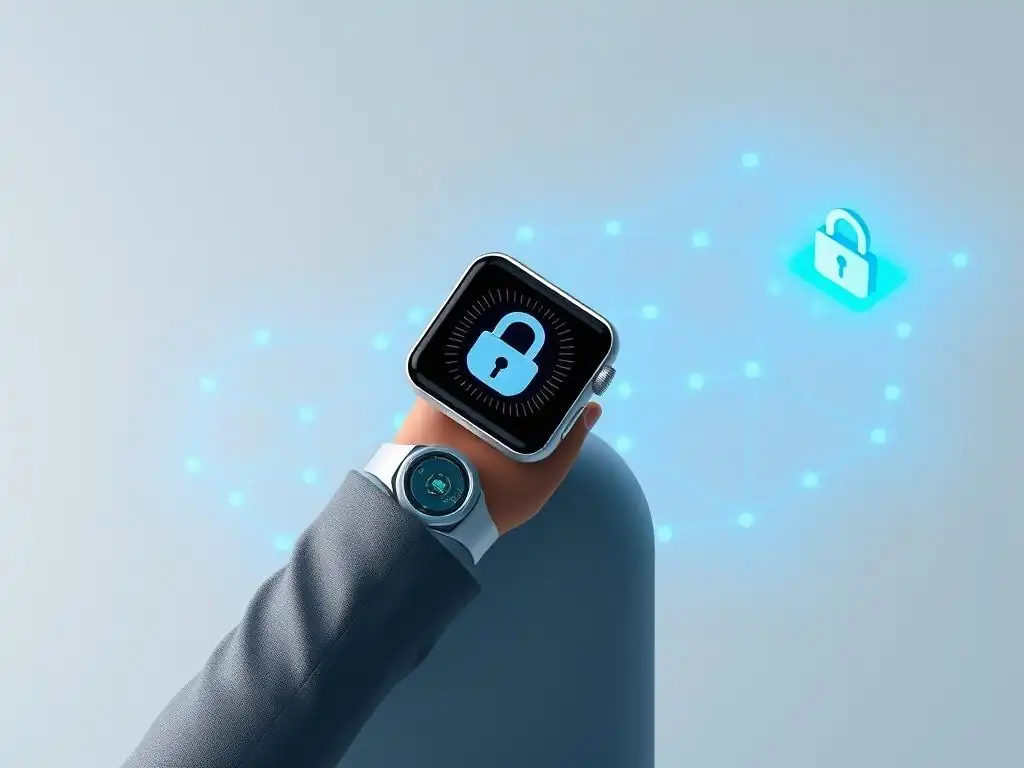
Remote Patient Monitoring with Blockchain-Secured Wearables
Remote patient monitoring (RPM) is a rapidly expanding field where wearables play a vital role, particularly for managing chronic conditions like heart disease or diabetes. Wearables collect continuous data (e.g., blood glucose levels, heart rate variability) which is transmitted to healthcare providers. Ensuring the security and integrity of this stream of sensitive, real-time data is critical for accurate diagnosis and timely intervention.
Blockchain can secure RPM data by providing an immutable ledger of readings. Each data point transmitted from a patient's wearable could be hashed and timestamped on a private or permissioned blockchain. Healthcare providers could access this verified data stream with permissions managed by smart contracts. This not only prevents tampering with historical data but also provides an auditable log of access, enhancing trust between patients and providers in blockchain wearable health data security applications for RPM. Pilot programs are exploring such implementations to improve the reliability of remote health monitoring.
Clinical Trials and Research: Data Integrity and Patient Consent
Clinical trials require rigorous data integrity and verifiable patient consent. Data collected from participants, including potentially from wearables used in trials, must be accurate and untampered. Managing consent across numerous participants over extended periods is also complex. Blockchain offers solutions for both challenges.
Wearable data collected during a trial can be recorded on a blockchain to create an immutable record, ensuring data integrity for analysis. Patient consent can be managed via smart contracts, allowing participants to grant, revoke, or modify their consent for data usage transparently on the ledger. Every interaction with the data, based on consent rules, is recorded. This not only streamlines consent management but also provides researchers and regulators with a verifiable audit trail, significantly improving the trustworthiness and efficiency of clinical trials utilizing blockchain wearable health data security.
Insurance and Wellness Programs: Secure Data Sharing and Incentives
Insurance companies and corporate wellness programs are increasingly using wearable data to incentivize healthy behavior or personalize premiums. Sharing sensitive health data with these entities raises significant privacy concerns. Blockchain can facilitate secure, consent-driven data sharing models.
Individuals could choose to share specific, aggregated, or anonymized wearable data with insurers or wellness programs via a blockchain platform. Smart contracts could automate incentives (e.g., premium discounts, rewards) based on verified data points (e.g., hitting step goals) recorded on the chain, without necessarily exposing the raw, sensitive data. The use of decentralized identity ensures that data is linked to the correct individual while preserving privacy where possible. This creates a transparent and secure way for users to benefit from their data while controlling its access, demonstrating the potential of blockchain wearable health data security in incentivized health programs.
Privacy Implications and Regulatory Considerations
GDPR and HIPAA Compliance in Blockchain-Based Wearable Solutions
Implementing blockchain for wearable health data security must navigate complex regulatory landscapes, primarily GDPR in Europe and HIPAA in the United States. These regulations mandate strict requirements for handling Protected Health Information (PHI) and personal data, including principles of privacy by design, data minimization, patient rights (like the right to access or erase data), and accountability.
While blockchain's immutability is great for integrity, the "right to erasure" (GDPR's Article 17) presents a challenge if raw PHI is stored directly on a public chain. Healthcare solutions typically address this by storing only encrypted hashes or pointers on the chain, with the actual data stored off-chain in systems that allow for deletion or modification as required by regulations.
Permissioned blockchains also help by restricting access to authorized parties, aligning with HIPAA's access control requirements. Designing blockchain solutions with these regulations in mind from the outset is crucial for legal and ethical compliance in blockchain wearable health data security.
Balancing Data Security with Patient Privacy Rights
Achieving a balance between robust data security and upholding patient privacy rights is a critical design consideration for blockchain wearable health data security systems. While blockchain enhances security through immutability and distribution, the inherent transparency of some blockchain models can conflict with the need for confidentiality in healthcare.
Techniques like off-chain data storage with on-chain hashes, data anonymization, pseudonymization, and differential privacy are essential to protect sensitive details while leveraging blockchain's integrity benefits. Zero-knowledge proofs can allow verification of data attributes without revealing the data itself. Empowering patients with granular consent controls via smart contracts is also key to respecting their autonomy and privacy rights, ensuring that security measures do not come at the cost of sacrificing individual privacy in blockchain wearable health data security implementations.
The Future of Blockchain and Healthcare Data Regulations
The regulatory landscape for blockchain in healthcare, particularly concerning wearable data, is still evolving. Regulators are grappling with how existing rules apply to decentralized, immutable systems. Future regulations may provide clearer guidelines on data ownership, the definition of PHI on a blockchain, cross-border data flow in decentralized networks, and the legal standing of smart contracts in healthcare agreements.
As blockchain adoption grows in healthcare, we can anticipate increased dialogue between technology developers, healthcare providers, regulators, and patient advocacy groups. This collaboration will be necessary to develop frameworks that facilitate innovation while ensuring patient safety, privacy, and data security. The development of clear standards and best practices for blockchain wearable health data security will be vital for widespread adoption and regulatory acceptance.
Limitations and Challenges of Blockchain Implementation
Scalability and Performance Issues in Healthcare Blockchains
Despite its potential, blockchain technology faces practical limitations when applied to large-scale healthcare systems and the massive volume of data generated by wearables. Public blockchains can suffer from low transaction throughput and high latency, making them unsuitable for real-time processing of continuous wearable data streams from millions of users.
While permissioned blockchains offer better performance, they still need to be highly scalable to handle the volume, velocity, and variety of health data. Storing large files directly on any blockchain is generally inefficient and costly; thus, solutions rely on storing metadata or hashes on-chain and the data off-chain, which introduces dependencies on traditional storage systems. Addressing these scalability and performance bottlenecks is crucial for the practical implementation of blockchain wearable health data security solutions at a population level.
Cost and Complexity of Blockchain Integration
Implementing blockchain solutions in existing healthcare infrastructure is complex and can be costly. Healthcare systems often rely on legacy IT systems that are difficult to integrate with new technologies. Developing, deploying, and maintaining a blockchain network requires specialized expertise, which is currently in high demand and short supply within the healthcare sector.
The initial setup costs for developing a custom permissioned blockchain or integrating with an existing platform can be substantial. Furthermore, the complexity extends to governance models, managing network participants, and ensuring compliance across a distributed network. These factors represent significant hurdles that must be overcome for the widespread adoption of blockchain wearable health data security solutions.
Addressing the Skills Gap in Blockchain Healthcare Development
A significant challenge hindering the adoption of blockchain in healthcare is the lack of skilled professionals who understand both blockchain technology and the intricacies of the healthcare industry, including regulatory requirements and clinical workflows. Developing secure, compliant, and effective blockchain wearable health data security solutions requires expertise in cryptography, distributed systems, smart contract development, and healthcare informatics.
Bridging this skills gap is essential. This involves training existing IT professionals within healthcare, fostering collaboration between blockchain developers and healthcare experts, and developing educational programs focused on health informatics and blockchain. Without a sufficiently skilled workforce, the potential of blockchain wearable health data security will remain largely untapped.
The Future of Blockchain in Securing Wearable Health Data
Emerging Trends: AI, IoT, and Blockchain Convergence
The future of securing wearable health data lies in the convergence of blockchain with other transformative technologies like Artificial Intelligence (AI) and the Internet of Things (IoT). Wearable devices are part of the IoT ecosystem, generating data that can be analyzed by AI algorithms for insights into health trends and personalized medicine. Blockchain can provide the secure, immutable, and transparent foundation for this data flow.
AI can analyze blockchain-secured wearable data without compromising privacy by operating on encrypted data or aggregated, anonymized datasets verified on-chain. Blockchain ensures the integrity of the AI training data and the auditability of algorithmic decisions based on sensitive health information. This convergence promises more intelligent, secure, and privacy-preserving health monitoring and analysis, enhancing the value proposition of blockchain wearable health data security solutions.
Potential Impact on Healthcare Delivery and Patient Outcomes
The secure and privacy-preserving management of wearable health data via blockchain has the potential to significantly impact healthcare delivery and patient outcomes. By providing clinicians with access to reliable, real-time or near-real-time data streams from patients' daily lives, it enables more proactive and personalized care. Early detection of deteriorating conditions, more accurate diagnoses based on comprehensive data, and improved adherence to treatment plans become possible.
Furthermore, secure data sharing facilitated by blockchain can accelerate medical research, drug discovery, and public health initiatives by making large, diverse datasets available under strict privacy controls. This could lead to breakthroughs in understanding diseases and developing more effective treatments, ultimately improving population health outcomes facilitated by robust blockchain wearable health data security.
Predictions for the Adoption of Blockchain Wearable Security Solutions
While challenges remain, the trajectory for blockchain adoption in securing wearable health data appears positive, albeit phased. Initial adoption is likely to occur in specific, high-value use cases such as clinical trials, remote monitoring for specific conditions, and secure health data marketplaces where the benefits of data integrity and patient control are most immediately apparent.
Widespread adoption will depend on overcoming scalability issues, reducing implementation costs, developing clearer regulatory frameworks, and building trust among users and healthcare providers. Over the next five to ten years, we can expect to see more pilot programs transitioning to production systems, particularly within integrated health networks or specialized health platforms that prioritize data security and patient empowerment, solidifying the role of blockchain wearable health data security.
Conclusion: Embracing Blockchain for Secure and Private Wearable Health Data
Key Takeaways: Blockchain's Role in Protecting Health Information
The proliferation of wearable health devices generates vast amounts of sensitive personal data, presenting significant privacy and security challenges. Traditional centralized data management systems are vulnerable to breaches and often leave individuals with limited control over their information. Blockchain technology, with its principles of decentralization, immutability, and cryptographic security, offers a powerful alternative for securing this valuable data.
Key benefits include enhanced data integrity, robust security against tampering, and the potential to empower patients with greater control over who accesses their health information. While challenges related to scalability, cost, and regulatory compliance exist, ongoing developments and the convergence with AI and IoT point towards a future where blockchain plays a foundational role in protecting wearable health data security, enabling more secure, private, and efficient healthcare ecosystems.
Call to Action: Exploring Blockchain Solutions for Wearable Data Security
As the healthcare industry continues to embrace digital transformation and the use of wearable technologies, prioritizing the security and privacy of the generated data is paramount. Healthcare organizations, technology providers, and regulators must actively explore and invest in blockchain-based solutions tailored for wearable health data security.
Understanding the nuances of permissioned blockchains, smart contracts for access control, and decentralized identity is crucial for developing effective strategies. Engaging in pilot programs, fostering expertise, and collaborating on industry standards will accelerate the adoption of these transformative technologies, ultimately building a more secure and trustworthy future for personal health information in the digital age.
Frequently Asked Questions
What are the main benefits of using blockchain for wearable health data security?
Blockchain offers enhanced data privacy and security through decentralization and encryption, making it more difficult for unauthorized access and manipulation. It also provides data immutability, ensuring the integrity of health records.
How does blockchain address the privacy concerns associated with wearable health data?
Blockchain allows for granular control over data access, enabling users to grant permission to specific parties. Furthermore, pseudonymization and encryption techniques can further protect patient identity.
What are some potential enterprise applications of blockchain in securing wearable health data?
Enterprises can use blockchain to create secure and interoperable health data platforms for clinical trials, remote patient monitoring, and supply chain management of medical devices.
What regulatory considerations are important when implementing blockchain solutions for wearable health data?
Compliance with regulations like HIPAA, GDPR, and other data privacy laws is crucial. Ensuring data sovereignty and obtaining necessary user consent are also vital aspects.
What is the future outlook for blockchain in securing wearable health data?
The future involves greater adoption of decentralized health identity solutions, improved data interoperability across systems, and the integration of AI for enhanced data analysis and security.
Final Reflection: Embracing Trust in Wearable Health
The promise of wearable health technology is undeniable, offering personalized insights and proactive healthcare management. However, the vulnerability of this data demands immediate and robust solutions. As we've explored, blockchain technology presents a compelling pathway to securing this sensitive information, ensuring privacy and fostering trust in this rapidly evolving landscape.
The integration of blockchain into wearable health data management isn't just a technical upgrade; it's a paradigm shift in how we perceive and control our personal health information. This shift is crucial for fostering widespread adoption and realizing the full potential of wearable technology. Data is the new oil, but in healthcare, it's more than that; it's life itself. We must safeguard it with the utmost care.
This quote underscores the profound responsibility we have to protect the integrity and privacy of health data in the digital age.
Now, consider the implications of this discussion for your own life. How can you advocate for greater data security and privacy in the wearable health technologies you use? Let us all commit to demanding transparency and security from the developers and providers of these devices, ensuring that our personal health data remains truly ours, empowering us to live healthier, more informed lives.
Empower Your Health Privacy: Start Your Blockchain Journey Now!
Thank you for exploring the world of blockchain and wearable health data. We hope this article has highlighted the importance of protecting your personal health information. Now, it’s time to take control and actively contribute to creating a more secure future for your data.
Are you ready to make a difference? Here’s how:
- Advocate for blockchain solutions: Reach out to your wearable technology provider and inquire about their plans for implementing blockchain technology to enhance data security and privacy. Let them know you value secure health data and want to see progress.
- Research blockchain-based health platforms: Look into existing decentralized health applications to understand how they prioritize data security and empower users.
- Share this information: Spread awareness about the significance of safeguarding wearable health data through blockchain technology. The more people are informed, the better decisions we can all make.
What specific steps will you take to ensure your health data remains truly secure? Share your ideas, and let’s work together to build a safer, more private future.
Leave a Reply