
Streamlining Insurance Claims: AI Smart Contracts for Faster and Fairer Processing


Welcome to Blockchain Trends, your gateway to understanding the revolutionary impact of blockchain technology. Beyond the hype of cryptocurrencies, we delve into the real-world applications transforming industries. Ever wondered how blockchain can revolutionize insurance? Our latest article explores how AI-powered smart contracts are streamlining blockchain insurance claims processing, promising faster, fairer, and more transparent outcomes. Discover how this innovative synergy is reshaping the future of insurance – and what it means for you. Read on to uncover the potential!
- Introduction: Revolutionizing Agricultural Insurance with Blockchain and AI
- Understanding AI Smart Contracts for Crop Insurance Claims
- Improving Crop Insurance Claims Processing with Blockchain Technology
- AI Smart Contracts: A Step-by-Step Look at the Crop Insurance Claims Process
- Real-World Applications of Blockchain Crop Insurance Claims Processing
- Addressing Challenges and Concerns
- The Future of Crop Insurance: AI, Blockchain, and Smart Contracts
- Conclusion: Embracing Innovation in Crop Insurance
-
Frequently Asked Questions
- How can blockchain technology improve insurance claims processing?
- What role do AI smart contracts play in automating insurance claims?
- What are the potential benefits of using blockchain for tracking insurance policies and claims data?
- How does blockchain technology address the issue of fraud in insurance claims?
- What are some challenges associated with implementing blockchain for insurance claims processing?
- Final Reflection: Embracing Transparency in Insurance
- Unlock Faster Claims: Embrace the Future of Insurance!
Introduction: Revolutionizing Agricultural Insurance with Blockchain and AI
The agricultural sector, a cornerstone of global economies, faces constant threats from unpredictable weather patterns, pests, and diseases. Crop insurance plays a vital role in mitigating these risks, providing a safety net for farmers and ensuring food security. However, traditional crop insurance claims processes are often plagued by inefficiencies, delays, and disputes, leading to farmer dissatisfaction and hindering the timely disbursement of crucial funds.
This article explores how the synergy of blockchain and artificial intelligence (AI), specifically through AI-powered smart contracts, is poised to revolutionize crop insurance claims processing, making it faster, fairer, and more transparent. By leveraging the immutable and transparent nature of blockchain with the analytical and decision-making capabilities of AI, we can move towards a more efficient and equitable system for agricultural insurance, ultimately strengthening the resilience of the farming community.
The Current State of Crop Insurance Claims: Challenges and Bottlenecks
The conventional crop insurance claims process is often cumbersome and time-consuming, involving multiple intermediaries, manual data collection, and subjective assessments. Farmers typically need to file claims after a damaging event, which are then investigated by insurance adjusters who assess the extent of the loss. This process can be lengthy, sometimes taking weeks or even months, delaying crucial payouts when farmers need them most.
For instance, in regions prone to monsoonal flooding, like parts of India and Bangladesh, delays in claim settlements can severely impact farmers' ability to replant crops in the subsequent season, exacerbating their financial vulnerability. Furthermore, disputes over claim amounts are not uncommon, often arising from differing interpretations of damage assessments or lack of transparency in the evaluation process.
According to a report by the World Bank, administrative costs in traditional agricultural insurance can consume up to 30% of premiums in some developing countries, highlighting the inefficiency of current systems. This not only reduces the payout farmers receive but also increases the overall cost of insurance, making it less accessible, especially for smallholder farmers.
The Promise of Blockchain and AI Synergy in Crop Insurance
The integration of blockchain and AI offers a powerful solution to address the inefficiencies and challenges inherent in traditional crop insurance claims processing. Blockchain technology, with its decentralized, transparent, and immutable ledger, provides a secure and auditable platform for managing insurance policies and claims data. Smart contracts, self-executing agreements coded on the blockchain, automate the claims process based on predefined conditions, eliminating manual intervention and reducing processing times.
When coupled with AI, the capabilities of smart contracts are significantly amplified. AI algorithms can analyze vast datasets from various sources, such as satellite imagery, weather data, IoT sensors, and historical claim records, to objectively assess crop damage, validate claims, and detect fraudulent activities with greater accuracy and speed.
For example, AI can analyze satellite images to identify drought-stricken areas or flood inundation, providing rapid and objective evidence of crop loss, thereby streamlining the claim verification process. This synergy not only accelerates claim settlements but also enhances transparency and trust among all stakeholders – farmers, insurers, and regulators – creating a more robust and reliable crop insurance ecosystem.
Understanding AI Smart Contracts for Crop Insurance Claims
What are Smart Contracts? A Brief Overview
Smart contracts are self-executing contracts with the terms of the agreement directly written into code. They operate on a blockchain, ensuring transparency and immutability. Once the predetermined conditions encoded in a smart contract are met, the contract automatically executes the agreed-upon actions without the need for intermediaries. Imagine a traditional contract requiring manual verification and execution at each step.
Smart contracts automate this entire process. For instance, in a simple example outside insurance, a smart contract could automatically release funds from escrow to a seller once a delivery confirmation is recorded on the blockchain. This automation reduces the need for manual oversight, minimizes the risk of human error, and enhances the speed and efficiency of transactions. In the context of insurance, smart contracts can be programmed to automatically process claims and disburse payouts when specific insured events occur, based on verifiable data sources.
How AI Enhances Smart Contract Functionality in Crop Insurance
While smart contracts provide automation, they are essentially rule-based systems that execute predefined instructions. AI elevates smart contracts to a new level of intelligence and adaptability. AI algorithms can analyze complex datasets and make informed decisions within the framework of a smart contract, going beyond simple rule-based triggers.
In crop insurance, AI can process vast amounts of data, including real-time weather information from meteorological agencies, high-resolution satellite imagery capturing crop health and acreage, and historical yield data from agricultural databases. For example, AI can be trained to identify patterns in satellite imagery indicative of crop stress due to drought or pest infestation, even before visible signs are apparent on the ground.
Furthermore, AI can learn from past claims data to improve fraud detection models, identifying anomalies and suspicious patterns that might be missed by manual review. This analytical power of AI, integrated into smart contracts, allows for more nuanced, accurate, and proactive claims processing, moving beyond simple trigger-based payouts to a more intelligent and responsive system.
Key Benefits of AI-Powered Smart Contracts in Claims Processing
The deployment of AI-powered smart contracts in crop insurance brings forth a multitude of benefits, primarily centered around enhanced efficiency, fairness, and reduced costs. Firstly, processing times for claims are significantly reduced. Automated claim verification through AI analysis of satellite and weather data eliminates the need for lengthy manual field inspections, shrinking claim processing times from weeks to potentially days or even hours. Secondly, fairness and objectivity are improved.
AI-driven assessments minimize subjective human interpretation in damage evaluation, leading to more consistent and equitable claim settlements. Thirdly, administrative costs are drastically lowered. Automation reduces the need for extensive paperwork, manual data entry, and large teams of claims adjusters, leading to substantial cost savings for insurance providers, which can potentially translate to lower premiums for farmers.
Finally, transparency is greatly enhanced. All policy terms, claim triggers, and data sources are recorded on the blockchain, providing an auditable and transparent record for all stakeholders, building trust and reducing disputes. These combined benefits create a more farmer-centric and sustainable crop insurance ecosystem.
Improving Crop Insurance Claims Processing with Blockchain Technology
Increased Transparency and Trust in Claims Handling
One of the most significant advantages of using blockchain in crop insurance claims processing is the enhanced transparency and trust it fosters. Traditional insurance systems often lack transparency, leading to farmer skepticism about the fairness of claim settlements. Blockchain's immutable ledger addresses this directly.
Every stage of the insurance process, from policy issuance to claim filing and settlement, can be recorded on the blockchain, creating an auditable and verifiable trail. Farmers can access policy terms, claim status, and the data used for assessment, ensuring they have a clear understanding of the process.
For instance, if a smart contract is triggered by a drought index based on publicly available meteorological data, this data and the contract's execution are recorded on the blockchain, leaving no room for ambiguity or manipulation. This transparency builds trust between farmers and insurers, fostering a more collaborative and reliable relationship, crucial for the long-term adoption and effectiveness of crop insurance schemes.
Automated Claims Verification and Fraud Detection using AI
AI plays a critical role in automating claims verification and bolstering fraud detection within blockchain-based crop insurance systems. Instead of relying solely on manual field assessments, AI algorithms can analyze diverse datasets to objectively verify claim events and assess damage. For example, AI can process satellite imagery from providers like Planet Labs or Sentinel to detect changes in vegetation health and identify areas affected by drought, floods, or pest outbreaks.
These satellite images, combined with weather data from sources like NOAA (National Oceanic and Atmospheric Administration) or local meteorological departments, provide robust and verifiable evidence of crop loss. Furthermore, AI can be trained to detect anomalies and patterns indicative of fraudulent claims.
By analyzing historical claims data, cropping patterns, and environmental data, AI can flag suspicious claims for further review, minimizing fraudulent payouts and protecting the integrity of the insurance pool. This automated verification and fraud detection not only speeds up the claims process but also ensures that payouts are made accurately and fairly to genuine claimants.
Faster Payouts and Reduced Administrative Costs
The combined power of blockchain and AI significantly accelerates payout times and reduces administrative overhead in crop insurance. Traditional claims processes involve multiple manual steps, leading to delays in payouts, often when farmers are in urgent need of financial assistance. AI-powered smart contracts automate many of these steps.
Once a claim event is verified by AI analysis of data sources, the smart contract automatically triggers the payout process, eliminating manual approvals and bureaucratic delays. This can reduce payout times from weeks or months to just days or even hours in some cases. Moreover, the automation inherent in blockchain and AI reduces the need for extensive manual labor in claims processing.
Fewer claims adjusters are required for field inspections, and administrative staff can be streamlined, leading to significant reductions in operational costs for insurance providers. These cost savings can be passed on to farmers in the form of lower premiums or reinvested in improving insurance products and services, making crop insurance more accessible and sustainable for the agricultural community.
AI Smart Contracts: A Step-by-Step Look at the Crop Insurance Claims Process
Step 1: Policy Enrollment and Data Storage on the Blockchain
The initial step involves farmers enrolling in a crop insurance policy. This process is streamlined and secured using blockchain technology. Farmer details, farm location, crop type, acreage, and policy terms are digitally recorded and stored on the blockchain. This creates an immutable and transparent record of the policy, accessible to both the farmer and the insurer.
Data privacy is maintained through encryption and permissioned access, ensuring only authorized parties can view sensitive information. For instance, a farmer can use a mobile application to input their farm details, which are then verified and recorded on the blockchain. This digital enrollment process reduces paperwork, minimizes errors associated with manual data entry, and ensures data integrity from the outset. The blockchain serves as a secure and reliable repository for all policy-related information, forming the foundation for subsequent automated claims processing.
Step 2: Triggering the Smart Contract with a Claim Event (e.g., Drought, Flood)
A critical aspect of AI-powered smart contracts is the automated triggering of the claims process. Smart contracts are designed to be triggered by predefined events, such as drought, flood, excessive rainfall, or pest outbreaks. These triggers are linked to real-time data feeds from reliable sources. For example, a smart contract could be set to trigger if a region experiences a prolonged period of below-average rainfall, as measured by meteorological data from a national weather service.
Similarly, flood events can be detected through satellite-based flood mapping or data from hydrological sensors. These data feeds act as oracles, providing verifiable and objective information to the smart contract. Once the pre-defined trigger conditions are met, the smart contract automatically initiates the claim assessment process, without requiring manual claim filing by the farmer, further simplifying and accelerating the process.
Step 3: AI-Powered Claim Assessment and Validation Using Satellite Imagery and Weather Data
Upon triggering, the AI engine integrated with the smart contract takes over for claim assessment and validation. AI algorithms analyze data from various sources to determine the extent of crop damage. Satellite imagery is a crucial input, allowing AI to assess vegetation health and identify areas affected by the insured peril. For example, AI can analyze Normalized Difference Vegetation Index (NDVI) from satellite images to detect areas with reduced vegetation vigor, indicative of drought stress or disease.
Weather data, including rainfall, temperature, and humidity data, is also analyzed to correlate environmental conditions with observed crop damage. AI algorithms can also incorporate historical yield data and crop growth models to estimate expected yield and quantify losses. This multi-faceted data analysis provides a comprehensive and objective assessment of crop damage, replacing subjective manual evaluations with data-driven insights, ensuring accuracy and fairness in claim validation.
Step 4: Automated Payout and Settlement
The final step in the AI-powered smart contract process is automated payout and settlement. Once the AI has assessed and validated the claim, and determined the payout amount based on the policy terms and the extent of damage, the smart contract automatically executes the payout. Funds are securely transferred to the farmer's designated digital wallet or bank account, as specified in the policy. Because the entire process is automated and recorded on the blockchain, payouts are disbursed rapidly and transparently.
Farmers receive timely compensation without lengthy delays or bureaucratic hurdles. Furthermore, all payout transactions are recorded on the blockchain, providing an immutable audit trail of all settlements, enhancing accountability and transparency for both farmers and insurers. This streamlined and automated payout process is a key advantage of AI-powered smart contracts, significantly improving the farmer experience and the overall efficiency of crop insurance.
Real-World Applications of Blockchain Crop Insurance Claims Processing
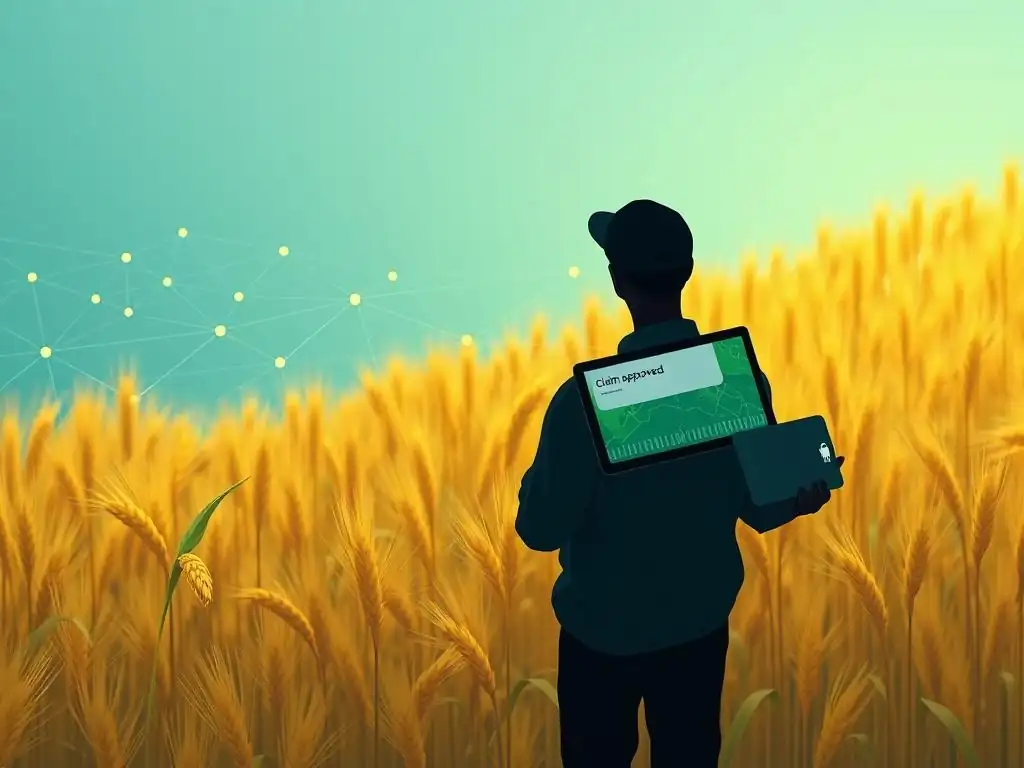
Case Study: Etherisc and Their Crop Insurance Platform
Etherisc is a prominent example of a company actively developing and deploying blockchain-based crop insurance solutions. They have created a decentralized insurance platform that utilizes smart contracts to automate various aspects of insurance, including crop insurance claims processing. Etherisc has partnered with organizations in several countries, including Kenya and Sri Lanka, to pilot and implement crop insurance programs for smallholder farmers.
Their platform leverages parametric insurance, where payouts are triggered based on predefined parameters, such as rainfall levels, rather than individual loss assessments. For instance, in Sri Lanka, Etherisc collaborated with local partners to offer rainfall index insurance for paddy rice farmers.
The smart contracts are triggered by rainfall data from reliable meteorological sources, and payouts are automatically disbursed to farmers' mobile wallets when rainfall falls below a pre-defined threshold. Etherisc's work demonstrates the practical feasibility and benefits of using blockchain and smart contracts to streamline and improve crop insurance, particularly in developing countries where traditional insurance infrastructure is often lacking.
Examples of AI-Driven Anomaly Detection in Crop Yield Predictions
AI is increasingly being used for anomaly detection in crop yield predictions, which is crucial for proactive risk management and improved insurance underwriting. AI algorithms can analyze vast datasets, including historical yield data, weather patterns, soil conditions, and satellite imagery, to build predictive models for crop yields. By comparing real-time data with predicted yields, AI can identify anomalies or deviations that may indicate potential crop failures or reduced harvests.
For example, if AI models predict an average yield of 2 tons of maize per hectare for a region, but real-time satellite data and weather patterns suggest significantly lower yields, this anomaly can trigger alerts for insurers and farmers. These anomalies can be caused by various factors, such as unexpected droughts, pest outbreaks, or disease infestations.
Early detection of such anomalies allows for timely interventions, such as providing farmers with advisory services or adjusting insurance coverage, mitigating potential losses and improving the overall resilience of the agricultural system. Companies like Descartes Labs and Geosys are utilizing AI and satellite imagery for advanced crop monitoring and yield prediction, providing valuable insights for the insurance industry.
The Impact on Farmer Security and Financial Stability
The adoption of AI-powered smart contracts for crop insurance has a profound impact on farmer security and financial stability, particularly for smallholder farmers in developing regions who are most vulnerable to climate risks. Faster and more reliable claim payouts provide farmers with timely access to funds when they experience crop losses, enabling them to recover more quickly and replant for the next season. This reduces their vulnerability to income shocks and helps maintain their livelihoods.
Increased transparency and fairness in the claims process build trust in insurance schemes, encouraging greater adoption of crop insurance among farmers. With a reliable safety net in place, farmers are more willing to invest in improved farming practices and adopt new technologies, boosting productivity and long-term sustainability.
Furthermore, reduced administrative costs and potentially lower premiums make crop insurance more accessible and affordable, especially for smallholder farmers who often face financial constraints. Ultimately, AI-powered smart contracts contribute to building a more resilient and financially secure agricultural sector, strengthening food security and improving the livelihoods of farming communities.
Addressing Challenges and Concerns
Data Privacy and Security Considerations
While blockchain offers enhanced security, data privacy and security remain crucial considerations in the implementation of AI-powered smart contracts for crop insurance. Crop insurance systems involve handling sensitive farmer data, including farm locations, crop types, and claim history. It is essential to ensure that data is protected from unauthorized access and misuse.
Blockchain solutions can employ encryption and permissioned access controls to safeguard data privacy. For instance, personal farmer data can be encrypted on the blockchain, and access can be restricted to authorized parties, such as the farmer and the insurer. Furthermore, compliance with data privacy regulations, such as GDPR or local data protection laws, is paramount.
Robust data governance frameworks and security protocols must be implemented to address potential vulnerabilities and ensure the responsible and ethical use of farmer data within blockchain-based crop insurance systems. Regular security audits and vulnerability assessments are also necessary to maintain the integrity and security of the system.
Regulatory Compliance and Legal Frameworks
The adoption of blockchain and AI in insurance necessitates navigating evolving regulatory landscapes and legal frameworks. Insurance is a heavily regulated industry, and the use of new technologies like blockchain and AI requires careful consideration of existing regulations and potential legal implications. Clear regulatory guidelines are needed to address issues such as data governance, smart contract enforceability, and consumer protection in the context of blockchain-based insurance.
Regulators need to adapt existing frameworks or develop new regulations to accommodate the unique characteristics of blockchain and AI in insurance. For example, legal frameworks need to clarify the legal status of smart contracts and ensure that they are recognized as legally binding agreements. Collaboration between insurance industry stakeholders, technology providers, and regulators is crucial to develop appropriate regulatory frameworks that foster innovation while ensuring consumer protection and market stability in the evolving landscape of blockchain insurance claims processing.
Scalability and Interoperability of Blockchain Insurance Solutions
Scalability and interoperability are important technical challenges to address for the widespread adoption of blockchain insurance solutions. Blockchain networks need to be able to handle a large volume of transactions and data to support large-scale crop insurance programs. Scalability solutions, such as layer-2 scaling technologies or sharding, may be necessary to ensure that blockchain networks can efficiently process a growing number of policies and claims. Interoperability between different blockchain platforms and legacy insurance systems is also crucial.
Insurance companies often use existing IT infrastructure and databases, and blockchain-based solutions need to be able to seamlessly integrate with these systems. Standards for data exchange and interoperability protocols are needed to facilitate communication and data sharing between different blockchain platforms and traditional insurance systems. Addressing these scalability and interoperability challenges is essential for ensuring the long-term viability and widespread adoption of blockchain-based crop insurance solutions across the agricultural sector.
The Future of Crop Insurance: AI, Blockchain, and Smart Contracts
Emerging Trends in Agtech and Insurtech
The agricultural technology (Agtech) and insurance technology (Insurtech) sectors are experiencing rapid innovation, with blockchain and AI at the forefront of transformative trends. In Agtech, we see increasing adoption of precision agriculture techniques, IoT sensors, drones, and satellite imagery for farm monitoring and data-driven decision-making. In Insurtech, there is a growing focus on digitalization, automation, and personalized insurance products.
The convergence of Agtech and Insurtech, fueled by blockchain and AI, is driving the development of new and innovative crop insurance solutions. We are witnessing the emergence of parametric insurance products, microinsurance schemes tailored for smallholder farmers, and decentralized insurance platforms. These trends indicate a shift towards more data-driven, efficient, and farmer-centric crop insurance models, leveraging technology to address the evolving needs of the agricultural sector and enhance resilience to climate risks.
The Role of AI in Personalized Crop Insurance Products Based on Farm-Specific Data
AI is playing an increasingly important role in enabling personalized crop insurance products tailored to the specific needs and risks of individual farms. Traditional crop insurance often relies on aggregated regional data, which may not accurately reflect the unique conditions and risks faced by individual farmers. AI algorithms can analyze farm-specific data, including historical yield data, soil maps, microclimate data, and farming practices, to assess individual farm risks and customize insurance policies accordingly.
For example, AI can identify farms that are more susceptible to drought or pest outbreaks based on their specific location and environmental conditions. This allows insurers to offer personalized premiums and coverage levels that are more accurately aligned with the actual risk profile of each farm. Personalized crop insurance products incentivize farmers to adopt risk-reducing farming practices and provide more effective risk management solutions, enhancing the overall efficiency and effectiveness of crop insurance schemes.
The Potential for Decentralized Crop Insurance Models (DeFi)
Decentralized Finance (DeFi) principles are beginning to explore their potential in transforming crop insurance models. DeFi leverages blockchain technology to create decentralized and transparent financial services, eliminating intermediaries and empowering users. In the context of crop insurance, DeFi principles could lead to the development of decentralized insurance platforms where farmers can directly pool risks and access insurance coverage without relying on traditional insurance companies. Smart contracts can automate risk pooling, premium collection, and claim payouts in a decentralized and transparent manner.
DeFi models could potentially reduce administrative costs, increase transparency, and enhance farmer participation in insurance schemes. While DeFi in crop insurance is still in its early stages, it holds promise for creating more inclusive and accessible insurance solutions, particularly for underserved farming communities in developing regions. Further research and pilot projects are needed to explore the practical feasibility and scalability of DeFi-based crop insurance models.
Conclusion: Embracing Innovation in Crop Insurance
The Transformative Power of AI and Blockchain
The integration of AI and blockchain technology represents a paradigm shift in crop insurance, offering transformative potential to address long-standing challenges and create a more efficient, equitable, and resilient agricultural insurance ecosystem. AI-powered smart contracts streamline claims processing, enhance transparency, reduce costs, and improve fraud detection. Blockchain provides a secure and transparent platform for managing insurance policies and claims data, building trust and accountability.
The synergy of these technologies has the power to revolutionize crop insurance, making it more accessible, affordable, and effective for farmers worldwide, particularly smallholder farmers who are most vulnerable to climate risks and economic shocks. Embracing these innovations is crucial for building a more sustainable and secure future for agriculture and ensuring global food security.
Call to Action: Explore the Possibilities of AI Smart Contracts for Crop Insurance
The journey towards widespread adoption of AI-powered smart contracts in crop insurance is ongoing, and further exploration and collaboration are essential. Insurance industry stakeholders, technology providers, researchers, policymakers, and farmer organizations need to work together to pilot, refine, and scale these innovative solutions. Further research is needed to address challenges related to data privacy, regulatory compliance, and interoperability.
Pilot projects and real-world implementations are crucial to demonstrate the practical benefits and address potential challenges in diverse agricultural contexts. By embracing innovation and fostering collaboration, we can unlock the full potential of AI smart contracts to transform crop insurance and create a more resilient and prosperous future for farmers and the agricultural sector as a whole.
Frequently Asked Questions
How can blockchain technology improve insurance claims processing?
Blockchain offers enhanced transparency and security through its immutable ledger. This can lead to faster claims settlement and reduced fraud, benefiting both insurers and policyholders.
What role do AI smart contracts play in automating insurance claims?
AI-powered smart contracts can automatically verify claim conditions and release payments upon fulfillment of predetermined criteria. This reduces manual intervention and accelerates the entire claims process.
What are the potential benefits of using blockchain for tracking insurance policies and claims data?
A blockchain-based system provides a single, auditable source of truth for all policy and claim related information. This improves data accuracy and reduces discrepancies between parties.
How does blockchain technology address the issue of fraud in insurance claims?
The immutable nature of blockchain makes it extremely difficult to tamper with claims data. This discourages fraudulent activity and helps insurers detect suspicious claims more effectively.
What are some challenges associated with implementing blockchain for insurance claims processing?
Challenges include regulatory uncertainty, the need for industry-wide collaboration, and concerns about data privacy and security that must be addressed carefully during implementation.
Final Reflection: Embracing Transparency in Insurance
The promise of faster and fairer insurance claims processing is no longer a futuristic fantasy, but a tangible reality thanks to the convergence of AI and blockchain technology. As we've explored, AI-powered smart contracts are poised to revolutionize the industry, moving beyond traditional, often opaque, systems to create a more transparent and efficient experience for both insurers and policyholders. This shift is particularly relevant today, as trust in institutions is increasingly questioned, and the demand for accountability grows stronger.
This technological evolution profoundly impacts the cultural landscape surrounding insurance. It's about more than just speed; it's about restoring faith in a system often perceived as complex and adversarial. The ability to automate and audit claims processing through blockchain creates a level playing field, fostering trust and reducing disputes. As the saying goes: Trust is built with consistency.
By leveraging blockchain insurance claims processing, we can build a more consistent and trustworthy relationship between insurers and their customers.
Now, consider the implications of this shift in your own life. How can you advocate for greater transparency and efficiency in the systems you interact with daily? The principles of blockchain – immutability, transparency, and decentralization – offer a powerful framework for building trust in any context. Let us all strive to embrace these principles, demanding fairness and accountability, and working towards a future where technology empowers us all.
Unlock Faster Claims: Embrace the Future of Insurance!
Thank you for exploring how AI and smart contracts are revolutionizing insurance! Now that you understand the potential for faster and fairer claim processing, let's put that knowledge into action.
Here's how you can contribute to the future of insurance:
- Delve Deeper: Research companies leveraging AI and smart contracts for insurance claims. Understand their approaches and share your findings.
- Advocate for transparency: Start a conversation with your insurance provider about their adoption of blockchain and AI. Ask about their plans to improve claim efficiency.
- Share this article: Help spread awareness! Share this article with your network to encourage wider discussion about these innovative technologies.
What application of AI in insurance claims are you most excited to see become a reality? Share your thoughts in the comments below!
Leave a Reply