
The Challenges of Scaling Blockchain for Mass Adoption in Gaming

Welcome to Blockchain Trends, your go-to resource for unraveling the transformative power of blockchain technology.
Ever wondered how blockchain can revolutionize industries beyond just cryptocurrencies? In this article, we delve into a critical aspect of its application in the booming world of gaming, tackling the pressing issue of blockchain gaming scalability challenges. Can blockchain truly handle the demands of millions of gamers? Join us as we explore the hurdles and potential solutions, paving the way for a truly decentralized gaming future.
The Challenges of Scaling Blockchain for Mass Adoption in Gaming
- Introduction: Blockchain Gaming's Promise and Scalability Hurdles
- Understanding the Core Blockchain Gaming Scalability Challenges
- Technical Bottlenecks Hindering Blockchain Game Scalability
- Exploring Layer-2 Solutions for Blockchain Gaming Scalability
- Alternative Blockchain Architectures for Gaming
- Addressing the User Experience (UX) in Scalable Blockchain Games
- Security Considerations for Scalable Blockchain Gaming Platforms
- The Future of Scalable Blockchain Gaming
-
Frequently Asked Questions
- What are the main Blockchain gaming scalability challenges?
- How does Blockchain gaming scalability challenges impact player experience?
- What are some potential solutions to address Blockchain gaming scalability challenges?
- How do Blockchain gaming scalability challenges affect game developers?
- How is regulation impacting the Blockchain gaming scalability challenges landscape?
- Final Reflection: Bridging the Blockchain Gaming Gap
- Unleash the Future of Gaming: Your Next Move Awaits!
Introduction: Blockchain Gaming's Promise and Scalability Hurdles
The Untapped Potential of Blockchain in Gaming
Blockchain technology holds immense promise for revolutionizing the gaming industry, extending far beyond mere cryptocurrency integration. Its potential lies in establishing true digital ownership of in-game assets, empowering players with unprecedented control and economic opportunities. Imagine a world where players genuinely own their characters, items, and virtual land, capable of trading them freely outside the confines of a single game.
This paradigm shift is facilitated by Non-Fungible Tokens (NFTs), unique digital assets secured on the blockchain, ensuring verifiable scarcity and provenance. Furthermore, blockchain enables the creation of play-to-earn (P2E) models, where players can earn cryptocurrency or valuable NFTs through gameplay, incentivizing participation and fostering vibrant in-game economies.
This transcends traditional gaming models, potentially transforming gaming from a leisure activity into a source of income for some players, particularly in developing economies. The integration of decentralized finance (DeFi) principles into gaming also opens up new avenues for in-game financial ecosystems, allowing for staking, lending, and borrowing of in-game assets, creating deeper engagement and economic complexity.
Beyond economic aspects, blockchain can enhance gameplay itself. Decentralized autonomous organizations (DAOs) could empower player communities to govern game development and evolution, fostering more democratic and player-centric gaming experiences. Imagine voting on game updates, rule changes, or even the game's roadmap using tokens earned through gameplay. This level of community involvement can lead to more engaging and sustainable game ecosystems.
Moreover, blockchain's inherent transparency and immutability can combat issues like cheating and fraud, fostering fairer and more trustworthy gaming environments. By recording game actions and asset ownership on an immutable ledger, blockchain can provide a verifiable record of gameplay, reducing the potential for manipulation and enhancing the integrity of competitive gaming and esports. This combination of economic empowerment, enhanced gameplay, and increased trust positions blockchain as a transformative force capable of reshaping the future of the gaming industry.
Defining Blockchain Gaming Scalability Challenges
Despite the transformative potential, the mass adoption of blockchain gaming hinges critically on overcoming significant scalability challenges. Scalability, in this context, refers to the ability of a blockchain network to handle a large volume of transactions and users without experiencing performance degradation, such as slow transaction speeds and high transaction costs. Traditional blockchain networks, particularly those like Ethereum which many blockchain games are built upon, were not originally designed to handle the high transaction throughput and low latency required for mainstream gaming applications.
Consider popular online games like Fortnite or League of Legends, which can handle millions of concurrent players and process thousands of transactions per second. Replicating this scale on a blockchain faces considerable hurdles.
The core issue stems from the fundamental architecture of most blockchains, where each transaction needs to be validated by a distributed network of nodes and recorded on a shared, immutable ledger. This consensus mechanism, while crucial for security and decentralization, inherently limits transaction processing speed compared to centralized databases.
For blockchain games, this translates into potential bottlenecks: slow in-game actions, delays in asset transfers, and increased costs for even simple in-game interactions. If a blockchain game becomes popular and attracts a large player base, the underlying blockchain network can become congested, leading to drastically increased gas fees (transaction costs) and significantly slower transaction confirmation times.
These scalability limitations directly impact the user experience, making blockchain games less appealing to mainstream gamers accustomed to the seamless and responsive experience of traditional games. Overcoming these "blockchain gaming scalability challenges" is paramount to unlocking the full potential of blockchain in the gaming sector and achieving widespread adoption.
Understanding the Core Blockchain Gaming Scalability Challenges
Transaction Throughput Limitations in Blockchain Games
One of the most significant hurdles in scaling blockchain gaming is the inherent transaction throughput limitations of many blockchain networks. Blockchains like Ethereum, while foundational to much of the current blockchain gaming landscape, have a relatively low transaction processing capacity compared to centralized systems. Ethereum's mainnet, for instance, historically processes around 15-20 transactions per second (TPS). While this might be sufficient for some applications, it falls dramatically short of the requirements for a massively multiplayer online game (MMOG) or even a moderately popular online game with frequent in-game interactions.
Consider a scenario in a blockchain-based MMORPG where thousands of players are simultaneously battling monsters, trading items, and crafting equipment. Each of these actions could potentially require a blockchain transaction. At 15-20 TPS, the network would quickly become overwhelmed, leading to significant delays and a degraded gaming experience.
This limitation directly impacts the design and functionality of blockchain games. Developers are often forced to make compromises, such as minimizing on-chain interactions, limiting the frequency of asset transfers, or simplifying game mechanics to reduce the transaction load. For example, a game might opt to only record the ownership of high-value assets on-chain, while less critical in-game actions are handled off-chain using centralized servers or less secure solutions.
However, this approach compromises the core value proposition of blockchain gaming – true decentralization and verifiable ownership of all in-game assets. Furthermore, even with these compromises, if a blockchain game gains significant popularity, the base layer blockchain can still become congested, impacting all applications built upon it, including gaming. Therefore, increasing transaction throughput is crucial for enabling more complex, engaging, and truly decentralized blockchain games capable of attracting a large player base and achieving mass adoption.
High Gas Fees and Their Impact on Game Economics
High gas fees, particularly on blockchains like Ethereum, represent another critical scalability challenge for blockchain gaming. Gas fees are transaction costs paid to miners or validators to process and confirm transactions on the blockchain. These fees fluctuate based on network demand; during periods of high network activity, gas fees can skyrocket, making even simple transactions prohibitively expensive.
For blockchain games, this translates to increased costs for players for essential in-game actions such as buying and selling items, participating in quests, or even simply moving assets between wallets. Imagine a player wanting to trade a low-value in-game item, only to find that the gas fee to complete the transaction is several times the item's value. This scenario is not uncommon on congested blockchains and severely undermines the economic viability and player experience in blockchain games.
The impact of high gas fees extends beyond individual transactions. It can cripple the in-game economy, discourage player participation, and make blockchain games inaccessible to players in regions with lower average incomes.
For play-to-earn games, high gas fees can erode the profitability of gameplay, reducing the incentive for players to engage and potentially hindering the game's growth. For instance, in the early days of Axie Infinity's surge in popularity, high Ethereum gas fees became a significant barrier for new players, particularly those in developing countries who were relying on the game for income.
While Axie Infinity later migrated to its Ronin sidechain to mitigate gas fees, this highlights the critical importance of addressing transaction costs for the long-term sustainability and mass adoption of blockchain gaming. Solutions to mitigate high gas fees, such as Layer-2 scaling solutions and alternative blockchain architectures, are therefore essential for making blockchain games economically viable and accessible to a wider audience.
Latency Issues and Real-Time Gameplay Requirements
Latency, or the delay between an action and its response, is a critical factor in gaming, especially for real-time gameplay. Traditional online games are designed to minimize latency to provide a smooth and responsive player experience. However, blockchain transactions inherently introduce latency due to the time required for transaction propagation, validation, and block confirmation across a distributed network.
On blockchains like Ethereum, block times can range from seconds to minutes, meaning that a transaction may take several seconds or even minutes to be fully confirmed and reflected in the game state. This level of latency is unacceptable for many types of games, particularly fast-paced action games, first-person shooters, and real-time strategy games where split-second reactions are crucial.
The latency inherent in blockchain transactions can disrupt the flow and responsiveness of real-time gameplay. Imagine playing a fast-paced fighting game where every attack or movement needs to be confirmed on the blockchain. The delay between pressing a button and seeing the action reflected on screen due to blockchain transaction processing would make the game unplayable.
While turn-based games or strategy games might be more tolerant of some latency, even in these genres, excessive delays can detract from the player experience. Developers are thus faced with the challenge of balancing the benefits of blockchain integration with the need for low latency gameplay.
Strategies to mitigate latency in blockchain gaming include optimizing transaction processing, utilizing faster consensus mechanisms, and employing Layer-2 solutions that offer faster transaction confirmation times. Ultimately, achieving mainstream adoption of blockchain gaming in genres that demand real-time responsiveness requires significant advancements in reducing blockchain latency to levels comparable to traditional gaming systems.
Technical Bottlenecks Hindering Blockchain Game Scalability
Blockchain Network Congestion and Scalability Solutions
Blockchain network congestion is a direct consequence of limited transaction throughput and becomes a major bottleneck hindering blockchain game scalability. When a blockchain network, like Ethereum mainnet, experiences a surge in transaction volume, such as during periods of high demand for a popular NFT drop or a viral blockchain game, it can become congested. This congestion leads to a backlog of pending transactions, resulting in slower transaction confirmation times and significantly increased gas fees.
For blockchain games, network congestion translates into a degraded player experience, with delays in in-game actions, asset transfers, and overall game responsiveness. Players may experience frustrating wait times for even simple actions to be processed, and the increased gas fees can make in-game transactions prohibitively expensive, effectively shutting down gameplay for many users.
Addressing blockchain network congestion requires implementing scalability solutions that increase transaction throughput and reduce latency. Several approaches are being explored and developed, broadly categorized as Layer-1 and Layer-2 solutions. Layer-1 solutions aim to improve the scalability of the base blockchain protocol itself.
Examples include sharding, which partitions the blockchain into smaller, more manageable shards that can process transactions in parallel, and consensus mechanism upgrades that allow for faster block times and higher TPS. Layer-2 solutions, on the other hand, build upon existing Layer-1 blockchains and provide off-chain transaction processing.
Examples include sidechains, rollups, and payment channels, which enable faster and cheaper transactions while still leveraging the security and decentralization of the underlying Layer-1 blockchain. For blockchain gaming to achieve mass adoption, a combination of Layer-1 and Layer-2 scalability solutions will likely be necessary to overcome network congestion and provide a seamless and cost-effective gaming experience even during periods of peak demand.
Smart Contract Complexity and Performance Optimization
Smart contracts are the backbone of most blockchain games, encoding game logic, asset ownership, and in-game economies. However, the complexity of smart contracts and their execution environment can also contribute to scalability challenges. Smart contracts are typically written in languages like Solidity and executed on virtual machines like the Ethereum Virtual Machine (EVM).
The EVM, while providing a secure and deterministic execution environment, is not optimized for high-performance computation required by complex game logic. Executing intricate game mechanics, AI algorithms, or large-scale simulations directly within smart contracts can be computationally intensive and resource-demanding, leading to slower transaction processing and increased gas costs. Furthermore, poorly optimized or inefficiently written smart contracts can exacerbate these performance issues, further hindering scalability.
Optimizing smart contract performance is crucial for creating scalable blockchain games. Developers need to carefully design and implement smart contracts, focusing on code efficiency, minimizing computational complexity, and reducing gas consumption. Techniques such as gas optimization, state management optimization, and efficient data structures are essential for improving smart contract performance.
Furthermore, exploring alternative smart contract platforms and virtual machines that offer better performance and scalability compared to the EVM is also important. For instance, blockchains utilizing WebAssembly (Wasm) based virtual machines are emerging as potential alternatives, offering potentially faster execution speeds and support for a wider range of programming languages, which could facilitate the development of more complex and scalable blockchain games. Addressing smart contract complexity and focusing on performance optimization are critical steps in overcoming technical bottlenecks and enabling the development of more sophisticated and scalable blockchain gaming experiences.
Data Storage Limitations for Large-Scale Blockchain Games
Blockchains are inherently designed for storing transactional data, not necessarily for handling vast amounts of game assets, world data, or player profiles associated with large-scale games. Storing large volumes of data directly on-chain can be prohibitively expensive and inefficient due to the distributed and replicated nature of blockchain storage. Every piece of data stored on-chain is replicated across numerous nodes in the network, increasing storage costs and potentially impacting network performance.
For large-scale blockchain games with extensive game worlds, numerous in-game assets, and detailed player data, on-chain data storage becomes a significant scalability bottleneck. Imagine trying to store the entire world map and asset library of an MMORPG directly on the Ethereum blockchain – the storage costs and transaction fees associated with updating and accessing this data would be astronomical and impractical.
To overcome data storage limitations, blockchain games typically employ hybrid approaches, combining on-chain and off-chain data storage solutions. Critical data, such as ownership of high-value NFTs and key game state information, is typically stored on-chain for security and transparency.
Less critical and voluminous data, such as game world details, player profiles, and frequently changing game states, is stored off-chain using traditional databases, decentralized storage solutions like IPFS (InterPlanetary File System), or cloud storage services. While off-chain storage offers scalability and cost-effectiveness, it also introduces complexities in managing data consistency, security, and trust.
Ensuring data integrity and synchronization between on-chain and off-chain components is crucial for maintaining a seamless and trustworthy gaming experience. Furthermore, exploring more efficient on-chain data storage techniques and decentralized storage solutions specifically optimized for gaming data are ongoing areas of research and development to address data storage limitations and enable the creation of truly massive and scalable blockchain game worlds.
Exploring Layer-2 Solutions for Blockchain Gaming Scalability
The Role of Layer-2 Scaling Solutions in Gaming
Layer-2 scaling solutions play a crucial role in addressing the scalability challenges hindering the mass adoption of blockchain gaming. As discussed, Layer-1 blockchains like Ethereum often struggle with transaction throughput, gas fees, and latency, making them less than ideal for the demands of mainstream gaming.
Layer-2 solutions are designed to operate on top of these Layer-1 blockchains, providing a secondary layer for processing transactions and handling data off-chain, while still inheriting the security and decentralization of the underlying Layer-1. By offloading transaction processing and data management to Layer-2, these solutions can significantly increase transaction throughput, reduce gas fees, and lower latency, making blockchain games more scalable and user-friendly.
In the context of gaming, Layer-2 solutions can enable a smoother and more cost-effective player experience. They can facilitate faster in-game transactions, such as item trades, asset transfers, and in-game purchases, without players having to bear the burden of high gas fees or long confirmation times on the Layer-1 blockchain. This can significantly improve the playability and economic viability of blockchain games, making them more appealing to mainstream gamers accustomed to the seamless experience of traditional games.
Furthermore, Layer-2 solutions can unlock new possibilities for game design and mechanics that are currently impractical on Layer-1 blockchains due to scalability constraints. For example, games can implement more frequent on-chain interactions, more complex in-game economies, and larger numbers of concurrent players without overwhelming the underlying blockchain network. Therefore, Layer-2 solutions are essential building blocks for scaling blockchain gaming and paving the way for mass adoption.
Sidechains for Faster and Cheaper Transactions in Games
Sidechains are a prominent type of Layer-2 scaling solution that can significantly enhance the scalability of blockchain games. A sidechain is essentially a separate blockchain that runs parallel to the main Layer-1 blockchain (e.g., Ethereum mainnet). It has its own consensus mechanism and block structure but is interoperable with the main chain, typically through a two-way peg mechanism.
This peg allows assets to be transferred between the main chain and the sidechain. In the context of gaming, sidechains can be used to handle the majority of in-game transactions and data processing, while leveraging the main chain for security and final settlement of important transactions.
By processing transactions on a dedicated sidechain, blockchain games can achieve significantly higher transaction throughput and lower gas fees compared to operating directly on the main chain. Sidechains can be designed and optimized specifically for gaming requirements, utilizing faster consensus mechanisms and lower transaction costs. For example, Axie Infinity's Ronin sidechain is specifically designed for the game and processes in-game transactions at near-zero gas fees and with faster confirmation times, drastically improving the player experience.
Players can seamlessly trade Axies and other in-game assets on the Ronin sidechain without encountering the high gas fees and congestion issues of the Ethereum mainnet. However, sidechains typically have their own security models, which may be less decentralized and potentially less secure than the main Layer-1 blockchain. Therefore, choosing a robust and secure sidechain is crucial for blockchain games relying on this scaling solution.
Rollups: Optimistic and ZK-Rollups for Gaming Applications
Rollups are another powerful category of Layer-2 scaling solutions that offer significant scalability improvements for blockchain gaming, while maintaining a higher level of security compared to sidechains. Rollups operate by executing transactions off-chain but posting transaction data and state roots (summaries of the state changes) on the Layer-1 blockchain. This allows rollups to inherit the security and data availability of the Layer-1 blockchain. There are two main types of rollups: Optimistic Rollups and Zero-Knowledge (ZK) Rollups.
Optimistic Rollups assume transactions are valid by default and only require fraud proofs to be submitted if a transaction is challenged. This optimistic approach allows for faster transaction processing and lower gas fees compared to the Layer-1 blockchain. However, there is a challenge period (typically 7 days) during which transactions can be challenged, which introduces a delay for withdrawals back to the Layer-1. For gaming, optimistic rollups can be suitable for handling a large volume of in-game transactions and asset transfers, but the withdrawal delay might be a consideration for certain game mechanics.
ZK-Rollups, on the other hand, use zero-knowledge proofs to cryptographically verify the validity of off-chain transactions before posting them to the Layer-1. This cryptographic verification eliminates the need for challenge periods, enabling faster withdrawals and potentially even faster transaction confirmation times compared to optimistic rollups. ZK-Rollups offer a higher level of security and faster finality but can be more complex to implement and computationally intensive. As ZK-Rollup technology matures, it holds immense potential for scaling blockchain gaming, particularly for applications requiring high security and fast transaction finality, such as competitive esports or high-value asset trading within games.
Payment Channels for Microtransactions in Blockchain Games
Payment channels offer a specialized Layer-2 scaling solution particularly well-suited for handling microtransactions in blockchain games. Microtransactions, such as in-game purchases of consumables, cosmetic items, or small amounts of in-game currency, are frequent but typically low-value transactions. Processing each microtransaction directly on the Layer-1 blockchain would be inefficient and costly due to gas fees. Payment channels address this issue by allowing users to conduct multiple transactions off-chain within a channel, only settling the net balance on the Layer-1 blockchain when the channel is closed.
A payment channel is established between two or more parties by locking up funds on the Layer-1 blockchain. Once the channel is open, participants can transact with each other off-chain, updating the channel's balance through signed messages. These off-chain transactions are instant and incur minimal fees.
When the channel participants are finished transacting, they can close the channel, and the final net balance is settled on the Layer-1 blockchain. For blockchain games, payment channels can be used to facilitate frequent microtransactions within the game, such as buying items from in-game shops, rewarding players for completing tasks, or facilitating small-value player-to-player trades.
By offloading microtransactions to payment channels, games can significantly reduce gas fees and improve the user experience for these frequent in-game interactions. However, payment channels are typically best suited for interactions between specific parties and may not be ideal for all types of in-game transactions, particularly those involving many different players or complex game logic.
Alternative Blockchain Architectures for Gaming
Directed Acyclic Graphs (DAGs) for High-Frequency Transactions
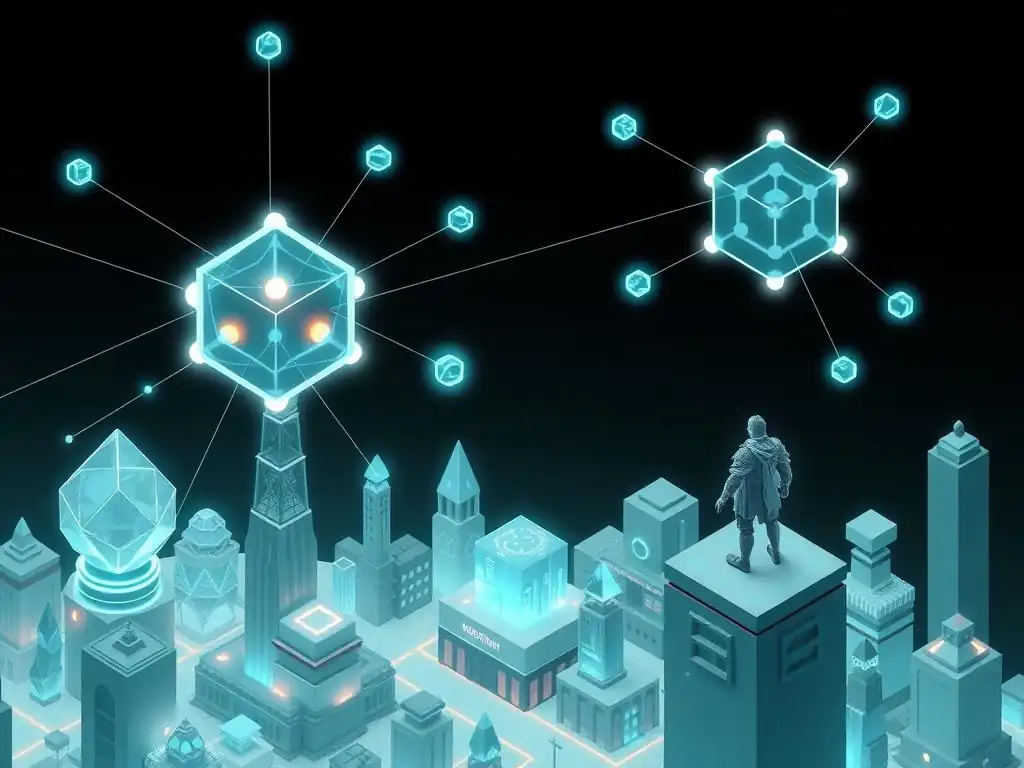
Directed Acyclic Graphs (DAGs) represent an alternative blockchain architecture that offers inherent advantages for handling high-frequency transactions, making them potentially well-suited for blockchain gaming. Unlike traditional blockchains that organize transactions into blocks, DAG-based systems structure transactions in a graph-like manner, where each new transaction directly validates previous transactions. This eliminates the need for block creation and block confirmation, allowing for significantly faster transaction processing and higher throughput. DAGs can potentially achieve near-instant transaction finality and handle a much larger volume of transactions per second compared to traditional blockchains, addressing key scalability challenges for gaming applications.
For blockchain games requiring very high transaction throughput and low latency, DAGs offer a compelling alternative to traditional blockchain architectures. Games with fast-paced gameplay, frequent in-game actions, or large numbers of concurrent players could benefit significantly from the scalability of DAGs. For instance, IOTA and Nano are examples of DAG-based cryptocurrencies that boast high transaction speeds and feeless transactions, making them potentially attractive for gaming applications.
However, DAG-based systems also have their own set of challenges and trade-offs. Security models and consensus mechanisms in DAGs can differ significantly from traditional blockchains, and the maturity and adoption of DAG technologies are still evolving compared to established blockchains like Ethereum. Further research and development are needed to fully explore the potential of DAGs for blockchain gaming and address any associated challenges.
Sharding is a Layer-1 scaling technique that aims to improve blockchain scalability by partitioning the blockchain into smaller, more manageable pieces called shards. Each shard operates as an independent blockchain, processing a subset of the network's transactions. By parallelizing transaction processing across multiple shards, sharding can significantly increase the overall transaction throughput of the blockchain network. Imagine dividing a large database into smaller, independent databases that can operate concurrently – this is analogous to how sharding works for blockchains.
In the context of blockchain gaming, sharding can enable a blockchain network to handle a much larger volume of in-game transactions and users. Different shards could potentially be dedicated to handling transactions for specific games or game regions, reducing congestion and improving transaction speeds. For example, Ethereum 2.0's sharding implementation aims to divide the Ethereum network into 64 shards, significantly increasing its transaction processing capacity.
However, sharding is a complex technical undertaking, and implementing it effectively in a secure and decentralized manner presents significant engineering challenges. Inter-shard communication, data consistency across shards, and security vulnerabilities related to shard takeover are some of the challenges that need to be addressed in sharded blockchain architectures. Despite these challenges, sharding holds significant promise for scaling blockchain networks to meet the demands of mass adoption, including in the gaming sector.
Delegated Proof-of-Stake (DPoS) and Its Implications for Gaming
Delegated Proof-of-Stake (DPoS) is a consensus mechanism that offers a more scalable and energy-efficient alternative to Proof-of-Work (PoW) and Proof-of-Stake (PoS) consensus mechanisms, with potential implications for blockchain gaming. In DPoS, token holders delegate their voting power to a smaller set of validators (often called delegates or witnesses) who are responsible for block production and transaction validation. This delegated governance model allows for faster block times and higher transaction throughput compared to PoW and some PoS systems. Blockchains like EOS and BitShares utilize DPoS consensus.
The faster block times and higher transaction throughput offered by DPoS can be advantageous for blockchain gaming applications. Games built on DPoS blockchains can potentially achieve lower latency and handle a larger volume of in-game transactions compared to games on slower blockchains. However, DPoS also involves trade-offs. The delegated nature of DPoS can lead to concerns about centralization, as a smaller number of delegates control block production and network governance.
The security and decentralization of DPoS systems depend heavily on the selection and behavior of delegates. While DPoS can offer scalability benefits for gaming, it is crucial to carefully consider the security implications and governance model of DPoS blockchains when choosing a platform for blockchain game development. The balance between scalability and decentralization is a key consideration when evaluating DPoS and other consensus mechanisms for blockchain gaming.
Addressing the User Experience (UX) in Scalable Blockchain Games
Simplifying Wallet Integration for Gamers
A major hurdle to mass adoption of blockchain gaming is the complexity and friction associated with cryptocurrency wallets and blockchain interactions for mainstream gamers. Traditional gamers are accustomed to seamless game onboarding and in-game transactions, often without even realizing the underlying technical complexities. In contrast, current blockchain games often require players to set up cryptocurrency wallets, understand concepts like private keys and gas fees, and manually manage blockchain transactions. This technical barrier can be daunting and confusing for non-crypto-native gamers, hindering their adoption of blockchain games.
Simplifying wallet integration is crucial for improving the user experience and attracting mainstream gamers to blockchain gaming. Solutions include embedding wallets directly within games, abstracting away complex blockchain terminology, and providing user-friendly interfaces for managing in-game assets and transactions. "Wallet-as-a-Service" providers and SDKs are emerging that allow game developers to integrate non-custodial wallets seamlessly into their games, simplifying the onboarding process for players.
Social logins, similar to those used in traditional games, can be integrated with wallets to streamline account creation. Furthermore, educating players through in-game tutorials and tooltips about basic wallet functionality and blockchain concepts, without overwhelming them with technical jargon, can improve user understanding and comfort. Making wallet integration as seamless and intuitive as possible is paramount to bridging the gap between traditional gaming and blockchain gaming and achieving mass adoption.
Abstracting Away Blockchain Complexity for Mass Appeal
For blockchain gaming to appeal to a mass audience, it is essential to abstract away the underlying blockchain complexity and provide a user experience that is indistinguishable from traditional games. Mainstream gamers are primarily interested in fun and engaging gameplay, not in understanding the intricacies of blockchain technology, smart contracts, or decentralized networks. Overloading players with technical details and requiring them to interact directly with blockchain infrastructure can create a steep learning curve and deter many potential players.
The focus should be on delivering a polished and enjoyable gaming experience, with blockchain functionalities operating seamlessly in the background. Game developers should strive to hide the technical complexities of blockchain from the player, presenting a user interface and gameplay mechanics that are familiar and intuitive to traditional gamers. For example, in-game marketplaces for trading NFTs should be designed to be as user-friendly as traditional in-game item shops, without requiring players to directly interact with blockchain explorers or cryptocurrency exchanges.
Gas fees, if applicable, should be handled transparently or even subsidized by the game developer to avoid surprising or deterring players. By prioritizing user experience and abstracting away blockchain complexity, developers can create blockchain games that are accessible and enjoyable for a broad audience, driving mass adoption and unlocking the full potential of blockchain in gaming.
Onboarding New Users to Blockchain Gaming Ecosystems
Onboarding new users to blockchain gaming ecosystems presents unique challenges due to the novel concepts and technologies involved. Unlike traditional games where onboarding typically involves simply downloading the game and creating an account, blockchain gaming often requires players to understand and interact with cryptocurrency wallets, NFTs, and decentralized marketplaces. This can be overwhelming for new users unfamiliar with blockchain technology, leading to confusion, frustration, and potential drop-off. Effective onboarding strategies are crucial for guiding new users through this process and ensuring a positive first experience with blockchain gaming.
Effective onboarding for blockchain games should be gradual, intuitive, and educational. Games should provide clear and concise tutorials that explain the basics of blockchain gaming, wallets, and NFTs in a user-friendly manner, avoiding technical jargon. Interactive tutorials and in-game guides can help players learn by doing, rather than being overwhelmed by lengthy text explanations.
Providing initial in-game NFTs or cryptocurrency rewards as part of the onboarding process can incentivize new users to explore the blockchain aspects of the game and understand the value proposition of digital ownership. Furthermore, offering robust customer support and community resources can help new users navigate any challenges they encounter during the onboarding process. By prioritizing user-friendly onboarding and providing adequate support and education, blockchain game developers can significantly improve user retention and attract a wider audience to their games and the broader blockchain gaming ecosystem.
Security Considerations for Scalable Blockchain Gaming Platforms
Maintaining Security in Layer-2 Scaling Solutions
While Layer-2 scaling solutions offer significant scalability benefits for blockchain gaming, it is crucial to carefully consider and address the security implications they introduce. Layer-2 solutions, by their nature, operate off-chain to some extent, which can potentially introduce new security vulnerabilities compared to operating solely on the Layer-1 blockchain. The security of a Layer-2 solution depends on its specific design, implementation, and the underlying Layer-1 blockchain it relies upon.
Different Layer-2 solutions have varying security models. Sidechains, for example, often have their own independent consensus mechanisms and security protocols, which may be less robust or decentralized than the Layer-1 blockchain. Rollups, particularly ZK-Rollups, generally inherit a higher degree of security from the Layer-1 blockchain as they post transaction data and state proofs on-chain. However, even with rollups, vulnerabilities can arise in the rollup bridge, smart contracts, or cryptographic implementations.
Payment channels rely on the security of multi-signature schemes and the participants' willingness to cooperate honestly. Game developers need to thoroughly evaluate the security properties of different Layer-2 solutions and choose those that provide an appropriate level of security for their game and in-game assets. Regular security audits, robust testing, and ongoing monitoring are essential for maintaining the security of blockchain gaming platforms utilizing Layer-2 solutions.
Protecting Against Attacks in High-Throughput Blockchain Games
High-throughput blockchain games, while addressing scalability challenges, can also become more attractive targets for various types of attacks. As blockchain games become more popular and involve higher volumes of transactions and valuable in-game assets, the potential rewards for malicious actors increase. High transaction throughput can also potentially amplify the impact of certain types of attacks if security measures are not adequately robust.
Common attack vectors in blockchain games include smart contract vulnerabilities, replay attacks, double-spending attacks, and Sybil attacks. In high-throughput environments, the speed and scale of transactions can make it more challenging to detect and mitigate attacks in real-time. For example, a flash loan attack exploiting a smart contract vulnerability could potentially be executed and exploited more rapidly in a high-throughput game environment.
Robust security measures are essential for protecting high-throughput blockchain games against attacks. This includes rigorous smart contract auditing, implementing rate limiting and anomaly detection systems, and employing security best practices throughout the game development lifecycle. Furthermore, proactive monitoring, incident response plans, and community reporting mechanisms are crucial for quickly identifying and addressing security incidents in live blockchain games.
Ensuring Data Integrity and Transparency in Scalable Systems
Maintaining data integrity and transparency is paramount in blockchain gaming, especially as systems scale and become more complex. Blockchain's inherent transparency and immutability are key value propositions, ensuring verifiable ownership of in-game assets and a fair and trustworthy gaming environment. However, as blockchain games scale using Layer-2 solutions and off-chain data storage, maintaining data integrity and transparency across these distributed systems becomes more challenging.
Data stored off-chain, even in decentralized storage solutions, may not have the same level of immutability and auditability as on-chain data. Ensuring data consistency and synchronization between on-chain and off-chain components is crucial for maintaining data integrity. Furthermore, transparency in Layer-2 operations and off-chain processes is essential for building trust and confidence among players.
Games should provide mechanisms for players to verify the integrity of their in-game assets, transaction history, and game state, even when parts of the system operate off-chain. Techniques such as cryptographic proofs, state channels, and transparent audit logs can be employed to enhance data integrity and transparency in scalable blockchain gaming systems. Balancing scalability with data integrity and transparency is a critical design consideration for the long-term success and adoption of blockchain gaming.
The Future of Scalable Blockchain Gaming
Innovations in Blockchain Technology for Gaming
The future of scalable blockchain gaming is intrinsically linked to ongoing innovations in blockchain technology. Research and development efforts are continuously pushing the boundaries of blockchain scalability, security, and user experience, paving the way for more sophisticated and mass-market blockchain games. Innovations across various areas of blockchain technology are particularly relevant to gaming.
Advancements in Layer-2 scaling solutions, such as more efficient rollups, state channels, and inter-chain communication protocols, are crucial for enabling higher transaction throughput and lower latency. New consensus mechanisms, like Proof-of-Stake variations and hybrid consensus models, are being explored to improve scalability and energy efficiency. Alternative blockchain architectures, such as DAGs and subnets, offer different approaches to achieving high transaction speeds and scalability.
Furthermore, advancements in zero-knowledge cryptography and secure multi-party computation are enhancing privacy and security in blockchain systems, which can be beneficial for gaming applications. Interoperability solutions, such as cross-chain bridges and atomic swaps, are enabling seamless asset transfers and interactions between different blockchains, creating more interconnected and versatile blockchain gaming ecosystems. These and other ongoing innovations in blockchain technology are collectively driving the evolution of scalable and user-friendly blockchain gaming platforms.
Axie Infinity, Star Atlas, and Gods Unchained: Case Studies in Scalability
Several blockchain games are already actively grappling with scalability challenges and implementing various solutions, providing valuable case studies for the future of scalable blockchain gaming. Axie Infinity, one of the most successful blockchain games to date, initially faced significant scalability issues on the Ethereum mainnet due to high gas fees and network congestion. To address this, Axie Infinity developed its Ronin sidechain, specifically designed for the game, which dramatically reduced gas fees and improved transaction speeds, enabling the game's explosive growth. Ronin serves as a prominent example of the effectiveness of sidechains for scaling blockchain games.
Star Atlas, an ambitious space-themed MMORPG, is being built on the Solana blockchain, which is known for its high transaction throughput and low fees. Solana's architecture allows Star Atlas to handle a large number of in-game transactions and players, showcasing the potential of high-performance Layer-1 blockchains for large-scale blockchain games. Gods Unchained, a collectible card game, has also explored Layer-2 scaling solutions, including Immutable X, a ZK-rollup specifically designed for NFTs on Ethereum.
Immutable X enables near-instant and gas-free NFT trading within Gods Unchained, demonstrating the benefits of ZK-rollups for NFT-centric blockchain games. These case studies highlight the diverse approaches being taken to address scalability challenges in blockchain gaming and provide valuable lessons for future game development.
Predictions for the Future of Mass Adoption
The future of mass adoption of blockchain gaming hinges on successfully overcoming the scalability challenges and delivering a seamless and engaging user experience to mainstream gamers. Continued innovation in blockchain technology, particularly in Layer-2 scaling solutions and alternative architectures, is expected to significantly improve transaction throughput, reduce gas fees, and lower latency, making blockchain games more scalable and accessible. Simplifying wallet integration and abstracting away blockchain complexity will be crucial for attracting non-crypto-native gamers. As user experience improves and blockchain gaming becomes more seamless and user-friendly, we can expect to see increased adoption from traditional gamers.
The rise of metaverse platforms and interconnected virtual worlds is likely to further accelerate the adoption of blockchain gaming, as blockchain provides the underlying infrastructure for digital ownership, interoperability, and decentralized economies within these virtual environments. Play-to-earn models, if designed sustainably and ethically, can continue to incentivize player participation and drive adoption, particularly in emerging markets.
However, regulatory clarity and responsible game design are also crucial for the long-term sustainability and mass adoption of blockchain gaming. While challenges remain, the ongoing progress in scalability solutions, user experience improvements, and the growing interest in metaverse and play-to-earn models suggest a promising future for the mass adoption of blockchain gaming, potentially transforming the gaming industry and creating new forms of digital entertainment and economic opportunities for players worldwide.
Frequently Asked Questions
What are the main Blockchain gaming scalability challenges?
The primary challenges involve transaction speed and throughput, making it difficult for games with high transaction volumes to function smoothly on current blockchains. This impacts user experience and game performance.
How does Blockchain gaming scalability challenges impact player experience?
Slow transaction speeds and high gas fees can lead to frustrating delays in gameplay, such as buying items or trading assets. This can significantly deter players and limit adoption.
What are some potential solutions to address Blockchain gaming scalability challenges?
Solutions include Layer-2 scaling solutions like sidechains and rollups, which process transactions off-chain. Another is exploring alternative consensus mechanisms that offer better throughput.
How do Blockchain gaming scalability challenges affect game developers?
Developers face technical hurdles in designing games that are both engaging and scalable on blockchain. They also need to consider economic models that are sustainable despite gas fees.
How is regulation impacting the Blockchain gaming scalability challenges landscape?
Regulatory uncertainty can hinder innovation and investment in blockchain gaming. Clear and supportive regulations are needed to foster growth and address scalability concerns.
Final Reflection: Bridging the Blockchain Gaming Gap
The exploration of blockchain gaming scalability challenges reveals a critical juncture for the industry. While the promise of decentralized ownership and novel gameplay mechanics shines brightly, the technical hurdles outlined in this article remain significant barriers to widespread adoption. Overcoming these challenges is not merely about technological advancement; it's about unlocking the true potential of blockchain to revolutionize the gaming experience for millions.
The impact of successful blockchain gaming scalability extends far beyond just faster transaction speeds. It touches upon the very fabric of how we perceive digital ownership and the value we place on in-game assets. The potential for a truly player-owned economy, where gamers can earn, trade, and even develop their own content, is a powerful vision that continues to inspire. The future of gaming is not just about playing games, but about owning them, shaping them, and benefiting from them.
This quote encapsulates the transformative power that scalable blockchain solutions can bring to the gaming world.
As we stand on the cusp of this new era, let us not be deterred by the complexities that lie ahead. Instead, let us embrace the challenge of building a more decentralized, equitable, and engaging gaming ecosystem. Consider how you, whether as a developer, gamer, or investor, can contribute to overcoming these blockchain gaming scalability challenges. The future of gaming is being written now, and your participation is vital to shaping a future where the power truly rests in the hands of the players.
Unleash the Future of Gaming: Your Next Move Awaits!
Thank you for exploring the intricate challenges of scaling blockchain in gaming with us. We hope this article has illuminated the hurdles and inspired you to consider the vast potential that lies within. Now, it's time to move beyond theory and into action!
- Experiment with a small-scale blockchain gaming project or prototype. Start simple and explore the practical implications of scalability solutions.
- Join the conversation: Share your insights and opinions on blockchain gaming's future on your social media channels using the hashtag #BlockchainGamingTrends and connect with fellow enthusiasts.
- Research emerging Layer-2 solutions and alternative blockchain architectures specifically tailored for gaming applications.
What innovative scaling solution do you believe holds the key to unlocking blockchain's full potential in the gaming world? Share your thoughts in the comments below!
Leave a Reply