
DeFi Investing for Absolute Beginners: Start from Zero Knowledge


Welcome to Blockchain Trends, where we delve into the real potential of blockchain technology, far beyond the hype. Curious about Decentralized Finance (DeFi) but feel overwhelmed? Our DeFi investing beginner’s guide is your perfect starting point. Unlock the secrets to navigating this exciting landscape, even with zero prior knowledge, and discover how you can participate in the future of finance. Ready to demystify DeFi and start building your decentralized portfolio? Let's begin!
- DeFi Investing for Absolute Beginners: Start from Zero Knowledge
- Essential DeFi Concepts for Beginners: Building Your Foundation
- Getting Started with DeFi Investing: Your First Steps
-
Frequently Asked Questions
- What exactly is DeFi, and why is it getting so much attention?
- As a beginner, what are the biggest risks I should be aware of when investing in DeFi?
- What are some of the most common DeFi applications that beginners can easily understand and potentially invest in?
- How does regulation impact DeFi investing, and what should beginners know about compliance?
- Where can I find reliable resources and educational materials to learn more about DeFi investing before putting my money at risk?
- Final Reflection: Embracing the Decentralized Future
- Unlock Your DeFi Potential: Start Your Journey Today!
DeFi Investing for Absolute Beginners: Start from Zero Knowledge
Beyond Traditional Finance: The Power of DeFi Explained
Decentralized Finance, or DeFi, represents a fundamental shift in how financial services can be delivered. Instead of relying on traditional intermediaries like banks, brokers, or exchanges, DeFi leverages blockchain technology, primarily on platforms like Ethereum, to create open, permissionless, and transparent financial protocols. Imagine transferring funds, taking out a loan, or earning interest without needing approval from a central authority or waiting for business hours. This is the core promise of DeFi. It aims to make finance accessible to anyone with an internet connection, anywhere in the world, bypassing the often-restrictive and costly gatekeepers of the legacy financial system.
At its heart, DeFi is built upon smart contracts – self-executing contracts with the terms of the agreement directly written into code. These contracts live on a blockchain, making them immutable and transparent. This means that once a smart contract is deployed, its rules cannot be changed, and anyone can verify how it operates.
This programmatic approach to finance allows for the creation of complex financial applications, from lending and borrowing platforms to decentralized exchanges (DEXs) and yield-generating protocols, all operating autonomously without a central point of control or failure. For anyone exploring a DeFi investing beginner’s guide, understanding this foundational layer is crucial.
Why DeFi Investing is Gaining Traction (Passive Income, Accessibility)
The appeal of DeFi investing for beginners and experienced investors alike stems from several key advantages not readily available in traditional finance. One major draw is the potential for passive income. DeFi protocols offer opportunities to earn yields on crypto assets through activities like staking, lending, or providing liquidity.
While yields are variable and carry risks, they have historically offered rates significantly higher than traditional savings accounts. For instance, some stablecoin lending protocols have, at times, offered annualized yields ranging from 3% to 15% or even higher, depending on market conditions and specific protocol risks, far exceeding typical bank deposit rates. This potential to put idle crypto assets to work is a significant motivator for many entering the space.
Beyond passive income, accessibility is a cornerstone of the DeFi revolution. Unlike traditional financial services that often require extensive paperwork, credit checks, or minimum balances, DeFi protocols are designed to be open to anyone with a crypto wallet and internet access. This democratizes finance, enabling individuals in regions with underdeveloped banking systems to participate in global financial markets.
Furthermore, transactions and activities on public blockchains are transparent, allowing users to audit the system and verify transactions. This combination of potential high yields (though with commensurate risk) and unparalleled accessibility makes DeFi investing a compelling area for exploration in any comprehensive DeFi investing beginner’s guide.
Essential DeFi Concepts for Beginners: Building Your Foundation
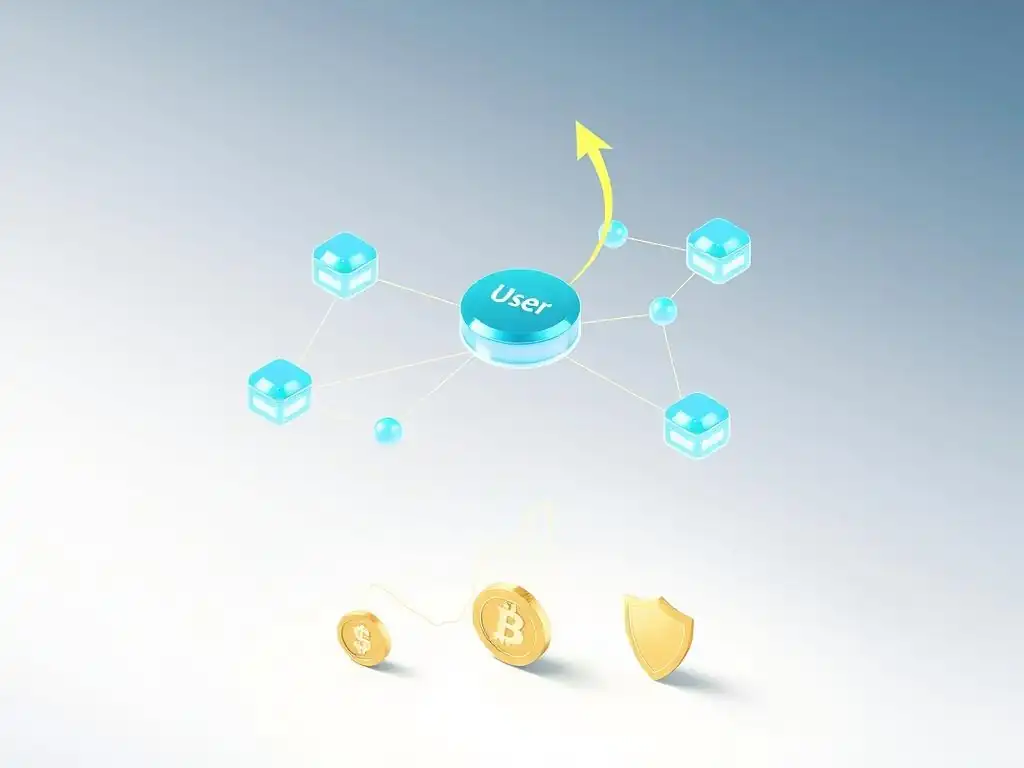
Understanding Smart Contracts and Blockchain Technology
At the technical core of Decentralized Finance lie two interwoven technologies: blockchain and smart contracts. A blockchain is a distributed, immutable ledger that records transactions across many computers. Think of it as a shared, continuously updated database that is incredibly difficult to tamper with because every new transaction (or "block") must be validated by the network participants and linked cryptographically to the previous block.
This distributed nature eliminates the need for a central authority to maintain trust and verify transactions, which is fundamental to the "decentralized" aspect of DeFi. The most prominent blockchain for DeFi is Ethereum, although other blockchains like Polygon, Binance Smart Chain, and Solana are also hosting growing DeFi ecosystems.
Smart contracts are the programmable backbone built on top of these blockchains. Written in code (languages like Solidity for Ethereum), these contracts automatically execute predefined actions when specific conditions are met. For example, a lending smart contract might automatically transfer borrowed funds to a user's wallet once collateral is deposited, and then automatically return the collateral once the loan is repaid with interest.
The code is the agreement. Because they reside on the blockchain, smart contracts are transparent and resistant to censorship or manipulation by a single party. This trust in code, rather than institutions, is what enables DeFi protocols to function autonomously and provide financial services without intermediaries, a key concept for anyone following a DeFi investing beginner’s guide.
Key DeFi Activities: Yield Farming, Staking, Lending, and Borrowing
DeFi offers a variety of ways to interact with crypto assets beyond simply holding them. Four of the most common activities for those interested in DeFi investing are yield farming, staking, lending, and borrowing. Lending and Borrowing protocols, like Aave or Compound, allow users to deposit crypto assets to earn interest (lending) or to take out loans using their crypto as collateral (borrowing). For example, you might deposit ETH and earn a variable interest rate, while someone else might borrow your ETH by putting up DAI stablecoins as collateral. This creates a peer-to-peer or pool-to-peer market for capital.
Staking typically involves locking up crypto assets to support the operations of a proof-of-stake blockchain network. In return for helping to validate transactions and secure the network, stakers earn rewards, often in the form of newly minted tokens. Ethereum's transition to Proof-of-Stake is a major example, allowing users to stake ETH to earn rewards.
Yield Farming is a more complex strategy that involves leveraging various DeFi protocols to maximize returns on crypto assets. It often involves moving funds between different protocols to chase the highest yields, which might come from earning interest, collecting trading fees, or receiving governance tokens as rewards (often referred to as "liquidity mining"). Understanding these distinct activities is vital for navigating the opportunities presented in a DeFi investing beginner’s guide.
The Role of Liquidity Pools in DeFi Protocols
Many core DeFi applications, particularly decentralized exchanges (DEXs) and yield farming protocols, rely heavily on liquidity pools. A liquidity pool is a collection of funds locked in a smart contract, typically consisting of a pair of crypto assets, like ETH and DAI. Instead of buyers and sellers directly matching orders like on a traditional exchange, users trade against the assets available in these pools.
Users who deposit their assets into a liquidity pool are called liquidity providers (LPs). They earn a portion of the trading fees generated by the protocol as compensation for providing the necessary liquidity that enables trading.
Liquidity pools are essential because they allow for automated trading and price discovery without the need for traditional order books or intermediaries. Automated Market Maker (AMM) protocols, such as Uniswap or SushiSwap, are popular examples that use mathematical formulas to price assets within a pool based on the ratio of the assets it holds. While providing liquidity can be profitable, LPs face a unique risk called impermanent loss.
This occurs when the price of the deposited assets changes relative to each other after being deposited in the pool. The greater the price divergence, the greater the impermanent loss, which can potentially outweigh the trading fees earned. This risk is a key consideration detailed in any comprehensive DeFi investing beginner’s guide.
Getting Started with DeFi Investing: Your First Steps
Choosing the Right Crypto Wallet for DeFi (e.g., MetaMask, Ledger Nano X)
The very first step in engaging with DeFi investing is securing a suitable crypto wallet. Your wallet is your gateway to the decentralized web, allowing you to store, send, and receive cryptocurrencies and, crucially for DeFi, interact with smart contracts and decentralized applications (dApps). Wallets come in different forms, broadly categorized as hot wallets and cold wallets.
Hot wallets are connected to the internet and often take the form of browser extensions (like MetaMask) or mobile apps. They are convenient for frequent transactions and interacting with dApps directly from your browser or phone. MetaMask, for example, is a widely used browser extension wallet that integrates seamlessly with many DeFi protocols on Ethereum and compatible networks.
Cold wallets, or hardware wallets, are physical devices that store your private keys offline. Examples include the Ledger Nano X or Trezor Model T. They are considered the most secure option for storing significant amounts of crypto assets because they are resistant to online threats like malware and phishing attacks.
When you want to perform a transaction or interact with a DeFi protocol using a hardware wallet, you typically connect it to a computer or phone and approve the transaction on the device itself, keeping your private keys isolated from the internet. While slightly less convenient for frequent, small interactions, a hardware wallet is highly recommended for securing the majority of your assets when venturing into DeFi investing, especially as part of a long-term strategy outlined in a DeFi investing beginner’s guide.
Acquiring Crypto to.
Frequently Asked Questions
What exactly is DeFi, and why is it getting so much attention?
DeFi, or Decentralized Finance, refers to financial applications built on blockchain technology. It's attracting attention because it aims to create a more open, permissionless, and transparent financial system, potentially disrupting traditional finance.
As a beginner, what are the biggest risks I should be aware of when investing in DeFi?
Beginner's should be aware of smart contract vulnerabilities, which can lead to lost funds, as well as impermanent loss in liquidity pools and the overall volatility of the crypto market.
What are some of the most common DeFi applications that beginners can easily understand and potentially invest in?
Some accessible DeFi applications include staking platforms where you can earn rewards for holding crypto, lending protocols where you can lend out your crypto for interest, and decentralized exchanges (DEXs) for trading.
How does regulation impact DeFi investing, and what should beginners know about compliance?
Regulation of DeFi is still evolving, but beginners should be aware that compliance is crucial. They should research the legal and tax implications in their jurisdiction before investing and understand the potential for regulatory changes.
Where can I find reliable resources and educational materials to learn more about DeFi investing before putting my money at risk?
Look for reputable resources such as Blockchain Trends, reputable crypto news websites and educational platforms that provide unbiased information and risk warnings. Always do your own research (DYOR) before investing.
Okay, here's a final reflection designed to close your "DeFi Investing for Absolute Beginners" article, formatted as requested and tailored to the content:
Final Reflection: Embracing the Decentralized Future
The journey into Decentralized Finance, as we've explored, might seem daunting at first, but the potential for financial empowerment is undeniable. DeFi represents a paradigm shift in how we interact with money, moving away from centralized control and towards a more accessible and transparent system. Understanding these foundational principles is crucial, especially now, as DeFi continues to evolve and reshape the financial landscape.
This exploration of DeFi for beginners has hopefully demystified the complexities and illuminated the path forward. The power of decentralized finance lies not just in its technology, but in its ability to democratize access to financial tools and opportunities. The future of finance is decentralized, and it's happening now.
This quote encapsulates the urgency and importance of understanding and participating in this transformative movement.
Now, armed with this foundational knowledge, I encourage you to reflect on your own financial goals and how DeFi might play a role in achieving them. Don't be afraid to start small, experiment cautiously, and continue learning. The decentralized future is being built today, and your participation, no matter how small, contributes to its growth and potential. Embrace the challenge, stay informed, and embark on your own DeFi adventure.
Unlock Your DeFi Potential: Start Your Journey Today!
Thank you for exploring the world of decentralized finance investing. We hope you now have a clear understanding of the fundamentals and feel confident to take your first steps. It's time to turn that knowledge into action.
Here are some steps you can take right now:
- Begin with a small investment: Try using a reputable DeFi platform with a modest amount of stablecoins to gain practical experience. Remember, only invest what you can afford to lose as you learn the ropes. This is the most important first step!
- Visit educational resources: Check out trusted websites and guides to deepen your understanding of DeFi strategies, platform features, and security tips.
- Share this guide: Spread the word and help others discover the opportunities of DeFi by sharing this article on your social media channels. Let’s foster an informed and engaged community!
Are you ready to start your DeFi journey? Which platform will you choose first, and what will be your initial investment approach? Share your plans in the comments below!
Leave a Reply