
The Future of Esports: Blockchain's Role in Fair Play and Transparency


Welcome to Blockchain Trends, your gateway to understanding the real-world applications of blockchain technology!
Ever wondered how blockchain can revolutionize more than just finance? Dive into our latest exploration of blockchain esports fair play and discover how decentralized solutions are poised to create a more transparent and trustworthy gaming ecosystem. This is just the beginning – explore our insights into DeFi, enterprise adoption, and the evolving regulatory landscape to uncover the full potential of decentralized systems. Let's unravel the future, together.
The Future of Esports: Blockchain's Role in Fair Play and Transparency
- Introduction: Esports Integrity and the Need for Blockchain Solutions
- Blockchain-Based Solutions for Esports Fair Play
- Blockchain and Esports Transparency: A New Level of Accountability
- Use Cases: Blockchain Projects Leading the Charge in Esports
- The Benefits of Blockchain Integration in Esports
- Challenges and Considerations for Blockchain Adoption in Esports
- The Future of Blockchain Esports: Predictions and Trends
- Conclusion: Blockchain's Transformative Potential for Esports Fair Play
-
Frequently Asked Questions
- How can blockchain technology ensure fair play in esports competitions?
- What specific blockchain applications are being used to combat cheating in esports?
- How does blockchain enhance transparency in esports prize distribution?
- What regulatory challenges need to be addressed for wider blockchain adoption in esports?
- What is the future outlook for blockchain's role in revolutionizing esports beyond fair play?
- Final Reflection: Embracing Trust in Competitive Gaming
- Ignite Esports Integrity: Secure the Game's Future!
Introduction: Esports Integrity and the Need for Blockchain Solutions
The Growing Pains of Competitive Gaming: Challenges to Fair Play
The esports industry has exploded into a multi-billion dollar global phenomenon, attracting millions of viewers and participants. This rapid growth, however, has brought to the forefront significant challenges, particularly concerning fair play and competitive integrity. Incidents of match-fixing, cheating through unauthorized software, and opaque tournament management have plagued the scene, casting shadows over the legitimacy of competitions and eroding trust among players and fans alike.
The centralized nature of many esports platforms and tournaments often concentrates power in the hands of a few organizers, making it difficult to ensure impartiality and accountability. This creates an environment where the potential for manipulation and lack of transparency undermines the very essence of competitive gaming: skill-based, fair contests.
The pressure to win in high-stakes esports tournaments, where prize pools can reach millions of dollars, incentivizes unethical behavior. Traditional methods of detecting and preventing cheating often rely on centralized anti-cheat software and human oversight, which can be fallible and are sometimes perceived as biased or insufficient. Furthermore, the lack of transparency in how match results are recorded and prizes are distributed can lead to disputes and a general lack of confidence in the fairness of the system.
As esports continues its trajectory of growth, addressing these integrity challenges becomes paramount to its long-term sustainability and acceptance as a legitimate and respected form of competition. The need for robust, transparent, and decentralized solutions is more pressing than ever to safeguard the future of esports.
How Blockchain Technology Can Revolutionize Esports Integrity
Blockchain technology, with its core principles of decentralization, transparency, and immutability, offers a compelling solution to many of the integrity challenges facing esports. By leveraging blockchain, the esports industry can move towards a more trustless and verifiable system where fair play is not just an aspiration but a built-in feature. The inherent transparency of blockchain, where all transactions and data are recorded on a public ledger, allows for unprecedented visibility into match results, prize distribution, and tournament operations. This open and auditable nature can significantly reduce the potential for manipulation and increase confidence in the fairness of competitions.
Moreover, the decentralized nature of blockchain eliminates single points of failure and control, distributing power and decision-making across a network. This can lead to more impartial tournament management and reduce the risk of biased rulings or decisions. Smart contracts, self-executing agreements coded on the blockchain, can automate processes like prize payouts and rule enforcement, ensuring that all participants are treated fairly and according to pre-defined rules.
The cryptographic security of blockchain also provides a robust foundation for combating cheating and hacking, offering new avenues for verifiable and transparent anti-cheat systems. By integrating blockchain, esports can build a more equitable and trustworthy ecosystem, fostering greater confidence among players, fans, and sponsors.
Blockchain-Based Solutions for Esports Fair Play
Transparent and Verifiable Match Results: Blockchain's Immutability
One of the most significant applications of blockchain in esports is in ensuring the transparency and verifiability of match results. Currently, match outcomes are often recorded and stored on centralized servers controlled by tournament organizers or game publishers. This system, while functional, is susceptible to manipulation or alteration, raising concerns about the integrity of recorded scores and match histories. Blockchain's immutability provides a powerful alternative. By recording match results on a blockchain, the data becomes permanently and transparently stored, making it virtually impossible to tamper with or retroactively change.
Imagine a scenario where every match outcome in a major Counter-Strike 2 tournament is recorded as a transaction on a dedicated blockchain for esports. This record would include the participating teams, the final score, and potentially even key in-game statistics. Anyone with access to the blockchain could independently verify the results, ensuring that the announced outcome is indeed the genuine, unaltered record of the match.
This level of transparency builds trust and eliminates any suspicion of foul play or data manipulation. Furthermore, this immutable record can serve as a permanent, verifiable history of esports competitions, valuable for statistical analysis, player performance tracking, and historical archiving of the sport.
Combating Cheating and Hacking in Esports with Decentralized Verification
Cheating and hacking represent a persistent threat to fair play in esports. Traditional anti-cheat systems, while continuously evolving, often operate in a reactive and centralized manner. Blockchain technology offers the potential for more proactive and decentralized solutions to combat these issues. Decentralized verification mechanisms, leveraging blockchain's cryptographic security, can enhance the detection and prevention of cheating in esports games. This can involve verifying game clients, player inputs, and even in-game events in a transparent and auditable manner.
For example, consider a system where critical game data, such as player actions and server-side events, are cryptographically hashed and recorded on a blockchain in real-time during a match. This "fingerprint" of the game state would be immutable and verifiable. Any discrepancy or anomaly in this on-chain record could indicate potential cheating or unauthorized modifications to the game client. While fully implementing such a system is complex and still under development, the concept of decentralized verification opens up new possibilities for creating more robust and tamper-proof anti-cheat measures in esports.
On-Chain Anti-Cheat Systems: A New Era of Esports Security
Building upon the concept of decentralized verification, the development of on-chain anti-cheat systems represents a potentially transformative approach to esports security. Instead of relying solely on centralized anti-cheat software running on players' machines, which can be bypassed or manipulated, on-chain systems aim to integrate anti-cheat functionalities directly into the blockchain-based esports ecosystem. This could involve smart contracts designed to detect and respond to suspicious activities based on verifiable on-chain data.
Imagine a future where game developers integrate APIs that allow for the real-time streaming of crucial game data onto a blockchain. Smart contracts could then be programmed to analyze this data for patterns indicative of cheating, such as impossible actions, unnatural reflexes, or unauthorized software usage.
If suspicious activity is detected, the smart contract could automatically trigger alerts, pause the match, or even issue penalties, all based on verifiable, on-chain evidence. While still in its early stages of research and development, on-chain anti-cheat systems hold the promise of a more secure and transparent esports environment, significantly deterring cheating and enhancing fair play.
Decentralized Tournament Management: Ensuring Impartiality and Trust
Centralized tournament management systems can be vulnerable to bias, manipulation, and lack of transparency. Decisions regarding rule enforcement, scheduling, and dispute resolution are often made by a single entity, potentially leading to perceptions of unfairness or partiality. Blockchain technology enables the creation of decentralized tournament management platforms that can enhance impartiality and trust in esports competitions. By distributing control and decision-making across a network, blockchain can create a more equitable and transparent environment for tournament organization.
Decentralized Autonomous Organizations (DAOs) offer a compelling model for blockchain-based tournament management. A DAO-governed esports tournament platform could use smart contracts to automate various aspects of tournament operations, such as player registration, match scheduling, bracket generation, and prize distribution. Governance tokens could be distributed to players, teams, and community members, allowing them to participate in decision-making processes related to rule changes, tournament formats, and dispute resolutions. This decentralized approach fosters community ownership and reduces the risk of centralized control or manipulation, leading to a fairer and more trusted tournament ecosystem.
Blockchain and Esports Transparency: A New Level of Accountability
Smart Contracts for Transparent Prize Distribution and Payments
The current prize distribution process in esports, often managed through traditional financial systems, can be opaque and prone to delays or disputes. Players may face uncertainty regarding payment schedules and the exact amounts they are owed. Smart contracts, executed on the blockchain, offer a solution for transparent and automated prize distribution in esports. By programming prize payment terms directly into smart contracts, tournament organizers can ensure that payouts are executed automatically and transparently upon the completion of matches or tournaments.
For instance, a smart contract could be designed to automatically release prize funds to winning teams or players once match results are verified and recorded on the blockchain. The terms of the prize distribution, including the amounts and payment schedules, would be publicly auditable within the smart contract code. This eliminates the need for manual processing and reduces the potential for errors, delays, or disputes regarding prize money. Smart contracts provide a verifiable and trustless mechanism for ensuring that players are paid fairly and promptly, fostering greater confidence and accountability in the esports prize system.
Tokenized Esports Ecosystems: Rewarding Players and Fans Fairly
Beyond prize distribution, blockchain-based tokens can revolutionize the entire esports ecosystem by creating new avenues for rewarding players and fans fairly. Traditional esports ecosystems often concentrate revenue streams in the hands of organizers and publishers, with players and fans receiving a relatively small share of the overall value generated. Tokenization, through the creation of esports-specific cryptocurrencies or digital assets, can redistribute value more equitably and incentivize participation across the ecosystem.
Imagine an esports platform that issues its own native token. Players could earn tokens for participating in tournaments, achieving milestones, or contributing to the community. Fans could earn tokens by watching matches, engaging with content, or participating in platform activities. These tokens could then be used within the esports ecosystem to access premium content, purchase in-game items, participate in governance, or even be traded on cryptocurrency exchanges. Tokenization can create a more vibrant and engaged esports community, where both players and fans are incentivized to contribute and participate in the growth of the ecosystem, sharing in its success.
Governance Tokens and Community Involvement in Esports Decisions
Governance tokens, a specific type of cryptocurrency, can further empower esports communities by enabling decentralized decision-making and community involvement in platform governance. By distributing governance tokens to players, fans, and other stakeholders, esports platforms can transition from centralized control to more democratic and community-driven models. Holders of governance tokens can vote on proposals related to platform development, rule changes, tournament formats, and other key decisions, giving them a direct voice in shaping the future of the esports ecosystem.
For example, a DAO-governed esports platform might allow governance token holders to vote on which games to feature in upcoming tournaments, or to propose and vote on changes to the platform's code of conduct. This level of community involvement can lead to more responsive and adaptable esports platforms that better serve the needs and desires of their users. Governance tokens foster a sense of ownership and responsibility within the esports community, promoting a more collaborative and sustainable ecosystem.
Use Cases: Blockchain Projects Leading the Charge in Esports
Merit Circle: Investing in the Metaverse and Play-to-Earn Gaming
Merit Circle is a decentralized autonomous organization (DAO) focused on investing in the metaverse and play-to-earn gaming, including esports. While not exclusively focused on esports integrity, Merit Circle's activities contribute to the broader adoption of blockchain in gaming, which indirectly supports fairer and more transparent esports environments. Merit Circle invests in and supports play-to-earn games, many of which incorporate blockchain-based assets and economies, fostering a more equitable distribution of rewards and ownership within gaming ecosystems.
By investing in the metaverse and play-to-earn gaming, Merit Circle is helping to build the infrastructure and ecosystem for a future where esports and gaming are more deeply integrated with blockchain technology. Their focus on play-to-earn models directly challenges traditional gaming models where players often have limited ownership or control over in-game assets. While their primary focus is broader than just esports integrity, Merit Circle's work contributes to the overall movement towards more decentralized and player-centric gaming experiences, which aligns with the goals of fair play and transparency in esports.
Enjin: Providing a Platform for Blockchain Gaming Assets
Enjin is a platform that provides tools and services for developers to create and manage blockchain-based gaming assets, including NFTs (Non-Fungible Tokens). While not solely dedicated to esports, Enjin's technology is widely used in blockchain gaming and has significant potential for enhancing transparency and ownership in esports. Enjin's platform allows game developers to tokenize in-game items, characters, and collectibles as NFTs, giving players true ownership of these digital assets. These NFTs can be traded, sold, and used across different games and platforms within the Enjin ecosystem, creating a more interconnected and player-owned gaming experience.
In the context of esports, Enjin's technology could be used to create unique and verifiable player skins, team logos, or tournament trophies as NFTs. These NFTs could represent provable ownership of digital assets and provide players and teams with new ways to monetize their achievements and build their brand. Furthermore, the transparency of the blockchain ledger ensures the authenticity and scarcity of these digital assets, combating counterfeiting and fraud. Enjin's platform provides a crucial infrastructure for building blockchain-based gaming ecosystems that can enhance transparency and player ownership in esports.
Ultra.io: A Blockchain-Based PC Game Distribution Platform
Ultra.io is a blockchain-based PC game distribution platform aiming to disrupt the traditional game distribution model dominated by platforms like Steam and Epic Games Store. While not exclusively focused on esports, Ultra's platform incorporates blockchain technology to offer a more transparent and equitable experience for both players and developers, which can indirectly benefit the esports ecosystem. Ultra leverages blockchain to provide features like NFT-based game ownership, allowing players to resell their digital games, and a more transparent revenue sharing model for developers.
In the context of esports, Ultra's platform could create a more open and decentralized environment for esports game distribution and tournament organization. By offering developers more control over their games and revenue streams, Ultra could incentivize the development of more blockchain-integrated esports titles.
Furthermore, the platform's use of NFTs for game ownership and in-game assets could enhance transparency and player ownership within esports games distributed through Ultra. While still in development, Ultra.io represents a promising example of how blockchain can be applied to create a more transparent and equitable game distribution platform that can benefit the broader gaming and esports industries.
The Benefits of Blockchain Integration in Esports
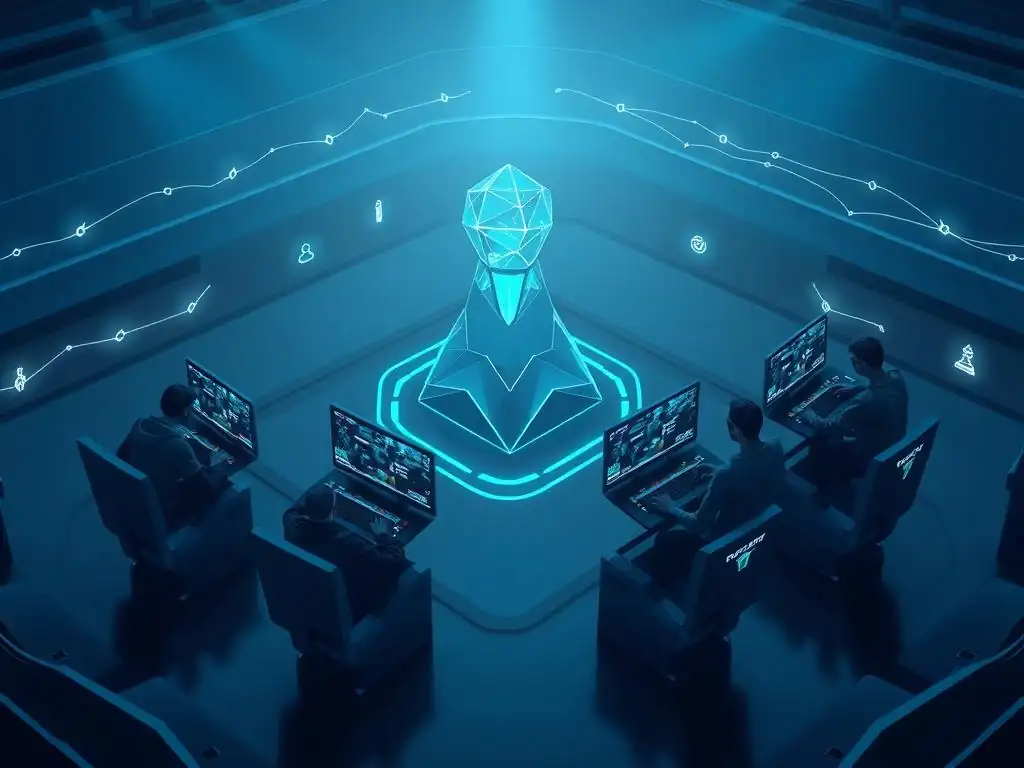
Enhanced Trust and Credibility in Esports Competitions
The most significant benefit of blockchain integration in esports is the enhanced trust and credibility it brings to competitions. By leveraging blockchain's transparency, immutability, and decentralization, esports can overcome many of the integrity challenges that currently plague the industry. Verifiable match results, transparent prize distribution, and decentralized tournament management all contribute to a more trustworthy and credible esports ecosystem. This increased trust is crucial for attracting and retaining players, fans, and sponsors, ensuring the long-term sustainability and growth of esports.
Blockchain's ability to provide verifiable proof of fair play and integrity is a game-changer for esports. In an industry where reputation and trust are paramount, blockchain offers a technological solution to build confidence and legitimacy. This enhanced credibility can attract mainstream audiences who may have been skeptical of esports due to concerns about fairness. By demonstrably addressing integrity issues, blockchain can help esports mature and gain wider acceptance as a legitimate and respected form of competitive entertainment.
Increased Player and Fan Engagement through Tokenization
Tokenization, enabled by blockchain technology, offers new avenues for increasing player and fan engagement in esports. Esports platforms and organizations can leverage tokens to reward players for participation, performance, and community contributions, creating a more incentivized and engaging ecosystem. Fans can also be rewarded for their viewership, engagement, and participation in platform activities, fostering a stronger sense of community and loyalty.
Tokenized esports ecosystems can create a more direct and rewarding relationship between players, fans, and organizations. Players can earn tokens for their skills and dedication, while fans can be rewarded for their passion and support. This creates a virtuous cycle where engagement is incentivized, leading to a more vibrant and active esports community. Tokens can also be used to grant access to exclusive content, voting rights, or other benefits, further enhancing engagement and participation.
Reduced Fraud and Manipulation in Esports Betting
Esports betting is a rapidly growing market, but it is also vulnerable to fraud and manipulation, mirroring challenges in traditional sports betting. Blockchain can significantly reduce fraud and manipulation in esports betting by providing transparent and verifiable data on match results and odds. Smart contracts can automate betting payouts and ensure fair and transparent betting processes. Decentralized betting platforms, built on blockchain, can eliminate the need for centralized bookmakers, reducing the risk of manipulation and increasing transparency.
By leveraging blockchain's transparency and security, esports betting can become more trustworthy and less susceptible to fraudulent activities. Verifiable match results on the blockchain eliminate ambiguity and disputes regarding outcomes, reducing the potential for match-fixing to influence betting markets. Smart contract-based betting systems can automate payouts and ensure that bets are settled fairly according to pre-defined rules. This increased transparency and security can attract more users to esports betting, fostering the growth of a legitimate and regulated betting market.
Global Accessibility and Inclusivity in Esports
Blockchain technology can contribute to greater global accessibility and inclusivity in esports. Traditional esports ecosystems can be geographically restricted, with limited opportunities for players and fans from certain regions to participate. Blockchain-based esports platforms can be inherently global and borderless, removing geographical barriers to entry and participation. Cryptocurrencies and blockchain-based payment systems can also facilitate easier and more accessible cross-border transactions for players and organizations worldwide.
Blockchain can democratize access to esports opportunities by creating more open and inclusive platforms. Players from anywhere in the world with an internet connection can potentially participate in blockchain-based esports tournaments and platforms. Cryptocurrencies can simplify cross-border payments for prize money and player salaries, overcoming limitations of traditional banking systems. This global accessibility and inclusivity can help to expand the reach of esports and foster a more diverse and international community.
Challenges and Considerations for Blockchain Adoption in Esports
Scalability Issues of Blockchain Networks for Real-Time Gaming
One of the primary challenges for blockchain adoption in esports is the scalability limitations of many existing blockchain networks. Real-time gaming requires high transaction throughput and low latency, which can be difficult to achieve on some blockchains. Processing every in-game action or event on a blockchain in real-time may not be feasible with current blockchain technology. Scalability solutions, such as layer-2 scaling solutions or more scalable blockchains, are needed to address this challenge.
While blockchain's transparency and security are beneficial for esports, the performance requirements of real-time gaming pose a significant hurdle. Transaction speeds on blockchains like Bitcoin or Ethereum are currently too slow for real-time game interactions. However, advancements in blockchain technology, including faster blockchains and scaling solutions like sidechains and rollups, are constantly being developed. As blockchain technology matures and scalability improves, its applicability to real-time esports will become more viable.
Regulatory Uncertainty Surrounding Blockchain and Cryptocurrency in Esports
The regulatory landscape surrounding blockchain and cryptocurrency is still evolving and varies significantly across different jurisdictions. This regulatory uncertainty can pose challenges for blockchain adoption in esports, particularly in areas related to cryptocurrency payments, tokenized assets, and betting platforms. Esports organizations and platforms need to navigate complex and potentially conflicting regulations related to blockchain and cryptocurrency to ensure compliance and avoid legal risks.
The lack of clear and consistent regulations for blockchain and cryptocurrency creates uncertainty for esports businesses looking to integrate these technologies. Regulations related to anti-money laundering (AML), know your customer (KYC), and securities laws can impact the use of cryptocurrencies for prize payouts, tokenized assets, and betting platforms. Navigating this regulatory landscape requires careful legal analysis and compliance efforts. Greater regulatory clarity and harmonization across jurisdictions would facilitate smoother blockchain adoption in esports.
Educating Esports Stakeholders on the Benefits of Blockchain Technology
A significant barrier to blockchain adoption in esports is the lack of widespread understanding and awareness of its benefits among esports stakeholders. Many players, fans, organizers, and sponsors may not be familiar with blockchain technology or its potential applications in esports. Educating these stakeholders about the advantages of blockchain, such as enhanced fair play, transparency, and new engagement opportunities, is crucial for driving adoption. Clear and accessible educational resources and communication are needed to overcome this knowledge gap.
Overcoming skepticism and resistance to new technologies requires effective education and communication. Explaining the benefits of blockchain in simple and relatable terms, showcasing successful use cases, and addressing concerns about complexity or risk are essential steps in educating esports stakeholders. Collaborative efforts between blockchain experts, esports organizations, and industry influencers are needed to promote blockchain literacy and drive wider adoption of these technologies in esports.
The Future of Blockchain Esports: Predictions and Trends
Integration of NFTs for Unique Esports Assets and Collectibles
The integration of Non-Fungible Tokens (NFTs) for unique esports assets and collectibles is a strong trend expected to shape the future of blockchain esports. NFTs can represent provable ownership of digital assets, creating new opportunities for players, teams, and fans to own, trade, and collect unique in-game items, skins, memorabilia, and digital collectibles related to esports. NFTs can enhance player ownership, create new revenue streams, and foster a more vibrant digital collectibles market within esports.
Imagine owning a limited-edition NFT skin commemorating a championship-winning team or a digital collectible representing a legendary esports player. NFTs can bring scarcity and verifiable ownership to digital esports assets, creating value and collectibility. Players could earn or purchase NFTs representing in-game achievements, tournament participation, or unique character customizations. Fans could collect NFTs of their favorite teams, players, or esports moments. The integration of NFTs can create a richer and more engaging digital ecosystem within esports, fostering new forms of ownership and interaction.
The Metaverse and Blockchain Esports: A Synergistic Relationship
The metaverse, a persistent, shared virtual world, and blockchain esports are poised to have a synergistic relationship in the future. The metaverse provides a natural environment for hosting and experiencing blockchain-based esports events, creating immersive and interactive virtual competitions. Blockchain technology can underpin the metaverse economy and infrastructure, enabling ownership of virtual assets, decentralized governance, and transparent interactions within metaverse esports experiences.
The metaverse offers a compelling platform for the next evolution of esports, moving beyond traditional screens and into immersive virtual worlds. Blockchain can provide the foundation for a decentralized and player-owned metaverse esports ecosystem. Imagine participating in a virtual Fortnite tournament within a metaverse environment, where in-game assets are NFTs, prize pools are distributed via smart contracts, and governance is managed by a DAO. The combination of the metaverse and blockchain has the potential to create entirely new and engaging esports experiences.
The Rise of DAO-Governed Esports Organizations
Decentralized Autonomous Organizations (DAOs) are predicted to play an increasingly prominent role in the future of esports, particularly in the governance and management of esports organizations and platforms. DAOs offer a decentralized and community-driven model for organizing and managing esports entities, distributing decision-making power to token holders and fostering greater transparency and community ownership. DAO-governed esports organizations can empower players, fans, and community members to participate in shaping the future of their favorite esports ecosystems.
DAOs can revolutionize the way esports organizations are structured and operated. Instead of centralized management, DAOs can distribute control and decision-making to a community of token holders. This can lead to more transparent and equitable governance models, where players, fans, and community members have a direct voice in platform development, rule changes, and resource allocation. DAO-governed esports organizations can foster a stronger sense of community ownership and create more sustainable and resilient esports ecosystems.
Conclusion: Blockchain's Transformative Potential for Esports Fair Play
Embracing Decentralization for a More Equitable and Sustainable Esports Future
Blockchain technology holds immense transformative potential for the future of esports, particularly in addressing critical issues of fair play and transparency. By embracing decentralization, esports can build a more equitable, trustworthy, and sustainable ecosystem for players, fans, and the broader community. Blockchain-based solutions offer the tools to enhance integrity, increase engagement, and create new opportunities for growth and innovation in the rapidly evolving world of competitive gaming.
The journey towards a fully blockchain-integrated esports ecosystem is ongoing, but the potential benefits are undeniable. From verifiable match results and on-chain anti-cheat systems to tokenized economies and DAO-governed platforms, blockchain offers a powerful toolkit for building a fairer and more transparent future for esports. As the esports industry continues to mature and evolve, embracing decentralization and blockchain technology is crucial for ensuring its long-term success and legitimacy as a global sporting phenomenon.
Frequently Asked Questions
How can blockchain technology ensure fair play in esports competitions?
Blockchain's immutable ledger provides a transparent and verifiable record of game data, preventing cheating and ensuring fair competition. This creates trust and accountability among players and organizers.
What specific blockchain applications are being used to combat cheating in esports?
Applications include verifiable random number generators (VRNGs) for fair loot box distribution and smart contracts to enforce rules and manage prize pools transparently. Tokenized rewards systems can also incentivize fair play.
How does blockchain enhance transparency in esports prize distribution?
Blockchain-based platforms can use smart contracts to automatically distribute prize money according to predefined rules, ensuring timely and transparent payouts. This eliminates potential disputes and builds trust.
What regulatory challenges need to be addressed for wider blockchain adoption in esports?
Regulation needs to clarify the legal status of blockchain-based assets and address concerns around data privacy and security. Standardized rules are crucial for global adoption.
What is the future outlook for blockchain's role in revolutionizing esports beyond fair play?
Beyond fair play, blockchain could revolutionize player ownership of in-game assets, create decentralized esports leagues, and foster community-driven governance. This promises a more equitable and engaging ecosystem.
Final Reflection: Embracing Trust in Competitive Gaming
The exploration of blockchain's potential within esports reveals a critical juncture for the industry. The promise of enhanced fair play and transparency is no longer a futuristic fantasy, but a tangible possibility within reach. As we've seen, blockchain technology offers solutions to long-standing issues of cheating, data manipulation, and opaque governance, paving the way for a more equitable and trustworthy competitive landscape.
The integration of blockchain into esports isn't just a technological upgrade; it's a cultural shift. It represents a move towards decentralization and community empowerment, giving players and fans alike greater control and visibility. This resonates deeply with the core values of the gaming community, fostering a sense of ownership and shared responsibility. The future of esports hinges on building trust, and blockchain offers a powerful tool to achieve that.
Ultimately, the future of esports, fortified by blockchain, rests on our collective willingness to embrace change and demand accountability. Let us not simply be passive observers, but active participants in shaping a more transparent and equitable gaming world. Consider how you can advocate for the adoption of blockchain solutions within your own esports communities, supporting initiatives that prioritize fair play and empower players. The power to build a better future for esports lies within our hands.
Okay, I'm ready to craft a compelling CTA based on your specifications. Here's the Call to Action for your article "The Future of Esports: Blockchain's Role in Fair Play and Transparency" for "Blockchain Trends" (blockchaintrends.org):
Ignite Esports Integrity: Secure the Game's Future!
Thank you for exploring how blockchain is revolutionizing esports fairness and transparency. You've now seen how this technology can tackle cheating, ensure secure prize pools, and empower players. Ready to champion the future of gaming? Here are a few ways you can make a difference:
- Dive Deep: Begin researching promising blockchain-based esports platforms.: This is the most impactful step you can take to understand and support this emerging ecosystem.
- Share this article with your network, especially fellow gamers, developers, and esports enthusiasts, to spread awareness about the potential of blockchain in gaming.
- Consider contributing to open-source blockchain esports projects – even a small contribution can strengthen the foundation of fair play.
What blockchain-based solution do you believe has the greatest potential to revolutionize esports, and what steps can the community take to accelerate its adoption? Let's discuss in the comments below!
Leave a Reply