
Beyond Speculation: Building Token Utility That Truly Lasts


Welcome to Blockchain Trends, your gateway to understanding the profound impact of blockchain technology beyond the hype. Are you ready to move past speculation and delve into the practical applications that are reshaping industries?
This week, we're exploring a crucial aspect of blockchain's long-term viability: sustainable token utility strategies. Discover how innovative approaches are creating lasting value and driving real-world adoption. Intrigued? Let's unlock the secrets to building token ecosystems that thrive, not just survive. Read on to learn more!
-
Beyond Speculation: Building Sustainable Token Utility That Truly Lasts
- Introduction: The Challenge of Enduring Token Value in Blockchain Projects
- Understanding Token Utility: Defining Real-World Value
- Identifying Core Problems with Unsustainable Tokenomics Models
- Sustainable Token Utility Strategies: A Comprehensive Guide
- Case Studies: Examining Successful and Unsuccessful Token Utility Models
- Measuring Token Utility: Key Performance Indicators (KPIs)
- Future Trends in Sustainable Token Utility
- Conclusion: Building a Future Where Token Utility Drives Long-Term Value
-
Frequently Asked Questions
- What is Token Utility and why is it important beyond just speculation?
- How can Decentralized Finance (DeFi) leverage Sustainable Token Utility Strategies?
- What role does Regulation play in shaping Sustainable Token Utility?
- Can Enterprise Applications benefit from incorporating Token Utility?
- What are some examples of Sustainable Token Utility Strategies for the Future of Decentralized Systems?
- Final Reflection: Forging a Future of Enduring Value
- Unleash Your Token's Potential: Build Utility Today!
Beyond Speculation: Building Sustainable Token Utility That Truly Lasts
Introduction: The Challenge of Enduring Token Value in Blockchain Projects
The blockchain landscape is replete with examples of tokens experiencing meteoric rises followed by precipitous declines. While initial excitement and speculative interest can drive short-term price surges, the long-term viability and value of a token fundamentally depend on its utility. Without genuine use cases embedded within a functioning ecosystem, tokens risk becoming mere speculative assets, vulnerable to market whims and ultimately failing to achieve sustainable growth or fulfill their project's potential.
Building sustainable token utility strategies is the critical challenge facing blockchain innovators today. It requires moving beyond simplistic models focused solely on price appreciation and instead designing tokens that are integral to the operation, governance, or value creation within a decentralized application or network. This shift is essential for fostering robust, resilient ecosystems that can withstand market volatility and deliver lasting value to participants, distinguishing projects with genuine substance from those built purely on hype.
Understanding Token Utility: Defining Real-World Value
What Does Token Utility Actually Mean?
Token utility refers to the functional use cases of a token within its native ecosystem or a broader network. It's about what a token does, not just what it might be worth. A utility token grants holders specific rights or access, such as the ability to use a service, participate in governance, pay for fees, or earn rewards for contributing resources to the network.
For instance, Filecoin's FIL token is used to pay for storage on the network, while Basic Attention Token (BAT) is used to reward users for viewing ads and publishers for creating content within the Brave browser ecosystem. These are tangible functions that drive demand based on actual usage rather than speculative hope.
Defining real-world value through token utility involves connecting the token's function to a problem it solves or a service it enables outside of the speculative market. This could mean a token that grants access to a decentralized computation network, like Render Token (RNDR) for GPU rendering power, or a token that is burned proportional to platform revenue, creating a direct link between platform success and token supply reduction. The key is that the token is a necessary component for interacting with or benefiting from the underlying product or service, ensuring its demand is tied to the ecosystem's activity.
Differentiating Utility from Speculation in Tokenomics
The distinction between utility and speculation is crucial for understanding the long-term prospects of a token. Speculation is driven by the belief that a token's price will increase, leading to buying based on market sentiment, news, or technical analysis, without necessarily using the token for its intended purpose. This can create bubbles that are unsustainable. Utility, on the other hand, creates intrinsic demand because users need the token to perform actions or gain benefits within the ecosystem.
While some level of speculation is often present in nascent markets, a project focused on sustainable token utility strategies prioritizes building mechanisms that generate demand from actual usage. A token used to pay for a service, for instance, will see demand grow as the service gains adoption. This contrasts sharply with tokens primarily used for staking to earn more tokens (often funded by inflation), which can lead to sell pressure if the only incentive is yield farming without underlying utility. True utility provides a fundamental floor of demand tied to the ecosystem's value proposition.
Identifying Core Problems with Unsustainable Tokenomics Models
The Pitfalls of Pump-and-Dump Token Designs
Many early tokenomics models were designed with short-term gains in mind, often unintentionally creating pump-and-dump scenarios. These models frequently involved aggressive marketing, limited initial supply coupled with rapid distribution to early investors or the team, and little to no actual product or service utility at launch. The value proposition was often centered solely on the token's potential price increase, fueled by hype and scarcity.
This approach is inherently unsustainable. Once the initial hype cycle fades or early investors decide to take profits, the lack of underlying utility means there is no organic demand to absorb the selling pressure. The token price collapses, leaving later investors with significant losses and often abandoning the project. This damages the reputation of the project and the broader blockchain space, highlighting the necessity of designing sustainable token utility strategies from the outset.
Over-Reliance on Staking Rewards and Inflationary Mechanisms
A common, yet often unsustainable, tokenomics model relies heavily on high staking rewards funded by token inflation. While staking can incentivize holding and provide network security in Proof-of-Stake systems, using excessive inflation purely to attract stakers without a corresponding increase in network usage or value creation dilutes the value of existing tokens. For example, a project might offer 50% annual yield for staking, but if this yield comes from minting new tokens without a mechanism to burn or otherwise absorb them through utility, the supply rapidly increases.
This model often attracts "yield farmers" who are only interested in the high returns and are likely to sell the earned tokens, creating constant sell pressure. Unless the network generates significant revenue or utility that justifies the inflation (e.g., transaction fees burned exceeding issuance), the token's value will likely erode over time due to the expanding supply. Sustainable token utility strategies must carefully balance inflation with real demand and value capture.
Lack of Real-World Integration and User Adoption
One of the most significant problems plaguing unsustainable tokenomics is the disconnect between the token and any real-world application or substantial user adoption. Many projects launch tokens based on whitepapers outlining future products, but the token has no function until those products are built and gain traction. If the product fails to launch, gain users, or integrate the token effectively, the token remains without utility.
Consider a decentralized social media platform token that is supposed to be used for advertising or tipping creators. If the platform fails to attract a significant user base (e.g., only a few thousand active users compared to a token supply for millions), the demand for the token for its intended use cases remains negligible. Without genuine adoption and integration into a valuable service that people actually use, the token's value is purely speculative. Building sustainable token utility strategies requires focusing on product-market fit and ensuring the token is essential to the user experience.
Sustainable Token Utility Strategies: A Comprehensive Guide
Strategy 1: Integrating Token Use Cases within the Core Product or Service
Examples of Successful Token Integration in Decentralized Finance (DeFi)
Successful DeFi protocols often embed their tokens deeply within their core functionality. For instance, the UNI token of Uniswap, a leading decentralized exchange, is primarily a governance token, allowing holders to vote on protocol changes, fee structures, and treasury allocation. While it doesn't directly pay for swaps, its role in shaping the protocol's future is a powerful form of utility.
Another example is Aave's AAVE token, which provides holders with discounted fees and governance rights, and also serves as a safety module, where stakers act as a backstop in case of a shortfall event, earning rewards but also taking on risk. This integration makes the token essential for participating in the protocol's evolution and security.
These models demonstrate how sustainable token utility strategies in DeFi tie token value directly to the health and development of the protocol. Demand for UNI is linked to participation in governance of a high-volume exchange, while demand for AAVE is tied to both governance and the desire to earn yield while securing a major lending protocol. These are not just speculative plays; they are functional components of complex financial systems.
Examples of Successful Token Integration in Supply Chain Management
Blockchain tokens are increasingly being integrated into enterprise solutions, particularly in supply chain management, to create sustainable utility. VeChain (VET) is a prime example; its VET token is used for value transfer within the VeChain ecosystem, while the VTHO token is generated by holding VET and is consumed for conducting transactions and using smart contracts on the VeChainThor blockchain. Companies like Walmart China and DNV use the VeChain platform for supply chain tracking and product authenticity verification, consuming VTHO with each transaction.
This dual-token model and mandatory consumption for network usage create a direct link between the real-world activity on the VeChain platform (e.g., tracking a shipment of goods) and the demand for VTHO, which in turn creates demand for VET. This is a clear instance of sustainable token utility strategies where the token's value is derived from its necessity in executing enterprise-level operations, demonstrating utility far beyond speculative trading.
Strategy 2: Governance and Decentralized Decision-Making
Empowering Token Holders Through Voting Rights
Granting token holders the power to participate in the decision-making process of a decentralized network or protocol is a fundamental sustainable token utility strategy. Governance tokens allow individuals to propose, debate, and vote on important parameters such as fee structures, protocol upgrades, allocation of community funds, and even strategic direction. Projects like Compound (COMP), Uniswap (UNI), and Aave (AAVE) effectively use their tokens in this manner. For example, Compound token holders vote on proposals to add new assets to the lending protocol or adjust interest rate models.
This utility aligns the incentives of token holders with the long-term success of the project. By giving them a voice, holders are more likely to be engaged community members who contribute to the health and growth of the ecosystem, rather than just passive investors. The value of the token becomes intrinsically linked to the right and ability to influence a potentially large and valuable network, making it a form of digital ownership with responsibilities and benefits.
Implementing On-Chain Governance Mechanisms
For governance utility to be truly effective and sustainable, the voting process and the execution of approved proposals often need to be conducted on-chain. This ensures transparency, immutability, and reduces reliance on a central authority to implement community decisions. Protocols like MakerDAO (MKR) have sophisticated on-chain governance systems where MKR holders vote on critical parameters for the Dai stablecoin, such as stability fees, debt ceilings, and which collateral types are accepted. Once a proposal passes, it can be automatically executed by smart contracts.
Implementing robust on-chain governance mechanisms adds significant utility to the governance token. It means the token isn't just a symbol of voting power but the actual key required to interact with and modify the core protocol rules. This level of integration makes the token essential for anyone wishing to have a meaningful impact on the network's future, solidifying its position as a core component of the ecosystem's infrastructure and contributing to sustainable token utility strategies.
Strategy 3: Rewarding Active Participation and Contribution
Incentivizing Community Engagement and Content Creation
Beyond core protocol usage or governance, tokens can be used to incentivize a wide range of valuable contributions to an ecosystem, fostering sustainable growth. This includes rewarding users for active participation, providing helpful support, creating educational content, or identifying bugs. Platforms like Steemit (STEEM, now largely replaced by Hive) attempted to build social networks where users earned tokens for posting and curating content, directly linking token distribution to community activity. While Steemit faced challenges, the model of rewarding content creation and engagement remains a powerful application of sustainable token utility.
More recent examples include projects distributing tokens to users who provide liquidity (liquidity mining), test new features, or contribute code. These mechanisms turn users into active participants and contributors, aligning their incentives with the project's success. By rewarding tangible contributions, the token gains utility as a medium for compensating labor and value creation within the decentralized network.
Implementing Reputation Systems Based on Token Holdings
Another innovative approach involves using token holdings or staking as a basis for reputation or tiered access within a decentralized community or service. This can grant holders enhanced privileges, such as priority support, access to exclusive features, or increased voting power (though weighted voting requires careful consideration to avoid centralization). For instance, some DAOs might give higher reputation scores or access levels to participants who have staked tokens for a long duration or hold a significant amount, signaling their long-term commitment.
This strategy creates utility for the token by linking it to social capital or enhanced functionality within the ecosystem. It encourages holding and staking beyond just financial speculation, as it unlocks tangible benefits and status. Building reputation systems around token ownership is a key element of developing sustainable token utility strategies that go beyond simple transactional use cases.
Strategy 4: Burning Mechanisms and Deflationary Tokenomics
Carefully Balancing Deflation with Utility
Token burning, the process of permanently removing tokens from circulation, is a powerful tool for potentially increasing scarcity and value. However, for burning to contribute to sustainable token utility, it must be linked to actual usage or value generation within the ecosystem, rather than being arbitrary. Burning tokens collected as transaction fees, platform revenue, or for accessing premium features creates a direct link between the ecosystem's activity and a reduction in token supply. This mechanism ensures that as the platform grows and generates more usage or revenue, the token becomes scarcer, potentially increasing its value for holders.
The balance is crucial; excessive burning without sufficient demand can lead to liquidity issues, while insufficient burning in an inflationary model won't counteract supply increases. A well-designed burning mechanism, such as a percentage of protocol revenue being used to buy back and burn tokens, aligns the token's value with the financial success of the underlying service.
Examples of Effective Token Burning Strategies
Numerous projects employ effective token burning strategies as part of their sustainable token utility models. Binance Coin (BNB) famously conducts quarterly burns based on Binance exchange's trading volume, removing millions of BNB from circulation. This links the success of the centralized exchange directly to the deflationary pressure on the BNB token supply. Similarly, Ethereum's EIP-1559 upgrade introduced a mechanism where a portion of transaction fees (the base fee) is burned instead of going solely to miners, creating deflationary pressure tied to network usage.
Other examples include tokens burned when used to pay for services (like paying for IPFS storage with Filecoin) or when specific actions are taken within a dApp (e.g., minting an NFT might require burning a small amount of a platform token). These examples illustrate how tying burning to real-world activity or platform revenue creates a robust, utility-driven deflationary model, contributing significantly to sustainable token utility strategies.
Strategy 5: Linking Token Value to Real-World Assets or Revenue Streams
Tokenizing Real Estate and Other Tangible Assets
Tokenizing real-world assets (RWAs) like real estate, art, or commodities is a burgeoning area for creating sustainable token utility. Security tokens, representing fractional ownership in these assets, derive their value directly from the underlying tangible asset and any revenue it generates (like rental income from real estate). Platforms facilitating the tokenization of real estate allow investors to buy tokens representing a share in a property, earning a proportional share of the rental yield or appreciation.
The utility of such tokens is clear: they provide fractional ownership, liquidity for illiquid assets, and a share in the asset's performance. The value is based on audited, real-world assets, not just speculative sentiment. While facing regulatory hurdles, this approach offers a powerful pathway to building sustainable token utility strategies by bridging the gap between blockchain and traditional finance.
Distributing Revenue to Token Holders
Some projects design their tokenomics to allow token holders to receive a portion of the revenue generated by the protocol or platform. This can take various forms, such as distributing a percentage of transaction fees, platform subscriptions, or other income streams directly to token stakers or holders. Synthetix (SNX), a decentralized synthetic asset protocol, distributes exchange fees generated on the platform to those who stake SNX and provide collateral.
This model creates a direct financial link between the success of the platform and the value accrual for token holders, moving beyond reliance on price appreciation alone. By acting somewhat like a dividend or revenue share, this utility provides a tangible financial incentive tied to the platform's performance, making it a compelling example of sustainable token utility strategies focused on value distribution.
Strategy 6: Dynamic Tokenomics and Adaptability
The Importance of Continuous Monitoring and Adjustment
The blockchain and crypto markets are constantly evolving. Tokenomics models designed at launch may become suboptimal as the ecosystem grows, market conditions change, or user behavior shifts. Therefore, a critical component of building sustainable token utility strategies is the ability to monitor key metrics continuously and adapt the tokenomics design as needed. This requires robust data analytics on token distribution, usage patterns, transaction volumes, staking participation, and community feedback.
Projects that thrive often have governance mechanisms or core teams capable of proposing and implementing changes to parameters like inflation rates, fee structures, staking rewards, or burning mechanisms based on real-world performance data. Static tokenomics in a dynamic environment can quickly lead to unsustainability.
Adapting Token Utility to Changing Market Conditions
Market cycles and technological advancements can significantly impact the relevance and effectiveness of a token's utility. During bull markets, speculative interest might overshadow utility, while in bear markets, only tokens with strong underlying use cases tend to retain value. Projects must be prepared to adapt their sustainable token utility strategies to remain relevant. This might involve introducing new use cases for the token as the product evolves, finding new partnerships that drive token demand, or adjusting incentives to maintain participation during downturns.
For example, a gaming token initially used only for in-game purchases might be expanded to also grant access to special tournaments, allow staking for passive rewards, or be used for governance over game development decisions. This adaptability ensures the token remains valuable and integrated into the ecosystem regardless of external market volatility, reinforcing its sustainable utility.
Case Studies: Examining Successful and Unsuccessful Token Utility Models
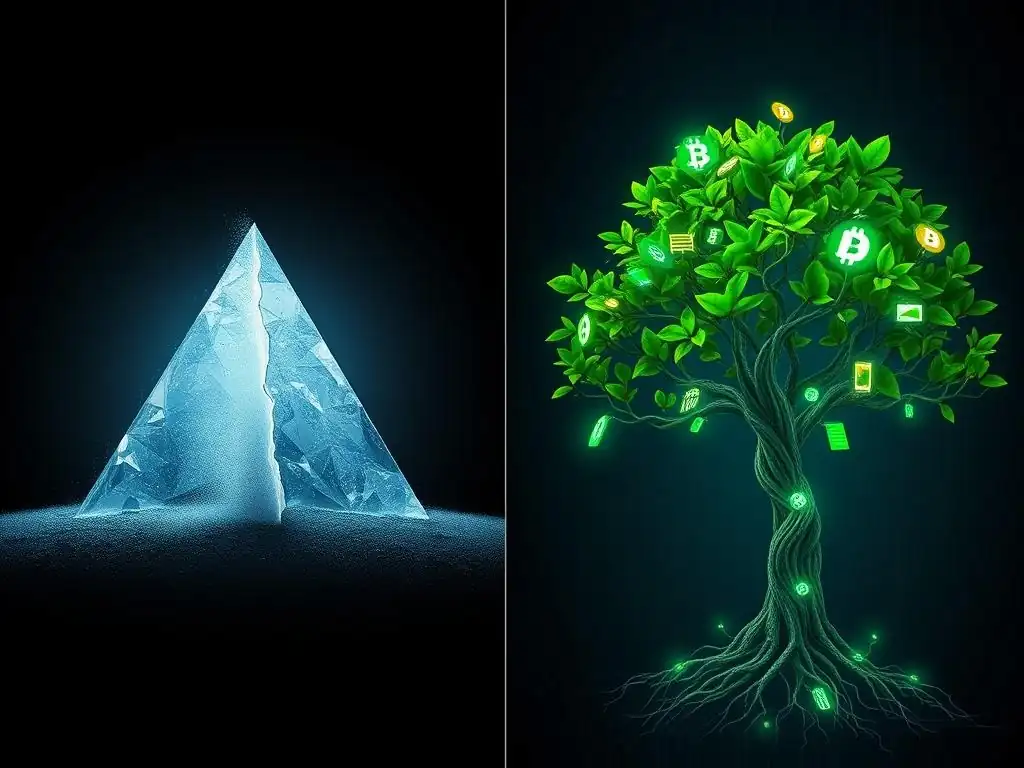
Case Study 1: MakerDAO - A Model for Sustainable Tokenomics
MakerDAO is widely regarded as a pioneering example of sustainable token utility. Its ecosystem revolves around the Dai stablecoin, pegged to the USD, and the MKR governance token. MKR holders are responsible for governing the Maker Protocol, deciding on crucial parameters like stability fees for different collateral types, debt ceilings, and risk parameters.
The utility of MKR is deeply embedded in the protocol's operation; it is required to vote on proposals that directly affect the safety and stability of the multi-billion dollar Dai ecosystem. Furthermore, in times of crisis where the system is undercollateralized, new MKR can be minted and sold to recapitalize the system, making MKR holders the ultimate backstop and risk-takers.
Key Takeaways from MakerDAO's Token Design
The success of MakerDAO's MKR token highlights several principles of sustainable token utility strategies. Firstly, the token has a clear, essential function: governance of a vital piece of DeFi infrastructure. Secondly, its value is tied to the health and usage of the Dai stablecoin; as more Dai is minted and used, the protocol generates more revenue (from stability fees), which is then used to buy back and burn MKR, creating deflationary pressure linked to utility.
Thirdly, MKR holders bear real risk, aligning their incentives with maintaining the protocol's integrity. This combination of essential governance, revenue-linked burning, and risk-bearing utility has made MKR one of the most enduring examples of a utility token with value derived from its function, not just speculation.
Case Study 2: BitConnect - Lessons Learned from Tokenomics Failure
BitConnect (BCC) serves as a stark warning about unsustainable tokenomics models based on Ponzi-like schemes. BitConnect promised users incredibly high, guaranteed daily returns (often cited as 1% per day) by lending their BCC tokens to a proprietary "trading bot." The BCC token itself had no utility outside of being deposited into this lending platform.
The high returns paid to early investors were funded by the deposits of later investors, a classic Ponzi structure. The demand for BCC was driven solely by the desire to participate in this high-yield lending program, not by any external use case or underlying product value.
Identifying the Flaws in BitConnect's Token Model
The fundamental flaw in BitConnect's model was the complete absence of genuine, external utility for the BCC token. Its only function was to be locked into a system that generated returns unsustainably from new money. There was no product adoption driving demand, no governance rights, no use in paying for services, and no link to real-world assets or revenue streams outside the scheme itself.
When the influx of new investors slowed, the system collapsed, and the BCC token price plummeted to virtually zero. This case study underscores the absolute necessity of building sustainable token utility strategies based on real-world value and honest mechanics, not just promises of guaranteed returns.
Measuring Token Utility: Key Performance Indicators (KPIs)
Tracking Active Users and Token Transaction Volume
Measuring the actual usage of a token is paramount for assessing its utility and the effectiveness of sustainable token utility strategies. Key KPIs include tracking the number of unique active wallets holding or interacting with the token, the total number of transactions involving the token, and the volume of those transactions (both in token amount and potentially in fiat value). For a utility token used for payments, tracking how many users are paying with the token and the total value of goods/services purchased with it provides direct insight into its functional demand.
High transaction volume coupled with a growing number of active users who are using the token for its intended purpose (not just trading) is a strong indicator of healthy utility. Conversely, a token with high trading volume on exchanges but low on-chain activity related to its purported use cases suggests that demand is primarily speculative.
Monitoring Token Velocity and Liquidity
Token velocity refers to the rate at which a token changes hands. High velocity can indicate that a token is being used frequently for transactions within an ecosystem, which is good for payment-oriented utility tokens. However, excessively high velocity coupled with low holding periods might also suggest users are quickly selling tokens received as rewards or earned, which can be a sign of weak holding incentives or lack of long-term belief. Monitoring velocity alongside usage metrics helps paint a clearer picture.
Liquidity, measured by trading volume across various exchanges and the depth of order books, is also important. While high liquidity enables easy trading (which can facilitate utility), it doesn't prove utility. However, insufficient liquidity can hinder a token's functional use if users cannot easily acquire or dispose of it when needed for utility purposes. Sustainable token utility strategies often aim for sufficient liquidity to support functional use without excessive volatility driven purely by speculation.
Assessing Community Engagement and Sentiment
Beyond quantitative data, qualitative metrics like community engagement and sentiment are vital for understanding the perceived utility and long-term viability of a token. Active participation in governance forums, constructive discussions on social media, user-generated content, and positive sentiment surveys can indicate a strong, engaged community that believes in the project's vision and the token's role within it.
A community focused solely on price predictions and trading tips, or one plagued by negativity and FUD (fear, uncertainty, doubt), often signals underlying issues with the token's utility or the project's execution. Measuring engagement through forum activity, social media mentions, and developer contributions (if applicable) provides valuable context for evaluating the success of sustainable token utility strategies and identifying areas for improvement.
Future Trends in Sustainable Token Utility
The Rise of Utility-Focused DAOs
Decentralized Autonomous Organizations (DAOs) are increasingly leveraging tokens to coordinate collective action and manage shared resources. Future sustainable token utility strategies will likely see tokens granting more nuanced rights within DAOs, beyond simple one-token-one-vote. This could include tokens that represent specific roles, grant access to gated information or services, or entitle holders to a share of DAO-managed assets or revenue streams derived from real-world activities (like investments or pooled resources).
As DAOs mature and take on more complex tasks, the utility of their governance and membership tokens will deepen, tying token value directly to the performance and services provided by the DAO. This represents a significant evolution towards tokens whose value is derived from active participation in and benefit from a decentralized collective, a powerful form of sustainable token utility.
The Impact of Regulation on Token Design
Regulatory clarity (or lack thereof) significantly impacts how tokens are designed and marketed. As regulators worldwide grapple with classifying digital assets, there's a growing pressure to distinguish utility tokens from securities. This pressure will likely drive projects to focus even more intently on embedding genuine, functional utility into their tokens from inception, rather than relying on promises of future profits.
Future sustainable token utility strategies will increasingly prioritize compliance, ensuring token features clearly align with utility classifications. This could lead to innovative designs where token usage is strictly tied to platform services, or where tokens represent access rights rather than investment contracts. Regulatory scrutiny, while challenging, can ultimately push the market towards more robust, utility-driven token models.
The Convergence of DeFi and Real-World Assets
The integration of Decentralized Finance (DeFi) with Real-World Assets (RWAs) is poised to create new avenues for sustainable token utility. Tokens representing ownership in real estate, invoices, carbon credits, or even future revenue streams from traditional businesses can bring tangible, external value onto the blockchain. DeFi protocols can then use these asset-backed tokens as collateral for lending, enable trading through decentralized exchanges, or package them into yield-generating products.
This convergence means tokens will have utility not just within closed crypto loops but as building blocks for financial activities tied to the global economy. A token representing a share of a solar farm's revenue, for instance, has utility derived from actual energy production. This merging of on-chain mechanics with off-chain value represents a powerful future direction for building sustainable token utility strategies.
Conclusion: Building a Future Where Token Utility Drives Long-Term Value
Key Considerations for Designing Sustainable Token Utility Models
Designing sustainable token utility models requires a fundamental shift in perspective from focusing on token price to focusing on token function. Key considerations include clearly defining the token's role within the ecosystem before launch, ensuring the token is essential for accessing the core product or service, implementing transparent and fair distribution mechanisms, and establishing robust governance that allows for future adaptation. Furthermore, integrating the token with revenue generation or value capture mechanisms within the protocol, and finding ways to reward active participation and contribution, are crucial for fostering long-term demand beyond speculation.
Projects must also consider the legal and regulatory environment and design tokens with clear utility to differentiate them from securities. Continuous monitoring of token usage, community sentiment, and market conditions is necessary to ensure the tokenomics remain effective and can be adjusted as the ecosystem evolves. Building sustainable token utility strategies is an ongoing process, not a one-time event.
Moving Beyond Speculation Towards Real-World Applications of Blockchain
The future of blockchain technology and digital assets hinges on moving beyond speculative trading and towards real-world applications that provide tangible value. Tokens with sustainable utility are at the heart of this transition. Whether powering decentralized finance protocols that offer global access to financial services, enabling transparent supply chains, facilitating decentralized governance, or representing fractional ownership in physical assets, tokens are the economic engines of decentralized systems.
By prioritizing the creation of genuine, functional utility, projects can build resilient ecosystems that attract users based on the value of the service provided, not just the promise of speculative gains. This focus on sustainable token utility strategies is essential for the long-term growth, adoption, and legitimacy of the blockchain space, unlocking its true potential to transform industries and empower individuals globally.
Frequently Asked Questions
What is Token Utility and why is it important beyond just speculation?
Token utility refers to the real-world value a token offers beyond simply being traded on an exchange. It's crucial because it creates lasting demand and justifies a token's existence, moving beyond purely speculative bubbles.
How can Decentralized Finance (DeFi) leverage Sustainable Token Utility Strategies?
DeFi protocols can use tokens for governance, staking rewards, or as collateral within the ecosystem. This incentivizes holding and active participation, leading to a more robust and sustainable DeFi ecosystem.
What role does Regulation play in shaping Sustainable Token Utility?
Clear regulatory frameworks can build trust and legitimacy around tokens. This encourages long-term investment and discourages projects with unsustainable or unethical utility models.
Can Enterprise Applications benefit from incorporating Token Utility?
Yes, enterprises can use tokens to incentivize customer loyalty, streamline supply chains, or manage digital assets. This creates new efficiencies and unlocks value within existing business processes.
What are some examples of Sustainable Token Utility Strategies for the Future of Decentralized Systems?
Examples include tokens that grant access to exclusive content or services, allow for decentralized voting, or represent ownership of real-world assets. These offer tangible benefits that drive long-term value.
Final Reflection: Forging a Future of Enduring Value
The journey through the landscape of token utility reveals a crucial truth: lasting value is not born from speculation, but from genuine purpose and thoughtful design. The strategies explored in this article serve as a roadmap, guiding projects away from fleeting hype and towards building ecosystems that offer tangible benefits to their users and the wider world.
The pursuit of sustainable token utility has profoundly shaped the evolution of blockchain technology, pushing developers and communities to move beyond mere financial incentives. This shift towards real-world applications and user-centric design is not just a trend, but a necessary evolution for the long-term health and adoption of the technology. The true measure of success is not how much you accumulate, but how much you contribute.
This quote encapsulates the essence of sustainable token utility – it's about creating value that extends beyond individual gain and contributes to a thriving ecosystem.
As we conclude this exploration, consider the power you hold to shape the future of decentralized systems. Reflect on the principles of utility, community, and innovation that have been discussed. How can you, in your own sphere of influence, champion the development of tokens that offer real-world solutions and empower individuals? The future of blockchain lies not in the hands of speculators, but in the visionaries who dare to build utility that truly lasts.
Unleash Your Token's Potential: Build Utility Today!
Thank you for exploring the essential elements of creating lasting token utility. We hope you've gained valuable insights into designing tokens that truly resonate with users and generate long-term value. Now, it’s time to put that knowledge into action.
Start by focusing on solving a real-world problem: identify a genuine need within your target market and develop your token to address that need effectively. This approach lays the foundation for lasting utility.
Consider expanding utility beyond traditional financial applications by integrating your token with real-world experiences, such as loyalty programs, content access, or community governance.
Share this article! If you know others interested in blockchain technology, feel free to share it on social media to inspire more innovative and sustainable projects.
What is the first step you will take to incorporate real-world utility into your token project, and how will you evaluate its success?
Leave a Reply