
The Intriguing World of Decentralized Autonomous Organizations (DAOs) and DApps


Welcome to Blockchain Trends, your compass in the ever-evolving landscape of decentralized innovation!
Ever wondered how blockchain is revolutionizing more than just cryptocurrency? We delve into the transformative power of this technology across DeFi, enterprise solutions, and beyond. This week, we're diving deep into the intriguing world of DAOs and decentralized governance, exploring how these revolutionary structures are reshaping organizations and empowering communities. Ready to unlock the potential of truly decentralized systems? Keep reading to discover how DAOs are changing the game!
The Intriguing World of Decentralized Autonomous Organizations (DAOs) and DApps
- Understanding Decentralized Autonomous Organizations (DAOs)
- Exploring Decentralized Applications (DApps)
- DAOs and DApps: A Symbiotic Relationship
- Challenges and Considerations for DAOs and DApps
- The Future of DAOs and Decentralized Application Ecosystems
- DAO Governance: Participation and Tokenomics
- Building and Launching a DApp with DAO Integration
-
Frequently Asked Questions
- What exactly are DAOs, and how do they relate to DApps?
- What are the key benefits of using a DAO for decentralized governance?
- How does blockchain technology underpin the functionality of DAOs and DApps?
- What are some potential challenges or risks associated with DAOs?
- How might DAOs impact the future of enterprise governance and organizational structures?
- Final Reflection: Embracing the Future of Decentralized Governance
- Ignite Your DAO Journey!
Understanding Decentralized Autonomous Organizations (DAOs)
What are DAOs? A Deep Dive into Decentralized Governance
Decentralized Autonomous Organizations, or DAOs, represent a paradigm shift in organizational structure, moving away from traditional hierarchical models towards community-driven governance. At their core, DAOs are internet-native organizations collectively owned and managed by their members. Decisions regarding the organization's direction, resource allocation, and operations are not dictated by a central authority but are instead made through proposals and voting systems encoded on a blockchain. This reliance on blockchain technology ensures transparency and immutability in governance processes, fostering trust and accountability within the organization.
The concept of decentralized governance is central to understanding DAOs. Unlike conventional organizations where power is concentrated in the hands of executives or boards, DAOs distribute governance rights among their members. Typically, these rights are represented by tokens, granting holders the ability to participate in decision-making processes. Imagine a cooperative where instead of a board making all decisions, every member with a certain stake can propose changes, vote on proposals, and directly influence the organization's path. This structure aims to create more equitable and democratic organizations, reflecting the collective will of their participants.
The Core Principles of DAO Functionality
Several core principles underpin the functionality of DAOs, differentiating them from traditional organizational structures. Transparency is paramount; all transactions, rules, and governance processes are typically recorded on a public blockchain, making them auditable and verifiable by anyone. This radical transparency builds trust and reduces the potential for opaque or self-serving actions often associated with centralized entities. Autonomy is another key tenet, as DAOs operate based on pre-defined rules encoded in smart contracts. These contracts execute automatically when specific conditions are met, removing the need for intermediaries and minimizing human intervention in routine operations.
Community-driven governance is also a fundamental principle. DAOs empower their communities by giving them a direct voice in decision-making. Proposals for changes to the DAO’s operations, rules, or treasury are submitted and voted upon by token holders. This fosters a sense of ownership and encourages active participation from members.
“Code is law” is a phrase often associated with DAOs, highlighting the importance of smart contracts in dictating operations. The rules of the DAO are explicitly defined in code, and once deployed, these rules are immutable, ensuring predictable and consistent behavior. Finally, DAOs are inherently global and accessible, leveraging the internet and blockchain technology to transcend geographical boundaries and enable participation from individuals worldwide.
How DAOs Differ from Traditional Organizations
The contrast between DAOs and traditional organizations is stark, particularly when examining governance, transparency, and operational structures. Traditional organizations typically follow a hierarchical model with centralized decision-making, where authority flows from the top down. Decisions are often made by a select few, such as executives or boards, and may not always be transparent to all stakeholders. In contrast, DAOs embrace flat organizational structures where decision-making is distributed across the community. Governance is decentralized, empowering token holders to participate in voting and shape the organization's direction.
Transparency is another significant differentiator. Traditional organizations, even publicly traded ones, often operate with a degree of opacity. Financial records and decision-making processes may not be fully accessible to all stakeholders. DAOs, by leveraging blockchain, offer radical transparency.
All transactions, governance proposals, and voting records are publicly auditable on the blockchain, fostering accountability and trust. Operationally, traditional organizations rely on human intermediaries and legal frameworks, which can be slow, costly, and subject to human error or bias. DAOs, utilizing smart contracts, automate many processes, reducing the need for intermediaries and enhancing efficiency. This shift towards decentralized governance and operational models represents a fundamental departure from conventional organizational paradigms.
The Benefits of Decentralized Governance with DAOs
Decentralized governance through DAOs offers a spectrum of compelling benefits compared to traditional centralized systems. Increased transparency is a primary advantage. As all DAO operations and governance actions are recorded on a public blockchain, every member and observer can verify the organization's activities. This radical transparency significantly reduces the potential for corruption and mismanagement, fostering greater trust and accountability. Enhanced security is another key benefit. By distributing control and relying on cryptographic security inherent in blockchain technology, DAOs are often more resilient to single points of failure and censorship compared to organizations with centralized servers and databases.
Community ownership and engagement are significantly amplified within DAOs. Members, often token holders, have a direct stake in the organization's success and are empowered to actively participate in its governance. This participatory model can lead to more innovative and responsive decision-making, as diverse perspectives are incorporated. Global participation is inherently facilitated by DAOs.
Operating on the internet and blockchain, DAOs can seamlessly onboard members from across the globe, breaking down geographical barriers and fostering diverse and inclusive communities. Finally, efficiency and automation are improved through the use of smart contracts. These contracts automate routine tasks and enforce pre-defined rules, reducing administrative overhead and streamlining operations compared to traditional organizations reliant on manual processes and intermediaries.
Exploring Decentralized Applications (DApps)
What are DApps? An Introduction to Decentralized Applications
Decentralized Applications, commonly known as DApps, are applications built on decentralized networks, primarily blockchains. Unlike traditional applications that rely on centralized servers and databases, DApps leverage the distributed and immutable nature of blockchain technology. This fundamental architectural difference provides DApps with unique characteristics, including enhanced transparency, security, and resilience. DApps aim to create a more user-centric and equitable digital landscape by shifting control away from centralized entities and towards users and communities.
DApps are designed to be open-source, meaning their code is publicly available and verifiable. This transparency fosters trust and allows for community scrutiny and contribution, promoting continuous improvement and security audits. They typically interact with blockchain networks to perform transactions and store data, leveraging smart contracts to automate functionalities and enforce rules.
Consider a social media platform built as a DApp. Instead of user data being stored on a central server controlled by the platform company, data would be distributed across a blockchain network, potentially giving users more control over their personal information and reducing the risk of centralized data breaches.
The Architecture of DApps: Blockchain, Smart Contracts, and User Interfaces
The architecture of DApps is typically composed of three key layers working in concert: the blockchain, smart contracts, and the user interface. The blockchain serves as the foundational layer, providing the decentralized and secure infrastructure for the DApp. It hosts the application's backend logic and data, ensuring immutability and transparency.
Different blockchains can be used, each offering varying levels of scalability, security, and specific functionalities. For instance, Ethereum is a popular choice for DApps due to its robust smart contract capabilities and large developer community, while other blockchains like Solana or Polkadot offer different trade-offs in terms of speed and cost.
Smart contracts are self-executing agreements written in code and deployed on the blockchain. They define the core logic and rules of the DApp, automating processes and interactions. When specific conditions are met, smart contracts automatically execute predefined actions, eliminating the need for intermediaries and ensuring transparent and predictable outcomes. Imagine a decentralized exchange (DEX) as a DApp.
Smart contracts would handle the logic for trading, order matching, and asset custody, all without relying on a central exchange operator. The user interface (UI) is the front-end layer that users interact with. It provides a user-friendly way to access the DApp's functionalities, even though the underlying logic and data reside on the blockchain and are governed by smart contracts. The UI acts as a bridge, enabling users to interact with the complex decentralized backend in an intuitive manner.
DApps vs. Traditional Applications: Key Differences
DApps and traditional applications diverge significantly in their fundamental characteristics, particularly in terms of decentralization, data management, and governance. Traditional applications are typically centralized, meaning they are controlled and operated by a single entity. Data is stored on centralized servers, and the application's logic is managed by the central provider. This centralization creates potential points of failure, censorship risks, and data privacy concerns. In contrast, DApps are decentralized. Their backend logic and data are distributed across a blockchain network, making them more resilient to censorship and single points of failure.
Data management also differs substantially. Traditional applications often store user data on centralized databases, raising concerns about data breaches and privacy. DApps, leveraging blockchain, can offer users more control over their data. Depending on the DApp's design, data may be stored on a public blockchain, a private blockchain, or even with users themselves using decentralized storage solutions.
Governance is another key differentiator. Traditional applications are governed by the central entity that controls them, often with limited user input. DApps, especially those integrated with DAOs, can offer decentralized governance models. Users or token holders can participate in decisions about the DApp's future development and operation, leading to more community-driven and equitable applications.
Popular DApp Use Cases: Decentralized Finance (DeFi), Blockchain Gaming, and Supply Chain Management
DApps are finding diverse applications across various sectors, with Decentralized Finance (DeFi), blockchain gaming, and supply chain management being prominent examples. DeFi DApps are revolutionizing financial services by offering decentralized alternatives to traditional banking and financial institutions. These DApps provide services like lending, borrowing, trading, and yield farming, all without intermediaries and often with greater transparency and accessibility. For example, Uniswap, a decentralized exchange, facilitates peer-to-peer token swaps without relying on a central order book, achieving daily trading volumes often exceeding \$1 billion USD.
Blockchain gaming DApps are transforming the gaming industry by introducing play-to-earn models and true digital asset ownership. Players can earn cryptocurrency or NFTs (Non-Fungible Tokens) by playing games, and these assets can be traded or used across different games and platforms, providing real-world value. Games like Axie Infinity have demonstrated the potential of blockchain gaming, with millions of players engaging in play-to-earn economies.
Supply chain management DApps are enhancing transparency and efficiency in tracking goods and verifying product authenticity. By recording supply chain data on a blockchain, DApps can provide an immutable and auditable record of a product's journey from origin to consumer, reducing fraud and improving accountability. Companies are increasingly exploring DApps to improve supply chain visibility and traceability, especially in industries like pharmaceuticals and food.
DAOs and DApps: A Symbiotic Relationship
How DAOs Govern and Manage DApps
DAOs and DApps often exist in a symbiotic relationship, where DAOs provide the governance framework for DApps. In this model, a DAO is established to manage and control a specific DApp, ensuring its decentralized operation and community-driven evolution. The DAO acts as the governing body, making decisions about the DApp's development, upgrades, resource allocation, and even its fundamental parameters. This governance is typically executed through proposals and voting mechanisms within the DAO, where token holders participate in shaping the DApp's future.
Consider a decentralized exchange (DEX) like Uniswap. Uniswap is governed by the Uniswap DAO, which comprises UNI token holders. Proposals for protocol upgrades, fee adjustments, or treasury management are submitted to the DAO and voted upon by UNI holders. This decentralized governance model ensures that the DEX is not controlled by a single entity but evolves based on the collective decisions of its community. This integration of DAOs and DApps fosters a truly decentralized ecosystem, where applications are not only built on decentralized infrastructure but are also governed in a decentralized manner.
The Role of Decentralized Governance in DApp Development
Decentralized governance plays a crucial role in the development and longevity of DApps, fostering community ownership, resilience, and adaptability. By incorporating decentralized governance, DApp development moves away from a top-down, centralized approach to a more collaborative and community-driven model. This allows for a wider range of perspectives and expertise to contribute to the DApp's evolution, potentially leading to more innovative and robust solutions. Community input can be invaluable in identifying user needs, suggesting new features, and even spotting potential vulnerabilities in the DApp.
Resilience is also enhanced through decentralized governance. A DApp governed by a DAO is less susceptible to the whims of a single central entity. Decisions are made through consensus, making it harder for any single actor to unilaterally alter the DApp's course or shut it down. Adaptability is another key benefit.
DAOs can quickly respond to changing market conditions or emerging technologies through their governance mechanisms. Proposals for upgrades or changes can be rapidly put to a vote, allowing the DApp to evolve and remain competitive in the dynamic blockchain landscape. This agile and community-driven development approach, facilitated by decentralized governance, is a significant advantage for DApps.
Examples of DAOs Powering DApps: MakerDAO/DAI Stablecoin, Uniswap, and Aragon
Several prominent DApps are effectively powered by DAOs, illustrating the practical application of decentralized governance. MakerDAO is one of the earliest and most successful examples, governing the DAI stablecoin. The MakerDAO DAO manages the parameters of the DAI stablecoin system, including the stability fee, collateral types, and overall risk management. MKR token holders vote on these critical parameters, ensuring the stability and decentralization of DAI, which currently has a market capitalization of over \$5 billion USD.
Uniswap, as mentioned previously, is another prime example. The Uniswap DAO governs the Uniswap protocol, one of the leading decentralized exchanges. UNI token holders have voting rights over protocol upgrades, treasury management, and future development initiatives. Uniswap has processed trillions of dollars in trading volume and is a cornerstone of the DeFi ecosystem, showcasing the effectiveness of DAO governance for complex financial DApps.
Aragon is a platform specifically designed to create and manage DAOs. Aragon itself is governed by the Aragon DAO, which oversees the development and direction of the Aragon platform. Many other DAOs and DApps are built using the Aragon platform, highlighting its role in facilitating decentralized governance and the growth of the DAO ecosystem. These examples demonstrate the diverse applications and real-world impact of DAOs in powering and governing DApps.
Challenges and Considerations for DAOs and DApps
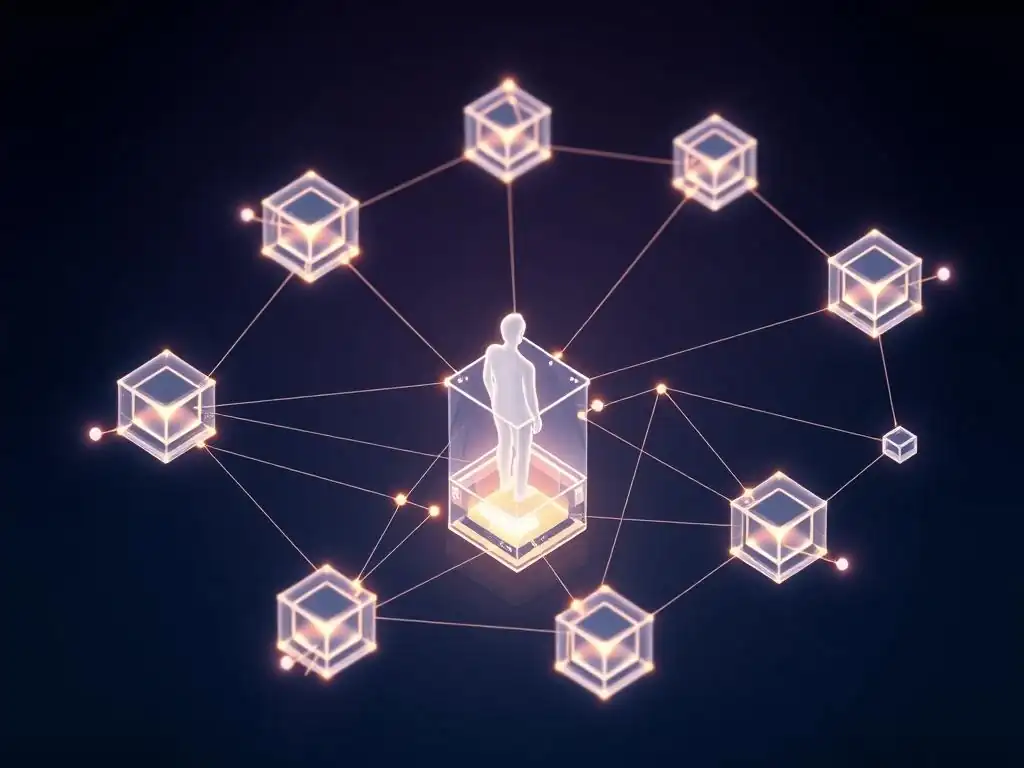
Security Risks in DAOs and DApps: Smart Contract Vulnerabilities
While DAOs and DApps offer numerous advantages, they are not without their challenges, particularly in the realm of security. Smart contract vulnerabilities are a significant concern. DApps and DAOs heavily rely on smart contracts, and if these contracts contain flaws or bugs, they can be exploited by malicious actors. History is replete with examples of smart contract exploits leading to substantial financial losses. For instance, the DAO hack in 2016, where vulnerabilities in the DAO's smart contracts led to the theft of millions of dollars worth of Ether, remains a stark reminder of these risks.
The immutability of smart contracts, while a strength in terms of transparency and predictability, also poses a challenge when vulnerabilities are discovered. Once a smart contract is deployed on the blockchain, it is often very difficult, if not impossible, to modify it to fix vulnerabilities. This necessitates rigorous auditing and testing of smart contracts before deployment.
Beyond smart contract vulnerabilities, DAOs and DApps can also be susceptible to governance attacks. If a malicious actor can acquire a significant number of governance tokens, they could potentially manipulate voting outcomes and gain control of the DAO or DApp for their own benefit. These security considerations are paramount and require ongoing vigilance and robust security practices in the DAO and DApp ecosystem.
Regulatory Uncertainty Surrounding DAOs and DApps
Regulatory uncertainty is a major hurdle facing the widespread adoption and mainstream acceptance of DAOs and DApps. The legal status of DAOs is still largely undefined in most jurisdictions. Traditional legal frameworks are often designed for organizations with clear legal entities and centralized control, which does not align well with the decentralized and distributed nature of DAOs. This lack of legal clarity creates uncertainty regarding liability, taxation, and compliance obligations for DAOs and their members.
Regulators globally are still grappling with how to classify and regulate DAOs and DApps. Some jurisdictions are taking a cautious approach, while others are attempting to create more accommodating frameworks. For example, some regions might classify DAOs as partnerships or unincorporated associations, while others are exploring new legal entity structures specifically for DAOs. The regulatory landscape is constantly evolving, and the lack of consistent and clear regulations creates challenges for DAOs and DApps operating across different jurisdictions. This uncertainty can hinder investment, innovation, and broader adoption as businesses and individuals navigate the complex and evolving regulatory environment.
Scalability Issues Facing DAOs and DApps
Scalability is a persistent challenge for many blockchains, and this issue directly impacts the scalability of DAOs and DApps built upon them. Many popular blockchains, particularly earlier generations, have limitations in terms of transaction throughput and processing speed. This can lead to network congestion, slow transaction times, and high gas fees, especially during periods of high demand. For DApps, this can translate to slow user experiences and limitations on the number of users or transactions the DApp can handle efficiently.
For DAOs, scalability challenges can affect governance participation. If voting processes are slow or expensive due to blockchain congestion, it can discourage participation and hinder the efficiency of decentralized governance. Various scaling solutions are being developed and implemented for blockchains, including layer-2 scaling solutions, sharding, and improvements to consensus mechanisms. These advancements are crucial for enabling DAOs and DApps to scale to meet the demands of mass adoption. Overcoming scalability limitations is essential for the long-term growth and viability of the decentralized application ecosystem.
The Future of DAOs and Decentralized Application Ecosystems
The Evolution of DAO Governance Models
DAO governance models are continuously evolving as the ecosystem matures and experiments with different approaches to decentralized decision-making. Early DAOs often relied on simple token-weighted voting, where voting power was directly proportional to token holdings. While straightforward, this model can be susceptible to plutocracy, where large token holders have disproportionate influence. More sophisticated governance models are emerging to address these limitations and enhance inclusivity and fairness.
Liquid democracy is gaining traction, allowing token holders to either vote directly on proposals or delegate their voting power to trusted representatives. This combines direct participation with expert delegation, potentially improving decision quality and efficiency. Quadratic voting is another innovative model that aims to address the issue of “one person, one vote” versus “one token, one vote.” It makes voting more costly as more votes are cast for a single option, aiming to better reflect the intensity of preferences within the community.
Furthermore, concepts like soulbound tokens and reputation systems are being explored to enhance governance participation and mitigate Sybil attacks. The ongoing experimentation and refinement of DAO governance models are crucial for creating more robust, equitable, and effective decentralized organizations.
The Growth Potential of DApps and Their Impact on Industries
DApps possess significant growth potential and are poised to disrupt and transform various industries beyond the cryptocurrency space. As blockchain technology matures and scalability solutions improve, DApps are becoming increasingly viable for mainstream applications. The financial industry is already experiencing significant disruption through DeFi DApps, and this trend is expected to continue. Beyond finance, DApps are showing promise in areas such as gaming, supply chain management, identity management, social media, and the creator economy.
In gaming, blockchain-based games are creating new economic models and ownership paradigms for players. In supply chain management, DApps are enhancing transparency and traceability, improving efficiency and reducing fraud. Decentralized social media platforms are emerging as alternatives to centralized giants, offering users more control over their data and content.
The creator economy is being empowered by DApps that enable artists and creators to directly monetize their work and connect with their audiences without intermediaries. The versatility and potential benefits of DApps suggest a broad and transformative impact across numerous sectors in the coming years, driving innovation and creating new opportunities.
The Convergence of DAOs, DApps, and Web3
DAOs and DApps are integral components of the broader Web3 vision, representing a fundamental shift towards a more decentralized, user-centric internet. Web3 aims to move away from the centralized control of Web2 giants towards a decentralized web owned and governed by its users. DAOs provide the governance layer for this decentralized ecosystem, enabling communities to collectively manage and control online platforms, protocols, and applications. DApps are the building blocks of Web3, offering decentralized alternatives to traditional web applications and services.
The convergence of DAOs, DApps, and other Web3 technologies like decentralized storage and identity solutions is creating a powerful and interconnected ecosystem. DAOs can govern DApps, and DApps can utilize decentralized storage solutions, all within the framework of a user-owned and controlled internet. This convergence has the potential to unlock new forms of online collaboration, economic models, and digital ownership. The development and adoption of DAOs and DApps are crucial steps towards realizing the full potential of Web3 and building a more open, equitable, and decentralized digital future.
DAO Governance: Participation and Tokenomics
Understanding DAO Tokenomics and Incentive Structures
DAO tokenomics and incentive structures are critical elements in ensuring effective governance and active participation within decentralized autonomous organizations. Tokenomics refers to the economic model of a DAO's native token, including its distribution, supply, utility, and how it incentivizes desired behaviors. A well-designed tokenomic model is crucial for aligning the interests of token holders with the long-term success of the DAO. Tokens often serve multiple purposes within a DAO, including governance rights, access to services, staking rewards, and utility within the DApp or protocol governed by the DAO.
Incentive structures are designed to motivate token holders to actively participate in governance, contribute to the DAO's ecosystem, and act in the best interests of the organization. These incentives can include staking rewards for locking up tokens and participating in network security, voting rewards for participating in governance proposals, and grants or funding for contributing to DAO projects or initiatives.
For example, many DAOs distribute a portion of their revenue or treasury to active participants as rewards. A balanced and effective tokenomic model and incentive structure are essential for fostering a vibrant and engaged DAO community and ensuring sustainable decentralized governance.
How to Participate in DAO Governance: Voting and Proposals
Participating in DAO governance typically involves understanding the DAO's governance processes, acquiring governance tokens, and actively engaging in voting and proposal submissions. The specific mechanisms for governance vary across DAOs, but generally involve a proposal process followed by voting by token holders. Governance proposals can cover a wide range of topics, including protocol upgrades, treasury management, strategic direction, and changes to DAO rules. Proposals are often submitted through a DAO's governance platform, which may be a dedicated website or a module within a blockchain explorer.
Token holders typically vote on proposals using their governance tokens. Voting power is usually proportional to the number of tokens held, although more sophisticated voting mechanisms, like liquid democracy or quadratic voting, may be employed. To participate effectively, token holders need to stay informed about governance proposals, understand the potential impacts of different decisions, and exercise their voting rights responsibly.
Active participation in voting and thoughtful proposal submissions are crucial for shaping the direction of the DAO and contributing to its long-term success. Many DAOs also have forums or community channels where members can discuss proposals and governance issues before formal voting.
The Impact of Token Holders on DAO Decision-Making
Token holders wield significant influence over DAO decision-making, directly impacting the organization's direction and operations. In most DAOs, token holders have the ultimate authority to approve or reject proposals, allocate resources, and even modify the fundamental rules of the DAO through governance votes. This decentralized decision-making power distinguishes DAOs from traditional organizations where decision-making is concentrated in the hands of a few. The collective will of token holders, expressed through governance votes, shapes the trajectory of the DAO and the DApp or protocol it governs.
The impact of token holders can be both positive and negative. Positive impacts include community-driven innovation, more equitable resource allocation, and greater transparency and accountability. However, potential negative impacts can arise if governance is dominated by a small group of large token holders, leading to plutocracy. Furthermore, low voter turnout or apathy among token holders can undermine the legitimacy and effectiveness of decentralized governance. Ensuring broad participation, fair voting mechanisms, and informed decision-making by token holders are crucial for maximizing the positive impact of decentralized governance in DAOs and mitigating potential risks.
Building and Launching a DApp with DAO Integration
Key Considerations for DApp Development with DAO Elements
Developing a DApp with DAO integration requires careful consideration of several key aspects, extending beyond traditional application development. Defining the scope and purpose of decentralized governance within the DApp is paramount. Decide which aspects of the DApp's operation and development will be governed by the DAO and which will remain outside of decentralized control.
This includes determining which parameters, functionalities, or resources will be subject to community proposals and voting. Designing the DAO's governance structure is another critical consideration. Select an appropriate governance model, such as token-weighted voting, liquid democracy, or quadratic voting, that aligns with the DApp's goals and community.
Tokenomics design is crucial for incentivizing participation and aligning stakeholder interests. Develop a tokenomic model that effectively distributes governance tokens, incentivizes active participation in governance, and aligns token holder incentives with the long-term success of the DApp. Smart contract development for governance functionalities is a key technical aspect. Develop and thoroughly audit smart contracts that implement the chosen governance mechanisms, ensuring security and reliability.
Finally, community building and engagement are essential for a successful DAO-integrated DApp. Cultivate a vibrant and engaged community that actively participates in governance and contributes to the DApp's ecosystem. These considerations are fundamental for building a robust and sustainable DApp with effective decentralized governance.
Integrating Smart Contracts for Decentralized Governance
Integrating smart contracts for decentralized governance is a core technical step in building a DAO-integrated DApp. Smart contracts are the foundation for automating governance processes and enforcing DAO rules on the blockchain. The first step is to design and develop smart contracts that implement the chosen governance mechanisms, such as proposal submission, voting, and execution of decisions. These contracts need to be robust, secure, and thoroughly audited to prevent vulnerabilities and ensure reliable operation. Common smart contract functionalities for DAO governance include token voting contracts, proposal contracts, and treasury management contracts.
Token voting contracts handle the voting process, allowing token holders to cast votes on proposals and tallying the results based on voting power. Proposal contracts manage the proposal submission process, defining the format and requirements for proposals and ensuring they are properly recorded on the blockchain. Treasury management contracts control the DAO's funds and automate the execution of decisions related to fund allocation based on governance votes. Integration with the DApp's backend and frontend is crucial.
The DApp's backend needs to interact with the governance smart contracts to trigger actions based on governance decisions. The frontend needs to provide a user-friendly interface for users to participate in governance, submit proposals, and vote on decisions. Secure and efficient smart contract integration is essential for a functional and trustworthy DAO-governed DApp.
Launching and Scaling a DApp Governed by a DAO
Launching and scaling a DApp governed by a DAO involves a phased approach, combining technical deployment with community building and strategic growth. Initial launch typically involves deploying the DApp's smart contracts and the DAO's governance contracts on the chosen blockchain network. This is followed by token distribution, often involving a fair launch mechanism or a phased distribution strategy to ensure broad community ownership.
Community building is crucial from the outset. Actively engage with the community, foster participation in governance, and build a strong and supportive user base. Marketing and communication are essential for raising awareness of the DApp and the DAO, attracting users and token holders.
Scaling the DApp and the DAO requires addressing scalability challenges, both technical and organizational. Explore and implement blockchain scaling solutions to ensure the DApp can handle increasing user demand and transaction volume. Continuously iterate and improve the DApp based on community feedback and governance decisions. Evolving the DAO's governance model may be necessary as the community grows and the DApp matures.
Consider implementing more sophisticated governance mechanisms and adapting the tokenomic model to maintain engagement and effectiveness at scale. Strategic partnerships and collaborations can also play a key role in scaling the DApp's reach and impact. A well-planned launch and a focus on community-driven growth are essential for the long-term success of a DApp governed by a DAO.
Frequently Asked Questions
What exactly are DAOs, and how do they relate to DApps?
DAOs, or Decentralized Autonomous Organizations, are organizations governed by rules encoded in a smart contract on a blockchain. DApps (Decentralized Applications) often utilize DAOs for governance and decision-making, allowing users to participate in the application's development and direction.
What are the key benefits of using a DAO for decentralized governance?
DAOs offer increased transparency and security through blockchain technology. They also promote community-driven decision-making, fostering a more equitable and participatory environment compared to traditional hierarchical structures.
How does blockchain technology underpin the functionality of DAOs and DApps?
Blockchain provides the immutable ledger necessary for recording DAO votes, proposals, and transactions, ensuring transparency and trust. DApps leverage blockchain for secure and decentralized data storage and execution of smart contracts, which power DAO operations.
What are some potential challenges or risks associated with DAOs?
DAOs can be vulnerable to smart contract exploits if the code is poorly written or contains security flaws. Issues related to legal and regulatory uncertainty also pose a significant challenge for widespread DAO adoption.
How might DAOs impact the future of enterprise governance and organizational structures?
DAOs could revolutionize enterprise governance by enabling more transparent and participatory decision-making processes. They may also lead to new organizational structures that are more agile and responsive to changing market conditions.
Final Reflection: Embracing the Future of Decentralized Governance
The exploration of DAOs and DApps reveals a transformative shift in how we organize and interact, and the promise of decentralized governance resonates powerfully in today's world. As centralized systems face increasing scrutiny and calls for greater transparency, the principles underpinning DAOs offer a compelling alternative, empowering communities and fostering a more equitable distribution of power and resources. This isn't just a technological trend; it's a fundamental rethinking of how we build and manage organizations.
The impact of DAOs extends far beyond the digital realm, influencing our understanding of collaboration, ownership, and trust. Witnessing the nascent stages of this revolution fills me with a sense of both excitement and responsibility, knowing that the choices we make today will shape the future of decentralized governance. The future is already here – it's just not evenly distributed.
- William Gibson. This quote encapsulates the current state of DAOs: the potential is immense, but widespread adoption requires careful consideration and thoughtful implementation.
Now, as you reflect on the potential of DAOs and decentralized governance, consider how you can contribute to this evolving landscape. How can you leverage these technologies to build more inclusive and transparent communities? How can you advocate for a future where power is distributed more equitably? The journey towards decentralized governance is a collective one, and your participation is crucial in shaping a future where technology empowers us all.
Ignite Your DAO Journey!
Thank you for exploring the fascinating world of decentralized organizations and blockchain applications. We hope you've gained a clear understanding of their potential and influence. Now, it’s time to take the next step.
Here are some ways to continue your exploration:
- Consider proposing a feature or improvement to a decentralized organization that interests you. This hands-on approach will give you insight into how governance works in practice.
- Try building a simple blockchain application using open-source tools—no need to be an expert programmer to get started!
- Join the community forums and share your thoughts on the future of decentralized governance and the most innovative blockchain applications you've discovered. Let’s learn from each other!
What blockchain project are you most excited to get involved with, and why? Share your thoughts in the comments below!
Leave a Reply