
Hyperledger Fabric vs. Corda vs. Quorum: Which Enterprise Blockchain Reigns Supreme?


Welcome to Blockchain Trends, your compass in the rapidly evolving world of decentralized technology. Beyond the hype surrounding cryptocurrencies lies a vast landscape of transformative potential. Are you ready to explore the enterprise applications poised to revolutionize industries? This week, we dive deep into the crucial question facing businesses today: Which enterprise blockchain platform is right for you?
Get ready for an in-depth enterprise blockchain platform comparison, pitting Hyperledger Fabric, Corda, and Quorum against each other. Discover which platform reigns supreme and unlocks the true potential of blockchain for your organization. The journey begins now – keep reading to find out!
- Hyperledger Fabric: The Modular Blockchain Powerhouse
-
Frequently Asked Questions
- What are the key differences between Hyperledger Fabric, Corda, and Quorum in an Enterprise blockchain platform comparison?
- Which Enterprise blockchain platform is best suited for supply chain management, considering the need for transparency and traceability?
- How do regulatory considerations impact the choice of an Enterprise blockchain platform for financial institutions?
- What are the primary factors to consider when conducting an Enterprise blockchain platform comparison based on scalability and performance?
- How does the level of decentralization differ between Hyperledger Fabric, Corda, and Quorum, and why is this important for Enterprise blockchain platform comparison?
- Final Reflection: Navigating the Enterprise Blockchain Landscape
- Ignite Your Enterprise Blockchain Journey!
Hyperledger Fabric: The Modular Blockchain Powerhouse
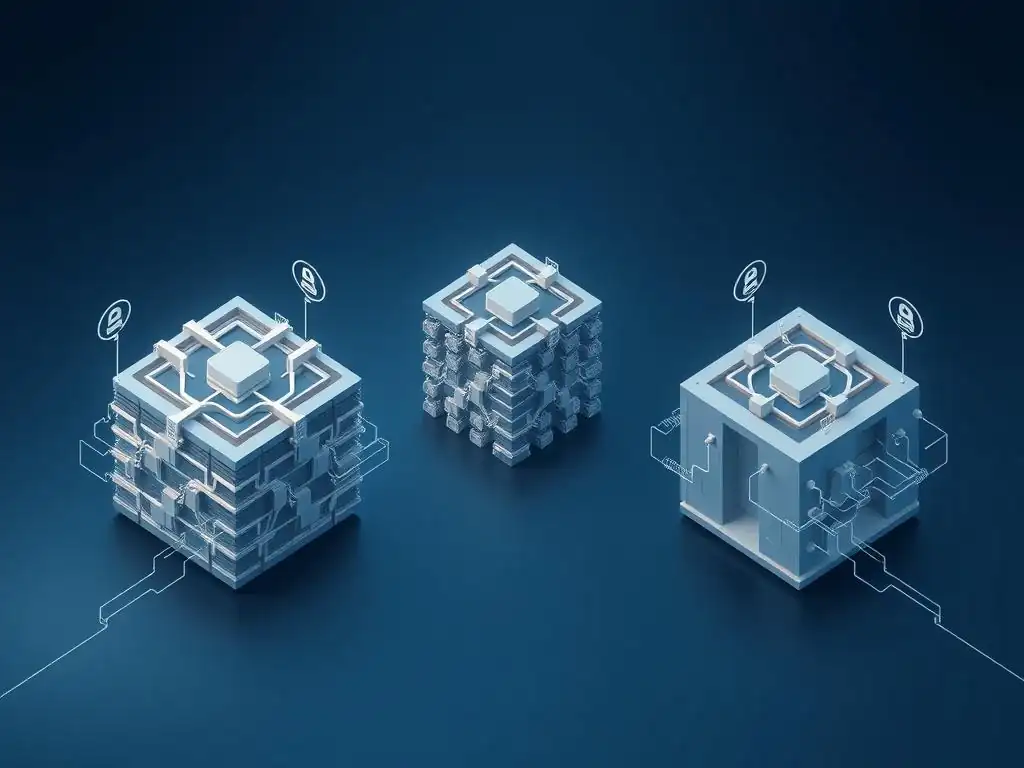
Hyperledger Fabric Architecture and Components
Hyperledger Fabric is an open-source, permissioned blockchain framework designed for enterprise use. Unlike public blockchains, it operates within a private network where participants are known and trusted entities, a critical distinction in any enterprise blockchain platform comparison. Its architecture is highly modular, allowing organizations to plug in different components, such as consensus mechanisms and membership services, to tailor the network to their specific business needs. Key components include Peers, which maintain the ledger and execute chaincode; Orderers, which ensure transaction consistency and deliver blocks to peers; and Certificate Authorities (CAs), which manage identities and issue certificates for participants.
The framework leverages channels to provide data privacy and isolation between participants within the same network. A channel is a private "subnet" of communication between specific network members, allowing them to transact confidentially without exposing sensitive data to the entire network. Chaincode, the smart contracts of Fabric, defines the business logic executed on the ledger.
These can be written in multiple standard programming languages like Go, Node.js, and Java, making it accessible to a broader range of enterprise developers compared to platforms requiring proprietary languages. This multi-component, channel-based architecture is a cornerstone of Fabric's appeal for complex enterprise environments requiring fine-grained access control and data segregation.
Key Features of Hyperledger Fabric for Enterprises
A primary feature attracting enterprises to Hyperledger Fabric is its permissioned nature. This means that all participants in a Fabric network must be identified and authorized, which is essential for meeting regulatory compliance and governance requirements in many industries. Data privacy is another significant advantage, achieved through the use of channels. Organizations can create separate channels for different sets of participants, ensuring that only relevant parties have access to specific transaction data, a crucial factor in enterprise blockchain platform comparison where data confidentiality is paramount.
Furthermore, Fabric offers flexibility through pluggable components, allowing enterprises to choose consensus mechanisms (like Raft or Kafka-based ordering) that best suit their performance and fault tolerance needs. The support for multiple programming languages for chaincode significantly lowers the barrier to entry for development teams already proficient in languages like Go, Java, or Node.js. Features like rich query support for the ledger state database (e.g., using CouchDB or LevelDB) and the ability to upgrade chaincode without halting the network contribute to its robustness and suitability for dynamic enterprise applications.
Use Cases for Hyperledger Fabric
Hyperledger Fabric has seen significant adoption across various industries due to its flexibility and focus on enterprise requirements. One prominent example is Walmart's use of Fabric for food traceability. By creating a blockchain network with their suppliers, Walmart was able to dramatically reduce the time it takes to trace a food item from farm to store from days or weeks down to seconds. This capability is vital for improving supply chain efficiency and responding rapidly to food safety incidents, showcasing Fabric's power in real-world scenarios within an enterprise blockchain platform comparison.
Beyond supply chain, Fabric is utilized in areas like trade finance (e.g., various initiatives building platforms for letters of credit and supply chain finance), digital identity management, and healthcare. For instance, in healthcare, Fabric's channels can be used to manage patient data access, allowing different providers or insurers to interact with specific, authorized subsets of health records while maintaining overall data privacy and security. Its ability to handle complex, multi-party transactions with privacy and transparency makes it a strong contender for diverse enterprise applications.
Hyperledger Fabric: Strengths and Weaknesses
One of the core strengths of Hyperledger Fabric is its modularity, which provides enterprises with the flexibility to customize the network architecture, consensus mechanism, and identity management to meet their specific operational and regulatory needs. Its permissioned nature and the use of channels offer robust data privacy and access control, making it highly suitable for industries with strict confidentiality requirements, a key differentiator in an enterprise blockchain platform comparison. The support for standard programming languages for chaincode also reduces the development effort and learning curve for many organizations.
However, Fabric is not without its challenges. Setting up and managing a Fabric network can be complex, requiring significant technical expertise in distributed systems and blockchain concepts. The governance model among participating organizations needs to be well-defined and agreed upon upfront, which can be challenging in multi-party consortia. While performance is generally high for permissioned networks, scalability can still become a concern depending on the transaction volume, channel design, and chosen consensus mechanism, requiring careful planning and optimization during deployment.
Frequently Asked Questions
What are the key differences between Hyperledger Fabric, Corda, and Quorum in an Enterprise blockchain platform comparison?
The main differences lie in their consensus mechanisms, data privacy approaches, and governance models. Fabric is modular, Corda focuses on legal agreements, and Quorum emphasizes private transactions.
Which Enterprise blockchain platform is best suited for supply chain management, considering the need for transparency and traceability?
Hyperledger Fabric is often favored due to its channel architecture enabling selective data visibility, which is crucial for managing sensitive information in supply chains.
How do regulatory considerations impact the choice of an Enterprise blockchain platform for financial institutions?
Corda, with its focus on legal enforceability and permissioned access, is often considered a suitable choice due to regulatory requirements concerning data privacy and compliance.
What are the primary factors to consider when conducting an Enterprise blockchain platform comparison based on scalability and performance?
Key factors include transaction throughput, latency, and the ability to handle a growing network size, which vary significantly between the platforms.
How does the level of decentralization differ between Hyperledger Fabric, Corda, and Quorum, and why is this important for Enterprise blockchain platform comparison?
Fabric offers a more flexible decentralization model, Corda focuses on direct agreement between parties, and Quorum primarily supports permissioned networks with limited decentralization. This impacts trust and control.
The exploration of Hyperledger Fabric, Corda, and Quorum reveals a complex and evolving landscape, but one thing is clear: the demand for robust and tailored enterprise blockchain solutions is only growing. As businesses grapple with the need for secure, transparent, and efficient data management, these platforms offer compelling, albeit distinct, pathways forward. Understanding their nuances is no longer a luxury, but a necessity for informed decision-making in the digital age.
The ongoing influence of blockchain technology on the enterprise world is undeniable. It's not just about cryptocurrency anymore; it's about revolutionizing supply chains, streamlining financial transactions, and securing sensitive data in ways previously unimaginable. The choice between Fabric, Corda, and Quorum hinges on specific business needs and priorities, but the underlying principle remains the same: leveraging distributed ledger technology to build trust and efficiency. The future of enterprise blockchain is not about one platform to rule them all, but rather a diverse ecosystem of solutions catering to specific industry needs.
As you navigate the complexities of enterprise blockchain adoption, consider the insights shared here not as definitive answers, but as a compass guiding you toward the right solution for your organization. Reflect on your specific requirements, weigh the pros and cons of each platform, and embrace the potential of blockchain to transform your business. The future is decentralized, and the power to shape it lies in your hands.
Okay, here's a CTA draft for the end of the "Hyperledger Fabric vs. Corda vs. Quorum: Which Enterprise Blockchain Reigns Supreme?" article on Blockchain Trends:
Ignite Your Enterprise Blockchain Journey!
Thanks for diving deep into the world of enterprise blockchains with us! We hope you've gained a clearer understanding of the strengths and weaknesses of Hyperledger Fabric, Corda, and Quorum. Now, it's time to put that knowledge into action and explore the possibilities for your business.
- Take the first step towards blockchain integration by identifying a specific use case within your organization that could benefit from a distributed ledger. Consider processes that involve multiple parties and require trust and transparency.
- Share this article with your team to spark a discussion about the potential of enterprise blockchain and collaboratively brainstorm ideas for implementation.
- Explore the documentation and online communities for each platform (Hyperledger Fabric, Corda, and Quorum) to get a hands-on feel for their development environments and identify which best aligns with your technical capabilities.
Ready to champion blockchain adoption within your company? What concrete project will you propose to your team to leverage the power of distributed ledger technology?
Leave a Reply