
RealWorld Assets in DeFi: The Growing Role of Tokenized Assets in Decentralized Finance

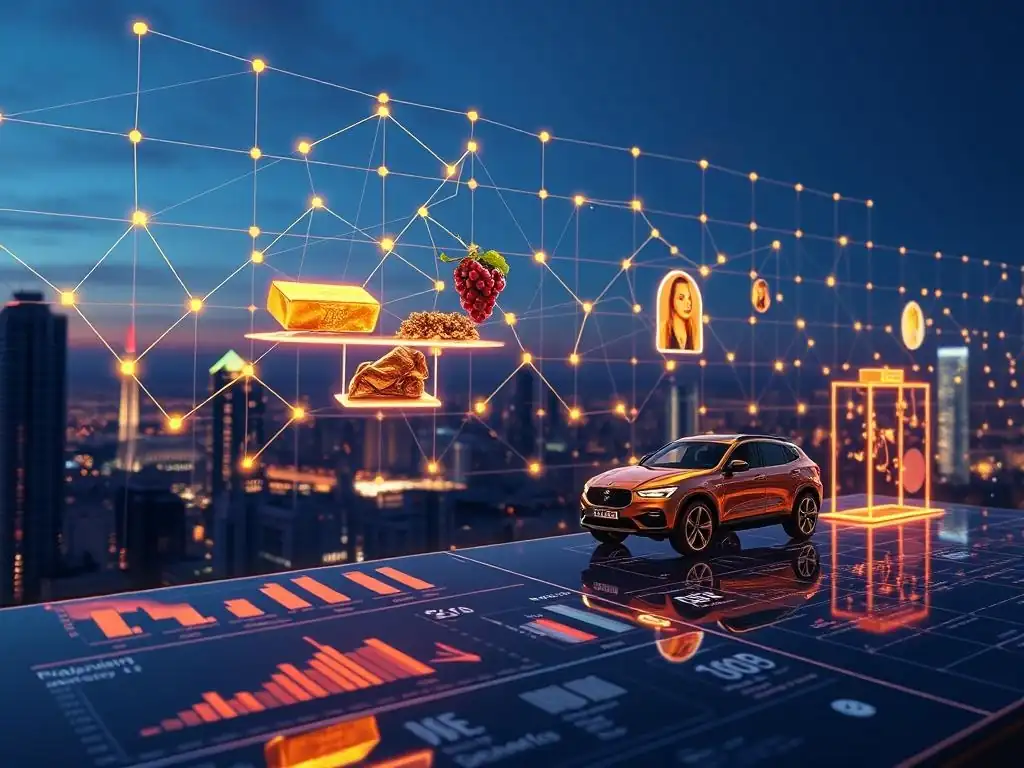
Welcome to Blockchain Trends, your gateway to understanding the revolutionary impact of blockchain technology.
Dive into the world beyond cryptocurrencies and explore how blockchain is reshaping industries. Today, we're unraveling the burgeoning trend of tokenized real-world assets and their increasing significance in Decentralized Finance (DeFi). How are these assets bridging the gap between traditional finance and the decentralized world? Let's explore the opportunities and challenges this exciting field presents, and discover the future of asset ownership.
Real-World Assets in DeFi: Expanding Decentralized Finance Beyond Crypto
- Introduction to Tokenized Real-World Assets (RWAs) in DeFi
- Benefits of Integrating Real-World Assets into DeFi
- Examples of Real-World Assets in DeFi
- Technical Infrastructure for RWA Tokenization
- Challenges and Risks of RWA Integration in DeFi
- Future Trends in Real-World Asset Tokenization
- Building a Robust and Sustainable RWA Ecosystem
- Case Studies: Examples of RWA Tokenization Initiatives
- The Impact of Blockchain Innovation on RWA Tokenization
- Conclusion: The Transformative Potential of RWAs in DeFi.
-
Frequently Asked Questions
- What are tokenized real-world assets (RWAs) in DeFi?
- How does tokenizing real-world assets benefit the DeFi ecosystem?
- What are some examples of real-world assets being tokenized for use in DeFi?
- What are the regulatory challenges associated with tokenizing RWAs?
- What is the future potential of tokenized real-world assets in DeFi?
- Final Reflection: Embracing the Tokenized Future
- Unlock DeFi's Untapped Potential: Start Tokenizing!
Introduction to Tokenized Real-World Assets (RWAs) in DeFi
Understanding the Integration of Traditional Assets into Decentralized Finance
Decentralized Finance (DeFi) has primarily operated within the confines of native crypto assets like cryptocurrencies and stablecoins. While this ecosystem has seen explosive growth, its scope remains limited compared to the vast landscape of traditional financial markets, which encompasses everything from real estate and commodities to equities and debt. The integration of real-world assets (RWAs) into DeFi signifies a pivotal expansion, aiming to bridge this gap by bringing tangible and traditional financial instruments onto blockchain networks. This process unlocks new possibilities for liquidity, utility, and broader participation within the decentralized ecosystem.
The potential market size unlocked by integrating RWAs is staggering. Consider the global real estate market, valued in the hundreds of trillions of dollars, or the global bond market, also measured in the tens of trillions. In contrast, the total market capitalization of cryptocurrencies, while significant, fluctuates in the low trillions.
Bringing even a small fraction of these traditional markets onto the blockchain through tokenization represents a potential influx of capital and use cases that could dwarf the current scale of DeFi. This integration is not merely about volume; it introduces asset classes with different risk profiles and yield characteristics, providing more sophisticated options for DeFi users.
The Role of Tokenization in Bridging Traditional and Decentralized Finance
Tokenization is the fundamental process enabling the integration of RWAs into DeFi. It involves creating a digital representation, or token, on a blockchain that represents ownership or a fractional stake in an underlying real-world asset. This token acts as a digital wrapper, making the illiquid, often cumbersome traditional asset more accessible and manageable within a digital environment. The token carries the rights and obligations associated with the underlying asset, governed by smart contracts and legal frameworks that connect the digital token to the physical or traditional asset.
This process serves as a crucial bridge between the legacy financial system and the nascent world of decentralized finance. By tokenizing real world assets, previously illiquid assets can become divisible and easily transferable. For example, a multi-million dollar piece of real estate or a valuable artwork can be fractionalized into thousands or millions of tokens, allowing a much broader range of investors to own a piece. This fractionalization, coupled with the 24/7 nature of blockchain markets, dramatically increases the potential liquidity of these assets, bypassing the traditional intermediaries and lengthy settlement times typically associated with their transfer.
Benefits of Integrating Real-World Assets into DeFi
Increased Capital Efficiency and Liquidity Provision
One of the most significant advantages of bringing real-world assets into DeFi is the substantial increase in capital efficiency. Traditional assets like real estate, private equity, or invoices are often illiquid, meaning they cannot be easily or quickly converted into cash without a significant loss in value. Tokenization transforms these static assets into dynamic, digital tokens that can be traded, lent, or used as collateral on blockchain platforms. This unlocks dormant capital tied up in these assets, making it available for productive use within the DeFi ecosystem or for the asset owners.
Furthermore, the tokenization of real world assets contributes directly to enhanced liquidity provision within DeFi protocols. By introducing a wider variety of assets that can serve as collateral for loans or be traded in decentralized exchanges, the overall liquidity of the ecosystem deepens. This means users can access capital more readily against their tokenized assets and execute trades with less price impact. The ability to use diverse tokenized real world assets as collateral, rather than being limited to volatile crypto assets, can also lead to more stable and reliable lending markets.
Enhanced Portfolio Diversification and Risk Management
For participants currently active in DeFi, portfolios are often heavily concentrated in cryptocurrencies, which can exhibit high volatility and correlation. Integrating tokenized real world assets provides much-needed diversification opportunities. Assets like tokenized real estate, bonds, or commodities typically have different risk profiles and are influenced by factors distinct from those driving crypto markets. Adding exposure to these asset classes via their tokenized forms within a DeFi portfolio can help smooth out volatility and potentially improve risk-adjusted returns.
This diversification capability allows users to build more robust and balanced investment strategies directly within decentralized platforms. Instead of needing separate accounts and processes for traditional investments, users can manage a blend of crypto and tokenized real world assets from a single interface. This simplifies portfolio management and enables sophisticated risk management techniques that were previously difficult or impossible for purely crypto-native portfolios, ultimately making DeFi a more mature and appealing financial ecosystem.
Improved Transparency and Traceability of Asset Ownership
Blockchain technology's inherent transparency is a major benefit when applied to real-world assets. Once an asset is tokenized, the ownership of the token, which represents a claim on the underlying asset, is recorded on an immutable, distributed ledger. This public record provides a clear, auditable history of who owns the token and when it was transferred, offering a level of transparency often lacking in traditional asset ownership records, which can be fragmented across various registries and intermediaries.
This enhanced transparency significantly improves traceability and reduces potential for fraud or disputes regarding ownership. Unlike paper deeds or private registers, the blockchain provides a single source of truth for the token's history. While the connection to the physical asset still requires legal frameworks and potentially custodians, the digital record of the token itself is verifiable by anyone on the network. This builds trust and efficiency in transactions involving tokenized real world assets, potentially reducing the need for extensive due diligence on ownership history.
Creation of Novel Financial Instruments and Applications
The tokenization of real world assets is not just about replicating existing financial products on the blockchain; it enables the creation of entirely new instruments and applications. Fractional ownership, as mentioned, allows for investment in high-value assets that were previously inaccessible to most investors. Beyond simple ownership tokens, complex financial structures like securitized revenue streams, royalty rights, or even intellectual property can be tokenized.
These novel tokenized real world assets can then be plugged into existing DeFi protocols in innovative ways. Imagine using a tokenized share of rental income from a property as collateral for a loan, or trading tokens representing future royalties from music or patents on a decentralized exchange. This expands the utility of DeFi far beyond simple lending and trading of cryptocurrencies, fostering innovation in financial product design and potentially unlocking new avenues for capital formation and investment.
Examples of Real-World Assets in DeFi
Tokenized Treasury Bills: Bringing Government Debt On-Chain
Tokenizing government debt, such as short-term U.S. Treasury bills, has emerged as a significant use case for tokenized real world assets in DeFi. These assets are generally considered among the safest investments globally and offer a yield. Bringing them onto the blockchain allows DeFi users to access this stable, low-risk yield source without leaving the decentralized ecosystem or navigating traditional brokerage accounts. Protocols achieve this by purchasing physical securities and then issuing corresponding tokens on a blockchain, representing ownership or a claim on the yield generated by these securities.
The appeal is clear: access to a stable, predictable yield, often tied to central bank rates, provides a crucial ballast in volatile crypto markets. Projects offering tokenized Treasuries have seen substantial growth, attracting hundreds of millions of dollars in assets under management (AUM). For instance, some platforms pool capital from DeFi users to purchase U.S. Treasury bills or money market fund shares held by regulated entities, issuing yield-bearing tokens in return. This effectively allows DeFi users to earn yield historically only available through traditional finance, directly on-chain.
Tokenized Corporate Bonds: Facilitating Decentralized Debt Markets
Corporate bonds represent another vast class of assets ripe for tokenization. Tokenizing corporate debt could allow companies to issue bonds directly on a blockchain, potentially reducing issuance costs and reaching a wider, global investor base. For investors, tokenized corporate bonds could offer easier access to corporate debt markets, fractional ownership of bonds, and increased liquidity compared to the often over-the-counter (OTC) nature of traditional bond trading, especially for smaller issuances.
While facing significant regulatory hurdles and requiring robust legal frameworks to link the token to the underlying debt obligation, the potential for decentralized corporate debt markets is substantial. Tokenization can facilitate more efficient secondary trading of corporate bonds and enable their use as collateral in DeFi lending protocols. This could particularly benefit small and medium-sized enterprises (SMEs) seeking alternative financing methods outside traditional banking channels, creating new avenues for capital formation by leveraging tokenized real world assets.
Tokenized Precious Metals: Providing Exposure to Safe-Haven Assets
Precious metals like gold and silver have long been considered safe-haven assets, retaining value during economic uncertainty. Tokenization allows investors to gain exposure to these assets within DeFi without the complexities of physical storage, insurance, or traditional brokerage accounts. Tokens representing gold or silver are typically backed by physical reserves held in secure vaults by custodians. Each token represents a specific quantity of the metal, verifiable through audits and transparency reports.
Owning tokenized gold, for example, provides investors with the benefits of gold ownership – diversification and a hedge against inflation – combined with the advantages of blockchain tokens: divisibility, ease of transfer, and the ability to use the asset within DeFi protocols. These tokens can be traded on decentralized exchanges or used as collateral in lending protocols, offering more flexibility than physical gold or even traditional gold ETFs. The transparency regarding the underlying reserves is a key factor in building trust in these tokenized real world assets.
Tokenized Carbon Credits: Enabling Decentralized Carbon Markets
Carbon credits, which represent a verified reduction or removal of greenhouse gas emissions, are becoming increasingly important in global efforts to combat climate change. Tokenizing carbon credits brings this environmental commodity onto the blockchain, creating a transparent and potentially more liquid market. Each token can represent one verified carbon credit, providing a clear digital record of its existence and transfer.
Tokenization addresses several inefficiencies in traditional carbon markets, such as double-counting, lack of transparency, and illiquidity. By creating tokenized real world assets for carbon credits, their ownership and retirement can be immutably recorded on a public ledger, enhancing transparency and trust. This also facilitates fractional ownership and easier trading, potentially increasing participation in carbon markets and incentivizing emission reduction efforts. Furthermore, smart contracts can enable programmatic use of carbon credits, for instance, automatically offsetting the carbon footprint of a transaction or activity.
Technical Infrastructure for RWA Tokenization
On-Chain Representation and Smart Contract Functionality
The technical foundation for tokenizing real world assets lies in their on-chain representation using blockchain tokens, typically leveraging standards like ERC-20 for fungible assets (like tokenized bonds or fractional shares) or ERC-721/ERC-1155 for non-fungible or unique assets (like a specific piece of real estate or artwork). These tokens serve as digital certificates of ownership or claim. The token contract stores essential metadata about the underlying asset, such as its type, issuer, terms (for debt), or a link to more extensive documentation stored off-chain (e.g., via IPFS).
Smart contracts are integral to managing the lifecycle and functionality of tokenized real world assets. They automate processes such as token issuance, transfer of ownership upon sale, distribution of yield (like interest payments or rental income) to token holders, and redemption processes where the token holder can claim the underlying asset (if applicable and feasible). Sophisticated smart contracts can also enforce rules related to the asset, such as transfer restrictions for regulated securities, ensuring compliance is embedded in the token's logic.
Oracle Integration for Real-Time Data Feeds
Bringing real-world assets onto the blockchain necessitates reliable mechanisms to connect the on-chain world with off-chain reality. This is where oracles become crucial. Oracles are services that provide smart contracts with external data. For tokenized real world assets, this data can include the market price of the underlying asset (e.g., the current price of gold or a bond), performance metrics (e.g., revenue generated by a tokenized business), or verification of certain real-world events related to the asset (e.g., completion of a construction phase for tokenized real estate development).
The accuracy and integrity of these data feeds are paramount. If an oracle provides incorrect or manipulated data, it can have severe consequences for RWA-backed DeFi protocols, potentially leading to incorrect valuations, unfair liquidations, or failure to execute smart contract functions correctly. Therefore, robust, decentralized oracle networks with multiple data sources and strong security measures are essential to ensure the reliability of tokenized real world assets and the protocols that utilize them.
Custodial and Non-Custodial Storage Solutions
While the token representing the RWA resides on the blockchain, the underlying physical or traditional asset often needs to be stored or managed in the real world. This requires secure custodial or, in some cases, non-custodial solutions. For physical assets like gold or real estate, a trusted third-party custodian is typically required to hold the asset securely and provide verification that it exists and matches the tokenized representation. Legal frameworks are then put in place to ensure that ownership of the token confers legal rights to the underlying asset or its value.
The nature of storage depends heavily on the asset type. For assets like invoices or future revenue streams, the "storage" might be more about legal agreements and verification of the underlying contract or claim rather than physical custody.
Non-custodial solutions for physical RWAs are less common due to the need to physically control the asset, but some models explore decentralized networks of custodians or rely purely on strong legal enforceability. Ensuring a robust and transparent link between the token and the underlying asset, whether through custody or legal structure, is critical for the credibility and value of tokenized real world assets.
Challenges and Risks of RWA Integration in DeFi
Regulatory Compliance and Legal Frameworks
Integrating real-world assets, which are subject to extensive regulation in traditional finance, into the largely unregulated or differently regulated DeFi space presents significant challenges. Tokenized real world assets can fall under existing securities laws, property laws, or other complex legal categories, depending on the asset and jurisdiction. Navigating this patchwork of regulations is difficult and requires careful legal structuring to ensure compliance.
The lack of clear legal frameworks specifically addressing tokenized assets in many jurisdictions creates uncertainty. Issues such as how token ownership is recognized legally, how to enforce rights related to the underlying asset through token ownership, and how to handle disputes or insolvencies in a cross-jurisdictional context need to be resolved. Furthermore, many RWAs require Know Your Customer (KYC) and Anti-Money Laundering (AML) checks, which are often at odds with the pseudonymous nature of public blockchains, necessitating identity solutions compatible with DeFi.
Security Risks and Smart Contract Audits
Like any blockchain application, protocols dealing with tokenized real world assets are exposed to security risks, including vulnerabilities in smart contracts, exploits, and hacks. Given that these protocols handle assets with significant real-world value, the stakes are extremely high. A vulnerability could lead to the loss of the underlying assets or the inability to redeem tokens for their real-world equivalent.
Rigorous security practices are paramount. This includes extensive smart contract audits by multiple reputable firms, penetration testing, and ongoing monitoring. However, even audited code can contain bugs, and the complexity of integrating off-chain processes (like custody and oracles) adds layers of potential failure points. Ensuring the security of the entire chain, from the token contract to the oracle feed and the custodial solution, is a complex but essential task for tokenized real world assets.
Scalability and Interoperability Issues
Bringing a large volume of RWA transactions and data onto existing blockchain networks can exacerbate scalability issues. High transaction throughput for assets traded frequently, or the need to process many data points from oracles, can lead to network congestion, high transaction fees (gas costs), and slow processing times, particularly on popular Layer-1 chains. This can make interacting with tokenized real world assets economically unfeasible for smaller transactions.
Furthermore, RWAs might be tokenized on different blockchains depending on the platform or issuer, leading to fragmentation. Assets on one chain might not be easily usable or tradable on another, limiting liquidity and creating silos. While cross-chain bridges and interoperability protocols aim to connect these networks, they introduce additional technical complexity and potential security vulnerabilities, posing risks to the movement and management of tokenized real world assets across different ecosystems.
Data Integrity and Oracle Reliability
The reliance on oracles to feed real-world data to smart contracts is a critical vulnerability. The value and functionality of many tokenized real world assets depend on accurate, timely, and reliable information about the underlying asset's status, price, or performance. If an oracle is compromised, malfunctions, or provides incorrect data, it can directly impact the on-chain representation and trigger incorrect actions by smart contracts, such as unfair liquidations in a lending protocol or incorrect yield distributions.
Ensuring the integrity of data feeds is an ongoing challenge. This requires decentralized oracle networks with robust validation mechanisms, redundant data sources, and incentives to ensure data providers are honest. The "oracle problem" is particularly acute for complex or illiquid RWAs where reliable, publicly available data feeds may not exist, making it harder to accurately represent their value and status on-chain and posing a significant risk to the ecosystem built around tokenized real world assets.
Future Trends in Real-World Asset Tokenization
Institutional Adoption and Regulatory Clarity
A major trend driving the future of tokenized real world assets is the increasing interest and involvement from traditional financial institutions. Banks, asset managers, and large corporations are exploring tokenization for various use cases, including streamlining operations, improving settlement, and creating new products. Their participation brings significant capital, expertise in regulated markets, and a push for the infrastructure needed for institutional-grade RWA tokenization.
Simultaneously, the growing prominence of tokenized RWAs is prompting regulators worldwide to pay closer attention. While current regulatory landscapes are often unclear, the future is likely to bring more specific guidelines and frameworks. This regulatory clarity, while potentially imposing restrictions, is crucial for fostering trust, enabling broader institutional participation, and providing legal certainty for the growth of the tokenized real world assets market.
Development of New DeFi Protocols for RWAs
As tokenized real world assets become more prevalent, there is a growing need for specialized DeFi protocols designed to handle their unique characteristics. Unlike crypto-native assets, RWAs may require features like identity verification for participants, mechanisms for handling legal recourse, variable yield structures, or integration with off-chain servicing processes. Future DeFi protocols will likely evolve to incorporate these requirements.
This includes the development of RWA-specific lending platforms that can assess creditworthiness based on real-world data, decentralized exchanges optimized for trading less liquid tokenized assets, and structured finance protocols that can handle complex RWA-backed securities. These innovations will expand the utility and accessibility of tokenized real world assets within the decentralized ecosystem.
Convergence of DeFi and Traditional Finance Infrastructure
The future of tokenized real world assets likely involves a convergence between decentralized finance and traditional financial infrastructure. This could manifest in various ways, such as traditional banks using blockchain technology for asset issuance and settlement, or DeFi protocols integrating with traditional financial services for custody, legal compliance, or accessing off-chain data.
Hybrid models, possibly involving permissioned blockchains for certain institutional RWA use cases or public blockchains interacting with regulated gateways, are likely to emerge. This convergence aims to combine the efficiency, transparency, and innovation of DeFi with the regulatory compliance, security, and scale of traditional finance, creating a more robust and widely adoptable ecosystem for tokenized real world assets.
Growth of Decentralized Autonomous Organizations (DAOs) for RWA Management
Decentralized Autonomous Organizations (DAOs) could play an increasingly important role in the governance and management of tokenized real world assets. DAOs can provide a decentralized structure for decision-making related to RWA pools, protocol parameters, or even the collective ownership and management of certain tokenized assets (like a tokenized portfolio of real estate or a fund).
Using DAOs for RWA management can enhance transparency in decision-making processes compared to traditional corporate structures. It allows token holders to have a say in how the underlying assets or the protocols interacting with them are managed. This adds a layer of decentralized governance to assets that originate from traditional, often centralized, systems, further aligning them with the core principles of decentralized finance and the future of tokenized real world assets.
Building a Robust and Sustainable RWA Ecosystem
Collaborative Efforts Between DeFi Projects and Financial Institutions
Building a successful and sustainable ecosystem for tokenized real world assets requires significant collaboration between native DeFi projects and traditional financial institutions. DeFi projects possess expertise in blockchain technology, smart contracts, and decentralized protocol design, while financial institutions bring deep knowledge of asset classes, risk management, legal structures, and regulatory compliance in traditional markets.
Partnerships can facilitate the origination of high-quality tokenized assets, ensure robust legal wrappers link tokens to underlying assets, and navigate complex regulatory landscapes. For example, a DeFi lending protocol might partner with a traditional credit assessment firm to evaluate real-world borrowers or collaborate with a bank to hold underlying securities. This synergy is crucial for scaling tokenized real world assets beyond niche applications.
Establishing Industry Standards for RWA Tokenization
The current landscape of RWA tokenization is somewhat fragmented, with different projects adopting varying technical implementations, legal approaches, and operational procedures. For the ecosystem to mature and achieve widespread adoption, establishing clear industry standards is essential. Standards can cover aspects such as:
- Technical token specifications: Ensuring interoperability and compatibility across different platforms.
- Legal frameworks: Standardizing the legal documentation linking tokens to underlying assets and defining token holder rights.
- Data reporting and oracles: Establishing reliable and verifiable methods for bringing off-chain data on-chain.
- Custody and servicing: Defining best practices for the secure handling and management of underlying assets.
Developing and adhering to these standards will reduce complexity, build confidence among potential users and institutions, and facilitate the seamless integration of tokenized real world assets across various platforms and jurisdictions.
Prioritizing Security and Risk Management Practices
Given the value and complexity involved, prioritizing robust security and comprehensive risk management is paramount for the long-term health of the RWA tokenization ecosystem. Security measures must extend beyond smart contract audits to encompass the entire process, including the security of oracle feeds, the integrity of custodial solutions, and the robustness of the legal frameworks.
Risk management frameworks must be tailored to the specific risks of each tokenized asset class, including credit risk for tokenized debt, market risk for volatile commodities or equities, operational risk related to custody and servicing, and legal/regulatory risk. Implementing stringent risk assessment, monitoring, and mitigation strategies is crucial to protect users and ensure the stability and reliability of protocols dealing with tokenized real world assets.
Case Studies: Examples of RWA Tokenization Initiatives
Ondo Finance: Tokenized U.S. Treasuries in DeFi
Ondo Finance is a prominent example of a protocol bringing traditional financial assets into DeFi. It focuses on offering tokenized versions of yield-bearing assets, particularly short-term U.S. Treasury bills and money market funds. Through partnerships with regulated entities, Ondo pools capital from DeFi users to invest in these traditional securities, and then issues blockchain tokens (like OUSG) that represent a share in these pools.
This approach provides DeFi users with access to the relatively stable and predictable yields of U.S. government debt, which are generally considered low-risk compared to native crypto yields. Users can hold these tokens in their decentralized wallets and potentially use them within the broader DeFi ecosystem (though specific protocol integrations are required). Ondo demonstrates a direct and successful model for tokenizing a major class of real world assets, bridging the gap between traditional fixed income markets and decentralized finance, managing significant assets under management in the process.
Goldfinch: Uncollateralized Lending with Real-World Credit Assessments
Goldfinch takes a different approach to integrating real-world assets into DeFi by focusing on credit. Instead of relying solely on crypto collateral, Goldfinch enables uncollateralized lending to businesses in emerging markets based on their real-world creditworthiness. The protocol connects capital providers (who supply stablecoins) with borrowers (businesses or financial institutions) after a decentralized network of "Auditors" performs diligence and approves borrower pools.
This model brings real-world credit risk and assessment into the DeFi lending landscape, which has historically been dominated by overcollateralized crypto loans. Borrowers receive capital on-chain and make repayments on-chain, with the terms governed by smart contracts. Goldfinch showcases how tokenized real world assets, in this case, claims on real-world loan repayments assessed via traditional credit principles, can expand the scope of decentralized finance beyond the crypto-native collateral constraint, facilitating access to capital for businesses globally.
Centrifuge: Bringing Real-World Invoices to DeFi
Centrifuge is a platform focused on tokenizing illiquid real-world assets, particularly invoices, supply chain finance assets, and real estate. Their protocol allows businesses to "mint" Non-Fungible Tokens (NFTs) that represent specific, verifiable real-world assets like an outstanding invoice owed by a creditworthy customer. These NFTs serve as tokenized real world assets.
These asset-backed NFTs can then be used as collateral to borrow stablecoins from liquidity pools on the Centrifuge platform (Tinlake) or integrated into other DeFi protocols. This process allows businesses to unlock working capital tied up in long payment cycles by financing their invoices on-chain. Centrifuge demonstrates how tokenization can bring diverse, illiquid real-world assets, representing future income streams or physical property, into the DeFi ecosystem to serve as productive collateral, providing a novel financing avenue for businesses.
The Impact of Blockchain Innovation on RWA Tokenization
Layer-2 Scaling Solutions for Increased Throughput
The scalability limitations of many Layer-1 blockchains pose a challenge for processing potentially high volumes of transactions involving tokenized real world assets. Layer-2 scaling solutions, such as optimistic rollups and zero-knowledge (ZK) rollups, offer a way to alleviate this. These technologies bundle transactions off-chain and submit compressed data or validity proofs back to the Layer-1 chain, significantly increasing transaction throughput and reducing costs.
For tokenized real world assets, which might involve frequent trading, yield distribution to many holders, or require rapid updates based on off-chain data, Layer-2 solutions are crucial. They make interactions more economically viable and faster, enabling a wider range of RWA types and use cases to be practically implemented on the blockchain. This increased efficiency is essential for scaling the RWA tokenization market to accommodate institutional volumes and retail adoption.
Decentralized Identity (DID) for KYC/AML Compliance
Regulatory requirements like Know Your Customer (KYC) and Anti-Money Laundering (AML) are often mandatory when dealing with regulated real-world assets, such as securities or real estate. These requirements traditionally clash with the pseudonymous nature of public blockchains. Decentralized Identity (DID) solutions offer a potential way to bridge this gap.
DIDs allow users to create self-sovereign digital identities and selectively share verifiable credentials (like proof of identity or accreditation status) without necessarily revealing sensitive personal information directly to every protocol. This enables compliance checks to be performed in a privacy-preserving manner, allowing only verified or accredited users to interact with specific tokenized real world assets that require such restrictions, thereby facilitating compliant RWA integration into DeFi.
Cross-Chain Interoperability for RWA Liquidity
Tokenized real world assets may reside on various blockchain networks, leading to fragmented liquidity. An investor holding tokenized real estate on one chain might want to use it as collateral on a lending protocol running on a different chain. Cross-chain interoperability solutions, including bridges and more advanced protocols, are vital for connecting these disparate ecosystems.
These solutions enable the seamless transfer and use of tokenized real world assets across different blockchains, aggregating liquidity and expanding their potential utility. While cross-chain bridges have faced security challenges, ongoing innovation in this area is focused on creating more secure and reliable methods for asset transfer. Improved interoperability is key to creating a truly global and liquid market for tokenized real world assets, allowing them to flow freely between different DeFi protocols and blockchain networks.
Conclusion: The Transformative Potential of RWAs in DeFi.
The integration of tokenized real world assets into Decentralized Finance represents a significant evolution, promising to expand the scope and impact of blockchain technology far beyond its initial crypto-native boundaries. By tokenizing assets ranging from stable government debt and corporate bonds to illiquid real estate and environmental credits, DeFi gains access to vast pools of capital, introduces much-needed portfolio diversification, and enables the creation of novel financial instruments.
While substantial challenges remain, particularly concerning regulatory compliance, legal enforceability, technical infrastructure reliability, and data integrity, the momentum towards RWA tokenization is undeniable. Collaborative efforts between traditional finance and DeFi, the development of industry standards, and ongoing innovation in blockchain technology, including Layer-2 scaling and decentralized identity, are paving the way for a robust and sustainable RWA ecosystem. Tokenized real world assets are poised to be a key driver in the convergence of traditional and decentralized finance, unlocking trillions in value and fundamentally transforming the global financial landscape.
Frequently Asked Questions
What are tokenized real-world assets (RWAs) in DeFi?
Tokenized RWAs are digital representations of physical or intangible assets like real estate, commodities, or intellectual property. They are brought onto a blockchain network to be used within DeFi protocols.
How does tokenizing real-world assets benefit the DeFi ecosystem?
Tokenization introduces greater liquidity to traditionally illiquid assets. It also offers diversification opportunities for DeFi users and connects traditional finance with the decentralized world.
What are some examples of real-world assets being tokenized for use in DeFi?
Examples include tokenized real estate shares, gold-backed tokens, and corporate bonds represented as digital tokens. These assets can be used as collateral or traded on decentralized exchanges.
What are the regulatory challenges associated with tokenizing RWAs?
Regulatory uncertainty is a major hurdle. Compliance with securities laws and KYC/AML regulations varies across jurisdictions, creating complexities for issuers and investors.
What is the future potential of tokenized real-world assets in DeFi?
Tokenized RWAs have the potential to revolutionize DeFi by unlocking trillions of dollars in value. They can bring stability and maturity to the ecosystem while fostering wider institutional adoption.
Final Reflection: Embracing the Tokenized Future
The journey of tokenized real-world assets into the realm of Decentralized Finance is no longer a futuristic vision, but a tangible reality reshaping the financial landscape. The potential for increased liquidity, accessibility, and efficiency that these assets unlock is undeniable, and their integration into DeFi protocols marks a significant step towards a more inclusive and democratized financial system. The growth we've witnessed thus far is just the beginning, a prelude to a future where traditional and decentralized finance seamlessly intertwine.
The ongoing evolution of tokenized real-world assets profoundly impacts how we perceive ownership and value. This shift towards fractionalized ownership and increased transparency resonates deeply with the core principles of decentralization, empowering individuals and fostering a more equitable financial ecosystem. As the barriers to entry diminish, more people can participate in markets previously reserved for institutional investors. The future of finance is decentralized, and tokenization is the key to unlocking its full potential.
This quote encapsulates the transformative power of tokenized assets, paving the way for a more accessible and efficient financial future.
Now, as you reflect on the possibilities presented by tokenized real-world assets, consider how you can contribute to this evolving landscape. Explore the opportunities, understand the risks, and embrace the potential for innovation. The future of finance is being built today, and your participation, whether as an investor, developer, or simply an informed observer, will shape the trajectory of this exciting new era. Let us all strive to build a more transparent, accessible, and equitable financial future, one token at a time.
Unlock DeFi's Untapped Potential: Start Tokenizing!
Thank you for exploring the exciting world of real-world assets in decentralized finance with us! We hope you now have a clearer understanding of how tokenization is transforming the financial landscape. It's time to turn your knowledge into action!
Here’s how you can get involved in the movement:
- Explore platforms that support asset tokenization. Find projects that align with your interests and learn about their tokenization processes firsthand.
- Share this article with your network! Help raise awareness about the potential of real-world assets and foster collaboration within the blockchain community.
- Consider joining relevant DeFi governance forums. Share your insights and help shape the future of asset integration in decentralized finance.
What type of real-world asset do you believe has the greatest potential to disrupt DeFi? What obstacles need to be addressed to make this a reality? Share your thoughts in the comments below!
Leave a Reply