
Community Resources for Smart Contract Auditors: Collaboration and Knowledge Sharing


Welcome to Blockchain Trends, your guide to understanding the revolutionary impact of blockchain technology!
Dive into a world beyond cryptocurrencies and discover how blockchain is reshaping industries through DeFi, enterprise applications, and cutting-edge decentralized systems. Are you ready to secure the future? This article is a comprehensive Smart Contract Auditor Resources Guide, offering invaluable community resources to help you navigate the complex world of smart contract security. Uncover the tools and collaborative networks that are essential for success in this rapidly evolving field – and learn how to contribute to a safer, more reliable blockchain ecosystem.
Community Resources for Smart Contract Auditors: Collaboration and Knowledge Sharing
- Smart Contract Auditor Resources Guide: A Comprehensive Overview
- Key Online Communities for Smart Contract Auditors
- Open-Source Tools and Platforms for Smart Contract Audits
- Knowledge Sharing Platforms and Repositories
- Building a Smart Contract Auditor Network: Mentorship and Peer Review
- Overcoming Challenges in Community Resource Utilization
- The Future of Community-Driven Smart Contract Auditing
- Smart Contract Auditor Resources: Checklist and Next Steps
-
Frequently Asked Questions
- What are the primary benefits of using community resources for smart contract auditors?
- How can a smart contract auditor contribute to and benefit from community platforms?
- What types of community resources are most valuable for smart contract auditors?
- How do community resources help address the evolving regulatory landscape of smart contracts?
- What is the role of collaboration within community resources for smart contract auditors?
- Final Reflection: Cultivating Trust Through Shared Knowledge
- Unlock Your Auditing Potential: Connect & Contribute!
Smart Contract Auditor Resources Guide: A Comprehensive Overview
Understanding the Need for Community Resources in Smart Contract Auditing
The landscape of smart contract security is constantly evolving, with new vulnerabilities and attack vectors emerging regularly. For a smart contract auditor, relying solely on personal knowledge and proprietary tools is insufficient to keep pace with this dynamic environment.
Community resources serve as vital conduits for up-to-date threat intelligence, shared learning experiences, and collaborative problem-solving, forming an essential part of any comprehensive smart contract auditor resources guide. Access to a broad base of knowledge, accumulated through the collective experience of numerous auditors and developers, significantly enhances an auditor's ability to identify complex and novel security flaws that might be missed in isolation.
The sheer volume and diversity of smart contracts deployed across various blockchain networks mean that no single auditor can encounter every possible vulnerability type. Community platforms provide a forum where auditors can discuss specific contract patterns, share findings from past audits, and learn from incidents that have occurred in the wild.
This shared pool of knowledge, encompassing everything from common reentrancy bugs to subtle logic errors or state manipulation vulnerabilities, is invaluable for refining auditing methodologies and staying ahead of malicious actors. Engaging with these communities ensures that auditors are not working in a vacuum but are connected to a global network of experts contributing to the collective security of decentralized systems.
The Importance of Collaboration in Identifying Smart Contract Vulnerabilities
Identifying vulnerabilities in smart contracts is often a complex task that benefits immensely from multiple perspectives. Collaboration among auditors and developers, facilitated by community platforms, allows for diverse viewpoints to be applied to a single piece of code, increasing the likelihood of finding subtle or deeply embedded flaws. Different auditors may specialize in different areas, such as low-level EVM execution, cryptographic vulnerabilities, or economic exploits, and combining these specializations through collaboration provides a more thorough security analysis than any individual could typically achieve alone. This collaborative approach is a cornerstone of effective smart contract auditing resources.
Real-world examples underscore the power of collaboration. Major incidents, like the infamous DAO hack in 2016 or the subsequent Parity wallet vulnerabilities, led to intense community-wide analysis and discussion, rapidly disseminating knowledge about reentrancy and multi-signature wallet risks.
While these were costly lessons, the post-mortem analysis and collaborative sharing of findings across forums, research papers, and community calls quickly solidified best practices and led to the development of new auditing tools and patterns. This historical perspective highlights how collective effort, rather than isolated work, drives significant advancements in smart contract security and forms a crucial part of any smart contract auditor resources guide.
Key Online Communities for Smart Contract Auditors
Smart Contract Security Forums and Discussion Boards: ConsenSys Diligence Forum
Online forums and discussion boards dedicated specifically to smart contract security provide structured platforms for auditors to engage in in-depth technical discussions, ask questions, and share insights. The ConsenSys Diligence community forum, for instance, is a well-regarded space where security researchers, auditors, and developers discuss vulnerabilities, secure coding patterns, and the use of auditing tools. Such forums often feature categorized discussions, making it easier to find information on specific topics like EVM assembly, formal verification, or token standard security.
These forums are not just Q&A platforms; they often host detailed analyses of recent hacks, propose solutions to emerging threats, and serve as places for community members to share war stories and lessons learned from challenging audits. For example, a discussion thread might break down the exploit vector used in a recent DeFi protocol hack, with members contributing their analysis of the vulnerable code snippet, the attack transaction details, and potential countermeasures.
This level of detailed, asynchronous discussion creates a persistent knowledge base that can be referenced by auditors looking for specific information on past incidents or complex vulnerability types, making it a valuable smart contract auditor resources guide section.
Blockchain and Smart Contract Auditing Subreddits: r/ethdev
Reddit hosts several active communities relevant to smart contract auditing, with r/ethdev being a prominent example focused on Ethereum development. While not exclusively for auditors, this subreddit attracts a large number of developers and security-conscious individuals who discuss Solidity, Vyper, EVM, gas optimizations, and security patterns. Auditors participating in such subreddits can gain insights into developer perspectives, common coding practices that might introduce vulnerabilities, and stay updated on the latest developments in the ecosystem they audit.
Beyond general development subreddits, more specialized ones might exist or emerge focusing specifically on smart contract security audits, vulnerability disclosures, or specific blockchain security topics. These platforms offer a blend of technical discussions, news sharing, and community interaction.
A post analyzing a security bug found in a popular library or a question about the security implications of a new EVM opcode can quickly attract comments from experienced auditors and developers, providing diverse viewpoints and accelerating the understanding of complex issues. While less formal than dedicated forums, they offer broad reach and exposure to current trends, complementing other smart contract auditor resources.
Discord and Telegram Groups for Real-time Collaboration
Discord and Telegram have become popular platforms for real-time communication and community building within the blockchain space, including for smart contract security professionals. Numerous groups exist where auditors, security researchers, and developers can chat live, ask quick questions, share urgent security alerts, and collaborate on immediate problems. The immediacy of these platforms is particularly useful when dealing with rapidly unfolding security events or needing quick feedback on a specific code pattern.
These groups often host specialized channels dedicated to different topics, such as specific auditing tools, formal verification, or discussions of recent exploits. Some auditing firms or security projects also host their own community groups on these platforms, providing direct access to their experts and resources. While the ephemeral nature of chat can make it harder to track long-term discussions compared to forums, the ability to get real-time input from peers around the globe makes these platforms indispensable for quick queries and staying instantly updated on critical security news, adding a dynamic layer to the available smart contract auditor resources.
Open-Source Tools and Platforms for Smart Contract Audits
Static Analysis Tools: Slither
Static analysis tools automatically analyze source code without executing it, identifying potential vulnerabilities, code smells, and insecure patterns based on predefined rules. Slither, developed by Trail of Bits, is a leading example in the smart contract security space, particularly for Solidity. It's an open-source framework written in Python that can detect a wide range of vulnerabilities, including reentrancy, access control issues, unchecked low-level calls, and state variable visibility problems. Its capabilities extend to providing detailed information about the contract's structure, control flow, and data dependencies.
Slither's extensibility allows auditors to write custom detectors tailored to specific project requirements or novel vulnerability types. The tool integrates well into CI/CD pipelines, enabling automated security checks during the development process. Reports generated by Slither provide actionable insights, pointing directly to the lines of code where potential issues exist. While static analysis cannot catch all types of vulnerabilities, especially those related to complex logic or economic interactions, tools like Slither are fundamental in providing a baseline security assessment and quickly identifying common flaws, serving as essential smart contract auditor resources.
Fuzzing Tools: Echidna
Fuzzing is an automated testing technique that involves feeding a program with a large volume of semi-random inputs to find crashes, assertion failures, or other unexpected behaviors that might indicate vulnerabilities. Echidna, also developed by Trail of Bits, is a powerful open-source fuzzer specifically designed for testing smart contracts. It works by repeatedly calling contract functions with generated inputs while monitoring a set of user-defined properties or invariants that the contract should always uphold.
Echidna is particularly effective at finding edge cases and state-dependent bugs that might be difficult to uncover through manual review or traditional unit tests. Auditors define properties, such as "the total supply of tokens should never exceed a certain value" or "only the contract owner can call this specific function," and Echidna attempts to find a sequence of calls and inputs that violates these properties.
The tool reports the specific sequence of transactions that triggered the failure, allowing auditors to pinpoint the exact conditions under which a bug occurs. Integrating fuzzing with tools like Echidna significantly enhances the depth of testing in a smart contract audit, making it a critical component in a comprehensive smart contract auditor resources guide.
Security Auditing Frameworks: OWASP Smart Contract Top 10
Frameworks and guidelines provide structured approaches and checklists for conducting smart contract security audits, ensuring comprehensive coverage of known vulnerability categories. The OWASP (Open Web Application Security Project) Smart Contract Top 10 is a prominent example, adapting the well-known OWASP Top 10 web application security risks to the specific context of smart contracts. This list highlights the ten most critical security risks for smart contracts, such as Reentrancy, Access Control, and Integer Overflows, based on their prevalence and potential impact.
Utilizing such a framework helps auditors systematically check for common and critical vulnerabilities across different projects. Each item in the OWASP Smart Contract Top 10 is typically accompanied by a description of the vulnerability, examples of vulnerable code, potential impacts, and mitigation strategies. While not exhaustive of all possible smart contract risks, it serves as an excellent starting point and a valuable checklist for auditors, particularly those newer to the field. Adhering to established frameworks like this ensures a baseline level of rigor and consistency in audits, contributing significantly to the quality of smart contract auditor resources.
Knowledge Sharing Platforms and Repositories
Smart Contract Security Best Practices Repositories: Smart Contract Weakness Classification and Test Cases (SWC Registry)
Structured repositories of known smart contract vulnerabilities, weaknesses, and associated test cases are invaluable resources for auditors learning about different attack vectors and how to identify them. The Smart Contract Weakness Classification and Test Cases (SWC Registry), maintained by the community, is a prime example.
It aims to provide a standardized list of security weaknesses specific to smart contracts, similar in concept to the Common Weakness Enumeration (CWE) for general software. Each SWC entry describes a specific vulnerability type, assigns it a unique ID (e.g., SWC-100 for Function Default Visibility), provides examples, and often links to relevant exploits or test cases.
Auditors can use the SWC Registry as a reference to understand the nuances of different vulnerability types, learn how they manifest in code, and find examples to test their understanding or configure their tools. The associated test cases, where available, provide concrete code snippets demonstrating the vulnerable pattern, which can be used for practice or integration into automated testing frameworks. This structured approach to classifying and documenting weaknesses makes the SWC Registry a fundamental part of any comprehensive smart contract auditor resources guide, aiding both learning and systematic auditing.
Vulnerability Databases: National Vulnerability Database (NVD)
While the National Vulnerability Database (NVD) primarily focuses on traditional software and hardware vulnerabilities, it is relevant to smart contract auditors when considering the broader ecosystem. Smart contracts do not operate in isolation; they interact with blockchain nodes, wallets, oracles, and other off-chain components, many of which can have traditional software vulnerabilities (CVEs - Common Vulnerabilities and Exposures) listed in the NVD. For example, a vulnerability in an Ethereum client (like Geth or Parity, historically) could potentially impact the execution environment of smart contracts or the security of nodes interacting with them.
Staying informed about vulnerabilities in the underlying blockchain infrastructure or related software is crucial for a holistic security assessment. While the NVD itself may not list smart contract code vulnerabilities directly (as they are application-specific rather than system-level CVEs), understanding the security posture of the execution environment, compilers, and tools used in the development and deployment process is part of a thorough audit. Monitoring relevant entries in databases like NVD, alongside blockchain-specific vulnerability resources, provides a broader context for security risks, complementing smart contract-specific resources.
Academic Research and Publications on Smart Contract Security
Academic research plays a significant role in advancing the field of smart contract security by exploring novel attack vectors, developing new analysis techniques, and proposing formal verification methods. Publications from universities and research institutions often delve into the theoretical underpinnings of smart contract security, analyze large datasets of deployed contracts to identify prevalent vulnerability patterns, or introduce cutting-edge tools and methodologies. Accessing and understanding this research is vital for auditors who want to stay at the forefront of the field and apply state-of-the-art techniques.
Numerous research papers have been published on topics ranging from empirical studies of smart contract vulnerabilities on Ethereum to formal methods for verifying complex contract properties or analyzing the security of specific DeFi protocols. Conferences like CCS, S&P (Oakland), USENIX Security, and financial cryptography conferences often feature tracks or papers specifically on blockchain and smart contract security. While sometimes dense, these publications provide deep technical insights and contribute significantly to the collective knowledge base, making them valuable, albeit sometimes less accessible, smart contract auditor resources for advanced practitioners.
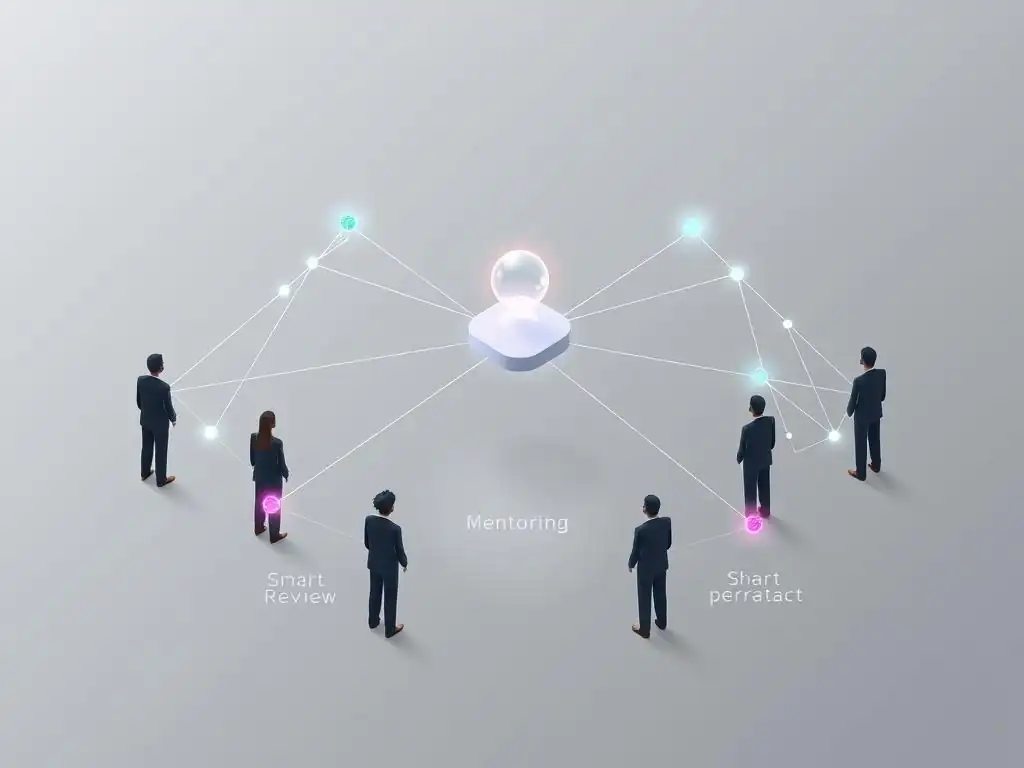
Building a Smart Contract Auditor Network: Mentorship and Peer Review
The Value of Mentorship Programs for Aspiring Auditors
Entering the field of smart contract auditing can be challenging due to the specialized technical knowledge required and the high stakes involved. Mentorship programs, either formal or informal, offer aspiring auditors invaluable guidance from experienced professionals. A mentor can help navigate the complex learning curve, recommend relevant resources, provide feedback on practice audits, and offer career advice. This personalized guidance is often more effective than relying solely on general documentation or online courses.
Mentors can share practical insights gained from years of auditing real-world contracts, covering topics like effective communication with clients, time management during audits, and strategies for dealing with novel or complex codebases. They can also introduce mentees to relevant community members and opportunities. Several security firms and community initiatives occasionally run structured mentorship programs, pairing newcomers with seasoned auditors. Even informal relationships built through community participation can evolve into mentorships, providing crucial support for developing the skills needed to become a proficient smart contract auditor, adding a vital human element to smart contract auditor resources.
Peer Review Processes: Improving Audit Quality and Accuracy
Peer review is a fundamental practice in smart contract auditing that significantly enhances the quality and accuracy of security assessments. Before an audit report is finalized and delivered to a client, it is standard practice for one or more other auditors within a firm or community to review the findings, methodology, and report itself. This process helps catch errors, ensures no critical vulnerabilities were missed, validates the severity assessments, and improves the clarity and completeness of the report.
Engaging in peer review, both as a reviewer and having one's work reviewed, is a continuous learning process. Reviewing others' audits exposes auditors to different coding patterns, vulnerability types they might not have encountered, and alternative auditing techniques. Having one's own work reviewed provides constructive feedback and identifies blind spots. Many auditing firms have established internal peer review protocols, but community-driven initiatives or collaborative projects can also incorporate peer review among participants, fostering a culture of shared responsibility and continuous improvement within the smart contract auditor resources landscape.
Participating in Bug Bounty Programs: Immunefi
Bug bounty programs offer a structured way for security researchers and auditors to find and report vulnerabilities in live smart contracts and decentralized applications (dApps) in exchange for rewards. Platforms like Immunefi specialize in web3 security bug bounties, connecting projects with a global community of whitehat hackers and auditors. Participating in these programs provides hands-on experience auditing deployed code, learning about real-world vulnerabilities, and practicing responsible disclosure.
Immunefi, for example, hosts bug bounty programs for numerous prominent blockchain projects, with potential rewards ranging from small amounts for low-severity issues up to millions of dollars for critical vulnerabilities in high-value protocols. For smart contract auditors, engaging with these platforms is not just about earning bounties; it's a way to test their skills against live systems, gain exposure to a wide variety of codebases and protocols, and build a reputation within the security community.
Successful vulnerability findings in bug bounties demonstrate practical auditing skills and contribute directly to improving the security of the decentralized ecosystem, making them a practical component of smart contract auditor resources.
Overcoming Challenges in Community Resource Utilization
Addressing Information Overload and Filtering Relevant Data
While community resources offer a wealth of information, they can also lead to information overload. With numerous forums, chat groups, repositories, and research papers, it can be challenging for a smart contract auditor to filter through the noise and identify the most relevant and valuable content. Different platforms have varying levels of signal-to-noise ratio, and staying updated across all of them is impractical. Effectively utilizing these resources requires developing strategies for managing the flow of information.
Auditors can mitigate information overload by being selective about the communities they join, focusing on those most relevant to their specialization or current projects. Utilizing notification filters in chat applications, subscribing to specific threads in forums, and using tools that aggregate security news can help streamline information intake. Regularly reviewing saved resources and curating personal knowledge bases are also important practices. The goal is not to consume everything, but to efficiently find the specific smart contract auditor resources needed at any given time.
Combating Misinformation and Ensuring Accuracy
The decentralized nature of many online communities means that information shared is not always vetted or accurate. Misinformation about vulnerabilities, exploits, or secure coding practices can spread quickly, potentially leading auditors down the wrong path or causing them to overlook real risks. It is crucial for auditors to critically evaluate information found in community discussions and cross-reference it with trusted sources.
Experienced auditors and well-established community members often play a role in correcting misinformation and steering discussions towards accurate technical analysis. Relying on reputable forums, official documentation from projects or security firms, and peer-reviewed research helps in verifying the accuracy of information. When encountering conflicting advice or analyses, seeking input from multiple trusted sources or attempting to verify the claims through independent research or testing is essential. Developing a discerning eye for reliable information is a key skill when utilizing community-driven smart contract auditor resources.
Promoting Ethical Practices and Responsible Disclosure
Community platforms are also spaces where discussions about ethical considerations and responsible disclosure practices take place. Finding a vulnerability in a smart contract, especially a deployed one, carries significant responsibility. Auditors must understand the ethical implications of their findings and adhere to responsible disclosure principles, which typically involve privately reporting the vulnerability to the project team before making it public, giving them time to fix the issue.
Community discussions and guidelines often reinforce the importance of responsible disclosure. Platforms like Immunefi also provide structured processes for reporting vulnerabilities ethically. However, the open nature of some communities means that discussions about vulnerabilities could potentially attract malicious actors. Auditors must be mindful of what information they share publicly, especially details that could be used to exploit a vulnerability. Promoting a strong ethical code and advocating for responsible disclosure within communities is vital for the health and trustworthiness of the smart contract auditor resources ecosystem.
The Future of Community-Driven Smart Contract Auditing
The Role of AI and Automation in Enhancing Collaboration
Artificial intelligence (AI) and automation are increasingly being integrated into smart contract security tools, and their role in enhancing community collaboration is likely to grow. AI-powered tools can assist auditors by automatically identifying common vulnerability patterns, suggesting potential areas of concern based on historical data, or even generating preliminary audit reports. This automation can free up auditors' time to focus on more complex, logic-based, or novel vulnerabilities that require human expertise.
Furthermore, AI could potentially be used to analyze vast amounts of data from community discussions, bug bounty reports, and vulnerability databases to identify emerging trends, connect seemingly unrelated issues, or even suggest relevant community members or resources based on an auditor's current task. Automated systems could also help in moderating forums, filtering noise, or summarizing lengthy technical discussions, making community resources more accessible and efficient. The synergy between human collaboration and AI-powered automation promises to significantly enhance the effectiveness of smart contract auditor resources in the future.
Decentralized Autonomous Organizations (DAOs) for Smart Contract Audits
Decentralized Autonomous Organizations (DAOs) represent a potential future model for coordinating smart contract auditing efforts and managing community resources. A DAO could potentially govern a pool of funds for bug bounties, manage a decentralized platform for peer review, or curate shared knowledge bases. Community members could participate in the governance of the DAO, voting on proposals related to funding security initiatives, setting standards, or resolving disputes.
While challenges remain in implementing and governing complex DAOs for critical functions like security, the model offers potential benefits such as increased transparency, community ownership, and decentralized decision-making. A security DAO could incentivize contributions to open-source tools, fund research into new security techniques, or establish a reputation system for auditors based on community reviews and successful findings. This decentralized approach could further democratize access to auditing resources and foster a more resilient and community-owned smart contract auditor resources ecosystem.
The Evolution of Smart Contract Security Standards and Best Practices
Community collaboration is a key driver in the evolution of smart contract security standards and best practices. As new vulnerabilities are discovered and analyzed within communities, and as new patterns and techniques for writing secure code emerge, these insights contribute to refining existing standards and creating new ones. Organizations like the Ethereum Foundation, ConsenSys, and various community groups actively publish and update documentation on secure development patterns, auditing guidelines, and vulnerability classifications, often incorporating feedback and findings from the community.
The continuous feedback loop between auditors encountering issues in the wild, researchers analyzing them, and the community discussing solutions ensures that standards remain relevant and up-to-date with the latest threats. Future developments might include more formalized community processes for proposing and ratifying security standards, perhaps integrated with decentralized governance mechanisms. This ongoing, community-driven refinement of knowledge is essential for maintaining the value and relevance of smart contract auditor resources in a rapidly changing technological landscape.
Smart Contract Auditor Resources: Checklist and Next Steps
Assessing Your Current Skillset and Identifying Knowledge Gaps
Before diving into community resources, take stock of your existing knowledge and skills. What programming languages do you know? Are you familiar with the EVM or other blockchain virtual machines? Do you understand common cryptographic primitives used in smart contracts? What auditing tools have you used? Be honest about areas where your knowledge is weak. Identifying these gaps is the first step in effectively leveraging smart contract auditor resources to improve.
Consider using self-assessment questionnaires or checklists provided by security firms or community guides (like this smart contract auditor resources guide) to evaluate your proficiency across different areas of smart contract security, such as static analysis, dynamic analysis, formal verification, token standards, and common vulnerability types. Based on your assessment, prioritize the resources and communities that can help you fill those specific knowledge gaps, whether it's learning a new tool, understanding a complex vulnerability, or gaining experience with a particular protocol type.
Joining Relevant Online Communities and Participating Actively
Once you've identified your learning goals, seek out the online communities that align with your interests and areas for improvement. Start with one or two platforms that seem most active and relevant, such as a specific Discord group focused on an auditing tool you want to learn, a forum discussing a particular blockchain, or a subreddit where security topics are frequently debated. Don't just lurk; actively participate by asking thoughtful questions, sharing your own insights (even if you're a beginner), and engaging with others' posts.
Active participation is key to building your network and maximizing the value you get from community resources. Offer help where you can, even if it's just pointing someone to a resource you recently found helpful. The more you engage, the more visible you become, and the more likely you are to connect with mentors, collaborators, or even potential employers. Consistent, positive interaction within these communities is a cornerstone of building your reputation as a smart contract auditor.
Contributing to Open-Source Projects and Sharing Your Expertise
A powerful way to solidify your understanding, gain practical experience, and give back to the community is by contributing to open-source smart contract security projects. This could involve contributing code to auditing tools like Slither or Echidna, adding test cases to the SWC Registry, improving documentation for security standards, or contributing to community-maintained lists of best practices or vulnerability examples.
Sharing your expertise, whether through writing blog posts about a vulnerability you found, giving talks at meetups, or simply explaining a concept to someone in a community chat, reinforces your own learning and helps others. Contributing to the collective smart contract auditor resources not only benefits the wider ecosystem but also builds your credibility and demonstrates your commitment to the field. Start small, perhaps by submitting a minor documentation fix or adding a simple test case, and gradually increase your contributions as you gain confidence and expertise.
Frequently Asked Questions
What are the primary benefits of using community resources for smart contract auditors?
Community resources offer increased collaboration and knowledge sharing, leading to better audit quality and faster learning curves for auditors. They provide access to diverse perspectives and updated information.
How can a smart contract auditor contribute to and benefit from community platforms?
Auditors can contribute by sharing audit findings, tools, and best practices, while benefiting from peer reviews, bug bounties, and learning about new vulnerabilities. This reciprocal exchange fosters a stronger ecosystem.
What types of community resources are most valuable for smart contract auditors?
Valuable resources include online forums, open-source audit tools, bug bounty programs, and knowledge bases that document common vulnerabilities and mitigation strategies. These help improve audit effectiveness.
How do community resources help address the evolving regulatory landscape of smart contracts?
Communities often discuss and interpret new regulations impacting smart contracts, offering insights on compliance strategies and helping auditors stay informed about changing legal requirements.
What is the role of collaboration within community resources for smart contract auditors?
Collaboration is crucial for identifying complex vulnerabilities, developing robust testing methodologies, and establishing industry-wide standards for smart contract security, ultimately strengthening the entire blockchain ecosystem.
The exploration of community resources for smart contract auditors underscores a critical truth: the security of decentralized systems hinges on collective expertise. The vulnerabilities exposed in smart contracts can have devastating consequences, making the availability of robust resources and collaborative platforms not just beneficial, but absolutely essential for fostering trust and reliability in the blockchain ecosystem.
The impact of readily accessible knowledge sharing on the quality of smart contract audits is undeniable. Witnessing the growth of collaborative platforms and the willingness of auditors to share their insights has been incredibly inspiring, reinforcing the belief that a rising tide lifts all boats. The strength of the team is each individual member. The strength of each member is the team.
- Phil Jackson. This sentiment perfectly encapsulates the spirit of the smart contract auditing community, where shared knowledge strengthens the entire field.
As we look to the future, let us all commit to actively participating in and contributing to these vital community resources. Share your knowledge, ask questions, and engage in constructive dialogue. By working together, we can elevate the standards of smart contract security and build a more secure and trustworthy decentralized future for everyone.
Unlock Your Auditing Potential: Connect & Contribute!
Thank you for exploring the vibrant landscape of smart contract auditing resources. We hope this article highlighted the importance of community and collaboration in enhancing your skills and knowledge. Now, it's time to turn that information into action.
Here are a few ways to get started:
- Participate actively in one of the online forums or communities mentioned and introduce yourself. Engaging with others is the fastest way to benefit from collective wisdom.
- Explore alternative platforms: Discover decentralized resource networks beyond mainstream online platforms.
- Share this article with fellow auditors who could benefit from these resources, helping to build a stronger, more collaborative auditing community.
Which resource from this article do you plan to explore today, and how do you think it will help you improve your auditing skills? Let’s start a conversation in the comments!
Leave a Reply