
Financial Inclusion for Refugees: BlockchainBased Solutions for Displacement and Vulnerability

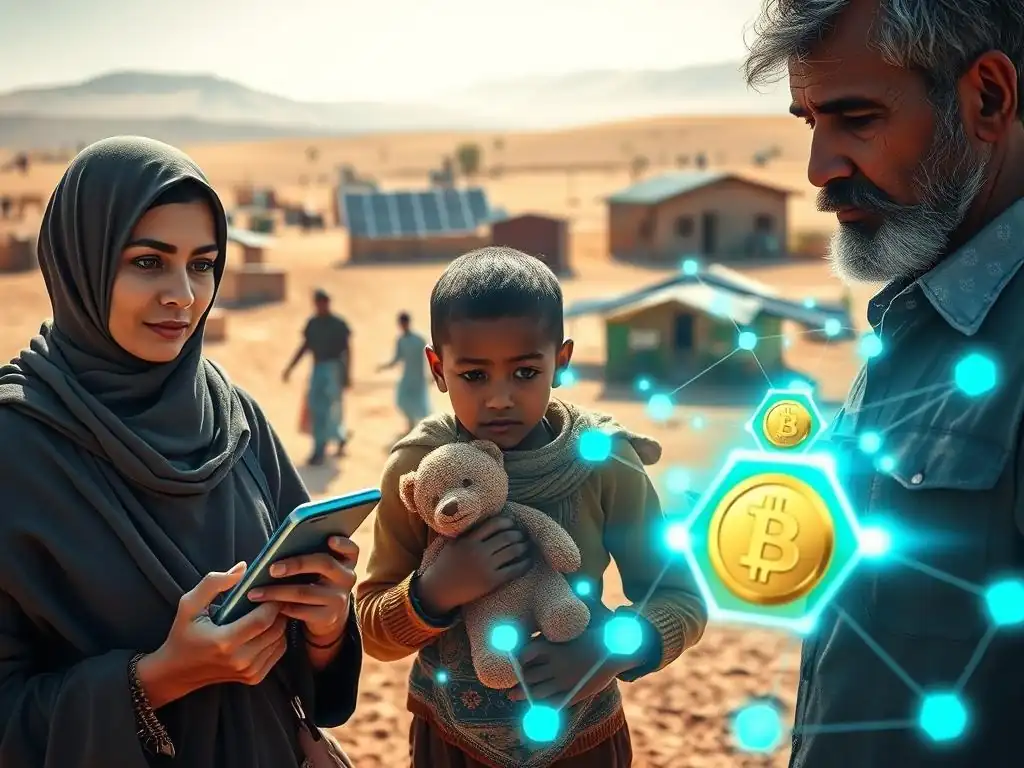
Welcome to Blockchain Trends, your guide to the evolving landscape of decentralized technologies!
Are you ready to discover how blockchain is revolutionizing more than just finance? This month, we delve into a critical application with our in-depth exploration of Blockchain refugee financial inclusion. Learn how this technology is being leveraged to empower displaced communities, providing secure identities and access to essential financial services. This article provides the first look into how blockchain can provide aid and relief for refugee financial inclusion.
What challenges exist, and what innovative solutions are emerging? Dive in to find out!
Financial Inclusion for Refugees: Blockchain-Based Solutions for Displacement and Vulnerability
- The Urgent Need for Refugee Financial Inclusion
- Blockchain Technology: A Catalyst for Refugee Financial Inclusion
-
Blockchain-Based Solutions for Refugee Financial Inclusion: A Detailed Overview
- Digital Identity Solutions for Refugees: Blockchain-Secured Identification
- Remittance Solutions for Refugees: Reducing Costs and Improving Efficiency with Blockchain
- Microfinance and Lending Platforms for Refugees: Utilizing Blockchain for Credit Access
- Aid Distribution Using Blockchain: Ensuring Transparency and Accountability
- Case Studies: Real-World Examples of Blockchain Refugee Financial Inclusion Initiatives
- Overcoming the Challenges and Risks of Blockchain Implementation for Refugees
- The Future of Blockchain Refugee Financial Inclusion: Scaling and Sustainability
- Conclusion: Blockchain as a Tool for Empowerment and Resilience in Refugee Communities
-
Frequently Asked Questions
- What are the main challenges refugees face regarding financial inclusion?
- How can blockchain technology help improve financial inclusion for refugees?
- What are some specific examples of blockchain-based solutions being used to support refugees?
- What are the regulatory hurdles and risks associated with implementing blockchain solutions for refugees?
- What does the future hold for blockchain-based financial inclusion for refugees?
- Final Reflection: Empowering Futures Through Blockchain
- Empower Refugees: Build a More Inclusive Future!
The Urgent Need for Refugee Financial Inclusion
Understanding the Financial Exclusion of Refugees: Challenges and Barriers
Refugees and displaced populations face significant obstacles in accessing essential financial services, a critical component of rebuilding their lives and achieving self-reliance. A primary barrier is often the lack of universally accepted identification documents. When fleeing conflict or disaster, vital papers are frequently lost or left behind, leaving individuals without the proof of identity required by banks and financial institutions. This exclusion extends beyond basic banking; it impacts access to remittances, credit, insurance, and even government or aid assistance.
Furthermore, refugees often reside in temporary settlements or remote areas with limited physical infrastructure, including bank branches or ATM networks. Cultural and linguistic barriers can also complicate interactions with financial service providers, while discriminatory practices or policies may further marginalize displaced groups.
Without formal financial access, refugees are forced to rely on informal and often insecure methods, making them vulnerable to exploitation, theft, and hindering their ability to save, invest, or participate effectively in the local economy. Reports indicate that globally, millions of displaced people remain unbanked or underbanked, perpetuating a cycle of dependency and limiting their potential for empowerment.
The Role of Financial Services in Refugee Empowerment and Resilience
Access to financial services is not merely about transactions; it is a fundamental enabler of empowerment and resilience for refugees. Having a safe place to store money, like a bank account or digital wallet, protects assets from loss or theft, which is particularly crucial in unstable environments. The ability to send and receive remittances securely and affordably allows refugees to support family members back home or receive vital funds from abroad, reducing reliance on aid and fostering a sense of connection.
Moreover, access to credit, even micro-loans, can enable refugees to start small businesses, purchase essential goods, or invest in education or skills training, paving a path towards economic independence. Insurance products, though often overlooked, can provide a safety net against unforeseen events like illness or natural disasters. Ultimately, financial inclusion integrates refugees into the formal economy, enhances their dignity, and provides them with the tools needed to navigate their challenging circumstances, build resilience, and contribute positively to their host communities.
Blockchain Technology: A Catalyst for Refugee Financial Inclusion
Exploring Blockchain's Potential to Address Refugee Financial Needs
Blockchain technology, with its distributed, immutable, and transparent ledger system, offers a compelling paradigm shift in how financial services can be delivered, holding significant promise for blockchain refugee financial inclusion. The inherent characteristics of blockchain can directly tackle some of the most persistent barriers faced by displaced populations. For instance, the ability to create secure, verifiable digital identities on a blockchain can bypass the need for traditional paper documents, which are often unavailable or unrecognized.
Furthermore, blockchain's peer-to-peer nature and lower transaction costs, especially for cross-border payments, can make remittances more affordable and accessible for refugees. It can also facilitate the creation of decentralized platforms for microfinance and aid distribution, increasing transparency and accountability. By providing a secure and accessible infrastructure, blockchain can empower refugees to manage their assets, access credit, and participate in economic activities, ultimately fostering greater self-reliance and resilience outside traditional, often inaccessible, financial systems.
Key Features of Blockchain for Financial Empowerment: Transparency, Security, and Accessibility
Several core features of blockchain technology make it particularly relevant for promoting financial empowerment among vulnerable populations like refugees. Transparency is a key benefit; transactions recorded on a public or permissioned blockchain are visible to authorized parties, reducing opportunities for corruption and ensuring accountability, especially in aid distribution. This verifiable ledger builds trust among participants and stakeholders.
Security is another crucial feature. Blockchain uses cryptographic principles to secure transactions and link blocks of data, making it extremely difficult to alter past records. This immutability provides a high level of data integrity and protects users from fraud. Finally, accessibility is enhanced because blockchain-based services can often be accessed via mobile phones, which are increasingly prevalent even in refugee settings, bypassing the need for physical bank branches or extensive infrastructure. These combined features create a robust foundation for innovative solutions aimed at blockchain refugee financial inclusion.
Blockchain-Based Solutions for Refugee Financial Inclusion: A Detailed Overview
Digital Identity Solutions for Refugees: Blockchain-Secured Identification
Overcoming the Challenges of Identity Verification for Displaced Populations
One of the most significant hurdles for refugees seeking financial services, employment, or even basic aid is the lack of recognized identification. Traditional identity systems rely on government-issued documents like passports or national ID cards, which are often lost, destroyed, or inaccessible during forced displacement. Without proof of identity, refugees cannot open bank accounts, register for mobile money services, access credit, or formally participate in the economy, leaving them in a precarious and vulnerable state.
The absence of formal identity also complicates efforts by aid organizations and governments to accurately track and assist displaced individuals, leading to inefficiencies and potential aid diversion. This fundamental lack of verifiable identity is a root cause of financial exclusion, trapping refugees in informal systems that offer little security or opportunity for growth. Addressing this identity gap is a critical first step towards achieving blockchain refugee financial inclusion.
Blockchain-Based Digital IDs: Enhancing Access to Financial Services
Blockchain technology offers a promising solution to the identity crisis faced by refugees through the creation of self-sovereign or decentralized digital identities. In this model, an individual's identity attributes (like biometric data, family links, educational history, or work experience) are securely stored and managed by the individual themselves, often anchored to a blockchain. This creates a tamper-proof and verifiable digital record that does not rely on a single, centralized authority or physical document.
Organizations and service providers, including financial institutions, can then verify specific identity claims (e.g., "Is this person over 18?" or "Has this person received aid previously?") with the user's permission, without needing to access the full identity profile.
This allows refugees to establish trust and prove their identity to access services like opening a digital wallet, receiving remittances, or applying for micro-loans, even without traditional documents. Projects are exploring how to link biometric data (like iris scans or fingerprints) recorded at registration points to a blockchain ID, providing a secure and persistent form of identification that travels with the refugee, significantly advancing blockchain refugee financial inclusion.
Remittance Solutions for Refugees: Reducing Costs and Improving Efficiency with Blockchain
The High Cost of Traditional Remittance Services for Refugees
Sending and receiving money across borders is a lifeline for many refugees, enabling them to support family members left behind or receive financial help from relatives or aid organizations abroad. However, traditional remittance services are often prohibitively expensive, especially for the small transaction amounts typical of refugee transfers. Global averages show remittance costs often exceeding 6-7% of the transaction value, and can be much higher in corridors relevant to refugees due to limited competition and complex intermediary networks.
Beyond the cost, traditional methods can be slow, taking days for funds to arrive, and access points (like agent locations) may be scarce or difficult to reach in areas where refugees reside. The reliance on informal channels, as a result of these barriers, exposes refugees to risks of theft, fraud, and unfavorable exchange rates. Reducing the cost and increasing the efficiency of remittances is a vital aspect of improving the financial well-being and promoting blockchain refugee financial inclusion.
Blockchain-Enabled Remittances: Faster, Cheaper, and More Transparent Transfers
Blockchain technology has the potential to significantly reduce the cost and increase the speed of cross-border remittances by cutting out traditional intermediaries like correspondent banks. By utilizing cryptocurrencies or stablecoins on a blockchain network, funds can be transferred directly from sender to receiver with much lower fees, often a fraction of the cost of traditional services. Transactions can settle in minutes or hours, rather than days.
Several companies and initiatives are piloting or deploying blockchain-based remittance services specifically targeting vulnerable populations. These platforms often leverage mobile technology, allowing refugees to receive funds directly into a digital wallet on their phone. The transparency of the blockchain ledger also allows both senders and receivers, as well as aid organizations, to track the movement of funds, adding a layer of accountability and trust. While volatility of some cryptocurrencies remains a concern, the use of stablecoins pegged to fiat currencies can mitigate this risk, making blockchain-enabled remittances a powerful tool for blockchain refugee financial inclusion.
Microfinance and Lending Platforms for Refugees: Utilizing Blockchain for Credit Access
The Lack of Access to Credit for Refugees and its Economic Impact
Access to credit is fundamental for economic opportunity, enabling individuals to start or expand businesses, pay for education, or cover emergency expenses. Refugees, however, face immense challenges in accessing formal credit. The lack of recognized identity, absence of credit history in the host country, and perceived high risk by traditional lenders make obtaining loans nearly impossible. This credit gap severely limits their ability to invest in income-generating activities or improve their living conditions.
Without access to formal lending, refugees may turn to informal lenders who charge exorbitant interest rates, leading to debt traps. This lack of financial leverage hinders their path towards self-sufficiency and perpetuates reliance on aid. Addressing this credit barrier is essential for empowering refugees to become active economic participants and is a key area where blockchain refugee financial inclusion solutions can make a significant impact.
Blockchain-Powered Microfinance: Expanding Lending Opportunities and Reducing Risk
Blockchain technology can facilitate innovative microfinance and lending models tailored for refugees. By leveraging blockchain-based digital identities and potentially incorporating alternative data (like repayment history from previous aid disbursements or participation in community savings groups) recorded on a distributed ledger, platforms can build a verifiable reputation or credit score for individuals who lack traditional credit history. This allows lenders, whether decentralized protocols or traditional microfinance institutions using blockchain infrastructure, to assess risk more effectively.
Decentralized lending platforms built on blockchain can also pool capital from a wider network of lenders globally, potentially offering more favorable terms. Smart contracts can automate loan disbursement and repayment tracking, reducing administrative costs and increasing efficiency. Furthermore, linking loans to specific verifiable activities recorded on the blockchain (e.g., purchasing supplies for a registered business) can add transparency and accountability. While still nascent, blockchain-powered microfinance holds promise for unlocking credit access for refugees, fostering entrepreneurship, and driving blockchain refugee financial inclusion.
Aid Distribution Using Blockchain: Ensuring Transparency and Accountability
Challenges in Traditional Aid Distribution Methods
Delivering humanitarian aid effectively and efficiently to displaced populations is fraught with challenges. Traditional systems often involve multiple intermediaries, complex logistics, and manual processes, leading to delays, high administrative costs, and a lack of transparency. It can be difficult for aid organizations and donors to track whether funds or goods reach the intended beneficiaries, increasing the risk of diversion, corruption, or inefficiency.
Furthermore, traditional aid distribution can be cumbersome for refugees, requiring them to travel to specific distribution points, potentially facing security risks or long queues. Cash aid, while flexible, can also be insecure to carry in large amounts and difficult to track. These inefficiencies and risks diminish the impact of aid and erode trust among beneficiaries, donors, and implementing agencies. Improving the delivery mechanism is crucial for maximizing the effectiveness of humanitarian efforts and is a prime candidate for blockchain refugee financial inclusion applications focused on aid.
Blockchain-Based Aid Distribution: Tracking and Verifying Aid Delivery
Blockchain technology can revolutionize aid distribution by creating a transparent, secure, and efficient system. By issuing aid vouchers or tokens on a blockchain, organizations can disburse assistance directly to refugees' digital wallets, accessible via mobile phones. When a refugee uses these tokens to purchase goods at registered vendors, the transaction is recorded on the blockchain, creating an immutable audit trail.
This allows aid agencies and donors to track exactly where and when aid was spent, verifying delivery to the intended beneficiaries and significantly reducing the risk of fraud or diversion. The World Food Programme's Building Blocks project, for instance, used blockchain to distribute cash assistance to Syrian refugees in Jordan, processing millions of transactions and saving millions of dollars in fees. This level of transparency and accountability builds trust among all stakeholders and ensures that aid resources are used effectively, demonstrating a powerful application of blockchain refugee financial inclusion in a humanitarian context.
Case Studies: Real-World Examples of Blockchain Refugee Financial Inclusion Initiatives

Building Blocks: World Food Programme's Blockchain for Syrian Refugees in Jordan
Problem Addressed
The World Food Programme (WFP) was providing cash assistance to Syrian refugees in Jordan through traditional banking and mobile money channels. This involved significant transaction fees paid to financial service providers, estimated at around $150,000 per month, and lacked granular transparency for tracking how the funds were used at the point of sale. Managing beneficiary data across different systems was also complex and costly.
The challenge was to find a more cost-effective, secure, and transparent way to deliver aid directly to refugees while ensuring accountability and financial inclusion. The existing system, while functional, incurred substantial overhead and didn't fully leverage technology for efficiency gains that could free up more resources for direct assistance.
Blockchain Implementation
WFP developed the Building Blocks project, utilizing a private, permissioned blockchain network built on the Ethereum platform (initially, later evolving). Instead of traditional cash transfers, refugees' iris scans (used for identity verification at iris-enabled ATMs and POS terminals) were linked to accounts on the blockchain. When a refugee purchased food items at WFP-contracted supermarkets, their identity was verified via iris scan, and the transaction was recorded directly on the blockchain ledger, debiting their allocated aid amount.
This system integrated with the existing UN biometric identification system (handled by UNHCR) and payment systems, creating a seamless process from identity verification to transaction recording. The blockchain served as the secure, transparent ledger of all aid disbursements and expenditures within the participating stores, bypassing traditional banks for the final transaction recording and settlement.
Results and Impact
Building Blocks successfully processed over $170 million in aid transfers to more than 100,000 Syrian refugees in Jordan between 2018 and 2020. The project significantly reduced transaction costs, reportedly saving WFP millions of dollars annually that could be redirected to provide more food assistance. The blockchain provided an immutable and transparent record of every transaction, enhancing accountability for both WFP and donors.
Furthermore, the system allowed WFP to gain valuable insights into spending patterns, helping to optimize aid programs. While not a full financial inclusion solution (it was primarily for food/cash aid redemption), it provided refugees with a secure, digital means to access their allocated assistance and demonstrated the potential of blockchain for humanitarian aid, laying foundational infrastructure that could potentially be expanded for broader blockchain refugee financial inclusion.
BanQu: Connecting Refugee Farmers to Global Supply Chains in Uganda
Problem Addressed
Refugee farmers in settlements like those in Uganda often cultivate crops but struggle to access formal markets or global supply chains. They lack verifiable identities, land ownership documents, and transaction histories, making it difficult to prove their legitimacy, secure fair prices for their produce, or access financial services like loans to invest in their farms. This exclusion keeps them in poverty and hinders their ability to become self-sufficient contributors to the economy.
Connecting these farmers directly to larger buyers and providing them with a traceable economic passport was the core challenge. The informal nature of their transactions and lack of verifiable data prevented them from building economic relationships with formal businesses.
Blockchain Implementation
BanQu implemented a blockchain-based platform to create economic identities and track transactions for refugee farmers in Uganda. Farmers are registered on the platform, creating a digital profile linked to their identity. When they sell crops to partner organizations or businesses (like NGOs or larger agricultural buyers), the transaction details (e.g., type of crop, quantity, price, date) are recorded on the BanQu blockchain ledger.
This creates an immutable record of their economic activity. The platform also allows for tracking the origin of crops, providing supply chain transparency. Farmers can access their transaction history via mobile phone, effectively building a verifiable economic passport and transaction history that can be shared (with permission) with potential buyers or financial institutions.
Results and Impact
BanQu has onboarded tens of thousands of refugees and smallholder farmers in various countries, including Uganda. By providing a verifiable transaction history on the blockchain, farmers gain visibility within supply chains and can prove their sales volumes and reliability to buyers. This has helped some farmers secure better prices for their produce and establish longer-term relationships with formal businesses.
Crucially, the verifiable transaction data serves as a form of credit history, enabling some farmers to access micro-loans or other financial services from partner institutions that would have previously denied them based on lack of traditional documentation. The platform demonstrates how blockchain can bridge the gap between informal refugee economies and the formal financial sector, significantly advancing blockchain refugee financial inclusion by creating traceable economic identities and histories.
Overcoming the Challenges and Risks of Blockchain Implementation for Refugees
Regulatory Considerations and Compliance
Implementing blockchain solutions for financial inclusion among refugees is not without regulatory hurdles. Jurisdictions have varying regulations regarding digital assets, identity verification (Know Your Customer - KYC, Anti-Money Laundering - AML), data privacy, and cross-border data transfer. Blockchain projects must navigate these complex legal landscapes, which can be particularly challenging when operating across multiple countries involved in refugee movements.
Ensuring compliance with KYC/AML rules is critical for financial services but can be difficult when users lack traditional identity documents. Solutions must find ways to verify identity using alternative, yet legally acceptable, methods. Furthermore, the regulatory status of cryptocurrencies or tokens used in aid or financial services can be ambiguous, requiring careful legal structuring and engagement with regulators to ensure legality and sustainability. Addressing these regulatory complexities is vital for the successful and widespread adoption of blockchain refugee financial inclusion initiatives.
Data Privacy and Security Concerns
While blockchain is inherently secure due to its cryptographic nature, implementing solutions for vulnerable populations raises specific data privacy and security concerns. Refugee data is highly sensitive; information about their location, identity, family members, or financial transactions could be used against them by hostile actors or governments. Ensuring that blockchain implementations protect this data from unauthorized access or misuse is paramount.
Designing systems with privacy in mind, using techniques like zero-knowledge proofs or ensuring that sensitive personal data is not stored directly on a public blockchain but rather linked securely from off-chain storage, is critical. Furthermore, the responsibility for data management and ownership in decentralized systems needs careful consideration. Projects must adhere to relevant data protection regulations (like GDPR, if applicable) and build systems that prioritize the safety and privacy of refugees, ensuring that efforts towards blockchain refugee financial inclusion do not inadvertently expose them to greater risk.
Digital Literacy and Access to Technology
A significant practical challenge is ensuring that refugees have the necessary digital literacy and access to technology to utilize blockchain-based financial services. While mobile phone penetration is increasing globally, access to smartphones, reliable internet connectivity, and electricity can still be limited in some refugee settings. Even with access, many refugees may lack the experience or knowledge to use digital wallets, manage private keys, or understand the concepts behind blockchain.
Solutions must be designed with user-friendliness as a priority, potentially utilizing simple interfaces or leveraging existing technologies like basic feature phones where smartphones are not prevalent. Providing adequate training and support to refugees on how to use these new tools securely is essential for adoption and preventing errors that could lead to loss of funds or identity compromise. Bridging the digital divide is a necessary step for blockchain refugee financial inclusion to reach its full potential.
The Future of Blockchain Refugee Financial Inclusion: Scaling and Sustainability
Potential for Wider Adoption and Collaboration
The successful pilots and initiatives like WFP's Building Blocks and BanQu have demonstrated the tangible benefits of using blockchain for aspects of refugee financial inclusion. The potential for wider adoption is significant as the technology matures and becomes more accessible. As more organizations, governments, and private sector entities become familiar with blockchain's capabilities, collaboration can accelerate the development and deployment of integrated solutions.
Scaling these initiatives requires moving beyond individual projects to creating interoperable platforms that can serve multiple needs – from identity and aid distribution to remittances and microfinance – across different locations and organizations. This necessitates collaboration between NGOs, UN agencies, host governments, financial institutions, and technology providers to build shared infrastructure and standards. The potential exists to impact millions more displaced individuals globally if these solutions can be scaled effectively, driving broader blockchain refugee financial inclusion.
The Role of Governments, NGOs, and the Private Sector
Realizing the full potential of blockchain refugee financial inclusion requires coordinated efforts from multiple stakeholders. Governments in host countries play a crucial role in creating enabling regulatory environments, recognizing digital identities, and integrating blockchain solutions into national financial infrastructures where appropriate. Their acceptance and support are vital for the sustainability and legality of these initiatives.
Non-governmental organizations (NGOs) and international bodies like the UN can act as implementers, trusted intermediaries, and advocates, leveraging their on-the-ground presence and understanding of refugee needs. They are essential for community engagement, digital literacy training, and ensuring solutions are designed ethically and responsibly. The private sector, including technology companies, financial institutions, and blockchain startups, brings the technical expertise, innovation, and capital needed to build and scale robust platforms. Partnerships between these sectors are key to developing comprehensive and sustainable blockchain solutions for refugee financial empowerment.
Building Sustainable and Scalable Blockchain Solutions for Refugee Financial Empowerment
For blockchain solutions to have a lasting impact on refugee financial inclusion, they must be sustainable and scalable. This means designing models that are cost-effective to operate, do not rely solely on grant funding indefinitely, and can adapt to changing circumstances. Sustainable models might involve partnerships with local financial institutions, leveraging existing mobile networks, or developing fee structures that are affordable for refugees while covering operational costs.
Scalability involves building platforms that can handle a large number of users and transactions across diverse geographic locations and contexts. This requires robust technical architecture, standardized protocols, and modular designs that can be adapted to different humanitarian settings. Focusing on interoperability with existing systems and ensuring solutions are user-friendly and culturally appropriate will be critical for achieving widespread adoption and building truly empowering and sustainable blockchain refugee financial inclusion.
Conclusion: Blockchain as a Tool for Empowerment and Resilience in Refugee Communities
The Transformative Potential of Blockchain for Refugee Financial Inclusion
Blockchain technology is emerging as a powerful tool with the potential to significantly enhance financial inclusion for refugees and displaced populations. By addressing fundamental barriers such as lack of identity, high transaction costs for remittances, limited access to credit, and inefficiencies in aid distribution, blockchain-based solutions can provide secure, transparent, and accessible pathways to financial services.
Initiatives leveraging digital identity, streamlined remittances, innovative microfinance models, and accountable aid delivery demonstrate the tangible benefits already being realized. The core features of blockchain—transparency, security, and accessibility—are uniquely suited to meet the specific needs and vulnerabilities of displaced individuals, offering them a chance to regain control over their financial lives.
The journey towards comprehensive blockchain refugee financial inclusion is still underway, facing challenges related to regulation, data privacy, and digital literacy. However, the progress made in various pilot projects and the increasing collaboration among humanitarian organizations, governments, and the private sector highlight a promising future. Blockchain is not a panacea, but when applied thoughtfully and ethically, it can dismantle systemic barriers and provide refugees with the essential financial tools needed to build resilience, achieve self-reliance, and contribute meaningfully to their host communities.
Call to Action: Fostering Innovation and Collaboration for a More Inclusive Future
To fully unlock the transformative potential of blockchain refugee financial inclusion, concerted effort and collaboration are required from all stakeholders. We must continue to innovate and develop user-centric, secure, and interoperable blockchain solutions tailored to the diverse needs of displaced populations. This involves investing in research and development, piloting new models, and sharing lessons learned across the humanitarian and technology sectors.
Furthermore, fostering an enabling environment is crucial. Governments should explore regulatory frameworks that support the use of blockchain for identity and financial services for refugees. NGOs and international organizations should champion these solutions and provide the necessary on-the-ground support and digital literacy training. The private sector should continue to build robust, affordable, and accessible platforms. By working together, we can leverage the power of blockchain to build a more financially inclusive future for refugees, moving beyond dependency towards dignity, empowerment, and lasting resilience.
Frequently Asked Questions
What are the main challenges refugees face regarding financial inclusion?
Refugees often lack official documentation needed to open bank accounts, face language barriers, and encounter discrimination, preventing access to traditional financial services.
How can blockchain technology help improve financial inclusion for refugees?
Blockchain offers secure and transparent identity management, facilitates cross-border transactions without intermediaries, and enables the creation of digital wallets accessible via smartphones.
What are some specific examples of blockchain-based solutions being used to support refugees?
Projects utilize blockchain for digital identity verification, distributing aid directly to refugees, and creating localized credit systems within refugee camps.
What are the regulatory hurdles and risks associated with implementing blockchain solutions for refugees?
Concerns include data privacy, compliance with anti-money laundering (AML) regulations), and the potential for misuse of cryptocurrency if not managed carefully.
What does the future hold for blockchain-based financial inclusion for refugees?
The future involves scaling existing solutions, integrating with national financial systems, and developing more user-friendly interfaces to promote wider adoption and impact.
Final Reflection: Empowering Futures Through Blockchain
The exploration of blockchain-based solutions for refugee financial inclusion underscores a critical truth: innovation can bridge the gap between vulnerability and opportunity. The challenges faced by displaced populations are immense, but the potential of decentralized technologies to provide secure, transparent, and accessible financial services offers a tangible path towards economic empowerment and self-sufficiency, a path that is more relevant now than ever before.
This journey into the intersection of blockchain and refugee aid has profoundly highlighted the power of technology to reshape lives. Witnessing the potential for blockchain to overcome traditional barriers to financial access, such as lack of identification and banking infrastructure, has been deeply inspiring. It reinforces the belief that even in the face of immense adversity, human ingenuity can create solutions that foster resilience and dignity. The best way to predict the future is to create it.
- Peter Drucker. This quote resonates deeply with the spirit of this exploration, urging us to actively shape a future where financial inclusion is a reality for all, regardless of their displacement status.
As you reflect on the possibilities presented by blockchain refugee financial inclusion, consider how you can contribute to this transformative movement. Whether through supporting organizations developing these solutions, advocating for policies that encourage innovation, or simply spreading awareness about the potential of blockchain to empower vulnerable populations, your actions can make a difference. Let us all strive to build a more inclusive and equitable world, one block at a time.
Okay, here's a CTA draft based on the article title "Financial Inclusion for Refugees: Blockchain-Based Solutions for Displacement and Vulnerability" for the website Blockchain Trends, domain blockchaintrends.org:
Empower Refugees: Build a More Inclusive Future!
Thank you for exploring the potential of blockchain technology to transform financial inclusion for refugees. We hope this article has shed light on the incredible possibilities for creating a more equitable and accessible financial landscape for displaced individuals. Now, let's turn knowledge into action!
Here's how you can contribute:
- Advocate for the implementation of blockchain-based financial solutions tailored to refugee communities. Contact your local representatives or relevant NGOs to express your support.
- Share this article with your network to raise awareness about the challenges and innovative solutions discussed.
- Brainstorm: Can you think of a novel application of blockchain to solve specific financial challenges faced by refugees? Share your ideas in the comments below!
What small step will you take today to help build a more financially inclusive world for refugees?
Leave a Reply