
Quantum Computing and Blockchain Scalability: Future Implications


Welcome to Blockchain Trends, your compass navigating the ever-evolving landscape of decentralized technology.
Dive into the future with us as we explore the intricate dance between emerging technologies. Today, we're unraveling a crucial question: How will quantum computing impact blockchain scalability? Discover the potential disruptions and groundbreaking solutions on the horizon, and why understanding these quantum computing implications is vital for anyone invested in the future of blockchain. Prepare to delve into the cutting-edge of innovation and uncover what's next.
Quantum Computing and Blockchain Scalability: Future Implications
- Introduction: The Blockchain Scalability Challenge and Emerging Solutions
- Quantum Computing Fundamentals: A Primer for Blockchain Enthusiasts
- Blockchain Scalability Issues: A Deep Dive
- Quantum Computing's Impact on Blockchain Scalability: Potential Benefits
- Quantum-Resistant Cryptography: A Crucial Component of Future-Proof Blockchains
- Comparing Quantum Solutions with Traditional Blockchain Scaling Methods
- The Intersection of Quantum Computing and Blockchain: Use Cases and Applications
- Challenges and Limitations of Implementing Quantum Solutions in Blockchain
- The Future of Blockchain Scalability: A Quantum Perspective
- Conclusion: Embracing Quantum Computing for a Scalable and Secure Blockchain Future
-
Frequently Asked Questions
- What is the biggest challenge blockchain faces in terms of scalability, and how might quantum computing affect it?
- How could quantum computing enhance blockchain scalability, rather than just threaten it?
- What are some current solutions being explored to address blockchain scalability issues, and how might quantum computing render them obsolete?
- What regulatory challenges are emerging regarding the intersection of blockchain scalability and quantum computing?
- How can businesses prepare for the potential impact of quantum computing on blockchain scalability and security in the long term?
- Final Reflection: Navigating the Quantum Frontier of Blockchain
- Supercharge Your Blockchain Knowledge!
Introduction: The Blockchain Scalability Challenge and Emerging Solutions
Blockchain technology, the backbone of cryptocurrencies and decentralized applications, faces a significant hurdle: scalability. While offering unparalleled security and transparency through distributed ledgers, current implementations struggle to handle transaction volumes comparable to traditional payment systems. This limitation impedes widespread adoption and the development of complex, high-throughput decentralized applications. Addressing this challenge is paramount for blockchain to move beyond niche uses and fulfill its transformative potential.
Various solutions are being explored and implemented to enhance blockchain scalability. These range from on-chain improvements like sharding, which partitions the network into smaller, more manageable segments, to off-chain methods such as Layer-2 protocols (e.g., Lightning Network for Bitcoin, optimistic and ZK rollups for Ethereum) and sidechains. These approaches aim to increase transaction throughput and reduce latency, but each comes with its own set of trade-offs regarding decentralization, security, and complexity. The quest for truly scalable, secure, and decentralized blockchains continues, pushing the boundaries of distributed system design.
Understanding the Limitations of Current Blockchain Technology
Current blockchain architectures, particularly those based on Proof-of-Work (PoW) like Bitcoin, are inherently limited in their transaction processing capacity. This limitation stems from the fundamental requirement that every node in the network must validate every transaction and agree on the state of the ledger. This consensus mechanism, while providing robust security against manipulation, creates a bottleneck as the network grows.
For instance, Bitcoin's design allows for roughly 7 transactions per second (TPS), a stark contrast to centralized systems like Visa, which can process tens of thousands of transactions per second during peak times. Ethereum, with its transition to Proof-of-Stake (PoS) via Ethereum 2.0 and the development of Layer-2 solutions, aims to drastically increase its capacity from around 15-30 TPS currently, but the sheer demand for decentralized applications still strains the network.
Beyond transaction throughput, blockchain technology also faces challenges related to data storage and synchronization. As more transactions are added to the ledger over time, the size of the blockchain grows continuously. A full node needs to download and store the entire history of transactions, which for Bitcoin is currently over 500 GB and for Ethereum can also exceed 1 TB.
This increasing storage requirement makes it more difficult and resource-intensive for individuals to run full nodes, potentially leading to greater centralization of network control among entities with significant computational resources. These constraints highlight the need for innovative approaches to handle the increasing volume of data and transactions on decentralized networks, directly impacting blockchain scalability quantum computing implications.
Quantum Computing as a Potential Game Changer for Blockchain
Quantum computing, leveraging the principles of quantum mechanics, holds the promise of solving computational problems that are intractable for even the most powerful classical computers. While still in its nascent stages, this technology could profoundly impact various fields, including materials science, drug discovery, and cryptography. For blockchain technology, quantum computing presents both a significant threat and a potential solution. The threat lies primarily in quantum computers' ability to break the cryptographic algorithms that secure current blockchains, specifically the public-key cryptography used for digital signatures (like ECDSA).
However, the potential benefits of quantum computing for blockchain scalability are also significant and form a key part of blockchain scalability quantum computing implications. Quantum algorithms could potentially accelerate complex cryptographic computations, leading to faster transaction validation. Furthermore, quantum techniques might offer novel ways to manage and store blockchain data more efficiently. While the development of fault-tolerant quantum computers capable of executing such tasks is still years away, the theoretical possibilities suggest that quantum computing could provide entirely new paradigms for designing and scaling decentralized systems, moving beyond the limitations imposed by classical computational models.
Quantum Computing Fundamentals: A Primer for Blockchain Enthusiasts
Quantum computing operates on principles fundamentally different from classical computing. Instead of bits representing 0 or 1, quantum computers use qubits, which can exist in a superposition of both 0 and 1 simultaneously. This property, along with entanglement (where the state of one qubit is linked to the state of another, regardless of distance), allows quantum computers to process vast amounts of information concurrently and explore multiple possibilities in parallel. This inherent parallelism is what gives quantum computers their potential power to solve certain problems much faster than classical computers.
Understanding these core concepts—qubits, superposition, and entanglement—is crucial for appreciating how quantum computing could intersect with and potentially transform fields like blockchain. While a deep dive into the physics is not necessary, grasping the basic idea that quantum computers can perform computations in a fundamentally different way provides context for the potential impacts on blockchain technology. This includes both the security risks posed by quantum algorithms like Shor's algorithm, capable of breaking public-key encryption, and the potential for quantum-enhanced solutions to improve blockchain scalability.
Key Concepts in Quantum Computing: Qubits, Superposition, and Entanglement
At the heart of quantum computing are qubits, the quantum equivalent of classical bits. Unlike a classical bit which must be either 0 or 1, a qubit can be 0, 1, or a combination of both simultaneously – a state known as superposition. Imagine a spinning coin: while it's spinning, it's neither definitively heads nor tails until it lands. A qubit in superposition is similar, holding a probability of being 0 and a probability of being 1 until measured. The ability of qubits to exist in superposition allows a quantum computer with n qubits to represent
Entanglement is another bizarre yet powerful quantum phenomenon. When two or more qubits are entangled, they become linked in such a way that the state of one qubit instantly influences the state of the others, regardless of the physical distance separating them. Measuring the state of one entangled qubit instantaneously determines the state of the other(s).
This correlation allows quantum computers to perform complex calculations across multiple qubits simultaneously, enabling algorithms that can explore vast solution spaces much more efficiently than classical computers. These properties—superposition and entanglement—are the foundation upon which quantum algorithms are built, offering the potential for breakthroughs in computation that were previously considered impossible, directly influencing potential blockchain scalability quantum computing implications.
How Quantum Algorithms Differ from Classical Algorithms
Classical algorithms process information sequentially, operating on bits that are either 0 or 1. They follow a deterministic path or a probabilistic path based on classical randomness. Quantum algorithms, on the other hand, leverage the unique properties of qubits—superposition and entanglement—to perform computations. They can explore multiple possibilities simultaneously, effectively running many classical computations in parallel within a single quantum operation. This is not true parallelism in the classical sense but rather the ability to manipulate superposed states in a way that leads to a desired outcome with high probability.
A prime example is Grover's algorithm, which can search an unsorted database quadratically faster than any classical algorithm. While a classical search might take
Blockchain Scalability Issues: A Deep Dive
Blockchain technology, despite its revolutionary potential, is currently hampered by several critical scalability issues that limit its ability to handle large-scale applications and mass adoption. These issues are inherent in the design of many popular blockchain networks, particularly those prioritizing decentralization and security above all else. Addressing these limitations is paramount for the future growth and utility of decentralized systems, and understanding them is the first step in evaluating blockchain scalability quantum computing implications.
The core challenges revolve around transaction throughput, the ever-increasing size of the blockchain ledger, and certain security vulnerabilities that can become more pronounced with scale. These factors create bottlenecks that lead to high transaction fees, long confirmation times, and increased hardware requirements for network participation, ultimately hindering the user experience and limiting the types of applications that can be realistically built on the blockchain.
Transaction Throughput Limitations: TPS and Network Congestion
Transaction throughput, typically measured in transactions per second (TPS), is a primary bottleneck for many blockchain networks. As mentioned, Bitcoin's average throughput is limited to around 7 TPS, while Ethereum currently hovers between 15 and 30 TPS on its mainnet. Compare this to traditional payment networks like Visa, which handles an average of about 1,700 TPS, with peak capacities much higher, or even centralized social media platforms that process thousands of events per second. This limited capacity means that during periods of high network activity, the blockchain can become congested.
Network congestion leads to longer transaction confirmation times and significantly increased transaction fees as users compete to get their transactions included in the next block. For example, during the peak of the 2017 cryptocurrency bull run or during popular NFT launches on Ethereum, average transaction fees (gas fees) soared to tens or even hundreds of dollars.
This makes micro-transactions impractical and limits the use of the blockchain for applications requiring rapid and low-cost interactions, such as gaming, supply chain tracking of numerous small items, or mainstream retail payments. Improving TPS without sacrificing decentralization or security is a central focus of current blockchain development efforts.
Blockchain Size and Storage Challenges
Another significant scalability challenge is the continuously growing size of the blockchain ledger. Every transaction ever recorded on a blockchain is stored and replicated across potentially thousands of nodes worldwide. For the Bitcoin network, the size of the blockchain data has grown from a few gigabytes in its early years to over 500 GB today. The Ethereum blockchain is similarly large, exceeding 1 TB for a full archive node. This substantial data size poses several problems.
Firstly, it requires significant storage space and bandwidth for anyone wanting to run a full node, which is crucial for maintaining the decentralization and security of the network. As the size increases, fewer individuals or small entities can afford the necessary hardware and internet connection, potentially leading to a concentration of full nodes among larger organizations.
Secondly, synchronizing a new node with the network becomes a time-consuming process, taking days or even weeks to download and verify the entire history. This increasing barrier to entry for running a full node is a major concern for the long-term health and decentralization of blockchain networks, impacting the broader blockchain scalability quantum computing implications landscape.
Security Concerns and the 51% Attack Vulnerability
While often touted for their security, proof-of-work blockchains are theoretically vulnerable to a 51% attack. This occurs if a single entity or group gains control of more than 50% of the network's total mining power (hash rate). With majority control, the attacker could potentially:
- Prevent new transactions from gaining confirmations.
- Stop other miners from finding blocks.
- Reverse transactions they have sent while in control, enabling double-spending.
Although a 51% attack on large, established networks like Bitcoin or Ethereum (in its PoW era) is incredibly difficult and prohibitively expensive due to the immense amount of computational power required, it remains a theoretical risk, particularly for smaller or newer PoW chains. The cost to acquire 51% of the hash rate for Bitcoin would require billions of dollars in hardware and electricity. However, this vulnerability highlights that security in PoW chains is directly tied to the computational cost of mining, which might change in the future.
Furthermore, as blockchains scale through methods like sharding, new security challenges emerge. In a sharded network, an attacker would only need to control 51% of the computing power for a specific shard to compromise it, rather than the entire network. This reduces the cost of attack significantly for individual shards. Designing secure sharding mechanisms requires complex coordination protocols and potentially staking requirements to deter malicious behavior. The interaction of these existing security models with potential quantum advancements adds another layer of complexity when considering blockchain scalability quantum computing implications.
Quantum Computing's Impact on Blockchain Scalability: Potential Benefits
While quantum computing poses a long-term threat to the cryptographic underpinnings of current blockchains, it also presents intriguing possibilities for enhancing blockchain scalability. The unique computational power of quantum systems could potentially be harnessed to address some of the core limitations discussed earlier, offering pathways to increased transaction speeds, more efficient data management, and new paradigms for consensus mechanisms.
These potential benefits stem from the ability of quantum algorithms to perform certain types of calculations exponentially or quadratically faster than classical algorithms. Exploring these possibilities is crucial for understanding the full spectrum of blockchain scalability quantum computing implications.
Enhanced Transaction Processing: Quantum-Accelerated Verification
One area where quantum computing could potentially benefit blockchain scalability is in accelerating the verification of transactions and blocks. Current blockchain nodes spend a significant amount of computational resources verifying digital signatures and proof-of-work (or proof-of-stake) proofs. While quantum computers pose a threat to the signature schemes themselves (via Shor's algorithm), other quantum algorithms, such as those related to optimization or database searching (like Grover's algorithm), might be applicable to speeding up certain verification processes.
For example, algorithms related to efficiently searching through large datasets of transactions or optimizing the process of block validation could potentially run faster on a quantum computer or a quantum-accelerated classical system. While the exact quantum algorithms for such tasks are still an active area of research, the theoretical speedups offered by quantum computation suggest that verification steps could become less of a bottleneck, potentially allowing nodes to process and validate a higher volume of transactions within a given time frame. This could contribute to improved transaction throughput, a key component of blockchain scalability quantum computing implications.
Improved Data Storage and Management Using Quantum Techniques
The ever-increasing size of blockchain data presents a significant hurdle. Quantum computing might offer novel approaches to data storage, compression, and retrieval that could help alleviate this challenge. While a full quantum hard drive is a distant prospect, the principles of quantum information theory could inspire new classical or hybrid data structures that are more efficient for storing blockchain data.
Furthermore, quantum search algorithms like Grover's algorithm could potentially be used to quickly locate specific transactions or data within a large blockchain ledger, even if the data is not indexed in a classical way. This could make querying the blockchain more efficient, reducing the computational load on nodes that need to access historical data. Research into applying quantum annealing or quantum optimization algorithms to problems related to data sharding or distribution within a decentralized network could also lead to more efficient storage and management strategies, directly contributing to addressing blockchain scalability issues.
Quantum-Resistant Cryptography: Securing Blockchains Against Quantum Attacks
Perhaps the most immediate and critical impact of quantum computing on blockchain is the threat it poses to current cryptographic security. Shor's algorithm can break the public-key cryptography (like ECDSA and RSA) used for digital signatures and key exchange in virtually all current blockchains. Once large-scale, fault-tolerant quantum computers become available, attackers could potentially forge signatures, allowing them to steal funds or manipulate the ledger. This necessitates a transition to quantum-resistant cryptography (also known as post-quantum cryptography or PQC).
Developing and implementing PQC algorithms is not just about security; it's also a crucial step for future-proofing blockchain scalability quantum computing implications. A blockchain that is vulnerable to quantum attacks is not truly scalable or sustainable in the long term. The performance characteristics of PQC algorithms—such as key sizes, signature sizes, and verification times—differ from current algorithms.
Integrating these new algorithms requires careful consideration to ensure they do not negatively impact transaction size, block size, or verification speed, which are all factors related to scalability. Successfully migrating to PQC is essential for the continued security and viability of blockchain technology in the quantum era.
Quantum-Resistant Cryptography: A Crucial Component of Future-Proof Blockchains
The advent of quantum computing, particularly the theoretical capabilities of algorithms like Shor's, has brought the cryptographic foundations of modern digital systems into question. Blockchains, which rely heavily on public-key cryptography for secure transactions and identity, are directly exposed to this future threat. Therefore, research and development into quantum-resistant cryptography (QRC), or post-quantum cryptography (PQC), is no longer a theoretical exercise but a critical imperative for ensuring the long-term security and viability of decentralized networks and the broader blockchain scalability quantum computing implications.
This field focuses on developing new cryptographic algorithms that are believed to be secure against attacks by both classical and quantum computers. The global cryptographic community, including standardization bodies like the National Institute of Standards and Technology (NIST), is actively working on identifying and standardizing these next-generation algorithms.
Understanding the Threat of Quantum Computers to Current Encryption Methods
The primary threat from quantum computers to current blockchain security lies in their ability to efficiently solve mathematical problems that are computationally intractable for classical computers. Specifically, Shor's algorithm can break the discrete logarithm problem and the integer factorization problem, which are the basis for widely used public-key cryptography schemes like Elliptic Curve Digital Signature Algorithm (ECDSA) and RSA. These are the algorithms used to generate the public/private key pairs that control blockchain addresses and sign transactions in networks like Bitcoin and Ethereum.
Once a sufficiently powerful quantum computer is built, an attacker could potentially use Shor's algorithm to derive a user's private key from their public key (which is part of their blockchain address). With the private key, the attacker could then sign transactions on behalf of the user, effectively stealing their funds.
While estimates vary, many experts believe that fault-tolerant quantum computers capable of executing Shor's algorithm could emerge within the next decade or two. This timeline necessitates proactive development and deployment of cryptographic countermeasures long before the threat becomes imminent, underscoring the urgency in addressing blockchain scalability quantum computing implications related to security.
Post-Quantum Cryptography (PQC) Algorithms: A New Era of Security
Post-quantum cryptography (PQC) refers to cryptographic algorithms designed to be secure against attacks by quantum computers. These algorithms are based on mathematical problems that are believed to be hard for both classical and quantum computers. NIST has been running a multi-year process to evaluate and standardize promising PQC algorithms across different categories, including:
- Lattice-based cryptography
- Code-based cryptography
- Multivariate polynomial cryptography
- Hash-based cryptography
- Isogeny-based cryptography
As of late 2022/early 2023, NIST announced the first set of algorithms selected for standardization, including CRYSTALS-Kyber for key encapsulation mechanisms (KEMs) and CRYSTALS-Dilithium, Falcon, and Sphincs+ for digital signatures. These algorithms have different performance characteristics compared to current ECC or RSA, typically involving larger key sizes or signature sizes, which has implications for data storage and transmission on a blockchain. For example, a Dilithium signature might be several kilobytes, significantly larger than a standard ECDSA signature (around 70-80 bytes).
Integrating PQC into Blockchain Infrastructure: Challenges and Opportunities
Integrating PQC algorithms into existing or new blockchain infrastructure presents several challenges. The most significant challenge is the potential impact on transaction size and, consequently, block size limits. Larger signatures and public keys mean larger transactions, which could reduce the number of transactions that can fit into a block, potentially decreasing transaction throughput unless block sizes are increased. This directly impacts blockchain scalability. For instance, if signature sizes increase tenfold, and no other changes are made, the effective transaction capacity per block would be reduced proportionally.
Furthermore, migrating existing blockchain users and assets to a PQC-secured environment is a complex process. It would likely require a hard fork for many networks, similar to other protocol upgrades. Users would need to generate new PQC-compatible key pairs and transfer their assets from their old, quantum-vulnerable addresses to new ones.
Despite these challenges, the transition to PQC is a critical opportunity to build blockchains that are truly secure for the long term, resilient against future quantum threats, and capable of supporting the growth and adoption necessary for large-scale blockchain scalability quantum computing implications. This transition must be carefully planned to minimize disruption and ensure a smooth upgrade path for the ecosystem.
Comparing Quantum Solutions with Traditional Blockchain Scaling Methods
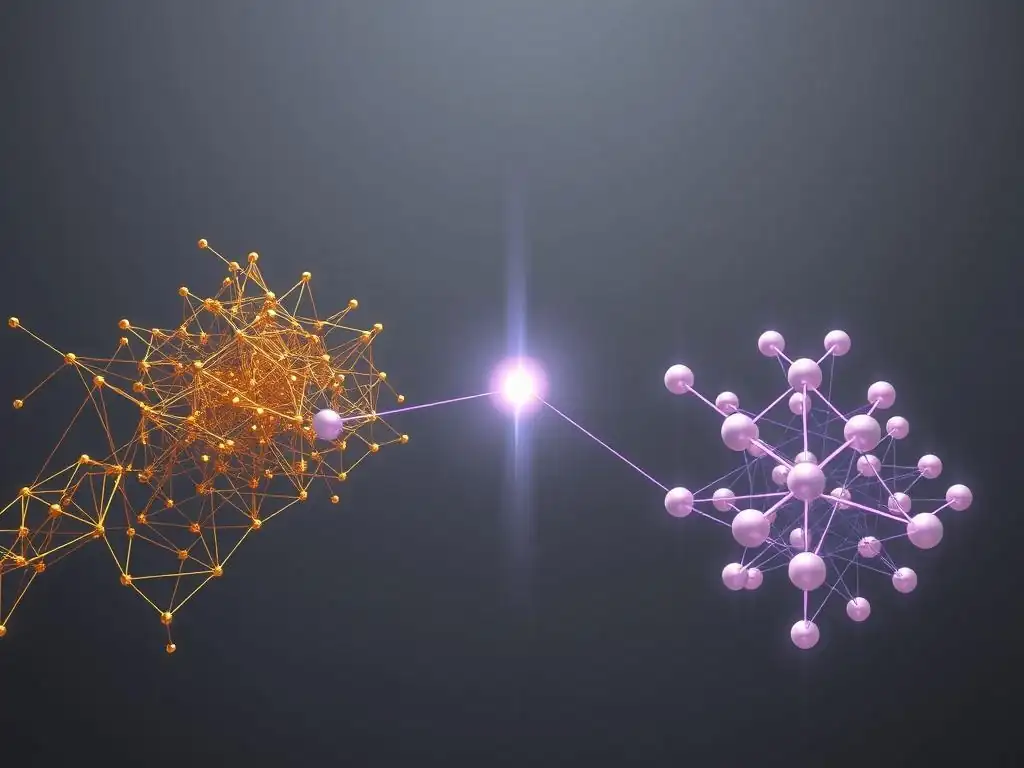
As the potential of quantum computing intersects with the pressing need for blockchain scalability, it's valuable to compare how quantum-enhanced approaches might stack up against or complement existing classical scaling solutions. Traditional methods like sharding, Layer-2 protocols, and sidechains aim to increase transaction throughput and manage data growth within the constraints of classical computation and network design. Quantum approaches, while still largely theoretical for direct scalability benefits, could offer fundamentally different ways of tackling these problems or provide the necessary security layer for future scalable networks.
Understanding the distinctions and potential synergies between these approaches is crucial for charting a path toward a highly scalable blockchain future. It's not necessarily an 'either/or' scenario; a hybrid approach combining the best of classical and quantum techniques might ultimately prevail, especially when considering blockchain scalability quantum computing implications.
Sharding is a database partitioning technique applied to blockchains to distribute the network's workload across multiple smaller segments or "shards." Instead of every node processing every transaction, each shard processes only a subset of transactions. This allows the network as a whole to handle a much higher volume of transactions in parallel.
Ethereum 2.0, for example, plans to implement sharding to significantly increase its TPS. The theoretical TPS increase from sharding is roughly proportional to the number of shards. If a network can handle X TPS per shard and has N shards, the total capacity becomes N * X TPS.
Quantum-enhanced scalability, in contrast, doesn't involve partitioning the network in the same way. Instead, potential benefits might come from speeding up fundamental operations within the network, such as transaction verification using quantum algorithms or optimizing data management. While sharding increases throughput by parallelizing processing across segments, quantum enhancements might increase the speed of processing within those segments or improve inter-shard communication efficiency. A hybrid model is plausible: a sharded blockchain could potentially use quantum algorithms within each shard for faster verification or use quantum techniques to secure cross-shard communication, combining the benefits of both approaches to enhance blockchain scalability.
Layer-2 Solutions vs. Quantum Computing
Layer-2 solutions operate on top of a blockchain (Layer-1) to handle transactions off-chain, only using the main chain for final settlement or dispute resolution. Examples include payment channels (like Bitcoin's Lightning Network) and rollups (Optimistic and ZK-Rollups on Ethereum). These solutions drastically increase throughput by processing thousands or even millions of transactions off-chain, batching them into a single transaction settled on Layer-1. For instance, ZK-Rollups can achieve thousands of TPS by performing computation and state storage off-chain and submitting concise validity proofs to the main chain.
Quantum computing doesn't offer a direct alternative to the off-chain processing model of Layer-2 solutions. However, quantum technology is relevant to Layer-2s primarily through the need for post-quantum security for the cryptographic operations used in Layer-2 protocols (e.g., signatures for state updates or proofs) and the underlying Layer-1 settlement layer.
Furthermore, quantum algorithms could potentially be used to optimize the generation or verification of complex proofs used in some Layer-2s, like ZK-Rollups, which involve computationally intensive zero-knowledge proofs. While Layer-2s address scalability through architectural layering, quantum computing's role is more likely to be in securing these layers with PQC and potentially accelerating specific underlying computations, contributing to the overall blockchain scalability quantum computing implications landscape.
Sidechains and State Channels in the Quantum Era
Sidechains are independent blockchains that are pegged to a main chain, allowing assets to be moved between them. They can have different consensus mechanisms and structures, enabling faster transaction speeds or different functionalities. State channels, similar to payment channels, allow parties to conduct multiple transactions off-chain, updating a shared "state," and only submitting the final state to the main chain. Both methods offload transactions from the main chain to improve scalability.
In the quantum era, the security of sidechains and state channels, like Layer-2s, will depend on the strength of their underlying cryptography against quantum attacks. The pegging mechanism of sidechains often relies on cryptographic proofs, and the multi-signature schemes or other cryptographic commitments used in state channels will need to be quantum-resistant. The potential for quantum computing to directly enhance the scalability of sidechains or state channels beyond securing them is less clear.
However, if quantum algorithms can optimize the consensus mechanisms used on sidechains or improve the efficiency of state channel updates or dispute resolution, they could indirectly contribute to the scalability benefits offered by these methods. The primary intersection remains the crucial need for post-quantum security across all layers and scaling solutions to ensure their long-term viability.
The Intersection of Quantum Computing and Blockchain: Use Cases and Applications
The convergence of quantum computing and blockchain technology opens up possibilities for novel applications and enhancements across various sectors. While the immediate focus is on securing blockchains against quantum threats through post-quantum cryptography, the long-term potential extends to leveraging quantum capabilities to improve existing blockchain use cases and enable entirely new ones. Understanding these potential applications provides insight into the future blockchain scalability quantum computing implications.
From enhancing decentralized finance (DeFi) platforms to securing complex supply chains and ensuring the integrity of digital voting systems, quantum technology could play a role in making these applications more robust, efficient, and scalable than currently possible with classical computing alone.
Quantum-Enhanced DeFi: Decentralized Exchanges, Lending Platforms, and Stablecoins
Decentralized Finance (DeFi) applications currently face scalability limitations on underlying blockchains, leading to high transaction costs and slow execution during peak demand. While Layer-2 solutions are addressing this, the potential intersection with quantum computing lies primarily in security and potentially in complex computations.
- Decentralized Exchanges (DEXs): The security of asset swaps and liquidity pools on DEXs relies on cryptographic signatures. Ensuring these are quantum-resistant is paramount. Furthermore, quantum algorithms for optimization could theoretically be applied to aspects like order matching in decentralized limit order books, potentially increasing efficiency, though this is highly speculative.
- Lending Platforms: Smart contracts governing decentralized lending depend on secure key management and reliable data feeds. Quantum-resistant signatures are essential for user security. Complex risk assessment models within DeFi could potentially benefit from quantum optimization algorithms, although practical applications are far off.
- Stablecoins: The stability mechanisms of certain stablecoins involve complex algorithms and potentially off-chain data. While quantum computing doesn't directly impact the economic models, the security of the underlying transactions and smart contracts is critical and requires PQC.
The primary impact of quantum computing on DeFi in the near-to-medium term will be the mandatory migration to post-quantum cryptography to protect user funds and protocol integrity. The potential for quantum computing to directly enhance DeFi scalability through faster execution of complex smart contract logic or optimization algorithms is a longer-term prospect that depends on the development of specific quantum hardware and software capable of handling such tasks reliably and cost-effectively.
Secure Supply Chain Management with Quantum-Resistant Blockchains
Blockchain technology offers a transparent and immutable way to track goods and materials throughout a supply chain, improving efficiency, reducing fraud, and enhancing visibility. Each transfer of ownership or location update can be recorded as a transaction. However, the scalability of tracking millions or billions of individual items necessitates high transaction throughput. The security of these records relies on the cryptographic integrity of the blockchain.
Integrating quantum-resistant cryptography into supply chain blockchains is crucial to prevent malicious actors with quantum capabilities from tampering with historical records or forging transactions. Imagine a scenario where an attacker could use a quantum computer to forge signatures and alter the provenance data of high-value goods. A quantum-resistant blockchain ensures that the audit trail remains secure.
Beyond security, potential, albeit speculative, quantum applications could involve using quantum optimization algorithms to improve supply chain logistics recorded on the blockchain, such as optimizing routing or inventory management based on decentralized data. The core benefit, however, remains the enhanced security provided by PQC for scalable supply chain tracking solutions.
Enhancing Voting Systems with Quantum Technology
Blockchain has been proposed as a way to create more transparent, secure, and verifiable digital voting systems. Each vote could be recorded as an encrypted transaction on a blockchain, ensuring immutability and preventing double voting. Key requirements for such systems include voter privacy, verifiability of the count, and the integrity of individual votes.
Quantum computing intersects with blockchain-based voting systems primarily through security. The cryptographic methods used to encrypt votes, ensure voter anonymity (e.g., using zero-knowledge proofs), and secure the integrity of the ballot on the ledger must be quantum-resistant. A quantum attack could potentially compromise voter privacy, decrypt votes, or even alter the recorded ballots if the underlying cryptography is vulnerable.
Implementing PQC is essential for future-proofing blockchain-based voting systems against such threats. While quantum algorithms might theoretically offer new ways to perform complex tasks like privacy-preserving vote aggregation or verification, the immediate and critical application is ensuring the quantum-security of the fundamental cryptographic building blocks, contributing to the overall viability of blockchain scalability quantum computing implications in this sensitive area.
Challenges and Limitations of Implementing Quantum Solutions in Blockchain
Despite the theoretical potential, the path to integrating quantum computing capabilities, particularly for scalability enhancements, into blockchain technology is fraught with significant challenges and limitations. Quantum computing is still an emerging field, and the practical hurdles to building and operating large-scale, fault-tolerant quantum computers are immense. These challenges span hardware, software, cost, and integration complexities with existing classical systems.
Understanding these limitations is crucial for maintaining realistic expectations about the timeline and feasibility of quantum-enhanced blockchains. While post-quantum cryptography is a more immediate and achievable goal, leveraging quantum computing for direct scalability benefits faces much higher barriers.
High Computational Costs of Quantum Computing
Currently, building and operating quantum computers is extremely expensive. The specialized hardware requires maintaining qubits in highly controlled environments, often at temperatures near absolute zero, using complex laser and microwave control systems.
Access to existing quantum computers is typically provided through cloud services (e.g., IBM Quantum Experience, Rigetti Computing, Google Cloud), and the cost per quantum operation or "shot" can be substantial. For example, accessing a few-qubit system for research purposes can cost thousands of dollars per hour of usage, and running complex algorithms requiring millions or billions of operations would be prohibitively expensive for decentralized networks where computations need to be verified by many nodes.
For quantum computing to directly contribute to blockchain scalability by accelerating computations (like verification or optimization), these computations would need to be performed cost-effectively and verified by network participants. The current economic model of quantum computing makes it impractical for the high volume, low-cost computations required for processing mainstream transaction loads. Until the cost of quantum computation drops dramatically and becomes accessible to a decentralized network of validators, leveraging it directly for transaction processing remains a distant prospect.
Quantum Hardware Limitations and Availability
Current quantum computers, often referred to as Noisy Intermediate-Scale Quantum (NISQ) devices, are limited in the number of qubits they possess and are prone to errors due to environmental noise. While systems with hundreds of qubits exist (e.g., IBM's Osprey with 433 qubits), building fault-tolerant quantum computers capable of running complex algorithms like Shor's or Grover's on a large scale requires millions of physical qubits to create stable logical qubits through error correction. This level of hardware capability is not yet available and represents a significant engineering challenge.
The limited availability of high-quality quantum hardware further restricts its application. Access is primarily confined to large research institutions and corporations. For blockchain, which relies on a decentralized network of participants running the protocol, requiring specialized, expensive, and scarce quantum hardware for core functions (beyond potentially securing keys) would fundamentally undermine its decentralized nature. Widespread blockchain scalability quantum computing implications leveraging quantum speedups depend on the development of accessible, reliable, and fault-tolerant quantum hardware, which is still likely years or even decades away.
Integration Complexities with Existing Blockchain Systems
Integrating any new technology into established blockchain protocols is complex due to the need for network-wide consensus on changes. Introducing quantum capabilities, even just PQC algorithms, requires significant protocol upgrades that must be agreed upon and implemented by the entire network. This often necessitates hard forks, which can be contentious and require careful coordination to avoid splitting the chain.
Furthermore, integrating quantum computation into a classical blockchain architecture presents architectural challenges. How would quantum co-processors interact with classical nodes? How would the results of quantum computations be verified by classical nodes? Designing hybrid quantum-classical architectures that maintain the security, decentralization, and transparency principles of blockchain while leveraging quantum speedups is a non-trivial task. These integration complexities, combined with the hardware and cost limitations, highlight that realizing the potential blockchain scalability quantum computing implications requires not just quantum advancements but also significant innovation in hybrid system design and distributed consensus mechanisms.
The Future of Blockchain Scalability: A Quantum Perspective
Looking ahead, the future of blockchain scalability is likely to be shaped by a combination of ongoing classical scaling efforts and the eventual emergence of quantum technologies. While the immediate focus is on securing blockchains against quantum threats through post-quantum cryptography, the longer-term perspective includes the potential for quantum computing to fundamentally alter the landscape of decentralized systems. This includes accelerating certain processes, enabling new forms of consensus, or facilitating more complex on-chain computations that are currently infeasible.
Predicting the exact timeline and nature of this intersection is challenging, as both blockchain technology and quantum computing are rapidly evolving fields. However, it is clear that quantum computing will be a significant factor in the evolution of blockchain scalability quantum computing implications.
Predicting the Timeline for Quantum-Powered Blockchains
Predicting the exact timeline for "quantum-powered" blockchains depends heavily on the definition. If "quantum-powered" means secured by post-quantum cryptography, the timeline is relatively near-term. Many blockchain projects are already researching and beginning to implement PQC standards. A significant transition to PQC across major blockchains is likely to occur within the next 5-10 years, ahead of the projected timeline for large-scale fault-tolerant quantum computers.
If "quantum-powered" means leveraging quantum computers for direct computational speedups in transaction processing or consensus, the timeline is much longer. This requires fault-tolerant quantum computers with a significant number of logical qubits (potentially millions) capable of running complex algorithms reliably. Current estimates for such machines range from 10 to 30 years or even longer. Therefore, while securing blockchains against quantum threats is an urgent task, seeing quantum computing directly enhance blockchain scalability in a practical, decentralized manner is a long-term vision, heavily dependent on fundamental breakthroughs in quantum hardware and software engineering.
The Role of Quantum Computing in the Evolution of Decentralized Systems
Quantum computing's role in the evolution of decentralized systems will likely be multifaceted. Firstly, it serves as a critical security driver, forcing the adoption of post-quantum cryptography to ensure the long-term integrity of distributed ledgers. This push for PQC will influence protocol design, potentially impacting transaction formats and block structures.
Secondly, in the longer term, if quantum computational power becomes accessible and cost-effective, it could enable new types of decentralized applications or enhance existing ones that require complex computations. This might include more sophisticated on-chain analytics, advanced simulations within decentralized autonomous organizations (DAOs), or entirely new consensus mechanisms that leverage quantum properties. The potential for quantum speedups in specific areas, combined with the inherent decentralization and security of blockchain, could lead to decentralized systems capable of tackling problems currently confined to centralized supercomputing environments, reshaping the landscape of blockchain scalability quantum computing implications.
Future Research Directions: Fault-Tolerant Quantum Computers and Hybrid Architectures
Future research at the intersection of quantum computing and blockchain needs to focus on several key areas. From the quantum computing side, the priority is the development of fault-tolerant quantum computers and improving qubit stability, connectivity, and error correction. This hardware progress is a prerequisite for running complex quantum algorithms relevant to blockchain.
From the blockchain side, research is needed on:
- Efficient integration of PQC algorithms without negatively impacting scalability.
- Developing new cryptographic primitives that might be quantum-resistant and better suited for blockchain constraints.
- Exploring hybrid quantum-classical architectures where classical blockchains interact securely and efficiently with quantum co-processors for specific tasks.
- Investigating the potential for quantum-inspired algorithms (classical algorithms based on quantum principles) to improve blockchain performance in the near term.
- Understanding the theoretical limits and potential benefits of using quantum resources in decentralized consensus mechanisms or state management.
These research directions are crucial for navigating the complex interplay between quantum advancements and the future of blockchain scalability, security, and decentralization.
Conclusion: Embracing Quantum Computing for a Scalable and Secure Blockchain Future
The intersection of quantum computing and blockchain technology presents both significant challenges and exciting opportunities. While the immediate concern is the existential threat quantum computers pose to current blockchain cryptography, this challenge is driving rapid innovation in post-quantum cryptography. This focus on PQC is essential not only for security but also for ensuring the long-term viability and scalability of blockchain networks in a quantum-threatened world.
Looking beyond security, the potential for quantum computing to directly enhance blockchain scalability through faster computation or improved data management, while still largely theoretical and dependent on future hardware developments, opens up intriguing possibilities for the evolution of decentralized systems. The path forward requires proactive research, development, and collaboration across the cryptographic, quantum computing, and blockchain communities.
Key Takeaways: Blockchain Scalability Quantum Computing Implications
Several key takeaways emerge when considering blockchain scalability quantum computing implications:
- Current blockchains face significant scalability challenges related to transaction throughput and data storage, limiting mass adoption.
- Quantum computing poses a critical threat to the public-key cryptography securing current blockchains, necessitating a move to post-quantum cryptography (PQC).
- Developing and integrating PQC is the most immediate and crucial intersection, impacting transaction size and protocol design.
- Beyond security, quantum computing theoretically offers potential benefits for scalability, such as faster verification or optimized data management, but practical application depends on future fault-tolerant quantum hardware.
- Existing classical scaling solutions (sharding, Layer-2s) will likely remain relevant and will need to be secured with PQC.
- Realizing the full potential of quantum-enhanced blockchain scalability requires significant advancements in quantum hardware, reductions in computational cost, and innovative hybrid classical-quantum architectures.
The primary and most urgent implication is the need to address quantum security proactively to ensure the continued operation and trust in blockchain networks.
Call to Action: Fostering Collaboration and Standardization in Quantum-Resistant Blockchain Development
To navigate the challenges and capitalize on the opportunities at the intersection of quantum computing and blockchain, fostering collaboration and standardization is paramount.
- Developers and Researchers: Continue researching and implementing promising PQC algorithms, evaluating their performance implications for blockchain, and exploring novel quantum-resistant cryptographic primitives. Investigate potential hybrid quantum-classical architectures for future scalability enhancements.
- Blockchain Projects and Foundations: Prioritize the integration of standardized PQC algorithms into protocol roadmaps. Plan and communicate migration strategies for users to transition to quantum-resistant addresses and systems.
- Cryptographic and Quantum Computing Communities: Collaborate on developing benchmarks and standards specifically tailored to the constraints and requirements of decentralized systems. Ensure that PQC standards are robust and practical for blockchain deployment.
- Users and Businesses: Stay informed about the quantum threat and PQC developments. Prepare for potential future protocol upgrades requiring key changes.
By working together, the community can ensure that blockchain technology remains secure, decentralized, and scalable in the face of the coming quantum era, realizing the positive blockchain scalability quantum computing implications while mitigating the risks.
Frequently Asked Questions
What is the biggest challenge blockchain faces in terms of scalability, and how might quantum computing affect it?
Blockchain's biggest challenge is transaction throughput, limiting its ability to handle large volumes. Quantum computing could potentially break existing blockchain encryption, necessitating quantum-resistant cryptography and affecting scalability efforts.
How could quantum computing enhance blockchain scalability, rather than just threaten it?
While primarily a threat, quantum computing research could lead to breakthroughs in optimization algorithms. These could potentially improve blockchain's consensus mechanisms and overall efficiency, indirectly aiding scalability.
What are some current solutions being explored to address blockchain scalability issues, and how might quantum computing render them obsolete?
Solutions include sharding, layer-2 solutions (like Lightning Network), and sidechains. Quantum computing could break the underlying cryptography of these solutions, especially if they rely on classical encryption methods, rendering them obsolete without quantum-resistant upgrades.
What regulatory challenges are emerging regarding the intersection of blockchain scalability and quantum computing?
Regulators are grappling with the need to balance innovation in blockchain with the potential security risks posed by quantum computing. This includes establishing standards for quantum-resistant cryptography within blockchain applications.
How can businesses prepare for the potential impact of quantum computing on blockchain scalability and security in the long term?
Businesses should begin assessing their blockchain infrastructure for vulnerabilities to quantum attacks. Investing in quantum-resistant solutions and staying informed about the latest developments are crucial steps.
The exploration of quantum computing's impact on blockchain scalability, as we've seen, isn't just a theoretical exercise; it's a crucial undertaking for the future of decentralized systems. The potential for quantum computers to both break and enhance blockchain security and efficiency demands immediate and proactive attention. Understanding these Blockchain scalability quantum computing implications is no longer optional, but essential for developers, policymakers, and anyone invested in the future of digital trust.
The interplay between these two groundbreaking technologies has already begun to reshape the landscape of digital security and data processing. This intersection forces us to confront fundamental questions about the resilience of our current cryptographic infrastructure and the possibilities for quantum-resistant solutions. The ongoing debate highlights the urgency of adapting to a rapidly evolving technological reality. The future is already here – it's just not evenly distributed.
- William Gibson. This quote perfectly encapsulates the current state of quantum computing and its potential impact on blockchain; the seeds of change are sown, but their full implications are yet to be realized.
As we stand on the cusp of a quantum revolution, I invite you to consider your role in shaping this future. How can you contribute to the development of quantum-resistant algorithms? How can you advocate for responsible innovation that prioritizes security and accessibility? The challenges are significant, but the opportunities are even greater. Let us embrace the potential of quantum computing to unlock new possibilities for blockchain scalability, while remaining vigilant in safeguarding the integrity and security of our digital world.
Supercharge Your Blockchain Knowledge!
Thanks for diving deep into the exciting intersection of quantum computing and blockchain scalability! We hope you've gained valuable insights into the potential future implications. Now, let's turn that knowledge into action!
Here's how you can further explore this fascinating topic:
- Contribute to open-source blockchain projects focused on quantum resistance to actively shape the future of decentralized security.
- Share this article with fellow tech enthusiasts and spark a conversation about the challenges and opportunities ahead.
- Attend a virtual conference on quantum cryptography and blockchain technology to network with experts and expand your understanding.
What quantum-resistant strategies do you think are most promising for long-term blockchain security? Share your thoughts in the comments below!
Leave a Reply