
The Evolution of Real Estate Investment: From Physical Deeds to Digital Tokens

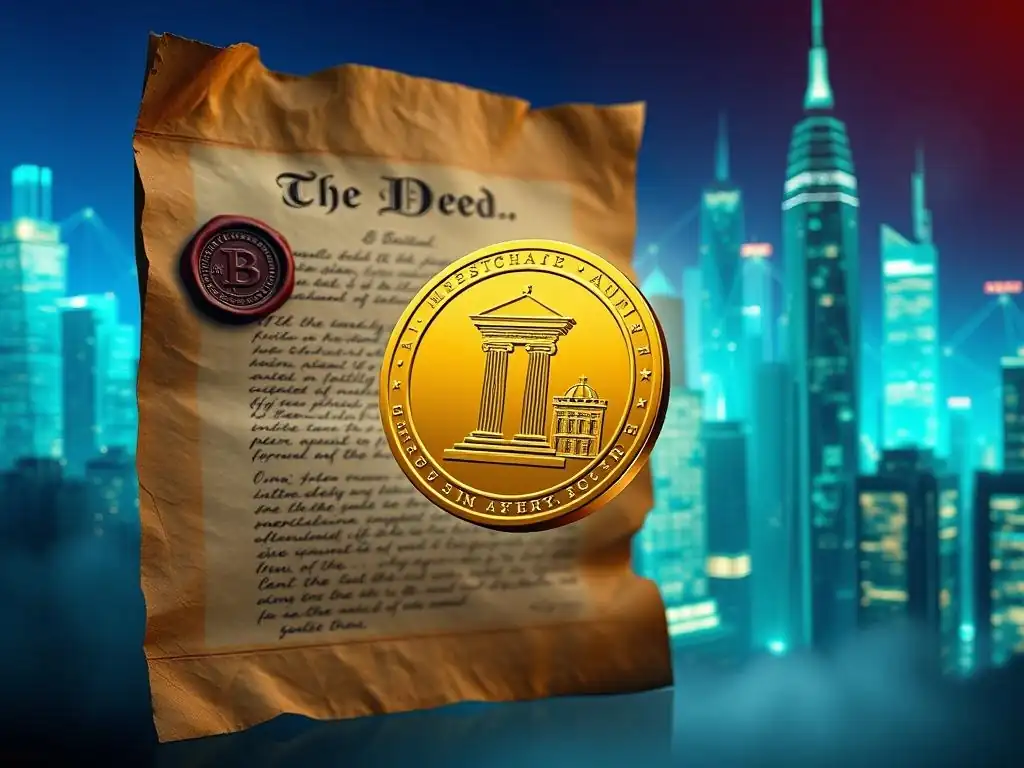
Welcome to Blockchain Trends, where we delve into the transformative potential of blockchain technology that extends far beyond the realm of cryptocurrencies. In this edition, we invite you to explore an exciting frontier in the real estate market: Blockchain real estate investment tokens. Discover how this innovative approach is revolutionizing property investment by streamlining processes and enhancing accessibility. Are you ready to unravel the evolution of real estate investment, from traditional physical deeds to the dynamic world of digital tokens? Join us on this journey to uncover the future of decentralized systems in real estate!
The Evolution of Real Estate Investment: From Physical Deeds to Digital Tokens
- Introduction: Revolutionizing Real Estate with Blockchain Technology
- The Rise of Real Estate Tokenization: A New Paradigm
- From Physical Deeds to Digital Assets: A Historical Perspective
- How Blockchain Real Estate Tokens Work
- Key Players and Platforms in the Real Estate Tokenization Space
- Regulatory Considerations for Real Estate Tokenization
- The Benefits of Investing in Blockchain-Based Real Estate
- Challenges and Opportunities in the Tokenized Real Estate Market
- Use Cases: Applications of Real Estate Tokenization
- Comparing Traditional Real Estate Investment vs. Blockchain Real Estate Tokens
- The Future Landscape: Predictions for Blockchain Real Estate Investment
- Conclusion: Embracing the Tokenized Future of Real Estate
-
Frequently Asked Questions
- What are Blockchain Real Estate Investment Tokens and how do they differ from traditional real estate investment?
- How does blockchain technology enhance the real estate investment process?
- What are the potential benefits of investing in Blockchain Real Estate Investment Tokens?
- What are the key regulatory considerations surrounding Blockchain Real Estate Investment Tokens?
- What is the future outlook for Blockchain Real Estate Investment Tokens and their impact on the real estate industry?
- Final Reflection: Embracing the Tokenized Future of Property
- Unleash Your Real Estate Future: Explore Tokenization Today!
Introduction: Revolutionizing Real Estate with Blockchain Technology
The Dawn of Digital Ownership: How Blockchain is Changing Real Estate
The traditional real estate market, long characterized by its illiquidity and complex transaction processes, is on the cusp of a profound transformation driven by blockchain technology. This shift is introducing a new era of digital ownership, moving away from cumbersome paper deeds and manual record-keeping towards secure, transparent, and verifiable digital assets. At the heart of this revolution are blockchain real estate investment tokens, digital representations of property ownership or economic rights that reside on a distributed ledger.
This technological leap enables a fundamental restructuring of how real estate is bought, sold, and managed. By leveraging the inherent properties of blockchain—immutability, transparency, and decentralization—the industry can potentially overcome long-standing inefficiencies. The concept of owning a fraction of a property, represented by easily tradable blockchain real estate investment tokens, opens up the market to a broader base of investors and promises to inject much-needed liquidity into what has historically been a highly illiquid asset class.
The Inefficiencies of Traditional Real Estate Investment
Traditional real estate investment is notoriously slow and expensive. A typical property transaction can take anywhere from several weeks to several months to complete, involving numerous intermediaries such as real estate agents, lawyers, escrow companies, and title insurers. Each intermediary adds layers of complexity, cost, and potential for delay or error. Transaction costs, including commissions, legal fees, taxes, and administrative charges, can easily accumulate to between 6% and 10% or even more of the property's value.
Furthermore, traditional real estate is illiquid. Selling a property is a significant undertaking that requires finding a buyer, negotiating terms, and navigating a lengthy closing process. Unlike stocks or bonds that can be traded relatively quickly on an exchange, real estate assets cannot be easily divided or transferred. This high barrier to entry, combined with the lack of liquidity and high associated costs, has historically limited real estate investment primarily to wealthy individuals and institutional investors, excluding many potential participants from accessing this valuable asset class.
The Rise of Real Estate Tokenization: A New Paradigm
Understanding Blockchain Real Estate Tokens: The Basics
Blockchain real estate tokens are digital assets issued on a blockchain network that represent ownership or economic rights in a specific piece of real estate or a portfolio of properties. These tokens function similarly to shares in a company, allowing investors to own a fraction of a property's value. Each token's ownership is immutably recorded on the blockchain, providing a clear and transparent ledger of who owns what portion of the asset.
The creation and management of these tokens are typically governed by smart contracts, self-executing agreements coded directly onto the blockchain. These smart contracts automate various processes, such as the distribution of rental income, the terms of a sale, or voting rights associated with property management decisions. This eliminates the need for many traditional intermediaries and introduces a level of automation and trustlessness that is not possible with conventional methods. Investing in blockchain real estate investment tokens means acquiring a digital security that represents a tangible asset.
Benefits of Tokenizing Real Estate Assets
Tokenization offers a compelling suite of benefits that address the core inefficiencies of traditional real estate. One of the most significant advantages is the potential for increased liquidity. By dividing properties into smaller, tradable tokens, investors can buy and sell fractional interests more easily than dealing with whole properties. This creates the possibility for secondary markets where blockchain real estate investment tokens can be traded, drastically reducing the time and effort required to exit an investment.
Beyond liquidity, tokenization facilitates fractional ownership, lowering the barrier to entry for potential investors. Instead of needing hundreds of thousands or millions of dollars to buy a property outright, individuals can invest smaller sums, perhaps just a few hundred or thousand dollars, by purchasing a number of tokens. This democratization expands the pool of potential investors globally. Additionally, tokenization can lead to lower transaction costs by streamlining processes and reducing reliance on multiple intermediaries, potentially cutting costs significantly compared to the traditional 6-10% range.
From Physical Deeds to Digital Assets: A Historical Perspective
The Legacy of Physical Deeds and Paper-Based Processes
For centuries, real estate ownership has been primarily documented through physical deeds and recorded in paper-based land registries. This system, while foundational, is inherently cumbersome and prone to inefficiencies. Transferring ownership involves physical documents, manual verification processes, and often lengthy waiting periods for official recording. The process requires the physical presence of parties or their representatives and relies heavily on the integrity of centralized record-keeping offices.
This reliance on physical documents and centralized paper records introduces several risks. Deeds can be lost, damaged, or even fraudulently altered. Verifying the complete history of a property's ownership—the chain of title—can be a painstaking process involving sifting through potentially disorganized or incomplete archives. Disputes over boundaries, ownership claims, and encumbrances are often complicated by the difficulty of definitively proving historical ownership and transaction details stored in disparate, often aging, paper systems.
The Emergence of Digital Records and Electronic Transfers
In recent decades, many jurisdictions have moved towards digitizing land records and implementing electronic transfer systems. This transition involved scanning physical documents, creating digital databases, and developing online portals for searching records and sometimes facilitating transactions. This was a significant step forward, improving accessibility to information and somewhat streamlining transaction processes compared to purely paper-based systems.
However, these digital systems often remain centralized, relying on single points of control and storage. While access improved, the underlying processes for verification, transfer, and security often still mirrored the traditional paper-based methods, just in a digital format. Issues like data security breaches, system downtime, and reliance on trusted third parties for data integrity persisted. The fundamental nature of ownership transfer still typically involved intermediaries and lacked the inherent transparency and immutability that a decentralized system could offer.
Blockchain as the Next Step: Secure and Transparent Ownership
Blockchain technology represents the logical evolution in the history of property record-keeping, moving beyond centralized digital databases to a decentralized and distributed ledger. In a blockchain system, ownership records are not stored in a single location but are replicated across a network of computers. Each transaction, including the transfer of blockchain real estate investment tokens, is cryptographically secured, timestamped, and added as a new "block" to the chain.
Once a block is added, it is extremely difficult and computationally expensive to alter, making the ledger effectively immutable. This provides an unprecedented level of security and integrity for ownership records. Furthermore, the distributed nature means there is no single point of failure, reducing the risk of data loss or censorship. The transparency of public blockchains allows anyone to verify transaction history (while maintaining privacy over party identities through pseudonymous addresses), ensuring that the ownership chain for blockchain real estate investment tokens is clear and verifiable, a stark contrast to the opacity of some traditional systems.
How Blockchain Real Estate Tokens Work
Smart Contracts: Automating Real Estate Transactions
Smart contracts are the backbone of real estate tokenization. These are self-executing contracts with the terms of the agreement directly written into lines of code. They reside on the blockchain and automatically execute predefined actions when specific conditions are met, without the need for intermediaries. In the context of blockchain real estate investment tokens, smart contracts can automate various aspects of property ownership and investment.
For example, a smart contract can be programmed to automatically distribute rental income proportionally to all token holders on a specific date each month, based on the number of blockchain real estate investment tokens they own. Another application is automating the sale process: when a buyer sends the agreed-upon cryptocurrency or fiat to the smart contract, it can automatically transfer the corresponding real estate tokens to the buyer's wallet. This automation reduces administrative overhead, minimizes the potential for human error, and ensures that agreements are executed exactly as programmed.
Fractional Ownership: Democratizing Real Estate Investment
One of the most impactful features enabled by blockchain real estate tokens is true fractional ownership. Historically, investing in a single property required purchasing the entire asset or participating in complex, illiquid structures like limited partnerships. Tokenization breaks down this barrier by dividing the ownership rights of a property into a large number of divisible tokens. For instance, a $5 million commercial building could be represented by 5 million tokens, each valued at $1.
This divisibility allows investors to purchase a fraction of the property's value, aligning their investment size with their budget. Minimum investment amounts can drop dramatically, from potentially hundreds of thousands to just a few hundred or thousand dollars. This democratizes access to real estate investment, enabling individuals who previously couldn't afford it to participate in the market. It also allows investors to diversify their portfolios across multiple properties or property types by buying small amounts of different blockchain real estate investment tokens.
Security and Transparency: The Advantages of a Decentralized Ledger
The underlying blockchain technology provides significant security and transparency benefits for real estate tokenization. Security is enhanced through cryptographic principles; each transaction is encrypted and linked to the previous one, forming a secure chain. The distributed nature of the ledger means that copies of the ownership records are held by many participants in the network, making it virtually impossible for any single entity to tamper with the records without detection.
Transparency is another key advantage, particularly with public blockchains. While the identities of token holders can be pseudonymous (represented by wallet addresses), the transactions themselves and the total supply of blockchain real estate investment tokens for a specific property are publicly verifiable on the ledger. This provides an unprecedented level of clarity regarding ownership distribution and transaction history, reducing the potential for fraudulent activities and increasing trust in the investment process.
Key Players and Platforms in the Real Estate Tokenization Space
Emerging Tokenization Platforms and Marketplaces
A growing ecosystem of technology platforms and marketplaces is emerging to facilitate the tokenization of real estate assets. These platforms provide the necessary infrastructure for property owners and developers to issue blockchain real estate investment tokens compliant with relevant regulations. They handle the technical aspects of creating and managing the tokens on a chosen blockchain network, such as Ethereum, Stellar, or specialized real estate blockchains.
These platforms often include features for investor onboarding (including Know Your Customer/Anti-Money Laundering checks), managing token distributions (like rental yield), and potentially hosting secondary markets where tokens can be traded among investors. Examples of platform functionalities include smart contract deployment, digital wallet management, and reporting tools. The development of robust, user-friendly platforms is crucial for the mainstream adoption of blockchain real estate investment tokens, providing the bridge between traditional assets and the digital world.
Examples of Companies Facilitating Real Estate Tokenization
Numerous companies globally are actively involved in the real estate tokenization space, ranging from startups specializing in the technology to established real estate firms exploring its potential. These players are facilitating everything from the tokenization of single luxury properties to portfolios of commercial buildings or development projects. Their activities span issuing security tokens representing equity in properties, to creating utility tokens related to property access or usage.
For instance, some companies focus on creating marketplaces for accredited investors to buy and sell fractional interests represented by blockchain real estate investment tokens in high-value assets like commercial offices or hotels. Others are working on solutions for residential properties, aiming to make homeownership more accessible or to allow existing homeowners to unlock equity by tokenizing a portion of their property. While specific project details vary, the collective effort is building the foundation for a future where tokenized real estate is a standard investment option.
Regulatory Considerations for Real Estate Tokenization
One of the primary regulatory challenges for real estate tokenization is determining how blockchain real estate investment tokens are classified under existing securities laws. In many jurisdictions, tokens representing ownership or an investment interest in a property are likely to be considered securities. This means that issuing and trading these tokens must comply with stringent regulations designed to protect investors, including registration requirements, disclosure obligations, and rules regarding who can invest (e.g., accredited investors).
Navigating these complex legal frameworks requires careful planning and legal expertise. Issuers of real estate tokens must ensure their offerings meet the requirements of relevant securities regulators, such as the SEC in the United States or similar bodies internationally. Failure to comply can result in significant legal penalties. The ongoing evolution of regulatory stances on digital assets means that the legal landscape for blockchain real estate investment tokens is constantly changing, requiring vigilance from all participants.
Global Regulatory Approaches and Challenges
The regulatory landscape for real estate tokenization varies significantly across different countries and regions, creating challenges for cross-border transactions and global market development. Some jurisdictions have begun to establish specific frameworks for digital assets and tokenized securities, providing more clarity. Others are still assessing how existing laws apply, leading to uncertainty. This fragmented approach can hinder the development of a seamless global market for blockchain real estate investment tokens.
Efforts are underway by various international bodies and industry groups to promote greater regulatory harmonization and clarity. However, differences in legal traditions, investor protection philosophies, and national interests mean that a uniform global standard is unlikely in the short term. This regulatory divergence necessitates that platforms and issuers operating in the real estate tokenization space must carefully consider the legal requirements of each jurisdiction in which they operate or market their blockchain real estate investment tokens, adding complexity to global expansion efforts.
The Benefits of Investing in Blockchain-Based Real Estate
Increased Liquidity: Trading Real Estate Tokens
One of the most compelling benefits for investors in blockchain real estate investment tokens is the potential for significantly increased liquidity compared to traditional real estate. Selling a physical property typically involves a multi-month process of listing, showing, negotiating, and closing. In contrast, tokenized real estate assets can potentially be traded on secondary marketplaces specifically designed for digital securities.
While the liquidity of these secondary markets is still developing, the underlying technology allows for near-instantaneous transfer of ownership upon execution of a trade. This means investors are not locked into their real estate investments for years, as is often the case traditionally. The ability to buy or sell fractional interests represented by blockchain real estate investment tokens more easily and quickly provides investors with greater flexibility and the ability to react more dynamically to market conditions or personal financial needs.
Lower Transaction Costs: Streamlining the Investment Process
Investing in tokenized real estate assets can lead to substantially lower transaction costs compared to traditional property transactions. Traditional real estate deals involve numerous fees, including real estate agent commissions (often 5-6% of the sale price), legal fees, title insurance, escrow fees, and recording fees, which collectively can total 6-10% or even higher. These costs significantly reduce the net return on investment.
Tokenization streamlines the process by reducing the reliance on many intermediaries. Smart contracts can automate parts of the transaction, minimizing legal and administrative overhead. While platforms facilitating tokenization and trading may charge fees, these are often structured differently and can be significantly lower than traditional costs. Estimates vary, but the overall cost of acquiring or selling blockchain real estate investment tokens could potentially be reduced to the range of 1-3% of the asset's value, representing considerable savings for investors.
Global Accessibility: Expanding Investment Opportunities
Blockchain real estate investment tokens break down geographical barriers that have traditionally limited real estate investment. Investing in property in another country or even another state often involves complex legal processes, currency exchange issues, and the need for local representation. Tokenization simplifies this dramatically, allowing investors from anywhere in the world to purchase fractional interests in properties located in different regions or countries.
This global accessibility expands the investment universe for individuals. An investor in Asia could easily acquire blockchain real estate investment tokens representing a share in a property in Europe or the Americas, and vice versa. This not only provides access to new markets but also facilitates international capital flow into real estate. The ability to invest across borders with relative ease, often using stablecoins or major cryptocurrencies, makes global portfolio diversification through real estate more practical than ever before.
Portfolio Diversification through Real Estate Tokens
The combination of lower investment thresholds and increased liquidity offered by blockchain real estate investment tokens makes portfolio diversification significantly more accessible. In traditional real estate, diversifying across different property types (residential, commercial, industrial) or geographical locations requires substantial capital. Buying multiple whole properties is simply not feasible for most investors.
With tokenization, an investor can allocate relatively smaller amounts across a variety of properties or property portfolios that have been tokenized. For example, an investor might put $5,000 into a tokenized office building in one city, $3,000 into a tokenized residential complex in another, and $2,000 into a tokenized vacation rental property. This ability to easily build a diversified portfolio of real estate assets using blockchain real estate investment tokens helps spread risk and can potentially improve overall portfolio performance, similar to how one diversifies a stock portfolio.
Challenges and Opportunities in the Tokenized Real Estate Market
One of the most significant hurdles facing the widespread adoption of blockchain real estate investment tokens is the current regulatory uncertainty in many jurisdictions. As discussed earlier, classifying these tokens under existing securities and property laws is complex and varies globally. This lack of clear guidelines can create legal risks for issuers and investors alike, potentially slowing down market growth.
However, this challenge also presents an opportunity for proactive engagement with regulators. As governments and regulatory bodies learn more about the technology and its potential benefits, clearer frameworks are beginning to emerge in some regions. Industry participants have the opportunity to work with policymakers to help shape regulations that protect investors while fostering innovation. Establishing clear, consistent legal guidelines for blockchain real estate investment tokens is crucial for building trust and encouraging institutional participation.
Technological Hurdles: Scalability and Interoperability
While blockchain technology offers significant advantages, current limitations in scalability and interoperability pose challenges for mass adoption in the real estate sector. Some blockchain networks can handle a limited number of transactions per second compared to traditional payment systems, which could become a bottleneck if tokenized real estate transactions scale dramatically. Furthermore, ensuring seamless interaction between different blockchain platforms and existing financial and property systems is essential.
Ongoing advancements in blockchain technology, such as Layer 2 scaling solutions and improved consensus mechanisms, are addressing scalability issues. Simultaneously, efforts to develop standards for tokenized assets (like ERC-20 or ERC-721 variants optimized for securities) and bridge technologies are improving interoperability. Overcoming these technological hurdles is key to creating a robust and efficient global market for blockchain real estate investment tokens that can handle high transaction volumes and integrate with existing infrastructure.
Market Adoption: Educating Investors and the Public
Despite the compelling benefits, widespread market adoption of blockchain real estate investment tokens requires significant education and awareness efforts. Many potential investors and even real estate professionals are unfamiliar with blockchain technology, digital wallets, and the concept of tokenized assets. There is a need to build trust and understanding in this new investment paradigm.
This challenge is also an opportunity for pioneers in the space. By providing clear information, demonstrating successful use cases, and building user-friendly platforms, companies can educate the market and build confidence. As more successful tokenization projects are completed and investors experience the benefits firsthand, adoption is likely to accelerate. Overcoming the knowledge gap is vital for unlocking the full potential of blockchain real estate investment tokens and making them a mainstream investment option.
The Future of Real Estate Investment: Tokenization as the Norm
Despite the challenges, the trajectory for blockchain real estate investment tokens points towards increasing integration into the financial landscape. The fundamental benefits of increased liquidity, lower costs, fractional ownership, and global accessibility are powerful drivers for change. As regulatory clarity improves, technology matures, and market understanding grows, tokenization is poised to become a standard, if not the dominant, method for investing in real estate.
The future likely involves a hybrid model initially, where tokenized assets coexist with traditional real estate. However, as the digital infrastructure matures and the advantages become undeniable, an increasing volume of real estate assets, from individual properties to large portfolios and development projects, will likely be represented by blockchain real estate investment tokens. This evolution promises a more efficient, transparent, and accessible global real estate market for all types of investors.
Use Cases: Applications of Real Estate Tokenization
Tokenizing REITs
Real Estate Investment Trusts (REITs) are companies that own, operate, or finance income-producing real estate. Traditionally, investors buy shares in REITs on stock exchanges, which offers some liquidity compared to direct property ownership. However, tokenizing REITs using blockchain technology could offer even greater benefits. By representing REIT shares as blockchain real estate investment tokens, issuers could potentially lower administrative costs associated with traditional share management and distribution.
Furthermore, tokenized REITs could potentially trade on specialized digital asset exchanges with potentially longer trading hours than traditional stock markets, enhancing liquidity. The transparency of the blockchain could also provide investors with more direct visibility into the underlying assets or the distribution of income. Tokenizing REITs essentially applies the benefits of fractional ownership and digital transfer to an already established real estate investment vehicle, making it more efficient and potentially more accessible.
Tokenizing Vacation Homes
Tokenizing vacation homes presents another compelling use case, moving beyond pure investment to potentially include usage rights. A vacation property can be divided into a set number of blockchain real estate investment tokens, each representing a fraction of ownership. Investors can purchase tokens not only for the potential rental income and appreciation but also potentially for a certain number of usage days per year, depending on the token structure.
This model allows multiple parties to co-own a vacation property, sharing the costs of maintenance, taxes, and management proportionally to their token holdings. Smart contracts can automate the booking system, maintenance fund collection, and distribution of rental income earned when the property is not in use by owners. This makes owning a share in a vacation home more affordable and manageable, transforming a traditional high-cost, low-liquidity asset into a more accessible and flexible investment or lifestyle asset using blockchain real estate investment tokens.
Comparing Traditional Real Estate Investment vs. Blockchain Real Estate Tokens
Liquidity Comparison
The starkest contrast between traditional real estate investment and investing via blockchain real estate investment tokens lies in liquidity. Traditional real estate is notoriously illiquid; selling a property can take several months, often involving extensive marketing, showings, negotiations, and closing procedures. The process is time-consuming, costly, and uncertain.
Tokenized real estate, conversely, aims to provide significantly higher liquidity. By dividing property ownership into small, tradable tokens, these assets can potentially be bought and sold on digital asset exchanges. While the liquidity of current secondary markets for real estate tokens is still developing, the underlying technology allows for transactions to be settled in minutes, not months. This potential for rapid buying and selling transforms real estate from a long-term, illiquid hold into an asset class with potential for more dynamic trading.
Accessibility and Global Reach
Traditional real estate investment typically requires substantial capital, often hundreds of thousands or millions of dollars, making it inaccessible to the average investor. Furthermore, investing in properties outside one's immediate geographical area or country involves significant logistical, legal, and financial hurdles.
Blockchain real estate investment tokens dramatically lower the barrier to entry through fractional ownership. Investments can start from as little as a few hundred or thousand dollars, opening the market to a much wider demographic. Crucially, tokenization enables global accessibility; investors can easily purchase tokens representing properties located anywhere in the world from their digital wallet, removing geographical limitations and facilitating true international real estate portfolio diversification.
Costs and Fees Analysis
Costs associated with traditional real estate transactions are high, typically ranging from 6% to 10% or more of the property value, encompassing agent commissions, legal fees, title insurance, and other closing costs. These fees significantly impact investment returns, especially on shorter-term holds.
Investing in blockchain real estate investment tokens promises to significantly reduce these costs. By automating processes via smart contracts and reducing the need for multiple intermediaries, transaction fees can be substantially lower. While platform fees and potential blockchain network fees exist, the overall cost to buy or sell tokenized real estate is estimated to be potentially in the range of 1-3% or less, representing a considerable saving that enhances potential investment returns.
Transparency and Security
Traditional real estate record-keeping often relies on disparate, sometimes outdated, centralized systems, leading to potential issues with transparency and security. Verifying the full ownership history (chain of title) can be complex, and records can be vulnerable to errors or manipulation.
Blockchain real estate investment tokens leverage the inherent transparency and security of distributed ledger technology. Ownership records and transaction histories are immutably stored on the blockchain, publicly verifiable (while maintaining party privacy through addresses), and secured by cryptography. This provides a level of transparency and security that is difficult to achieve in traditional systems, significantly reducing the risk of title disputes or fraudulent transfers and building greater trust in the ownership records.
The Future Landscape: Predictions for Blockchain Real Estate Investment
The Growth of Institutional Investment in Tokenized Real Estate
As the regulatory environment for digital assets matures and the infrastructure for real estate tokenization becomes more robust, institutional investors are expected to increasingly enter the market. Large asset managers, pension funds, and investment banks, which typically require high levels of liquidity, transparency, and compliance, have historically found direct real estate investment challenging due to its illiquidity and operational complexities.
Blockchain real estate investment tokens address many of these concerns. The potential for secondary market trading provides the liquidity institutions need, while the transparency and immutability of the blockchain align with their requirements for verifiable records. As platforms build out enterprise-grade solutions and regulatory clarity emerges, we can anticipate significant capital flows from institutional players into the tokenized real estate market, further validating the asset class and driving market growth.
The Integration of DeFi (Decentralized Finance) with Real Estate
The convergence of Decentralized Finance (DeFi) protocols with real estate tokenization is poised to unlock innovative financial possibilities. Once real estate assets are represented as blockchain real estate investment tokens on a blockchain, they can potentially be used within DeFi ecosystems. This could include using tokenized real estate as collateral for decentralized loans, participating in yield farming protocols that generate returns from property income, or enabling peer-to-peer real estate financing.
Integrating tokenized real estate into DeFi creates new avenues for leveraging asset value and generating passive income, moving beyond traditional rental yields. It also has the potential to further increase the liquidity and utility of real estate tokens. This integration is still in its early stages, facing challenges related to valuation, legal enforceability of smart contracts linked to physical assets, and regulatory compliance, but represents a significant future opportunity for the sector.
The Impact of Blockchain on Property Management and Leasing
Beyond investment, blockchain technology and smart contracts can significantly impact property management and leasing processes, whether the underlying property is tokenized or not. Smart contracts can automate rental payments, manage security deposits, and enforce lease terms, reducing administrative overhead and potential disputes. Records of payments, maintenance requests, and lease agreements can be immutably stored on a blockchain for transparency and easy verification.
For tokenized properties, property management becomes even more streamlined, with income distribution automated via smart contracts directly to token holders' wallets. This reduces the need for traditional property management companies to handle financial distributions, potentially lowering management fees. While full adoption requires overcoming challenges related to data privacy and integrating physical property operations with digital systems, the potential for increased efficiency and transparency in property management through blockchain is substantial.
Conclusion: Embracing the Tokenized Future of Real Estate
Blockchain Real Estate Tokens: A Transformative Force
The evolution of real estate investment is clearly moving towards digitalization, and blockchain real estate investment tokens are at the forefront of this transformation. By leveraging distributed ledger technology, smart contracts, and tokenization, the industry is beginning to dismantle the traditional barriers of illiquidity, high costs, and limited access that have defined it for centuries. These digital assets are fundamentally changing how we perceive and interact with property ownership, making it more akin to investing in other liquid asset classes.
The shift from physical deeds to digital tokens is more than just a technological upgrade; it represents a paradigm shift towards a more efficient, transparent, and inclusive real estate market. While challenges related to regulation, technology, and adoption remain, the clear benefits offered by blockchain real estate investment tokens are driving innovation and investment in the space. The early successes and growing interest suggest that tokenization is not merely a temporary trend but a foundational change.
The Potential for Greater Efficiency, Transparency, and Accessibility
Ultimately, the promise of blockchain real estate investment tokens lies in their potential to create a real estate market characterized by significantly greater efficiency, transparency, and accessibility. Transactions can be faster and cheaper, ownership records are more secure and verifiable, and investment opportunities are opened up to a global pool of investors regardless of their location or wealth level.
As the infrastructure matures and regulatory clarity increases, the vision of a global, liquid marketplace for fractional real estate ownership, powered by blockchain, moves closer to reality. Embracing the tokenized future of real estate means acknowledging the power of technology to unlock value, reduce friction, and create a more equitable investment landscape for everyone interested in this historically significant asset class. The journey from physical deeds to widespread adoption of blockchain real estate investment tokens is underway, promising a more dynamic and accessible future for real estate investment.
Frequently Asked Questions
What are Blockchain Real Estate Investment Tokens and how do they differ from traditional real estate investment?
Blockchain real estate investment tokens represent ownership of real estate assets on a blockchain. Unlike traditional investments, they offer fractional ownership, increased liquidity, and reduced transaction costs.
How does blockchain technology enhance the real estate investment process?
Blockchain enhances the process through increased transparency, security, and efficiency. It allows for automated smart contracts, streamlined transactions, and reduced intermediaries.
What are the potential benefits of investing in Blockchain Real Estate Investment Tokens?
Potential benefits include lower investment thresholds, access to a global market, and enhanced portfolio diversification. Furthermore, tokens provide instant liquidity compared to traditional real estate.
What are the key regulatory considerations surrounding Blockchain Real Estate Investment Tokens?
Regulatory considerations involve compliance with securities laws, anti-money laundering (AML) regulations, and Know Your Customer (KYC) requirements. Navigating these regulations is crucial for legitimacy and investor protection.
What is the future outlook for Blockchain Real Estate Investment Tokens and their impact on the real estate industry?
The future outlook suggests widespread adoption and a transformation of the real estate industry. Expect to see increased accessibility, innovation in financing models, and greater market efficiency.
Final Reflection: Embracing the Tokenized Future of Property
The journey from tangible deeds to blockchain real estate investment tokens represents more than just technological advancement; it signifies a fundamental shift in how we perceive and interact with property ownership. This evolution, explored throughout this article, is not a distant possibility but a rapidly unfolding reality, poised to democratize access to real estate investment for a global audience.
This transition profoundly impacts the cultural and social landscape, offering the potential to unlock capital, streamline transactions, and foster greater transparency within the real estate sector. Witnessing this transformation firsthand underscores the importance of understanding and adapting to these emerging technologies. The future is already here – it's just not evenly distributed.
- William Gibson. This quote resonates deeply as we stand on the cusp of a new era in real estate, one where access and opportunity are no longer limited by geographical boundaries or traditional financial constraints.
Now, consider the implications of this tokenized future for your own investment strategies. How can you leverage these innovative tools to diversify your portfolio, access previously unattainable markets, and participate in the evolution of real estate? Embrace the potential of blockchain real estate investment tokens, and become an active participant in shaping the future of property ownership.
Unleash Your Real Estate Future: Explore Tokenization Today!
Thank you for exploring the exciting world of real estate investment! We hope you've gained valuable insights into how tokenization can transform the industry. Now, it's time to take the next step and see how this innovative technology can work for you.
Here’s how to get started:
- Take the initiative to research a reputable real estate tokenization platform. Find one that matches your investment goals and learn about its features and processes. This will be your first step!
- Browse our extensive collection of articles at BlockchainTrends.org and discover other groundbreaking applications of blockchain technology beyond real estate.
- Share this article with a friend or colleague interested in the future of real estate and start a conversation about the potential of tokenization!
Are you ready to begin building your digital real estate portfolio? Which property would you like to invest in first, and what makes it appealing to you?
Leave a Reply