
Blockchain for Drug Supply Chain Transparency: From Manufacturer to Patient


Welcome to Blockchain Trends, your compass in the rapidly evolving world of decentralized technology! Beyond the buzz of cryptocurrencies, we delve into the transformative potential of blockchain across diverse sectors. Ever wondered how blockchain can revolutionize industries beyond finance?
Today, we explore a critical application: the blockchain drug supply chain. Discover how this technology is forging a new path towards transparency and security, ensuring medication integrity from manufacturer to patient. Intrigued? Read on to uncover the groundbreaking solutions and the future of pharmaceutical safety.
- Blockchain for Drug Supply Chain Transparency: Ensuring Medication Safety from Manufacturer to Patient
- The Problem: Opacity and Vulnerabilities in Traditional Pharmaceutical Supply Chains
- Blockchain Solution: Enhancing Drug Supply Chain Integrity with Distributed Ledger Technology
-
Implementing Blockchain in the Pharmaceutical Supply Chain: A Step-by-Step Approach
- Step 1: Onboarding Stakeholders: Manufacturers, Distributors, Pharmacies, and Patients
- Step 2: Creating a Shared, Immutable Ledger for Drug Information
- Step 3: Tracking Drug Movement: From Origin to Point of Dispensing
- Step 4: Verifying Authenticity: Preventing Counterfeit Medications from Entering the Supply Chain
- Benefits of Blockchain-Enabled Drug Supply Chain: Enhanced Security and Trust
- Use Cases: Real-World Applications of Blockchain in Pharmaceutical Traceability
- Challenges and Considerations for Blockchain Drug Supply Chain Implementation
- The Future of Blockchain in Pharmaceutical Supply Chains: Towards a More Secure and Transparent Healthcare Ecosystem
- Conclusion: Blockchain's Transformative Potential for Drug Supply Chain Security
-
Frequently Asked Questions
- What specific problem does blockchain address in the drug supply chain?
- How does blockchain enhance transparency in the drug supply chain?
- What are some benefits of using blockchain in the drug supply chain for pharmaceutical companies?
- What are the main challenges to implementing blockchain in the drug supply chain?
- How does blockchain help patients ensure the authenticity of their medication?
- Final Reflection: Securing Health, One Block at a Time
- Unleash Trust: Secure Your Health Future!
Blockchain for Drug Supply Chain Transparency: Ensuring Medication Safety from Manufacturer to Patient
Exploring Blockchain's Role in Healthcare: Revolutionizing Drug Traceability
The healthcare industry, particularly the pharmaceutical sector, faces significant challenges in ensuring the integrity and safety of its global supply chain. From the point of manufacture to the patient's hands, medications traverse complex networks involving numerous intermediaries. This complexity creates opportunities for illicit activities such as counterfeiting, diversion, and tampering, posing serious risks to public health and eroding trust in essential medicines. The need for a robust, transparent, and secure tracking system has become paramount.
Blockchain technology, a distributed ledger system, offers a promising solution to these long-standing issues. By providing an immutable and verifiable record of every transaction and movement within the supply chain, blockchain has the potential to revolutionize how drugs are tracked and traced. This enhanced traceability is not just about logistics; it's fundamentally about patient safety, ensuring that the medication received is authentic, handled correctly, and originated from a legitimate source. The implementation of a blockchain drug supply chain can transform a traditionally opaque system into a transparent and trustworthy one.
The Problem: Opacity and Vulnerabilities in Traditional Pharmaceutical Supply Chains
Challenges in Tracking Medications: Counterfeit Drugs and Diversion
Traditional pharmaceutical supply chains often lack the comprehensive, real-time visibility needed to effectively track medications from end-to-end. This opacity creates fertile ground for criminal enterprises to introduce counterfeit drugs into the legitimate supply chain. Counterfeit medications can contain incorrect ingredients, improper dosages, or even toxic substances, leading to ineffective treatments, adverse health effects, and potentially death. The World Health Organization (WHO) estimates that up to 10% of medical products in low- and middle-income countries are substandard or falsified, a staggering figure highlighting the global scale of this problem.
Beyond counterfeiting, drug diversion – the rerouting of legitimate pharmaceuticals from their intended path – is another major challenge. This can involve theft, illegal resale, or misuse, particularly with controlled substances like opioids. The lack of granular tracking makes it difficult to pinpoint exactly where diversion occurs, complicating investigations and preventing effective countermeasures. A robust blockchain drug supply chain is crucial for creating an auditable trail that can expose these vulnerabilities and deter illicit activities.
The Cost of Counterfeit Drugs: Impact on Public Health and the Economy
The economic impact of counterfeit drugs is substantial, costing the global pharmaceutical industry billions annually. Estimates vary, but reports suggest that the global market for counterfeit drugs could be worth over $200 billion. This figure includes lost sales for legitimate manufacturers, costs associated with investigations and recalls, and the burden on healthcare systems treating patients harmed by fake medications. However, the most significant cost is the human one – the suffering and loss of life caused by ineffective or harmful counterfeit treatments.
Furthermore, the presence of counterfeit drugs erodes public trust in healthcare providers, pharmacies, and pharmaceutical companies. Patients may become hesitant to take necessary medications, fearing they are not authentic. This loss of trust can have long-term implications for public health initiatives and the adoption of essential treatments. Implementing a secure blockchain drug supply chain is not just an economic imperative; it's a moral one, aimed at protecting the health and well-being of populations worldwide.
Lack of End-to-End Visibility: Identifying Weak Points in the Supply Chain
A fundamental flaw in many existing pharmaceutical supply chains is the fragmented nature of data. Information about a drug's journey is often siloed within different entities – manufacturers, wholesalers, distributors, pharmacies, and hospitals. This lack of a single, unified view makes it nearly impossible to have true end-to-end visibility. When an issue arises, such as a suspected counterfeit batch or a recall, tracing the affected products back to their origin or forward to their destination is a time-consuming and often incomplete process.
This limited visibility prevents stakeholders from proactively identifying weak points in the supply chain where vulnerabilities are most likely to occur. It hinders effective inventory management, complicates regulatory compliance, and delays response times during crises. A blockchain drug supply chain addresses this by creating a shared, transparent ledger accessible to authorized parties, providing a comprehensive history of each product from its creation to its final dispensation.
Blockchain Solution: Enhancing Drug Supply Chain Integrity with Distributed Ledger Technology
How Blockchain Technology Improves Pharmaceutical Traceability
Blockchain technology fundamentally changes how data is recorded and shared within a supply chain. Instead of relying on centralized databases managed by individual parties, blockchain uses a distributed ledger where transaction records are replicated across multiple nodes in a network. Each block of data is linked to the previous one cryptographically, creating an immutable chain. For the pharmaceutical industry, this means that every step in a drug's journey – manufacturing, packaging, shipping, receiving, dispensing – can be recorded as a transaction on the ledger.
This system drastically improves traceability. With each transfer of ownership or physical movement recorded on the blockchain, stakeholders can follow the drug's path with unprecedented accuracy. If a question arises about a specific batch, its entire history is available and verifiable on the distributed ledger. This level of transparency and traceability is a significant upgrade from paper-based systems or disparate electronic databases, making a blockchain drug supply chain far more resilient against fraud and error.
Key Features of Blockchain for Supply Chain Management: Immutability, Transparency, and Security
Three core features of blockchain technology make it particularly well-suited for enhancing drug supply chain management: immutability, transparency, and security. Immutability means that once data is recorded on the blockchain, it cannot be altered or deleted. This provides a tamper-proof record of every event, ensuring the integrity of the historical data associated with a specific drug product. Any attempt to change a record would break the cryptographic link to the previous block, making the alteration immediately obvious to all network participants.
Transparency, in the context of a permissioned blockchain often used in enterprise settings, means that authorized participants have access to the same shared ledger. This shared view eliminates information silos and fosters trust among supply chain partners. While sensitive details might be masked or encrypted, the key transactional data is visible, allowing for verification at each step.
Security is inherent in the cryptographic nature of blockchain. Transactions are encrypted, and the distributed nature of the ledger makes it extremely difficult for a single entity to compromise the entire system. This combination of features provides a robust foundation for building a secure and reliable blockchain drug supply chain.
Understanding Distributed Ledger Technology (DLT) for Drug Tracking
Distributed Ledger Technology (DLT) is the underlying technology behind blockchain. It refers to a database that is shared and synchronized across multiple sites, countries, or institutions. In a DLT network for drug tracking, various participants – manufacturers, logistics providers, wholesalers, pharmacies, regulators – would each hold a copy of the ledger. When a drug is shipped from a manufacturer to a wholesaler, for instance, this transaction is recorded on the ledger, validated by the network's consensus mechanism, and then added as a new block, updated on all copies of the ledger.
This distributed nature eliminates the single point of failure found in centralized systems. If one participant's system is compromised, the integrity of the overall ledger remains intact because other participants hold valid copies. Furthermore, DLT can support various levels of access control, allowing participants to view only the information relevant to their role in the supply chain while maintaining the overall transparency and security of the network. This makes DLT, and specifically blockchain, a powerful tool for creating a trustworthy and resilient blockchain drug supply chain.
Implementing Blockchain in the Pharmaceutical Supply Chain: A Step-by-Step Approach
Step 1: Onboarding Stakeholders: Manufacturers, Distributors, Pharmacies, and Patients
Successfully implementing a blockchain drug supply chain requires the active participation and buy-in from all key stakeholders across the ecosystem. This includes pharmaceutical manufacturers, who initiate the product's journey; wholesalers and distributors, who handle logistics and storage; pharmacies and hospitals, who dispense medications to patients; and potentially even regulatory bodies and patients themselves, who might need access to verification data. Onboarding involves educating these parties about the benefits of blockchain, addressing their concerns regarding data privacy and system integration, and establishing clear protocols for interaction with the blockchain platform.
Building a consortium or a governance model involving representatives from each stakeholder group is often necessary to ensure that the implemented solution meets the needs of the entire supply chain. This collaborative approach helps define the data standards, access permissions, and operational procedures required for the blockchain network to function effectively. Without broad participation, the network's value as a comprehensive traceability solution is significantly diminished.
The core of the blockchain drug supply chain is the shared, immutable ledger. This step involves designing and deploying the blockchain network itself. A permissioned blockchain, such as Hyperledger Fabric or R3 Corda, is typically preferred for enterprise use cases in highly regulated industries like pharmaceuticals, as it allows for controlled access and participant identity verification. The ledger structure must be defined to capture essential information about each drug unit or batch.
This information includes unique identifiers (like serial numbers or GTINs), manufacturing details (batch number, date, location), and subsequent transaction data (transfer of ownership, shipping information, temperature logs if applicable). Smart contracts, automated agreements stored on the blockchain, can be used to define the rules for adding data and executing transactions, ensuring consistency and compliance. Once established, this ledger becomes the single source of truth for tracking the drug's provenance.
Step 3: Tracking Drug Movement: From Origin to Point of Dispensing
With the ledger in place and stakeholders onboarded, the next crucial step is to integrate systems and processes to record every significant movement of the drug on the blockchain. This begins at the manufacturing site, where drugs are serialized and their initial data is recorded. As the drug moves from manufacturer to distributor, from distributor to pharmacy, and finally dispensed to a patient, each transfer of custody is registered as a transaction on the ledger.
This requires integrating the blockchain platform with existing enterprise resource planning (ERP) systems, warehouse management systems (WMS), and point-of-sale systems used by different supply chain participants. Scanning unique identifiers at each transfer point triggers the recording of the transaction on the blockchain, creating a continuous, verifiable history. This real-time tracking capability is fundamental to the effectiveness of a blockchain drug supply chain.
Step 4: Verifying Authenticity: Preventing Counterfeit Medications from Entering the Supply Chain
A primary benefit of the blockchain drug supply chain is its ability to empower participants, including potentially patients, to verify the authenticity of a drug. At any point in the supply chain, from a wholesaler receiving a shipment to a pharmacist dispensing medication, the unique identifier on the drug package can be scanned. This scan queries the blockchain ledger, retrieving the complete history of that specific item.
By comparing the information on the package (e.g., batch number, expiry date) with the immutable record on the blockchain, and verifying the sequence of transactions, stakeholders can confirm that the drug has followed the legitimate path and hasn't been tampered with or swapped. If the scanned information doesn't match the blockchain record, or if the history shows anomalies (e.g., a drug appearing in two places at once), it indicates a potential counterfeit or diversion event, triggering alerts and preventing the product from moving forward in the supply chain. This verification step is a powerful deterrent against illicit activities.
Benefits of Blockchain-Enabled Drug Supply Chain: Enhanced Security and Trust
Improved Traceability and Accountability: Identifying the Source of Counterfeit Drugs
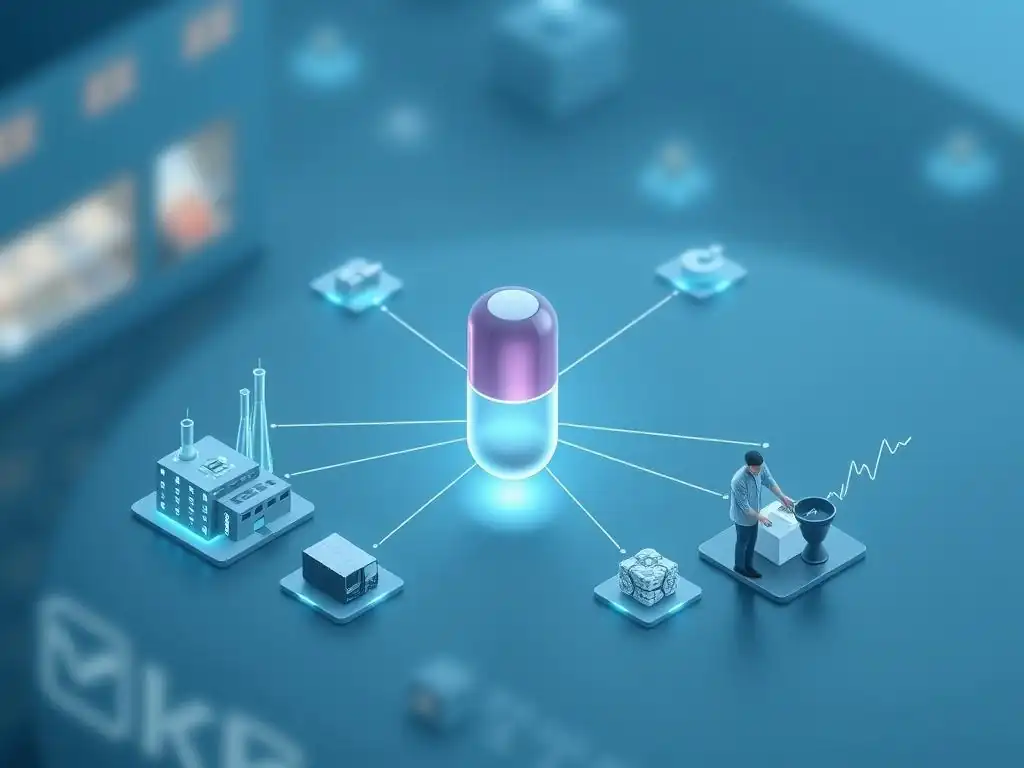
A key advantage of implementing a blockchain drug supply chain is the dramatic improvement in traceability. Every transaction, every transfer of custody, is recorded on an immutable ledger, creating a clear, auditable trail for each drug product. This granular visibility allows authorities and supply chain participants to pinpoint exactly where a suspected counterfeit drug entered the legitimate system or where diversion occurred. Instead of lengthy investigations relying on disparate records, the blockchain provides immediate access to the product's complete history.
This enhanced traceability also fosters accountability. With a clear record of who handled the drug at each step, it becomes easier to identify responsible parties in case of issues like improper storage, delays, or suspected tampering. This increased accountability encourages best practices and reduces the likelihood of negligence or malicious activity within the supply chain. The transparency provided by the blockchain drug supply chain makes it harder for illicit actors to operate undetected.
Increased Efficiency: Streamlining Processes and Reducing Costs
While the primary driver for a blockchain drug supply chain is often security and safety, there are also significant efficiency gains to be realized. By providing a single, shared source of truth, blockchain can reduce the need for manual verification processes, reconciliation of disparate databases, and extensive paperwork. Smart contracts can automate routine processes, such as payment triggers upon successful delivery and verification of goods.
Streamlining these operations can lead to reduced administrative costs, faster transaction times, and improved inventory management. For example, tracking and managing drug recalls becomes significantly more efficient when the exact location and history of affected batches are readily available on the blockchain. A more efficient supply chain ultimately translates to cost savings that can benefit manufacturers, distributors, and potentially even patients.
Enhanced Data Integrity: Ensuring Accuracy and Preventing Tampering
Data integrity is paramount in the pharmaceutical industry, where small errors can have life-threatening consequences. Traditional systems are susceptible to data entry errors, accidental deletion, or malicious tampering within centralized databases. Blockchain's inherent immutability and cryptographic security features provide a powerful defense against these issues. Once data is recorded on the blockchain, it is permanently linked to the previous records and validated by the network, making unauthorized alterations virtually impossible without being immediately detected.
This ensures that the information regarding a drug's origin, handling, and journey is accurate and trustworthy. Regulators can rely on the data for compliance checks, and supply chain partners can make decisions based on verified information. This enhanced data integrity is a cornerstone of a reliable blockchain drug supply chain, building confidence in the system and the products it tracks.
Building Patient Trust: Providing Access to Medication Provenance Information
Ultimately, the goal of enhancing the drug supply chain is to protect patients. A blockchain drug supply chain can directly contribute to building patient trust by potentially allowing them to verify the authenticity and history of their own medication. Imagine a patient scanning a QR code on their prescription bottle and, through a secure application, accessing verified information about where and when the drug was manufactured, its journey through the supply chain, and confirmation that it was handled by legitimate entities.
While the level of patient access would need careful consideration regarding privacy and data presentation, providing this option empowers patients and provides reassurance that their medication is safe and legitimate. This transparency fosters a stronger sense of trust between patients and the healthcare ecosystem, reinforcing the value of a secure and transparent blockchain drug supply chain.
Use Cases: Real-World Applications of Blockchain in Pharmaceutical Traceability
Case Study 1: Tracking Vaccines with Blockchain to Ensure Cold Chain Integrity
Maintaining the cold chain is critical for the efficacy of many vaccines. Any deviation from the required temperature range can render a vaccine ineffective or even harmful. Traditional monitoring methods can be fragmented and prone to manual errors. Blockchain offers a solution by providing an immutable record of temperature data throughout the vaccine's journey. For instance, during the COVID-19 pandemic, several initiatives explored using blockchain to track vaccine shipments.
Projects aimed at tracking vaccines involved placing IoT (Internet of Things) sensors in vaccine shipments that continuously monitor temperature and humidity. This data is then securely recorded onto a blockchain ledger at regular intervals or when specific thresholds are breached. This creates a continuous, verifiable cold chain log that can be audited by regulators and health authorities. If a temperature excursion occurs, the blockchain record provides indisputable evidence, allowing for the isolation and proper disposal of compromised batches, thus ensuring that only viable vaccines reach patients.
Case Study 2: Preventing Opioid Diversion with Blockchain-Based Tracking Systems
The opioid crisis has highlighted the urgent need for better tracking of controlled substances to prevent diversion and misuse. Traditional tracking systems, like state-level Prescription Drug Monitoring Programs (PDMPs), can be siloed and lack real-time interoperability. Blockchain provides a framework for a more secure and interconnected tracking system for controlled substances. For example, pilot programs have been developed to track opioids from the manufacturer to the pharmacy using blockchain.
In such systems, each opioid prescription and subsequent dispensing event is recorded as a transaction on a permissioned blockchain. This creates an unalterable record that can be accessed by authorized parties, including manufacturers, distributors, pharmacies, and regulatory bodies. The system can flag suspicious patterns, such as multiple prescriptions for the same patient from different doctors or unusually high dispensing rates from a specific pharmacy, enabling quicker intervention and investigation into potential diversion activities. This use case demonstrates the power of a blockchain drug supply chain in addressing a critical public health issue.
Case Study 3: Enhancing Pharmaceutical Supply Chain Security in Developing Countries
Counterfeit drugs disproportionately affect developing countries, where regulatory oversight may be less stringent and traditional supply chain infrastructure is often less robust. Blockchain technology offers a way to leapfrog some of these limitations by providing a cost-effective and secure method for tracking medications. Projects in regions like Africa and Southeast Asia have explored using blockchain to improve the security and transparency of drug distribution.
These initiatives often focus on providing a simple mechanism, such as mobile phone scanning of QR codes on drug packaging, that allows patients and healthcare providers to verify the authenticity of medication by checking its status on a blockchain ledger. This empowers end-users to participate in the verification process and acts as a deterrent to counterfeiters. By providing a trustworthy system in environments where trust in the supply chain may be low, blockchain plays a vital role in improving access to safe and legitimate medicines.
Challenges and Considerations for Blockchain Drug Supply Chain Implementation
Regulatory Compliance: Meeting FDA and Other Agency Requirements
Implementing a blockchain drug supply chain in the highly regulated pharmaceutical industry requires careful consideration of existing and evolving compliance requirements. In the United States, the Drug Supply Chain Security Act (DSCSA) mandates enhanced tracing of pharmaceutical products through the supply chain. While DSCSA outlines requirements for interoperable electronic tracing, it doesn't specifically mandate blockchain. However, a well-designed blockchain solution can potentially help companies meet or exceed DSCSA requirements by providing an immutable and interoperable record.
Companies must ensure their blockchain implementation aligns with DSCSA deadlines and data exchange standards. Furthermore, international regulations vary, requiring a global solution to be adaptable. Engaging with regulatory bodies like the FDA, EMA (European Medicines Agency), and others early in the development process is crucial to ensure that the blockchain solution is compliant and meets the necessary standards for data integrity, security, and auditability.
Data Privacy and Security: Protecting Sensitive Patient Information
While blockchain enhances security for transaction data, implementing a blockchain drug supply chain raises important considerations regarding data privacy, particularly under regulations like GDPR and HIPAA. The ledger contains information about the movement of drugs, which could potentially be linked to patient data if not handled carefully. It is crucial that the blockchain design focuses on tracking the product (the drug package) rather than the patient.
Sensitive patient information, such as names, addresses, or medical conditions, should not be stored directly on the public or even a permissioned blockchain ledger. Instead, the system should focus on tracking the serialized product identifier. Any necessary links to patient data should be managed off-chain in secure, compliant systems, with only anonymized or aggregated data potentially referenced on the blockchain if required for specific use cases like dispensing verification. Implementing robust access controls and encryption is essential to protect sensitive information within the broader ecosystem surrounding the blockchain.
Scalability and Interoperability: Integrating with Existing Systems
The pharmaceutical supply chain is vast and complex, involving millions of transactions daily. A blockchain solution must be scalable to handle this volume of data and participants without performance degradation. Choosing the right blockchain platform and architecture (e.g., private, permissioned, or hybrid) is critical for ensuring scalability. Furthermore, achieving widespread adoption requires interoperability – the ability of the blockchain system to seamlessly communicate and exchange data with the myriad of existing legacy systems used by manufacturers, distributors, pharmacies, and regulators.
Integrating blockchain with existing ERP, WMS, and serialization systems can be technically challenging and requires significant development effort. Solutions must be designed with open APIs and data standards to facilitate integration. A phased approach to implementation, starting with pilot programs focusing on specific segments or use cases, can help address scalability and interoperability challenges gradually and demonstrate the value proposition before full-scale deployment.
Cost of Implementation and Maintenance: Assessing the Return on Investment (ROI)
Implementing a blockchain drug supply chain is a significant investment. Costs include platform development or licensing, integration with existing systems, hardware infrastructure, training for personnel, and ongoing maintenance. Organizations must carefully assess the total cost of ownership and develop a clear business case demonstrating the potential return on investment (ROI).
The ROI calculation should consider not only the direct costs but also the potential savings and benefits, such as reduced losses from counterfeiting and diversion, increased efficiency in recalls and returns, improved compliance, and enhanced brand reputation and patient trust. While initial implementation costs can be high, the long-term benefits in terms of supply chain integrity, safety, and efficiency can justify the investment for pharmaceutical companies and the broader healthcare ecosystem.
The Future of Blockchain in Pharmaceutical Supply Chains: Towards a More Secure and Transparent Healthcare Ecosystem
Integration with IoT Devices: Real-Time Monitoring of Drug Conditions
The convergence of blockchain and the Internet of Things (IoT) holds significant promise for the future of the blockchain drug supply chain. IoT devices, such as sensors that monitor temperature, humidity, light exposure, and even physical shock, can be placed directly on drug packaging or shipping containers. These sensors can continuously collect data about the environmental conditions experienced by the medication during transit and storage.
By integrating these IoT devices with the blockchain ledger, the sensor data can be automatically and immutably recorded as part of the drug's history. This provides real-time, verifiable evidence of proper handling and storage conditions throughout the supply chain. For temperature-sensitive products like vaccines or biologics, this integration is crucial for ensuring product quality and safety from the manufacturing plant all the way to the point of administration, creating a truly intelligent and responsive blockchain drug supply chain.
AI and Blockchain Convergence: Predictive Analytics for Supply Chain Optimization
Combining Artificial Intelligence (AI) with blockchain technology can unlock advanced capabilities for optimizing the pharmaceutical supply chain. The immutable and comprehensive dataset recorded on the blockchain provides a rich source of information for AI algorithms. AI can analyze this data to identify patterns, predict potential disruptions, detect anomalies indicative of fraud or diversion attempts, and optimize logistics routes.
For example, AI could analyze historical tracking data on the blockchain to predict delivery delays based on weather patterns or historical bottlenecks. It could also analyze transaction patterns to proactively flag suspicious activities that deviate from normal behavior, providing an early warning system against counterfeiting or diversion. The convergence of AI and blockchain creates a more intelligent, resilient, and predictive blockchain drug supply chain.
The Role of Smart Contracts in Automating Supply Chain Processes
Smart contracts, self-executing contracts with the terms of the agreement directly written into code, will play an increasingly important role in automating processes within the blockchain drug supply chain. These contracts reside on the blockchain and automatically execute predefined actions when specific conditions are met, based on the data recorded on the ledger.
For instance, a smart contract could automatically trigger payment to a distributor once the blockchain confirms that a shipment of drugs has been successfully delivered and verified by the receiving pharmacy. Another smart contract could initiate a product recall process across all relevant parties if a specific batch number is flagged as defective on the ledger. This automation reduces manual effort, minimizes delays, and ensures that supply chain processes are executed consistently and compliantly, further enhancing the efficiency and reliability of the blockchain drug supply chain.
Conclusion: Blockchain's Transformative Potential for Drug Supply Chain Security
Frequently Asked Questions
What specific problem does blockchain address in the drug supply chain?
Blockchain addresses the problem of counterfeit drugs and lack of traceability. It provides an immutable record of each transaction, making it difficult to introduce fake medications.
How does blockchain enhance transparency in the drug supply chain?
Blockchain creates a shared, distributed ledger that all participants can access. This provides end-to-end visibility of the drug's journey, from manufacturer to patient, enhancing transparency.
What are some benefits of using blockchain in the drug supply chain for pharmaceutical companies?
Benefits include improved supply chain efficiency, reduced risk of counterfeiting, and enhanced regulatory compliance. This also leads to increased consumer trust.
What are the main challenges to implementing blockchain in the drug supply chain?
Key challenges include lack of standardization, high initial investment costs, and the need for collaboration among diverse stakeholders. Data privacy concerns also need to be addressed.
How does blockchain help patients ensure the authenticity of their medication?
Blockchain allows patients to verify the origin and authenticity of their medication using a unique identifier or QR code. This empowers patients and reduces the risk of consuming counterfeit drugs.
Okay, here's a final reflection designed to close your article "Blockchain for Drug Supply Chain Transparency: From Manufacturer to Patient," optimized for the keyword "Blockchain drug supply chain" and following the structure you provided:
Final Reflection: Securing Health, One Block at a Time
The journey of pharmaceuticals from manufacturer to patient is fraught with vulnerabilities, but the insights explored in this article demonstrate that blockchain technology offers a powerful solution for enhancing transparency and security within the drug supply chain. The potential to combat counterfeiting, reduce medication errors, and ultimately safeguard public health makes the adoption of blockchain in this sector not just innovative, but essential.
The impact of a transparent and secure drug supply chain extends far beyond regulatory compliance; it fosters trust between patients, healthcare providers, and pharmaceutical companies. Knowing that the medication you're taking is authentic and untainted is a fundamental right, and blockchain can help guarantee that right. The best way to predict the future is to create it.
- Peter Drucker. This quote perfectly encapsulates the proactive approach needed to implement blockchain solutions and revolutionize the drug supply chain.
As we look ahead, let us not underestimate the transformative power of blockchain in revolutionizing the drug supply chain. Consider how you, as a patient, healthcare professional, or industry stakeholder, can advocate for the adoption of this technology. Let's work together to build a future where every medication is traceable, every patient is protected, and the integrity of the pharmaceutical supply chain is unassailable.
Unleash Trust: Secure Your Health Future!
Thank you for exploring how blockchain is transforming drug supply chains and improving patient safety. Now, it's time to take action.
Here's how you can promote transparency:
- Advocate for transparency: Ask your healthcare providers and pharmacies whether they are using blockchain technology to verify the authenticity and origin of your medications.: Your health depends on it—be proactive!
- Share this information with friends and family to raise awareness about blockchain's role in healthcare. Together, we can build a community of informed advocates.
- Explore other uses of blockchain beyond healthcare. Its versatility and potential are truly impressive!
What steps will you take this week to support a more transparent and secure pharmaceutical supply chain? Share your ideas in the comments below!
Leave a Reply