
Blockchain for Clinical Trial Data Provenance: Tracing the Journey of Research Information


Welcome to Blockchain Trends, your compass navigating the ever-evolving landscape of decentralized technologies!
Ever wondered how blockchain can revolutionize fields beyond cryptocurrency? This week, we delve into its fascinating application in healthcare. Specifically, we're exploring Blockchain clinical trial data provenance and how it's poised to transform the integrity and transparency of medical research. Discover how this technology can trace the complete journey of research information, ensuring accuracy and reliability. Ready to unlock the potential? Read on to learn more!
Blockchain for Clinical Trial Data Provenance: Tracing the Journey of Research Information
- Introduction: The Need for Enhanced Data Provenance in Clinical Trials
- Understanding Blockchain Technology for Data Provenance
- Blockchain Clinical Trial Data Provenance: A Detailed Explanation
- Benefits of Using Blockchain for Clinical Trial Data
- Applications of Blockchain in Clinical Trial Data Management
- Implementing Blockchain for Clinical Trial Data Provenance: Key Considerations
- Case Studies: Examples of Blockchain Applications in Clinical Research
- Challenges and Limitations of Blockchain in Clinical Trials
- The Future of Blockchain in Clinical Trial Data Provenance
- Conclusion: Blockchain as a Catalyst for Trust and Transparency in Clinical Research
-
Frequently Asked Questions
- How does blockchain enhance clinical trial data provenance?
- What are the key benefits of using blockchain for clinical trial data provenance?
- What types of clinical trial data can be secured using blockchain?
- How can blockchain address concerns about data privacy in clinical trials?
- What are the potential challenges to implementing blockchain for clinical trial data provenance?
- Final Reflection: Securing the Future of Clinical Research
- Reimagine Trust: Take Control of Clinical Trial Transparency!
Introduction: The Need for Enhanced Data Provenance in Clinical Trials
The Challenges of Data Integrity and Transparency in Clinical Research
Clinical trials are the bedrock of medical advancement, generating vast amounts of data that inform regulatory decisions and ultimately impact patient care. However, the traditional methods of managing this data face significant challenges regarding integrity and transparency. Data can be altered, lost, or mishandled at various stages, from collection at investigator sites to aggregation, analysis, and reporting.
A 2019 report by the FDA highlighted data integrity issues as a leading cause for regulatory actions in clinical trials, underscoring the critical need for more robust systems. Ensuring that every piece of data is accurate, unaltered, and traceable to its origin is paramount for the validity and trustworthiness of trial results.
Furthermore, the lack of inherent transparency in conventional systems makes it difficult for auditors, regulators, and even sponsors to verify the complete history and authenticity of trial data without extensive manual checks. The complexity of multi-site, global trials exacerbates these issues, creating fragmented data trails across disparate systems. This opacity can lead to delays in regulatory approval, increased costs due to audits, and, in worst-case scenarios, questions about the reliability of the trial's findings, potentially impacting patient safety and public trust in medical research.
Why Blockchain is a Promising Solution for Clinical Trial Data Management
Blockchain technology offers a compelling solution to address the fundamental challenges of data integrity and transparency in clinical research, particularly focusing on blockchain clinical trial data provenance. By providing an immutable, distributed ledger, blockchain creates a tamper-evident record of all data transactions and events. Each time data is entered, updated, or accessed, this action can be recorded on the blockchain, creating a permanent, verifiable audit trail. This inherent characteristic makes it significantly harder to alter data without detection, thereby enhancing data integrity from the point of data capture through analysis and submission.
The decentralized nature of blockchain further contributes to transparency. Instead of data being siloed in centralized databases controlled by individual parties, a blockchain can allow authorized stakeholders – such as sponsors, investigators, regulators, and potentially even patients – to view the immutable record of data provenance. This shared, single source of truth reduces disputes, simplifies auditing, and builds trust among all participants in the clinical trial ecosystem. The application of blockchain for clinical trial data provenance provides an unprecedented level of assurance regarding the history and authenticity of critical research information.
Understanding Blockchain Technology for Data Provenance
How Blockchain Ensures Data Immutability and Auditability
Blockchain technology fundamentally ensures data immutability through its cryptographic structure and consensus mechanisms. Data is grouped into blocks, and each new block contains a cryptographic hash of the previous block, creating a chain. If any data within a historical block is altered, the hash of that block changes. Since the next block in the chain includes the original hash, this mismatch immediately signals tampering.
Furthermore, in a permissioned blockchain network suitable for clinical trials, multiple participants (nodes) hold copies of the ledger. Any proposed change or new block must be validated by a consensus mechanism among these nodes. This distributed validation makes it practically impossible for a single malicious actor to alter data on their copy of the ledger and have that change accepted by the network.
This structure inherently provides a robust audit trail. Every transaction or data entry recorded on the blockchain is time-stamped and linked to the identity (or pseudonym) of the participant who initiated it. This creates a chronological, verifiable history of data creation, modification, and access.
Auditors can simply query the blockchain to reconstruct the exact journey of any data point, confirming when it was recorded, by whom, and verifying that it has not been altered since. This contrasts sharply with traditional systems where audit logs can potentially be modified or incomplete. The immutability and inherent auditability provided by blockchain technology are key to establishing reliable blockchain clinical trial data provenance.
Key Features of Blockchain Relevant to Clinical Trial Applications
Several core features of blockchain technology make it particularly relevant for enhancing data management and provenance in clinical trials. Decentralization distributes the ledger across multiple nodes, eliminating single points of failure and reducing reliance on a central authority, which aligns well with the multi-party nature of trials involving sponsors, CROs, sites, and labs.
Immutability, as discussed, guarantees that once data is recorded, it cannot be retrospectively altered without leaving a detectable trace, ensuring the reliability of the data history. Transparency (within a permissioned context where access is controlled) allows authorized parties to view the same version of the data record, fostering trust and collaboration.
Furthermore, cryptography secures the data and transactions recorded on the chain, ensuring privacy and authenticity. Smart contracts, self-executing contracts with the terms of the agreement directly written into code, can automate processes like data access permissions, data verification triggers, or payments based on predefined conditions, reducing manual intervention and potential errors. These features collectively enable the creation of a secure, transparent, and verifiable system for managing clinical trial data, forming the technical foundation for establishing strong blockchain clinical trial data provenance.
Decentralized Ledger Technology (DLT) and its Role in Data Integrity
Decentralized Ledger Technology (DLT), of which blockchain is a prominent type, plays a crucial role in enhancing data integrity in clinical trials by moving away from centralized data storage. In a traditional setup, data resides in a central database, making it a single, attractive target for cyberattacks or internal tampering. A breach of this central repository could compromise the integrity of the entire dataset. DLT, however, distributes copies of the ledger across a network of participants.
For data to be added or modified (in a controlled, append-only manner), the majority of participants in the network must agree through a consensus mechanism. This distribution and consensus requirement mean that compromising the data would necessitate simultaneously attacking and gaining control over a significant portion of the network's nodes, which is exponentially more difficult than attacking a single server. By distributing trust and control across the network, DLT significantly enhances the resilience and integrity of the data, providing a robust framework for managing and verifying blockchain clinical trial data provenance.
Blockchain Clinical Trial Data Provenance: A Detailed Explanation
Defining Clinical Trial Data Provenance
Clinical trial data provenance refers to the complete history and lineage of a piece of data, from its initial creation or collection point through every subsequent step, including transformations, aggregations, analyses, and storage. It answers crucial questions like:
- Where did this data come from? (Source, investigator, device)
- When was it recorded? (Timestamp)
- Who recorded or entered it? (User identity)
- What modifications, if any, were made to it? (Change history)
- Who accessed the data and when? (Access logs)
Establishing robust data provenance is essential for verifying the reliability and authenticity of clinical trial results. Regulators, auditors, and sponsors need to be confident that the data presented reflects the actual observations and measurements taken during the trial, without unauthorized alterations or gaps in its history. Poor data provenance can lead to regulatory rejections, require costly data reconciliation efforts, and erode confidence in the study's findings.
Tracking Data Lineage with Blockchain: From Creation to Analysis
Using blockchain for clinical trial data provenance allows for meticulous tracking of data lineage. When data is initially captured, say a patient's vital sign reading at a clinical site, this event can be recorded on the blockchain as a transaction.
This transaction would include a hash of the data, a timestamp, the identifier of the source (e.g., site ID, device ID), and the identity of the user entering the data. As this data moves through the trial workflow – perhaps being aggregated with data from other sites, undergoing cleaning processes, or being used in statistical analysis – each significant step or transformation is recorded as a new transaction on the blockchain, linked back to the original data entry.
This creates an immutable, chronological chain of records detailing every event in the data's lifecycle. An auditor can query the blockchain to see the exact path the data took: from Site A on Date X by User Y, aggregated into Dataset Z on Date Z, included in Analysis A on Date A, and so forth. This provides a transparent and undeniable record of the data's journey, significantly enhancing the ability to verify its history and state at any point in time. Implementing blockchain clinical trial data provenance provides an unshakeable foundation for data history tracking.
Ensuring Data Integrity and Authenticity throughout the Trial Lifecycle
Blockchain technology ensures data integrity and authenticity throughout the entire clinical trial lifecycle by providing a tamper-evident record of all data activities. From the moment an electronic Case Report Form (eCRF) is signed off at a site, or data is streamed from a wearable device, a record of this event (or a hash of the data) can be anchored to the blockchain. Any subsequent attempt to alter this original data point in a connected system would be immediately detectable because the hash of the current data would no longer match the original hash recorded on the blockchain.
Furthermore, the use of digital signatures, verifiable on the blockchain, can confirm the authenticity of the source of the data (e.g., confirming that data truly came from a specific investigator or device). This continuous, verifiable recording of data state and activity across the trial phases – from patient recruitment and data collection to monitoring, analysis, and reporting – provides an unprecedented level of assurance that the data remains unchanged and authentic. This robust approach to data integrity is the core promise of blockchain clinical trial data provenance.
Benefits of Using Blockchain for Clinical Trial Data
Enhanced Transparency and Trust in Clinical Trial Results
One of the primary benefits of applying blockchain for clinical trial data provenance is the significant enhancement of transparency and, consequently, trust in the trial results. By recording data entries, updates, and access logs on a distributed, immutable ledger, blockchain creates a shared, verifiable history accessible to authorized parties. This means sponsors, Contract Research Organizations (CROs), investigators, and regulators can all view the same, tamper-evident record of the data's journey from source to submission.
This level of transparency reduces information asymmetry and potential disputes about data validity. For instance, auditors can trace data points instantly, reducing the need for time-consuming site visits and manual checks. Regulators gain confidence knowing they can independently verify the integrity of the submitted data against an immutable record. Ultimately, this increased transparency builds greater confidence in the accuracy and reliability of clinical trial findings, which is crucial for public health and regulatory decision-making.
Improved Data Security and Reduced Risk of Data Tampering
Blockchain technology inherently improves data security and significantly reduces the risk of data tampering compared to traditional centralized systems. Data recorded on a blockchain, particularly in a permissioned network suitable for sensitive clinical trial data, is secured using advanced cryptography. Each block is linked to the previous one via a cryptographic hash, and altering data in a past block would break this chain, making tampering immediately obvious to anyone viewing the ledger.
Moreover, the decentralized nature means there is no single central database that, if breached, could compromise all the data. An attacker would need to compromise a majority of the network's participating nodes simultaneously to successfully alter the ledger, a task that is computationally and logistically far more challenging than breaching a single server. This robust security architecture provides a high degree of assurance that the recorded blockchain clinical trial data provenance is accurate and has not been maliciously altered.
Streamlined Auditing Processes and Regulatory Compliance
The immutable and transparent nature of blockchain significantly streamlines auditing processes and facilitates regulatory compliance in clinical trials. Auditors can access the blockchain ledger to instantly verify the timestamp, source, and history of any data point, eliminating the need to sift through potentially disparate and less reliable paper trails or centralized electronic logs. This speeds up the audit process, reduces costs, and increases the thoroughness of data verification.
Regulatory bodies like the FDA and EMA require stringent data integrity and audit trails. Blockchain provides a system that inherently meets and often exceeds these requirements by offering a verifiable, unalterable record of all data activities. The ability to easily demonstrate the complete and untampered provenance of data points simplifies regulatory submissions and increases the likelihood of smooth and timely approvals. The verifiable blockchain clinical trial data provenance provides a clear path to demonstrating adherence to Good Clinical Practice (GCP) guidelines related to data handling.
Increased Efficiency in Data Sharing and Collaboration among Stakeholders
Collaboration among the numerous stakeholders involved in clinical trials – sponsors, CROs, investigator sites, labs, and regulators – is often hampered by inefficient and insecure data sharing mechanisms. Using a blockchain as a shared, immutable record for critical data points and their provenance can dramatically improve this. Authorized parties can access the agreed-upon, single source of truth on the blockchain, reducing the need for multiple data transfers and reconciliation efforts across different systems.
Smart contracts can automate data access permissions, ensuring that only authorized parties can view specific data according to predefined rules and consent agreements. This secure and efficient sharing mechanism fosters better collaboration, reduces delays caused by data transfer bottlenecks, and ensures that all parties are working with verified, authentic data. This enhanced data sharing capability is a direct benefit of leveraging blockchain for clinical trial data provenance.
Applications of Blockchain in Clinical Trial Data Management
Patient Consent Management and Data Access Control
Blockchain can revolutionize patient consent management in clinical trials by providing a secure, transparent, and auditable system for recording consent decisions. When a patient provides consent, this event can be recorded on the blockchain, including details like the version of the consent form, the date, and the patient's digital signature (or a cryptographic representation thereof). This creates an immutable record that can be easily verified by all parties involved.
Furthermore, smart contracts can be used to enforce the patient's consent preferences regarding data access and sharing. If a patient consents only to their data being used for a specific trial and shared anonymously for research purposes, a smart contract linked to their consent record on the blockchain can automatically enforce these rules, granting or denying access to their data based on the predefined conditions. This empowers patients with greater control over their data and provides an auditable trail of how consent was managed, strengthening blockchain clinical trial data provenance related to patient participation.
Supply Chain Tracking for Pharmaceuticals and Medical Devices
While not directly related to patient data provenance, blockchain is also being applied to track the supply chain of investigational drugs and medical devices used in clinical trials. Ensuring the integrity and authenticity of these materials is critical for patient safety and trial validity. A blockchain ledger can record every step a product takes, from manufacturing and packaging to shipping, customs, storage at investigator sites, and dispensing to patients.
Each transfer of custody or significant event (like temperature monitoring excursions) can be recorded as a transaction on the blockchain. This creates an immutable history that proves the product's origin, handling conditions, and legitimacy. This application, exemplified by initiatives like the MediLedger Network, helps prevent counterfeiting, ensures proper storage conditions, and provides a verifiable chain of custody, indirectly supporting the integrity of the trial by ensuring the materials used are authentic and handled correctly. While distinct from patient data, it contributes to the overall trustworthiness of the clinical trial process.
Secure Storage and Sharing of Clinical Trial Data
While storing all raw clinical trial data directly on a public or even a permissioned blockchain can be impractical due to data volume and privacy concerns, blockchain is highly effective for securing and managing access to data stored off-chain. Instead of storing the actual data on the blockchain, cryptographic hashes of data files or datasets are recorded. These hashes act as digital fingerprints. If the off-chain data is altered, its hash changes, and this mismatch with the hash stored on the blockchain provides immediate proof of tampering.
Furthermore, blockchain and smart contracts can manage access permissions to the off-chain data repositories. When a party requests access to data, the request can be routed through a smart contract on the blockchain that verifies their authorization based on predefined rules (e.g., role, consent status, regulatory approval). This provides a secure and auditable mechanism for controlling who accesses what data and when, significantly enhancing the security and controlled sharing of sensitive clinical trial information while maintaining robust blockchain clinical trial data provenance by recording access events.
Real-Time Monitoring of Clinical Trial Progress
Blockchain can facilitate closer to real-time monitoring of clinical trial progress by providing a shared, continuously updated ledger of key trial milestones and data submissions. As data is collected and verified at investigator sites, its status (or a hash of verified data batches) can be recorded on the blockchain. This allows sponsors and CROs to gain near real-time visibility into data flow, patient recruitment status, and protocol deviations as they are recorded.
This capability enables proactive trial management, allowing sponsors to identify potential issues or delays more quickly than relying on periodic data transfers and reports. For example, if data submission volume from a site drops unexpectedly, this can be flagged by monitoring blockchain transactions. While not storing all raw data, anchoring key status updates and data hashes to the blockchain provides a transparent and verifiable snapshot of trial activities, contributing to efficient oversight and supporting the overall goal of establishing reliable blockchain clinical trial data provenance.
Implementing Blockchain for Clinical Trial Data Provenance: Key Considerations
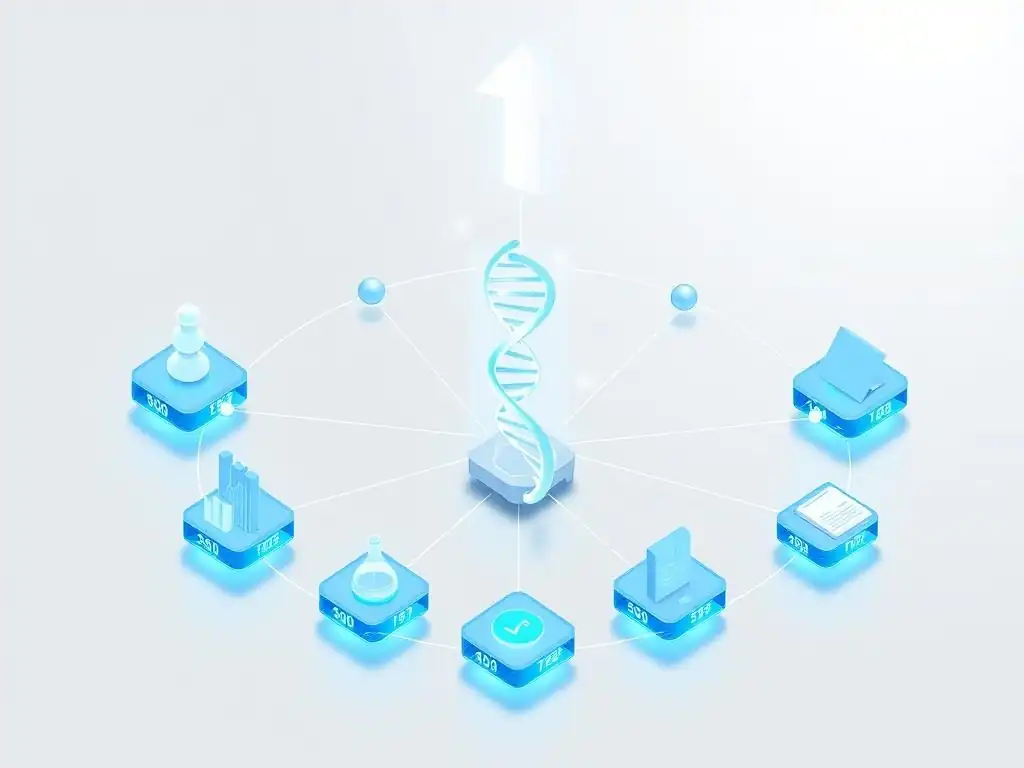
Choosing the Right Blockchain Platform for Clinical Trials
Selecting the appropriate blockchain platform is a critical first step when implementing blockchain for clinical trial data provenance. Public, permissionless blockchains like Bitcoin or Ethereum (in its original proof-of-work form) are generally unsuitable due to privacy concerns, variable transaction costs, and unpredictable performance. Clinical trial data is highly sensitive and requires controlled access. Therefore, permissioned or private blockchain platforms are typically preferred.
Examples of suitable platforms include Hyperledger Fabric, R3 Corda, or Quorum. These platforms allow organizations to control who can join the network (nodes), define roles and permissions for viewing and interacting with data, and often offer better transaction speed and scalability. The choice depends on factors like the required level of privacy, performance needs (transactions per second), ease of integration with existing systems, governance requirements, and the expertise available within the implementing organization. A thorough evaluation based on these criteria is essential.
Data Privacy and Compliance with Regulations
Implementing blockchain for clinical trial data provenance must strictly adhere to data privacy regulations such as the Health Insurance Portability and Accountability Act (HIPAA) in the United States and the General Data Protection Regulation (GDPR) in Europe. Storing Protected Health Information (PHI) or Personally Identifiable Information (PII) directly on an immutable ledger, even a permissioned one, raises significant compliance challenges, particularly regarding the "right to erasure" under GDPR.
Therefore, a common approach is to store sensitive patient data off-chain in secure, compliant databases. Only cryptographic hashes of this data, metadata about the data (like timestamps, source IDs), and transaction logs are recorded on the blockchain. This ensures data provenance and integrity are verifiable without exposing sensitive patient information on the ledger itself. Implementing robust access controls via smart contracts and ensuring the off-chain storage meets all regulatory requirements are paramount. Legal and compliance experts must be involved from the outset.
Interoperability with Existing Clinical Trial Systems
Clinical trials rely on a complex ecosystem of existing systems, including Electronic Data Capture (EDC) systems, Clinical Trial Management Systems (CTMS), Electronic Health Records (EHR), and lab information systems. For a blockchain solution for clinical trial data provenance to be effective, it must seamlessly integrate with these legacy systems. Data needs to flow from collection points in EDC or EHR systems onto the blockchain (or have its hash recorded) and potentially back into other systems for analysis or reporting.
This requires developing robust Application Programming Interfaces (APIs) and middleware to connect the blockchain layer with existing infrastructure. The challenge lies in standardizing data formats and ensuring smooth, secure data exchange between potentially disparate technologies. Lack of interoperability can lead to data silos and hinder the adoption of blockchain solutions, negating the benefits of enhanced provenance. Prioritizing interoperability during the design and implementation phase is crucial.
Scalability and Performance Requirements for Clinical Trials
Clinical trials, especially large, multi-site studies, generate vast volumes of data and require thousands, if not millions, of transactions (data entries, updates, queries). The chosen blockchain platform must be able to handle this scale and provide adequate performance in terms of transaction throughput and latency. Public blockchains often struggle with scalability, leading to slow transaction times and high costs during periods of high network activity.
Permissioned blockchains are generally more scalable than public ones because they involve a limited number of known participants and can use more efficient consensus mechanisms. However, even permissioned networks have limitations. Organizations must carefully assess the expected data volume and transaction frequency of their clinical trials and select a platform that can meet these demands. Strategies like using off-chain storage for large data files while recording hashes on-chain, or utilizing layer-2 scaling solutions, may be necessary to ensure the blockchain solution for clinical trial data provenance remains performant and cost-effective as trials grow in size and complexity.
Case Studies: Examples of Blockchain Applications in Clinical Research
Guardtime's KSI Blockchain for Clinical Trial Data Integrity
Guardtime is a company that has applied its Keyless Signature Infrastructure (KSI) blockchain technology to ensure the integrity of data, including clinical trial data. Rather than storing the data itself, the KSI blockchain creates cryptographic "signatures" or hashes of data at regular intervals (e.g., daily). These hashes are then included in a block, which is linked to the previous block using hashing, creating an immutable chain. Periodically, a hash of the entire chain is published publicly (e.g., in newspapers or on websites), creating a global, verifiable anchor point.
If data is later questioned, its current hash can be computed and compared to the hash recorded on the KSI blockchain. If they don't match, it proves the data has been altered since it was 'signed' on the blockchain. This system was reportedly used by a major pharmaceutical company (though specific trial details are often confidential) to provide an independent, verifiable proof of the integrity of their clinical trial data submissions to regulators. This approach focuses specifically on providing strong proof of data integrity over time, contributing significantly to blockchain clinical trial data provenance.
Mediledger Network for Pharmaceutical Supply Chain Security
The MediLedger Network, an initiative involving major pharmaceutical companies, is a prominent example of blockchain application, specifically focusing on the pharmaceutical supply chain, which is closely related to clinical trials. While not directly tracking patient data provenance, it addresses the provenance of the drugs and materials used in trials. The network uses a permissioned blockchain to track the ownership and movement of pharmaceutical products as they move from manufacturers to distributors, pharmacies, and ultimately to patients (or trial sites).
By recording transactions like shipping, receiving, and changes in ownership on the immutable ledger, MediLedger creates a verifiable history for each product. This helps combat counterfeit drugs, verify product authenticity, and comply with regulations like the US Drug Supply Chain Security Act (DSCSA). For clinical trials, this ensures the investigational product administered to patients is legitimate and has been handled correctly throughout its journey, indirectly supporting the integrity and trustworthiness of the trial data collected.
Lessons Learned from Early Blockchain Implementations in Clinical Trials
Early implementations of blockchain in clinical research, though often pilot projects or limited deployments, have provided valuable lessons. One key lesson is that while the technology is promising for blockchain clinical trial data provenance, integration with legacy systems is a significant hurdle. Simply layering blockchain on top of existing, fragmented systems without proper APIs and data standardization is ineffective. Projects have shown the need for careful planning regarding data flow and system architecture.
Another lesson is the importance of clear governance and collaboration among stakeholders. A blockchain network for clinical trials requires agreement on data standards, access rules, and network operation. Early pilots highlighted the challenges of bringing together competing organizations (like different sponsors or CROs) to agree on a shared infrastructure and rules. Finally, the regulatory landscape is still evolving. Projects have learned the necessity of proactive engagement with regulatory bodies to ensure solutions meet current and future compliance requirements, particularly regarding data privacy and the handling of immutable records.
Challenges and Limitations of Blockchain in Clinical Trials
Technical Complexity and Integration Hurdles
One of the primary challenges in adopting blockchain for clinical trial data provenance is the inherent technical complexity of the technology itself. Designing, developing, and deploying a blockchain solution requires specialized expertise in distributed systems, cryptography, and smart contract programming, which is not widely available within traditional pharmaceutical or clinical research organizations.
Furthermore, integrating a blockchain layer with the diverse and often outdated legacy systems used in clinical trials (EDC, CTMS, EHR, etc.) presents significant technical hurdles. These systems often use proprietary data formats and lack modern APIs. Building the necessary interfaces and ensuring seamless data flow between the blockchain and these systems requires substantial development effort and can be costly. Overcoming these technical integration challenges is crucial for successful implementation of blockchain clinical trial data provenance solutions.
Regulatory Uncertainty and Lack of Standardized Frameworks
Despite growing interest, the regulatory landscape for using blockchain in clinical trials, especially for core data management, remains somewhat uncertain. While regulatory bodies like the FDA and EMA are exploring the technology, there is currently no specific, standardized framework or guidance on how blockchain solutions should be validated, audited, or integrated into existing regulatory submission processes.
This lack of clear guidance creates hesitations for pharmaceutical companies and CROs, who are understandably risk-averse when it comes to adopting new technologies that could impact regulatory approval. Questions remain about how regulators will access and audit data on a blockchain, how amendments to smart contracts will be handled, and how the immutability principle aligns with requirements for data correction. Developing standardized frameworks and engaging proactively with regulators are necessary steps to accelerate the adoption of blockchain clinical trial data provenance.
Concerns about Data Scalability and Storage Costs
While permissioned blockchains offer better scalability than public ones, storing the vast amount of data generated by large clinical trials remains a concern. Even if only hashes and metadata are stored on-chain, the ledger can grow significantly over time. Managing the storage and ensuring efficient access to this ever-growing ledger across multiple nodes can become technically complex and potentially expensive.
Furthermore, while the blockchain itself might store minimal data, the off-chain storage solutions needed to house the actual, sensitive clinical trial data still require robust infrastructure, security, and compliance measures, adding to the overall cost and complexity. Organizations must carefully design their blockchain architecture to manage data growth effectively and evaluate the long-term costs associated with maintaining the distributed ledger and associated storage infrastructure when implementing blockchain clinical trial data provenance solutions.
Addressing the Skills Gap in Blockchain Technology for Clinical Research
A significant limitation to the widespread adoption of blockchain in clinical trials is the current skills gap. There is a shortage of professionals who possess expertise in both blockchain technology and the intricacies of clinical research processes, regulatory requirements (like GCP, HIPAA, GDPR), and existing clinical trial systems.
Successfully implementing and managing a blockchain solution for clinical trial data provenance requires a multidisciplinary team that understands the technical aspects of distributed ledgers, the specific data flow and compliance needs of clinical trials, and how to bridge the gap between these two domains. Training existing staff, hiring new talent with combined expertise, or partnering with specialized technology providers are necessary steps to overcome this skills gap and fully realize the potential of blockchain in this field.
The Future of Blockchain in Clinical Trial Data Provenance
Emerging Trends in Blockchain and Healthcare
Several emerging trends in blockchain are poised to further impact its application in healthcare and specifically in blockchain clinical trial data provenance. One trend is the development of more specialized, healthcare-focused blockchain platforms designed to address the unique requirements of sensitive health data, including enhanced privacy features like zero-knowledge proofs, which allow verification of data properties without revealing the underlying data itself.
Another trend is the increasing focus on interoperability standards within the blockchain space and between blockchain networks and traditional healthcare IT systems. Initiatives aimed at creating common data models and APIs will simplify the integration challenges mentioned earlier. Finally, the maturation of enterprise-grade blockchain solutions with improved scalability, performance, and governance models is making the technology more viable for large-scale clinical trial operations.
Potential for AI and Blockchain Integration in Clinical Trials
The integration of Artificial Intelligence (AI) and blockchain holds significant potential for enhancing clinical trials. AI can be used to analyze the vast datasets generated during trials, identifying patterns, predicting outcomes, or optimizing trial design. However, the effectiveness and trustworthiness of AI analysis depend entirely on the integrity and provenance of the data it processes.
Blockchain can provide the secure, immutable, and verifiable data provenance layer that AI needs. By ensuring that the data fed into AI algorithms is authentic and untampered, blockchain enhances the reliability of the AI's insights. Furthermore, blockchain can record the decisions made by AI systems or the models used, creating an auditable trail of the AI's role in the trial process. This synergy between AI for analysis and blockchain for data integrity and provenance could lead to more efficient, reliable, and trustworthy clinical trials.
The Role of Blockchain in Decentralized Clinical Trials (DCTs)
Decentralized Clinical Trials (DCTs), which leverage technologies like telemedicine, wearable devices, and remote monitoring to reduce the need for physical site visits, are becoming increasingly common. DCTs generate data from a wider variety of sources and locations than traditional trials, making data provenance and integrity even more challenging to manage.
Blockchain technology is particularly well-suited to the needs of DCTs. It can provide a secure and verifiable method for collecting and timestamping data from remote devices and patient inputs, ensuring the authenticity and integrity of this distributed data.
Blockchain can also manage patient consent for data sharing from various sources and provide a transparent audit trail for all data flows within the decentralized framework. By providing a trusted layer for data provenance and integrity across distributed data sources, blockchain can become a foundational technology enabling the secure and scalable execution of DCTs, significantly advancing the capabilities of blockchain clinical trial data provenance in this new paradigm.
Conclusion: Blockchain as a Catalyst for Trust and Transparency in Clinical Research
Recap of Key Benefits of Blockchain for Clinical Trial Data Provenance
Blockchain technology offers a transformative approach to managing clinical trial data, fundamentally enhancing trust and transparency through robust data provenance. The core benefits stem from its inherent characteristics: immutability ensures that data records, once created, cannot be altered without detection; decentralization removes single points of failure and distributes trust; and cryptography secures data and verifies authenticity.
These features translate into tangible advantages for clinical trials, including improved data integrity and security, reduced risk of tampering, streamlined auditing processes, enhanced regulatory compliance, and more efficient data sharing among stakeholders. By creating a verifiable, tamper-evident history for every piece of data from collection through analysis, blockchain clinical trial data provenance builds confidence in the accuracy and reliability of research findings, which is paramount for patient safety and medical progress.
The Importance of Continued Innovation and Collaboration in this Field.
While the potential of blockchain for clinical trial data provenance is clear, its widespread adoption requires continued innovation and collaboration. Addressing technical challenges related to integration with legacy systems, developing more scalable and cost-effective solutions, and navigating the evolving regulatory landscape are critical next steps.
Collaboration among pharmaceutical companies, CROs, technology providers, and regulatory bodies is essential to establish industry standards, best practices, and clear guidance for using blockchain in clinical research. Sharing lessons learned from pilot projects and working together to build interoperable, compliant solutions will accelerate the realization of blockchain's full potential as a catalyst for trust and transparency in clinical trials, ultimately benefiting patients by bringing safe and effective treatments to market more efficiently.
Frequently Asked Questions
How does blockchain enhance clinical trial data provenance?
Blockchain provides an immutable ledger ensuring data cannot be altered retroactively. This traceability creates a transparent and auditable record of data changes throughout the trial lifecycle, enhancing trust.
What are the key benefits of using blockchain for clinical trial data provenance?
Key benefits include improved data integrity, reduced data fraud, and enhanced regulatory compliance. This leads to greater confidence in trial results and faster drug development.
What types of clinical trial data can be secured using blockchain?
Blockchain can secure various data points, including patient data (anonymized), research data, audit trails, and consent records, all crucial for ensuring the validity of the clinical trial.
How can blockchain address concerns about data privacy in clinical trials?
By using techniques like data anonymization and permissioned blockchains, access to sensitive patient data can be controlled while still maintaining the integrity of the data on the blockchain.
What are the potential challenges to implementing blockchain for clinical trial data provenance?
Challenges include interoperability with existing systems, scalability, and the need for clear regulatory guidelines regarding the use of blockchain in clinical research.
Final Reflection: Securing the Future of Clinical Research
The exploration of blockchain technology for clinical trial data provenance highlights a critical need in modern research: trust and transparency in the information that shapes our healthcare. As we've seen, the immutability and distributed nature of blockchain offer a powerful solution to combat data manipulation and ensure the integrity of clinical trial results, a factor that directly impacts patient safety and the advancement of medical knowledge.
The impact of reliable clinical trial data extends far beyond the laboratory. It influences policy decisions, shapes medical practices, and ultimately determines the treatments available to patients. The potential for blockchain to revolutionize this process is immense, yet its successful implementation requires careful consideration of ethical implications and regulatory frameworks. The future of medicine depends on our ability to trust the data that informs it.
This quote underscores the profound responsibility we have to safeguard the integrity of clinical research.
As we look ahead, let us all consider the role we play in fostering a more transparent and trustworthy research environment. Whether you are a researcher, a patient, or a policy maker, ask yourself: how can I contribute to ensuring the validity of clinical trial data? By embracing innovative solutions like blockchain and advocating for ethical data practices, we can collectively build a future where medical advancements are grounded in truth and benefit all of humanity.
Reimagine Trust: Take Control of Clinical Trial Transparency!
Thank you for exploring how blockchain can revolutionize the management of clinical trial data provenance. We hope this article has shed light on creating a more secure, transparent, and trustworthy research environment. Now, it's time to turn these insights into action.
Here’s how you can help shape the future of clinical trial integrity:
- Champion Data Security: Consider implementing a permissioned blockchain system within your research team or organization to improve data security and auditability. This is a vital first step.
- Explore open-source blockchain initiatives focused on healthcare and research to find collaboration opportunities and develop your own solutions.
- Share this article with colleagues and industry partners to foster discussions about blockchain's transformative potential in clinical trials.
Are you ready to become an advocate for reliable and verifiable clinical trial data? How will you use blockchain technology to build a more trustworthy future for medical research?
Leave a Reply