
Can Blockchain Voting Prevent Double Voting? A Deep Dive into Security Mechanisms

Welcome to Blockchain Trends, your compass in the rapidly evolving world of decentralized technology. Forget just cryptocurrencies – we delve into the real-world applications of blockchain, from revolutionizing finance to reshaping industries. Ever wondered how blockchain can safeguard democratic processes? This article cracks open the code, exploring the crucial blockchain voting security mechanisms that can prevent double voting and ensure fair elections. Intrigued? Let's dive in and uncover the potential of secure, transparent, and tamper-proof voting systems built on the blockchain.
- Blockchain Voting Security Mechanisms: Preventing Double Voting
- Understanding Blockchain Voting Systems
- Blockchain Voting Security Mechanisms: A Technical Overview
- Analyzing Blockchain's Effectiveness Against Double Voting
- Comparing Blockchain Voting to Traditional Voting Systems
- The Future of Blockchain Voting Security
- Conclusion: Is Blockchain Voting the Answer to Double Voting?
-
Frequently Asked Questions
- How does blockchain technology help prevent double voting in elections?
- What are some common blockchain voting security mechanisms used to combat double voting?
- What role does decentralization play in enhancing the security of blockchain voting systems?
- Are blockchain voting systems completely immune to double voting and other types of electoral fraud?
- What are the key challenges and considerations when implementing blockchain voting security mechanisms on a large scale?
- Final Reflection: Securing Democracy's Future
- Fortify Democracy: Explore the Future of Secure Voting!
Blockchain Voting Security Mechanisms: Preventing Double Voting
Introduction: Enhancing Electoral Integrity with Blockchain Technology
Ensuring the integrity of democratic elections is paramount, yet traditional voting systems often face persistent challenges, including the potential for fraud such as double voting. This threat undermines the fundamental principle of "one person, one vote," eroding public trust and potentially altering election outcomes. As technology evolves, so too do the opportunities to address these vulnerabilities, leading to significant interest in how innovations like blockchain can be leveraged to build more secure and trustworthy electoral processes. This article delves into the specific blockchain voting security mechanisms designed to prevent double voting and bolster election integrity.
Blockchain technology, known for its immutable ledger and decentralized nature, is being explored as a robust foundation for next-generation voting systems. Proponents argue that its inherent properties offer significant advantages over conventional methods by creating a tamper-evident record of every vote. By understanding the core technical components and security protocols of blockchain voting, we can assess its potential to mitigate critical risks like double voting and contribute to a more transparent and verifiable election landscape.
The Double Voting Problem: A Critical Threat to Fair Elections
Double voting occurs when an individual casts more than one ballot in a single election, whether intentionally or due to administrative errors. This directly violates the principle of equal representation and can significantly skew election results, particularly in close contests. The potential for double voting exists in various forms across traditional systems, from issues with provisional ballots that are not properly reconciled, to voters casting ballots in multiple locations, or challenges in accurately updating voter rolls across different jurisdictions or voting methods (e.g., in-person and mail-in).
The impact of perceived or actual double voting extends beyond mathematical distortion; it severely damages public confidence in the electoral process. Allegations of fraudulent voting, even if unsubstantiated on a large scale, fuel distrust and can lead to legal challenges that delay results and further polarize the electorate. For example, managing absentee ballots and ensuring they are not also cast in person requires meticulous cross-referencing, a process prone to human error or potential exploitation, highlighting the need for more automated and verifiable blockchain voting security mechanisms.
Understanding Blockchain Voting Systems
How Blockchain Voting Works: A Simplified Explanation
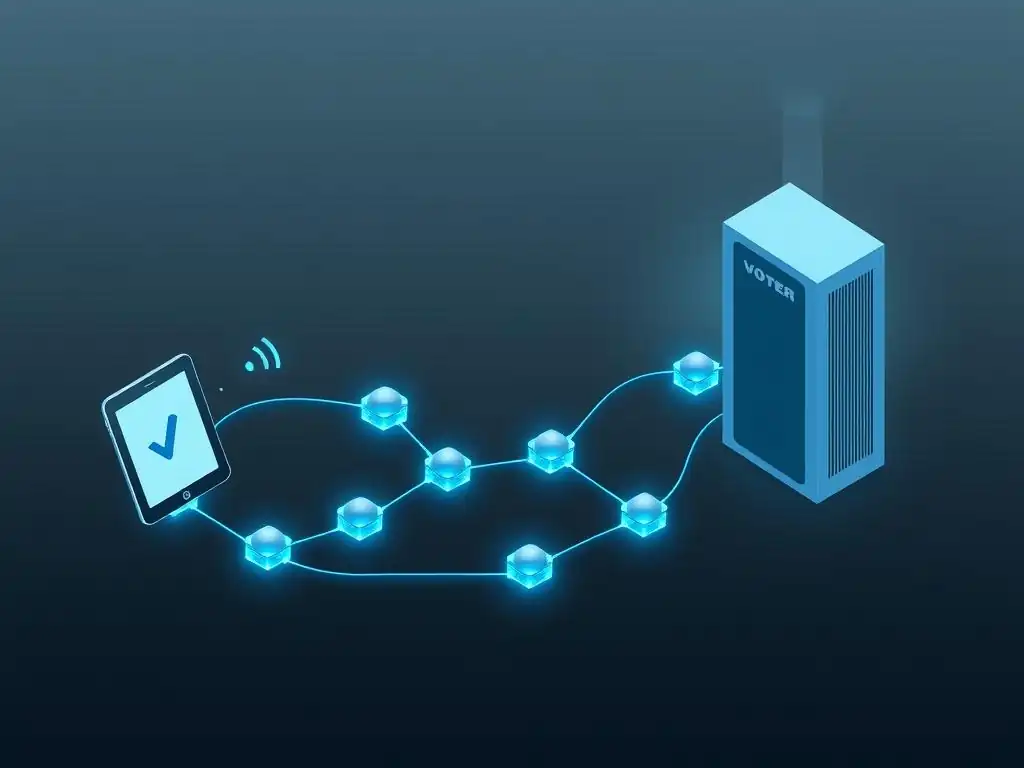
At its core, a blockchain voting system translates a voter's ballot into a secure, digital transaction recorded on a distributed ledger. The process typically begins with secure voter registration and identity verification, often linking a real-world identity to a unique, pseudonymous digital identifier on the blockchain. When a verified voter casts their ballot (usually through a secure application), this action generates a transaction containing their encrypted vote and their unique identifier. This transaction is then broadcast to a network of computers (nodes) participating in the blockchain.
These network nodes validate the transaction based on pre-defined rules encoded in smart contracts, including checking if the unique identifier has already cast a vote. Once validated, the transaction is bundled with others into a "block."
This block is then added to the end of the existing chain of blocks using a consensus mechanism, which ensures agreement among nodes on the order and validity of transactions. Because each new block contains a cryptographic hash of the previous block, the entire chain becomes immutable; altering a vote transaction in an earlier block would require re-calculating the hashes of all subsequent blocks, a computationally infeasible task on a large, distributed network, thereby establishing a fundamental blockchain voting security mechanism.
Key Components of Secure Blockchain Voting Platforms
A robust blockchain voting platform relies on several key technological components working in concert to ensure security and integrity. First and foremost is a highly secure identity verification system that links real-world voters to unique digital identifiers on the blockchain. This step is critical because the prevention of double voting hinges on the system's ability to recognize each voter uniquely within the digital realm. Following verification, secure ballot encryption is essential to protect voter privacy, ensuring that while the vote is recorded and verifiable on the ledger, its content (the voter's choice) remains confidential until decryption for tallying.
Beyond identity and encryption, the platform utilizes smart contracts – self-executing code deployed on the blockchain – to automate and enforce election rules, such as eligibility checks and the critical "one voter, one vote" rule. The underlying consensus mechanism of the blockchain network determines how transactions (votes) are validated and blocks are added, providing a layer of security against tampering by requiring agreement among participants. Finally, the transparent, auditable ledger itself allows for independent verification of the voting process and results, complementing the automated blockchain voting security mechanisms.
Benefits of Blockchain Voting: Beyond Preventing Double Voting
While preventing double voting is a significant advantage, blockchain voting offers several other benefits that contribute to overall electoral integrity and efficiency. One major benefit is enhanced transparency. The distributed ledger provides a publicly or permissioned verifiable record of every cast ballot transaction. This allows election observers, auditors, and even the public (with appropriate tools and permissions) to independently verify that votes have been accurately recorded and that the final tally corresponds to the votes on the chain, a level of auditability often difficult to achieve with opaque electronic voting machines or complex manual processes.
Furthermore, blockchain voting has the potential to increase accessibility, particularly for voters who are overseas, military personnel, or those with disabilities, allowing them to cast ballots remotely and securely. The technology can also significantly speed up the tabulation of results, as votes are recorded digitally in real-time on the ledger, eliminating the need for manual counting. The decentralized nature of some blockchain implementations can also offer greater resilience against single points of failure or cyberattacks compared to centralized voting databases, adding layers to the overall blockchain voting security mechanisms.
Blockchain Voting Security Mechanisms: A Technical Overview
Cryptographic Techniques for Voter Authentication
Cryptography forms a cornerstone of blockchain voting security mechanisms, particularly in ensuring that only eligible and authenticated individuals can cast a vote. Asymmetric encryption, involving a pair of public and private keys, is commonly used. After a voter's identity is verified off-chain by election officials, they are issued or linked to a unique digital identity on the blockchain, often associated with a pair of cryptographic keys. When the voter casts their ballot, they use their unique private key to digitally sign the transaction representing their vote.
This digital signature serves as proof that the vote originated from the legitimate owner of that private key, thereby authenticating the voter's action. The corresponding public key, which is known or derivable from the voter's on-chain identifier, can be used by anyone to verify the signature's authenticity without needing the private key.
Advanced techniques like Zero-Knowledge Proofs (ZKPs) are also being explored; ZKPs could potentially allow the system to verify that a voter meets eligibility criteria (e.g., is registered and hasn't voted) without revealing any sensitive personal information about the voter on the blockchain, significantly enhancing privacy while maintaining security.
Preventing Double Voting with Smart Contracts and Consensus Mechanisms
The most direct blockchain voting security mechanism against double voting is the use of smart contracts combined with the blockchain's consensus protocol. A smart contract is deployed on the blockchain specifically programmed with the election rules, including the crucial constraint that each unique voter identifier can cast only one vote. When a vote transaction is submitted, the smart contract automatically executes a check against a record of identifiers that have already voted in that election.
If the smart contract detects that the submitting identifier has already cast a ballot, it automatically rejects the transaction. This rejection happens before the transaction is included in a block and added to the chain, effectively preventing the second vote from ever being recorded.
The blockchain's consensus mechanism then ensures that this smart contract logic is executed and agreed upon by a majority of the network's participating nodes. For a double vote to be successfully recorded, an attacker would need to compromise the smart contract code and gain control over enough network nodes to override the consensus rules and force the inclusion of the invalid transaction, a feat that is computationally and economically prohibitive in a well-designed, sufficiently decentralized system.
Unique Identifiers and Voter Registration on the Blockchain
The efficacy of preventing double voting in a blockchain system fundamentally relies on the secure creation and management of unique voter identifiers. During the voter registration process, which typically occurs off-chain under the strict control of election authorities, a voter's real-world identity is verified. Upon successful verification, a unique digital identifier is generated for that voter within the blockchain voting system. This identifier is the sole representation of the voter on the chain, used for casting and verifying their single ballot, while their real identity is securely stored separately by the election authority.
The security of this registration process is paramount. If an attacker can create multiple unique on-chain identifiers linked to a single real person, they could bypass the one-vote-per-identifier rule enforced by the smart contract. Therefore, robust security measures, such as multi-factor authentication, integration with secure government identity databases, and stringent controls over the issuance of on-chain credentials, are critical components of the overall blockchain voting security mechanisms. The integrity of the voter roll and the secure linking to the on-chain identifier form the necessary foundation for the subsequent anti-double voting measures.
Digital Signatures and Their Role in Vote Verification
Digital signatures play a vital role in ensuring the integrity and authenticity of each vote recorded on the blockchain. As discussed earlier, when a voter casts their ballot, the transaction is signed using their unique private key. This signature is a cryptographic stamp that is intrinsically linked to the specific content of the vote transaction and the voter's identity (represented by their public key). Any alteration to the vote data after it has been signed will cause the signature verification to fail.
This mechanism provides a tamper-evident trail. Election officials, auditors, or observers can use the voter's public key to verify the signature on any cast ballot transaction recorded on the blockchain. A successful verification confirms two things: that the vote was cast by the individual associated with that unique identifier and that the vote data has not been modified since it was signed. This ability to independently verify the authenticity and integrity of every single vote transaction on the immutable ledger is a powerful blockchain voting security mechanism that enhances transparency and trust in the final election results.
Analyzing Blockchain's Effectiveness Against Double Voting
Case Studies: Voatz and Follow My Vote Implementations
Several pilot programs and platforms have attempted to implement blockchain voting, offering insights into practical blockchain voting security mechanisms. Voatz, a mobile voting platform utilizing a permissioned blockchain, has been used in pilot elections for military personnel and overseas citizens in states like West Virginia, Colorado, and Utah.
Their approach focuses on strong identity verification integrated with state voter registration databases and using the blockchain ledger to record that each verified identity submits only one ballot via their app. While offering convenience, Voatz has faced scrutiny and criticism regarding the security of its mobile application layer and the transparency of its permissioned blockchain.
Follow My Vote represents a different model, often advocating for a more transparent, open-source approach potentially using public or consortium blockchains. Their proposed system typically involves issuing unique voting tokens or identifiers to registered voters and leveraging the blockchain's ledger to track the usage of these tokens, allowing only one vote per token/ID. These case studies highlight different technical architectures and trade-offs in implementing blockchain voting security mechanisms, particularly concerning the balance between privacy (often favored by permissioned systems) and transparency (favored by more open systems), and the challenges of securing the entire ecosystem beyond just the core blockchain.
Assessing the Security Strengths and Weaknesses of Different Blockchain Voting Models
Different blockchain models offer varying degrees of security strengths and weaknesses regarding double voting. Permissioned blockchains, where participation is restricted to known entities (like government agencies or approved vendors), can offer higher transaction speeds and potentially lower costs.
Their strength lies in the ability to tightly control who can validate transactions and add blocks, making network-level attacks like 51% attacks less likely from external actors. However, their weakness lies in the potential for collusion among the limited number of participants who control the network; if these entities collude, they could potentially manipulate the system or censor votes, impacting the core blockchain voting security mechanisms.
Public blockchains, like Ethereum or specialized voting chains, offer greater decentralization and transparency. Their strength is resilience against collusion among a small group of participants; gaining control of a majority of the network's power is extremely difficult and expensive. However, they can face challenges with scalability, transaction costs, and transaction finality time, which could impact the efficiency of a large-scale election.
Regardless of the blockchain type, a critical weakness across all models is the reliance on the security of the off-chain voter registration and identity verification process. If this initial step is compromised, enabling an attacker to register multiple legitimate-looking on-chain identities for one person, the on-chain blockchain voting security mechanisms preventing double voting (like the one-vote-per-ID smart contract) can be bypassed.
Addressing Potential Vulnerabilities: 51% Attacks and Sybil Attacks
While blockchain offers significant security advantages, it's not immune to all forms of attack, and specific vulnerabilities must be addressed when designing blockchain voting security mechanisms. A 51% attack, primarily associated with Proof-of-Work blockchains but conceptually relevant elsewhere, occurs when an entity gains control of a majority of the network's processing power or staking power.
In a voting context, while smart contracts enforce the one-vote rule, a successful 51% attack could theoretically be used to censor vote transactions, prevent blocks from being added, or potentially attempt to double-spend if the smart contract logic wasn't perfectly immutable or if the attacker controlled the nodes executing it. However, the economic cost of mounting such an attack on a widely distributed, robust network is typically prohibitive.
Sybil attacks involve an attacker creating a large number of pseudonymous identities to gain disproportionate influence. In blockchain networks, consensus mechanisms like PoW and PoS are designed to be Sybil-resistant by requiring significant resources (computational power or stake) per node. However, in a blockchain voting system, the primary vulnerability to a Sybil attack doesn't lie in the network nodes but in the voter registration process.
If an attacker can compromise the off-chain identity verification system and register multiple unique on-chain voting identifiers for a single person, they can effectively cast multiple votes, bypassing the core blockchain voting security mechanisms on the chain itself. Robust identity verification is therefore the critical defense against Sybil attacks in blockchain voting.
Comparing Blockchain Voting to Traditional Voting Systems
Security Advantages of Blockchain Over Traditional Methods
When comparing blockchain voting security mechanisms to traditional methods, several key advantages emerge. Traditional paper-based systems, while providing a physical record, are susceptible to errors in manual counting, ballot damage or loss, and potential physical tampering during collection, transport, or storage. Centralized electronic voting machines or databases present single points of failure that are attractive targets for cyberattacks, which could potentially alter vote counts or voter registration data without leaving easily detectable traces.
In contrast, blockchain's inherent immutability provides a tamper-evident ledger; once a vote transaction is validated and added to the chain, altering it is practically impossible without being detected by the network. The transparency of the ledger allows for independent auditing and verification of every recorded vote, a level of oversight often lacking in the 'black box' nature of some electronic voting machines.
Furthermore, the automated enforcement of rules via smart contracts, like preventing double voting based on unique identifiers, offers a potentially more reliable and less error-prone method than manual checks against voter rolls, which can be outdated or incomplete. The cryptographic linking of votes to unique identifiers and the use of digital signatures provide a robust method for verifying the authenticity and integrity of each ballot cast, enhancing blockchain voting security mechanisms against various forms of fraud.
Limitations and Challenges of Implementing Blockchain Voting
Despite the significant potential and robust blockchain voting security mechanisms, implementing these systems faces substantial limitations and challenges. Cybersecurity risks remain, not necessarily in the core blockchain ledger itself, but in the surrounding ecosystem. The secure management of private keys used by voters, the security of the mobile or web applications used to cast votes, and the protection of the off-chain voter registration database are all critical points of vulnerability. A breach in any of these areas could compromise the integrity of the election, irrespective of the blockchain's security.
Other challenges include scalability – handling the millions or hundreds of millions of votes cast in large national elections efficiently and reliably within a limited timeframe is a significant technical hurdle for current blockchain technology. Cost is also a factor; while potential long-term savings exist, the initial investment in developing, deploying, and securing a nationwide blockchain voting infrastructure, including robust identity verification systems, is substantial.
Furthermore, ensuring equitable access for all citizens, regardless of technological proficiency or access to required devices/internet, and building sufficient public trust and understanding in a complex, novel technology are major non-technical barriers to widespread adoption.
Cost Analysis: Blockchain Voting vs. Traditional Voting Infrastructure
A detailed cost analysis comparing blockchain voting to traditional systems is complex and depends heavily on the specific implementation model. Traditional elections involve significant recurrent costs such as printing and distributing millions of paper ballots (e.g., millions of dollars per election), renting polling locations, staffing thousands of polling stations, maintaining and transporting physical voting machines, and conducting manual or semi-manual vote counting and auditing processes. For instance, a US federal election cycle can cost billions of dollars.
Blockchain voting introduces different cost centers. There are significant upfront costs for developing or procuring the secure software platform, establishing the blockchain network infrastructure (nodes), and upgrading or integrating with highly secure digital identity verification systems. Ongoing costs include system maintenance, security monitoring and audits, and potentially providing secure hardware or software for voters.
While blockchain could potentially reduce costs associated with printing, logistics, and manual labor, the required investment in digital infrastructure, cybersecurity expertise, and continuous system audits is substantial. The long-term cost-effectiveness is a subject of ongoing debate and analysis, with potential savings in logistics and personnel balanced against high-tech infrastructure and security expenses required to maintain robust blockchain voting security mechanisms.
The Future of Blockchain Voting Security
Emerging Technologies and Innovations in Blockchain Voting
The field of blockchain voting security mechanisms is continuously evolving with the development of new cryptographic techniques and blockchain architectures. Emerging technologies such as Zero-Knowledge Proofs (ZKPs) hold significant promise for enhancing both security and privacy.
ZKPs could allow the system to verify that a voter is eligible and has not previously voted without revealing the voter's identity or even the specific vote itself on the public ledger, addressing critical privacy concerns that hinder current adoption. Homomorphic encryption, which allows computations (like vote tallying) to be performed directly on encrypted data, offers another avenue for preserving ballot secrecy while ensuring verifiability.
Further innovations include the development of decentralized identifiers (DIDs) and verifiable credentials, which could provide a more secure and privacy-preserving way to link a voter's real-world identity to their on-chain voting rights, strengthening the crucial identity layer. Research is also ongoing into specialized consensus mechanisms tailored for voting environments, focusing on achieving rapid finality, high security, and resistance to manipulation, while potentially operating in a permissioned or hybrid environment suitable for governmental use. These advancements aim to address current limitations and build even more robust blockchain voting security mechanisms for the future.
Regulatory Landscape and the Adoption of Blockchain Voting Systems
The regulatory landscape surrounding blockchain voting is still nascent, and this represents a significant factor influencing its future adoption. While pilot programs have occurred in various jurisdictions globally, regulatory bodies and election officials remain understandably cautious. Concerns about the auditability, accessibility, and fundamental security of these systems, particularly when compared to established (though imperfect) traditional processes, mean that widespread government approval for binding elections is limited. Existing election laws and regulations are often designed around physical processes and may not adequately address the unique aspects of digital, blockchain-based voting, requiring significant legal reform.
For blockchain voting to gain traction, there is a clear need for robust regulatory frameworks, standardized technical requirements, and independent certification processes. Regulators will require compelling evidence from rigorous testing and audits demonstrating that blockchain voting security mechanisms are not only theoretically sound but also proven in practice to be superior to existing methods, especially in preventing fraud like double voting and ensuring the integrity and secrecy of the ballot.
The path to widespread adoption will likely involve continued research, successful small-scale pilots, and transparent collaboration between technology providers, election officials, and policymakers to build necessary trust and establish clear guidelines.
The Role of Audits and Transparency in Ensuring Secure Blockchain Elections
Even with the inherent transparency of a blockchain ledger, comprehensive audits are crucial for ensuring the overall security and trustworthiness of blockchain voting systems. While the chain allows anyone to verify that recorded votes haven't been altered, audits must encompass the entire system. This includes rigorous security audits of the platform's code (including smart contracts), the underlying infrastructure, the identity verification process, and the procedures for managing cryptographic keys. These audits aim to identify vulnerabilities in the implementation of blockchain voting security mechanisms that could be exploited, regardless of the blockchain's theoretical security.
The transparency of the blockchain ledger, however, enables a new form of post-election auditability. With appropriate tools, election observers can verify that the number of votes cast on the chain aligns with the number of verified voters who participated, that no votes were removed or altered, and that the final tally calculation correctly sums the votes recorded on the immutable ledger. This on-chain verifiability, combined with independent security audits of the system's components and processes, provides a powerful framework for ensuring the integrity of the election and building confidence in the effectiveness of the blockchain voting security mechanisms.
Conclusion: Is Blockchain Voting the Answer to Double Voting?
The Potential and Challenges of Blockchain-Based Electoral Systems
Blockchain technology offers significant technical potential to address the long-standing problem of double voting in elections. By leveraging unique on-chain identifiers, smart contracts designed to enforce the one-vote-per-ID rule, cryptographic signatures for authentication and integrity, and the inherent immutability and transparency of the distributed ledger, blockchain voting security mechanisms provide a compelling technical defense against this specific type of fraud. These mechanisms offer a verifiable and automated approach that can be more robust and less susceptible to human error or tampering than many traditional manual or centralized electronic systems.
However, blockchain voting is not a panacea. Its effectiveness against double voting is heavily reliant on the security and integrity of the off-chain voter registration and identity verification process. If this initial layer can be compromised to create multiple legitimate-looking identities for one person, the on-chain security measures can be bypassed.
Furthermore, significant challenges related to overall system security (beyond the core chain), scalability, accessibility, public trust, and regulatory acceptance must be overcome before blockchain voting can be widely implemented for large-scale, binding elections. While the technology presents powerful blockchain voting security mechanisms against double voting, its successful adoption requires a holistic approach addressing the entire electoral ecosystem.
Frequently Asked Questions
How does blockchain technology help prevent double voting in elections?
Blockchain's immutable ledger makes it difficult to alter or duplicate votes. Each vote is recorded as a unique transaction, linked to the previous one, creating a tamper-proof chain. This ensures that each vote is counted only once.
What are some common blockchain voting security mechanisms used to combat double voting?
Several mechanisms exist, including cryptographic keys for voter authentication and zero-knowledge proofs to verify voter eligibility without revealing their identity. Smart contracts can also automate the voting process and enforce rules against double voting.
What role does decentralization play in enhancing the security of blockchain voting systems?
Decentralization distributes the voting data across multiple nodes, making it extremely difficult for a single attacker to compromise the entire system. This distributed ledger approach eliminates a single point of failure and enhances data integrity.
Are blockchain voting systems completely immune to double voting and other types of electoral fraud?
While blockchain significantly reduces the risk of double voting, it's not entirely foolproof. Security still depends on the implementation details, such as voter identification and key management, and is still susceptible to human error.
What are the key challenges and considerations when implementing blockchain voting security mechanisms on a large scale?
Scalability, voter accessibility, and regulatory compliance are significant challenges. Ensuring user-friendly interfaces for all voters and addressing concerns about data privacy are crucial for widespread adoption.
Final Reflection: Securing Democracy's Future
The exploration of blockchain voting security mechanisms reveals that the promise of a truly secure and transparent electoral process is not just a futuristic fantasy, but a tangible possibility within our grasp. The potential to eliminate double voting and enhance overall election integrity through blockchain technology is a compelling vision, especially in an era where trust in democratic institutions is constantly challenged. The intricate security layers, from cryptographic hashing to distributed consensus, offer a robust defense against manipulation, paving the way for a more confident and engaged electorate.
This journey into the technical intricacies of blockchain voting has underscored its profound implications for the future of democracy. The ability to verify votes independently and transparently, while maintaining voter anonymity, is a game-changer that could revitalize civic participation and restore faith in the electoral process. Democracy dies in darkness,
as the saying goes, and blockchain's inherent transparency offers a powerful antidote to the shadows of doubt and suspicion that often plague modern elections. The ongoing development and refinement of these security mechanisms are crucial to ensuring that this technology fulfills its potential to safeguard our democratic values.
As we stand at the cusp of a new era in electoral technology, I invite you to consider the role you can play in shaping its future. Reflect on the importance of secure and transparent elections in your own community and beyond. Explore the potential of blockchain voting to address the challenges facing your local electoral systems. By embracing innovation and demanding accountability, we can collectively build a future where every vote counts, and every voice is heard, ensuring a more just and equitable society for all.
Fortify Democracy: Explore the Future of Secure Voting!
Thank you for exploring the world of blockchain voting! We hope you now have a clearer understanding of how this technology could transform election security and eliminate the risk of double voting. Now, it's time to deepen your involvement.
Here are some ways you can help shape the future of transparent and secure elections:
- Engage in meaningful discussions: Share this article with your network to spark conversations about the potential of blockchain voting. Let's go beyond headlines and explore its true possibilities.
- Explore real-world applications: Research pilot programs that have implemented blockchain voting. Consider their benefits and challenges, and think about how these systems can be improved.
- Advocate for change: Reach out to your local representatives to inquire about their views on adopting blockchain-based voting solutions. Your voice can influence the future of democracy.
What additional security features, besides preventing double voting, do you think blockchain could introduce to election processes? Share your thoughts in the comments below!
Leave a Reply