
NFT Governance in Virtual Worlds: Shaping Decentralized Futures

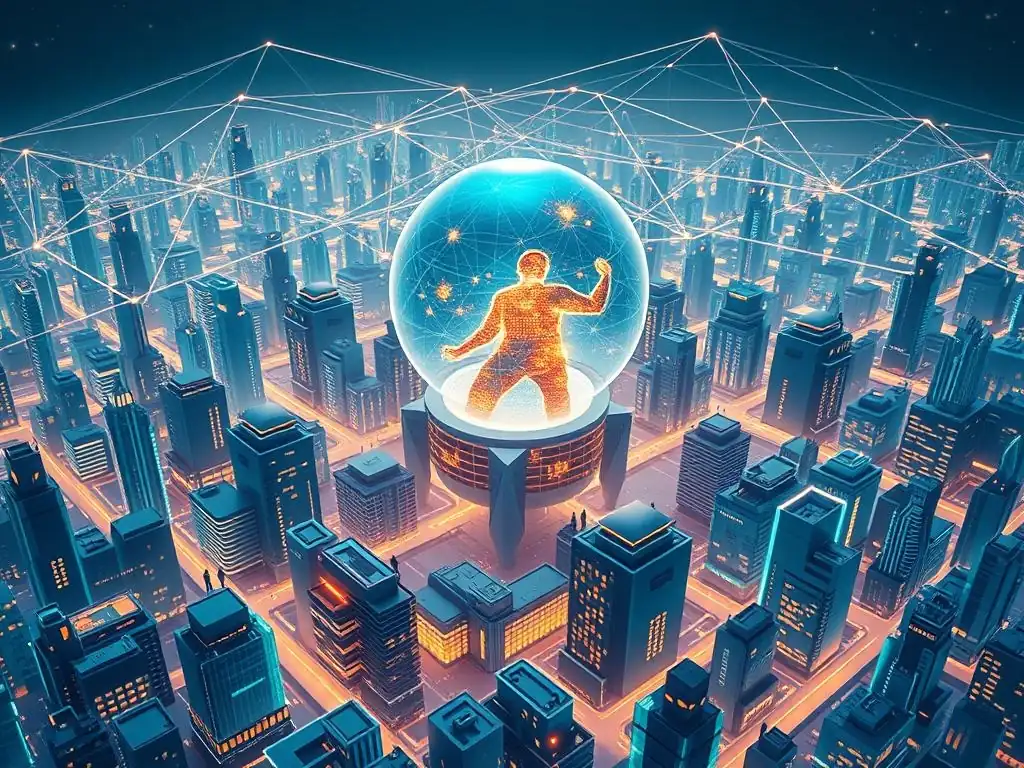
Welcome to Blockchain Trends, your compass in the rapidly evolving landscape of decentralized technology. Delve beyond the buzz and discover how blockchain is reshaping industries, from finance to supply chain management. This week, we're diving deep into the fascinating intersection of NFT governance in virtual worlds. How are these digital assets empowering communities and shaping the very fabric of these emerging realities? Explore the possibilities and challenges ahead, and unlock the potential of decentralized futures. Read on to unravel the intricacies and discover what this means for the future of the metaverse!
- Decentralized Governance in Blockchain Gaming: Shaping Player-Owned Worlds
- Understanding Decentralized Governance in Blockchain Gaming
- Key Aspects of Decentralized Governance in Blockchain Gaming
- Benefits of Decentralized Governance for Blockchain Games
- Challenges and Considerations for Decentralized Game Governance
- Examples of Decentralized Governance in Existing Blockchain Games
- The Future of Decentralized Governance in Blockchain Gaming
- Building Effective Decentralized Governance Systems: Best Practices
- Decentralized Governance and the Future of Game Ownership
-
Frequently Asked Questions
- What exactly is NFT governance in the context of virtual worlds?
- How does NFT governance differ from traditional governance models in virtual worlds?
- What are some potential benefits of implementing NFT governance in virtual worlds?
- What are some challenges associated with implementing NFT governance in virtual worlds?
- How might regulation impact the future of NFT governance in virtual worlds?
- Final Reflection: Navigating the Decentralized Frontier
- Shape the Metaverse: Your Voice Matters!
Decentralized Governance in Blockchain Gaming: Shaping Player-Owned Worlds
Blockchain Trends: Exploring Decentralized Governance in Gaming Ecosystems
The convergence of blockchain technology and the gaming industry has unlocked unprecedented opportunities for player empowerment, particularly through decentralized governance models. As blockchain trends continue to evolve, the integration of Non-Fungible Tokens (NFTs) into virtual worlds is paving the way for a paradigm shift in game ownership and decision-making.
This article delves into the burgeoning field of NFT governance in virtual worlds, focusing on the mechanisms, benefits, challenges, and future prospects of decentralized governance in blockchain gaming ecosystems. We will explore how NFTs are not just digital collectibles, but powerful tools for granting players a voice in the development and direction of the virtual worlds they inhabit.
The exploration of decentralized governance within blockchain gaming is crucial for understanding the next evolution of online entertainment. Traditional gaming models often operate under centralized control, where game developers and publishers hold unilateral power over game economies, rules, and content updates. However, blockchain technology offers a viable alternative, enabling the creation of gaming ecosystems where players can collectively participate in governance processes.
This shift toward player-owned and player-governed virtual worlds represents a significant departure from established norms and promises to foster more engaging, equitable, and sustainable gaming experiences. Understanding NFT governance in virtual worlds is not just about understanding a niche trend; it's about grasping the fundamental changes occurring within the digital entertainment landscape.
Understanding Decentralized Governance in Blockchain Gaming
What is Decentralized Governance and Why Does it Matter for Games?
Decentralized governance, in the context of blockchain gaming, refers to systems where decision-making authority is distributed among a community of stakeholders, rather than being concentrated in a central entity like a game studio. This often involves using blockchain technology to create transparent and verifiable mechanisms for proposing, voting on, and implementing changes within a game's ecosystem. Decentralization in this context is not merely about technology; it is a fundamental shift in power dynamics, moving control from developers to players.
The importance of decentralized governance for games stems from several factors. Firstly, it addresses the issue of player agency and ownership. In traditional games, players are essentially renters of the game world, with limited influence over its evolution. Decentralized governance, particularly through NFT governance virtual worlds, empowers players by giving them a direct stake in the game's future. Secondly, it fosters greater transparency and trust within the gaming community.
All governance processes, from proposals to voting outcomes, are recorded on the blockchain, making them publicly auditable and resistant to manipulation. Finally, decentralized governance can lead to more resilient and adaptable game ecosystems. By distributing decision-making, games can become more responsive to community needs and evolve in a more organic and community-driven manner. This is particularly relevant in the rapidly evolving landscape of blockchain and virtual worlds, where adaptability is key to long-term success.
The Role of Tokens and NFTs in Blockchain Game Governance Models
Tokens, both fungible and non-fungible, are the foundational elements of governance in blockchain games. Fungible tokens, often native cryptocurrencies within the game's ecosystem, are commonly used to represent voting power. Holding a certain amount of these tokens grants players the right to participate in governance decisions, with voting weight typically proportional to the token amount held or staked. For instance, in many DeFi related games, governance tokens like $AXS in Axie Infinity, grant holders voting rights on key game parameters.
NFTs, on the other hand, introduce a different dimension to game governance, particularly within virtual worlds. NFTs, representing unique in-game assets such as land, characters, or items, can also be tied to governance rights. This allows for a more granular and asset-specific approach to governance.
For example, owning a plot of virtual land represented by an NFT in a metaverse platform like Decentraland might grant voting rights related to land usage policies or infrastructure development within that specific district. NFT governance virtual worlds leverages the unique ownership aspect of NFTs to create governance systems where influence is tied to the ownership of valuable in-game assets, directly linking player investment and stake in the game with their governance power. This contrasts with purely token-based governance, where voting power is solely determined by the quantity of fungible tokens held.
Decentralized Autonomous Organizations (DAOs) and Game Governance
Decentralized Autonomous Organizations, or DAOs, are emerging as a prominent structure for implementing decentralized governance in blockchain games. A DAO is essentially an organization run by rules encoded as computer programs called smart contracts on a blockchain. These smart contracts automate governance processes, execute decisions based on community consensus, and manage the organization's resources transparently and autonomously. DAOs eliminate the need for traditional hierarchical management structures, replacing them with code-driven governance that is governed by the community.
In the context of game governance, DAOs provide a framework for players to collectively manage and steer the direction of a game. Game DAOs can be designed to govern various aspects of a game, from economic parameters like token distribution and inflation rates to game mechanics, content updates, and even the game's roadmap.
For example, a Game DAO might be responsible for managing a community treasury funded by in-game transactions, deciding how these funds are allocated to game development, marketing, or community initiatives based on proposals and votes from DAO members. The use of DAOs for NFT governance virtual worlds is particularly compelling as it allows for the creation of truly player-owned and operated virtual economies and societies within games.
Key Aspects of Decentralized Governance in Blockchain Gaming
Voting Rights and Token/NFT Staking
Voting rights within decentralized game governance systems are typically tied to the ownership and staking of specific tokens or NFTs. Token staking involves locking up a certain amount of governance tokens to gain voting power and often earn rewards. This mechanism incentivizes long-term commitment to the game and aligns player incentives with the game's success. The amount of tokens staked usually directly correlates with the voting weight a player possesses, ensuring that those with a greater stake have a larger influence on governance decisions.
NFT staking, while less common than token staking, is also emerging as a method for granting voting rights, particularly within NFT governance virtual worlds. In this model, specific NFTs, such as land parcels or rare in-game items, can be staked to gain governance power. This approach directly links governance participation to the ownership of valuable and often scarce in-game assets.
For instance, staking a high-value land NFT in a virtual world might grant a player significant voting rights on land-related policies, infrastructure developments, or even broader game governance matters. Both token and NFT staking mechanisms are crucial for ensuring that governance power is distributed among committed players and stakeholders within the game ecosystem.
Community Proposals and Game Development Roadmap
Decentralized governance in blockchain games relies heavily on community proposals as the primary mechanism for initiating changes and shaping the game's development roadmap. Any member of the community, who meets certain criteria (such as holding a minimum amount of governance tokens or NFTs), can typically submit proposals for consideration. These proposals can range from suggesting new game features or balancing changes to proposing modifications to the game's economic model or even outlining future development priorities.
The process for submitting and voting on community proposals is usually transparent and on-chain. Proposals are typically discussed within community forums and governance platforms before being formally put to a vote. Once a proposal reaches the voting stage, token or NFT holders can cast their votes, with the voting weight determined by their staked assets.
Successful proposals, which meet predefined quorum and approval thresholds, are then implemented, often automatically through smart contracts. This community-driven approach to game development roadmaps ensures that the game evolves in a direction that reflects the collective will and desires of its player base, fostering a sense of ownership and co-creation within the NFT governance virtual worlds.
Transparency and Auditability in On-Chain Governance Systems
Transparency and auditability are fundamental pillars of decentralized governance systems, especially in blockchain gaming. Because governance processes are conducted on a blockchain, all proposals, voting records, and outcomes are permanently recorded on a public ledger. This inherent transparency provides a high degree of accountability and trust within the game ecosystem, as anyone can independently verify the integrity of the governance process.
On-chain governance systems ensure that every action taken, from proposal submissions to vote casting and execution of decisions, is publicly auditable. Smart contracts, which often automate governance mechanisms within DAOs, further enhance transparency by making the rules and logic of governance explicitly defined and verifiable. This level of transparency contrasts sharply with traditional game development, where decision-making processes are often opaque and centralized. In NFT governance virtual worlds, this transparency not only builds trust but also empowers players to actively monitor and participate in the governance process, knowing that all actions are open to public scrutiny and verification.
Benefits of Decentralized Governance for Blockchain Games
Enhanced Player Participation and Ownership
One of the most significant benefits of decentralized governance in blockchain games is the enhanced player participation and sense of ownership it fosters. By giving players a direct voice in decision-making processes through token or NFT voting, decentralized governance transforms them from passive consumers into active stakeholders. This shift in dynamic creates a stronger sense of community and investment in the game's long-term success. Players feel more connected to the game and are incentivized to contribute positively to its development and growth.
Decentralized governance, particularly in NFT governance virtual worlds, empowers players by granting them real ownership not just of in-game assets, but also of the game's direction. This ownership extends beyond simply possessing NFTs; it encompasses the ability to influence game mechanics, economic policies, and the overall trajectory of the virtual world. This increased participation and ownership can lead to higher player engagement, retention, and a more vibrant and collaborative gaming community. Players are no longer just playing a game; they are actively shaping and co-creating it, leading to a more meaningful and fulfilling gaming experience.
Increased Decentralization and Community Control
Decentralized governance inherently increases the level of decentralization within a blockchain game ecosystem, shifting control away from centralized game developers and publishers towards the community. This redistribution of power is a core tenet of blockchain technology and aligns with the ethos of Web3. By implementing on-chain governance mechanisms, games can move away from top-down decision-making models to more democratic and community-driven approaches.
This increased decentralization and community control can lead to several positive outcomes. Firstly, it reduces the risk of centralized failures or unilateral decisions that might negatively impact the player base. Secondly, it promotes a more resilient and adaptable game ecosystem, as decisions are made through collective consensus rather than being dictated by a single entity.
Thirdly, it aligns the interests of the game developers and the player community, fostering a more collaborative and symbiotic relationship. In NFT governance virtual worlds, decentralization ensures that the virtual world truly belongs to its inhabitants, fostering a sense of shared ownership and responsibility for its evolution and prosperity.
Fostering a More Equitable and Sustainable Game Economy
Decentralized governance can contribute to the creation of more equitable and sustainable game economies in blockchain games. By allowing players to participate in decisions related to tokenomics, inflation rates, and resource distribution, decentralized governance can mitigate some of the inherent imbalances often found in traditional game economies. Players, acting collectively through governance mechanisms, can ensure that economic policies are fairer and more beneficial to the broader community rather than solely favoring centralized entities.
Furthermore, decentralized governance can enhance the long-term sustainability of game economies. Transparent and community-driven decision-making can lead to more robust and adaptable economic models that are less prone to manipulation or collapse. For example, proposals to adjust token supply or introduce new economic incentives can be debated and voted upon by the community, ensuring that changes are implemented with broader consensus and consideration for long-term economic health.
In NFT governance virtual worlds, this is particularly crucial as these virtual economies often rely on player-driven markets and intricate economic interactions. Decentralized governance can act as a vital mechanism for maintaining economic equilibrium, fairness, and long-term sustainability within these complex digital ecosystems.
Challenges and Considerations for Decentralized Game Governance

Sybil Attacks and Voting Manipulation
One of the significant challenges facing decentralized game governance is the potential for Sybil attacks and voting manipulation. Sybil attacks occur when a single malicious actor creates multiple fake identities (wallets or accounts) to gain disproportionate voting power and influence governance outcomes. In systems where voting power is directly tied to token or NFT holdings, attackers can accumulate assets across multiple identities to manipulate votes in their favor.
Mitigating Sybil attacks in NFT governance virtual worlds requires robust identity verification and anti-spam mechanisms. Techniques such as proof-of-personhood, social graph verification, and sophisticated bot detection systems can be employed to reduce the effectiveness of Sybil attacks. Furthermore, governance models can be designed to incorporate weighted voting mechanisms or quadratic voting, which make it more costly and less effective for attackers to manipulate outcomes by accumulating numerous small voting identities. Addressing Sybil attack vulnerabilities is crucial for ensuring the integrity and fairness of decentralized governance systems in blockchain games.
Scalability Issues and Transaction Costs
Scalability issues and transaction costs on blockchain networks can pose challenges to the practical implementation of decentralized game governance. On-chain governance processes, which involve submitting proposals, casting votes, and executing decisions through smart contracts, require numerous transactions to be processed on the blockchain. If the underlying blockchain network has limited scalability or high transaction fees, governance participation can become expensive and slow, potentially discouraging broader community involvement.
Layer-2 scaling solutions, such as rollups and sidechains, offer potential solutions to these scalability and cost challenges. By offloading governance transactions to faster and cheaper layer-2 networks, while still maintaining security and finality on the main blockchain, games can enable more efficient and affordable governance participation. Furthermore, optimizing smart contract code and governance mechanisms to minimize transaction overhead can also help reduce costs and improve scalability. Addressing scalability and transaction cost concerns is essential for making decentralized governance accessible and practical for blockchain games with large player bases.
Legal and Regulatory Uncertainty Surrounding Game DAOs
The legal and regulatory landscape surrounding DAOs, particularly Game DAOs, is still largely uncertain and evolving. Traditional legal frameworks are often not well-suited to accommodate the decentralized and autonomous nature of DAOs, leading to ambiguity regarding legal liability, entity status, and regulatory compliance. This legal uncertainty poses a significant challenge for blockchain games implementing DAO governance models.
Depending on jurisdiction, Game DAOs may face legal scrutiny related to securities laws, gaming regulations, and consumer protection laws. The lack of clear legal precedents and regulatory guidelines creates risks for both game developers and DAO participants.
Navigating this complex legal landscape requires careful consideration of jurisdictional variations, seeking legal counsel specialized in blockchain and DAO regulations, and adopting best practices for DAO structure and operation to mitigate potential legal risks. As the legal and regulatory frameworks surrounding DAOs mature, it is crucial for the blockchain gaming industry to engage with regulators and policymakers to advocate for clear and appropriate legal frameworks that foster innovation while addressing legitimate regulatory concerns.
Examples of Decentralized Governance in Existing Blockchain Games
Axie Infinity: Analyzing Land Governance and AXS Staking
Axie Infinity, a prominent play-to-earn blockchain game, offers a compelling example of decentralized governance through its AXS token and its plans for land governance within its virtual world, Lunacia. AXS token holders can stake their tokens to participate in governance voting, influencing decisions related to the community treasury, game development priorities, and economic parameters. This token-based governance mechanism has allowed the Axie Infinity community to actively participate in shaping the game's evolution and economic policies.
Furthermore, Axie Infinity is developing a system for land governance within Lunacia, where land NFTs will grant owners voting rights related to land-based activities and developments within the virtual world. This initiative aims to empower land owners to collectively manage and shape the virtual landscape of Lunacia. By combining token-based governance with NFT-based land governance, Axie Infinity is exploring a multi-faceted approach to decentralized governance, giving players different avenues to participate in the game's decision-making processes. The success and challenges faced by Axie Infinity's governance model provide valuable insights for other blockchain games considering implementing decentralized governance.
Decentraland: Examining MANA Voting and Community Grants
Decentraland, a decentralized virtual world platform, provides another significant example of decentralized governance through its MANA token and its DAO structure. MANA token holders can use their tokens to vote on proposals related to Decentraland's policies, content curation, and development roadmap. The Decentraland DAO manages a substantial treasury funded by LAND sales and other platform revenue, and DAO members vote on how these funds are allocated through community grants.
The Decentraland DAO's community grants program is a notable example of decentralized resource allocation. DAO members vote on proposals from community members seeking funding for various projects within Decentraland, such as content creation, infrastructure development, and community events. This decentralized grant mechanism empowers the community to directly shape the development and growth of the Decentraland virtual world. Decentraland's experience with DAO governance and community grants offers valuable lessons for other NFT governance virtual worlds seeking to empower their communities through decentralized decision-making and resource allocation.
Comparing and Contrasting Different Decentralized Game Governance Approaches
Comparing Axie Infinity and Decentraland reveals different approaches to decentralized game governance. Axie Infinity primarily utilizes token-based governance (AXS) with emerging land NFT governance, while Decentraland heavily relies on DAO governance with MANA token voting and community grants. Axie Infinity's governance is more focused on in-game economic and development decisions, whereas Decentraland's governance extends to broader platform policies and community-driven development.
Another key difference lies in the scope of governance. Axie Infinity's governance, while evolving, is still primarily managed by Sky Mavis, the game developer, with the DAO gradually gaining more influence. Decentraland, on the other hand, aims for a more fully decentralized and community-operated virtual world, with the DAO having significant autonomy and control over the platform's direction.
These examples highlight that there is no one-size-fits-all approach to decentralized game governance. The optimal model depends on the specific game's design, community structure, and long-term vision. Analyzing these different approaches and their respective strengths and weaknesses is crucial for developing effective and tailored governance models for NFT governance virtual worlds.
The Future of Decentralized Governance in Blockchain Gaming
Emerging Trends and Innovations in On-Chain Voting and Proposals
The field of on-chain voting and proposal mechanisms is continuously evolving, with several emerging trends and innovations poised to shape the future of decentralized game governance. One notable trend is the development of more sophisticated voting systems beyond simple token-weighted voting. Quadratic voting, conviction voting, and liquid democracy are gaining traction as alternative voting mechanisms that aim to address some of the limitations of basic token voting, such as plutocracy and voter apathy.
Another innovation is the integration of decentralized identity solutions with governance systems. Verifiable credentials and decentralized identifiers (DIDs) can enhance Sybil resistance and enable more nuanced governance models based on reputation, participation history, or specific skill sets within the community. Furthermore, advancements in smart contract technology and governance tooling are making it easier and more efficient to implement complex on-chain governance processes. These emerging trends and innovations promise to make decentralized game governance more robust, inclusive, and adaptable in the future.
The Impact of Decentralized Governance on Game Design and Development
Decentralized governance is not just a backend infrastructure component; it has a profound impact on game design and development processes. When games are designed with decentralized governance in mind from the outset, it opens up new possibilities for player agency, co-creation, and community-driven content generation. Game developers can design systems that actively encourage player participation in governance, making governance itself an integral part of the gameplay experience.
Decentralized governance can also influence the types of games that are created. NFT governance virtual worlds, for instance, are often designed to be more open-ended and community-driven, allowing players to shape the virtual world's narrative, economy, and social dynamics through governance mechanisms. This shift towards player-driven development can lead to more innovative and engaging game experiences that are constantly evolving based on community feedback and participation. The integration of decentralized governance into game design represents a fundamental shift in the relationship between game developers and players, fostering a more collaborative and co-creative approach to game development.
Predictions for the Adoption and Implementation of Game DAOs
The adoption and implementation of Game DAOs is expected to accelerate in the coming years as the blockchain gaming industry matures and the benefits of decentralized governance become more apparent. As players increasingly demand greater ownership and control over their gaming experiences, Game DAOs are likely to become a standard feature of blockchain games, particularly in NFT governance virtual worlds.
Predictions suggest that Game DAOs will evolve beyond simple voting mechanisms to encompass more comprehensive governance frameworks, including decentralized dispute resolution, community-managed treasuries, and even decentralized game development teams. We may see the emergence of specialized DAO tooling and infrastructure specifically tailored for the needs of blockchain games, making it easier for developers to implement and manage robust DAO governance systems. The widespread adoption of Game DAOs has the potential to fundamentally transform the gaming industry, ushering in an era of player-owned, player-governed, and truly decentralized gaming experiences.
Building Effective Decentralized Governance Systems: Best Practices
Establishing Clear Governance Rules and Guidelines
Establishing clear and well-defined governance rules and guidelines is paramount for building effective decentralized governance systems in blockchain games. Ambiguous or poorly defined rules can lead to confusion, disputes, and undermine the legitimacy of the governance process. Governance rules should clearly outline the scope of governance, the mechanisms for submitting and voting on proposals, the quorum and approval thresholds for decisions, and the processes for resolving disputes.
These rules should be transparently communicated to the community and easily accessible. Furthermore, governance guidelines should be designed to be adaptable and evolvable over time. As the game and its community mature, governance rules may need to be adjusted or refined to address new challenges and opportunities. A well-documented and clearly understood set of governance rules provides a solid foundation for a fair, transparent, and effective decentralized governance system in NFT governance virtual worlds.
Fostering Community Involvement and Education
Successful decentralized governance hinges on active community involvement and a well-informed player base. Simply implementing governance mechanisms is not enough; it is crucial to actively foster community participation and educate players about the governance process and their role in it. This involves creating accessible and user-friendly governance platforms, providing clear explanations of governance rules and proposals, and actively engaging with the community to solicit feedback and address concerns.
Educational initiatives, such as tutorials, FAQs, and community workshops, can help empower players to understand and participate effectively in governance. Encouraging open communication and dialogue within the community is also essential for building consensus and fostering a sense of shared ownership. A well-informed and actively engaged community is the lifeblood of any successful decentralized governance system, particularly in the dynamic and evolving landscape of NFT governance virtual worlds.
Implementing Robust Security Measures and Auditing Processes
Implementing robust security measures and auditing processes is critical for protecting decentralized governance systems from manipulation and ensuring their long-term integrity. Smart contracts that underpin governance mechanisms should be rigorously audited by reputable security firms to identify and mitigate potential vulnerabilities. Measures to prevent Sybil attacks, voting manipulation, and other forms of malicious interference are essential for maintaining the fairness and trustworthiness of the governance process.
Regular audits of governance processes and smart contract code should be conducted to ensure ongoing security and identify any emerging vulnerabilities. Furthermore, implementing transparent monitoring and alerting systems can help detect and respond to suspicious activity or governance attacks in real-time. Security and auditability are not just technical considerations; they are fundamental for building trust and confidence in decentralized governance systems within blockchain games and NFT governance virtual worlds.
Decentralized Governance and the Future of Game Ownership
Empowering Players Through Decentralized Decision-Making
Decentralized governance fundamentally empowers players by shifting decision-making authority from centralized game developers to the community. This empowerment is not just about granting players voting rights; it is about fostering a sense of ownership, agency, and co-creation within the gaming ecosystem. Players become active participants in shaping the game's future, contributing their ideas, perspectives, and expertise to its development and evolution.
This player empowerment can lead to more engaging and fulfilling gaming experiences. When players feel like they have a real stake in the game and their voices are heard, they are more likely to be invested in its long-term success and contribute positively to the community. Decentralized decision-making, particularly in NFT governance virtual worlds, represents a paradigm shift in the player-developer relationship, moving towards a more collaborative and community-centric model of game development and ownership.
Creating More Sustainable and Engaging Game Experiences
Decentralized governance has the potential to create more sustainable and engaging game experiences in the long run. By fostering community ownership and participation, decentralized governance can build stronger and more resilient game ecosystems. Community-driven decision-making can lead to more adaptable and responsive game development, ensuring that the game evolves in a way that aligns with the needs and desires of its player base.
Furthermore, decentralized governance can contribute to the long-term economic sustainability of blockchain games. Transparent and community-managed economic models can foster greater trust and stability, reducing the risk of economic imbalances or centralized manipulation. Engaged and empowered player communities are more likely to be loyal and supportive, contributing to the long-term success and vibrancy of the game. NFT governance virtual worlds, built on principles of decentralization and community ownership, are poised to create more sustainable and engaging gaming experiences that transcend traditional game models.
The Long-Term Vision for Player-Owned and Governed Games
The long-term vision for player-owned and governed games is one of truly decentralized and community-driven virtual worlds. In this vision, players are not just consumers of entertainment but active citizens of digital societies, with real ownership and governance rights over the virtual worlds they inhabit. Game DAOs will become increasingly sophisticated and autonomous, managing all aspects of game development, economics, and community management in a decentralized and transparent manner.
NFT governance virtual worlds will become vibrant and dynamic ecosystems, shaped by the collective will and creativity of their player communities. This future envisions a gaming landscape where players are not just playing games, but building, governing, and owning them. The shift towards player-owned and governed games represents a fundamental transformation in the gaming industry, promising to unlock new levels of player engagement, creativity, and ownership in the digital age.
Frequently Asked Questions
What exactly is NFT governance in the context of virtual worlds?
It refers to using NFTs as a mechanism for community members to participate in decision-making processes within virtual worlds. This allows holders of specific NFTs to vote on proposals related to the platform's development or policy.
How does NFT governance differ from traditional governance models in virtual worlds?
Traditional models often rely on centralized control or elected representatives. NFT governance offers a more decentralized and transparent approach, empowering NFT holders directly to shape the virtual world's future.
What are some potential benefits of implementing NFT governance in virtual worlds?
Benefits include increased community engagement, greater transparency in decision-making, and a more equitable distribution of power. It can also lead to more innovative and community-driven development of the virtual world.
What are some challenges associated with implementing NFT governance in virtual worlds?
Challenges include ensuring fairness and preventing manipulation of the voting process. Also, dealing with low voter turnout and establishing clear and enforceable governance rules are crucial.
How might regulation impact the future of NFT governance in virtual worlds?
Regulation could impact the legal status of NFTs used for governance, the liability of virtual world operators, and the rights and responsibilities of NFT holders. Clear regulatory frameworks are needed to foster responsible innovation.
The exploration of NFT governance in virtual worlds is not merely a theoretical exercise; it's a crucial conversation unfolding in real-time as we witness the nascent stages of the metaverse. The potential for decentralized decision-making, empowered by NFTs, to shape these digital landscapes is immense, offering a compelling alternative to centralized control and opening doors to unprecedented levels of community ownership and participation.
This burgeoning field has profoundly influenced the cultural and social landscape, forcing us to reconsider traditional notions of property, identity, and governance. The ability to directly participate in the shaping of virtual worlds, and to have that participation immutably recorded on a blockchain, represents a paradigm shift in how we interact with digital spaces. The future is already here – it's just not evenly distributed.
- William Gibson. This quote perfectly encapsulates the current state of NFT governance; the tools and technologies are available, but their widespread adoption and equitable application remain a challenge we must actively address.
As we stand on the precipice of a more immersive and interconnected digital future, let us not be passive observers. Consider how you can contribute to the development of responsible and inclusive NFT governance models within virtual worlds. Explore the possibilities, engage in the discussions, and actively shape the decentralized future you wish to inhabit. The power to build a more equitable and empowering metaverse lies within each of us.
Shape the Metaverse: Your Voice Matters!
Thank you for exploring the world of NFT governance and virtual worlds. You've learned about the potential for decentralized futures and how NFTs are transforming digital ownership. Now, it's time to take action!
You can help shape the future of governance in the metaverse by:
- Actively participating in the governance of a virtual world you find engaging. Cast your votes, propose changes, and influence the development of your digital community. This is your opportunity to make an impact.
- Exploring different governance models used in various virtual worlds and sharing your insights on social media with the hashtag #NFTGovernance. Help others understand the possibilities!
- Designing your own NFT governance system. Experiment with voting mechanisms, decentralized autonomous organizations, and community engagement strategies to create a more fair and inclusive metaverse.
What innovative governance model will you contribute to the future of virtual worlds? Share your ideas in the comments below!
Leave a Reply