
Hardware Wallets for Advanced Crypto Users: Features You Can't Ignore

Welcome to Blockchain Trends, your guide to navigating the evolving landscape of blockchain technology! Beyond the hype, we delve into the real-world applications and transformative potential of this groundbreaking innovation. Ready to elevate your crypto security? This week, we're unlocking the secrets of secure hardware wallets benefits and revealing the features advanced users simply can't afford to ignore. Discover how these devices can safeguard your digital assets and empower you to take control of your financial future. Let's explore!
- Introduction to Secure Hardware Wallets Benefits for Advanced Crypto Users
-
Key Features of Secure Hardware Wallets
- Superior Security Measures: How Hardware Wallets Protect Your Assets
- User-Friendly Interfaces: Navigating Advanced Features with Ease
- Multi-Currency Support: Diversifying Your Crypto Portfolio
- Backup and Recovery Options: Ensuring Access to Your Crypto
- Compatibility with DeFi Applications: Expanding Your Crypto Use Cases
- Top Secure Hardware Wallets for Advanced Users
- Why Advanced Crypto Users Should Invest in Secure Hardware Wallets
- Comparing Secure Hardware Wallet Options
- Conclusion: Maximizing Security with Secure Hardware Wallets
-
Frequently Asked Questions
- What are the core benefits of using a hardware wallet compared to software wallets?
- Are hardware wallets only for experienced crypto users, or can beginners benefit from them?
- How do hardware wallets protect against phishing attacks and keyloggers?
- What types of cryptocurrencies are typically supported by hardware wallets?
- What happens if a hardware wallet is lost or damaged?
- Final Reflection: Securing Your Digital Future
- Unlock Your Crypto Security: Start Your Hardware Wallet Journey Today!
Introduction to Secure Hardware Wallets Benefits for Advanced Crypto Users
Navigating the complex landscape of cryptocurrency demands a sophisticated approach to security, especially for advanced users who manage significant digital assets or engage in intricate decentralized finance (DeFi) activities. While software wallets offer convenience for everyday transactions, they often fall short of providing the robust protection required against the evolving threats of the digital world. The paramount importance of safeguarding private keys, which grant access to one's cryptocurrency holdings, cannot be overstated. A single compromise can lead to irreversible loss of funds, highlighting the critical need for superior security solutions beyond basic digital protection.
This is where hardware wallets emerge as an indispensable tool for serious crypto participants. Unlike software wallets that store private keys on internet-connected devices like computers or smartphones, hardware wallets isolate these crucial keys within a dedicated, offline physical device. This fundamental design principle creates an air gap between your sensitive information and potential online threats, such as malware, phishing attacks, and unauthorized remote access. Understanding the core function and the secure hardware wallets benefits they offer is the first step towards achieving true sovereignty over your digital wealth and mitigating risks associated with holding and transacting in cryptocurrency.
Understanding the Importance of Security in Cryptocurrency
The decentralized nature of cryptocurrency, while offering financial freedom, also places the full burden of security squarely on the user's shoulders. There are no banks or central authorities to reverse fraudulent transactions or recover lost funds. The immutable ledger means that once a transaction is signed with your private key and broadcasted, it is permanent. This inherent feature underscores why protecting your private keys is the single most critical aspect of cryptocurrency ownership. A compromised private key is equivalent to losing control of your bank account with no recourse.
The threat landscape is constantly shifting, with attackers employing increasingly sophisticated methods. Phishing scams trick users into revealing their private keys or seed phrases, malware lurks on compromised websites or downloads to steal keys directly from devices, and exchange hacks, though less frequent now, still pose a risk if assets are left on centralized platforms.
For advanced users dabbling in DeFi, smart contract risks and protocol vulnerabilities add further layers of complexity. Relying solely on basic password protection or two-factor authentication on online platforms is insufficient; a dedicated, offline security layer is essential to counter these persistent and evolving threats and fully realize secure hardware wallets benefits.
Overview of Hardware Wallets and Their Role in Crypto Security
Hardware wallets are physical electronic devices designed with the sole purpose of securely storing a user's private keys offline. They act as a secure enclave, ensuring that private keys never leave the device, even when signing transactions. When a user wants to send cryptocurrency, they initiate the transaction on their computer or smartphone using accompanying software.
This transaction data is then sent to the hardware wallet, which verifies the details, uses the stored private key to cryptographically sign the transaction internally, and then sends the signed transaction back to the computer for broadcasting to the network. The private key itself never touches the internet-connected device.
This offline signing process is the cornerstone of a hardware wallet's security model. By isolating the private key, the device effectively insulates the user's funds from online threats. Even if the computer used to initiate the transaction is infected with malware, the malware cannot access the private key stored on the hardware device.
This makes hardware wallets the gold standard for cold storage, particularly for large amounts of cryptocurrency that are not needed for frequent trading. The secure hardware wallets benefits are clear: they provide a robust defense against common digital threats, offering peace of mind and true ownership of digital assets.
Key Features of Secure Hardware Wallets
Secure hardware wallets offer a suite of features specifically designed to address the complex security needs of cryptocurrency users, especially those managing diverse portfolios and engaging in advanced activities. Beyond the fundamental benefit of offline key storage, these devices incorporate various technologies and design principles to enhance protection, usability, and compatibility within the broader crypto ecosystem. Understanding these key features is crucial for advanced users looking to leverage the full secure hardware wallets benefits.
These features collectively contribute to a layered security approach. From the physical tamper-resistance of the device itself to the cryptographic processes and user interface confirmations, each element plays a vital role in safeguarding assets. The integration of features like multi-currency support and compatibility with DeFi platforms ensures that these devices are not just vaults for long-term storage but also practical tools for actively participating in the decentralized economy, all while maintaining the highest security standards.
Superior Security Measures: How Hardware Wallets Protect Your Assets
At the heart of a hardware wallet's security lies its use of a Secure Element (SE) chip or other specialized hardware architecture designed to resist physical and digital attacks. A Secure Element is a tamper-resistant microchip that provides a secure environment for cryptographic operations and key storage. Major hardware wallet manufacturers often utilize certified SE chips, similar to those found in credit cards or passports, which are engineered to withstand sophisticated side-channel attacks, fault injection, and physical probing attempts. This contrasts sharply with general-purpose processors found in computers or smartphones, which are much more vulnerable.
Furthermore, hardware wallets implement robust firmware verification processes. When you update a hardware wallet's firmware, the device cryptographically verifies the authenticity of the update using digital signatures from the manufacturer. This prevents malicious firmware from being installed that could compromise your keys.
Coupled with mandatory on-device transaction confirmation – requiring the user to physically press buttons on the wallet to approve a transaction – hardware wallets create a formidable barrier against unauthorized access and manipulation. This combination of secure hardware, verified firmware, and physical user confirmation is a cornerstone of secure hardware wallets benefits, making them incredibly difficult to compromise remotely.
While security is paramount, usability is also a critical factor for advanced users managing multiple assets and complex transactions. Modern secure hardware wallets feature intuitive interfaces, often including bright screens and physical buttons, to facilitate easy navigation and transaction verification directly on the device. The screen allows users to visually confirm critical transaction details, such as the recipient address and the amount being sent, before signing. This physical verification step is a crucial defense against malware that might attempt to alter transaction details displayed on the computer screen.
Companion desktop or mobile applications provided by manufacturers or third parties (like Electrum or MetaMask, when integrated) offer a more graphical interface for managing portfolios, initiating transactions, and interacting with decentralized applications. These applications communicate with the hardware wallet via USB or Bluetooth but never handle the private keys themselves. The goal is to provide a seamless user experience for managing crypto activities while keeping the sensitive signing process isolated on the secure device. This blend of on-device physical interface and off-device software management enhances the overall secure hardware wallets benefits by combining strong security with practical usability.
Multi-Currency Support: Diversifying Your Crypto Portfolio
Advanced crypto users typically hold a diverse portfolio spanning multiple cryptocurrencies and tokens. A key feature of leading secure hardware wallets is extensive support for a wide range of digital assets. While early hardware wallets might have only supported Bitcoin, modern devices can manage hundreds, if not thousands, of different coins and tokens, including major cryptocurrencies like Ethereum, Ripple, Litecoin, and numerous ERC-20 tokens. This multi-currency capability is achieved through firmware updates and compatibility with various wallet software interfaces.
Managing multiple assets on a single, secure device simplifies portfolio management and consolidates security. Instead of relying on separate wallets for each asset, potentially increasing the attack surface, users can secure their entire holdings under one robust protection layer. This not only enhances convenience but also leverages the full secure hardware wallets benefits across the entire portfolio. Checking balances, sending transactions, and receiving funds for different cryptocurrencies can all be done through the connected software interface, with the hardware wallet handling the private key operations for each supported asset.
Backup and Recovery Options: Ensuring Access to Your Crypto
The security of a hardware wallet extends to its backup and recovery mechanisms. During the initial setup, a hardware wallet generates a unique recovery phrase, typically a sequence of 12, 18, or 24 words (based on the BIP39 standard). This seed phrase is the master key to all the private keys managed by the device. Crucially, this phrase is displayed only on the hardware wallet's screen and should be written down on paper and stored in a secure, offline location, separate from the device itself.
This recovery phrase is the user's lifeline if the hardware wallet is lost, stolen, or damaged. With this phrase, the user can restore their entire wallet – including all accounts and associated private keys for all supported cryptocurrencies – onto a new compatible hardware wallet or even certain software wallets.
This standardized backup method ensures that users retain access to their funds under various circumstances, providing a robust disaster recovery plan. The secure storage of this recovery phrase is as important as the secure storage of the hardware wallet itself, cementing the comprehensive secure hardware wallets benefits for long-term asset management.
Compatibility with DeFi Applications: Expanding Your Crypto Use Cases
For advanced users engaged in decentralized finance (DeFi), compatibility with web3 applications and protocols is a crucial feature. Leading secure hardware wallets offer seamless integration with popular browser extensions like MetaMask or WalletConnect. This allows users to interact with DeFi platforms, decentralized exchanges (DEXs), lending protocols, NFT marketplaces, and other dApps directly through their hardware wallet.
When using a hardware wallet with a DeFi application, the process remains secure. The application requests a signature for a transaction (e.g., approving a token spend, swapping tokens, providing liquidity). This request is passed to the hardware wallet, which displays the transaction details on its screen for user verification.
Only after the user confirms the details by physically pressing buttons on the device is the transaction signed internally by the hardware wallet and sent back to the application. This integration model allows users to participate fully in the dynamic DeFi ecosystem while keeping their private keys isolated and secure, thereby extending the secure hardware wallets benefits beyond simple holding to active participation.
Top Secure Hardware Wallets for Advanced Users
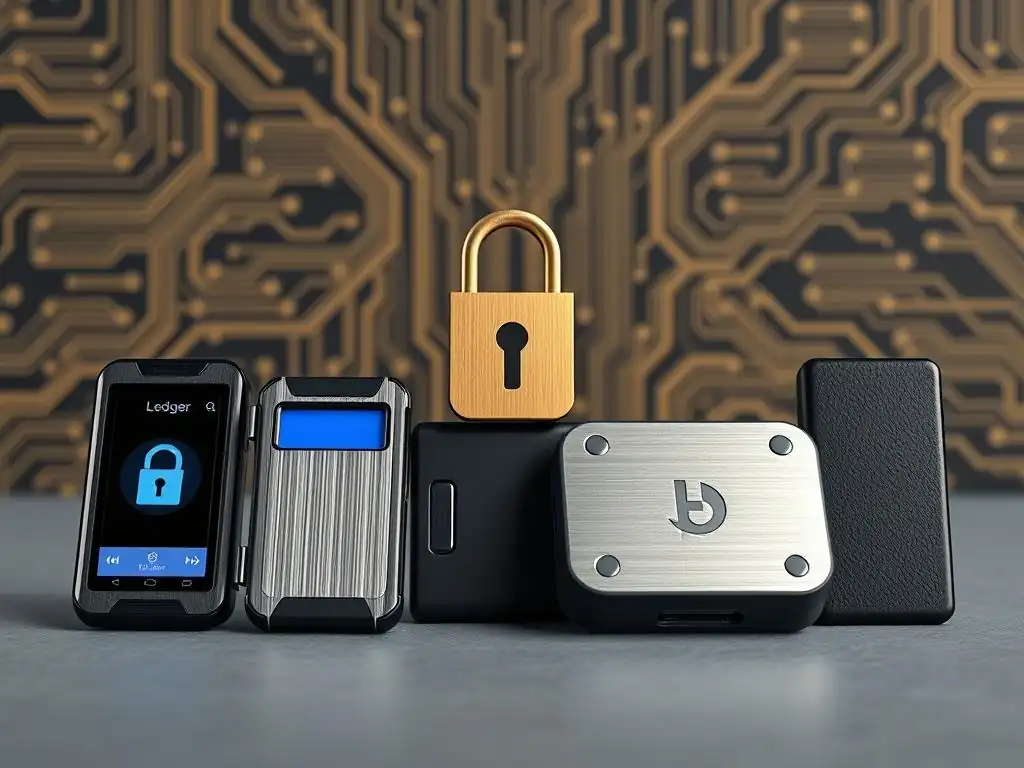
Choosing the right hardware wallet depends on individual needs, but several models stand out in the market for their robust security features, wide asset support, and user experience tailored for advanced users. Ledger Nano X, Trezor Model T, and BitBox02 are consistently ranked among the top contenders, each offering a slightly different approach to security and functionality. Examining their unique features, strengths, and weaknesses can help advanced users make an informed decision to maximize their secure hardware wallets benefits.
These devices represent the pinnacle of personal cryptocurrency security. They have undergone extensive security audits, have established track records, and are backed by companies dedicated to hardware security. While their core function of offline key storage is similar, differences in their interfaces, connectivity options, supported assets, and specific security implementations cater to varying user preferences and technical requirements.
Ledger Nano X: The Powerhouse of Security and Mobility
The Ledger Nano X is a flagship hardware wallet known for its large storage capacity and Bluetooth connectivity, offering a blend of top-tier security and convenience. It supports over 5,500 different cryptocurrencies and tokens, allowing advanced users to manage a vast and diverse portfolio on a single device. The integrated Secure Element chip (CC EAL5+ certified) provides a high level of protection against physical attacks. Its larger screen makes verifying transaction details easier compared to smaller models.
Unique Features of Ledger Nano X
One of the most notable features of the Ledger Nano X is its Bluetooth capability, allowing users to manage their crypto and interact with dApps wirelessly via the Ledger Live mobile app. This provides significant mobility, enabling users to transact securely from their smartphone without needing a USB connection.
While Bluetooth introduces a potential wireless vector, Ledger implements strong end-to-end encryption between the device and the app, and critical transaction signing still requires physical confirmation on the device itself. Another key feature is its substantial internal storage, capable of installing numerous cryptocurrency applications simultaneously (up to 100, depending on the app size), making it ideal for managing a large number of different assets without constantly uninstalling and reinstalling apps.
Pros and Cons of Using Ledger Nano X
Pros:
- Wide range of supported cryptocurrencies (5500+).
- Large capacity for installing many apps simultaneously.
- Bluetooth connectivity for mobile use.
- Large, clear screen for transaction verification.
- Robust security architecture with Secure Element.
Cons:
- Higher price point compared to some competitors.
- Bluetooth feature, while convenient, raises minor security considerations (though mitigated by encryption and on-device confirmation).
- Battery life needs management for Bluetooth use.
Trezor Model T: The Ultimate User Experience
The Trezor Model T is the premium hardware wallet offering from SatoshiLabs, the creators of the first Bitcoin hardware wallet. It stands out with its large color touchscreen interface, which provides an exceptionally user-friendly experience for navigating menus and confirming transactions. Like Ledger, it supports a wide array of cryptocurrencies, though typically slightly fewer than Ledger's extensive list. Trezor is also highly regarded for its commitment to open-source firmware, allowing the security community to audit its code.
Unique Features of Trezor Model T
The most distinctive feature of the Trezor Model T is its vibrant color touchscreen. This interface allows for intuitive navigation and makes the process of confirming addresses and transaction details visually clear and less prone to errors than devices with smaller or monochrome screens.
The touch screen is also used for PIN entry and recovery phrase input (using a randomized keypad), which adds a layer of security against keyloggers on the connected computer. It also supports Shamir Backup (SLIP39), an advanced method to split the recovery seed into multiple unique shares, requiring a specified number of shares to recover the wallet, offering enhanced resilience against loss of individual shares.
Pros and Cons of Using Trezor Model T
Pros:
- Excellent color touchscreen interface.
- Open-source firmware for community review.
- Supports Shamir Backup (SLIP39).
- Reputable manufacturer with a long history.
- Supports a wide range of major cryptocurrencies.
Cons:
- Highest price point among popular models.
- Does not support as many altcoins as the Ledger Nano X.
- No Bluetooth connectivity (relies on USB-C).
BitBox02: A Minimalist Approach to Security
The BitBox02, developed by Shift Crypto, takes a minimalist approach, focusing on core security principles and ease of use, particularly for Bitcoin. It comes in two versions: one specifically for Bitcoin-only users and a Multi edition that supports Bitcoin, Ethereum, Litecoin, and ERC-20 tokens. A unique feature is its use of touch sensors along the sides for navigation and confirmation, combined with a clear OLED display. It also features microSD card backup, offering an alternative to writing down the seed phrase on paper.
Unique Features of BitBox02
The BitBox02's touch sensors provide a simple yet effective way to interact with the device, requiring specific tap and swipe gestures for confirmation, which can reduce the risk of accidental presses. Its microSD card backup feature allows users to store an encrypted backup of their wallet directly onto a physical card, which can be stored securely. While paper backup is still recommended, the microSD option provides a convenient digital alternative (though it's crucial to encrypt this backup strongly).
It also integrates seamlessly with the BitBoxApp desktop and mobile application, which is known for its clean interface and focus on essential features. The emphasis on being Bitcoin-focused in one version appeals to purists prioritizing maximal security for BTC.
Pros and Cons of Using BitBox02
Pros:
- Strong focus on security and simplicity.
- Unique touch sensor interface.
- MicroSD card backup option.
- Dedicated Bitcoin-only version available.
- Open-source firmware.
Cons:
- Supports fewer cryptocurrencies than Ledger or Trezor (especially the Multi edition).
- Smaller OLED display compared to Ledger X or Trezor T.
- Navigation via touch sensors can have a learning curve for some users.
Why Advanced Crypto Users Should Invest in Secure Hardware Wallets
For advanced users, the decision to invest in a secure hardware wallet is not merely about convenience; it's a strategic necessity for robust asset protection and effective participation in the crypto economy. The secure hardware wallets benefits extend far beyond basic holding, providing essential safeguards against the most prevalent and sophisticated threats. Managing larger sums or engaging in complex DeFi interactions significantly increases the potential impact of a security lapse, making the physical security layer provided by a hardware wallet indispensable.
The relatively modest cost of a quality hardware wallet is a small price to pay when considering the potential loss of significant digital assets. Compared to the millions lost annually to hacks, scams, and malware, a hardware wallet represents a highly cost-effective insurance policy. It empowers advanced users to take full control of their security posture, moving away from reliance on potentially vulnerable software-only solutions or custodial services.
Protecting Against Hacks and Scams: Real-World Examples
The history of cryptocurrency is unfortunately replete with instances of users losing funds due to security breaches, many of which could have been prevented by using a hardware wallet. While centralized exchange hacks like Mt. Gox (2014, ~$460 million lost) or Coincheck (2018, ~$530 million lost) highlight the risks of leaving funds on exchanges, individual users are also constant targets. Phishing attacks continue to be highly effective; in one notable case, users interacting with a fake Uniswap website lost hundreds of thousands of dollars in tokens after unknowingly granting malicious smart contracts unlimited spending approval.
Malware designed to steal private keys or alter recipient addresses during transactions is another persistent threat. For example, clipboard malware can detect when a user copies a cryptocurrency address and silently replace it with the attacker's address. A user sending Bitcoin might think they are sending it to address 'A' but malware swaps it to address 'B' just before they paste it.
A hardware wallet combats this by requiring the user to verify the final recipient address on the device's trusted screen before signing, making such clipboard attacks ineffective. These real-world scenarios underscore the crucial secure hardware wallets benefits in providing a physical, unalterable verification step that software alone cannot guarantee.
Long-Term Storage Solutions: The Benefits of Cold Storage
For advanced users accumulating cryptocurrency as a long-term investment, utilizing a hardware wallet for cold storage is the most secure method. Cold storage refers to keeping cryptocurrency offline, completely disconnected from the internet. A hardware wallet facilitates this by storing the private keys offline, only connecting briefly when a transaction needs to be signed. The majority of the time, the device can be disconnected and stored securely, rendering it impervious to online hacking attempts.
Storing significant amounts of crypto on an exchange or software wallet connected to the internet (hot storage) significantly increases the risk profile. While convenient for trading, hot storage is a constant target for attackers. Moving assets into the cold storage provided by a hardware wallet drastically reduces this exposure.
For example, an investor holding 50 BTC for several years would face immense risk leaving it on an exchange; securing it with a hardware wallet provides peace of mind knowing the keys are offline and protected by dedicated security hardware. This long-term, low-risk storage is one of the primary secure hardware wallets benefits for serious investors.
Enhancing Your Crypto Strategy: Using Hardware Wallets for DeFi
Advanced users aren't just hodling; they're actively participating in the crypto ecosystem through staking, yield farming, lending, and trading on DEXs. Engaging with DeFi protocols requires interacting with smart contracts, which introduces its own set of risks, including contract vulnerabilities or malicious dApps. Integrating a hardware wallet into your DeFi strategy enhances security significantly.
Instead of relying on a browser extension wallet where the private key might be accessible to malicious scripts on compromised websites, using a hardware wallet means your private key never leaves the secure device. When you interact with a DeFi protocol, the transaction details (e.g., approving a token spend, depositing into a liquidity pool) are sent to your hardware wallet for review. You verify the specific contract interaction and the details on the hardware wallet's screen before signing.
This ensures you understand and approve exactly what the smart contract is asking your wallet to do, preventing unauthorized actions even if the website interface is compromised. This seamless yet secure interaction with the DeFi world is a major secure hardware wallets benefit for active participants.
Comparing Secure Hardware Wallet Options
Selecting the ideal secure hardware wallet involves weighing features, security implementations, ease of use, and cost. While Ledger, Trezor, and BitBox are leading contenders, understanding their specific differences helps advanced users choose the device that best fits their portfolio diversity, technical comfort level, and intended use cases (e.g., pure cold storage vs. active DeFi participation). A direct comparison highlights where each device excels and what compromises, if any, they entail.
The choice often comes down to a balance between maximum altcoin support, touchscreen convenience, open-source philosophy, and price. Each device offers robust core security, but the nuances in their features and ecosystems cater to different user preferences. Evaluating these aspects critically is key to unlocking the maximum secure hardware wallets benefits tailored to an individual's needs.
Feature Comparison: Ledger vs. Trezor vs. BitBox
| Feature | Ledger Nano X | Trezor Model T | BitBox02 (Multi) |
|---|---|---|---|
| Security Chip | Secure Element (CC EAL5+) | General-purpose MCU + Secure Boot | Secure Element (CC EAL6+) |
| Interface | OLED screen + 2 buttons | Color Touchscreen | OLED screen + Touch sensors |
| Connectivity | USB-C, Bluetooth | USB-C | USB-C |
| Supported Assets | 5500+ (via Ledger Live apps) | 1800+ (major coins + tokens) | Bitcoin, Ethereum, Litecoin, ERC-20 (Multi) |
| App Capacity | ~100 apps simultaneously | Limited by device storage (install/uninstall) | Limited by device storage (install/uninstall) |
| Backup Method | 24-word seed phrase (BIP39) | 12/24-word seed phrase (BIP39), Shamir (SLIP39) | 24-word seed phrase (BIP39), Encrypted MicroSD |
| Open Source | Partial (Apps), Firmware (Closed/Audited) | Yes (Firmware & Software) | Yes (Firmware & Software) |
| Mobile Support | Yes (via Ledger Live app + Bluetooth/USB) | Yes (via Trezor Suite Lite + USB-C) | Yes (via BitBoxApp + USB-C) |
| DeFi Compatibility | Excellent (via Ledger Live & WalletConnect) | Excellent (via Trezor Suite & WalletConnect) | Good (via BitBoxApp & WalletConnect) |
This table provides a snapshot, but deeper dives into specific asset support or niche features are often necessary for advanced users with unique requirements. For example, users heavily invested in a wide array of obscure altcoins might find Ledger's extensive support library crucial, while users prioritizing open-source code might lean towards Trezor or BitBox.
Price Considerations: Finding Value in Hardware Wallets
Secure hardware wallets represent an investment in security, and their prices reflect the specialized hardware and development required. Generally, the Ledger Nano X and Trezor Model T are positioned at the higher end of the consumer hardware wallet market, typically ranging from $100 to $150 USD. This price reflects their premium features like Bluetooth (Ledger X) or a color touchscreen (Trezor T), as well as extensive research and development into security.
The BitBox02 is often slightly more affordable, typically falling in the $100 to $120 range for the Multi edition. The Bitcoin-only version might be marginally less expensive. While there are cheaper hardware wallets available from other manufacturers, the models discussed here have established reputations and have undergone significant security scrutiny, making them a worthwhile investment for advanced users managing substantial value. The secure hardware wallets benefits they provide in terms of asset protection far outweigh their initial cost.
Recommendations Based on User Needs: Choosing the Right Wallet
- For users prioritizing maximum altcoin support and mobile convenience: The Ledger Nano X is likely the best fit due to its vast asset compatibility and Bluetooth connectivity.
- For users valuing user experience, open-source firmware, and advanced backup options (Shamir): The Trezor Model T stands out with its touchscreen and SLIP39 support.
- For users prioritizing core security, simplicity, and a strong focus on Bitcoin (with some altcoin support) or who prefer microSD backup: The BitBox02 (either Bitcoin-only or Multi) offers a compelling, minimalist approach.
Ultimately, the "best" secure hardware wallet depends on the individual. All three models offer a significant upgrade in security over software wallets for advanced users. Researching the specific cryptocurrencies you hold and how you plan to interact with them (e.g., heavy DeFi use, long-term storage only) will help narrow down the choice and ensure you gain the most relevant secure hardware wallets benefits.
Conclusion: Maximizing Security with Secure Hardware Wallets
For advanced users navigating the dynamic and sometimes volatile world of cryptocurrency, robust security is not a luxury but a fundamental requirement. The risks associated with managing digital assets – from sophisticated hacks and malware to human error and physical loss – necessitate a defense mechanism that goes beyond the capabilities of software-only solutions. Secure hardware wallets provide this essential layer of protection by isolating private keys offline, creating an air gap that is virtually impervious to online threats.
Investing in a quality hardware wallet from a reputable manufacturer is one of the most impactful steps an advanced user can take to safeguard their digital wealth. The secure hardware wallets benefits, including superior offline key storage, physical transaction verification, support for diverse asset portfolios, and seamless integration with the growing DeFi ecosystem, collectively empower users to maintain full control and sovereignty over their funds while actively participating in the decentralized economy.
Final Thoughts on Secure Hardware Wallets Benefits for Advanced Crypto Users
The secure hardware wallets benefits are undeniable for anyone serious about holding or using cryptocurrency beyond casual experimentation. They provide the gold standard in self-custody, shifting the power and responsibility for security from potentially vulnerable third parties or online systems directly to the user, protected by specialized hardware.
For advanced users managing significant value or engaging in complex transactions, the enhanced security and peace of mind offered by these devices are invaluable. Features like tamper-resistant chips, verified firmware, physical screens for verification, and secure backup options form a comprehensive defense against the most common and severe threats in the crypto space.
While no security solution is entirely foolproof, hardware wallets significantly reduce the attack surface and mitigate risks that software wallets cannot. They represent a critical tool in the advanced crypto user's arsenal, enabling secure long-term storage (cold storage) and safer interaction with the burgeoning world of decentralized finance.
Encouraging Responsible Crypto Management with Secure Solutions
Adopting a secure hardware wallet is a cornerstone of responsible cryptocurrency management. It signals a commitment to taking personal custody seriously and understanding the inherent risks of this new financial paradigm. Beyond simply purchasing a device, responsible management involves:
- Properly backing up and securing your recovery phrase: Store it offline in multiple secure locations, away from the device itself. Never digitize it or share it.
- Verifying transaction details on the hardware wallet screen: Always double-check recipient addresses and amounts before confirming.
- Keeping hardware wallet firmware updated: Ensure you are running the latest verified version from the manufacturer.
- Being wary of phishing attempts and malicious software: Hardware wallets protect against many online threats, but user vigilance remains crucial.
By integrating a secure hardware wallet into their workflow and adhering to best practices for private key management, advanced crypto users can significantly enhance their security posture, protect their assets from loss, and confidently explore the vast opportunities within the blockchain ecosystem, reaping the full secure hardware wallets benefits.
Frequently Asked Questions
What are the core benefits of using a hardware wallet compared to software wallets?
Hardware wallets offer enhanced security because your private keys are stored offline, shielding them from online threats like malware and hacking attempts. This significantly reduces the risk of your crypto assets being compromised.
Are hardware wallets only for experienced crypto users, or can beginners benefit from them?
While the term "Advanced Crypto Users" is in the title, hardware wallets are beneficial for all users. The added security they provide makes them a valuable tool, especially for protecting long-term investments, regardless of experience level.
How do hardware wallets protect against phishing attacks and keyloggers?
Because transactions need to be physically confirmed on the device, hardware wallets mitigate phishing and keylogger risks. This physical confirmation prevents unauthorized transactions even if your computer is compromised, ensuring transaction integrity.
What types of cryptocurrencies are typically supported by hardware wallets?
Most hardware wallets support a wide range of cryptocurrencies, including Bitcoin, Ethereum, and many ERC-20 tokens. However, it's crucial to verify compatibility with your specific assets before purchasing.
What happens if a hardware wallet is lost or damaged?
Hardware wallets typically provide a recovery seed phrase that allows you to restore your funds to a new wallet, even if the original device is lost or damaged. This backup mechanism is vital for ensuring the safety of your digital assets.
Final Reflection: Securing Your Digital Future
The insights shared throughout this article underscore the paramount importance of secure hardware wallets benefits in today's rapidly evolving cryptocurrency landscape. As digital assets become increasingly integrated into our financial lives, the need for robust security measures is no longer a luxury, but a necessity. The vulnerabilities inherent in software wallets and centralized exchanges demand a proactive approach to safeguarding our investments, and hardware wallets offer precisely that.
The ongoing influence of hardware wallets extends beyond mere asset protection; it fosters a sense of ownership and control over one's financial destiny. This shift towards self-custody is a powerful movement, empowering individuals to participate in the decentralized future with confidence and peace of mind. Not your keys, not your coins.
This simple adage encapsulates the fundamental principle that true ownership resides in controlling the private keys that govern access to your digital assets.
As you navigate the complexities of the crypto world, remember that the security of your investments rests ultimately in your hands. Consider the features discussed, weigh the benefits against your individual needs, and take the necessary steps to secure your digital future with a hardware wallet. By embracing this proactive approach, you not only protect your assets but also contribute to a more secure and decentralized financial ecosystem for all.
Unlock Your Crypto Security: Start Your Hardware Wallet Journey Today!
Thanks for exploring the world of hardware wallets! You've gained a solid understanding of the advanced features that can significantly enhance your crypto security. Now, it's time to put that knowledge into action and take control of your digital assets.
Here are some steps you can take right now:
- Secure your assets by selecting and setting up your first hardware wallet. This is the most important step toward truly owning your crypto.
- Explore features like passphrase protection and multi-signature setups. Practice using them on a test wallet before applying them to your main holdings.
- Share this article with fellow crypto enthusiasts who are ready to upgrade their security. Help them discover the benefits of hardware wallets!
What advanced hardware wallet feature are you most excited to implement in your security strategy, and why?
Leave a Reply