
Unveiling DeFi: A Beginner's Guide to the Future of Finance


Welcome to Blockchain Trends, your gateway to understanding the revolutionary impact of blockchain technology. Are you ready to dive into the world of Decentralized Finance? Then look no further! This DeFi beginner's guide will unravel the complexities and unlock the potential of this groundbreaking financial landscape. Curious about how you can participate in the future of finance? Let's explore together...
Unveiling DeFi: A Beginner's Guide to the Future of Finance
- Introduction to Decentralized Finance (DeFi): Your Journey Begins
- Understanding the Building Blocks of DeFi
- Exploring Key DeFi Concepts for Beginners
- A Step-by-Step Guide to Getting Started with DeFi
- Potential Risks and Challenges in the DeFi Space
- DeFi Use Cases and Real-World Applications
- The Future of DeFi: Trends and Predictions
- Conclusion: Embracing the Potential of Decentralized Finance
-
Frequently Asked Questions
- What exactly is DeFi and how does it differ from traditional finance?
- How can a beginner get started in the DeFi space?
- What are the primary risks associated with investing in DeFi?
- What are some common DeFi applications besides cryptocurrency trading?
- How is DeFi potentially reshaping the future of finance?
- Final Reflection: Embracing the Decentralized Dawn
- Ignite Your DeFi Journey!
Introduction to Decentralized Finance (DeFi): Your Journey Begins
What is DeFi and Why Should You Care?
Decentralized Finance, or DeFi, represents a revolutionary shift in the financial landscape, moving away from traditional, centralized institutions like banks and brokerages towards peer-to-peer transactions on open blockchains. At its core, DeFi leverages blockchain technology, primarily Ethereum initially, to create a financial system accessible to anyone with an internet connection, regardless of their location or socioeconomic status.
This system operates through automated protocols and smart contracts, eliminating the need for intermediaries and offering services like lending, borrowing, trading, and insurance directly between users. For anyone seeking a comprehensive DeFi beginner's guide finance, understanding this fundamental shift is the crucial first step.
The significance of DeFi lies in its potential to democratize finance. Traditional finance often involves lengthy processes, high fees, and restrictions based on credit scores or geographical location. DeFi, conversely, aims to provide permissionless access to financial services.
This means anyone can participate, whether they want to earn interest on their assets, take out a loan, or trade cryptocurrencies without needing a bank account or a broker. The transparency of blockchain also allows users to verify transactions and protocol rules, fostering a level of trust not always present in opaque traditional systems. Exploring DeFi finance opens doors to new opportunities for wealth creation and financial autonomy.
The Core Principles of DeFi: Transparency, Accessibility, and Control
Transparency is a cornerstone of the DeFi ecosystem. Because transactions and smart contract code reside on public blockchains like Ethereum, they are typically verifiable by anyone. This open ledger approach allows users to audit the activity of protocols, understand how funds flow, and gain confidence in the system's integrity, though the specific identities of participants are often pseudonymous. This level of openness contrasts sharply with the closed, proprietary systems of traditional finance, where internal operations are rarely visible to the public. A good DeFi beginner's guide finance highlights this fundamental difference.
Accessibility is another key principle. DeFi platforms are typically accessible to anyone globally, 24/7, provided they have internet access and a compatible crypto wallet. There are no geographical barriers, no minimum account balances required by intermediaries, and no need to pass through cumbersome Know Your Customer (KYC) procedures for basic interactions like trading on a decentralized exchange (DEX) or depositing assets into a lending pool. This global, permissionless access is particularly impactful for individuals in underserved regions or those excluded from traditional banking systems.
Finally, DeFi emphasizes user control. With DeFi, users typically retain custody of their digital assets through non-custodial wallets. This means they hold their private keys and have direct control over their funds, unlike traditional banking where the bank holds and controls your money. This control extends to participation in governance for many protocols, where token holders can vote on proposed changes and upgrades, giving users a direct say in the future of the platforms they use. This empowerment is a core tenet for anyone exploring DeFi finance.
DeFi vs. Traditional Finance: Key Differences Explained
| Feature | Traditional Finance | Decentralized Finance (DeFi) |
|---|---|---|
| Intermediaries | Banks, Brokers, Clearinghouses | Smart Contracts, Protocols, Code |
| Access | Permissioned, Based on Location/Credit | Permissionless, Global, 24/7 |
| Transparency | Opaque (Internal Records) | Transparent (Public Blockchain) |
| Custody | Centralized (Financial Institution holds) | Decentralized (User holds private keys) |
| Operation | Business Hours, Manual Processes | Automated via Code, Always On |
| Regulation | Heavily Regulated by Governments | Evolving, Complex, Often Unclear |
| Fees | Transaction Fees, Account Fees, etc. | Gas Fees (Blockchain Transaction Costs), Protocol Fees |
The most fundamental difference lies in the reliance on intermediaries. Traditional finance is built upon trusted third parties that facilitate transactions and manage assets. DeFi removes these intermediaries, replacing them with self-executing smart contracts on a blockchain. This disintermediation reduces costs, increases speed, and eliminates potential points of failure or censorship associated with central authorities. For a DeFi beginner's guide finance, grasping this shift from trust in institutions to trust in code is paramount.
Another significant divergence is in accessibility and control. Traditional finance often requires extensive identity verification, credit checks, and adheres to geographical boundaries and business hours. DeFi, by design, aims for global, permissionless access around the clock, allowing anyone with internet access and cryptocurrency to participate. Furthermore, users typically maintain direct control over their assets in DeFi through non-custodial wallets, a stark contrast to depositing funds into a bank account where the bank has custody. While traditional finance offers established consumer protections and regulatory frameworks, DeFi operates in a newer, less defined regulatory space, presenting both opportunities and challenges.
Understanding the Building Blocks of DeFi
Smart Contracts: The Engine of Decentralized Applications (dApps)
Smart contracts are the automated agreements that power decentralized applications (dApps) within the DeFi ecosystem. Written as code and deployed on a blockchain like Ethereum, these contracts automatically execute when predefined conditions are met, without the need for a human intermediary. For example, a lending smart contract might automatically release collateral back to a borrower once the loan and interest are repaid, or distribute interest payments to lenders based on the terms coded into the contract. This automation removes the need for trust between parties, as the logic is transparently executed by the blockchain network.
The logic and rules of a DeFi protocol are entirely embedded within its smart contracts. This includes how assets are pooled, how interest rates are calculated, how collateralization ratios are enforced, and how liquidations occur. Because the code is typically open-source and verifiable on the blockchain, users can theoretically audit the contract's behavior before interacting with it. However, understanding complex code requires technical expertise. The integrity and security of a DeFi protocol are directly tied to the robustness and freedom from vulnerabilities of its underlying smart contracts.
Blockchain Technology: The Foundation of DeFi Security and Immutability
Blockchain technology provides the foundational layer upon which DeFi protocols are built. It is a distributed, immutable ledger that records all transactions across a network of computers. Once a transaction or smart contract execution is added to the blockchain, it is extremely difficult, if not impossible, to alter or remove it. This immutability ensures the integrity of financial records and the finality of transactions within the DeFi ecosystem. The distributed nature of the blockchain network means there is no single point of failure; the system can continue to operate even if many participants go offline.
Beyond immutability, blockchain provides security through cryptographic principles. Transactions are signed digitally using private keys, ensuring that only the owner of an asset can authorize its movement or interaction with a smart contract. The consensus mechanisms used by blockchains (like Proof-of-Stake) ensure that all participants agree on the state of the ledger, preventing fraudulent transactions. This robust security model is essential for handling financial assets and executing complex financial logic in a trustless environment. Understanding the role of blockchain is crucial for any DeFi beginner's guide finance.
Crypto Assets: The Fuel Powering the DeFi Ecosystem
Crypto assets, including native blockchain cryptocurrencies like Ether (ETH) on Ethereum and various tokens, are the primary assets used within the DeFi ecosystem. These digital assets serve multiple purposes: they can be used as collateral for loans, traded on decentralized exchanges, deposited into liquidity pools to earn fees, or staked to secure networks and earn rewards. The total value locked (TVL) in DeFi protocols, a key metric representing the total value of crypto assets deposited, has grown significantly, reaching tens of billions of dollars across various blockchains, demonstrating the scale of assets flowing through the system.
The diversity of crypto assets available for use in DeFi is vast. It includes major cryptocurrencies, various altcoins, stablecoins pegged to fiat currencies (like USDC or DAI), wrapped tokens representing assets from other blockchains (like wBTC representing Bitcoin on Ethereum), and protocol-specific tokens (like UNI for Uniswap or AAVE for Aave). Each asset can interact with different DeFi protocols in various ways, offering users a wide range of strategies for managing and growing their digital wealth. Mastering the use of these assets is a core part of any DeFi beginner's guide finance.
Exploring Key DeFi Concepts for Beginners
Decentralized Exchanges (DEXs): Trade Crypto Without Intermediaries
Decentralized Exchanges (DEXs) allow users to trade cryptocurrencies directly with one another without needing to deposit funds onto a centralized platform managed by a company. Instead of an order book managed by an exchange operator, most modern DEXs utilize Automated Market Maker (AMM) protocols. In an AMM, trading pairs (like ETH/DAI) are held in liquidity pools funded by users. When a user wants to trade, they interact directly with the smart contract governing the pool, which automatically determines the price based on the ratio of assets within the pool. Popular examples include Uniswap, SushiSwap, and PancakeSwap.
Trading on a DEX means users retain custody of their assets throughout the process, directly interacting with smart contracts from their personal wallets. This eliminates the counterparty risk associated with centralized exchanges, where the user must trust the exchange not to be hacked or misuse their funds. While DEXs often offer a wider variety of smaller tokens and are censorship-resistant, they can be less user-friendly for beginners, may have higher transaction costs (gas fees) depending on network congestion, and can suffer from lower liquidity for certain trading pairs compared to major centralized exchanges.
Lending and Borrowing Platforms: Earning Interest on Your Crypto Assets
DeFi lending and borrowing platforms enable users to earn interest on their idle crypto assets by lending them out to borrowers, or to borrow crypto assets by providing other crypto as collateral. These platforms operate through smart contracts that pool assets from lenders and automatically manage the loan terms, including interest rates (often determined algorithmically based on supply and demand), collateral requirements, and liquidation processes. Protocols like Aave and Compound are prominent examples in this space.
For lenders, these platforms offer a way to generate passive income on their cryptocurrency holdings, potentially earning yields that can be significantly higher than traditional savings accounts, although also carrying higher risk. For borrowers, they provide a way to access liquidity without selling their crypto assets, often used for purposes like leveraged trading or covering short-term expenses. Borrowing in DeFi is typically overcollateralized, meaning the value of the collateral provided is greater than the value of the loan taken out, to protect lenders from default risk. Navigating these platforms is a key part of a DeFi beginner's guide finance.
Yield Farming: Maximizing Returns Through DeFi Strategies
Yield farming is an advanced DeFi strategy where users attempt to maximize returns on their crypto assets by leveraging various DeFi protocols. This often involves providing liquidity to DEXs, lending assets, or staking tokens in specific protocols to earn rewards. These rewards can come in the form of interest payments, trading fees from DEXs, or governance tokens distributed by the protocol itself. Yield farmers frequently move their assets between different protocols to chase the highest possible returns, following complex strategies.
While potentially lucrative, yield farming is not without significant risks. It requires a deep understanding of multiple protocols, constant monitoring, and can involve exposure to impermanent loss (discussed later), smart contract risk, and volatile token prices. The high annual percentage yields (APYs) often advertised can be misleading, as they are frequently calculated based on fluctuating token prices and reward structures. Yield farming is generally considered an intermediate to advanced strategy within DeFi finance, not typically recommended for absolute beginners due to its complexity and risks.
Stablecoins: Minimizing Volatility in the DeFi Space
Stablecoins are a critical component of the DeFi ecosystem, designed to minimize the price volatility typically associated with cryptocurrencies like Bitcoin or Ether. They achieve this stability by pegging their value to a less volatile asset, most commonly fiat currencies like the US dollar (e.g., USDC, USDT, DAI). This allows users to engage in DeFi activities like trading, lending, and borrowing without constantly being exposed to the wild price swings of unpegged cryptocurrencies.
There are different types of stablecoins:
- Fiat-collateralized: Backed 1:1 by reserves of fiat currency held in traditional bank accounts (e.g., USDC, USDT).
- Crypto-collateralized: Backed by reserves of other cryptocurrencies, often overcollateralized to absorb volatility (e.g., DAI).
- Algorithmic: Do not use direct asset reserves but rely on algorithms and smart contracts to manage supply and demand to maintain the peg (less common and higher risk).
Stablecoins provide a reliable store of value within the DeFi ecosystem, making it practical for users to participate in activities like taking out loans or earning interest without the constant worry of their principal asset value plummeting. They are essential for enabling practical financial transactions in DeFi finance.
A Step-by-Step Guide to Getting Started with DeFi
Setting Up Your Crypto Wallet: Choosing the Right One for DeFi
The first step in your DeFi journey is setting up a non-custodial crypto wallet. Unlike wallets on centralized exchanges, a non-custodial wallet gives you full control of your private keys and thus, your assets. These wallets act as your gateway to interacting with DeFi protocols. Popular software wallets (browser extensions and mobile apps) include MetaMask, WalletConnect-compatible wallets like Trust Wallet, and hardware wallets like Ledger or Trezor for enhanced security.
When choosing a wallet, consider factors like ease of use, supported networks (most DeFi activity started on Ethereum but has expanded to others like Polygon, Binance Smart Chain, Solana, etc. ), and security features. For beginners, a browser extension wallet like MetaMask is often the easiest way to start interacting with web-based DeFi applications. Remember to secure your recovery phrase (seed phrase) meticulously, as losing it means losing access to your funds, and anyone who finds it can access your wallet. This is a critical step in any DeFi beginner's guide finance.
Funding Your Wallet: Buying Crypto on Centralized Exchanges
Once your non-custodial wallet is set up, you'll need to fund it with cryptocurrency to start using DeFi protocols. The most common way for beginners to acquire crypto is by purchasing it on a centralized exchange (CEX) like Coinbase, Binance, Kraken, or Gemini. These platforms allow you to buy cryptocurrencies using traditional fiat currency (like USD, EUR) via bank transfers, credit cards, or other payment methods.
After purchasing crypto on a CEX, you will need to withdraw it to your non-custodial wallet. This involves copying your wallet's public address and pasting it into the withdrawal section of the exchange. Be extremely careful to ensure the address is correct and that you select the correct network for the withdrawal (e.g., ERC-20 for tokens on Ethereum). Withdrawing funds incurs a transaction fee, which varies depending on the exchange and network congestion.
Connecting Your Wallet to DeFi Platforms: A Secure and Seamless Process
Interacting with most DeFi platforms involves connecting your non-custodial wallet directly to the platform's website or application. This is typically done by clicking a "Connect Wallet" button on the DeFi protocol's interface. Your wallet application (like MetaMask) will then pop up, asking for your permission to connect to the site. This process does not give the platform access to your private keys or the ability to move funds without your explicit permission for each transaction.
Connecting your wallet simply allows the DeFi platform to view your public address and check your balances, and prepares it to prompt you to sign transactions when you initiate actions like swapping tokens, lending assets, or claiming rewards. Always verify that you are on the legitimate website of the DeFi protocol you intend to use to avoid phishing scams. This secure connection method is a core feature of DeFi finance, enabling direct interaction.
DeFi platforms, while diverse in their specific functions (lending, trading, etc. ), often share common interface elements. You'll typically see sections for:
- Dashboard/Overview: Showing your current positions, balances within the protocol, and earnings.
- Markets/Pools: Listing the available assets or trading pairs you can interact with.
- Supply/Borrow: For lending protocols, allowing you to deposit assets to earn interest or borrow against your collateral.
- Swap/Trade: For DEXs, enabling you to exchange one cryptocurrency for another.
- Stake/Farm: For protocols offering staking or yield farming opportunities.
- Governance: If the protocol has a governance token, allowing you to participate in voting.
Each action you initiate on a DeFi platform (depositing, withdrawing, swapping, borrowing, repaying) requires you to confirm and sign a transaction using your connected wallet. This transaction will incur a network fee (gas fee), which must be paid in the blockchain's native currency (e.g., ETH on Ethereum). Understanding these basic components is vital for any DeFi beginner's guide finance. Start with simple actions and small amounts while you get comfortable with the interface and transaction process.
Potential Risks and Challenges in the DeFi Space
Smart Contract Vulnerabilities: Protecting Yourself from Hacks
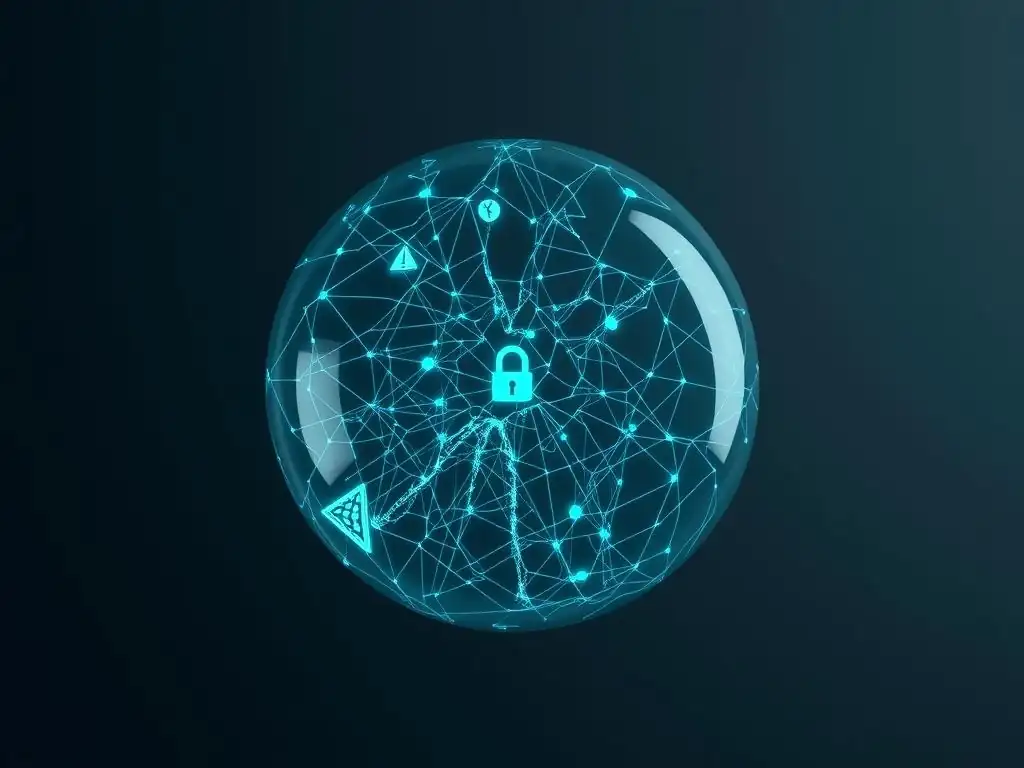
One of the primary risks in DeFi is the potential for vulnerabilities within the smart contracts that govern the protocols. While code is designed to be trustless, it is written by humans and can contain bugs or logical flaws that malicious actors can exploit. Such exploits have led to significant losses in the past; for instance, the exploit of the Poly Network in 2021 resulted in the theft of over $600 million (though a significant portion was later returned).
To mitigate this risk, users should ideally interact with protocols that have a proven track record, have undergone extensive audits by reputable third-party security firms, and potentially have bug bounty programs. However, audits are not a guarantee against exploits. There is no central authority to recover lost funds if a smart contract is hacked. Users must understand that depositing assets into a DeFi protocol means trusting the security and integrity of its code.
Impermanent Loss: Understanding the Risks of Liquidity Providing
Impermanent loss is a significant risk faced by users who provide liquidity to Automated Market Maker (AMM) DEXs. It occurs when the price ratio of the tokens in a liquidity pool changes relative to when you deposited them. The loss is "impermanent" because it only becomes real if you withdraw your assets from the pool before the prices return to their original ratio (relative to each other).
Essentially, if one asset in the pool significantly increases or decreases in value compared to the other, an arbitrageur will rebalance the pool by buying the cheaper asset and selling the more expensive one. When you eventually withdraw your liquidity, you will receive a different quantity of each token than you originally deposited, and the total dollar value might be less than if you had simply held the initial tokens in your wallet. The greater the price divergence, the greater the impermanent loss. This risk is crucial to understand for anyone providing liquidity within DeFi finance.
The regulatory landscape surrounding DeFi is still developing and varies significantly across different jurisdictions. Governments and financial regulators worldwide are grappling with how to classify and oversee decentralized protocols that do not have a central company or identifiable legal entity. This uncertainty creates potential risks, as new regulations could impact the accessibility, functionality, or legality of certain DeFi activities.
Regulatory actions could target specific types of protocols (e.g., those facilitating derivatives trading), stablecoin issuers, or even front-end interfaces that provide access to DeFi protocols. Changes in regulation could potentially force protocols to alter their operations or restrict access for users in certain regions. Staying informed about potential regulatory developments is important for users navigating the DeFi space, as the legal framework for DeFi finance is still being defined.
Scam Projects and Rug Pulls: How to Identify and Avoid Them
Like any emerging and rapidly growing ecosystem, DeFi is susceptible to scams and fraudulent projects. A common type is a "rug pull," where the developers of a new protocol attract investors by offering high yields or promising features, and then suddenly withdraw all the pooled liquidity (the "rug") and disappear with the funds. These projects often lack audits, have anonymous teams, and use unaudited or malicious smart contracts.
Identifying and avoiding scams requires diligence. Look for projects with transparent, preferably doxxed (publicly known) teams, clear documentation, successful audits from reputable firms, and a track record. Be highly skeptical of new projects offering unrealistically high, unsustainable yields. Research the protocol's smart contracts if possible, and understand how the yield is generated. Sticking to established, battle-tested protocols is generally safer for a DeFi beginner's guide finance.
DeFi Use Cases and Real-World Applications
DeFi for Lending and Borrowing: Accessing Capital Without Traditional Banks
DeFi lending and borrowing platforms offer a significant alternative to traditional banking services. Users can deposit crypto assets like ETH, DAI, or USDC into lending pools on protocols such as Aave or Compound and earn interest, often paid out continuously with each block confirmation on the blockchain. Borrowers can then take out loans in different cryptocurrencies by locking up other crypto assets as collateral. The collateralization ratio is typically high, often 120% or more, meaning you must deposit $120 worth of crypto to borrow $100.
This system provides access to capital without the need for credit checks, loan applications, or relying on traditional bank approval processes. It's particularly useful for crypto holders who need liquidity but don't want to sell their assets (e.g., to avoid capital gains taxes or because they are bullish on the asset's future price). While interest rates can be volatile, they are often competitive with or higher than traditional finance rates, making it an attractive use case for DeFi finance.
DeFi for Payments and Remittances: Faster and Cheaper Transactions
While not the most common use case compared to lending or trading, DeFi-enabled payments and remittances offer the potential for faster and cheaper cross-border transactions than traditional methods like international wire transfers. Using stablecoins, individuals can send value globally with significantly lower fees and settlement times measured in minutes rather than days.
Platforms and protocols are being developed to facilitate easier crypto payments. While mass consumer adoption is still nascent, this use case is particularly relevant for remittances to countries where traditional transfer services are expensive or inaccessible. The inherent speed and low cost of blockchain transactions, especially on more scalable networks, position DeFi as a potential disruptor in the global payments industry.
DeFi for Insurance: Decentralized Risk Management
Decentralized insurance protocols aim to provide coverage against specific risks within the crypto and DeFi space, such as smart contract exploits, stablecoin depegging events, or even centralized exchange hacks. Protocols like Nexus Mutual allow users to purchase "coverage" against the failure of a specific smart contract or protocol. Other users can act as underwriters, pooling their capital to cover potential payouts and earning rewards for taking on this risk.
This decentralized approach to insurance removes the need for a traditional insurance company intermediary. Claims are typically assessed and voted upon by members of the protocol or a decentralized claims assessor group, rather than a centralized adjuster. While still a developing area within DeFi, decentralized insurance offers a novel way to manage some of the unique risks associated with participating in DeFi finance.
DeFi for Asset Management: Automated Portfolio Strategies
DeFi enables new forms of asset management through automated strategies and tokenized portfolios. Protocols can allow users to deposit assets into vaults or strategies that automatically deploy capital across various lending, borrowing, or yield farming opportunities to optimize returns. This allows users to access sophisticated strategies that might otherwise be complex to manage manually.
Tokenized asset management protocols can also represent baskets of underlying assets as a single token, making it easier to gain exposure to diversified portfolios or specific DeFi strategies. While still evolving, these decentralized approaches offer the potential for more transparent, accessible, and potentially lower-fee alternatives to traditional asset management services.
The Future of DeFi: Trends and Predictions
The Evolution of DeFi Protocols: Innovation and Scalability
The DeFi ecosystem is characterized by rapid innovation. Protocols are constantly evolving, introducing new features, improving capital efficiency, and exploring novel financial primitives. A major trend is the focus on scalability. As the Ethereum network faced congestion and high gas fees, DeFi activity expanded to other layer-1 blockchains (like Solana, Avalanche, Terra - prior to its collapse, Binance Smart Chain) and layer-2 scaling solutions built on top of Ethereum (like Polygon, Arbitrum, Optimism).
This multi-chain or cross-chain future is likely to continue, allowing users to access DeFi services on faster and cheaper networks. Further protocol evolution is expected in areas like undercollateralized lending (currently rare), decentralized derivatives, and enhanced user interfaces to improve accessibility for non-technical users. Continued development in smart contract security and formal verification methods is also crucial for the ecosystem's long-term health.
Institutional Adoption of DeFi: Mainstream Finance Embraces Decentralization
While DeFi began as a grassroots movement, there is increasing interest and exploration from traditional financial institutions and corporations. This "institutional DeFi" often involves permissioned pools or customized protocols designed to meet regulatory requirements and the specific needs of large financial players. Institutions are exploring using DeFi for activities like wholesale lending, tokenized assets, and clearing and settlement.
Major financial firms are investigating the potential efficiency gains and cost reductions offered by decentralized systems. While full integration is still some way off, the trend suggests that elements of DeFi's architecture and processes could eventually be adopted or adapted by mainstream finance, bridging the gap between the traditional and decentralized worlds.
The Impact of DeFi on Financial Inclusion: Empowering the Underserved
One of the most significant long-term impacts of DeFi is its potential to enhance financial inclusion globally. By providing permissionless access to financial services, DeFi can serve individuals and communities who are currently unbanked or underbanked. This includes access to savings mechanisms (lending protocols), credit (borrowing), and the ability to participate in global markets (DEXs) without needing traditional financial infrastructure.
In regions with unstable currencies, stablecoins and DeFi can offer a way to preserve wealth and conduct transactions more reliably. While challenges remain regarding internet access, digital literacy, and regulatory clarity, the fundamental design of DeFi offers a pathway to empowering billions of people by giving them direct control over their financial lives and access to global financial opportunities. This potential for inclusion is a powerful narrative for the future of DeFi finance.
Conclusion: Embracing the Potential of Decentralized Finance
DeFi: A New Paradigm for Financial Services
Decentralized Finance (DeFi) represents a fundamental shift in how financial services can be delivered and accessed. By leveraging blockchain technology, smart contracts, and crypto assets, DeFi protocols are building an alternative financial system that is transparent, accessible, and user-controlled. It moves away from reliance on centralized intermediaries, offering direct, peer-to-peer interactions for activities like trading, lending, borrowing, and more. This DeFi beginner's guide finance has explored the core concepts, building blocks, and potential applications of this rapidly evolving space.
While significant risks exist, including smart contract vulnerabilities, impermanent loss, and regulatory uncertainty, the potential benefits of DeFi are substantial. It offers the promise of increased efficiency, reduced costs, greater accessibility for the unbanked, and new avenues for wealth creation and management. The ecosystem is still young and dynamic, constantly innovating and expanding across different blockchains and use cases.
Your DeFi Journey: Taking the First Steps Towards Financial Freedom
Embarking on your DeFi journey requires careful preparation and a willingness to learn. Start by understanding the basics: setting up a secure non-custodial wallet, acquiring cryptocurrency, and learning how to safely connect to and interact with reputable DeFi platforms. Begin with small amounts and familiarize yourself with concepts like gas fees, stablecoins, and the specific mechanics of the protocols you choose to use.
Educate yourself about the risks involved and how to mitigate them, such as researching project audits and understanding the potential for impermanent loss if providing liquidity. DeFi offers powerful tools for financial autonomy, but with that power comes responsibility for managing your own security and understanding the protocols you interact with. This DeFi beginner's guide finance is just the starting point for exploring the exciting and potentially transformative world of decentralized finance.
Frequently Asked Questions
What exactly is DeFi and how does it differ from traditional finance?
DeFi, or Decentralized Finance, aims to recreate traditional financial services using blockchain technology. Unlike traditional finance, DeFi operates without central intermediaries like banks, offering services such as lending, borrowing, and trading through smart contracts.
How can a beginner get started in the DeFi space?
Beginners should start by understanding the basic concepts of blockchain and cryptocurrencies. Then, explore reputable DeFi platforms with user-friendly interfaces and consider starting with small amounts to learn the ropes.
What are the primary risks associated with investing in DeFi?
DeFi risks include smart contract vulnerabilities, impermanent loss in liquidity pools, and regulatory uncertainty. Also, rug pulls are a prevalent risk which could result in the loss of funds.
What are some common DeFi applications besides cryptocurrency trading?
Beyond trading, DeFi encompasses applications like decentralized lending and borrowing, yield farming, and stablecoin creation. It also facilitates the creation of decentralized insurance and prediction markets.
How is DeFi potentially reshaping the future of finance?
DeFi promises a more inclusive and transparent financial system by removing intermediaries and lowering barriers to entry. Its potential to automate financial processes and offer innovative financial products could revolutionize the industry.
Final Reflection: Embracing the Decentralized Dawn
The journey into Decentralized Finance (DeFi), as we've explored, is more than just understanding blockchain and cryptocurrencies; it's about grasping a fundamental shift in how we perceive and interact with money. The promise of a more accessible, transparent, and equitable financial system is no longer a distant dream, but a rapidly evolving reality shaping the future of finance. This guide serves as a starting point, but the true potential of DeFi lies in its continuous innovation and its ability to empower individuals globally.
The impact of DeFi extends far beyond mere technological advancement. It's influencing the very fabric of our economic interactions, challenging traditional institutions and fostering a new wave of financial inclusion. Witnessing this transformation firsthand, and understanding its potential to democratize wealth, is a truly inspiring experience. The future of finance is decentralized, and it's happening now.
This quote encapsulates the urgency and excitement surrounding DeFi, urging us to not just observe, but actively participate in shaping its trajectory.
Now, armed with this foundational knowledge, I invite you to reflect on the role you wish to play in this decentralized future. How can you leverage the tools and principles of DeFi to build a more secure, equitable, and prosperous financial life for yourself and your community? The power to shape the future of finance is within your reach – embrace the challenge, explore the possibilities, and contribute to building a truly decentralized dawn.
Ignite Your DeFi Journey!
Thanks for exploring the world of Decentralized Finance with us! We hope this guide has demystified DeFi and empowered you to understand its potential. Now, it's time to take the next step and put your knowledge into action.
Here's how you can delve deeper into the DeFi revolution:
- Start small: Invest a tiny amount in a reputable DeFi platform to experience staking or yield farming firsthand.: This is the best way to learn the practicalities and understand the risks involved.
- Explore the possibilities: Delve into blockchaintrends.org and check our DeFi analysis on a weekly basis.
- Share this article with a friend who's also curious about the future of finance! Let's spread the word about DeFi's transformative power.
Ready to take the leap and explore the exciting possibilities of DeFi?
Leave a Reply