
Deploying Smart Contracts: From Code to Blockchain Execution


Welcome to Blockchain Trends, your compass navigating the decentralized future!
Are you ready to unlock the full potential of blockchain technology, moving beyond the hype and into practical application? In this deep dive, we're unraveling the intricacies of smart contract deployment best practices. Discover crucial insights that can save you time, resources, and headaches in your journey to build secure and efficient decentralized applications. What are the key considerations for a successful deployment? Let's explore...
Deploying Smart Contracts: From Code to Blockchain Execution
- Understanding Smart Contract Deployment
- Smart Contract Development and Testing
- Preparing for Smart Contract Deployment: Key Considerations
- Step-by-Step Guide to Smart Contract Deployment
- Post-Deployment Smart Contract Management
- Smart Contract Deployment Best Practices: A Comprehensive Checklist
- Common Smart Contract Deployment Challenges and Solutions
- The Future of Smart Contract Deployment
-
Frequently Asked Questions
- What are some key considerations before deploying a smart contract?
- Why is gas optimization so critical when deploying smart contracts?
- What are some common security vulnerabilities to watch out for during smart contract development?
- What are the best practices for testing smart contracts before deployment?
- How does blockchain regulation impact smart contract deployment?
- Final Reflection: Embracing the Future of Decentralized Agreements
- Launch Your Blockchain Journey!
Understanding Smart Contract Deployment
What is Smart Contract Deployment? A Detailed Overview
Smart contract deployment is the crucial process of making your meticulously crafted smart contract code live and operational on a blockchain network. It's akin to launching a software application onto the internet, but instead of centralized servers, the application resides on a decentralized, immutable ledger. This process involves several key steps, from compiling your high-level code, typically written in languages like Solidity for Ethereum-compatible blockchains, into bytecode that the Ethereum Virtual Machine (EVM) or other blockchain virtual machines can understand, to broadcasting this bytecode to the network along with the necessary transaction data.
Upon successful deployment, your smart contract is assigned a unique address on the blockchain. This address becomes the entry point for interacting with your contract's functions. Every interaction, whether it’s calling a function to read data or triggering a state-changing transaction, involves sending transactions to this specific contract address.
The deployed smart contract then becomes an autonomous agent, executing its pre-defined logic whenever triggered by a transaction, thereby automating processes and agreements in a transparent and trustless manner. Understanding smart contract deployment is fundamental for anyone venturing into blockchain development, as it bridges the gap between writing code and creating functional decentralized applications.
Prerequisites for Successful Smart Contract Deployment
Before embarking on the journey of smart contract deployment, several prerequisites must be in place to ensure a smooth and successful process. Firstly, a solid understanding of smart contract programming languages, such as Solidity for Ethereum and Vyper, is indispensable. You should be comfortable writing, testing, and debugging smart contracts, understanding concepts like contract structure, data types, functions, and event handling. Without a firm grasp of these programming fundamentals, developing deployable and functional smart contracts will be significantly challenging.
Secondly, familiarity with blockchain technology, particularly the nuances of the target blockchain network, is crucial. Understanding concepts like gas, transaction fees, block times, and consensus mechanisms is vital for optimizing your smart contract for deployment and operation. For instance, deploying on Ethereum requires a deep understanding of gas mechanics to estimate and manage deployment costs effectively.
Furthermore, setting up a development environment, which usually includes tools like Node.js, npm or yarn, and development frameworks such as Hardhat or Truffle, is necessary. These tools streamline the development, testing, and deployment workflows, making the process more efficient and less error-prone. Finally, access to a blockchain network, whether a test network (like Goerli for Ethereum) or the main network, along with a wallet funded with the network's native cryptocurrency (like ETH for Ethereum) to pay for deployment transaction fees, is the ultimate prerequisite for initiating the deployment process.
Smart Contract Development and Testing
Writing Secure and Efficient Smart Contracts: Best Practices
Writing secure and efficient smart contracts is paramount, as vulnerabilities can lead to significant financial losses and inefficiencies can result in high gas costs and slow execution. One of the primary best practices is to adhere to the principle of least privilege, ensuring that contracts and functions only have the necessary permissions and access. This minimizes the attack surface and reduces the potential impact of security breaches. For example, avoid using delegatecall unless absolutely necessary and carefully manage access control using modifiers and roles. Furthermore, implementing thorough input validation is crucial to prevent common vulnerabilities like reentrancy attacks and integer overflows. Always validate user inputs to ensure they are within expected ranges and formats before processing them within your contract logic.
Efficiency in smart contract code directly translates to lower gas costs for users interacting with your application. Optimize your code by minimizing gas consumption, which includes avoiding unnecessary computations, using efficient data structures, and carefully structuring loops and conditional statements. For instance, using calldata instead of memory for function arguments when possible, and optimizing storage variable access patterns, can significantly reduce gas usage.
Employing well-established smart contract design patterns, such as the Checks-Effects-Interactions pattern to mitigate reentrancy risks, and using libraries like SafeMath for arithmetic operations to prevent overflows, are also essential best practices. Regularly auditing your code, both manually and using automated static analysis tools like Slither, can help identify potential security vulnerabilities and gas inefficiencies before deployment, leading to more robust and cost-effective smart contracts.
Smart Contract Testing Strategies: Ensuring Functionality and Security
Rigorous testing is an indispensable part of smart contract development, ensuring both functionality and security before deployment. A comprehensive testing strategy typically involves several layers, starting with unit testing. Unit tests focus on individual functions or modules of your smart contract in isolation, verifying that each component behaves as expected under various conditions. Frameworks like Hardhat and Truffle provide excellent testing environments and assertion libraries for writing effective unit tests in JavaScript or TypeScript. These tests should cover normal cases, edge cases, and error conditions to ensure robustness.
Beyond unit tests, integration testing is crucial to examine how different components of your smart contract interact with each other and with external systems. This level of testing verifies the overall workflow and data flow within your application. For instance, if your smart contract interacts with another contract or an oracle, integration tests will ensure these interactions function correctly.
Furthermore, security testing is paramount, focusing specifically on identifying potential vulnerabilities. This includes penetration testing, fuzzing, and static analysis. Tools like Mythril and Oyente can perform static analysis to detect common vulnerabilities like reentrancy, timestamp dependency, and gas denial-of-service attacks.
Consider also employing formal verification methods for critical smart contracts, which mathematically prove the correctness and security properties of your code. Finally, deploying your smart contract to a test network (like Goerli or Sepolia for Ethereum) and conducting end-to-end testing in a realistic environment is a vital step before mainnet deployment. This allows you to observe real-world gas costs, network latency, and user interactions, providing valuable insights and identifying potential issues that might not be apparent in local testing environments.
Choosing the Right Development Environment for Smart Contracts
Selecting the right development environment significantly impacts the efficiency and ease of smart contract development and deployment. Several robust environments cater to different needs and preferences. Remix IDE, a browser-based IDE, is an excellent starting point, particularly for beginners. It offers a user-friendly interface for writing, compiling, deploying, and debugging Solidity smart contracts directly within your web browser. Remix is incredibly convenient for quick prototyping and learning, as it requires no local setup and provides built-in tools for testing and interacting with contracts.
For more complex projects and professional development workflows, local development environments like Hardhat and Truffle are highly recommended. Hardhat is a powerful Ethereum development environment that provides a suite of tools for compiling, testing, deploying, and verifying smart contracts. It offers features like a local Ethereum network for fast and isolated testing, plugin support to extend functionality, and a streamlined deployment process.
Truffle, another popular framework, offers similar capabilities and has been a long-standing standard in the Ethereum development community. It also provides a robust testing framework, deployment migrations, and a package manager for managing dependencies. Both Hardhat and Truffle support JavaScript and TypeScript for testing and scripting, offering flexibility and scalability for larger projects.
Choosing between Remix, Hardhat, or Truffle often depends on the project's complexity and the developer's familiarity with command-line tools and scripting environments. For rapid prototyping and learning, Remix is ideal, while Hardhat and Truffle are better suited for more serious development and deployment workflows requiring advanced features and customization.
Preparing for Smart Contract Deployment: Key Considerations
Selecting the Appropriate Blockchain Network for Deployment: Ethereum, Polygon, or Avalanche
Choosing the right blockchain network for deploying your smart contract is a critical decision that significantly impacts performance, cost, and accessibility. Ethereum, as the pioneering platform for smart contracts, remains a dominant choice due to its vast ecosystem, mature tooling, and strong community support. However, Ethereum's mainnet can suffer from high gas fees and slower transaction speeds, especially during peak demand. This can make it less suitable for applications requiring frequent or low-cost transactions.
Polygon, an Ethereum Layer-2 scaling solution, offers a compelling alternative. Polygon provides significantly lower transaction fees and faster confirmation times compared to Ethereum mainnet, while still maintaining Ethereum compatibility and security through its bridge. This makes Polygon an attractive option for applications targeting a wider user base and requiring cost-effective operations, such as DeFi platforms or NFT marketplaces.
Avalanche is another high-performance blockchain platform known for its speed and scalability. Avalanche boasts very fast transaction finality and lower fees than Ethereum mainnet, and it also supports custom blockchains and subnets, offering greater flexibility for specific application needs. When selecting a network, consider factors like transaction costs, speed requirements, security needs, community support, and the target audience for your application.
For high-value applications prioritizing maximum security and decentralization, Ethereum mainnet might be preferred despite the higher costs. For applications focused on mass adoption and low transaction fees, Polygon or Avalanche can be more suitable choices. Carefully evaluating these trade-offs based on your application's specific requirements is essential for making the right network selection.
Gas Optimization Techniques for Cost-Effective Deployment
Gas optimization is crucial for deploying and operating cost-effective smart contracts, especially on networks like Ethereum where gas fees can be substantial. One fundamental technique is to minimize the amount of computation and storage used by your smart contract. This involves writing efficient code that avoids unnecessary loops, complex calculations, and excessive storage operations. For example, using calldata instead of memory for function arguments whenever possible reduces gas costs, as calldata is cheaper to access. Similarly, optimizing storage variable access patterns by grouping related variables and minimizing writes to storage can significantly lower gas consumption.
Another important technique is to use efficient data types. For instance, using smaller integer types like uint8 or uint32 when appropriate, instead of the default uint256, can save gas, especially when dealing with arrays or structs. Furthermore, employing external function calls judiciously and caching frequently accessed data can also contribute to gas savings. Consider using assembly (Yul) for gas-critical sections of your code, although this should be done with caution due to increased complexity and potential security risks if not handled correctly. During the development phase, continuously profile your smart contract's gas usage using tools like Remix's debugger or Hardhat's gas reporting feature. This allows you to identify gas-intensive parts of your code and iteratively optimize them. Prioritizing gas optimization not only reduces deployment and operational costs but also enhances the user experience by making your decentralized applications more accessible and affordable to a wider audience.
Smart Contract Security Audits: Protecting Against Vulnerabilities
Smart contract security audits are a critical step in the deployment preparation process, acting as a vital safeguard against potential vulnerabilities that could lead to exploits and financial losses. A security audit involves engaging a reputable third-party security firm or independent auditor to thoroughly review your smart contract code.
These auditors possess specialized expertise in smart contract security and employ a range of techniques, including manual code review, automated static analysis, and dynamic testing, to identify potential weaknesses. The audit process typically involves a detailed examination of your contract's logic, code structure, and potential attack vectors, such as reentrancy, integer overflows, and access control vulnerabilities.
The outcome of a security audit is a comprehensive report detailing identified vulnerabilities, their severity, and recommended remediation steps. It is crucial to address all identified issues and implement the suggested fixes before deploying your smart contract to the mainnet. Choosing a reputable and experienced audit firm is paramount, as the quality of the audit directly impacts its effectiveness. Look for firms with a proven track record in smart contract security and expertise in auditing contracts written in your chosen language (e.g., Solidity). While security audits incur costs, they are a worthwhile investment, especially for contracts handling significant value or sensitive data. Think of a security audit as an insurance policy, significantly reducing the risk of costly exploits and enhancing the overall security and trustworthiness of your decentralized application. Post-audit, consider ongoing security monitoring and regular audits, especially if you are making updates or modifications to your smart contract code.
Step-by-Step Guide to Smart Contract Deployment
Compiling Your Smart Contract Code
The first step in the smart contract deployment process is compiling your Solidity code into bytecode, which is the low-level code that the Ethereum Virtual Machine (EVM) can understand and execute. This compilation step is essential to translate your human-readable Solidity code into machine-executable instructions for the blockchain. The Solidity compiler, solc, is the standard tool for this process. You can access solc through various means, including the command line, Remix IDE, or development frameworks like Hardhat and Truffle.
Using the command line, you would typically navigate to your project directory and execute a command like solc --bin --abi YourContract.sol to compile a Solidity file named YourContract.sol. This command generates two crucial output files: a .bin file containing the bytecode and an .abi file containing the Application Binary Interface. The ABI is a JSON file that describes your contract's interface, including function signatures, event definitions, and data types. This ABI is essential for interacting with your deployed smart contract from external applications or web3 libraries. Remix IDE automatically handles compilation when you write or modify Solidity code within the IDE, providing real-time feedback and compilation outputs. Development frameworks like Hardhat and Truffle also integrate the Solidity compiler and simplify the compilation process through configuration files and command-line scripts. Regardless of the method used, successful compilation results in the bytecode and ABI files, which are necessary for the subsequent deployment steps. Ensure you are using a compatible and up-to-date version of the Solidity compiler to avoid compatibility issues and leverage the latest compiler optimizations and security features.
Deploying Smart Contracts Using Remix IDE
Remix IDE offers a user-friendly and straightforward way to deploy smart contracts directly from your web browser, making it ideal for beginners and quick deployments. After writing and compiling your Solidity code in Remix, navigate to the "Deploy & Run Transactions" plugin, usually located on the left-hand sidebar. In this plugin, you'll need to select the "Environment" you wish to deploy to.
For testing purposes, you can choose "JavaScript VM (London)," which simulates a blockchain environment within your browser. For deploying to a real test network or the mainnet, you'll need to select "Injected Provider - MetaMask" (or another compatible wallet provider). This option connects Remix to your MetaMask wallet, allowing you to use your wallet's accounts and funds to deploy the contract.
Once you've selected your environment, choose the contract you want to deploy from the "Contract" dropdown menu. If your contract constructor function requires any parameters, you'll see input fields to provide those parameters. After filling in the constructor arguments (if any), click the "Deploy" button. If you're deploying to a real network using MetaMask, MetaMask will pop up, prompting you to confirm the deployment transaction and showing you the estimated gas fees.
Review the transaction details and gas fees carefully before confirming. Upon confirmation and successful transaction mining, Remix will display the deployed contract in the "Deployed Contracts" section, along with its contract address. You can then interact with your deployed contract directly from Remix using the functions listed below the contract address. Remix's intuitive interface and direct wallet integration make smart contract deployment accessible and efficient, especially for learning and testing purposes.
Deploying Smart Contracts Using Hardhat
Hardhat provides a more robust and programmable approach to smart contract deployment, particularly suitable for larger projects and automated deployment workflows. To deploy using Hardhat, you'll typically write a deployment script in JavaScript or TypeScript within your Hardhat project. This script uses Hardhat's ethers plugin (or web3.js) to interact with the blockchain and deploy your compiled smart contract. First, ensure you have compiled your smart contract using the npx hardhat compile command. Then, create a deployment script file, for example, deploy/01_deploy_my_contract.js, within your Hardhat project's deploy directory.
Inside the deployment script, you'll use the ethers.getContractFactory() function to get a contract factory instance for your compiled contract. Then, you'll call the deploy() method on the contract factory to deploy your contract. If your contract's constructor requires arguments, you'll pass them as arguments to the deploy() method. For example:
const { ethers } = require("hardhat");

async function main() {
  const MyContract = await ethers.getContractFactory("MyContract");
  const myContract = await MyContract.deploy("constructorArg1", "constructorArg2");

  await myContract.deployed();

  console.log("MyContract deployed to:", myContract.address);
}

main()
  .then(() => process.exit(0))
  .catch((error) => {
    console.error(error);
    process.exit(1);
  });
To execute this deployment script, use the command npx hardhat run deploy/01_deploy_my_contract.js --network <network-name>, replacing <network-name> with the desired network (e.g., goerli, mainnet, or your local Hardhat network). You'll need to configure your Hardhat configuration file ( hardhat.config.js or hardhat.config.ts) with the necessary network details, including RPC URLs and private keys for your deployer account. Hardhat's scripting approach allows for more complex deployment logic, parameterization, and integration with other tasks in your development workflow, making it a powerful tool for professional smart contract deployment.
Verifying Your Smart Contract on Block Explorers: Etherscan, Polygonscan, or Snowtrace
Verifying your smart contract on block explorers like Etherscan (for Ethereum), Polygonscan (for Polygon), or Snowtrace (for Avalanche) is a crucial step post-deployment. Verification allows users to publicly view and audit the source code of your deployed contract, enhancing transparency and trust in your decentralized application. When a contract is verified, block explorers display the source code alongside the contract address, enabling anyone to confirm that the deployed bytecode corresponds to the published source code and understand the contract's logic.
To verify your contract, you typically need to provide the flattened source code of your contract (including all imported contracts in a single file), the compiler version used for compilation, and the optimization settings. Block explorers usually offer a verification interface where you can upload your flattened source code and provide these details. Hardhat and Truffle provide plugins and tasks that automate the verification process. For example, Hardhat's hardhat-etherscan plugin simplifies verification on Etherscan and other compatible explorers. After installing the plugin, you can run the command npx hardhat verify --contract contracts/MyContract.sol:MyContract <contract-address> --network <network-name>, replacing <contract-address> with your deployed contract address and <network-name> with the network name. This command automatically submits your contract source code and compilation details to the block explorer for verification. Successful verification is usually indicated by a green checkmark next to your contract address on the block explorer. Contract verification is a best practice, especially for contracts intended for public use or handling significant value, as it builds confidence and allows for community scrutiny, fostering a more transparent and trustworthy blockchain ecosystem.
Post-Deployment Smart Contract Management
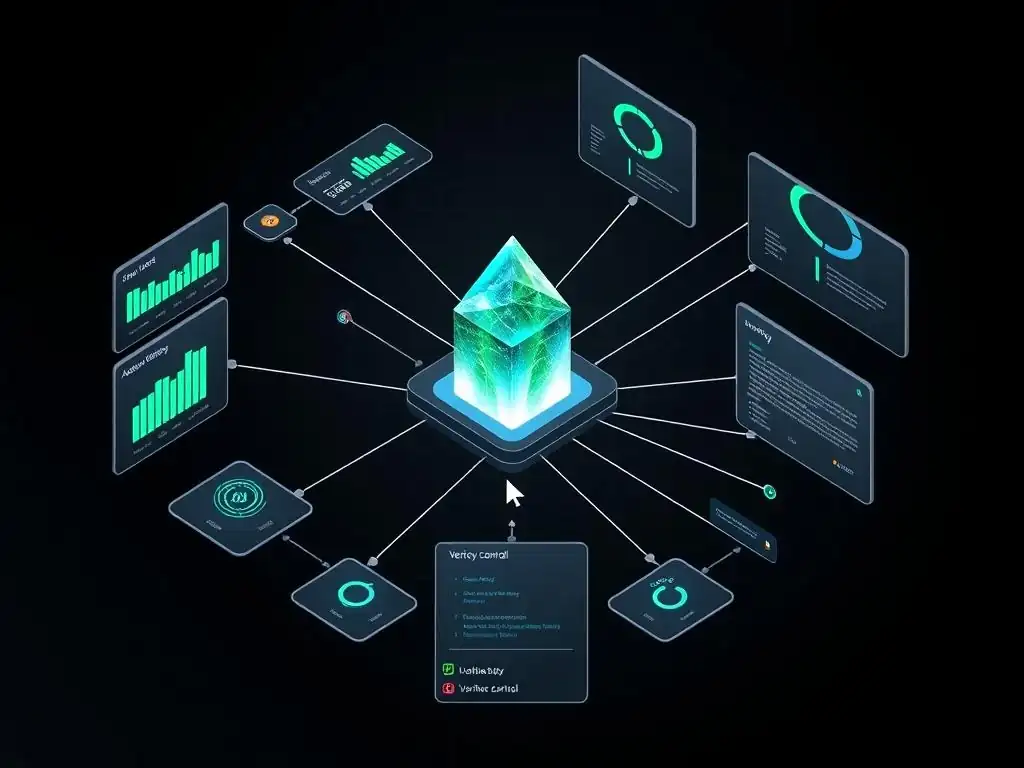
Monitoring Smart Contract Performance and Usage
After deploying your smart contract, continuous monitoring of its performance and usage is essential for ensuring smooth operation, identifying potential issues, and gathering valuable insights into user interaction. Monitoring involves tracking various metrics, including transaction volume, gas consumption, function call frequency, and error rates. Block explorers like Etherscan, Polygonscan, and Snowtrace provide basic monitoring capabilities, allowing you to view transaction history, event logs, and contract balance. However, for more comprehensive and real-time monitoring, specialized tools and services are often necessary.
Several blockchain monitoring platforms, such as Nansen, Dune Analytics, and The Graph, offer advanced analytics and dashboards for tracking smart contract activity. These platforms provide detailed insights into user behavior, contract interactions, and network performance related to your deployed contract. You can set up alerts to notify you of unusual activity, such as spikes in transaction volume or error occurrences.
Implementing logging within your smart contract using events is also crucial for monitoring. Events allow you to emit structured data whenever specific actions occur within your contract, such as user interactions, state changes, or errors. These events can be indexed and queried by external applications and monitoring tools, providing valuable data for analysis and debugging.
Regularly reviewing monitoring data helps you understand how your smart contract is being used, identify areas for optimization, and proactively address any performance or security concerns. Effective monitoring is a cornerstone of responsible smart contract management, ensuring the long-term health and reliability of your decentralized application.
Smart Contract Upgradability Strategies: Proxies, Diamond Standard, and Immutable Storage
Once deployed, smart contracts are immutable by default, meaning their code cannot be directly altered. However, in many real-world scenarios, the need to upgrade or modify smart contract logic arises due to bug fixes, feature enhancements, or evolving business requirements. To address this, various smart contract upgradability patterns have been developed, allowing for contract logic updates while preserving the contract's address and state. Proxy patterns are among the most common upgradability strategies.
In a proxy pattern, users interact with a proxy contract, which then delegates calls to an implementation contract containing the actual logic. To upgrade the contract, you simply deploy a new implementation contract and update the proxy contract to point to the new implementation address. This effectively swaps out the underlying logic while maintaining the same contract address for users.
The Diamond Standard, also known as EIP-2535, is a more advanced upgradability pattern that allows for modular and decentralized contract upgrades. It breaks down contract functionality into multiple independent modules (facets) and uses a diamond contract as a central router to delegate calls to these facets. Upgrading the contract involves adding, replacing, or removing facets, allowing for fine-grained and flexible upgrades.
Immutable storage patterns focus on separating the contract's logic from its storage. The logic contract remains immutable, while the storage is managed by a separate, potentially upgradable storage contract. When choosing an upgradability strategy, consider factors like complexity, gas overhead, security implications, and the level of decentralization required.
While upgradability offers flexibility, it also introduces complexities and potential security risks if not implemented carefully. Immutable contracts, on the other hand, offer greater security and simplicity but lack upgradability. Carefully weighing these trade-offs based on your application's needs is crucial when deciding whether and how to implement smart contract upgradability.
Handling Smart Contract Bugs and Security Incidents
Despite rigorous testing and security audits, bugs and security vulnerabilities can still be discovered in deployed smart contracts. Having a well-defined plan for handling such incidents is crucial for minimizing damage and ensuring the continued operation of your decentralized application. The first step in handling a bug or security incident is prompt identification and assessment. Monitoring tools and user reports can help detect anomalies or potential exploits. Once an issue is identified, immediately assess its severity and potential impact. Prioritize addressing critical vulnerabilities that could lead to significant financial losses or data breaches.
If your contract is upgradable, leverage your upgradability mechanism to deploy a patched version of the contract. This may involve deploying a new implementation contract with the bug fix and updating the proxy contract to point to the new implementation. If the contract is not upgradable, mitigating actions may be more limited.
In some cases, you might be able to implement emergency stop mechanisms within your contract logic to temporarily halt vulnerable functions or pause contract operations while a solution is developed. Communicate transparently with your users about the incident, the steps being taken to address it, and any potential impact on their funds or data. Establish clear communication channels and keep users informed throughout the incident resolution process.
Post-incident, conduct a thorough root cause analysis to understand how the bug or vulnerability occurred and implement preventative measures to avoid similar issues in the future. This might involve enhancing testing procedures, improving code review processes, or strengthening security audit protocols. Learning from past incidents and continuously improving your security practices is essential for building robust and resilient smart contract systems.
Smart Contract Deployment Best Practices: A Comprehensive Checklist
Pre-Deployment Checklist: Ensuring a Smooth and Secure Deployment
Before deploying your smart contract to the blockchain, meticulously review this pre-deployment checklist to ensure a smooth, secure, and successful launch:
- Code Review and Testing:
- [ ] Conduct thorough unit tests for all functions, covering normal cases, edge cases, and error conditions.
- [ ] Perform integration testing to verify interactions between contract components and external systems.
- [ ] Run static analysis tools (e.g., Slither, Mythril) to identify potential vulnerabilities.
- [ ] Manually review the code for logic errors, gas inefficiencies, and potential security flaws.
- Security Audit:
- [ ] Engage a reputable third-party security firm or independent auditor to conduct a comprehensive security audit.
- [ ] Address all identified vulnerabilities and implement recommended fixes from the audit report.
- [ ] Consider a second audit for critical or high-value contracts.
- Gas Optimization:
- [ ] Optimize code for gas efficiency, minimizing computation, storage, and unnecessary operations.
- [ ] Profile gas usage for critical functions and identify areas for further optimization.
- [ ] Estimate deployment and operational gas costs on the target network.
- Network Selection:
- [ ] Choose the appropriate blockchain network (e.g., Ethereum, Polygon, Avalanche) based on application requirements, cost considerations, and target audience.
- [ ] Configure network settings and wallet access for the chosen network in your development environment.
- Deployment Environment Setup:
- [ ] Set up and configure your chosen deployment environment (Remix, Hardhat, Truffle).
- [ ] Ensure your development environment is properly connected to the target blockchain network.
- [ ] Fund your deployer wallet with sufficient native cryptocurrency for deployment gas fees.
- Contract Metadata and Documentation:
- [ ] Prepare contract metadata, including contract name, description, and author information.
- [ ] Document contract functions, events, and usage instructions clearly.
- [ ] Ensure your contract ABI is readily available for users and developers to interact with the contract.
- Risk Assessment and Mitigation:
- [ ] Identify potential risks associated with contract deployment and operation.
- [ ] Develop a risk mitigation plan, including contingency measures for bug fixes and security incidents.
- [ ] Consider implementing circuit breakers or emergency stop mechanisms for critical functions if applicable.
Post-Deployment Checklist: Maintaining and Monitoring Your Smart Contract
Once your smart contract is deployed, this post-deployment checklist will guide you in maintaining, monitoring, and ensuring its ongoing success:
- Verification on Block Explorer:
- [ ] Verify your smart contract source code on block explorers (Etherscan, Polygonscan, Snowtrace) to enhance transparency and trust.
- [ ] Confirm successful verification and that the source code is publicly accessible.
- Monitoring and Analytics:
- [ ] Set up real-time monitoring for contract performance, transaction volume, and error rates.
- [ ] Utilize blockchain analytics platforms (Nansen, Dune Analytics) for in-depth usage analysis.
- [ ] Monitor contract event logs for user interactions and critical events.
- [ ] Configure alerts for unusual activity or potential issues.
- Security Monitoring and Incident Response:
- [ ] Implement continuous security monitoring for your deployed contract.
- [ ] Establish a clear incident response plan for handling bug reports and security vulnerabilities.
- [ ] Regularly review security logs and audit trails.
- Performance Optimization:
- [ ] Continuously monitor gas usage and identify areas for further optimization.
- [ ] Analyze transaction costs and explore potential gas optimization strategies.
- [ ] Consider iterative code improvements to enhance performance and reduce gas consumption.
- Community Engagement and Support:
- [ ] Establish channels for community feedback and bug reporting.
- [ ] Provide clear documentation and support resources for users and developers.
- [ ] Engage with the community and address user queries and concerns promptly.
- Upgradability Management (if applicable):
- [ ] If using an upgradable contract pattern, have a well-defined upgrade process.
- [ ] Test upgrade procedures thoroughly in a test environment before applying them to the mainnet.
- [ ] Communicate upgrade plans and timelines transparently to users.
- Data Backup and Recovery:
- [ ] Implement a strategy for backing up critical contract data and state (if applicable and feasible).
- [ ] Define recovery procedures in case of unforeseen data loss or contract failures.
- Regular Audits and Updates:
- [ ] Plan for regular security audits, especially after significant code changes or feature additions.
- [ ] Stay informed about emerging security threats and best practices in smart contract development.
- [ ] Be prepared to deploy updates or patches as needed to address vulnerabilities or improve functionality.
Common Smart Contract Deployment Challenges and Solutions
Gas Limit Issues and Solutions
Encountering gas limit issues during smart contract deployment is a common challenge, particularly on networks like Ethereum. Gas limit refers to the maximum amount of gas you are willing to spend on a transaction. If the gas limit is set too low, and the actual gas required for deployment exceeds this limit, the deployment transaction will fail with an "out of gas" error. This typically happens when deploying complex contracts or when network congestion increases gas prices, making deployments more gas-intensive.
One primary solution is to accurately estimate the gas required for deployment and set an appropriate gas limit. Development environments like Hardhat and Truffle often provide gas estimation tools that can help you determine the approximate gas needed for your contract deployment. You can also use block explorers or gas price oracles to monitor current network gas prices and adjust your gas limit and gas price accordingly.
Increasing the gas limit in your deployment transaction is a straightforward solution, but it also increases the potential transaction cost. Therefore, optimizing your smart contract code for gas efficiency is a more sustainable long-term solution. By reducing the gas consumption of your contract through techniques discussed earlier, you can lower the overall gas required for deployment and operation, making it less likely to encounter gas limit issues and reducing transaction costs.
In some cases, breaking down a complex deployment into smaller, more manageable transactions can also help avoid gas limit errors. For instance, deploying large contracts in stages or initializing complex data structures in separate transactions after initial deployment might be necessary to stay within gas limits.
Addressing Security Vulnerabilities Discovered After Deployment
Discovering security vulnerabilities in a smart contract after it has been deployed to the blockchain is a serious challenge that requires swift and effective action. The immutability of smart contracts makes directly patching vulnerabilities difficult, but not impossible. The approach to addressing post-deployment vulnerabilities largely depends on whether the contract was designed with upgradability in mind.
If the contract utilizes an upgradable proxy pattern, the most effective solution is to deploy a new implementation contract with the security fix and update the proxy contract to point to the patched implementation. This allows you to seamlessly replace the vulnerable code with a secure version without changing the contract address or disrupting user interactions.
However, if the contract is immutable and not upgradable, options are more limited. In severe cases, if a critical vulnerability poses an immediate threat to user funds, a coordinated effort might be needed to communicate the vulnerability to the community and potentially encourage users to withdraw funds or cease interaction with the contract. In some cases, if the vulnerability is exploitable but doesn't directly lead to fund theft, and the contract has a kill switch or emergency stop mechanism, you might be able to temporarily pause or disable vulnerable functions to prevent exploitation.
For less critical vulnerabilities that don't pose immediate risks, the best course of action is often transparency. Publicly disclose the vulnerability, document it clearly, and provide workarounds or mitigations if possible.
For future deployments, prioritize implementing robust security practices, thorough testing, and security audits to minimize the likelihood of post-deployment vulnerability discoveries. Consider incorporating upgradability patterns into your smart contract designs from the outset to provide a mechanism for addressing unforeseen security issues in the future.
Managing Smart Contract Data and Storage
Managing data and storage within smart contracts presents unique challenges due to the cost and immutability of blockchain storage. Storing large amounts of data directly on the blockchain can be prohibitively expensive due to gas costs associated with storage operations. Therefore, optimizing data storage and considering alternative storage solutions are crucial for efficient smart contract development. Minimizing on-chain storage by only storing essential data directly in the smart contract is a primary best practice.
For larger datasets or less frequently accessed data, consider off-chain storage solutions. InterPlanetary File System (IPFS) is a decentralized storage network that is commonly used in conjunction with smart contracts. You can store data off-chain on IPFS and store the IPFS hash of the data on-chain within your smart contract. This allows you to leverage the immutability and content-addressability of IPFS for data integrity while minimizing on-chain storage costs.
Database solutions like centralized or decentralized databases can also be used for off-chain data storage, with smart contracts referencing or interacting with these databases as needed. When designing your smart contract data structures, choose data types and storage patterns that minimize gas consumption. Using efficient data types, packing variables to reduce storage slots, and optimizing data access patterns can significantly impact storage costs. Consider using mapping and array data structures judiciously, as they can have different gas implications for storage and retrieval. For upgradable contracts, carefully manage data migration during upgrades. Upgrading contract logic while preserving existing data requires careful planning and implementation to ensure data consistency and avoid data loss. Immutable storage patterns, as discussed earlier, can also help separate data management from contract logic, providing more flexibility in data storage strategies. Effectively managing smart contract data and storage is essential for building scalable, cost-effective, and performant decentralized applications.
The Future of Smart Contract Deployment
Emerging Trends in Smart Contract Deployment Technologies
The landscape of smart contract deployment is continuously evolving, with several emerging trends shaping its future. One significant trend is the development of more sophisticated and user-friendly deployment tools and frameworks. Platforms are emerging that aim to simplify the entire deployment process, abstracting away complexities and making it accessible to a wider range of developers, even those with less blockchain-specific expertise. These tools often offer visual interfaces, automated deployment scripts, and integrated testing and verification features, streamlining the workflow and reducing the learning curve for smart contract deployment.
Cross-chain smart contract deployment is another burgeoning trend, driven by the increasing interoperability of blockchain networks. Developers are exploring ways to deploy and manage smart contracts across multiple blockchains, leveraging the strengths of different platforms and reaching a broader user base. This involves developing tools and standards for cross-chain contract communication and deployment, enabling decentralized applications to operate seamlessly across various blockchain ecosystems.
Furthermore, advancements in layer-2 scaling solutions and alternative blockchain platforms are influencing smart contract deployment strategies. Layer-2 solutions like optimistic rollups and zk-rollups are offering faster and cheaper transaction environments, making them increasingly attractive for deploying applications requiring high throughput and low costs.
Alternative blockchain platforms with different virtual machine architectures and consensus mechanisms are also providing new options and trade-offs for smart contract deployment, catering to diverse application needs and performance requirements. These emerging trends point towards a future of more accessible, versatile, and efficient smart contract deployment technologies, fostering greater innovation and adoption of decentralized applications.
The Role of Automated Deployment Tools
Automated deployment tools are playing an increasingly vital role in modern smart contract development workflows, enhancing efficiency, reducing errors, and streamlining the deployment process. These tools automate repetitive tasks, such as compiling code, generating deployment scripts, interacting with blockchain networks, and verifying contracts, freeing up developers to focus on core logic and application development. Development frameworks like Hardhat and Truffle already incorporate automation features, providing tasks and scripts for compiling, testing, and deploying smart contracts with command-line interfaces. Emerging deployment platforms and services are taking automation further, offering more comprehensive and user-friendly automated deployment pipelines.
These automated tools often integrate with CI/CD (Continuous Integration/Continuous Deployment) systems, enabling automated deployments whenever code changes are pushed to repositories. This facilitates rapid iteration, faster release cycles, and more consistent deployments. Automated deployment tools can also handle complex deployment scenarios, such as deploying multiple contracts, managing contract dependencies, and configuring network settings programmatically. They can incorporate security best practices into the deployment process, such as automated security checks, vulnerability scanning, and verification steps.
Furthermore, automation reduces the risk of human error during deployment, ensuring consistency and reliability. By automating deployment workflows, developers can significantly accelerate their development cycles, improve deployment quality, and focus on building innovative and impactful decentralized applications. The continued evolution and adoption of automated deployment tools will be a key driver in the growth and maturity of the smart contract ecosystem.
Smart Contract Deployment and the Evolution of Decentralized Applications (dApps)
Smart contract deployment is intrinsically linked to the evolution and advancement of decentralized applications (dApps). The ease and efficiency of smart contract deployment directly impact the speed and scale at which dApps can be developed, iterated upon, and deployed to blockchain networks. As deployment technologies become more user-friendly, automated, and versatile, the barrier to entry for dApp development lowers, fostering greater innovation and experimentation within the decentralized space. Simplified deployment processes empower developers to rapidly prototype, test, and deploy their dApps, accelerating the development lifecycle and enabling faster iteration based on user feedback and market demands.
The ability to deploy smart contracts across multiple blockchain networks, facilitated by cross-chain deployment technologies, expands the reach and potential user base of dApps. Developers can leverage the unique features and advantages of different blockchains, deploying components of their dApps on the most suitable platforms and creating more interconnected and interoperable decentralized ecosystems.
Furthermore, advancements in upgradable smart contract patterns and deployment management tools enable dApps to evolve and adapt over time. Developers can continuously improve their dApps, add new features, and address bugs or vulnerabilities without requiring complete redeployments or disrupting user access.
This agility and adaptability are crucial for the long-term sustainability and competitiveness of dApps in a rapidly evolving technological landscape. As smart contract deployment technologies continue to advance, we can expect to see a surge in the development and deployment of more sophisticated, user-friendly, and impactful dApps, driving the broader adoption and mainstream acceptance of blockchain technology.
Frequently Asked Questions
What are some key considerations before deploying a smart contract?
Before deployment, ensure your smart contract is thoroughly audited for vulnerabilities, has gas optimization implemented for cost-effectiveness, and that you've defined a robust testing strategy.
Why is gas optimization so critical when deploying smart contracts?
Gas optimization directly impacts the cost of execution on the blockchain. Inefficient code leads to higher gas fees, making your smart contract less attractive and potentially unusable.
What are some common security vulnerabilities to watch out for during smart contract development?
Watch out for reentrancy attacks, integer overflow/underflow, and denial-of-service (DoS) attacks. These vulnerabilities can lead to significant financial losses and compromise the contract's integrity.
What are the best practices for testing smart contracts before deployment?
Employ a combination of unit testing, integration testing, and fuzz testing. Simulate various scenarios and edge cases to identify and fix potential bugs before the public deployment.
How does blockchain regulation impact smart contract deployment?
Regulations can impact the legality and enforceability of smart contracts. Ensure compliance with relevant jurisdictions regarding data privacy, securities laws, and KYC/AML requirements, particularly in DeFi applications.
Final Reflection: Embracing the Future of Decentralized Agreements
The journey from writing smart contract code to seeing it execute flawlessly on a blockchain is a complex one, but mastering smart contract deployment best practices is now more crucial than ever. As decentralized applications (dApps) and decentralized finance (DeFi) continue to reshape industries, the security, efficiency, and reliability of these contracts directly impact the trust and stability of the entire ecosystem. Ignoring these best practices is no longer an option; it's a risk that can lead to devastating consequences.
The impact of smart contracts extends far beyond the technical realm; they are fundamentally altering how we interact, transact, and build trust in a digital world. Witnessing the evolution of smart contracts from theoretical concepts to practical tools has been truly inspiring, highlighting the power of technology to democratize access and empower individuals. The blockchain is more than just a technology; it's a social and political movement.
- Andreas Antonopoulos. This quote encapsulates the transformative potential of smart contracts to reshape societal structures and redefine traditional power dynamics.
As you navigate the world of smart contract development and deployment, remember that you are not just writing code; you are building the foundation for a more transparent and equitable future. Take the lessons learned here, embrace the best practices, and contribute to the responsible and secure growth of the decentralized web. The future of trust is in your hands.
Launch Your Blockchain Journey!
Thank you for exploring the world of smart contract deployment. We hope you've gained a better understanding of how to bring your code to life on the blockchain. Now, it's time to put that knowledge into practice.
Here’s how you can continue progressing:
- Start deploying! Choose a simple smart contract you've written or found online and deploy it to a test network like Goerli or Sepolia. Document your experience and share any challenges you face. This is your first step!
- Learn about the security considerations of deployed contracts. Study common vulnerabilities and explore tools such as static analyzers to enhance your smart contract security.
- Engage with the Blockchain Trends community! Share your deployment experiences, ask questions, and participate in discussions on our forum.
What is the first smart contract you plan to deploy, and what challenges do you expect? Share your thoughts in the comments below!
Leave a Reply