
The Legal Landscape of Smart Contracts in Real Estate: Navigating the Regulations


Welcome to Blockchain Trends, your premier source for understanding the revolutionary impact of blockchain technology beyond the hype.
Ever wondered how blockchain is reshaping industries outside of cryptocurrency? Dive into our latest analysis of Smart Contract Real Estate Regulations and uncover the intricate legal landscape governing this innovative application. Learn how these regulations are evolving and what it means for the future of decentralized real estate. Are smart contracts truly ready to transform property transactions? Let's explore the challenges and opportunities together.
- The Legal Landscape of Smart Contracts in Real Estate: Navigating the Regulations
- Defining Smart Contracts in the Context of Real Estate Law
- The Current Regulatory Framework for Smart Contracts: An International Perspective
- Challenges in Applying Existing Laws to Smart Contract Real Estate
- Specific Legal Issues Arising from Smart Contract Use in Real Estate
- Emerging Regulatory Trends and Proposed Solutions for Smart Contract Real Estate
- Case Studies: Smart Contracts in Real Estate and Legal Outcomes
- Future of Smart Contract Real Estate Regulations
- Conclusion: Navigating the Smart Contract Real Estate Regulations Landscape
-
Frequently Asked Questions
- What are smart contracts in real estate?
- How do smart contracts improve real estate transactions?
- What are the key regulations affecting smart contracts in real estate?
- Are there any risks associated with using smart contracts in real estate?
- What is the future outlook for smart contracts in the real estate industry?
- Final Reflection: Embracing the Future of Real Estate Law
- Unlock Your Real Estate Future with Smart Contracts
Understanding the Potential of Smart Contracts in Property Transactions
Smart contracts hold significant potential to revolutionize real estate transactions by automating and streamlining many steps traditionally handled manually. By embedding the terms of an agreement directly into code that executes automatically when predefined conditions are met, these digital contracts can facilitate faster closings, reduce administrative overhead, and enhance transparency. Processes such as offer acceptance, earnest money deposit handling, title searches, and even final fund disbursement could theoretically be managed through automated smart contract logic, drastically cutting down the time involved from months to potentially weeks or even days.
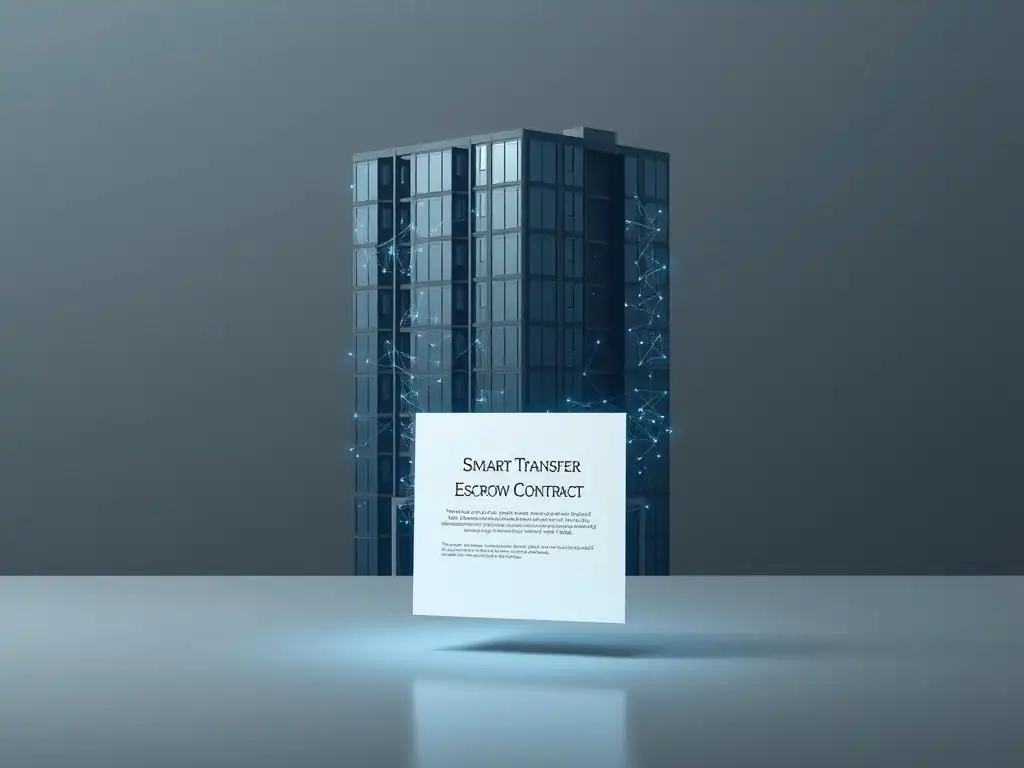
Consider the typical escrow process, which often involves multiple intermediaries and manual verification steps. A smart contract could hypothetically hold escrow funds in a secure, decentralized digital wallet, automatically releasing them to the seller only upon verifiable confirmation of title transfer on a digital registry and receipt of digital signatures from all parties.
Early pilot projects, such as Sweden's Lantmäteriet (Cadastral Authority) exploring blockchain for land registry, have demonstrated the technical feasibility of linking digital identities and property records, hinting at the efficiency gains possible if robust smart contract real estate regulations were in place to support such systems legally.
The Growing Need for Smart Contract Real Estate Regulations
Despite the promise of efficiency and transparency, the increasing exploration of smart contracts in real estate highlights a critical gap in existing legal frameworks. Traditional real estate law was developed for paper-based contracts and manual processes, creating significant challenges when applied to code-based agreements that execute autonomously. Issues such as determining legal enforceability, handling errors or bugs in the code, addressing identity verification, and establishing clear dispute resolution mechanisms become complex without specific guidelines.
The lack of clear smart contract real estate regulations creates legal uncertainty for buyers, sellers, agents, and financial institutions alike. For example, if a smart contract contains a coding error that results in an incorrect fund transfer or failure to record a lien, who is liable? How can parties seek recourse if the contract is immutable once deployed? Without specific legal definitions and rules governing their use in high-value, complex transactions like property sales, the risks associated with deploying smart contracts outweigh the potential benefits for most market participants, underscoring the urgent need for tailored regulatory guidance.
Defining Smart Contracts in the Context of Real Estate Law
What is a Smart Contract? A Legal Definition for Property Applications
From a legal perspective, a smart contract can be viewed as an agreement whose terms are written directly into lines of code. This code is stored on a blockchain or other distributed ledger technology and executes automatically based on predefined conditions. While often referred to as "contracts," their legal status is still debated across jurisdictions.
Are they legally binding contracts in themselves, or merely mechanisms for automating the execution of traditional legal agreements? For property applications, a helpful definition considers them as self-executing clauses within a traditional legal contract, or perhaps as a new form of agreement entirely, requiring specific smart contract real estate regulations to clarify their standing.
In the context of real estate, a smart contract isn't just the code; it's the intersection of the code with the underlying legal intent and the real-world asset (the property). Lawyers and technologists are working towards definitions that recognize the code as the operational mechanism while acknowledging the necessity of linking it to traditional legal concepts like offer, acceptance, consideration, and the legal transfer of title.
This involves ensuring the code accurately reflects the parties' intentions as captured in a human-readable legal document, a crucial aspect that future smart contract real estate regulations must address to bridge the gap between code execution and legal enforceability.
Key Components of Real Estate Smart Contracts: Digital Signatures, Automated Payments, and Title Verification
Effective smart contracts for real estate transactions require several interconnected components to function reliably and legally. One key element is robust digital identity verification and legally recognized digital signatures, ensuring that the parties interacting with the contract are who they claim to be and that their digital consent holds legal weight equivalent to physical signatures. Regulations like the U.S. ESIGN Act or the EU's eIDAS regulation provide a foundation, but specific guidance is needed for their application within blockchain-based smart contracts tied to property.
Another critical component is the automated handling of payments, such as earnest money, down payments, and final closing funds. This requires secure integration with regulated financial systems or stablecoins, ensuring compliance with anti-money laundering (AML) and know-your-your-customer (KYC) regulations.
Furthermore, integrating smart contracts with official, verifiable digital title or land registry systems is paramount. Without a legally recognized method for the smart contract to confirm and potentially trigger the official transfer of property ownership on a government-maintained registry, the contract cannot fully automate the core function of a real estate transaction, highlighting a major area requiring specific smart contract real estate regulations and infrastructure development.
The Current Regulatory Framework for Smart Contracts: An International Perspective
Examining Existing Laws Applicable to Smart Contracts
Currently, there are no comprehensive, globally unified smart contract real estate regulations. Instead, the legal landscape is a patchwork of existing laws that may or may not apply, often with significant ambiguity. General contract law principles regarding offer, acceptance, and intent are often cited, but applying these to autonomous code execution is challenging.
Electronic signature laws provide some basis for digital consent, but their applicability to keys controlling smart contract interactions is still being tested. Consumer protection laws may offer some recourse in cases of fraud or error, but the decentralized and often pseudonymous nature of blockchain can complicate enforcement.
Furthermore, property law, which governs ownership and transfer of real estate, remains heavily tied to physical documents and centralized government registries. Integrating smart contracts requires a legal framework that recognizes digital representations of title and permits their transfer via blockchain mechanisms. Financial regulations, including those related to escrow, lending, and money transmission, also impact how automated payments within smart contracts can function legally. The lack of specific smart contract real estate regulations means that each element of a potential transaction must be scrutinized against existing, often ill-fitting, legal precedents.
Jurisdictional Variations: United States, European Union, and Singapore
The approach to smart contract real estate regulations varies significantly across jurisdictions. In the United States, the legal landscape is fragmented, with state-level variations. Some states, like Arizona and Tennessee, have passed legislation recognizing the legal validity of signatures and records secured by blockchain, but these laws are generally broad and do not specifically address the complexities of real estate title transfer via smart contracts. Federal regulations concerning financial aspects and consumer protection also play a role, creating a complex compliance environment.
The European Union is working towards broader regulation of digital assets and blockchain technology, such as the proposed Markets in Crypto-Assets (MiCA) regulation, which focuses primarily on cryptocurrencies and stablecoins but sets a precedent for digital asset regulation. However, specific EU-wide smart contract real estate regulations are non-existent, with property law remaining largely a member state competency.
Countries like Singapore have been more proactive in exploring legal frameworks for tokenized assets, which could potentially include real estate, and have established regulatory sandboxes to test innovative uses of blockchain technology, providing a glimpse into how future smart contract real estate regulations might develop in forward-thinking nations.
Challenges in Applying Existing Laws to Smart Contract Real Estate
Enforceability of Smart Contracts in Real Estate Transactions
One of the most significant challenges for smart contract real estate regulations is determining their legal enforceability. While the code executes automatically ("code is law" principle), legal systems rely on the ability to interpret intent, handle unforeseen circumstances, and provide remedies for breach or error. If a smart contract's code doesn't perfectly reflect the parties' understanding or contains bugs, traditional courts face difficulties in interpreting and enforcing it. Can a court order specific performance on a piece of code? Can damages be assessed based on automated execution?
Moreover, the immutability of some blockchain implementations poses a challenge to legal principles that allow for contract modification, termination, or correction of errors. If a mistake occurs during a smart contract execution related to a property transfer, reversing or correcting the action can be technically difficult or impossible without prior design considerations, creating complex legal scenarios. Establishing clear smart contract real estate regulations is essential to define the circumstances under which smart contracts are considered legally binding, how errors are handled, and what legal recourse is available when things go wrong.
Data Privacy and Security Concerns in Smart Contract Implementations
Implementing smart contracts in real estate raises significant data privacy and security concerns that must be addressed by smart contract real estate regulations. Real estate transactions involve sensitive personal and financial data, including identities, financial records, and property details. Storing or processing such information on a public, immutable blockchain can conflict with privacy regulations like the GDPR in Europe or various state laws in the US, which grant individuals rights over their data, including the right to erasure.
Ensuring the security of the smart contract code itself is also paramount. Vulnerabilities in the code can be exploited by malicious actors, potentially leading to loss of funds or incorrect property transfers. High-profile hacks of smart contracts in other domains, resulting in millions of dollars lost, highlight these risks. Smart contract real estate regulations need to mandate rigorous security audits, define responsibility in case of breaches, and potentially require the use of private or permissioned blockchains where sensitive data can be managed more securely and in compliance with privacy laws.
Dispute Resolution Mechanisms for Smart Contract-Based Real Estate Deals
Resolving disputes arising from smart contract real estate transactions presents novel challenges for legal systems. Traditional litigation or arbitration processes are often slow and may lack the technical expertise required to understand and interpret complex smart contract code and blockchain data. Determining jurisdiction can also be difficult if parties are located in different regions and the blockchain infrastructure is globally distributed.
New dispute resolution mechanisms are being explored, such as on-chain arbitration where disputes are resolved by decentralized oracles or specialized blockchain arbitrators. However, the legal recognition and enforceability of decisions rendered through such mechanisms are uncertain without specific smart contract real estate regulations. Clear legal frameworks are needed to define how disputes will be handled, whether traditional courts have jurisdiction, how evidence (like blockchain transaction history) will be treated, and how judgments can be enforced in a smart contract context.
Specific Legal Issues Arising from Smart Contract Use in Real Estate
Title and Ownership Transfer using Smart Contracts: Legal Considerations
The most fundamental legal issue for smart contract real estate regulations is the legal recognition of title and ownership transfer executed via a smart contract. In most jurisdictions, legal title transfer requires registration with a government-maintained land registry. Simply recording a transaction on a blockchain does not, in itself, confer legal ownership without a corresponding change in the official registry. This means smart contracts must somehow interface with or trigger actions in these traditional systems.
For a smart contract to legally transfer property, either the land registry itself must be digitized and operate on a compatible blockchain system (a long-term prospect), or the smart contract must be legally recognized as a valid instrument that compels the traditional registry to update. This requires specific legislation defining digital property tokens, their link to real-world assets, and the legal effect of their transfer on a blockchain. Without such foundational smart contract real estate regulations, smart contracts can only facilitate aspects of the transaction, not the core legal transfer of title.
Escrow Services and Smart Contracts: Regulatory Compliance
Automating escrow services using smart contracts involves significant regulatory considerations, particularly concerning smart contract real estate regulations related to financial services. Entities holding funds in escrow are typically subject to strict regulations regarding licensing, handling of client funds, and record-keeping (AML/KYC). While a smart contract can technically hold funds in a digital wallet, the entity or individuals controlling that wallet, or the platform facilitating the escrow, would likely be deemed to be providing regulated escrow services.
This means that using smart contracts for escrow doesn't necessarily bypass existing financial regulations; rather, it introduces new complexities in ensuring compliance. The smart contract itself would need to be designed to meet regulatory requirements, such as providing audit trails and mechanisms for regulatory access if required. Clear smart contract real estate regulations are needed to specify how automated escrow agents or platforms must comply with existing financial regulations and consumer protection laws.
Mortgage and Financing Implications of Smart Contract-Based Real Estate
Integrating smart contracts into the mortgage and real estate financing process presents complex legal and regulatory challenges. Mortgages involve intricate legal agreements, including promissory notes and security instruments (like deeds of trust or mortgages) that grant lenders a lien on the property. Automating loan disbursement, payment collection, or lien release via smart contracts requires these digital processes to be legally recognized and enforceable within the existing financial and property law frameworks.
Furthermore, the securitization of mortgages, a cornerstone of the modern financial system, relies on standardized legal documentation and clear rules around lien priority and foreclosure. Smart contracts and tokenized mortgages would require specific smart contract real estate regulations to ensure they fit within these established systems, maintaining lender confidence and market liquidity. Issues such as handling foreclosures via smart contracts, ensuring compliance with consumer lending laws, and integrating with credit reporting agencies all need careful legal consideration and regulatory guidance.
Emerging Regulatory Trends and Proposed Solutions for Smart Contract Real Estate
Regulatory Sandboxes and Innovation Hubs for Blockchain Real Estate
Recognizing the potential benefits and the regulatory challenges, several jurisdictions are exploring the use of regulatory sandboxes and innovation hubs to test blockchain and smart contract applications in real estate. These sandboxes allow companies to experiment with new technologies, like smart contract real estate platforms, in a controlled environment under regulatory supervision, often with temporary waivers from certain regulations. This provides regulators with practical insights into how the technology works and where existing laws create barriers or risks.
Examples include initiatives in the UK, Singapore, and parts of the US that have allowed limited testing of blockchain-based property registries or fractional ownership platforms. While these projects are often small-scale proofs-of-concept rather than full-scale implementations, they are crucial for informing the development of future smart contract real estate regulations. By allowing supervised innovation, sandboxes help identify necessary legal adjustments and build regulatory expertise before widespread adoption occurs.
Development of Standardized Smart Contract Templates for Real Estate
One proposed solution to the legal uncertainty surrounding smart contracts in real estate is the development of standardized templates. These templates would be pre-audited for security and designed to align with existing legal principles and anticipated smart contract real estate regulations. By using approved templates, parties could gain greater confidence in the legal validity and technical reliability of their smart contracts.
Initiatives by legal tech firms, industry consortia, and even some governmental bodies aim to create libraries of legally sound, code-based clauses for common real estate transaction steps (e.g., escrow release conditions, closing date triggers). These templates would serve as building blocks, reducing the risk of errors and ambiguity compared to custom-coded contracts. Legal professionals would play a crucial role in adapting and validating these templates for specific transactions, bridging the gap between code and traditional legal practice, and paving the way for clearer smart contract real estate regulations governing their use.
The Role of Government Agencies in Shaping Smart Contract Regulations
Government agencies, particularly land registries, financial regulators, and bodies overseeing contract and property law, play a pivotal role in shaping smart contract real estate regulations. Their engagement is crucial because the core functions of real estate transactions—legal title transfer, financing, and record-keeping—fall under their purview. Without their buy-in and adaptation of processes, widespread legal use of smart contracts in this sector is impossible.
Land registries, for instance, need to explore how to integrate with or evolve into digital systems that can interact with blockchain technology to legally record ownership changes initiated by smart contracts. Financial regulators must provide clarity on how automated financial flows via smart contracts comply with banking, lending, and AML/KYC laws.
Agencies responsible for contract law may need to issue guidance or propose legislation defining the legal status of smart contracts, error correction mechanisms, and dispute resolution pathways. Proactive engagement from these agencies is key to developing effective smart contract real estate regulations that balance innovation with necessary legal safeguards.
Case Studies: Smart Contracts in Real Estate and Legal Outcomes
Analyzing Successful and Unsuccessful Smart Contract Real Estate Implementations
Analyzing real-world attempts to use smart contracts in real estate provides valuable lessons, though examples of fully legally completed transactions solely reliant on smart contracts for title transfer are rare. Most "successful" cases are pilot projects or use smart contracts for parts of the process, like managing fractional ownership tokens or automating payments related to property management.
For example, platforms tokenizing real estate assets use smart contracts to represent ownership shares and automate dividend payments, but the underlying legal ownership of the physical property often remains held by a traditional legal entity, highlighting the current limitations imposed by the absence of comprehensive smart contract real estate regulations.
Unsuccessful implementations or challenges often stem directly from the legal and regulatory uncertainties. Projects aiming for direct title transfer via blockchain have faced hurdles with integrating into traditional land registries or gaining legal recognition for the on-chain transfer as the official change of ownership. Security vulnerabilities in smart contracts have also led to issues, such as frozen funds or incorrect execution, raising questions about liability and recourse under existing laws. These cases underscore the critical need for clear smart contract real estate regulations to define the boundaries, requirements, and legal effects of using this technology.
Lessons Learned from Real-World Smart Contract Real Estate Transactions
Pilot projects and early attempts at smart contract real estate implementations have yielded crucial lessons for the development of smart contract real estate regulations. A primary lesson is that technology alone is insufficient; legal and regulatory frameworks must evolve in parallel. Projects have shown that legal certainty regarding identity, title, and enforceability is paramount for adoption beyond niche use cases. The technical challenges of securely integrating smart contracts with traditional legal and financial infrastructure are significant but often overshadowed by the legal ambiguities.
Another key lesson is the importance of collaboration between technologists, legal professionals, regulators, and industry stakeholders. Successful pilots have involved close cooperation with land registries and financial institutions. The difficulty in reversing errors in immutable smart contracts has also highlighted the need for careful design, robust auditing, and potentially new legal mechanisms for error correction or dispute resolution tailored to the technology. These experiences inform the ongoing global conversation about how to best structure smart contract real estate regulations to foster innovation while protecting consumers and maintaining market stability.
Future of Smart Contract Real Estate Regulations
Predictions for the Evolution of Legal Frameworks
Predicting the exact trajectory of smart contract real estate regulations is challenging, but several trends are likely to emerge. Initially, regulations may focus on specific, lower-risk aspects of real estate transactions, such as automating lease agreements, managing rental payments, or facilitating fractional ownership through security tokens, where existing securities laws can provide a partial framework. Full automation of legal title transfer for traditional property is likely a longer-term prospect, requiring fundamental changes to land registry systems and property law.
We can anticipate a gradual, iterative approach from regulators, likely influenced by outcomes from sandboxes and pilot projects. There may be a move towards recognizing smart contracts as legally valid provided they meet certain criteria, such as verifiability, linkability to human-readable terms, and compliance with identification requirements. The development of international standards or best practices for smart contract real estate regulations could also gain traction to facilitate cross-border transactions and provide consistency.
The Impact of Regulatory Clarity on Smart Contract Adoption in Real Estate
The presence or absence of clear smart contract real estate regulations will be a major determinant of the technology's adoption rate in the sector. Currently, legal uncertainty is a significant barrier, deterring traditional institutions like banks, insurers, and large real estate firms from fully embracing smart contracts for core transaction processes. These entities require a high degree of legal certainty and predictability.
Clear, well-defined smart contract real estate regulations would significantly boost confidence among market participants. It would provide a legal basis for enforceability, clarify liability in case of errors or breaches, establish guidelines for data privacy and security, and define mechanisms for dispute resolution. Regulatory clarity would reduce perceived risks, lower legal costs associated with navigating ambiguous laws, and likely attract greater investment and innovation into smart contract-based real estate solutions, paving the way for more widespread and impactful use of this transformative technology.
Key Takeaways for Real Estate Professionals and Legal Experts
For real estate professionals and legal experts, navigating the evolving landscape of smart contract real estate regulations requires proactive engagement and education. Key takeaways include recognizing that smart contracts are powerful tools for automation but do not currently bypass fundamental legal requirements, especially regarding property title transfer and financial regulations. Understanding the current legal ambiguities and jurisdictional variations is crucial when considering or implementing smart contract solutions.
Staying informed about pilot projects, regulatory sandbox outcomes, and proposed legislation is essential. Collaboration between legal and technical experts is necessary to design smart contracts that are not only functional but also legally compliant and enforceable. As the technology matures, legal professionals will play a vital role in drafting clear human-readable terms linked to code and advising clients on the risks and opportunities presented by smart contract real estate regulations.
Preparing for the Future of Smart Contracts in Property Law
Preparing for the future of smart contracts in property law involves anticipating changes and advocating for clear, effective smart contract real estate regulations. This means participating in industry discussions, engaging with regulatory bodies, and exploring how existing legal principles can be adapted or how new ones need to be developed. The legal framework must evolve to accommodate the unique characteristics of blockchain and smart contracts, such as immutability, transparency, and automated execution.
The future will likely see smart contracts becoming increasingly integrated into specific parts of the real estate lifecycle, potentially starting with less regulated areas before moving towards core title transfer. The pace of this integration will largely depend on the speed and clarity with which comprehensive smart contract real estate regulations are developed and implemented globally. Professionals who understand both the technological capabilities and the legal necessities will be best positioned to leverage the potential of smart contracts while navigating the regulatory complexities.
Frequently Asked Questions
What are smart contracts in real estate?
Smart contracts are self-executing contracts with the terms of the agreement directly written into code. They automate transactions and enhance efficiency in real estate dealings.
How do smart contracts improve real estate transactions?
They reduce the need for intermediaries, enhance transparency, and ensure that transactions are executed automatically when conditions are met, streamlining the overall process.
What are the key regulations affecting smart contracts in real estate?
Smart contract real estate regulations vary by jurisdiction but generally encompass compliance with property laws, consumer protection, and data privacy, ensuring that they align with existing legal frameworks.
Are there any risks associated with using smart contracts in real estate?
Yes, potential risks include coding errors, legal enforceability issues, and the need for clear regulatory guidelines, which can lead to disputes if not properly addressed.
What is the future outlook for smart contracts in the real estate industry?
The future looks promising, with increasing adoption expected as regulations evolve. Smart contracts could revolutionize the industry by enhancing efficiency, reducing costs, and improving transaction security.
Final Reflection: Embracing the Future of Real Estate Law
The exploration of smart contract real estate regulations reveals a pivotal moment for the industry, where innovation and legal frameworks must converge. The integration of blockchain technology into real estate transactions promises unprecedented efficiency and transparency, but only if we proactively address the regulatory challenges that lie ahead. Ignoring these challenges risks stifling innovation and creating a chaotic legal environment, hindering the widespread adoption of this transformative technology.
The potential of smart contracts to revolutionize real estate is undeniable, yet the path forward requires careful consideration and collaboration. My own fascination with this intersection of law and technology stems from a belief that innovation should serve to empower individuals and communities, not create new avenues for exploitation. The law must be stable, and yet it cannot stand still.
- Roscoe Pound. This quote perfectly encapsulates the delicate balance we must strike as we navigate the evolving legal landscape of smart contract real estate.
As we stand on the cusp of a new era in real estate, I invite you to reflect on the role you can play in shaping its future. Consider how you can contribute to fostering a responsible and inclusive legal environment for smart contracts, ensuring that this technology benefits all stakeholders. Let us embrace the potential of smart contracts while remaining vigilant in our pursuit of fairness, transparency, and legal certainty, paving the way for a more efficient and equitable real estate market for generations to come.
Unlock Your Real Estate Future with Smart Contracts
Thank you for exploring the legal aspects of smart contracts in real estate. With this knowledge, you're better equipped to navigate this rapidly evolving field. If you're considering implementing smart contracts in your property transactions, here are some practical steps to get started:
- Consult with a qualified real estate attorney experienced in blockchain technology to evaluate whether smart contracts are suitable for your upcoming transactions. Ensuring compliance and reducing risks are essential.
- Share this article with your professional network on LinkedIn or other social media platforms to promote awareness and spark meaningful discussions about the legal considerations involved.
- Investigate blockchain-based real estate platforms to see how industry leaders are addressing legal challenges and driving innovation. You may uncover new opportunities for your business!
What is the most significant legal concern you face when thinking about using smart contracts in real estate, and what strategies do you plan to implement to address it? Share your thoughts in the comments below!
Leave a Reply