
The Magic of Blockchain: Unveiling its Secrets for Beginners


Welcome to Blockchain Trends, your guide to understanding the revolutionary potential of blockchain technology.
Are you ready to discover the hidden advantages that blockchain holds for businesses, regardless of size? This week, we delve into the blockchain benefits for businesses small, revealing how this technology can unlock unprecedented efficiency, security, and innovation. Intrigued? Keep reading to uncover the magic of blockchain and how it can transform your operations.
Blockchain for Enhanced Supply Chain Transparency
- Introduction to Blockchain in Supply Chain Management
- Benefits of Blockchain for Supply Chain Visibility
- Blockchain Applications in Supply Chain Management
- How Blockchain Works in a Supply Chain Context
- Implementing Blockchain in Your Supply Chain
- The Future of Blockchain in Supply Chain
- Conclusion: Leveraging Blockchain for a More Transparent and Efficient Supply Chain
-
Frequently Asked Questions
- What are some of the primary blockchain benefits for businesses small, especially those unfamiliar with the technology?
- How can small businesses leverage blockchain for supply chain management, and what are the immediate advantages?
- What are the key regulatory considerations that small businesses should be aware of when implementing blockchain solutions?
- Beyond cryptocurrencies, what are some practical blockchain applications for small businesses in areas like marketing or customer loyalty?
- What are the potential challenges and initial investment costs associated with adopting blockchain technology for small businesses?
- Final Reflection: Embracing the Decentralized Future
- Ignite Your Blockchain Journey!
Introduction to Blockchain in Supply Chain Management
What is Blockchain? Core Concepts for Supply Chain Professionals
For supply chain professionals, understanding blockchain begins with grasping its foundational elements. At its core, blockchain is a revolutionary database technology, structured as a chain of 'blocks'. Each block contains a set of transaction records, and crucially, a cryptographic hash of the previous block, linking them together chronologically and making the chain tamper-evident.
This sequential and cryptographic linkage is what gives blockchain its inherent security and integrity. Imagine it as a digital ledger that is not stored in one central location but distributed across a network of computers. This decentralization is a key characteristic, meaning no single entity controls the data, making it more resilient to manipulation and single points of failure.
Furthermore, blockchain leverages cryptography to secure transactions and control access. Cryptographic hashing ensures that any alteration to a block's data would change its hash, and therefore break the chain, immediately alerting the network to tampering. The use of public and private key cryptography allows for secure and verifiable transactions between parties without the need for intermediaries.
For supply chain operations, this translates into a system where data is transparent, secure, and auditable, fostering trust and efficiency among all participants. This is especially relevant when considering blockchain benefits for businesses small that often lack the resources for complex and expensive traditional security measures.
Understanding Distributed Ledger Technology (DLT) in Supply Chain
Distributed Ledger Technology (DLT) is the broader category of technologies to which blockchain belongs. In the context of supply chain, DLT provides a shared, replicated, and synchronized digital record of data, geographically spread across multiple participants in a network. Unlike traditional databases managed by a central authority, a DLT allows multiple parties to access, inspect, and validate transactions, fostering transparency and accountability. This shared ledger eliminates the need for intermediaries to verify information, reducing delays and costs associated with traditional verification processes.
The application of DLT in supply chains is particularly impactful because it addresses the inherent complexity and fragmentation of global trade networks. Consider a typical product journey involving multiple suppliers, manufacturers, distributors, and retailers. In a traditional system, each participant often maintains their own records, leading to data silos, inconsistencies, and a lack of end-to-end visibility.
DLT resolves this by creating a single, shared version of the truth, accessible to all authorized stakeholders. This unified view of supply chain data significantly enhances coordination, reduces disputes, and unlocks numerous blockchain benefits for businesses small by providing them with access to a more efficient and collaborative ecosystem.
Why is Blockchain Important for Supply Chain? Addressing Key Challenges
The importance of blockchain for supply chain stems directly from its ability to address critical challenges plaguing traditional systems. One of the most significant issues is the lack of transparency. Often, businesses have limited visibility beyond their immediate suppliers or customers, making it difficult to track products, verify origins, or ensure ethical sourcing. Blockchain provides an immutable and transparent record of every transaction, enabling end-to-end traceability and accountability across the entire supply chain. This enhanced visibility is crucial for building trust with consumers and meeting increasing regulatory demands for product provenance.
Another key challenge is inefficiency. Paper-based processes, manual data entry, and reliance on intermediaries contribute to delays, errors, and increased costs. Blockchain streamlines operations by automating processes through smart contracts, reducing paperwork, and facilitating real-time data sharing. Furthermore, the issue of fraud, particularly counterfeiting, is a major concern in many industries. Blockchain's inherent security and immutability make it an effective tool to combat counterfeiting by providing a verifiable record of product authenticity from origin to consumer. For blockchain benefits for businesses small, these improvements in efficiency and security can translate into significant cost savings and competitive advantages.
Benefits of Blockchain for Supply Chain Visibility
Enhanced Traceability: Tracking Products from Origin to Consumer
Enhanced traceability is arguably one of the most compelling blockchain benefits for businesses small and large in the supply chain. Imagine being able to track a product's journey from its raw material source to the final consumer with complete clarity and certainty. Blockchain makes this possible by recording every step of the product lifecycle on an immutable ledger.
For example, in the food industry, this means tracking produce from farm to fork, recording details like origin, processing dates, temperature controls, and certifications at each stage. If a food safety issue arises, such as a contamination outbreak, blockchain-enabled traceability allows for rapid identification of affected batches and precise recalls, minimizing consumer risk and brand damage.
Consider the case of Walmart's use of blockchain to track mangoes. Before implementing blockchain, tracing mangoes back to their origin took days. With blockchain, this process was reduced to mere seconds. This dramatic improvement in traceability not only enhances food safety but also improves supply chain efficiency by allowing for faster identification and resolution of issues. For businesses of all sizes, but especially blockchain benefits for businesses small, enhanced traceability translates to improved product quality control, reduced waste, and increased consumer confidence.
Improved Transparency: Sharing Data Securely Across the Supply Chain
Improved transparency, enabled by blockchain, fosters trust and collaboration across the supply chain ecosystem. Traditionally, supply chain data is often siloed, with each participant holding only a partial view. Blockchain breaks down these silos by providing a shared, permissioned ledger where authorized stakeholders can access relevant information securely and in real-time. This transparency extends beyond simple tracking; it encompasses data about product origins, manufacturing processes, certifications, and even ethical sourcing practices.
For instance, a consumer might want to know if their coffee beans are ethically sourced and sustainably produced. With blockchain, this information can be readily available and verifiable, directly from the source. Companies like Starbucks are exploring blockchain to trace their coffee beans from farm to cup, providing consumers with unprecedented transparency into their supply chain.
This level of transparency is not only demanded by increasingly conscious consumers but also increasingly mandated by regulations focusing on supply chain due diligence and responsible sourcing. The blockchain benefits for businesses small in terms of transparency are particularly significant, as it levels the playing field, allowing them to demonstrate their commitment to ethical and sustainable practices as effectively as larger corporations.
Increased Efficiency: Streamlining Processes and Reducing Delays
Increased efficiency is a core driver for blockchain adoption in supply chain management. Many traditional supply chain processes are burdened by paperwork, manual data entry, and redundant verification steps, leading to delays and increased costs. Blockchain streamlines these processes by automating tasks through smart contracts, digitizing documentation, and facilitating real-time communication among stakeholders. Smart contracts, self-executing agreements coded onto the blockchain, can automate payments upon delivery verification, trigger alerts for deviations from agreed-upon conditions, and automate various other transactional processes.
For example, consider the shipping industry, where documentation processes are notoriously complex and time-consuming. Blockchain platforms like TradeLens, a collaboration between IBM and Maersk, are digitizing shipping documentation, streamlining customs clearance, and improving cargo tracking. By reducing reliance on paper-based processes and automating key workflows, blockchain significantly reduces administrative overhead and speeds up the entire supply chain lifecycle. These efficiency gains directly translate to cost savings and faster delivery times, key blockchain benefits for businesses small seeking to optimize their operations and compete effectively.
Reduced Fraud: Preventing Counterfeiting and Ensuring Authenticity
Reduced fraud, particularly the prevention of counterfeiting, is a powerful blockchain benefit for businesses small and large, especially in industries vulnerable to product piracy, such as pharmaceuticals, luxury goods, and electronics. Blockchain's immutable ledger provides a secure and verifiable record of product provenance, making it extremely difficult for counterfeiters to introduce fake products into the legitimate supply chain. Each product can be assigned a unique digital identity on the blockchain, and every transaction or movement is recorded and time-stamped, creating an auditable trail of custody.
In the pharmaceutical industry, the stakes of counterfeiting are incredibly high, as fake medications can have serious health consequences. Blockchain is being explored to track pharmaceuticals from manufacturing to dispensing, ensuring the authenticity of drugs and protecting patients. Similarly, in the luxury goods sector, where brand reputation and exclusivity are paramount, blockchain is being used to verify the authenticity of high-value items and combat the multi-billion dollar counterfeit market. For blockchain benefits for businesses small, this enhanced security against fraud can protect their brand reputation, safeguard their revenue streams, and build trust with their customers.
Blockchain Applications in Supply Chain Management
Food Safety: Tracking Produce and Ensuring Compliance
Blockchain technology is revolutionizing food safety by offering unprecedented traceability and transparency across the food supply chain. From farm to consumer, every step – from harvesting and processing to packaging and distribution – can be recorded on a blockchain. This immutable record allows for quick identification of the origin of food products, crucial in the event of contamination or recalls. For instance, if a batch of spinach is found to be contaminated with E. coli, blockchain can rapidly pinpoint the source farm and affected distribution channels, enabling targeted recalls and preventing widespread health risks.
Moreover, blockchain facilitates compliance with food safety regulations. Many countries and regions have stringent requirements for food provenance and handling. By recording all necessary data on a blockchain, food producers and distributors can easily demonstrate compliance to regulatory bodies.
Companies like Provenance are working with food businesses to implement blockchain-based traceability solutions, enhancing consumer trust and streamlining regulatory compliance. For blockchain benefits for businesses small in the food industry, this means access to tools that can improve their food safety standards and meet the demands of increasingly discerning consumers and stringent regulations, allowing them to compete more effectively with larger players.
Pharmaceutical Tracking: Combating Counterfeit Drugs
The pharmaceutical industry faces a significant challenge from counterfeit drugs, which pose serious health risks and undermine public trust. Blockchain offers a potent solution for tracking pharmaceuticals throughout the supply chain, from manufacturing to dispensing, ensuring authenticity and combating counterfeiting. By recording each stage of a drug's journey on a blockchain, including manufacturing details, batch numbers, and distribution points, a secure and auditable record is created. This makes it extremely difficult for counterfeit drugs to enter the legitimate supply chain undetected.
Initiatives like the MediLedger Network are exploring blockchain solutions to comply with regulations like the Drug Supply Chain Security Act (DSCSA) in the United States, which mandates track and trace capabilities for pharmaceuticals. Blockchain's immutability and transparency ensure data integrity and build trust among all stakeholders in the pharmaceutical supply chain, from manufacturers to pharmacies and patients. For blockchain benefits for businesses small in the pharmaceutical sector, leveraging blockchain for track and trace can be a crucial differentiator, enhancing their reputation for quality and safety, and enabling them to participate in larger, more regulated markets.
Conflict Minerals Sourcing: Ensuring Ethical and Responsible Sourcing
Ensuring ethical and responsible sourcing of minerals, particularly conflict minerals, is a growing concern for businesses across various industries, especially electronics and automotive. Conflict minerals, such as tin, tantalum, tungsten, and gold (3TG), often originate from conflict-affected and high-risk areas and can fuel human rights abuses. Blockchain technology provides a powerful tool for enhancing transparency and traceability in mineral supply chains, helping companies ensure ethical sourcing and comply with due diligence regulations. By recording the origin and chain of custody of minerals on a blockchain, companies can create a verifiable record of their sourcing practices.
For example, the Responsible Sourcing Blockchain Network (RSBN) is a collaborative initiative using blockchain to track minerals like cobalt from mine to manufacturer, improving transparency and accountability in the cobalt supply chain. This technology allows companies to trace minerals back to their source, verify ethical mining practices, and reduce the risk of inadvertently contributing to conflict and human rights violations.
For blockchain benefits for businesses small that are committed to ethical sourcing but may lack the resources for complex due diligence processes, blockchain offers a more accessible and efficient way to demonstrate their commitment and meet the growing demands for responsible supply chains.
Luxury Goods Authentication: Verifying Authenticity and Preventing Fraud
The luxury goods market is plagued by counterfeiting, costing brands billions of dollars annually and damaging brand reputation. Blockchain offers a robust solution for authenticating luxury goods and combating fraud by providing a tamper-proof record of product provenance and ownership. By assigning unique digital identities to luxury items on a blockchain, brands can create a verifiable certificate of authenticity that accompanies the product throughout its lifecycle. This digital certificate can record details such as manufacturing origin, materials used, and ownership history, making it easy to verify the authenticity of an item at any point in time.
Luxury brands like LVMH, Prada, and Cartier are part of the Aura Blockchain Consortium, which uses blockchain technology to provide customers with proof of authenticity for their products. Consumers can scan a QR code or NFC tag on a luxury item to access its blockchain-based certificate of authenticity, verifying its legitimacy and origin. For blockchain benefits for businesses small in the luxury goods sector, implementing blockchain-based authentication can be a significant competitive advantage, enhancing brand trust, protecting against counterfeiting, and offering customers a premium and secure ownership experience.
How Blockchain Works in a Supply Chain Context
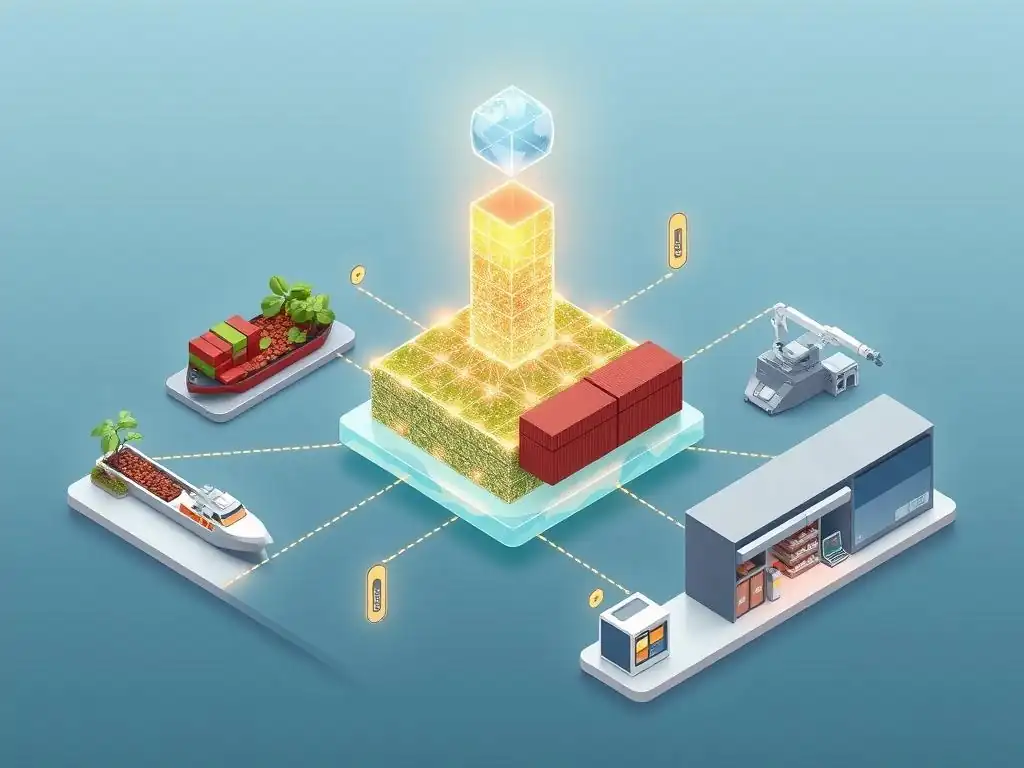
Data Immutability: Ensuring Data Integrity and Trust
Data immutability is a fundamental characteristic of blockchain and a cornerstone of its value in supply chain applications. Once data is recorded on a blockchain, it becomes virtually impossible to alter or delete. This immutability is achieved through cryptographic hashing and the distributed consensus mechanism of the blockchain network. Each block of data is linked to the previous block through a cryptographic hash, creating a chain of records that are tamper-evident. Any attempt to modify data in a block would change its hash, breaking the chain and immediately alerting the network to the tampering.
In a supply chain context, data immutability ensures the integrity of information related to product provenance, transactions, and compliance. For example, once a shipment's arrival at a port is recorded on the blockchain, that record cannot be retroactively changed, providing an auditable and trustworthy history of events. This data integrity is crucial for building trust among supply chain partners, reducing disputes, and ensuring accountability. For blockchain benefits for businesses small, data immutability offers a level of security and trust that was previously only accessible to large corporations with sophisticated IT infrastructure.
Permissioned vs. Permissionless Blockchains: Choosing the Right Model
When considering blockchain for supply chain applications, businesses need to understand the difference between permissioned and permissionless blockchains and choose the right model for their specific needs. Permissionless blockchains, like Bitcoin and Ethereum, are open to anyone to join and participate in transaction validation. They offer high levels of decentralization and transparency but can be slower and less scalable for enterprise applications.
Permissioned blockchains, on the other hand, require participants to be authorized to join the network and validate transactions. This allows for greater control over network access, faster transaction speeds, and improved scalability, making them more suitable for many supply chain use cases.
For supply chain consortiums and enterprise deployments, permissioned blockchains like Hyperledger Fabric and Corda are often preferred. These platforms offer the benefits of blockchain technology – transparency, immutability, and security – while also addressing the scalability, privacy, and control requirements of business networks.
The choice between permissioned and permissionless blockchains depends on the specific use case, the level of trust among participants, and the desired balance between decentralization and performance. For blockchain benefits for businesses small, permissioned blockchains can offer a more practical and accessible entry point into blockchain technology, allowing them to participate in industry-specific networks and gain the advantages of shared infrastructure.
Smart Contracts: Automating Agreements and Payments
Smart contracts are self-executing contracts with the terms of the agreement directly written into code. Deployed on a blockchain, smart contracts automatically execute pre-defined actions when specific conditions are met. In supply chain management, smart contracts can automate a wide range of processes, from payment processing and shipment tracking to quality control and compliance verification. For example, a smart contract can be programmed to automatically release payment to a supplier once a shipment has been verified as delivered and meets pre-defined quality standards.
This automation reduces the need for manual intervention, minimizes errors, and speeds up transaction times. Smart contracts also enhance transparency and trust by ensuring that agreements are executed fairly and predictably, based on verifiable data recorded on the blockchain. For instance, in international trade, smart contracts can streamline customs clearance processes and automate the release of goods upon successful inspection. The blockchain benefits for businesses small through smart contracts include reduced administrative costs, faster payment cycles, and increased efficiency in managing complex supply chain operations, allowing them to compete more effectively in global markets.
Integration with IoT Devices: Tracking Assets in Real-Time
The integration of blockchain with Internet of Things (IoT) devices unlocks powerful capabilities for real-time asset tracking and monitoring in supply chains. IoT devices, such as sensors and trackers, can collect data on the location, condition, and environment of goods as they move through the supply chain.
When this data is integrated with blockchain, it creates a secure, transparent, and immutable record of asset movements and conditions. For example, temperature sensors on refrigerated containers can continuously monitor the temperature of perishable goods and automatically record this data on the blockchain, ensuring cold chain integrity and triggering alerts if temperature thresholds are breached.
This real-time visibility enhances supply chain efficiency, reduces spoilage and losses, and improves quality control. Furthermore, the combination of blockchain and IoT enables automated verification of delivery and condition, triggering smart contract execution and automated payments. For blockchain benefits for businesses small, the integration of blockchain and IoT offers access to advanced tracking and monitoring capabilities that were previously too expensive or complex. This allows them to optimize their logistics, improve product quality, and provide customers with greater transparency and assurance about the condition and provenance of goods.
Implementing Blockchain in Your Supply Chain
Identifying Use Cases: Focus on Key Pain Points
Before implementing blockchain in a supply chain, it's crucial to identify specific use cases that address key pain points and offer tangible business value. A successful blockchain implementation starts with a clear understanding of the problems you are trying to solve and whether blockchain is the most appropriate solution. Focus on areas where lack of transparency, inefficiencies, fraud, or lack of trust are significant challenges.
For example, if counterfeiting is a major issue, a blockchain-based product authentication system might be a relevant use case. If slow and inefficient payment processes are a bottleneck, smart contracts for automated payments could be considered.
Conduct a thorough assessment of your supply chain processes to identify areas where blockchain's unique capabilities – transparency, immutability, security, and automation – can provide the greatest impact. Start with a pilot project focusing on a specific, well-defined use case to test the technology and demonstrate its value before undertaking a large-scale implementation. For blockchain benefits for businesses small, focusing on targeted use cases allows them to leverage blockchain effectively without overstretching resources and to demonstrate a clear return on investment.
Choosing a Blockchain Platform: Evaluating Different Options
Selecting the right blockchain platform is a critical decision for successful implementation. Several blockchain platforms are available, each with different characteristics and suitability for various supply chain applications. Consider factors such as the type of blockchain (permissioned or permissionless), scalability, security features, smart contract capabilities, interoperability, and the platform's ecosystem and support. For enterprise supply chains, permissioned blockchain platforms like Hyperledger Fabric, Corda, and Quorum are often preferred due to their scalability, privacy controls, and enterprise-grade features.
Evaluate different platforms based on your specific use case requirements, technical capabilities, and budget. Consider whether you need a platform that is open-source or commercially supported, and assess the availability of developer tools and resources. Think also about the platform's interoperability with existing systems and other blockchain networks, as seamless integration is crucial for realizing the full potential of blockchain in a complex supply chain environment. For blockchain benefits for businesses small, choosing a platform that is cost-effective, easy to integrate, and supported by a strong community can be particularly important to ensure successful adoption.
Developing or Integrating Blockchain Solutions: Build vs. Buy Considerations
When implementing blockchain solutions, businesses face the decision of whether to build a custom solution from scratch or buy a pre-built solution from a vendor. Building a custom solution offers greater flexibility and control but requires significant in-house blockchain expertise and development resources. Buying a pre-built solution can be faster and less expensive initially, as it leverages the expertise and infrastructure of a specialized vendor. However, pre-built solutions may be less customizable and may not perfectly fit specific business needs.
The "build vs. buy" decision depends on factors such as the complexity of the use case, the availability of in-house blockchain skills, budget constraints, and time-to-market requirements. For blockchain benefits for businesses small, buying a pre-built solution or leveraging a blockchain-as-a-service (BaaS) platform can be a more practical and cost-effective approach, allowing them to access blockchain technology without the need for extensive in-house development capabilities. In many cases, a hybrid approach, combining pre-built components with some custom development, can offer the best balance of flexibility and efficiency.
Supply Chain Data Standards and Interoperability
Data standards and interoperability are essential for realizing the full potential of blockchain in supply chain management. For blockchain to effectively facilitate seamless data exchange and collaboration across the entire supply chain, standardized data formats and protocols are needed. Without interoperability, different blockchain platforms and systems may operate in silos, limiting their effectiveness. Industry-wide initiatives are underway to develop and promote supply chain data standards that enable different blockchain solutions to communicate and exchange data seamlessly.
Organizations like GS1 are working on standards for product identification and data sharing that can be leveraged by blockchain applications. Adopting and adhering to these standards is crucial for ensuring interoperability and scalability of blockchain-based supply chain solutions. For blockchain benefits for businesses small, participating in and supporting industry standards initiatives is vital to ensure that their blockchain implementations can integrate effectively with the broader supply chain ecosystem, enabling them to participate in larger networks and benefit from network effects.
The Future of Blockchain in Supply Chain
Blockchain and Sustainability: Promoting Ethical and Environmentally Friendly Practices
The future of blockchain in supply chain is increasingly intertwined with sustainability and ethical considerations. Blockchain's transparency and traceability capabilities can be leveraged to promote ethical and environmentally friendly practices throughout the supply chain. By tracking the origin and lifecycle of products and materials, blockchain can help ensure responsible sourcing, reduce waste, and improve environmental impact. For example, blockchain can be used to verify sustainable forestry practices, track recycled materials, and monitor carbon emissions across the supply chain.
Consumers are increasingly demanding sustainable and ethically produced goods, and blockchain can provide the verifiable proof needed to meet these demands and build consumer trust. Companies are exploring blockchain solutions to track the provenance of sustainable products, such as organic food, fair-trade coffee, and ethically sourced fashion. For blockchain benefits for businesses small committed to sustainability, blockchain offers a powerful tool to differentiate themselves in the market, attract environmentally conscious consumers, and contribute to a more sustainable and responsible global economy.
Blockchain and AI: Optimizing Supply Chain Operations
The convergence of blockchain and Artificial Intelligence (AI) holds immense potential for further optimizing supply chain operations. AI algorithms can analyze the vast amounts of data generated by blockchain-based supply chains to gain insights, predict demand, optimize logistics, and automate decision-making. For example, AI can analyze blockchain data to identify bottlenecks in the supply chain, predict potential disruptions, and optimize routing and inventory management. The combination of blockchain's secure and transparent data infrastructure with AI's analytical capabilities can lead to more efficient, resilient, and intelligent supply chains.
AI can also enhance the functionality of smart contracts, making them more adaptive and responsive to real-world conditions. For instance, AI-powered smart contracts could dynamically adjust pricing or delivery schedules based on real-time supply chain data and market conditions. For blockchain benefits for businesses small, the integration of AI with blockchain can provide access to sophisticated analytical tools and automation capabilities that can level the playing field and enable them to compete more effectively with larger, more technologically advanced companies.
Blockchain and the Circular Economy: Enabling Product Lifecycle Tracking
Blockchain is poised to play a crucial role in enabling the circular economy, a model focused on minimizing waste and maximizing resource utilization by extending product lifecycles and promoting reuse, repair, and recycling. Blockchain's ability to track products throughout their lifecycle – from manufacturing to end-of-life – makes it ideal for supporting circular economy initiatives. By recording product information, ownership history, and material composition on a blockchain, companies can facilitate product take-back programs, track recycled materials, and incentivize reuse and repair.
For example, blockchain can be used to track electronic devices throughout their lifecycle, enabling efficient recycling and reuse of valuable components. It can also facilitate the creation of digital product passports, providing consumers with information about a product's origin, materials, and environmental impact, promoting more informed purchasing decisions. For blockchain benefits for businesses small embracing circular economy principles, blockchain offers a vital infrastructure for tracking product lifecycles, managing reverse logistics, and demonstrating their commitment to sustainability and resource efficiency.
Data Privacy and Security in Blockchain-Based Supply Chains
While blockchain enhances security and transparency, data privacy and security remain critical considerations in blockchain-based supply chains, particularly in light of regulations like GDPR. While blockchain itself is secure, the data stored on it and the access controls governing that data must be carefully managed to ensure compliance with privacy regulations. Permissioned blockchains offer greater control over data access and privacy compared to permissionless blockchains, allowing businesses to restrict access to sensitive information to authorized participants.
Implementing robust data encryption, access control mechanisms, and data governance policies is essential for ensuring data privacy in blockchain-based supply chains. Businesses need to carefully consider what data is stored on the blockchain, who has access to it, and how data privacy regulations are addressed. For blockchain benefits for businesses small, understanding and addressing data privacy and security considerations is crucial for building trust with customers and partners and ensuring compliance with legal requirements as they adopt blockchain technology.
Conclusion: Leveraging Blockchain for a More Transparent and Efficient Supply Chain
Key Takeaways: Understanding the Benefits and Potential of Blockchain
Blockchain technology offers transformative potential for supply chain management, providing significant blockchain benefits for businesses small and large. Its core strengths – enhanced transparency, improved traceability, increased efficiency, and reduced fraud – address critical challenges in traditional supply chains. By providing an immutable and shared ledger, blockchain fosters trust and collaboration among supply chain partners, enabling end-to-end visibility and accountability. From food safety and pharmaceutical tracking to ethical sourcing and luxury goods authentication, blockchain applications are diverse and impactful.
Implementing blockchain requires careful planning, including identifying relevant use cases, choosing the right platform, and considering data standards and interoperability. While challenges remain, particularly around data privacy and scalability, the future of blockchain in supply chain is bright. The convergence of blockchain with AI, IoT, and circular economy principles promises to further optimize supply chain operations, promote sustainability, and create more resilient and responsible global trade networks. For businesses of all sizes, understanding and leveraging blockchain benefits for businesses small specifically, is becoming increasingly crucial for maintaining competitiveness and building future-proof supply chains.
Supply Chain Consortiums and Blockchain Initiatives
Numerous supply chain consortiums and blockchain initiatives are driving adoption and innovation in the field. Industry leaders and technology providers are collaborating to develop blockchain-based solutions for various sectors, including shipping (TradeLens, GSBN), food (IBM Food Trust), pharmaceuticals (MediLedger), and minerals (RSBN). These consortiums play a vital role in establishing industry standards, promoting interoperability, and accelerating the adoption of blockchain technology across supply chains.
Participating in or monitoring these initiatives can provide valuable insights and opportunities for businesses looking to leverage blockchain benefits for businesses small and integrate blockchain into their operations. The continued growth and maturation of these consortiums will be instrumental in shaping the future of blockchain in supply chain and realizing its full transformative potential.
Frequently Asked Questions
What are some of the primary blockchain benefits for businesses small, especially those unfamiliar with the technology?
Blockchain offers enhanced data security through its immutable ledger, increased transparency in transactions, and potential for cost reduction by eliminating intermediaries.
How can small businesses leverage blockchain for supply chain management, and what are the immediate advantages?
Blockchain provides traceability and accountability throughout the supply chain. This leads to improved efficiency, reduced risk of fraud, and enhanced customer trust.
What are the key regulatory considerations that small businesses should be aware of when implementing blockchain solutions?
Regulations around blockchain are still evolving. Data privacy, security compliance, and industry-specific laws are critical areas to consider before implementation.
Beyond cryptocurrencies, what are some practical blockchain applications for small businesses in areas like marketing or customer loyalty?
Blockchain can enable secure loyalty programs, personalized marketing campaigns with enhanced data privacy, and verification of digital content to combat counterfeiting.
What are the potential challenges and initial investment costs associated with adopting blockchain technology for small businesses?
Challenges include the complexity of implementation, the need for specialized expertise, and initial infrastructure costs. However, open-source solutions can help minimize expenses.
Final Reflection: Embracing the Decentralized Future
The journey into blockchain, as we've explored, reveals a transformative technology poised to reshape the business landscape, particularly for smaller enterprises. The democratization of access to secure, transparent, and efficient systems is no longer a futuristic fantasy, but a tangible reality. Blockchain's potential to streamline operations, enhance security, and foster trust represents a significant leap forward, leveling the playing field and empowering small businesses to compete in an increasingly digital world.
This technology's influence extends far beyond mere efficiency gains; it's fundamentally altering how we perceive trust and value in the digital age. Witnessing the shift towards decentralized systems underscores the importance of adaptability and embracing innovation. The future is already here – it's just not evenly distributed.
- William Gibson. This quote perfectly encapsulates the current state of blockchain adoption, highlighting the urgency for small businesses to understand and leverage its potential before being left behind.
Now, armed with this newfound understanding of blockchain's magic, I invite you to reflect on how you can integrate these principles into your own ventures. Consider the possibilities for enhanced security, streamlined supply chains, and transparent customer interactions. The decentralized future is not something to fear, but an opportunity to build a more resilient, trustworthy, and ultimately, more successful business. Embrace the change, explore the possibilities, and unlock the magic of blockchain for your own benefit.
Ignite Your Blockchain Journey!
Thank you for exploring the world of blockchain with us! We hope this article clarified the core concepts and sparked your curiosity about this transformative technology. Now it's time to take the next step and turn your understanding into action.
Here are a few suggestions to get started:
- Enroll in a free online blockchain course! This is the best way to deepen your knowledge and develop practical skills.
- Share this article with a friend or colleague who is also interested in blockchain — spreading the knowledge benefits everyone.
- Explore other articles on Blockchain Trends that discuss specific applications and real-world use cases, revealing more of blockchain’s potential.
What is the first blockchain concept you're eager to learn more about, and why? Share your thoughts in the comments below!
Leave a Reply