
Decentralized Data Storage for DApps: Exploring IPFS and Arweave Solutions


Welcome to Blockchain Trends, your compass in the rapidly evolving world of decentralized technologies. Are you ready to delve beyond the hype and uncover the real potential of blockchain? In this article, we're diving deep into the groundbreaking solutions reshaping data storage for DApps, specifically exploring IPFS and Arweave decentralized storage. Discover how these innovative technologies are paving the way for a more resilient, secure, and truly decentralized future – and why you need to understand them now. Let's begin!
Decentralized Data Storage for DApps: Exploring IPFS and Arweave Solutions
- Introduction to Decentralized Storage for DApps
-
IPFS: The InterPlanetary File System for DApps
- What is IPFS and How Does it Work?
- IPFS Content Addressing and Content Identifiers (CIDs)
- Pinning Data on IPFS: Ensuring Data Availability for DApps
- Using IPFS with DApps: Practical Implementation Examples
- Advantages of IPFS for DApp Data Management: Scalability and Cost-Effectiveness
- Disadvantages of IPFS for DApp Data Management: Persistence Challenges and Mitigation Strategies
-
Arweave: Permanent Data Storage for Decentralized Applications
- Exploring the Arweave Network: A Blockchain-Based Storage Solution
- Understanding the Permaweb: Arweave's Vision for Permanent Data
- Arweave's Data Endowment Model: Ensuring Long-Term Data Preservation
- Integrating Arweave with DApps: Use Cases and Examples
- Advantages of Arweave for DApp Data: Immutability and Data Ownership
- Disadvantages of Arweave for DApp Data: Cost Considerations and Scalability Limitations
-
IPFS vs. Arweave: A Detailed Comparison for DApp Developers
- Data Persistence: IPFS's Pinning vs. Arweave's Permanent Storage
- Cost Analysis: Comparing the Storage Costs of IPFS and Arweave
- Performance and Scalability: Evaluating IPFS and Arweave for DApp Needs
- Security Considerations: Comparing the Security Models of IPFS and Arweave
- Data Retrieval Speed: Comparing the data retrieval speed of IPFS and Arweave
- Integration Complexity: Assessing the Ease of Integration with DApps
-
Choosing the Right Decentralized Storage Solution for Your DApp
- Factors to Consider When Selecting IPFS or Arweave
- DApp Use Case Scenarios: Matching Storage Solutions to Specific Needs
- DApp Example: Using IPFS for Storing NFT Metadata
- DApp Example: Using Arweave for Archiving Decentralized Social Media Posts
- Hybrid Approaches: Combining IPFS and Arweave for Optimal DApp Storage
- Best Practices for Implementing Decentralized Storage in DApps
- The Future of Decentralized Storage and DApp Development
- Conclusion: Leveraging IPFS and Arweave for Robust DApp Data Management
-
Frequently Asked Questions
- What are IPFS and Arweave, and why are they relevant to decentralized applications (DApps)?
- How does IPFS differ from Arweave in its approach to decentralized storage?
- What are the key benefits of using decentralized storage solutions like IPFS and Arweave for DApps?
- What are some potential challenges or limitations associated with using IPFS and Arweave for DApp data storage?
- How do regulatory considerations impact the use of decentralized storage solutions like IPFS and Arweave?
- Final Reflection: Embracing the Decentralized Future
- Ignite Your DApp's Potential: Embrace Decentralized Storage!
Introduction to Decentralized Storage for DApps
The Need for Decentralized Storage in DApp Development
Decentralized applications (DApps) represent a paradigm shift from traditional centralized software, operating on blockchain technology to provide trustless, transparent, and censorship-resistant services. However, while the logic (smart contracts) and transaction history reside on the blockchain, storing large amounts of data – such as user-generated content, media files, or application assets – directly on most blockchains is prohibitively expensive and technically challenging due to block size limitations and high gas fees.
For instance, storing even a few megabytes on Ethereum can cost thousands of dollars. This creates a critical need for decentralized storage solutions that can handle significant data volumes off-chain while maintaining the core principles of decentralization, immutability, and availability required by DApps.
Relying on traditional centralized cloud storage providers (like AWS S3 or Google Cloud Storage) for DApp data introduces a single point of failure, censorship risk, and potential downtime, undermining the decentralized nature of the application itself. If a centralized provider goes down or decides to remove data, the DApp can become unusable or lose critical information, regardless of the blockchain's uptime.
Therefore, DApp developers must seek robust IPFS Arweave decentralized storage options that align with the Web3 ethos, ensuring data persistence, integrity, and accessibility without relying on centralized authorities. This is where exploring solutions like IPFS and Arweave becomes essential for building truly resilient and decentralized applications.
Understanding the Limitations of Traditional Storage Solutions for DApps
Traditional storage relies on centralized servers owned and operated by single entities. This architecture presents several fundamental limitations when applied to the decentralized environment of DApps. Firstly, it introduces a significant attack vector; if the central server is compromised or experiences an outage, all data stored on it becomes inaccessible or vulnerable.
A widely reported outage from a major cloud provider, for example, can impact hundreds or thousands of applications simultaneously. Secondly, centralized storage is susceptible to censorship. The controlling entity has the power to remove or restrict access to data based on their policies or external pressure, directly contradicting the censorship-resistant goal of many DApps, particularly those involving social media or content publishing.
Furthermore, traditional storage often uses location-based addressing (e.g., http://domain.com/path/to/file), meaning you request data based on where it is stored. This makes the system fragile; if the server moves or the file path changes, the link breaks. For DApps aiming for high availability and resilience, this dependency on fixed locations is a significant drawback. The IPFS Arweave decentralized storage model, in contrast, focuses on content addressing, requesting data based on what it is, providing greater resilience and removing reliance on specific server locations. This shift is crucial for DApps that need to ensure their data remains accessible and verifiable regardless of infrastructure changes or failures.
IPFS and Arweave: Leading Solutions for DApp Data Storage
In the landscape of decentralized storage, IPFS (InterPlanetary File System) and Arweave have emerged as prominent solutions catering to different, yet sometimes complementary, needs of DApp developers. IPFS offers a peer-to-peer hypermedia protocol designed to make the web faster, safer, and more open. It allows for the storage and sharing of data in a decentralized manner, utilizing content addressing to identify files uniquely. While IPFS provides a mechanism for decentralized storage and retrieval, it doesn't inherently guarantee long-term data persistence without additional mechanisms like pinning services.
Arweave, on the other hand, is built as a protocol for permanent data storage. It aims to store data forever through a sustainable economic model powered by its native token, AR. By paying a one-time fee, users can store data on the Arweave network indefinitely, creating what they call the "Permaweb."
This fundamental difference in design – IPFS focusing on distribution and retrieval, Arweave on permanent archiving – makes them suitable for different use cases within the DApp ecosystem. Understanding the nuances of both IPFS Arweave decentralized storage options is key for developers deciding how to manage their application's data effectively and in alignment with their project's goals.
IPFS: The InterPlanetary File System for DApps
What is IPFS and How Does it Work?
IPFS, or the InterPlanetary File System, is a peer-to-peer network protocol for storing and sharing data in a distributed file system. Unlike traditional web protocols like HTTP, which download files from a single server location, IPFS retrieves files from a network of nodes.
When you request a file on IPFS, the network finds nodes storing that content using its unique content identifier (CID) and retrieves pieces of the file from multiple locations simultaneously, similar to how BitTorrent works. This content-addressed approach means that the location of the data doesn't matter, only its hash (the CID), making the system more resilient to server outages and censorship.
At its core, IPFS works by breaking files into smaller chunks, cryptographically hashing each chunk, and then building a Merkle DAG (Directed Acyclic Graph) structure to represent the file and its chunks. The root hash of this Merkle DAG is the file's unique Content Identifier (CID). When an IPFS node wants to access a file, it asks the network, "Who has the data associated with this CID?"
Other nodes that have the data (or parts of it) respond, and the requesting node can then retrieve the data from multiple sources. This distributed nature makes IPFS inherently more resilient and potentially faster for data retrieval, especially for popular content, by leveraging the bandwidth of multiple nodes. This makes IPFS a compelling choice for certain types of IPFS Arweave decentralized storage needs in DApps.
IPFS Content Addressing and Content Identifiers (CIDs)
Content addressing is a fundamental concept in IPFS and a key differentiator from traditional location-based addressing (like URLs). In IPFS, every piece of content, whether it's a file or a directory, is uniquely identified by its Content Identifier (CID). A CID is a short, cryptographic hash of the content itself.
This means that if even a single bit of the content changes, its CID will be completely different. This provides a powerful mechanism for verifying the integrity of the data – if you retrieve data using a specific CID, you can be absolutely certain that you have received the exact content that was originally stored under that identifier.
CIDs are generated using a process that includes hashing the data and adding information about the hashing algorithm used and the data format. For example, a CID might look something like QmY7Yh4UmoZKjfP4J7gX6v7e2S2sM2Q8e1r3J8K5M5F5F5. This string doesn't tell you where the data is stored, but what the data is. This immutability is critical for many DApp use cases, such as storing verifiable digital assets or ensuring that a specific version of an application's front-end code remains accessible. When a DApp interacts with data on IPFS, it typically does so by referencing these CIDs, ensuring that the application always accesses the intended, verified content. This approach enhances the reliability and trustworthiness of data within the realm of IPFS Arweave decentralized storage solutions.
Pinning Data on IPFS: Ensuring Data Availability for DApps
While IPFS provides a decentralized way to store and retrieve data, it does not automatically guarantee that your data will be available forever. An IPFS node stores data it retrieves or adds, but it can also garbage collect (delete) data it deems unnecessary to free up space, especially if the data is not frequently accessed or explicitly "pinned."
Pinning is the process of telling an IPFS node (or a network of nodes) that specific content (identified by its CID) is important and should not be garbage collected. For a DApp to reliably access its data, that data must be pinned on one or more nodes that are consistently online.
DApp developers often use pinning services or run their own IPFS nodes specifically for pinning their application's critical data. Pinning services like Pinata, Infura, or Filebase manage IPFS nodes and offer APIs to easily pin content for a fee, typically based on the amount of data stored and bandwidth used. Without pinning, a DApp referencing a CID might find that the content is no longer available on the network if the original node that stored it went offline and no other nodes cached or pinned it.
Therefore, effective pinning strategy is crucial for the reliability and uptime of DApps relying on IPFS for their IPFS Arweave decentralized storage needs. A common practice is to use multiple pinning services or a combination of self-hosting and services for redundancy.
Using IPFS with DApps: Practical Implementation Examples
Integrating IPFS into a DApp involves using IPFS libraries or APIs to add, retrieve, and manage data via CIDs. A common pattern is to store larger, static assets like images, videos, or documents on IPFS and then store the resulting CID on the blockchain, typically within a smart contract or as part of a transaction. For example, an NFT DApp on a blockchain like Polygon or Ethereum might store the actual image or metadata file for an NFT on IPFS.
The smart contract for the NFT would then include the IPFS CID in the token's metadata URI. When a user views the NFT in a marketplace or wallet, the application retrieves the CID from the smart contract and uses it to fetch the associated data from the IPFS network.
Another example is a decentralized social media DApp. User posts, including text and attached media, could be stored on IPFS. The blockchain would only store immutable records linking user identities (wallet addresses) to the CIDs of their posts or a list of post CIDs. When a user views a profile or feed, the DApp fetches the list of CIDs from the blockchain and retrieves the actual post content from IPFS. This approach keeps blockchain costs low (only storing CIDs) while leveraging IPFS for scalable, distributed content storage. Developers can interact with IPFS nodes using client libraries available in languages like JavaScript ( ipfs-http-client) or Python ( ipfsapi or python-ipfs-http-client). A basic example of adding data might involve code like this (simplified):
const { create } = require('ipfs-http-client');
const ipfs = create({ url: 'YOUR_IPFS_NODE_URL' });

async function addDataToIpfs(data) {
  const result = await ipfs.add(data);
  console.log('Added data:', result.cid.toString());
  return result.cid.toString();
}

// Example usage:
// addDataToIpfs('Hello, decentralized world!');
This allows DApps to manage significant amounts of data off-chain, while maintaining the integrity and verifiability of the data links on-chain, demonstrating a practical application of IPFS Arweave decentralized storage principles.
Advantages of IPFS for DApp Data Management: Scalability and Cost-Effectiveness
One of the primary advantages of using IPFS for DApp data management is its potential for scalability. IPFS is designed to handle large amounts of data distributed across many nodes. As more nodes join the network and store copies of content, the network's capacity and ability to serve that content increase. This peer-to-peer architecture avoids the bottlenecks associated with single-server systems and can theoretically scale to handle vast amounts of data and traffic, making it suitable for DApps with a large user base or significant data storage needs, such as decentralized video platforms or data marketplaces.
In terms of cost-effectiveness, storing data on IPFS itself is generally free, as you are utilizing the storage space of participating nodes. The costs primarily come from running your own node, using a pinning service, or paying for bandwidth if you are serving data extensively.
Compared to the extremely high cost of storing data directly on most blockchains (where costs can be measured in dollars per kilobyte), storing data on IPFS and only putting the resulting CID on-chain is vastly cheaper, often orders of magnitude less expensive. For instance, storing a 1MB image on Ethereum might cost hundreds or thousands of dollars, whereas storing it on IPFS and putting the CID (a few dozen bytes) on-chain might cost cents or a few dollars depending on the blockchain's gas fees at the time.
This cost efficiency makes IPFS an attractive option for DApps dealing with substantial off-chain data as part of their IPFS Arweave decentralized storage strategy.
Disadvantages of IPFS for DApp Data Management: Persistence Challenges and Mitigation Strategies
Despite its advantages, IPFS has a significant challenge regarding data persistence. As mentioned earlier, IPFS nodes can garbage collect data that isn't pinned. This means that simply adding data to IPFS does not guarantee it will remain available indefinitely. If the node that initially stored the data goes offline, and no other node has cached or actively pinned that specific content, the data can become inaccessible. This ephemeral nature by default is a major concern for DApps that require reliable, long-term data availability, such as archives, historical records, or essential application assets.
Mitigating this persistence challenge requires active management. The most common strategy is to use pinning services, either commercial services or by running dedicated infrastructure. However, relying on pinning services introduces a degree of centralization (though less than traditional cloud storage) and ongoing costs.
Developers must ensure their pinning strategy is robust, potentially using multiple services or geographic locations for redundancy. Another strategy involves incentivizing other nodes to store the data, although this is less direct than explicit pinning. For DApps where permanent data storage is non-negotiable, the inherent need for ongoing pinning effort or cost is a notable disadvantage of IPFS when compared to solutions designed for permanence, highlighting a key difference in the IPFS Arweave decentralized storage landscape.
Arweave: Permanent Data Storage for Decentralized Applications
Exploring the Arweave Network: A Blockchain-Based Storage Solution
Arweave is a decentralized storage network designed specifically for the permanent storage of data. Unlike many other decentralized storage solutions that rely on ongoing payments or pinning, Arweave aims to store data forever after a single upfront payment. The network operates on a novel consensus mechanism called Proof of Access (PoA), which incentivizes miners to store and replicate data and also prove they can access historical data efficiently. This mechanism encourages miners to store rare data to increase their chances of mining the next block and earning rewards.
The Arweave network is built upon a blockweave, a structure similar to a blockchain but where each block is linked to both the previous block and a randomly selected previous block from history. This structure is integral to the Proof of Access mechanism, as miners need to access data from these old blocks to mine new ones. The network is composed of miners who store data and process transactions, and users who pay to upload data.
The payment model and consensus mechanism are designed to create an endowment fund that can perpetually cover the costs of storing the data, aiming for true permanence. This makes Arweave a distinct player in the IPFS Arweave decentralized storage space, focusing on long-term archiving.
Understanding the Permaweb: Arweave's Vision for Permanent Data
Arweave's vision extends beyond just storing raw data files; it aims to build the "Permaweb," a permanent, decentralized web layer built on top of the Arweave storage network. The Permaweb consists of web pages, applications, and data stored immutably and permanently on the Arweave blockweave. Because data is stored forever, any content uploaded to the Permaweb, such as a website's HTML, CSS, and JavaScript files, remains accessible indefinitely without the need for ongoing hosting fees or server maintenance.
Developers can build decentralized applications and websites directly on the Permaweb. These applications are served directly from the Arweave network, ensuring they remain available and censorship-resistant as long as the network exists. This concept allows for the creation of truly persistent digital artifacts and decentralized archives. For example, a decentralized publishing platform could use the Permaweb to ensure that articles, once published, can never be taken down or altered. This permanent layer is a core offering that differentiates Arweave within the broader category of IPFS Arweave decentralized storage solutions.
Arweave's Data Endowment Model: Ensuring Long-Term Data Preservation
The core mechanism enabling Arweave's promise of permanent storage is its unique data endowment model. When a user pays to store data on Arweave, the transaction fee is not simply distributed to miners for immediate block rewards. Instead, a significant portion of this upfront fee is placed into a perpetual endowment fund. This fund is designed to generate yield over time, using a hypothetical long-term storage cost curve. The yield generated from this endowment is then used to pay miners for the ongoing storage of the data.
The economic model assumes that the cost of storage hardware will continue to decrease over time, while the value generated from the endowment fund (ideally from transaction fees and potentially staking rewards) will be sufficient to cover the decreasing cost of storing the data perpetually. While there's a long-term assumption involved, the model is designed to create a financial incentive for miners to store data for decades, theoretically forever.
This innovative approach to funding long-term storage is a key characteristic of Arweave, setting it apart from models that require recurring payments or pinning, and is central to its role in the IPFS Arweave decentralized storage ecosystem.
Integrating Arweave with DApps: Use Cases and Examples
Integrating Arweave into DApps is typically done via its HTTP API, which allows applications to upload and retrieve data. Since Arweave provides permanent storage, it's particularly well-suited for DApp use cases that require immutable archiving or long-term data availability. Examples include storing historical transaction logs, preserving digital art or collectibles metadata permanently, archiving decentralized social media posts, or ensuring the long-term availability of important documents or records.
For instance, a decentralized autonomous organization (DAO) might use Arweave to permanently archive its governance proposals, voting results, and meeting minutes. These documents are critical historical records that should remain accessible and immutable. By uploading them to Arweave and storing the resulting transaction IDs on the blockchain, the DAO ensures these records persist indefinitely. Another example is a decentralized blogging platform where authors want to guarantee their published articles remain available forever, immune to platform shutdowns or censorship. The platform can upload each article to Arweave, and the blockchain would store a reference (the Arweave transaction ID) linking the author's identity to their published content. Developers can use libraries like arweave-js to interact with the network programmatically. A simple upload might look like this (simplified):
const Arweave = require('arweave');

const arweave = Arweave.init({
    host: 'arweave.net', // Hostname or IP address for a Arweave node
    port: 443,           // Port
    protocol: 'https'    // Network protocol http or https
});

async function uploadToArweave(data, jwk) {
    const transaction = await arweave.createTransaction({ data: data }, jwk);
    await arweave.transactions.sign(transaction, jwk);
    const response = await arweave.transactions.post(transaction);
    console.log('Uploaded data:', response.status, response.statusText, transaction.id);
    return transaction.id; // The Arweave transaction ID acts as the permanent address
}

// Example usage (requires a wallet JWK):
// const wallet = JSON.parse(fs.readFileSync('wallet.json'));
// uploadToArweave('This data is permanent!', wallet);
This capability for permanent, one-time-payment storage offers a distinct advantage for specific data types within the broader IPFS Arweave decentralized storage landscape.
Advantages of Arweave for DApp Data: Immutability and Data Ownership
The most significant advantage of Arweave for DApp data is its core promise of permanent, immutable storage. Once data is uploaded to Arweave and confirmed on the blockweave, it is designed to be available forever without any further action or payment required from the user.
This level of permanence is unprecedented in traditional storage and offers a crucial feature for DApps that need to preserve data history, ensure content integrity over long periods, or provide verifiable archives. The immutability is guaranteed by the nature of the blockweave structure and the consensus mechanism, making it impossible to alter or delete data once stored.
Furthermore, Arweave promotes true data ownership. When you upload data, you receive a transaction ID that acts as a permanent, unchangeable reference to your content. There is no central authority that can take your data down or restrict access to it (assuming the network continues to operate).
For DApps focused on user sovereignty, digital asset permanence, or censorship resistance, this immutable and owner-controlled storage model is highly valuable. It provides a foundation of trust that the data the DApp relies on will always be there and will always be the same, a key benefit when considering IPFS Arweave decentralized storage options for critical data.
Disadvantages of Arweave for DApp Data: Cost Considerations and Scalability Limitations
While Arweave offers permanence, this comes with its own set of considerations, particularly regarding cost and scalability in certain scenarios. The cost of storing data on Arweave is paid upfront for theoretically perpetual storage. This upfront fee can be relatively high compared to the pay-as-you-go or pinning costs of IPFS, especially for large amounts of data.
For example, storing 1 GB of data on Arweave might cost around $20-30 (this price fluctuates based on AR token price and network conditions), whereas storing 1 GB on IPFS via a pinning service might cost $5-10 per month. While the total cost over many years might favor Arweave, the initial investment can be a barrier for DApps with very large datasets or unpredictable storage needs.
Another potential disadvantage is related to scalability for rapidly changing or very frequently accessed data. Arweave is optimized for archiving and retrieval, not for high-throughput, low-latency operations like those required for real-time databases or frequently updated files. Uploading data involves waiting for it to be included in a block, which can take time, and retrieval speeds, while decent for archived content, may not match the performance of cached content on a well-connected IPFS network or a traditional CDN.
While Arweave is continuously improving, its design prioritizes permanence over speed for dynamic data, which is a limitation for DApps requiring constant data modifications or extremely fast access. These factors are important to weigh when comparing IPFS Arweave decentralized storage solutions.
IPFS vs. Arweave: A Detailed Comparison for DApp Developers
Data Persistence: IPFS's Pinning vs. Arweave's Permanent Storage
The most significant difference between IPFS and Arweave lies in their approach to data persistence. IPFS, by default, does not guarantee persistence. Data added to an IPFS node might be removed through garbage collection unless it is explicitly pinned. Persistence on IPFS relies on a network of nodes willingly storing or being paid to store (pin) the data. If all nodes storing a particular piece of content go offline or unpin it, the data becomes unavailable. This model is excellent for caching and distributing data efficiently but requires active management (pinning) for long-term availability.
Arweave, conversely, is designed for permanent storage from the ground up. A single, upfront payment is intended to fund the storage of data forever through its endowment model and Proof of Access consensus. Once data is confirmed on the Arweave blockweave, there is no concept of 'unpinning' or garbage collection by design.
The network's incentives are aligned to ensure data is replicated and stored by numerous miners indefinitely. This makes Arweave ideal for archival purposes where data must never be lost or altered, presenting a fundamentally different promise of persistence compared to the pinning-dependent model of IPFS Arweave decentralized storage.
Cost Analysis: Comparing the Storage Costs of IPFS and Arweave
Comparing the costs of IPFS and Arweave requires considering both the payment model and the duration of storage. IPFS storage costs typically involve paying for pinning services on a recurring basis (e.g., monthly or annually) or the infrastructure costs of running your own pinning nodes. These costs are often based on the amount of data stored and bandwidth used. For example, pinning 100GB of data might cost between $50-$150 per month depending on the provider and service tier. Over time, these recurring costs can add up, especially for large datasets or long-lived DApps.
Arweave storage involves a single, upfront payment for theoretically permanent storage. As of late 2023/early 2024, the cost per GB has fluctuated but is often cited in the range of $20-$30 per GB. While this upfront cost can be substantial for large amounts of data (e.g., 1TB could cost $20,000 - $30,000 upfront), there are no further recurring fees for that data.
For DApps requiring data to be available for many years or decades, Arweave's one-time fee model could potentially be more cost-effective in the long run compared to the cumulative recurring costs of IPFS pinning services. However, for data with a shorter lifespan or uncertain long-term needs, IPFS might be cheaper upfront and more flexible. Analyzing the projected lifespan and access patterns of the data is crucial when comparing the cost of IPFS Arweave decentralized storage options.
Performance and Scalability: Evaluating IPFS and Arweave for DApp Needs
Performance and scalability differ between IPFS and Arweave based on their design priorities. IPFS is designed as a distributed file system and can be very performant for data retrieval, especially for popular content that is cached on many nodes close to the user. With sufficient pinning and network connectivity, IPFS can serve data quickly, making it suitable for DApps that require fast access to static assets or frequently requested files.
Its scalability lies in the peer-to-peer nature; as more nodes store content, retrieval paths become more diverse and potentially faster. However, upload speed can vary depending on network conditions and the node being used.
Arweave's performance is optimized for reliable, long-term retrieval rather than low-latency, high-frequency access. Uploading data involves waiting for block confirmation, which can take minutes. Retrieving data from Arweave is generally reliable but may not be as fast as retrieving from a well-connected IPFS node or a traditional CDN, particularly for large files or during peak network load.
Its scalability is focused on its ability to store an ever-growing amount of data permanently through its economic incentives and blockweave structure, rather than optimizing for rapid distribution or frequent changes. For DApps needing archival storage, Arweave's performance is adequate, but for DApps requiring real-time data interaction or very fast asset loading, IPFS or a hybrid approach might be more suitable within the IPFS Arweave decentralized storage spectrum.
Security Considerations: Comparing the Security Models of IPFS and Arweave
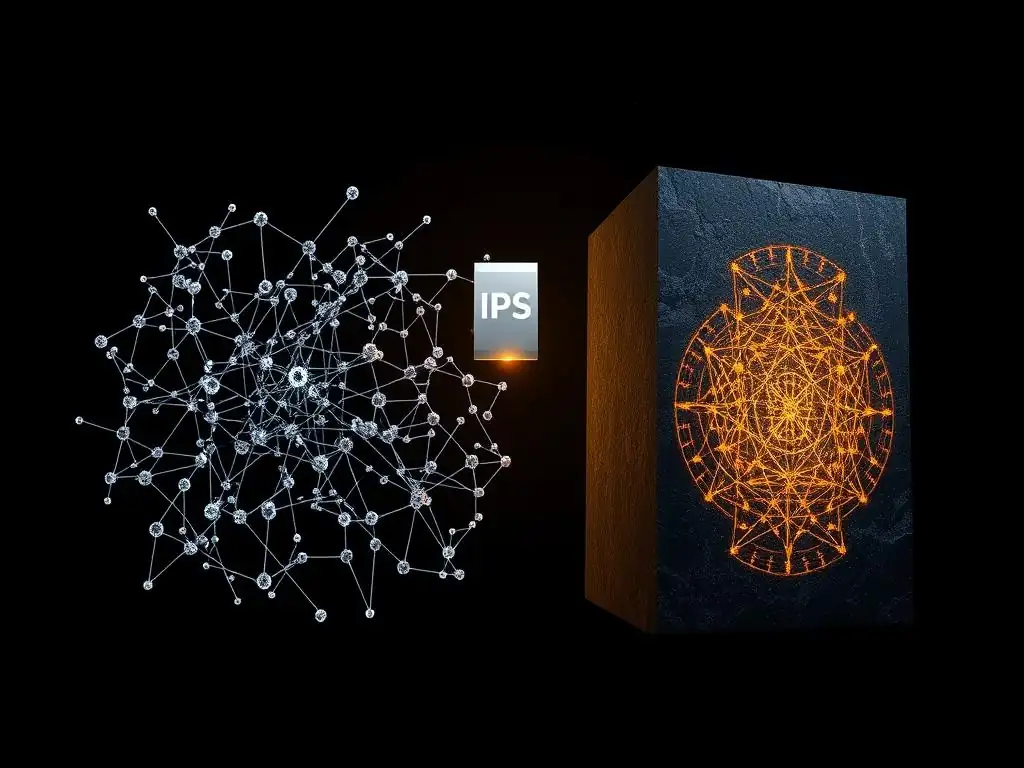
Both IPFS and Arweave offer significant security advantages over traditional centralized storage, primarily through decentralization and cryptographic verification, but their specific security models differ. In IPFS, security is largely based on content addressing. When you retrieve data using a CID, you are guaranteed to receive the exact content associated with that hash.
This prevents tampering; if the data is modified, its CID changes, and the original CID will no longer resolve to the altered data. The security of data availability on IPFS, however, depends on the security and reliability of the nodes that are pinning and serving the content. Users must trust that pinning services or self-hosted nodes are secure and maintained.
Arweave's security model is built into its blockweave structure and Proof of Access consensus. Data is replicated across numerous miners, making it extremely difficult for any single entity or small group to censor or alter data without controlling a vast portion of the network's storage. The cryptographic linking of blocks and the PoA mechanism ensure data integrity and incentivize long-term storage and verification.
The security relies on the economic model successfully incentivizing miners over time. While both offer robust data integrity checks (via CIDs in IPFS and transaction IDs/hashes in Arweave), Arweave's design inherently focuses more on guaranteed long-term data availability and censorship resistance through its network-wide permanent storage mechanism, a key aspect when evaluating IPFS Arweave decentralized storage security.
Data Retrieval Speed: Comparing the data retrieval speed of IPFS and Arweave
Data retrieval speed is a critical factor for user experience in DApps. IPFS retrieval speed can be highly variable, depending on the popularity of the content, the number of nodes storing it, the proximity of those nodes, and the network conditions. For very popular content cached widely, retrieval can be extremely fast, potentially faster than traditional HTTP from a single server due to parallel downloads from multiple peers.
However, for unpopular or newly added content that is only pinned on a few remote nodes, retrieval can be slow. Using dedicated pinning services with good infrastructure can improve reliability and speed for data critical to a DApp.
Arweave retrieval involves querying the network for data associated with a transaction ID. While Arweave miners are incentivized to store data efficiently, the network structure and consensus are not primarily optimized for low-latency content delivery in the same way a content delivery network (CDN) or a highly-peered IPFS network might be. Retrieval speeds are generally reliable for accessing archived data, but might not be suitable for serving assets that need to load instantly for a smooth user interface, such as small icons or real-time updates.
For data that is accessed less frequently but needs to be reliably available, Arweave is performant enough. For high-frequency, low-latency data access, IPFS with strategic pinning or a combination of solutions might be necessary, influencing the choice between IPFS Arweave decentralized storage options.
Integration Complexity: Assessing the Ease of Integration with DApps
The complexity of integrating IPFS or Arweave into a DApp depends on the development stack and the specific requirements. Both networks offer client libraries and APIs for various programming languages, making programmatic interaction feasible. Integrating IPFS often involves using an HTTP client library to interact with a local or remote IPFS node or a pinning service API. Developers need to handle adding files, obtaining CIDs, and retrieving data using those CIDs. Managing pinning, checking pin status, and potentially dealing with node uptime adds layers of complexity to ensure data availability. Libraries like ipfs-http-client simplify many of these interactions for web and Node.js environments.
Integrating Arweave involves using a client library (like arweave-js) to interact with the Arweave network gateway. Developers need to handle transaction creation, signing with a wallet key file, and posting transactions to the network. Retrieving data involves fetching a transaction by its ID. The one-time payment model simplifies long-term management once data is uploaded, but handling wallet keys and funding transactions adds a different kind of complexity compared to IPFS pinning. Overall, both require developers to understand decentralized network interactions, but the operational complexity differs: IPFS requires ongoing pinning management, while Arweave requires careful handling of the initial payment and wallet keys for uploads. The choice between IPFS Arweave decentralized storage also considers the developer's familiarity and comfort with these distinct integration patterns.
Choosing the Right Decentralized Storage Solution for Your DApp
Factors to Consider When Selecting IPFS or Arweave
Selecting between IPFS and Arweave, or deciding to use both, depends heavily on the specific needs and characteristics of your DApp's data. Several factors should guide this decision-making process. Firstly, consider the required level of data permanence. If data must be available indefinitely with high assurance against loss or censorship, Arweave's permanent storage model is a strong fit. If data persistence is required but can be managed through active pinning and potentially doesn't need to survive for centuries, IPFS with a robust pinning strategy is viable.
Secondly, evaluate the nature of the data and its access patterns. Is the data static and primarily for archiving (e.g., historical records, final versions of documents)? Arweave excels here. Is the data dynamic, frequently updated, or requires low-latency access (e.g., user profile pictures, game assets loaded during gameplay)? IPFS, potentially combined with caching layers, might be more suitable.
Thirdly, analyze the cost model that aligns best with your DApp's economics. Can your DApp or users afford an upfront, potentially higher cost for permanent storage (Arweave), or is a recurring, potentially lower-per-period cost model (IPFS pinning) more feasible? Finally, consider the size and volume of data. For very large, frequently changing datasets, the upfront cost of Arweave might be prohibitive, while managing pinning for petabytes on IPFS also presents operational challenges. Balancing these factors is key to choosing the appropriate IPFS Arweave decentralized storage solution.
DApp Use Case Scenarios: Matching Storage Solutions to Specific Needs
Different DApp use cases naturally lend themselves to either IPFS or Arweave, or a combination. For DApps dealing with large static assets or content that needs to be widely distributed and cached, such as decentralized media platforms, NFT marketplaces hosting digital art files, or decentralized web hosting for front-end applications, IPFS is often the preferred choice. Its content addressing and peer-to-peer nature are excellent for efficient retrieval of potentially popular content, and pinning services make managing availability practical for these use cases.
For DApps requiring immutable historical records, permanent archiving of critical data, or long-term preservation of digital artifacts, Arweave is typically the better fit. Examples include decentralized governance platforms archiving proposals and votes, decentralized science (DeSci) platforms storing research data permanently, decentralized social networks archiving user posts for historical record, or decentralized identity systems storing verifiable credentials immutably. In these scenarios, the one-time payment for perpetual storage aligns well with the need for guaranteed long-term availability and integrity, distinguishing its role in the IPFS Arweave decentralized storage landscape.
DApp Example: Using IPFS for Storing NFT Metadata
A prevalent use case for IPFS in the DApp space is storing NFT metadata and asset files. When an NFT is minted on a blockchain like Ethereum, Polygon, or Solana, the smart contract typically stores a URI pointing to the token's metadata. This metadata is often a JSON file containing details about the NFT, such as its name, description, traits, and a link to the digital asset (image, video, etc.). Storing this JSON file and the asset file directly on the blockchain would be prohibitively expensive.
Instead, the metadata JSON file is uploaded to IPFS, and its CID is obtained. This CID is then included in the NFT smart contract's tokenURI function. The digital asset (e.g., a JPEG image) is also uploaded to IPFS, and its CID is referenced within the metadata JSON file. When a wallet or marketplace displays the NFT, it calls the tokenURI function on the smart contract to get the metadata CID, retrieves the JSON file from IPFS using that CID, and then retrieves the asset file (image) using the CID found within the JSON. This ensures that the metadata and asset are decentralized and verifiable via their CIDs, leveraging IPFS for efficient and cost-effective storage of off-chain components within the IPFS Arweave decentralized storage context of NFTs. Pinning the metadata and asset CIDs is crucial to ensure they remain available.
For a decentralized social media DApp, while current posts might be stored using a variety of methods for quick access, using Arweave for long-term archiving of posts offers a strong guarantee of permanence. Imagine a platform where users create text posts and upload images or videos. Storing every post on the blockchain is impractical. Using Arweave, every post and its associated media could be uploaded, receiving a unique Arweave transaction ID.
The blockchain could then store a simple, immutable record linking the user's decentralized identity to a list of their Arweave transaction IDs for their historical posts. When a user views an old post or an archive, the DApp retrieves the relevant transaction ID from the blockchain record and fetches the original, unaltered post content directly from the Arweave network.
This ensures that even if the social media DApp's front-end or primary servers go offline, the historical content remains permanently accessible on the Permaweb via its Arweave ID. This provides a level of censorship resistance and data preservation vital for platforms aiming to create lasting public records, showcasing Arweave's strength for archival IPFS Arweave decentralized storage use cases.
Hybrid Approaches: Combining IPFS and Arweave for Optimal DApp Storage
Given their complementary strengths, a hybrid approach combining IPFS and Arweave is often the most effective strategy for DApp data management. DApps can leverage IPFS for data that requires high availability, frequent access, or is subject to updates (though immutability via new CIDs for updates is standard IPFS practice), while utilizing Arweave for data that needs to be permanently archived and never altered or removed.
For example, a decentralized publishing platform might store article drafts or frequently revised versions on IPFS for ease of access and collaboration during the writing process. Once an article is finalized and published, the final version could be uploaded to Arweave for permanent archiving, with the Arweave transaction ID stored on the blockchain alongside the article's metadata (which might still be pinned on IPFS).
Similarly, a DApp could use IPFS for user profile pictures and caching popular content, while using Arweave to store critical user data backups or immutable activity logs. This hybrid model allows DApps to benefit from the speed and flexibility of IPFS for certain data types and the guaranteed permanence of Arweave for others, creating a robust and layered IPFS Arweave decentralized storage architecture.
Best Practices for Implementing Decentralized Storage in DApps
Secure Data Handling on IPFS and Arweave
Implementing secure data handling is paramount when using decentralized storage solutions like IPFS and Arweave in DApps. While the networks themselves offer integrity guarantees (via CIDs/transaction IDs), developers must consider data confidentiality and access control if the data is sensitive or private. Neither IPFS nor Arweave provides built-in encryption or access control mechanisms at the network level. Data uploaded is typically publicly accessible via its CID or transaction ID.
Therefore, sensitive data should be encrypted before being uploaded to either network. Encryption keys must be securely managed, ideally using decentralized key management systems or by leveraging blockchain accounts. Access control logic should be implemented within the DApp's smart contracts or off-chain components that interact with the storage layer, ensuring that only authorized users can decrypt and access sensitive data.
For instance, a DApp storing private user data on IPFS or Arweave might encrypt each user's data with a key derived from their public/private key pair, and the DApp would handle decryption client-side after verifying the user's identity via their blockchain wallet. Relying solely on the decentralized nature of IPFS Arweave decentralized storage without adding encryption for private data is a common security pitfall.
Optimizing Data Storage Costs for DApps
Optimizing costs is crucial for the sustainability of DApps using IPFS Arweave decentralized storage. For IPFS, cost optimization primarily involves efficient pinning management. Avoid pinning unnecessary data and unpin data that is no longer needed. Choose a pinning service provider that offers competitive rates and reliable service, or evaluate the cost-effectiveness of running your own pinning infrastructure for large volumes. Consider data compression before uploading to reduce storage size and thus cost.
For Arweave, cost is an upfront consideration. Optimize data size before uploading through compression. Carefully consider what needs to be permanently stored. Not all DApp data requires the permanence of Arweave; ephemeral or easily recreatable data might be better suited for IPFS or even temporary centralized storage if strictly necessary. For data that must be permanent, ensure the data format is efficient. For hybrid approaches, strategically allocate data types to either IPFS or Arweave based on their permanence needs and access patterns to balance ongoing and upfront costs effectively.
Ensuring Data Integrity and Availability for DApp Users
Ensuring data integrity and availability is fundamental to providing a reliable user experience in DApps. Both IPFS and Arweave offer strong data integrity guarantees through content addressing and cryptographic hashing; if data is corrupted or tampered with, its identifier changes, making the manipulation detectable. The challenge lies in ensuring availability. For IPFS, this requires a robust pinning strategy, potentially using multiple pinning services or geographically diverse nodes to prevent single points of failure. Monitoring the pin status of critical data is also important.
For Arweave, availability relies on the health and incentives of the network's miners. While the economic model is designed for permanence, the network's ability to serve data depends on miners staying online and replicating data. Developers should monitor the Arweave network status if their DApp is critically dependent on it.
In a hybrid approach, DApps can use IPFS as a caching layer for frequently accessed data stored permanently on Arweave, offering faster retrieval for active users while retaining the Arweave copy as the ultimate, immutable source of truth. Implementing retry mechanisms and handling potential network delays gracefully in the DApp's front-end is also essential for managing the inherent latency variations of decentralized networks compared to centralized systems, solidifying the reliability of IPFS Arweave decentralized storage solutions.
Code Snippets for IPFS and Arweave Integration
Integrating IPFS and Arweave involves interacting with their respective APIs using client libraries. Here are illustrative (simplified) code snippets demonstrating basic operations.
For IPFS (using ipfs-http-client in Node.js/browser):
// Assuming ipfs client is initialized as 'ipfs'
// Add data
async function addText(text) {
  const { cid } = await ipfs.add(text);
  console.log('Added text with CID:', cid.toString());
  return cid.toString();
}

// Retrieve data
async function catByCid(cid) {
  const chunks = [];
  for await (const chunk of ipfs.cat(cid)) {
    chunks.push(chunk);
  }
  const data = Buffer.concat(chunks).toString();
  console.log('Retrieved data:', data);
  return data;
}

/*
// Example Usage:
addText('Hello from IPFS!')
  .then(cid => catByCid(cid))
  .catch(err => console.error(err));
*/
For Arweave (using arweave-js in Node.js/browser):
// Assuming arweave client is initialized and you have a wallet JWK
// Add data (requires funding the wallet)
async function uploadText(text, walletJwk) {
  const transaction = await arweave.createTransaction({ data: text }, walletJwk);
  // Optional: Add tags for easier querying
  transaction.addTag('Content-Type', 'text/plain');
  transaction.addTag('App-Name', 'MyDApp');

  await arweave.transactions.sign(transaction, walletJwk);
  const response = await arweave.transactions.post(transaction);
  console.log('Uploaded text. Status:', response.status, '. Transaction ID:', transaction.id);
  if (response.status === 200) {
      return transaction.id; // Data is accepted, but may take time to be mined
  } else {
      throw new Error(`Upload failed: ${response.status}`);
  }
}

// Retrieve data
async function downloadText(transactionId) {
  try {
    const response = await arweave.transactions.getData(transactionId, {decodePaths: true, string: true});
    console.log('Retrieved data:', response);
    return response;
  } catch (error) {
    console.error('Error retrieving data:', error);
    throw error;
  }
}

/*
// Example Usage (requires a wallet JWK object):
// const wallet = {...}; // Load your wallet JWK
// uploadText('This text is permanent on Arweave!', wallet)
//   .then(txId => downloadText(txId))
//   .catch(err => console.error(err));
*/
These snippets illustrate the basic add/ upload and cat/ download operations, highlighting the different paradigms – IPFS using CIDs and Arweave using transaction IDs within the IPFS Arweave decentralized storage landscape.
The Future of Decentralized Storage and DApp Development
Emerging Trends in Decentralized Storage Technologies
The field of decentralized storage is continuously evolving, with new protocols and improvements emerging alongside IPFS and Arweave. Trends include the development of more sophisticated economic models to better incentivize long-term storage and retrieval, focusing on mechanisms like staking, proof-of-storage derivatives, and liquid staking for storage providers. We are also seeing increased focus on interoperability between decentralized storage networks and various blockchains, often through bridges or specialized layer-2 solutions, making it easier for smart contracts to interact directly with off-chain data references.
Another trend is the development of specialized storage solutions tailored for specific data types or use cases, such as decentralized databases (like Ceramic Network built on IPFS) or privacy-preserving storage layers. Furthermore, improvements in data retrieval speed and efficiency are ongoing, with efforts to build decentralized content delivery networks (CDNs) on top of protocols like IPFS. As the demand for IPFS Arweave decentralized storage grows with the expansion of Web3 and DApps, innovation is accelerating to address current limitations and offer more performant, cost-effective, and user-friendly solutions.
The Role of IPFS and Arweave in the Evolution of DApps
IPFS and Arweave are poised to play increasingly critical roles in the evolution of DApps and the broader Web3 ecosystem. IPFS is likely to remain a foundational layer for distributing and accessing static and semi-static content efficiently, serving as the decentralized backbone for hosting DApp front-ends, storing NFT assets, and managing large media files. Its flexibility and wide adoption make it a go-to choice for data that benefits from a peer-to-peer distribution model, solidifying its place in the IPFS Arweave decentralized storage ecosystem.
Arweave is positioned to become the standard for permanent, verifiable data archiving. As DApps generate more valuable and historically significant data – from DAO governance records and scientific research results to cultural artifacts and personal digital histories – the need for guaranteed long-term preservation will grow.
Arweave's unique economic model addresses this need directly, providing a crucial layer for data that must endure beyond the lifespan of any single DApp or service provider. The complementary nature of IPFS for distribution and Arweave for permanence suggests a future where DApps routinely utilize both, leveraging their respective strengths for a more robust and resilient data architecture.
Potential Future Developments for IPFS and Arweave
Both IPFS and Arweave have active development roadmaps aiming to improve their capabilities and address current limitations. For IPFS, future developments may focus on enhancing data discovery and routing, improving performance for dynamic content, and further integrating with blockchain networks through native protocols or layer-2 solutions. There is also ongoing work on incentivization layers (like Filecoin, which builds an incentive layer on top of IPFS) to provide more robust guarantees for data storage and retrieval beyond simple pinning.
For Arweave, future developments might involve improving transaction throughput and confirmation times, exploring mechanisms to make data retrieval even faster, and potentially developing features that allow for more complex data structures or querying directly on the Permaweb. As the network scales, optimizations for miner operations and the long-term sustainability of the endowment model will also be key areas of focus. Both projects are also likely to see increased tooling and developer support, making it easier for DApps to integrate and utilize IPFS Arweave decentralized storage solutions effectively.
The Impact of Decentralized Storage on Web3
The widespread adoption of decentralized storage solutions like IPFS and Arweave is fundamental to realizing the vision of Web3. Web3 aims to create a decentralized, user-owned internet, and this is impossible if the underlying data still resides on centralized servers susceptible to censorship, control, and failure. By providing robust alternatives to traditional storage, IPFS and Arweave enable DApps to store and manage data in a way that aligns with decentralized principles.
This shift impacts everything from how digital identity is managed (storing verifiable credentials immutably) to how content is published and consumed (censorship-resistant media platforms) and how digital assets are owned and preserved (permanent NFT metadata). Decentralized storage empowers users by giving them greater control and ownership over their data and makes DApps more resilient and trustworthy. As these technologies mature and become easier to use, they will underpin a new generation of decentralized applications, fundamentally changing how we interact with data online and solidifying the importance of IPFS Arweave decentralized storage in the future of the internet.
Conclusion: Leveraging IPFS and Arweave for Robust DApp Data Management
Key Takeaways on IPFS and Arweave for DApp Developers
For DApp developers navigating the landscape of decentralized data management, understanding the core differences and strengths of IPFS and Arweave is crucial. IPFS excels at decentralized file distribution and retrieval using content addressing, making it highly suitable for storing and serving static or semi-static assets like images, videos, or DApp front-ends. Its cost-effectiveness relative to on-chain storage and its peer-to-peer nature offer significant scalability benefits, though ensuring data persistence requires diligent pinning strategies.
Arweave provides a unique solution for permanent, immutable data storage with a single upfront payment. It is ideal for archiving critical historical records, ensuring the long-term availability of digital assets, and building applications where data must never be lost or altered. While potentially having higher upfront costs and different performance characteristics compared to IPFS for frequent access, its guarantee of permanence fills a vital need in the decentralized ecosystem. Both IPFS Arweave decentralized storage options offer verifiable data integrity through cryptographic identifiers.
Embracing Decentralized Storage for Enhanced DApp Functionality
Embracing decentralized storage is not just a technical choice but a philosophical one, aligning DApps with the core tenets of Web3: decentralization, censorship resistance, and user ownership. By moving away from centralized storage dependencies, DApps become more resilient to failures, more resistant to censorship, and empower users by giving them greater assurance about the availability and integrity of the data their applications rely on.
Using solutions like IPFS and Arweave enables DApps to handle larger volumes of data than can be stored on-chain, unlocking new possibilities for complex applications involving rich media, extensive user-generated content, or detailed historical archives. Developers can build more functional, robust, and future-proof DApps by strategically integrating these decentralized storage layers.
Call to Action: Explore IPFS and Arweave for Your Next DApp Project
The world of decentralized applications is rapidly expanding, and the need for robust, decentralized data storage is more critical than ever. Whether your DApp requires efficient content distribution, guaranteed permanent archiving, or a combination of both, IPFS and Arweave offer powerful solutions. Developers are encouraged to dive deeper into these technologies, experiment with their APIs, and consider how IPFS Arweave decentralized storage can enhance the functionality, resilience, and decentralization of their next project. Explore the documentation, join developer communities, and build the future of the decentralized web on a foundation of truly decentralized data.
Frequently Asked Questions
What are IPFS and Arweave, and why are they relevant to decentralized applications (DApps)?
IPFS (InterPlanetary File System) and Arweave are decentralized storage networks that offer alternatives to traditional centralized cloud storage. They are relevant to DApps because they provide increased data security and availability, removing single points of failure and censorship resistance.
How does IPFS differ from Arweave in its approach to decentralized storage?
IPFS uses a content-addressed system where data is identified by its hash, and nodes voluntarily store and serve content. Arweave, on the other hand, is a permanent and immutable storage network where data is stored forever with a one-time payment.
What are the key benefits of using decentralized storage solutions like IPFS and Arweave for DApps?
Decentralized storage offers benefits such as increased data security, censorship resistance, and improved data availability. This helps DApps to be more robust, transparent, and resistant to manipulation compared to centralized systems.
What are some potential challenges or limitations associated with using IPFS and Arweave for DApp data storage?
Some challenges include the complexity of integrating these systems into DApps, the potential for data unavailability in IPFS if nodes don't actively pin content, and the upfront cost associated with permanent storage on Arweave.
How do regulatory considerations impact the use of decentralized storage solutions like IPFS and Arweave?
Regulatory considerations are evolving, but issues around data privacy and compliance can arise depending on the type of data stored and the jurisdiction. DApp developers must be aware of these legal implications when adopting decentralized storage.
Final Reflection: Embracing the Decentralized Future
The exploration of IPFS and Arweave as decentralized storage solutions for DApps reveals a critical shift in how we approach data management in the digital age. The promise of censorship resistance, permanence, and enhanced security offered by these technologies is not just a theoretical advantage; it's a vital necessity in a world increasingly concerned with data privacy and control. This is especially true as DApps become more sophisticated and handle increasingly sensitive information.
The impact of decentralized storage extends far beyond the technical realm, influencing the very fabric of our digital interactions. Witnessing the rise of platforms built on these principles instills a sense of empowerment, knowing that data can be truly owned and controlled by individuals, not centralized entities. This shift resonates deeply with the core tenets of Web3 and the desire for a more equitable and transparent internet. The Internet was built to be decentralized, and it's time we reclaim that vision.
- Brewster Kahle, Founder of the Internet Archive.
As you navigate the evolving landscape of decentralized applications, consider the profound implications of your choices. Embrace the power of IPFS and Arweave, not just as technological solutions, but as tools to build a more resilient, secure, and democratic digital future. Let us all strive to create applications that empower users and safeguard their data, contributing to a world where information is truly free and accessible to all.
Ignite Your DApp's Potential: Embrace Decentralized Storage!
Thank you for exploring the world of decentralized data storage and discovering the capabilities of IPFS and Arweave. We hope you've gained valuable insights into how these solutions can transform your DApp's performance and security. Now, it's time to put that knowledge into practice.
Are you ready to elevate your DApp? Here's how to get started:
- Begin by prototyping a key component of your DApp using IPFS for content addressing. This practical step will help you understand the technology and identify real-world applications.
- Investigate Arweave's permanent storage options. Consider how its innovative economic model can provide long-term data availability for important features, such as immutable historical records.
- Share this article with fellow developers! Let’s foster a discussion about the future of decentralized storage and its influence on the DApp ecosystem.
Which decentralized storage solution will you explore first to enhance your DApp, and why?
Leave a Reply