
Personalized Smart Contracts: Tailoring Agreements with AIDriven Insights


Welcome to Blockchain Trends, your compass in the rapidly evolving world of decentralized technology.
Dive into the transformative potential of blockchain beyond cryptocurrencies. Ever wondered how to make blockchain applications truly adaptable and responsive to individual needs? Our latest exploration delves into blockchain smart contracts personalization, revealing how AI-driven insights are paving the way for tailored agreements. Discover the future of decentralized systems and unlock the power of personalized blockchain experiences. Curious to learn how this synergy can revolutionize industries? Keep reading!
- Introduction: The Evolution of Smart Contracts and the Need for Personalization
- The Synergy of AI and Blockchain: Revolutionizing Smart Contract Agreements
- Key Benefits of Blockchain Smart Contracts Personalization
-
Use Cases: Applying Personalized Smart Contracts Across Industries
- Personalized Smart Contracts in Supply Chain Management: Temperature-Sensitive Goods Tracking
- AI-Tailored Smart Contracts for Healthcare Data Management: Consent-Based Data Sharing
- Customized Smart Contracts in Decentralized Finance (DeFi): Personalized Loan Terms Based on Credit Score
- Personalization of Smart Contracts in Intellectual Property Rights Management: Usage-Based Licensing Agreements
- Implementing Personalized Smart Contracts: A Technical Overview
- Challenges and Future Trends in Blockchain Smart Contracts Personalization
- Conclusion: Embracing the Potential of Tailored Smart Contracts
-
Frequently Asked Questions
- What are personalized smart contracts, and how do they differ from traditional smart contracts?
- How does AI contribute to the personalization of smart contracts?
- What are some potential use cases for personalized smart contracts beyond simple financial transactions?
- What are the regulatory considerations surrounding the use of AI in personalized smart contracts?
- What are the key challenges to overcome for widespread adoption of personalized smart contracts?
- Final Reflection: Embracing the Personalized Blockchain Future
- Unlock Your Smart Contract Potential Now!
Introduction: The Evolution of Smart Contracts and the Need for Personalization
Understanding Traditional Smart Contracts: Limitations and Challenges
Traditional smart contracts, at their core, are self-executing agreements written in code and stored on a blockchain. Envisioned as a revolutionary step towards automating agreements, they were initially designed to operate based on predefined conditions, triggering actions automatically when those conditions were met. Think of a vending machine analogy: you insert coins (meet condition), and the machine dispenses a product (executes action). Early smart contracts mirrored this simplicity, focusing on basic if-then logic for straightforward transactions. For instance, a simple escrow service could be automated, releasing funds to a seller once a buyer confirmed receipt of goods.
However, the initial promise of traditional smart contracts encountered limitations when applied to more complex real-world scenarios. Their rigid structure and lack of adaptability became apparent. Traditional smart contracts are inherently static; once deployed, modifying the terms often requires deploying a new contract entirely, which can be cumbersome and inefficient.
They struggle to accommodate nuanced situations, unforeseen circumstances, or agreements that require flexibility and dynamic adjustments. Imagine a supply chain contract based on fixed delivery dates; delays due to weather or unforeseen logistical issues would not be automatically accounted for, potentially leading to contract breaches or disputes despite no fault of either party. This inflexibility highlighted a critical gap: the inability of traditional smart contracts to personalize agreements based on specific needs and evolving contexts.
The Rise of Blockchain Smart Contracts Personalization: Addressing Specific Needs
The concept of Blockchain smart contracts personalization emerges as a direct response to the limitations of their traditional counterparts. Recognizing that not all agreements are created equal and that businesses and individuals operate with diverse needs and evolving circumstances, personalization aims to inject flexibility and adaptability into the realm of smart contracts.
This evolution is driven by the understanding that a "one-size-fits-all" approach is insufficient for the vast spectrum of agreements that could benefit from blockchain technology. Instead of rigid, pre-programmed conditions, personalized smart contracts strive to incorporate dynamic parameters and intelligent decision-making capabilities, tailoring agreements to the specific context of each interaction.
This shift towards personalization is fueled by the increasing demand for sophisticated and adaptable agreements across various sectors. From complex financial instruments in DeFi to intricate supply chain networks and personalized healthcare data management, the need for contracts that can intelligently respond to real-world data and individual requirements is paramount.
Blockchain smart contracts personalization is not merely about tweaking existing contracts; it's about fundamentally rethinking how agreements are structured and executed, leveraging advancements in artificial intelligence to create a new generation of smart contracts that are truly intelligent, responsive, and user-centric. This evolution promises to unlock the full potential of blockchain technology for a wider range of applications, moving beyond basic automation to enable dynamic, context-aware agreements that can adapt and evolve alongside the needs of their users.
The Synergy of AI and Blockchain: Revolutionizing Smart Contract Agreements
How AI Enhances Smart Contract Functionality
Artificial Intelligence (AI) acts as the catalyst for transforming basic smart contracts into personalized, dynamic agreements. AI's ability to analyze vast datasets, identify patterns, and make predictions introduces a layer of intelligence that was previously absent in traditional smart contracts. One crucial enhancement is in data analysis.
AI algorithms can process real-time data feeds from various sources, such as market prices, weather conditions, sensor readings, or social media sentiment, to inform and adjust contract parameters dynamically. For example, in a logistics smart contract, AI could analyze traffic data and weather forecasts to proactively adjust delivery schedules and routes, mitigating potential delays and optimizing efficiency.
Furthermore, AI empowers smart contracts with predictive modeling capabilities. By learning from historical data, AI can forecast future trends and events, allowing smart contracts to anticipate potential risks and opportunities. In decentralized finance (DeFi), for instance, AI could analyze market volatility and user behavior to dynamically adjust loan interest rates or collateral requirements, mitigating risks for both lenders and borrowers.
AI also facilitates automated decision-making within smart contracts. Instead of relying solely on simple "if-then" rules, AI-powered contracts can make complex, nuanced decisions based on a multitude of factors, mimicking human-like judgment in certain scenarios. This could be applied to automated dispute resolution, where AI analyzes contract terms, relevant data, and user interactions to suggest fair and efficient resolutions, streamlining the process and reducing reliance on manual intervention.
AI-Driven Insights for Dynamic Contract Parameters
The integration of AI into blockchain smart contracts enables the creation of dynamic contract parameters, a cornerstone of personalization. Traditional smart contracts operate with fixed terms defined at deployment. In contrast, AI-driven insights allow for contract parameters to adapt and evolve based on real-time data and AI-powered analysis. This dynamism is crucial for creating agreements that are responsive to changing circumstances and individual needs.
Imagine a usage-based insurance smart contract for vehicles. Instead of a fixed monthly premium, AI could analyze driving behavior data – speed, braking patterns, mileage, time of day driving – collected from telematics devices. Based on this analysis, the premium could dynamically adjust, rewarding safer drivers with lower rates and increasing rates for riskier driving patterns.
This ability to dynamically adjust contract parameters extends across various applications. In supply chain management, AI could analyze sensor data on temperature-sensitive goods in transit. If the temperature deviates from the acceptable range, the smart contract could automatically trigger alerts, adjust transportation routes, or even initiate insurance claims, all without manual intervention.
In personalized learning platforms, smart contracts could adjust the difficulty level of educational content based on a student's real-time performance and learning progress, as assessed by AI algorithms. This dynamic adaptation ensures that the contract remains relevant, efficient, and fair throughout its lifecycle, maximizing its effectiveness and value for all parties involved.
Key Benefits of Blockchain Smart Contracts Personalization
Enhanced Efficiency and Automation Through AI
The marriage of AI and blockchain in personalized smart contracts significantly enhances efficiency and automation beyond what traditional smart contracts could offer. AI algorithms can automate complex tasks previously requiring manual intervention, streamlining workflows and reducing operational costs. For instance, AI can automate data validation and verification processes within a smart contract.
Instead of manual checks to ensure data accuracy before triggering contract execution, AI can analyze data from multiple sources in real-time, verifying its integrity and automatically proceeding with the agreed-upon actions if the data meets pre-defined criteria. This reduces human error and speeds up transaction processing times considerably.
Furthermore, AI-powered automation extends to more sophisticated functions like dynamic risk assessment and mitigation. In financial smart contracts, AI can continuously monitor market conditions and user risk profiles. If it detects increased risk factors, such as high market volatility or a user's deteriorating credit score, it can automatically adjust contract parameters to mitigate potential losses, such as increasing collateral requirements or triggering margin calls.
This proactive risk management, automated by AI, significantly improves the efficiency and security of financial transactions executed through smart contracts, reducing the need for constant manual oversight and intervention. According to a McKinsey report, businesses that effectively leverage AI for automation can see operational cost reductions of up to 40-60% in specific business processes.
Improved Security and Trust with Smart Contract Customization
While often perceived as complex, personalized smart contracts, when implemented thoughtfully, can actually enhance security and trust compared to their traditional counterparts. Customization allows for the incorporation of advanced security protocols and tailored access controls, addressing specific vulnerabilities and building stronger trust frameworks. For example, in data-sensitive smart contracts, such as those managing healthcare records, personalization enables the implementation of granular consent mechanisms powered by AI.
AI algorithms can manage complex consent preferences, ensuring that data access is only granted to authorized parties for specific purposes, aligning with regulations like GDPR. This level of fine-grained control over data access, customized to individual privacy preferences, significantly enhances data security and user trust.
Moreover, personalized smart contracts can incorporate AI-driven anomaly detection systems to monitor contract execution in real-time. AI algorithms can learn the normal operational patterns of a smart contract and flag any deviations or suspicious activities as anomalies. For instance, unusual transaction volumes, unauthorized access attempts, or unexpected changes in contract parameters could trigger alerts, enabling rapid intervention to prevent potential security breaches or fraudulent activities.
This proactive security monitoring, powered by AI and tailored to the specific contract's operational profile, adds an extra layer of security and builds greater trust in the integrity and reliability of personalized smart contract agreements. A study by IBM found that organizations using AI-powered security systems experience a 29% reduction in security incidents.
Greater Flexibility and Adaptability in Agreement Terms
Personalization inherently brings greater flexibility and adaptability to agreement terms within smart contracts. Traditional smart contracts, with their rigid, pre-defined conditions, often struggle to accommodate unforeseen circumstances or evolving needs. Personalized smart contracts, empowered by AI, can dynamically adjust agreement terms based on real-time data, changing market conditions, or evolving user requirements, making them significantly more adaptable and resilient.
Consider a subscription-based service managed by a personalized smart contract. Instead of fixed subscription tiers with pre-set features, AI could analyze a user's usage patterns and dynamically adjust the service offering and pricing to better match their individual needs. If a user's usage decreases, the AI could automatically downgrade them to a lower-cost tier, or offer personalized recommendations for features they might find more valuable.
This adaptability extends to handling unforeseen events or force majeure situations. In traditional smart contracts, events like natural disasters or pandemics could trigger contract breaches due to rigid delivery schedules or performance metrics. Personalized smart contracts, however, could be designed to incorporate AI-driven analysis of external factors.
If AI detects a significant disruption, such as a major weather event impacting supply chains, the smart contract could automatically adjust delivery deadlines, payment schedules, or even temporarily suspend certain contract obligations, providing greater flexibility and resilience in the face of unexpected challenges. This inherent adaptability makes personalized smart contracts more robust and suitable for dynamic and uncertain environments, reducing the risk of disputes and fostering stronger, more adaptable business relationships.
Streamlined Dispute Resolution Using AI-Powered Analysis
Dispute resolution, often a complex and costly process in traditional contracts, can be significantly streamlined and improved through AI-powered analysis within personalized smart contracts. AI can act as an impartial intermediary, analyzing contract terms, transaction history, relevant data, and user interactions to provide objective insights and facilitate faster, fairer dispute resolution.
For instance, in a supply chain smart contract, if a dispute arises regarding product quality or delivery delays, AI can analyze sensor data from IoT devices tracking product conditions, shipment timestamps, and communication logs between parties. Based on this comprehensive data analysis, AI can identify the root cause of the dispute and provide evidence-based recommendations for resolution, such as determining liability or suggesting compensation adjustments.
Moreover, AI can be integrated into personalized smart contracts to implement automated dispute resolution mechanisms. Based on pre-defined rules and AI-driven analysis, the smart contract can automatically trigger dispute resolution protocols when certain conditions are met, such as significant deviations from agreed-upon performance metrics or breaches of contract terms. This could involve triggering arbitration processes, automatically releasing partial payments based on AI-assessed performance, or even initiating smart contract rollbacks in cases of clear violations.
By automating and streamlining the dispute resolution process, AI-powered personalized smart contracts can significantly reduce the time, cost, and complexity associated with resolving disagreements, fostering greater trust and efficiency in contractual relationships. According to a report by PwC, AI in dispute resolution can reduce resolution times by up to 60%.
Use Cases: Applying Personalized Smart Contracts Across Industries
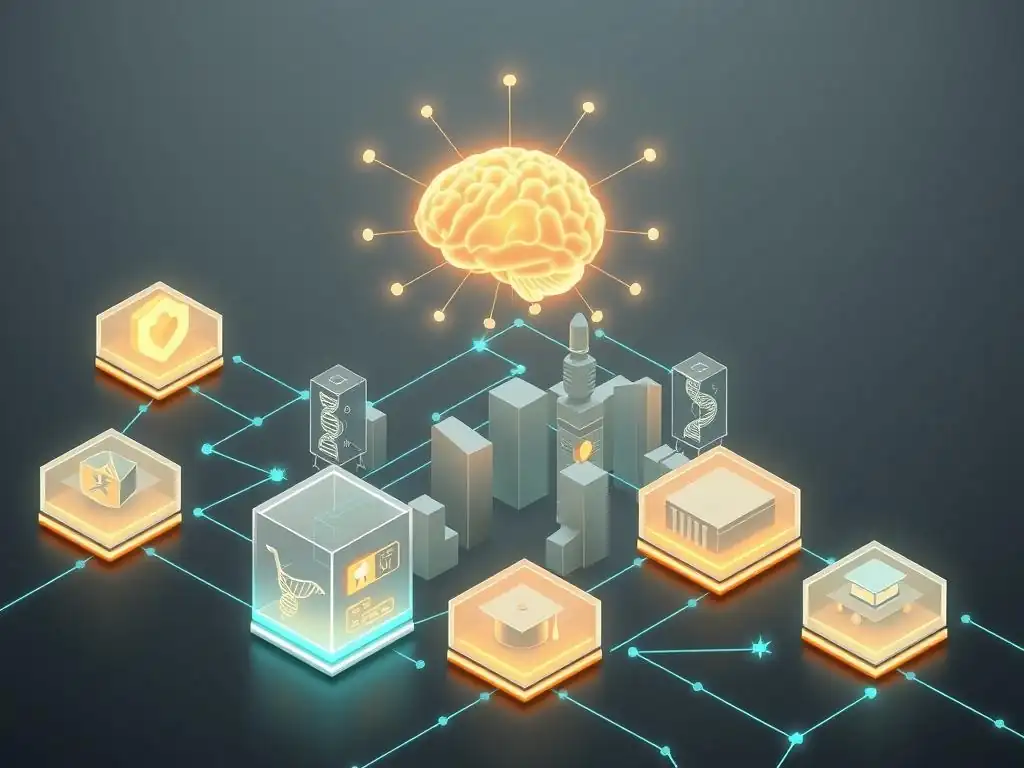
Personalized Smart Contracts in Supply Chain Management: Temperature-Sensitive Goods Tracking
In supply chain management, particularly for temperature-sensitive goods like pharmaceuticals or perishable foods, personalized smart contracts offer a revolutionary approach to ensuring product integrity and compliance. Imagine a pharmaceutical company shipping vaccines that require strict temperature control. A personalized smart contract can be deployed, linked to IoT sensors embedded within the shipping containers. These sensors continuously monitor temperature, humidity, and location throughout the journey. AI algorithms within the smart contract analyze this real-time sensor data against pre-defined temperature ranges specified in the agreement.
If the temperature deviates outside the acceptable range for a specified duration, the AI-driven smart contract can automatically trigger a series of actions. This could include sending immediate alerts to stakeholders – the shipper, receiver, and insurer – notifying them of a potential temperature breach.
The contract could also automatically initiate a quality control inspection upon arrival at the destination, or even trigger a pre-defined insurance claim if the temperature deviation exceeds critical thresholds, indicating potential product spoilage. This level of automated, data-driven monitoring and response, personalized to the specific temperature requirements of the goods, significantly reduces the risk of product damage, ensures regulatory compliance, and streamlines the handling of temperature-related issues in the supply chain, minimizing losses and enhancing efficiency.
AI-Tailored Smart Contracts for Healthcare Data Management: Consent-Based Data Sharing
Healthcare data management presents a complex landscape of privacy regulations and the need for secure, consent-based data sharing. AI-tailored smart contracts offer a powerful solution for managing patient data access and permissions in a personalized and compliant manner. Consider a scenario where a patient wants to share their medical records with a specialist for a second opinion.
Using a personalized smart contract, the patient can define granular consent parameters. They can specify exactly which parts of their medical record are shared, with whom (e.g., a specific doctor or hospital), for what purpose (e.g., consultation for diagnosis), and for how long (e.g., one-time access for 30 days).
AI plays a crucial role in enforcing these personalized consent parameters. When a healthcare provider attempts to access patient data, the AI within the smart contract verifies their credentials and checks against the patient's pre-defined consent rules. Access is only granted if it aligns precisely with the patient's personalized permissions.
Furthermore, AI can audit data access logs, ensuring compliance and detecting any unauthorized access attempts. This system not only empowers patients with greater control over their sensitive health information but also streamlines data sharing for legitimate medical purposes, fostering collaboration among healthcare professionals while maintaining stringent privacy and security standards, aligning with regulations like HIPAA and GDPR.
Customized Smart Contracts in Decentralized Finance (DeFi): Personalized Loan Terms Based on Credit Score
Decentralized Finance (DeFi) aims to democratize financial services, and personalized smart contracts can play a key role in making DeFi more accessible and tailored to individual user profiles. In the context of lending and borrowing platforms in DeFi, customized smart contracts can offer personalized loan terms based on a user's creditworthiness, risk profile, and financial history, moving beyond the standardized, often rigid terms of traditional DeFi protocols. Imagine a DeFi lending platform utilizing AI-powered personalized smart contracts.
When a user applies for a loan, the smart contract can integrate with secure, privacy-preserving decentralized identity and credit scoring services. AI algorithms analyze the user's credit score, borrowing history, and potentially other relevant financial data, all while adhering to privacy regulations and minimizing data exposure.
Based on this AI-driven risk assessment, the smart contract can dynamically adjust loan terms, such as interest rates, collateral requirements, and repayment schedules. Users with higher credit scores and lower risk profiles could be offered more favorable terms, such as lower interest rates and reduced collateral needs, making borrowing more affordable and accessible.
Conversely, users with higher risk profiles might be offered loans with higher interest rates or stricter collateral requirements to mitigate lender risk. This personalized approach to DeFi lending not only allows for more equitable and risk-adjusted lending practices but also expands access to financial services for a wider range of users with diverse financial backgrounds and risk appetites, fostering greater inclusivity and efficiency within the DeFi ecosystem.
Personalization of Smart Contracts in Intellectual Property Rights Management: Usage-Based Licensing Agreements
Intellectual Property (IP) rights management, particularly in digital content and software licensing, can be significantly enhanced through personalized smart contracts. These contracts can facilitate usage-based licensing agreements, where payment and access are dynamically adjusted based on actual usage patterns, offering a more flexible and transparent alternative to traditional fixed-term licenses. Consider a software company licensing its software through personalized smart contracts. Instead of selling perpetual licenses or fixed-term subscriptions, the company can offer usage-based licenses where users pay only for the features they actually use and the duration of their usage.
AI plays a vital role in tracking and verifying software usage. The personalized smart contract can integrate with software usage monitoring tools. AI algorithms analyze usage data – features accessed, duration of use, number of users – and automatically calculate licensing fees based on pre-defined pricing models and usage tiers specified in the smart contract. Payments can be automatically triggered via cryptocurrency transactions when usage thresholds are reached or at pre-defined billing cycles.
This usage-based licensing model, enabled by personalized smart contracts and AI-driven usage tracking, offers numerous benefits. It provides greater flexibility and cost-effectiveness for users, who only pay for what they consume. It also offers software companies a more granular and data-driven approach to licensing and revenue generation, potentially opening up new markets and usage models previously impractical with traditional licensing methods.
Implementing Personalized Smart Contracts: A Technical Overview
Data Integration and AI Model Training for Smart Contract Personalization
Implementing personalized smart contracts requires careful consideration of data integration and AI model training. Personalization hinges on the ability of AI algorithms to analyze relevant data and make informed decisions. Therefore, seamless and secure data integration is paramount.
This involves identifying relevant data sources, such as IoT sensor data, market feeds, user behavior data, or external APIs, and establishing secure channels for data ingestion into the smart contract environment. Data integration must also address data privacy concerns, ensuring compliance with regulations like GDPR and CCPA. Techniques like federated learning, where AI models are trained on decentralized data sources without centralizing sensitive data, can be employed to enhance privacy.
Equally critical is the training of robust and reliable AI models that power the personalization logic within the smart contract. This involves selecting appropriate AI algorithms – machine learning models, deep learning networks, or rule-based expert systems – based on the specific personalization requirements and data characteristics. Training these models requires large, high-quality datasets that accurately represent the target domain and user behaviors.
The training process must be iterative, involving model validation, testing, and fine-tuning to ensure accuracy, fairness, and resilience to adversarial attacks. Furthermore, ongoing monitoring and retraining of AI models are essential to maintain their performance and adapt to evolving data patterns and user preferences over time. Model explainability is also crucial, especially in sensitive applications, to ensure transparency and auditability of AI-driven decisions within the smart contract.
Security Considerations for AI-Enhanced Smart Contracts
While AI enhances the functionality of smart contracts, it also introduces new security considerations that must be carefully addressed. AI models themselves can be vulnerable to adversarial attacks, where malicious actors attempt to manipulate model inputs or training data to compromise their performance or bias their outputs. Robust security measures are needed to protect AI models from such attacks, including input validation, adversarial training techniques, and anomaly detection systems that monitor model behavior for suspicious patterns.
Data security is paramount. Personalized smart contracts often rely on sensitive user data to drive personalization. Robust data encryption, access control mechanisms, and secure multi-party computation techniques are crucial to protect data confidentiality and integrity throughout the data lifecycle – from data collection and storage to processing and usage within the smart contract.
Smart contract code security remains a critical concern. AI-enhanced smart contracts are inherently more complex than traditional contracts, increasing the potential for coding errors and vulnerabilities. Rigorous code auditing, formal verification techniques, and secure development practices are essential to minimize vulnerabilities and ensure the robustness of the smart contract code.
Furthermore, the governance and update mechanisms for AI-enhanced smart contracts require careful design. Mechanisms for securely updating AI models and smart contract logic, while maintaining transparency and immutability of historical contract states, need to be established. Decentralized governance models, leveraging blockchain's inherent security and transparency, can be employed to manage updates and ensure the long-term security and integrity of personalized smart contract systems.
Blockchain Platform Compatibility and Scalability
The successful implementation of personalized smart contracts also hinges on blockchain platform compatibility and scalability. Not all blockchain platforms are equally well-suited for supporting the computational demands of AI integration and the data storage requirements of personalized agreements. Choosing a blockchain platform that offers sufficient computational power, smart contract execution efficiency, and data storage capacity is crucial. Platforms like Ethereum, Polkadot, and newer Layer-2 solutions are actively exploring and enhancing their capabilities to support more complex smart contract functionalities, including AI integration.
Interoperability between blockchain platforms is also increasingly important. Personalized smart contracts may need to interact with data or services residing on different blockchains. Cross-chain communication protocols and interoperability solutions are essential to enable seamless data exchange and cross-platform functionality for personalized smart contract applications.
Scalability is a critical factor, especially for applications that require processing a large volume of personalized smart contracts and transactions. Blockchain platforms need to be able to handle the increased transaction load and computational complexity introduced by AI integration without compromising performance or increasing transaction costs.
Layer-2 scaling solutions, such as state channels, rollups, and sidechains, are actively being developed and deployed to enhance the scalability of blockchain platforms and make them more suitable for large-scale personalized smart contract deployments. Furthermore, research into more efficient consensus mechanisms and blockchain architectures is ongoing, aimed at further improving the scalability and performance of blockchain platforms to meet the growing demands of personalized and AI-driven applications.
Challenges and Future Trends in Blockchain Smart Contracts Personalization
Overcoming Data Privacy Concerns in AI-Driven Smart Contracts
Data privacy is a paramount challenge in the development and deployment of AI-driven personalized smart contracts. AI algorithms thrive on data, and personalization often relies on sensitive user information. Ensuring data privacy while leveraging AI for personalization requires careful consideration of privacy-enhancing technologies and ethical data handling practices.
Differential privacy is a promising technique that adds statistical noise to datasets, allowing AI models to learn useful patterns without revealing individual data points. Homomorphic encryption enables computations to be performed on encrypted data, allowing AI models to process data without decrypting it, preserving data confidentiality. Secure multi-party computation (MPC) allows multiple parties to jointly compute a function on their private inputs without revealing their individual data to each other, facilitating collaborative AI model training and data analysis while maintaining privacy.
Beyond technological solutions, ethical data governance frameworks and user-centric consent mechanisms are crucial. Transparent data policies, clear user consent protocols, and data minimization principles are essential to build user trust and ensure responsible data handling in personalized smart contract systems.
Regulations like GDPR and CCPA provide a legal framework for data privacy, and compliance with these regulations is mandatory for deploying personalized smart contracts that handle personal data. Furthermore, ongoing research and development in privacy-preserving AI and decentralized identity solutions are crucial to address the evolving data privacy challenges and enable the responsible and ethical deployment of AI-driven personalized smart contracts.
Ensuring Transparency and Auditability in Personalized Agreements
Transparency and auditability are fundamental principles of blockchain technology, and they remain crucial in the context of personalized smart contracts, even with the added complexity of AI. While AI algorithms can be complex "black boxes," it is essential to ensure that the decision-making processes within personalized smart contracts are transparent and auditable, especially when these decisions impact contractual obligations and user rights.
Explainable AI (XAI) is a growing field focused on developing AI models that can provide insights into their decision-making processes. Integrating XAI techniques into personalized smart contracts can enhance transparency by providing explanations for AI-driven actions and parameter adjustments, making it easier to understand why a smart contract behaved in a particular way.
Detailed logging of data inputs, AI model parameters, and contract execution steps is essential for auditability. Blockchain's immutable ledger provides a natural platform for storing audit trails of smart contract activities, ensuring that all actions are recorded and verifiable. Independent audits of AI models and smart contract code by third-party experts can further enhance transparency and build trust in the system's integrity.
Furthermore, decentralized governance mechanisms can be employed to oversee the development, deployment, and updates of personalized smart contracts, ensuring community oversight and accountability. Striking a balance between AI's predictive power and the need for transparency and auditability is crucial for the widespread adoption and trust in personalized smart contracts.
The Future of AI and Blockchain Convergence: Towards Autonomous Agreements
The convergence of AI and blockchain is poised to revolutionize the future of agreements, moving towards increasingly autonomous and intelligent contractual systems. Personalized smart contracts are a stepping stone towards this future, paving the way for agreements that can self-adapt, self-optimize, and even self-govern, minimizing human intervention and maximizing efficiency. Imagine a future where smart contracts are not just self-executing but also self-learning and self-improving.
AI-powered smart contracts could continuously learn from past contract executions, market dynamics, and user interactions to refine their logic, optimize performance, and proactively adapt to changing circumstances. This could lead to the evolution of "living contracts" that dynamically evolve and improve over time, becoming more efficient and effective with each iteration.
Furthermore, the convergence of AI and blockchain could lead to the emergence of truly autonomous organizations (DAOs) governed by sophisticated smart contracts. These DAOs could operate with minimal human oversight, relying on AI-driven decision-making and blockchain-based governance mechanisms to manage complex operations, allocate resources, and adapt to changing environments.
The future may see the rise of "AI agents" interacting with blockchain-based smart contracts to negotiate, execute, and manage agreements autonomously, paving the way for a new era of decentralized, intelligent, and self-governing contractual systems. While challenges remain in terms of security, privacy, and ethical considerations, the potential of AI and blockchain convergence to transform the way we create and interact with agreements is immense, promising a future where contracts are smarter, more efficient, and more adaptable than ever before.
Conclusion: Embracing the Potential of Tailored Smart Contracts
The Transformative Impact of AI on Blockchain Technology
The integration of Artificial Intelligence into blockchain technology is proving to be a transformative force, unlocking new levels of functionality and expanding the application scope of blockchain far beyond its initial cryptocurrency focus. AI injects intelligence, adaptability, and dynamic decision-making capabilities into the traditionally rigid framework of blockchain, creating a synergy that is revolutionizing various industries.
From enhancing security and efficiency to enabling new forms of automation and personalization, AI is empowering blockchain to address more complex and nuanced real-world challenges. This convergence is not merely an incremental improvement; it represents a paradigm shift, fundamentally altering the way blockchain technology can be utilized and its potential impact on society.
AI's ability to analyze vast datasets, predict future trends, and automate complex tasks complements blockchain's inherent strengths in security, transparency, and immutability. This powerful combination is fostering innovation across sectors like finance, supply chain management, healthcare, and intellectual property rights, creating new opportunities and efficiencies previously unattainable with either technology in isolation. As AI and blockchain continue to converge and evolve, we can expect to see even more groundbreaking applications emerge, further solidifying their combined transformative impact on the technological landscape and the future of decentralized systems.
Blockchain Smart Contracts Personalization: A Key Driver of Innovation
Blockchain smart contracts personalization stands out as a key driver of innovation within this broader AI and blockchain convergence. By addressing the limitations of traditional, static smart contracts, personalization unlocks the full potential of blockchain for a wider range of use cases and user needs.
The ability to tailor agreements to specific contexts, dynamically adjust parameters based on real-time data, and incorporate intelligent decision-making through AI is making smart contracts more relevant, efficient, and user-centric. This shift towards personalization is not just a technical advancement; it's a fundamental evolution in the way we think about and utilize smart contracts, moving from rigid automation to flexible and intelligent agreements that can adapt to the complexities of the real world.
Blockchain smart contracts personalization is paving the way for more sophisticated and adaptable applications across industries, from personalized financial services in DeFi to dynamic supply chain management and consent-driven healthcare data sharing. As the technology matures and adoption increases, personalized smart contracts are poised to become a cornerstone of the decentralized future, driving innovation and unlocking new possibilities for how we interact, transact, and build trust in the digital age.
Embracing the potential of tailored smart contracts is crucial for harnessing the full power of blockchain and AI synergy and realizing the vision of a more efficient, transparent, and user-centric digital economy.
Frequently Asked Questions
What are personalized smart contracts, and how do they differ from traditional smart contracts?
Personalized smart contracts use AI-driven insights to tailor agreement terms and conditions dynamically. Unlike traditional smart contracts, which are rigid and pre-defined, personalized contracts can adapt to individual user needs and contexts. This allows for more flexible and relevant agreements.
How does AI contribute to the personalization of smart contracts?
AI algorithms analyze data to understand user preferences, risk profiles, and contextual factors. This information is then used to dynamically adjust the parameters of the smart contract. AI assists with optimizing terms and creating a more bespoke experience.
What are some potential use cases for personalized smart contracts beyond simple financial transactions?
Personalized smart contracts can be applied to various areas, including personalized insurance policies that adjust coverage based on real-time risk assessments. They can also enable dynamic supply chain management, and facilitate personalized healthcare agreements.
What are the regulatory considerations surrounding the use of AI in personalized smart contracts?
Regulatory bodies are still grappling with the implications of AI in blockchain. Key concerns include data privacy, algorithm bias, and ensuring transparency and accountability in automated decision-making. Clear regulatory frameworks are needed.
What are the key challenges to overcome for widespread adoption of personalized smart contracts?
Challenges include the complexity of integrating AI with blockchain, ensuring data security and privacy, and building user trust in AI-driven agreements. Overcoming these challenges is essential for realizing the full potential of personalized smart contracts.
Final Reflection: Embracing the Personalized Blockchain Future
The exploration of personalized smart contracts, driven by AI insights, reveals a potent force reshaping the landscape of blockchain technology. The ability to dynamically tailor agreements to individual needs and circumstances represents a paradigm shift, moving beyond rigid, one-size-fits-all contracts to a more nuanced and responsive system. This shift is not just a technological advancement; it's a move towards greater inclusivity and efficiency in how we conduct business and build trust in the digital age.
The ongoing influence of personalized smart contracts is already palpable, promising to unlock new levels of customization and automation across various sectors. Witnessing this evolution firsthand underscores the profound impact that technology can have on simplifying complex interactions and fostering stronger, more personalized relationships. The future of law is not just about enforcing rules, but about creating systems that anticipate needs and adapt to individual circumstances.
This quote encapsulates the essence of what personalized smart contracts strive to achieve – a future where agreements are not just legally binding, but also intelligently tailored to the unique context of each participant.
As we stand on the cusp of this personalized blockchain future, I invite you to reflect on the potential of this technology to transform your own interactions and agreements. Consider how AI-driven insights can empower you to create smarter, more responsive contracts that truly reflect your individual needs and values. Embrace the opportunity to be a part of this evolution, and together, let's build a future where blockchain technology serves as a catalyst for greater personalization, efficiency, and trust in all aspects of our lives.
Okay, I'm ready to craft a Call to Action (CTA) for the end of a web article titled "Personalized Smart Contracts: Tailoring Agreements with AIDriven Insights" for the website "Blockchain Trends" (blockchaintrends.org). Here it is:
Unlock Your Smart Contract Potential Now!
Thank you for diving into the world of personalized smart contracts! We hope you've gained valuable insights into how AI can revolutionize your agreement processes. Now, let's put that knowledge into action and start building a smarter future, together.
Here's how you can get started:
- Begin brainstorming: How can you immediately apply AI-driven insights to personalize your next smart contract?: This is your first step toward revolutionizing your agreements!
- Explore similar applications:Delve into Blockchain Trends' archive for more articles on cutting-edge applications of AI in blockchain.
- Share this article: Discuss the possibilities! Share this article with your network on social media and start a conversation on the future of smart contracts.
Ready to start building smarter, more personalized smart contracts today? What innovative personalization feature will you integrate first?
Leave a Reply