
Will DEXs Eventually Replace Centralized Exchanges? A LongTerm Outlook


Welcome to Blockchain Trends, your compass in the rapidly evolving world of decentralized technology!
Dive into the transformative potential of blockchain beyond cryptocurrencies. But what does the future hold for decentralized exchanges? Are they poised to eclipse their centralized counterparts? Explore our in-depth analysis of the " Decentralized Exchanges Future Outlook" and uncover the trends shaping the future of DeFi and decentralized systems. The answers might surprise you...
- The Future of Crypto Trading: Decentralized vs. Centralized
-
Frequently Asked Questions
- What are the main advantages of using decentralized exchanges (DEXs) over centralized exchanges (CEXs)?
- What are some potential roadblocks hindering the widespread adoption of DEXs?
- How is regulation impacting the future outlook of decentralized exchanges?
- What role will Layer-2 scaling solutions play in the future of DEXs?
- How might the rise of institutional investors affect the adoption and development of DEXs?
- Final Reflection: Embracing the Decentralized Dawn
- Embrace the Decentralized Future: Begin Your Journey Now!
The Future of Crypto Trading: Decentralized vs. Centralized
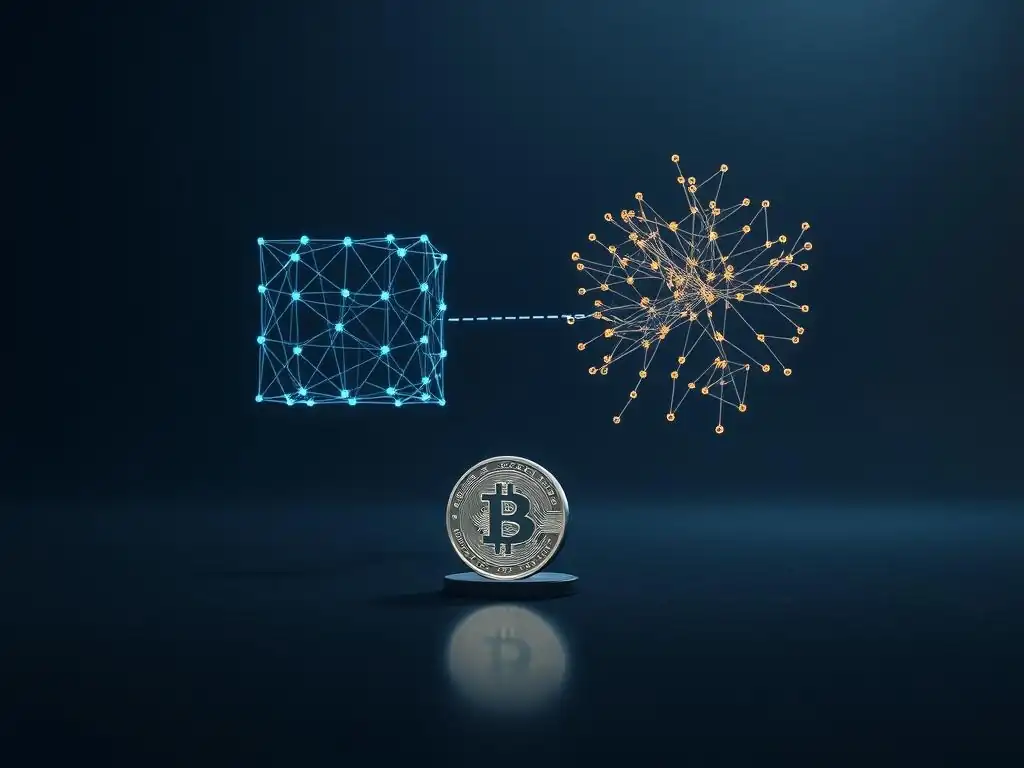
Predictions for the Crypto Exchange Market in the Next Decade
Over the next decade, the landscape of cryptocurrency exchanges is expected to undergo significant transformation, driven by evolving user preferences, technological advancements, and regulatory clarity. While centralized exchanges (CEXs) currently dominate trading volume, particularly in spot and derivatives markets, projections suggest a gradual shift in market share.
Many analysts anticipate that decentralized exchanges (DEXs) will capture a larger percentage of spot trading volume, potentially increasing their share from current levels (often cited around 10-20% of total spot volume) to perhaps 30-40% or even higher in specific market segments within the next five to ten years. This growth is likely to be fueled by increasing demand for self-custody, privacy, and access to a wider array of long-tail assets often listed on DEXs before CEXs.
The decentralized exchanges future outlook is also heavily influenced by the maturation of DeFi protocols. As more sophisticated financial instruments and services emerge on-chain, the need for decentralized trading venues that can seamlessly interact with these protocols will grow.
While CEXs may retain dominance for institutional trading, fiat-to-crypto on-ramps, and high-frequency trading requiring deep liquidity and advanced order book features, the retail and crypto-native user base may increasingly gravitate towards DEXs for core trading activities. The competitive pressure from DEXs is also likely to push CEXs to innovate, potentially leading to hybrid models or enhanced transparency measures, further blurring the lines between the two types of platforms.
The Impact of Web3 on the Evolution of Exchanges
Web3 principles are fundamentally shaping the evolution of exchanges, emphasizing decentralization, user ownership, and censorship resistance – core tenets that align perfectly with the decentralized exchanges future outlook. In a Web3 world, users are expected to have full control over their digital assets, a stark contrast to the custodial model of CEXs where users deposit funds onto the exchange's wallet.
DEXs, built on smart contracts on public blockchains, embody this principle by allowing users to trade directly from their non-custodial wallets, eliminating the need to trust a third party with their private keys. This shift towards self-custody is a major driver for DEX adoption among those who prioritize sovereignty over their assets.
Furthermore, Web3 promotes composability and interoperability between different protocols. DEXs are inherently designed to be composable, seamlessly integrating with other DeFi applications like lending protocols, yield farms, and insurance platforms. This allows users to perform complex financial operations – such as swapping tokens received from a loan or instantly trading assets earned from staking – without ever leaving the decentralized ecosystem.
CEXs, while adding DeFi features, often do so within their centralized infrastructure, limiting the true composability and open access that Web3 promises. The long-term view on decentralized trading is that it will become the default method for interacting with the broader Web3 financial landscape.
Decentralized Finance Future: The Role of DEXs in a DeFi-Centric World
The decentralized finance future is inextricably linked to the success and continued development of decentralized exchanges. DEXs serve as the primary liquidity layer and price discovery mechanism for the vast majority of tokens within the DeFi ecosystem. Protocols like Uniswap, Curve, and PancakeSwap facilitate billions of dollars in daily volume, enabling users to swap tokens, provide liquidity, and participate in governance. Without robust and efficient DEXs, the flow of capital and assets necessary for lending, borrowing, staking, and other DeFi activities would be severely hindered.
As DeFi matures and attracts a wider user base, the demand for user-friendly, secure, and scalable DEXs will only increase. Innovations in Layer-2 scaling solutions (like Optimistic Rollups and ZK-Rollups) and cross-chain interoperability protocols are directly addressing some of the historical limitations of DEXs, such as high transaction costs and limited cross-chain trading capabilities.
These technological advancements are crucial for realizing the full potential of DeFi and solidifying the position of DEXs as foundational infrastructure. The decentralized exchanges future outlook is therefore not just about trading, but about enabling a truly open, permissionless, and interconnected global financial system built on blockchain technology.
Frequently Asked Questions
What are the main advantages of using decentralized exchanges (DEXs) over centralized exchanges (CEXs)?
DEXs offer greater privacy and custodial control over your funds, eliminating the need to trust a third party. They also typically feature lower fees and increased accessibility to a wider range of tokens.
What are some potential roadblocks hindering the widespread adoption of DEXs?
DEXs can be more complex to use than CEXs, and gas fees on some blockchains can be prohibitively expensive, especially during periods of high network congestion. Liquidity fragmentation across different DEXs also presents a challenge.
How is regulation impacting the future outlook of decentralized exchanges?
Regulatory uncertainty surrounding DEXs is a major concern. Governments are grappling with how to regulate decentralized platforms while balancing innovation. Compliance challenges and potential crackdowns could significantly impact DEX growth.
What role will Layer-2 scaling solutions play in the future of DEXs?
Layer-2 solutions are crucial for improving the scalability and affordability of DEXs. They reduce transaction costs and increase transaction speeds, making DEXs more competitive with CEXs.
How might the rise of institutional investors affect the adoption and development of DEXs?
Institutional interest in DeFi is growing, but regulatory hurdles and lack of institutional-grade infrastructure currently limit their participation. As these barriers are overcome, institutions could drive significant growth and innovation in the DEX space, demanding robust security and compliance features.
Final Reflection: Embracing the Decentralized Dawn
The exploration of whether Decentralized Exchanges (DEXs) will eventually replace Centralized Exchanges (CEXs) reveals a critical juncture in the evolution of finance. The promise of a truly decentralized future, free from centralized control and opaque practices, is more relevant than ever in a world increasingly wary of institutional power. The potential for greater transparency, security, and user autonomy offered by DEXs presents a compelling alternative to the established order.
The rise of DEXs is not merely a technological shift; it represents a fundamental reimagining of financial power structures. This evolution resonates deeply with the desire for greater individual control and financial sovereignty, a sentiment that has fueled the crypto movement from its inception. The future of finance is decentralized, and it's being built one block at a time.
This quote encapsulates the relentless progress and unwavering belief in the transformative potential of decentralized technologies to reshape our financial landscape.
As we stand on the cusp of this decentralized dawn, let us consider the role we each play in shaping its trajectory. Will you embrace the principles of transparency and self-custody that DEXs champion? Will you contribute to the development and adoption of these innovative platforms? The future of finance is not predetermined; it is being actively created. Let us strive to build a future where financial power is distributed, accessible, and truly serves the needs of all.
Embrace the Decentralized Future: Begin Your Journey Now!
Thank you for exploring the potential of decentralized exchanges with us! We hope this article has provided you with a clear understanding of how cryptocurrency trading is evolving. Now, it’s time to take action.
Here are a few ways you can deepen your knowledge of DEXs:
- Start small: Try executing a modest trade on a reputable decentralized exchange to experience the process firsthand. This will help you grasp the mechanics and potential advantages.
- Investigate the governance tokens of various DEXs. Understanding how governance works can enable you to participate in shaping the future of decentralized trading.
- Share your thoughts! Join discussions on your favorite crypto forums or social media platforms and share your predictions for the future of DEXs with the hashtag #DEXRevolution.
What innovative features of DEXs are you most excited to see develop in the coming years? Share your thoughts in the comments below!
Leave a Reply