
Demystifying Smart Contract Use Cases: RealWorld Applications Explained


Welcome to Blockchain Trends, your guide to navigating the evolving landscape of blockchain technology. Beyond the hype of cryptocurrencies, we delve into the real, transformative power of this technology. Are you ready to see how blockchain is revolutionizing industries? This week, we're demystifying the game-changing potential of smart contract realworld applications. Discover how these self-executing agreements are streamlining processes and creating new opportunities, and explore the vast implications for businesses and beyond. Intrigued? Let's unlock the future, one smart contract at a time!
Smart Contract Applications Across Industries
- Introduction: Understanding the Potential of Smart Contracts
- Industry-Specific Smart Contract Applications
- Detailed Exploration of Smart Contract Use Cases
- Challenges and Future Trends in Smart Contract Adoption
- Conclusion: The Transformative Power of Smart Contracts
-
Frequently Asked Questions
- What are some real-world applications of smart contracts beyond cryptocurrencies?
- How do smart contracts improve supply chain transparency and efficiency?
- What role do smart contracts play in Decentralized Finance (DeFi)?
- What are the regulatory challenges associated with smart contract deployment?
- How are smart contracts being used to manage and secure healthcare data?
- Final Reflection: Embracing the Smart Contract Revolution
- Ignite Your Smart Contract Journey!
Introduction: Understanding the Potential of Smart Contracts
Defining Smart Contracts and Their Significance
Smart contracts are self-executing contracts with the terms of the agreement directly written into lines of code. This code exists across a distributed, decentralized blockchain network. The code controls the execution, and transactions are trackable and irreversible. Unlike traditional contracts that rely on legal frameworks and intermediaries for enforcement, smart contracts automate the execution of terms when predefined conditions are met. This foundational characteristic makes them powerful tools for disintermediation, reducing costs, and increasing efficiency and transparency in various processes.
Their significance lies in their ability to remove the need for trusted third parties in many transactions and agreements. By embedding logic directly into the contract code, the execution is guaranteed to follow the programmed rules, eliminating risks associated with human error, interpretation, or deliberate manipulation. This trustless execution environment is a cornerstone of blockchain technology, enabling a new paradigm for agreements and processes across numerous sectors. The concept extends far beyond simple transfers of value, unlocking diverse smart contract realworld applications.
The Evolution of Smart Contracts: From Concept to Implementation
The concept of smart contracts was first proposed by cryptographer Nick Szabo in 1994, long before the advent of Bitcoin. Szabo envisioned digital contracts that could be enforced automatically by computer protocols, aiming to improve the efficiency and security of electronic commerce. At the time, the necessary infrastructure for widespread implementation, particularly a secure, decentralized ledger, did not exist. These early ideas remained theoretical until the emergence of blockchain technology.
The launch of Ethereum in 2015 marked a pivotal moment in the evolution of smart contracts. Ethereum's blockchain was designed with a built-in Turing-complete programming language (Solidity, Vyper, etc.) specifically to allow developers to write and deploy complex smart contracts. This capability moved smart contracts from a theoretical concept to a practical reality, enabling developers to build decentralized applications (dApps) and protocols that leverage the power of automated, trustless agreements, paving the way for countless smart contract realworld applications.
Smart Contracts and Blockchain: A Symbiotic Relationship
Smart contracts and blockchain technology share a deeply symbiotic relationship; one enables the other's full potential. A blockchain provides the secure, immutable, and decentralized infrastructure necessary for smart contracts to operate reliably. Once a smart contract is deployed to a blockchain, its code and state are distributed across thousands of nodes, making it highly resistant to tampering and censorship. The blockchain acts as the execution environment, ensuring that the contract runs exactly as coded when triggered by appropriate inputs or events, often delivered via oracles.
Conversely, smart contracts significantly enhance the functionality and utility of blockchain networks beyond simple cryptocurrency transactions. They transform a distributed ledger into a programmable platform capable of automating complex logic and processes. This programmability is what drives the innovation in areas like Decentralized Finance (DeFi), supply chain management, digital identity, and many other sectors, demonstrating the vast potential for smart contract realworld applications. Without smart contracts, blockchain would largely remain a database technology; with them, it becomes a distributed computing platform.
Industry-Specific Smart Contract Applications
Optimizing Supply Chain Management with Smart Contracts
Enhancing Supply Chain Visibility and Traceability
Supply chain management is an area ripe for disruption by smart contracts. Traditional supply chains often suffer from a lack of transparency, making it difficult to track goods accurately from origin to destination. Smart contracts, integrated with blockchain and IoT devices, can create an immutable record of every step a product takes. For instance, a sensor on a shipment of perishable goods could trigger an update on the blockchain when temperature thresholds are breached, and a smart contract linked to this data could automatically notify parties or even trigger an insurance claim.
By recording each transaction, transfer of ownership, and logistical event on a shared, permissioned ledger accessible to relevant parties, smart contracts provide unprecedented visibility. Participants can verify the authenticity and provenance of goods, track their location in near real-time, and monitor conditions like temperature or humidity. This enhanced traceability is crucial for quality control, compliance, and combating fraud. These are practical smart contract realworld applications that build trust and efficiency throughout complex logistical networks.
Minimizing Counterfeit Goods and Fraud Through Automation
Counterfeiting and fraud represent significant challenges and financial losses across many industries, from luxury goods to pharmaceuticals. Smart contracts offer a powerful mechanism to combat this. By assigning unique digital identities (often via tokens) to physical products and linking them to a blockchain record managed by smart contracts, the entire lifecycle of a product can be verified. When a product is manufactured, a unique ID is created and linked to its details on the blockchain. As it moves through the supply chain, each legitimate handler interacts with the smart contract to update its status, creating an auditable history.
Consumers or retailers can scan a QR code or NFC tag on the product to verify its authenticity by checking its history against the blockchain record. A smart contract can be programmed to reject updates from unauthorized entities or flag suspicious activity, such as a single item appearing in multiple locations simultaneously. This automated verification process, powered by smart contracts, drastically reduces the opportunity for counterfeit goods to enter the legitimate supply chain, showcasing compelling smart contract realworld applications for brand protection and consumer safety.
Maersk and IBM's TradeLens: A Supply Chain Example
A prominent example of blockchain and potential smart contract use in supply chain is TradeLens, a platform jointly developed by Maersk and IBM. While the platform primarily focuses on creating a shared, immutable record of shipping transactions, the underlying architecture and potential for automation highlight the direction supply chain is heading. The vision involves digitizing complex processes involving multiple parties – shippers, ports, customs, carriers, etc. – and automating workflows based on verified data.
Imagine a scenario where a smart contract automatically releases a container holds once customs clearance data is confirmed on the ledger, or triggers a payment upon verified delivery at the destination port. While TradeLens's current implementation might rely more on shared data visibility than fully automated smart contract execution for all steps, the platform demonstrates the value proposition: reducing paperwork, speeding up transit times, and lowering costs by creating a single source of truth and automating processes based on trusted data inputs. This initiative provides a concrete look at how smart contract realworld applications can transform global logistics.
Improving Healthcare with Smart Contract Technology
Secure Management of Patient Records Using Blockchain-Based Smart Contracts
Managing patient health records securely and efficiently is a critical challenge in healthcare. Data silos, privacy concerns (like HIPAA in the US), and the difficulty of sharing information between different providers hinder effective care. Blockchain technology, combined with smart contracts, offers a potential solution. Patient data itself wouldn't typically be stored on the public blockchain due to privacy and storage limitations. Instead, a smart contract could manage access permissions to encrypted records stored off-chain or on a private/permissioned blockchain.
A smart contract could allow patients to grant granular access to their medical history to specific doctors, specialists, or researchers for a defined period. The contract would automatically enforce these permissions, logging every access attempt immutably on the blockchain. This gives patients greater control over their data while enabling authorized healthcare professionals to access necessary information quickly and securely, improving diagnosis and treatment coordination. These are vital smart contract realworld applications addressing fundamental healthcare data challenges.
Automated Insurance Claim Processing for Efficiency
Processing healthcare insurance claims is notoriously complex, slow, and prone to errors and fraud. Smart contracts can significantly automate and streamline this process. When a medical service is rendered, the relevant data (verified by the healthcare provider) can be recorded on a blockchain. A smart contract, pre-programmed with policy terms, deductibles, co-pays, and coverage rules, can automatically evaluate the claim against the policy and the recorded service data.
If the conditions for payment are met – for example, the service code is covered, the deductible has been met, and the patient's eligibility is confirmed – the smart contract can automatically initiate a payment to the healthcare provider or reimburse the patient. This reduces manual processing, minimizes disputes based on policy interpretation (as the rules are coded), and speeds up payouts. Automated claims processing is a powerful example of smart contract realworld applications bringing efficiency to administrative healthcare tasks.
Streamlining Clinical Trials for Improved Transparency
Clinical trials are essential for developing new treatments but are often criticized for a lack of transparency, data integrity issues, and high costs. Smart contracts can enhance the integrity and efficiency of clinical trials. Data points from patient consent, treatment administration, and outcome measurements can be recorded on a blockchain, linked to smart contracts that enforce trial protocols. For instance, a smart contract could ensure that patient data is recorded only after explicit digital consent is obtained and verified.
Furthermore, smart contracts can automate payments to participants or researchers based on verified milestones being reached within the trial. The immutable nature of the blockchain ensures that trial data, once recorded, cannot be altered, enhancing the credibility of the results. By providing a transparent, auditable, and automated framework for managing trial processes and data, smart contracts can help streamline research, reduce costs, and accelerate the development of new therapies. These represent impactful smart contract realworld applications in the medical research field.
Transforming Real Estate with Smart Contracts
Automating Property Transactions and Escrow
Real estate transactions are characterized by complex processes, extensive paperwork, and reliance on multiple intermediaries like lawyers, escrow agents, and title companies. Smart contracts have the potential to automate significant portions of this process. A smart contract could hold the digital representation of funds (cryptocurrency or tokenized fiat) in escrow. When all predefined conditions are met – such as verified transfer of property title (represented digitally on a blockchain or linked via oracles to traditional records) and completion of inspections – the smart contract automatically releases the funds to the seller and transfers the digital title to the buyer.
This automation streamlines the process, reduces the time required to close a deal, and lowers the risk of funds being mishandled. The terms are transparently coded and executed only when conditions are verified, providing a trustless escrow mechanism. Automating this critical part of the real estate transaction is a compelling demonstration of smart contract realworld applications.
Reducing Intermediaries in Real Estate Deals
The traditional real estate process involves numerous parties, each adding costs and potential points of failure. Smart contracts can directly connect buyers and sellers, potentially reducing or eliminating the need for some intermediaries. While lawyers and agents still play crucial roles in negotiation, due diligence, and legal compliance (which may not be fully automatable or legally recognized everywhere yet), smart contracts can handle the transactional and escrow aspects automatically.
By automating the transfer of value and digital property rights based on verified conditions, smart contracts cut down on administrative overhead and fees associated with traditional escrow services. This disintermediation makes transactions faster and potentially less expensive. The ability to bypass traditional gatekeepers for the core execution of the agreement highlights the transformative potential of smart contract realworld applications in real estate.
Tokenizing Real Estate Assets for Fractional Ownership
One of the most innovative smart contract realworld applications in real estate is asset tokenization. Smart contracts can be used to create digital tokens on a blockchain, where each token represents a fractional ownership share in a property. This lowers the barrier to entry for real estate investment, allowing individuals to invest smaller amounts in high-value properties that would otherwise be inaccessible.
Smart contracts manage the rules around these tokens: how they are issued, how ownership is transferred, how rental income is distributed among token holders, and how voting rights (if applicable) are managed. This creates liquidity for previously illiquid assets and enables global participation in real estate markets. The smart contract ensures that the distribution of income or sale proceeds is automated and transparently distributed based on token ownership percentages recorded on the blockchain.
Smart Contracts in Decentralized Finance (DeFi): Expanding Access
Automating Lending and Borrowing Platforms
Decentralized Finance (DeFi) is perhaps the most mature ecosystem for smart contract realworld applications. A core component of DeFi is automated lending and borrowing. Platforms like Aave or Compound use smart contracts to pool assets supplied by lenders and allow borrowers to take out loans against collateral, typically other cryptocurrencies.
The smart contract code defines the terms: interest rates (often determined algorithmically based on supply and demand), collateralization ratios, and liquidation rules. If the value of a borrower's collateral falls below a certain threshold relative to the loan amount, the smart contract automatically liquidates the collateral to repay the loan, all without any human intervention or traditional financial institution. This automation provides efficiency, transparency, and 24/7 access to financial services.
Enabling Decentralized Exchanges (DEXs)
Decentralized Exchanges (DEXs) allow users to trade cryptocurrencies directly with each other without requiring a central intermediary to hold funds or manage the order book. This is made possible by smart contracts. Automated Market Maker (AMM) DEXs like Uniswap or PancakeSwap use smart contracts to manage liquidity pools and execute trades based on predefined algorithms.
When a user wants to trade one token for another, they interact with a smart contract that draws liquidity from a pool of tokens supplied by other users. The smart contract calculates the exchange rate based on the ratio of tokens in the pool and executes the swap automatically. This enables peer-to-peer trading directly from users' wallets, reducing counterparty risk and censorship resistance, demonstrating key smart contract realworld applications in financial markets.
Facilitating Yield Farming and Staking
Yield farming and staking are popular DeFi strategies that leverage smart contracts to allow users to earn passive income on their cryptocurrency holdings. Staking involves locking up cryptocurrency in a wallet to support the operations of a proof-of-stake blockchain network. Smart contracts manage the staking process, distributing rewards automatically to participants based on their staked amount and the network's rules.
Yield farming involves depositing crypto assets into liquidity pools or lending protocols managed by smart contracts to earn fees or governance tokens. Smart contracts automate the distribution of these rewards based on the amount of liquidity provided. These complex financial strategies, entirely governed by code, highlight the power of smart contracts to create new economic models and opportunities within the decentralized ecosystem, representing advanced smart contract realworld applications.
Enhancing Digital Identity Management with Smart Contracts
Creating Self-Sovereign Identity Solutions
Traditional digital identity relies on centralized authorities or service providers (governments, social media companies) to store and manage user data. This creates privacy risks and makes it difficult for individuals to control their own information. Smart contracts are foundational to building self-sovereign identity (SSI) systems, where individuals own and manage their digital identities.
In an SSI model, users store their verifiable credentials (e.g., proof of age, educational degrees, professional licenses) in a secure digital wallet. Smart contracts on a blockchain can be used to anchor cryptographic proofs of these credentials, allowing third parties to verify their authenticity without the user having to reveal the underlying sensitive data. The smart contract acts as a verifiable registry of trust anchors or public keys associated with the issuer of the credential.
Streamlining KYC and AML Compliance
Know Your Customer (KYC) and Anti-Money Laundering (AML) regulations are essential for preventing financial crime but are often cumbersome and repetitive for both businesses and users. Smart contracts can help streamline this process by enabling the creation and verification of reusable digital identities. Once a user's identity has been verified by a trusted entity (e.g., a regulated identity provider), a verifiable credential can be issued and linked to the user's decentralized identity via a smart contract.
Subsequent services requiring KYC can request proof of specific attributes (e.g., "Is this user over 18?" or "Is this user a resident of Country X?") without needing to re-collect and store sensitive documents. The smart contract facilitates the secure sharing of verifiable claims, reducing the burden on users and businesses while maintaining regulatory compliance. These are crucial smart contract realworld applications for regulated industries.
Using Smart Contracts for Secure Online Voting
While large-scale governmental elections using smart contracts face significant challenges, online voting within organizations, shareholder meetings, or smaller communities is a potential smart contract realworld application. Smart contracts can manage the entire voting process: registering eligible voters (via linked digital identities), accepting votes securely, tallying results transparently, and ensuring that each eligible participant votes only once.
The smart contract code, visible to all participants, defines the voting rules, eligibility criteria, and counting mechanism. Once a vote is cast, it is recorded immutably on the blockchain via the smart contract. This provides a transparent, auditable, and tamper-proof voting record. While challenges remain regarding voter anonymity and coercion in public settings, smart contracts offer a promising technical foundation for secure and verifiable digital elections in controlled environments.
Detailed Exploration of Smart Contract Use Cases
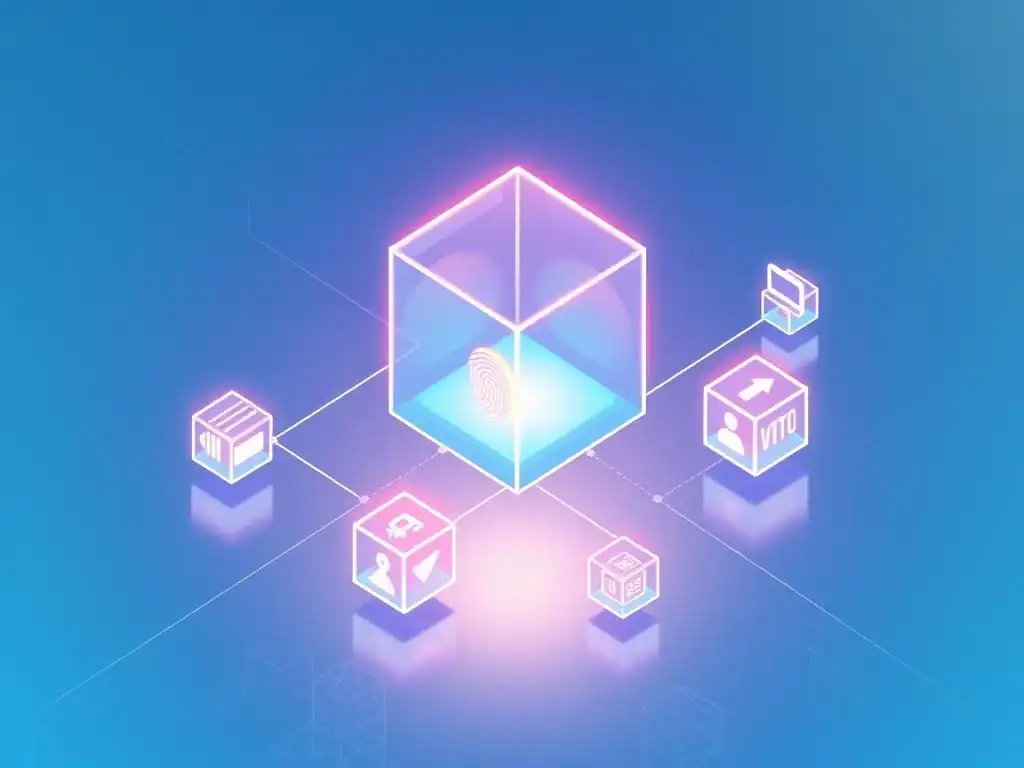
Smart Contracts in Elections and Voting
Ensuring Secure and Transparent Elections
The integrity of elections is paramount to democratic processes. Smart contracts offer a compelling technical framework for enhancing election security and transparency, though significant non-technical hurdles exist for widespread adoption. A smart contract can be programmed to manage the entire lifecycle of an election: defining the candidates, specifying the voting period, registering eligible voters (perhaps linked to a verified digital identity system), receiving encrypted votes, and finally, tallying the results according to predefined rules.
Once deployed, the smart contract code is immutable and publicly verifiable, allowing anyone to audit the rules of the election. Votes, once cast and recorded on the blockchain (often in an encrypted form to protect voter privacy), cannot be altered or removed. The smart contract's automated tallying function ensures that results are calculated exactly as specified, removing potential for human error or manipulation during the counting phase. This provides a level of auditability and transparency difficult to achieve with traditional systems, demonstrating powerful potential smart contract realworld applications.
Preventing Voter Fraud and Manipulation
Smart contracts can implement mechanisms designed to prevent various forms of voter fraud. By linking votes to verified, unique digital identities managed through the blockchain, the smart contract can enforce the "one person, one vote" principle, preventing individuals from voting multiple times. The immutable ledger also prevents tampering with individual votes or the overall tally after they have been recorded. Any attempt to submit an invalid vote or alter existing data would be rejected by the network according to the smart contract's rules.
Furthermore, the transparency of the smart contract code and the public nature of the blockchain record (while maintaining voter anonymity) allow for independent verification of the election process and results by auditors or the public. This inherent auditability makes it significantly harder to manipulate election outcomes undetected. While issues like ensuring voter anonymity while preventing coercion remain complex challenges for smart contract realworld applications in public elections, the technology offers robust tools against technical fraud.
Challenges and Limitations of Smart Contract-Based Elections
Despite the technical potential, implementing smart contract-based elections faces significant challenges, particularly for large-scale public polls. A major hurdle is identity verification: securely linking a real-world citizen's identity to a digital one on the blockchain while preserving anonymity and preventing coercion is complex. Ensuring universal access to the technology is another issue; not everyone has the necessary devices or digital literacy.
Security risks, though different from traditional systems, are also present. A bug in the smart contract code could compromise the entire election, and fixing it after deployment can be difficult or impossible. Furthermore, while the blockchain prevents tampering after data is recorded, ensuring the integrity of data input (e.g., verifying the voter's identity at the point of casting a vote) still requires trusted mechanisms. These limitations mean that while promising for certain contexts like shareholder voting or internal organizational polls, widespread government adoption of smart contract realworld applications for elections is likely still years away.
Smart Contracts in Intellectual Property (IP) Management
Protecting Copyrights and Trademarks with Blockchain
Intellectual property, such as copyrights, trademarks, and patents, is challenging to manage and protect in the digital age. Smart contracts, combined with blockchain technology, can offer a new approach to registering, verifying, and enforcing IP rights. Creators can timestamp and register their original works on a blockchain, creating an immutable and publicly verifiable proof of existence and ownership at a specific point in time. This record can serve as strong evidence in copyright disputes.
Smart contracts can also manage the licensing of IP. A smart contract could contain the terms of an IP license – defining usage rights, duration, and payment terms. When a licensee agrees to the terms, the smart contract automatically grants access to the digital asset (or verifies permission) upon payment, ensuring compliance with the license agreement. This creates a transparent and automated system for managing IP ownership and usage rights, representing valuable smart contract realworld applications.
Automating Royalty Payments and Licensing
One of the most practical smart contract realworld applications for IP management is the automation of royalty payments. Artists, musicians, writers, and other creators often rely on complex systems involving multiple intermediaries (publishers, collection societies, distributors) to collect and distribute royalties. This process can be slow, opaque, and prone to errors.
Smart contracts can automate the distribution of royalties based on predefined rules and verified usage data. For example, a smart contract could be linked to streaming platforms or digital marketplaces. When a piece of content (like a song or digital artwork) is used or sold, the smart contract receives notification and automatically splits the revenue among all rights holders (e.g., the artist, songwriter, producer, label) according to pre-agreed percentages coded into the contract. This ensures timely, accurate, and transparent payment distribution.
A Platform for Artists to Manage Digital Rights
Several platforms are emerging that leverage smart contracts to empower artists and creators to manage their digital rights directly. These platforms allow artists to tokenize their work, creating unique digital assets (Non-Fungible Tokens or NFTs) that represent ownership or a share of ownership. Smart contracts govern the rules around these tokens – including how they can be traded, resold, and how creators receive a percentage of future sales in perpetuity (creator royalties).
These smart contracts automatically execute the terms of sale and resale, ensuring that artists receive their agreed-upon share each time the token changes hands on the blockchain. This cuts out traditional intermediaries, giving artists more control over their distribution and revenue streams. Such platforms are powerful examples of smart contract realworld applications creating new economic models for digital content creation and ownership.
Smart Contracts in Energy and Sustainability
Enabling Peer-to-Peer Energy Trading
Smart contracts are enabling revolutionary changes in the energy sector, particularly in facilitating peer-to-peer (P2P) energy trading. In microgrid environments or neighborhoods with distributed renewable energy sources (like rooftop solar panels), homeowners can generate surplus energy. Smart contracts can automate the process of selling this excess energy directly to neighbors or other consumers within the microgrid, bypassing traditional utility intermediaries for these specific transactions.
A smart contract can be configured to automatically execute a trade when a seller has surplus energy (verified by a smart meter reading relayed via an oracle) and a buyer needs energy, based on pre-agreed prices or real-time market dynamics. The smart contract handles the energy transfer recording and the corresponding payment settlement automatically on the blockchain. This creates a decentralized energy market, empowering prosumers and potentially leading to more efficient local energy distribution. These are exciting smart contract realworld applications for the future of energy grids.
Tracking Carbon Credits and Environmental Impact
Tracking and trading carbon credits and other environmental assets is another significant area for smart contract realworld applications. Smart contracts can be used to create and manage tokenized carbon credits on a blockchain. Each token could represent a verified unit of carbon reduction or removal. Smart contracts ensure that these tokens are issued only upon verified achievement of environmental milestones and that they can only be retired (taken out of circulation) once used to offset emissions, preventing double-counting.
Furthermore, smart contracts can automate the trading of these carbon credits between companies or individuals. The contract ensures that the exchange of tokens happens simultaneously with the exchange of value. Beyond carbon credits, smart contracts can potentially be used to track and verify other environmental metrics and incentivize sustainable behavior through automated reward systems based on verified actions recorded on the blockchain.
Smart Contracts for Renewable Energy Microgrids
Smart contracts are integral to the operation of decentralized renewable energy microgrids. Beyond P2P trading, they can manage complex aspects of grid balancing, demand-response programs, and automated billing. For example, a smart contract could dynamically adjust energy prices within the microgrid based on real-time supply and demand data fed by oracles, automatically triggering agreements between participants to consume less energy during peak times in exchange for a reward.
Smart contracts can also automate billing and settlement processes for all energy transactions within the microgrid, whether between peers or with a central operator. This automation increases efficiency, reduces administrative costs, and provides a transparent record of all energy flows and financial transactions. These are complex yet powerful smart contract realworld applications contributing to a more decentralized and sustainable energy future.
Challenges and Future Trends in Smart Contract Adoption
Addressing Smart Contract Security Risks
Auditing and Formal Verification for Security
While smart contracts offer significant benefits, they are not immune to risks, particularly security vulnerabilities. Because smart contracts directly control valuable assets and execute immutable logic, bugs or flaws in the code can lead to significant financial losses or unintended behavior. The infamous DAO hack in 2016, which resulted in the loss of millions of dollars worth of Ether due to a smart contract vulnerability, highlighted these risks early on.
To mitigate these risks, rigorous security practices are essential. Smart contract auditing involves expert review of the code to identify potential vulnerabilities, such as reentrancy attacks, integer overflows, or access control issues. Beyond manual auditing, formal verification uses mathematical methods to prove that the smart contract code behaves exactly as intended under all possible conditions. While complex, formal verification offers a higher degree of assurance against certain types of bugs, making it a critical step for high-value smart contract realworld applications.
Smart Contract Development Best Practices
Developing secure smart contracts requires adherence to specific best practices. This includes writing clean, modular, and well-documented code; minimizing the complexity of contracts; and carefully managing external calls to other contracts or oracles to prevent unexpected interactions or dependencies. Using established and tested libraries or frameworks can also reduce the risk of introducing new bugs.
Furthermore, developers must consider potential attack vectors unique to the blockchain environment, such as front-running or denial-of-service attacks. Implementing mechanisms like timelocks for critical operations or upgradeability patterns (used cautiously) can provide safeguards. Comprehensive testing, including unit tests, integration tests, and fuzz testing, is crucial before deployment. Following these practices is vital for building robust and trustworthy smart contract realworld applications.
Scaling Smart Contract Execution
Layer-2 Solutions and Sharding Techniques
One of the major challenges for widespread smart contract realworld applications is the scalability limitations of many popular blockchains, particularly those that process transactions sequentially (like Ethereum's mainnet before The Merge). High transaction volume can lead to network congestion, slow transaction times, and high gas fees, making many applications economically unviable.
Layer-2 scaling solutions aim to address this by processing transactions off-chain and only submitting summary data or proofs to the main blockchain (Layer 1). Examples include rollups (optimistic and zero-knowledge), state channels, and sidechains. Sharding is another approach, involving splitting the blockchain into smaller, more manageable partitions (shards) that can process transactions in parallel. These techniques increase the transaction throughput capacity of the network, making it more feasible to run complex and high-volume smart contract realworld applications.
Code Optimization for Smart Contract Efficiency
Beyond network-level scaling, optimizing the efficiency of the smart contract code itself is crucial, especially on blockchains where execution incurs costs (gas). Writing gas-efficient code minimizes transaction fees, making the application more affordable for users. This involves careful consideration of data storage (storage operations are expensive), loop structures, and function calls.
Developers strive to minimize the amount of computation and data storage required on the blockchain. Utilizing events for logging data instead of storing it directly in contract state, packing data efficiently, and choosing the right data structures are all part of code optimization. While seemingly minor, these optimizations significantly impact the usability and cost-effectiveness of smart contract realworld applications, particularly those expected to handle frequent interactions.
Future Developments in Smart Contract Applications
Smart Contracts, AI, and the Internet of Things (IoT)
The convergence of smart contracts with Artificial Intelligence (AI) and the Internet of Things (IoT) holds immense potential for future smart contract realworld applications. IoT devices can serve as reliable data oracles, providing real-world information (like temperature, location, sensor readings) that triggers smart contract execution. For example, an insurance smart contract could automatically pay out a claim based on IoT sensor data verifying damage or a specific event.
AI can enhance smart contracts in several ways. AI algorithms could analyze data to predict conditions that trigger a smart contract or optimize the terms of dynamic contracts (like variable interest rates in DeFi). AI could also be used in the development and auditing process to identify potential vulnerabilities in smart contract code more effectively. The combination of automated execution (smart contracts), real-world data input (IoT), and intelligent analysis/decision-making (AI) could power highly sophisticated decentralized applications across industries.
The Impact of Regulation on Smart Contract Development
The regulatory landscape is a critical factor shaping the future of smart contract realworld applications. As smart contracts move from niche blockchain applications to mainstream use in finance, legal agreements, and supply chains, regulators worldwide are grappling with how to classify and govern them. Questions around legal enforceability, liability in case of code errors, and compliance with existing laws (like securities regulations, data privacy laws, etc.) are still being addressed.
Clear and thoughtful regulation could provide legal certainty, encouraging broader adoption by traditional businesses. Conversely, overly restrictive or unclear regulations could stifle innovation. Future developments will likely see a push for regulatory frameworks that acknowledge the unique nature of smart contracts while ensuring consumer protection, financial stability, and legal clarity. The evolution of regulation will heavily influence where and how smart contract realworld applications proliferate.
Conclusion: The Transformative Power of Smart Contracts
Smart Contracts as Catalysts for Innovation
Smart contracts have proven to be powerful catalysts for innovation, fundamentally changing how agreements are made and executed in the digital realm. By automating trust and enforcement through code, they have opened up possibilities previously constrained by the need for intermediaries, manual processes, and paper-based contracts. From enabling entirely new financial ecosystems in DeFi to streamlining complex logistical operations and creating novel ways to manage digital assets, smart contracts are driving efficiency, transparency, and new business models.
Their ability to execute automatically based on verifiable conditions makes them ideal for automating workflows, reducing costs, and minimizing human error and potential for corruption. The ecosystem of smart contract realworld applications continues to expand rapidly as developers and businesses explore new ways to leverage this technology across diverse sectors.
Embracing Smart Contracts for Transparency and Efficiency
A key benefit driving the adoption of smart contract realworld applications is the inherent transparency and efficiency they offer. The terms of a smart contract are embedded in the code, which is often public or auditable by relevant parties on the blockchain. This transparency ensures that all participants understand how the agreement will be executed. The execution itself is automated, instantaneous (once conditions are met), and resistant to delays or manual bottlenecks.
This combination of transparency and automation leads to significant efficiency gains. Processes that once took days or weeks involving multiple steps and intermediaries can be completed in minutes or seconds. This is evident in areas like automated payments, instant settlements in DeFi, and streamlined supply chain tracking. Embracing smart contracts allows organizations to build more agile, cost-effective, and trustworthy systems.
The Long-Term Impact of Smart Contracts on Blockchain Technology
Smart contracts are not just applications on blockchain; they are integral to the evolution and long-term impact of blockchain technology itself. They transform the blockchain from a simple ledger into a programmable, dynamic platform capable of supporting complex decentralized applications and systems. The value and utility derived from blockchain are increasingly tied to the sophistication and robustness of the smart contracts deployed on it.
As smart contract technology matures, becomes more secure, and scaling solutions improve, its influence will only grow. They are poised to automate more aspects of our digital and physical interactions, from managing digital identities and property rights to governing decentralized autonomous organizations (DAOs). The future of blockchain is inextricably linked to the continued development and widespread adoption of smart contract realworld applications, promising a future built on automated, transparent, and trustless agreements.
Frequently Asked Questions
What are some real-world applications of smart contracts beyond cryptocurrencies?
Smart contracts are being used in a variety of sectors, including supply chain management, healthcare data management, and digital identity verification, to automate processes and ensure transparency. These applications move beyond simple financial transactions.
How do smart contracts improve supply chain transparency and efficiency?
By recording each step of the supply chain on a blockchain, smart contracts provide an immutable and verifiable record, allowing for better tracking and reducing the risk of fraud or counterfeit goods. This leads to increased trust and efficiency.
What role do smart contracts play in Decentralized Finance (DeFi)?
Smart contracts are the backbone of DeFi, enabling automated lending and borrowing, decentralized exchanges, and other financial services without intermediaries. They execute pre-defined rules, making DeFi more transparent and accessible.
What are the regulatory challenges associated with smart contract deployment?
Regulatory uncertainty surrounding the legal status and enforceability of smart contracts poses a significant challenge. Standardizing contract language and addressing potential vulnerabilities are also key considerations.
How are smart contracts being used to manage and secure healthcare data?
Smart contracts can facilitate secure data sharing between healthcare providers, patients, and researchers, while ensuring compliance with privacy regulations like HIPAA. This leads to improved data security and patient empowerment.
Final Reflection: Embracing the Smart Contract Revolution
The exploration of smart contract real-world applications reveals not just technological advancements, but a fundamental shift in how we perceive trust and automation. The potential to reshape industries, from supply chain management to healthcare, is no longer a distant promise, but a tangible reality unfolding before us. This article has only scratched the surface of the transformative power smart contracts hold, highlighting the urgent need for wider understanding and adoption.
The impact of smart contracts extends beyond mere efficiency; it touches upon the very fabric of our societal interactions. The promise of transparency and immutability offers a pathway to a more equitable and accountable future, one where trust is built into the code itself. The future is already here – it's just not evenly distributed.
- William Gibson. This quote resonates deeply when considering smart contracts; while the technology exists, its widespread implementation and equitable access remain a challenge we must actively address.
As we stand on the cusp of this technological revolution, I invite you to consider the implications of smart contracts in your own life and work. How can you leverage this technology to build more transparent, efficient, and trustworthy systems? Embrace the opportunity to learn, experiment, and contribute to the development of a future where smart contracts empower individuals and organizations alike. The power to shape this future lies within each of us.
Ignite Your Smart Contract Journey!
Thank you for exploring the world of smart contract use cases! We hope this article has shed light on their practical applications and sparked your curiosity about their potential. Now, it's time to take your newfound knowledge and turn it into action!
Here are some ways to continue your exploration:
- Start brainstorming: Consider how smart contracts could transform processes within your industry or community. Could they automate tasks, enhance transparency, or build trust in new ways? Let your creativity lead the way!
- Dive deeper: Explore platforms and resources that facilitate smart contract development, such as Solidity or Truffle, to understand the technical details.
- Share and discuss: Pass this article along to colleagues and friends, and start conversations about the exciting possibilities of smart contracts. Together, we can raise awareness!
What real-world challenge do you see smart contracts helping to solve? Share your ideas in the comments below!
Leave a Reply