
The Energy Consumption of Different NFT Standards: A Comparative Analysis


Welcome to Blockchain Trends, your guide to the ever-evolving world of decentralized technology.
Beyond the buzzwords, have you ever wondered about the real environmental cost of your favorite digital collectibles? Dive in as we explore the surprisingly complex issue of NFT standard energy consumption. This comparative analysis breaks down the ecological footprint of different NFT standards, revealing the often-overlooked impact and sparking a crucial conversation about a sustainable future for blockchain. Discover the facts and join us in shaping a more responsible digital landscape.
The Energy Consumption of Different NFT Standards: A Comparative Analysis
- Introduction: Understanding NFT Standard Energy Consumption
- What are NFT Standards and Why Do They Matter?
- Comparative Analysis: Energy Consumption by NFT Standard
- Factors Influencing NFT Energy Usage
- Mitigation Strategies: Reducing the Environmental Impact of NFTs
- Case Studies: NFT Projects Prioritizing Sustainability
- The Future of Sustainable NFTs
- Conclusion: Choosing Energy-Efficient NFT Standards for a Greener Future
-
Frequently Asked Questions
- How does the energy consumption of different NFT standards like ERC-721 and ERC-1155 compare?
- What are the main factors contributing to the NFT standard energy consumption?
- Are there any NFT standards specifically designed to be more energy-efficient?
- How can users minimize the environmental impact of creating and trading NFTs?
- What role do regulations play in addressing the energy consumption concerns associated with NFTs?
- Final Reflection: Powering the Future of NFTs
- Uncover Your NFT Power: Become an Eco-Conscious Creator!
Introduction: Understanding NFT Standard Energy Consumption
The Growing Concern: Environmental Impact of NFTs
The meteoric rise of Non-Fungible Tokens (NFTs) has captivated the digital world, transforming how we perceive ownership of digital assets, from art and music to collectibles and virtual real estate. Alongside this innovation, however, came significant scrutiny regarding the environmental impact of the underlying blockchain technology. Early concerns were particularly loud for NFTs minted and traded on Proof-of-Work (PoW) blockchains like Ethereum before its major upgrade, with estimates of the energy consumed per transaction being alarmingly high, drawing comparisons to the energy usage of small countries.
This widespread attention on the energy footprint of NFTs brought the discussion about sustainable blockchain practices to the forefront. Critics highlighted that creating or transferring a single NFT could consume the equivalent energy of dozens or even hundreds of thousands of household electricity cycles, depending on network congestion and the specific transaction complexity on a PoW chain. Addressing this environmental aspect and understanding the factors contributing to the energy use, including the specific NFT standard energy consumption, became crucial for the industry's future acceptance and growth.
Focus: Analyzing the Energy Footprint of Various NFT Standards
This article aims to provide a detailed, comparative analysis of the energy consumption associated with different prominent NFT standards. While the energy cost is primarily driven by the underlying blockchain's consensus mechanism, the standard itself defines how assets are created, managed, and transacted, which can indirectly influence overall energy use. By examining standards like Ethereum's ERC-721 and ERC-1155, as well as standards on alternative blockchains like Solana, we can gain a clearer picture of where the energy is consumed in the NFT lifecycle.
Our focus will be on dissecting how the design and implementation of these standards interact with blockchain technology to determine their energy profiles. We will explore how different consensus mechanisms fundamentally alter the energy equation and how specific features of a standard, such as batching capabilities in ERC-1155, can offer efficiencies. The goal is to provide readers with the knowledge to understand the nuances of NFT standard energy consumption and make more environmentally conscious decisions.
What are NFT Standards and Why Do They Matter?
Defining NFT Standards: ERC-721, ERC-1155, and Solana NFTs
NFT standards are essentially sets of rules and specifications that dictate how non-fungible tokens are created, deployed, and managed on a blockchain. They provide a common framework that allows different applications, wallets, and marketplaces to interact seamlessly with NFTs. The most widely adopted standard is Ethereum's ERC-721, introduced by the team behind CryptoKitties. ERC-721 is designed for unique, non-interchangeable tokens, meaning each token has its own distinct identity and value, much like a specific piece of artwork or a unique collectible item.
Another significant Ethereum standard is ERC-1155, often referred to as a "multi-token standard." Developed by Enjin, ERC-1155 allows for the creation and management of both fungible tokens (like cryptocurrencies or game currencies) and non-fungible tokens within a single smart contract.
This standard introduces efficiencies like batch transfers, where multiple tokens can be sent in a single transaction, and the ability to manage different types of digital assets under one contract, contrasting with ERC-721 which typically requires a separate contract for each collection. Beyond Ethereum, blockchains like Solana have their own native NFT standards (often associated with the Metaplex protocol), designed to leverage their specific architecture for different performance characteristics, including energy consumption.
Impact of NFT Standard Choice on Energy Efficiency
While the blockchain's consensus mechanism is the dominant factor in energy consumption, the chosen NFT standard can still have an indirect impact, particularly regarding transaction volume and smart contract complexity. For instance, on a blockchain, each transaction requires energy for validation and inclusion in a block. An NFT standard that necessitates a separate transaction for every single action (like transferring one token at a time) will inherently lead to more transactions for bulk operations compared to a standard that supports batching.
Consider the difference between transferring 100 unique items using ERC-721 versus ERC-1155. With ERC-721, this could potentially require 100 individual transfer transactions (though some platforms might bundle them off-chain before a final on-chain transaction). With ERC-1155, these 100 items could potentially be transferred in a single batch transaction. This difference in the number of on-chain operations directly impacts the total energy consumed for that specific activity, highlighting how the NFT standard energy consumption is also tied to its design efficiency for common operations.
How Different NFT Standards Operate: A Technical Overview
From a technical standpoint, ERC-721 smart contracts typically involve deploying a contract that represents a collection and then calling a mint function for each individual token created within that collection. Owning and transferring these tokens involves functions like ownerOf and transferFrom or safeTransferFrom, each typically executed as a separate transaction on the blockchain. This structure is straightforward and well-suited for truly unique items where individual tracking is paramount.
ERC-1155 operates differently by using a single contract to manage multiple token IDs, each potentially representing a different class of asset (e.g., token ID 1 could be a unique sword NFT, while token ID 2 could be 100 units of a fungible game currency). Key functions include balanceOfBatch and safeBatchTransferFrom, which allow querying balances or transferring multiple token types or quantities in a single call. This batching capability reduces the number of transactions required for managing inventories, leading to potential gas savings on EVM chains and contributing to a lower overall NFT standard energy consumption profile for applications involving bulk asset management. Solana's NFT standard leverages the Solana Program Library (SPL) and Metaplex programs, utilizing Solana's distinct account model and transaction processing architecture, which differs significantly from Ethereum's EVM.
Comparative Analysis: Energy Consumption by NFT Standard
ERC-721 Energy Consumption: A Detailed Breakdown
The energy consumption historically associated with ERC-721 NFTs was primarily a function of the Ethereum network's Proof-of-Work consensus mechanism. Before the Merge in September 2022, minting or transferring an ERC-721 token required a transaction that was included in a block validated by energy-intensive mining. Each validation process consumed vast amounts of electricity across the network. While a single ERC-721 transaction's energy cost was a tiny fraction of the entire network's consumption for that block, the cumulative effect of millions of NFT transactions contributed significantly to the overall energy footprint of PoW Ethereum.
Estimates for the energy consumption of a single Ethereum transaction during the PoW era varied widely depending on the source and methodology, but commonly cited figures ranged from dozens to hundreds of kWh per transaction. This meant that creating or transferring a single ERC-721 NFT could consume energy equivalent to an average U.S. household's usage for several days or even a week. It's crucial to understand that this high energy cost was not an inherent property of the ERC-721 standard itself, but rather a direct consequence of deploying and using that standard on a Proof-of-Work blockchain.
Understanding Proof-of-Work Implications for ERC-721 NFTs
Proof-of-Work is a consensus algorithm where participants (miners) compete to solve complex mathematical puzzles. The first miner to solve the puzzle gets to add the next block of transactions to the blockchain and is rewarded. This computational race requires significant processing power and, consequently, large amounts of electricity. The more secure and decentralized a PoW network aims to be, the more computational power (and thus energy) is typically required to prevent malicious attacks.
When an ERC-721 transaction was submitted to the PoW Ethereum network, it joined a pool of pending transactions waiting to be included in a block. The energy consumed by miners validated all transactions in that block. Therefore, the energy cost attributed to a single ERC-721 transaction was essentially its proportional share of the total energy consumed by the network to validate the block it was included in. This direct link between transaction volume and network-wide energy consumption on a PoW chain was the core reason for the high NFT standard energy consumption figures observed before Ethereum's transition.
Ethereum NFT Project Energy Usage
Historical examples like the initial popularity surge of CryptoKitties on Ethereum in late 2017 or the boom of various NFT marketplaces and collections in 2020-2021 clearly demonstrated the high energy cost associated with ERC-721 activity on a PoW chain. During peak times, these activities contributed significantly to network congestion and high gas fees, which were a proxy for the high computational demand and energy expenditure. Reports from platforms like CryptoArt.wtf, though controversial in their methodology, highlighted the scale of energy use, estimating some individual NFT transactions consumed energy comparable to extensive travel or years of household electricity.
However, the landscape changed fundamentally with the Ethereum Merge in September 2022. Ethereum transitioned from Proof-of-Work to Proof-of-Stake. This upgrade reduced the energy consumption of the entire Ethereum network by over 99.9%. Consequently, the energy cost associated with validating any transaction on Ethereum, including those involving ERC-721 and ERC-1155 NFTs, plummeted to negligible levels. An ERC-721 transaction on PoS Ethereum now consumes energy comparable to a few internet searches, drastically altering the narrative around Ethereum NFT standard energy consumption.
ERC-1155 Energy Consumption: Efficiency Considerations
ERC-1155, while also an Ethereum standard, offers some inherent efficiencies in its design that can lead to lower energy consumption compared to ERC-721 for certain use cases, even on the same blockchain. Its primary advantage lies in its ability to handle multiple token types and quantities within a single transaction. This is particularly useful in applications like gaming or digital asset platforms where users might own or trade many different items simultaneously.
On Proof-of-Work Ethereum, using ERC-1155's batch transfer function ( safeBatchTransferFrom) to send multiple tokens in one transaction consumed less gas than performing individual safeTransferFrom calls for each token using ERC-721. While the total energy cost was still subject to the high baseline of the PoW network, the ERC-1155 standard allowed for fewer overall transactions for bulk operations, thereby contributing less incrementally to the network's load and associated energy use compared to the equivalent activity with ERC-721.
Leveraging Shared Contracts for Reduced Energy Footprint
A key architectural difference contributing to ERC-1155's potential efficiency is its support for managing multiple token types within a single smart contract deployment. With ERC-721, it's common practice to deploy a new smart contract for each distinct collection of NFTs. This means a platform hosting dozens or hundreds of collections might have dozens or hundreds of separate ERC-721 contracts deployed.
ERC-1155 allows all these different asset types to be managed by a single, well-designed contract. Deploying fewer contracts reduces the overall blockchain activity and storage requirements over time for platforms managing a diverse range of digital assets. While the energy saved from deploying one fewer contract might be marginal compared to transaction energy, it represents a more efficient use of blockchain resources at scale, subtly influencing the overall NFT standard energy consumption for a platform utilizing this structure.
Enjin-Based Game NFT Energy Savings
Enjin, the creator of the ERC-1155 standard, is a prime example of a platform leveraging its capabilities for efficiency, particularly in the gaming space. Enjin's platform and SDKs are built around ERC-1155, enabling game developers to mint and manage complex inventories of in-game assets efficiently. Games often involve players acquiring and trading numerous items, a use case where batching and multi-token management are highly beneficial.
By facilitating batch transfers and managing multiple asset types within single contracts using ERC-1155, Enjin's platform allowed for more gas-efficient operations on Ethereum compared to what would have been possible using only ERC-721 for every asset type. Furthermore, Enjin recognized the energy limitations of PoW and developed Efinity, a blockchain built on Polkadot, specifically designed for NFTs with a focus on speed, cost, and energy efficiency. This move underscores how platforms are prioritizing the underlying blockchain architecture to significantly reduce the NFT standard energy consumption associated with their activities.
Solana NFT Energy Profiles
Solana has emerged as a major blockchain for NFTs, offering a distinct architecture compared to Ethereum. Utilizing a combination of Proof of History (PoH) and Proof of Stake (PoS), Solana is designed for high transaction throughput and extremely low transaction costs. This design inherently translates to a significantly lower energy consumption per transaction compared to historical Proof-of-Work systems.
NFTs on Solana, often leveraging the Metaplex protocol and the Solana Program Library (SPL) token standards, benefit directly from the network's efficiency. Minting or transferring an NFT on Solana consumes a minuscule amount of energy compared to the energy required for the same operation on PoW Ethereum. While the exact energy cost fluctuates based on network load and specific transaction details, it is consistently cited as being orders of magnitude lower than legacy systems.
Exploring Alternatives: Solana and other Proof-of-Stake Blockchains
The discussion around NFT standard energy consumption has driven many creators, platforms, and collectors towards blockchains utilizing Proof-of-Stake or similar low-energy consensus mechanisms. Beyond Solana, prominent examples include Polygon (an Ethereum Layer-2/sidechain using PoS), Flow, Tezos, Cardano, and others. These chains replace the energy-intensive mining of PoW with validation based on staking cryptocurrency, which requires dramatically less computational power.
For anyone concerned about the environmental footprint of their NFT activities, choosing to operate on a PoS chain is the single most impactful decision they can make. Whether using an ERC-like standard or a native standard on these chains, the energy consumed per transaction for minting, transferring, or interacting with NFTs is drastically lower than on any PoW chain. The underlying blockchain's architecture is the primary determinant of the NFT standard energy consumption.
Energy efficiency comparisons with Ethereum
Comparing Solana's energy efficiency to Ethereum's requires distinguishing between Ethereum's PoW past and its PoS present. Historically, a Solana transaction consumed vastly less energy than a PoW Ethereum transaction – often estimated to be thousands or tens of thousands of times less. Post-Merge, PoS Ethereum's energy consumption per transaction has also dropped to very low levels.
While precise, universally agreed-upon figures for energy per transaction on PoS chains are challenging to establish and compare directly across different architectures, both PoS Ethereum and Solana are considered highly energy-efficient. Some analyses suggest Solana might be marginally more energy-efficient per transaction due to its specific design optimizations for throughput, but the difference is far less significant than the difference between any PoS chain and a PoW chain. The key takeaway remains that the transition away from PoW is the monumental shift that has reshaped the NFT standard energy consumption landscape.
Factors Influencing NFT Energy Usage
Blockchain Consensus Mechanisms: Proof-of-Work vs. Proof-of-Stake
At the heart of the energy consumption debate for NFTs lies the blockchain's consensus mechanism. Proof-of-Work (PoW), used by Bitcoin and historically by Ethereum, relies on computational power to secure the network. Miners expend significant energy solving cryptographic puzzles to validate transactions and add new blocks. This process ensures security and decentralization but comes at a high environmental cost, as the energy consumption scales with the network's hashing power.
Proof-of-Stake (PoS), on the other hand, achieves consensus based on participants 'staking' their cryptocurrency holdings. Validators are chosen to create new blocks based on the amount of crypto they have staked and are willing to lose if they act maliciously. This method requires dramatically less computational power and, therefore, significantly less energy than PoW. The shift from PoW to PoS is the single most effective way to reduce the energy footprint of blockchain activities, including the overall NFT standard energy consumption on a network.
Smart Contract Optimization Techniques for Energy Reduction
While the consensus mechanism is the dominant factor, the efficiency of the smart contract code itself can also influence energy usage, particularly on EVM-compatible chains where transaction cost is measured in 'gas'. A poorly optimized smart contract might require more computational steps to execute a function (like minting or transferring an NFT), thus consuming more gas and slightly increasing the energy cost for that specific operation.
Techniques like minimizing redundant computations, optimizing storage reads and writes (which are gas-expensive), using efficient data structures, and employing gas-efficient programming patterns can help reduce the gas cost per transaction. While the impact of smart contract optimization on total network energy is small compared to the consensus mechanism choice, it is still relevant for minimizing the NFT standard energy consumption on a per-transaction basis, especially for complex NFT interactions or large-scale minting operations.
NFT Minting and Transaction Costs: Energy Implications
The financial cost of minting and transacting NFTs (gas fees on Ethereum, transaction fees on Solana, etc.) is often correlated with the energy cost, especially on PoW chains. High gas fees on PoW Ethereum indicated high demand for block space and the significant computational work required to process transactions, directly reflecting high energy expenditure. On PoS chains, transaction fees are typically much lower because the energy cost per transaction is minimal.
The total energy usage for a specific NFT project or collection is a function of the energy cost per transaction multiplied by the number of transactions (minting, transfers, sales, etc.). Even on a highly energy-efficient PoS chain, a project with extremely high transaction volume will consume more total energy than a project with low volume on the same chain. However, the NFT standard energy consumption per unit of activity (one mint, one transfer) is orders of magnitude lower on PoS than it ever was on PoW.
Mitigation Strategies: Reducing the Environmental Impact of NFTs
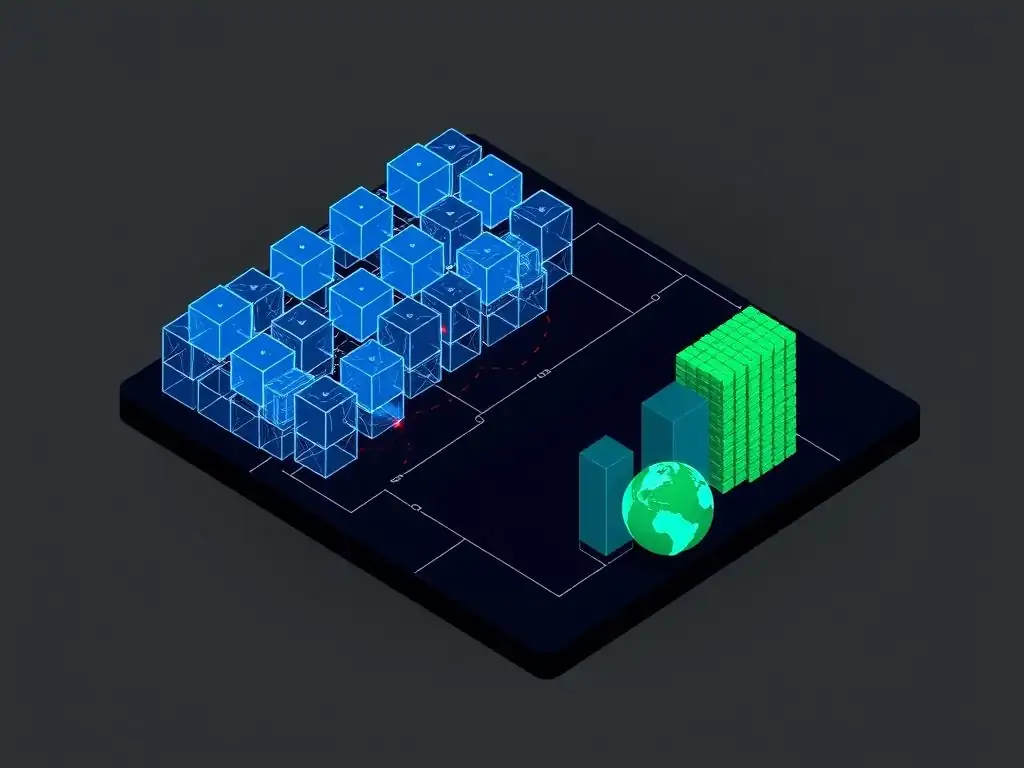
Transitioning to More Energy-Efficient Blockchains
The most impactful strategy for reducing the environmental footprint of NFTs is to move away from Proof-of-Work blockchains to those utilizing Proof-of-Stake or other low-energy consensus mechanisms. Ethereum's successful transition to PoS is a prime example, instantly reducing the energy consumption of all existing and future ERC-721 and ERC-1155 NFTs on the network by over 99.9%.
Projects launching new NFT collections or platforms should prioritize blockchains designed with energy efficiency in mind, such as Solana, Polygon, Flow, Tezos, or Cardano. These chains offer significantly lower energy costs per transaction, ensuring that the creation and trading of NFTs have a minimal environmental impact. This strategic choice of the underlying platform is far more significant in determining the NFT standard energy consumption than the specific standard used on an inefficient chain.
Layer-2 Solutions for Scalability and Reduced Energy Use
For projects that wish to remain within the Ethereum ecosystem but seek even lower transaction costs and energy usage than L1 PoS Ethereum, Layer-2 scaling solutions offer a compelling option. L2s like Polygon (which also functions as a sidechain), Optimism, Arbitrum, and zkSync process transactions off the main Ethereum chain, bundling many transactions into a single, compressed transaction that is then submitted to the L1.
This process drastically reduces the load on the Ethereum mainnet, leading to lower gas fees and further reduced energy consumption per operation compared to executing transactions directly on L1. Many NFT marketplaces and projects are increasingly deploying on L2s, providing users with faster, cheaper, and more energy-efficient ways to mint, buy, and sell NFTs. Operating on a Layer-2 significantly lowers the effective NFT standard energy consumption per interaction.
Carbon Offset Programs for NFT Creators and Collectors
While transitioning to energy-efficient chains is the most direct way to reduce emissions, carbon offsetting programs can serve as a complementary strategy. Some NFT projects, platforms, or individual creators purchase carbon credits to compensate for the estimated energy consumption associated with their activities, particularly historical activity that occurred on PoW chains or residual energy use on PoS networks.
These programs involve investing in projects that reduce greenhouse gas emissions elsewhere, such as renewable energy installations, reforestation, or energy efficiency improvements. While offsets are not a substitute for direct emission reduction and their effectiveness can be debated, they offer a mechanism for the NFT community to take responsibility for its environmental footprint. Marketplaces like KnownOrigin have implemented strategies that include leveraging L2 solutions and considering offset possibilities to address the NFT standard energy consumption associated with their operations.
Case Studies: NFT Projects Prioritizing Sustainability
Proof-of-Stake NFT Project
Consider the example of a prominent generative art project that chose to launch on the Tezos blockchain. Tezos utilizes a Liquid Proof-of-Stake (LPoS) consensus mechanism, which is known for its extremely low energy consumption per transaction, often cited as being orders of magnitude lower than PoW systems. The project specifically highlighted its choice of Tezos as being driven by a commitment to environmental sustainability, allowing artists and collectors to participate without contributing to the high energy use associated with legacy blockchains.
By minting and trading their NFTs on Tezos, this project ensured that each transaction's energy footprint was minimal. Reports from the Tezos Foundation indicate that the energy needed for an entire year of operations on the Tezos network is roughly equivalent to the energy consumption of 17 U.S. households per year, a stark contrast to the historical energy figures associated with PoW blockchains. This demonstrates how selecting a PoS chain fundamentally changes the NFT standard energy consumption profile for a project.
Carbon-Neutral NFT Marketplace
KnownOrigin, an established NFT art marketplace, provides a case study in prioritizing sustainability through platform choices. Initially operating on Ethereum mainnet during the PoW era, the marketplace actively sought ways to reduce its impact. Following Ethereum's Merge to PoS, their operations became vastly more energy-efficient overnight. Furthermore, KnownOrigin expanded its presence by integrating with Polygon, an Ethereum Layer-2 solution utilizing PoS.
This move to Polygon enabled KnownOrigin to offer artists and collectors significantly lower gas fees and faster transactions, while simultaneously reducing the energy consumption associated with minting and trading NFTs on their platform even further compared to L1 Ethereum (though both are now highly efficient). By leveraging energy-efficient L2 infrastructure, KnownOrigin demonstrates a marketplace actively working to minimize the NFT standard energy consumption for its community.
Lessons Learned: Best Practices for Eco-Friendly NFTs
From analyzing different standards and case studies, several best practices emerge for minimizing the environmental impact related to NFT standard energy consumption:
- Prioritize Energy-Efficient Blockchains: The most crucial decision is the choice of the underlying blockchain. Opt for Proof-of-Stake chains (Ethereum post-Merge, Solana, Tezos, Cardano, etc.) or Layer-2 solutions (Polygon, Optimism, Arbitrum) over Proof-of-Work chains.
- Utilize Efficient Standards and Practices: While secondary to blockchain choice, utilizing standards like ERC-1155 for use cases benefiting from batching can offer marginal efficiencies in transaction volume and cost.
- Optimize Smart Contracts: Write gas-efficient smart contracts on EVM chains to minimize the resources required per operation.
- Consider Offsets Responsibly: While not a primary solution, offsetting can help address unavoidable or historical emissions. Ensure offset programs are credible and transparent.
- Educate the Community: Raise awareness among creators and collectors about the energy implications of different blockchain choices and promote sustainable practices.
These lessons highlight that focusing solely on the NFT standard energy consumption without considering the blockchain infrastructure provides an incomplete picture. The platform is paramount.
The Future of Sustainable NFTs
Innovation in NFT Standards for Reduced Energy Consumption
While the move to PoS has largely addressed the primary energy concerns, innovation in NFT standards and related protocols continues. Future developments may focus on further optimizing smart contract interactions, reducing data storage requirements on-chain, or enabling more efficient cross-chain transfers. Concepts like 'stateless' NFTs or advanced data compression could potentially lead to marginal energy savings even on already efficient blockchains by reducing the computational load per transaction.
Furthermore, ongoing research into novel consensus mechanisms and blockchain architectures could yield even more energy-efficient ways to validate transactions and secure networks. As the technology matures, the focus will likely shift from drastically reducing energy consumption (as achieved by the PoS transition) to maintaining ultra-low consumption while supporting massive scale and new functionalities, ensuring that the NFT standard energy consumption remains minimal even as the ecosystem grows.
The Role of Regulation and Industry Standards
External factors, such as government regulation and the development of industry-wide standards, are likely to play a role in shaping the future of sustainable NFTs. Governments might introduce requirements for transparency regarding the energy consumption of blockchain platforms or specific applications, potentially incentivizing the adoption of greener technologies. Regulatory pressure could push platforms and projects to report on their environmental footprint.
The industry itself can also set standards. Marketplaces, developer communities, and consortiums could establish best practices for energy efficiency, potentially even requiring projects to meet certain criteria to be listed or supported. Such industry-led initiatives could further drive down the overall NFT standard energy consumption across the ecosystem by favoring projects built on the most sustainable infrastructure.
Consumer Awareness and Demand for Eco-Friendly NFTs
Ultimately, consumer awareness and demand will be powerful forces driving sustainability in the NFT space. As collectors become more informed about the environmental impact of different blockchains, they are increasingly likely to favor NFTs minted on energy-efficient platforms. Artists and creators are also responding to this awareness by consciously choosing sustainable blockchains for their projects.
This growing demand for "green" NFTs creates a market incentive for creators and platforms to prioritize energy efficiency. Projects that can demonstrate a minimal environmental footprint, including low NFT standard energy consumption due to their underlying blockchain choice, will likely gain a competitive advantage, attracting environmentally conscious buyers and contributing to a broader shift towards sustainable practices within the digital collectibles market.
Conclusion: Choosing Energy-Efficient NFT Standards for a Greener Future
Key Takeaways: Understanding the Energy Footprint of NFTs
This analysis underscores that the energy consumption of NFTs is overwhelmingly determined by the consensus mechanism of the blockchain they reside on, rather than the specific NFT standard (like ERC-721 or ERC-1155) itself. The historical concerns about high energy use were valid for NFTs on Proof-of-Work blockchains, where transaction validation required massive computational power.
With the widespread adoption of Proof-of-Stake and the successful transition of Ethereum, the energy footprint of minting and trading NFTs has been reduced by orders of magnitude. While standards like ERC-1155 offer design efficiencies that can reduce transaction volume for certain use cases, the most critical factor for minimizing the NFT standard energy consumption associated with any activity is selecting an energy-efficient blockchain or Layer-2 solution.
Call to Action: Promoting Sustainable Practices within the NFT Ecosystem
The future of NFTs is increasingly sustainable, thanks to technological advancements and growing awareness. However, continued effort is needed. Creators should actively choose energy-efficient blockchains and Layer-2 solutions for new projects. Developers should strive for smart contract optimization. Collectors should educate themselves and support projects that prioritize sustainability.
By making informed decisions about the platforms we use, we can collectively ensure that the innovation and creativity flourishing within the NFT space do not come at an unacceptable environmental cost. Promoting transparency, adopting best practices, and favoring energy-efficient infrastructure will pave the way for a greener and more sustainable future for digital collectibles and the broader blockchain ecosystem.
Frequently Asked Questions
How does the energy consumption of different NFT standards like ERC-721 and ERC-1155 compare?
Different NFT standards have varying energy footprints. Proof-of-work blockchains, often used by ERC-721, generally consume more energy than proof-of-stake alternatives. ERC-1155 can be more efficient due to its ability to represent multiple assets in a single contract.
What are the main factors contributing to the NFT standard energy consumption?
The primary factors are the underlying blockchain's consensus mechanism and the complexity of the smart contracts. Transaction volume and gas fees also influence the overall energy expenditure.
Are there any NFT standards specifically designed to be more energy-efficient?
Yes, several standards prioritize energy efficiency. Some are built on eco-friendly blockchains, while others leverage layer-2 scaling solutions to reduce on-chain activity and energy consumption.
How can users minimize the environmental impact of creating and trading NFTs?
Users can choose NFTs on proof-of-stake blockchains, or explore projects using carbon offset programs. Reducing the frequency of minting and trading can also contribute.
What role do regulations play in addressing the energy consumption concerns associated with NFTs?
Regulations can encourage the adoption of more sustainable NFT standards and practices. Governments may implement policies to incentivize energy-efficient blockchains and penalize environmentally damaging ones.
Final Reflection: Powering the Future of NFTs
The analysis presented here underscores a critical truth: the environmental impact of NFTs is inextricably linked to the underlying blockchain technology. While the allure of digital ownership and decentralized finance continues to grow, we must acknowledge the significant energy footprint associated with different NFT standards and actively seek more sustainable alternatives. The future of NFTs hinges on our collective commitment to minimizing their environmental cost.
This exploration into NFT standard energy consumption has profoundly shaped my understanding of the digital landscape. It's no longer enough to simply marvel at the innovation; we must critically evaluate its consequences. The choices we make regarding which blockchains and NFT standards to support will directly impact the planet. We are living on this planet as if we had another one to go to.
- Terry Swearingen. This quote serves as a stark reminder that our actions have real-world implications, and we must prioritize sustainability in the digital realm.
As you navigate the exciting world of NFTs, I urge you to consider the energy consumption of the platforms and standards you choose to support. Let's champion eco-friendly alternatives, demand greater transparency from blockchain developers, and collectively strive for a future where digital innovation and environmental responsibility go hand in hand. The power to shape a sustainable NFT ecosystem lies within each of us.
Uncover Your NFT Power: Become an Eco-Conscious Creator!
Thanks for exploring the energy consumption differences among various NFT standards with Blockchain Trends. Now that you’re informed, here are some practical steps you can take to promote a more sustainable NFT ecosystem:
- Transition to minting NFTs on proof-of-stake blockchains, which significantly reduces environmental impact. Consider exploring and moving your creations to these more eco-friendly platforms.
- Support and use platforms and marketplaces that prioritize energy-efficient NFT standards.
- Share this information with fellow creators and collectors to foster a community focused on responsible NFT creation.
What specific actions will you take to minimize the energy footprint of your NFT activities? Share your thoughts and plans in the comments below!
Leave a Reply