
Blockchain's Potential to Solve the Real Estate Affordability Crisis


Welcome to Blockchain Trends, your compass in the rapidly evolving world of decentralized technologies!
Dive deep into how blockchain is reshaping industries beyond just cryptocurrencies. In this article, we're tackling a critical issue: Can blockchain unlock new pathways to real estate affordability? Explore the innovative solutions and groundbreaking applications that are poised to revolutionize property ownership and access. Read on to discover how this technology is not just a buzzword, but a potential key to a more equitable future.
Blockchain's Potential to Solve the Real Estate Affordability Crisis
- Introduction: The Real Estate Affordability Crisis and Blockchain's Promise
- Understanding the Roots of the Real Estate Affordability Crisis
- Blockchain Real Estate Affordability Solutions: A Deep Dive
- Case Studies: Blockchain Initiatives Addressing Real Estate Affordability
- Overcoming the Challenges of Blockchain Adoption in Real Estate
- The Future of Affordable Housing: A Blockchain-Powered Vision
- Conclusion: Blockchain as a Key to Unlock Real Estate Affordability
-
Frequently Asked Questions
- How can blockchain technology specifically help with real estate affordability?
- What are some examples of blockchain applications in real estate, besides affordability?
- What are the regulatory challenges facing the implementation of blockchain in real estate?
- How does DeFi (Decentralized Finance) intersect with blockchain real estate affordability solutions?
- What is the future outlook for blockchain real estate affordability solutions?
- Final Reflection: Unlocking Homeownership Through Blockchain
- Reimagine Affordable Housing: Your Next Move
Introduction: The Real Estate Affordability Crisis and Blockchain's Promise
The global real estate market is facing a significant and growing challenge: affordability. In major urban centers and even suburban areas, the cost of purchasing or renting property has escalated dramatically over the past decade, outpacing wage growth in many regions. This crisis impacts individuals, families, and entire communities, hindering economic mobility and exacerbating wealth inequality. Factors ranging from supply shortages and rising construction costs to speculative investment and complex regulatory environments contribute to this complex problem.
Amidst this challenge, blockchain technology, known primarily for its role in cryptocurrencies, is emerging as a potential transformative force. Its inherent characteristics—transparency, security, efficiency, and the ability to enable fractional ownership—offer promising avenues to address some of the core issues driving up housing costs. This article explores how blockchain real estate affordability solutions can potentially democratize access to property investment and streamline processes to lower overall costs, offering a new perspective on tackling a persistent global issue.
Understanding the Roots of the Real Estate Affordability Crisis
Factors Contributing to High Housing Costs
One primary driver of high housing costs is the fundamental imbalance between supply and demand, particularly in desirable urban and coastal areas. Restrictive zoning laws, often designed decades ago, limit density and dictate land use, constraining the construction of new housing units, especially multi-family dwellings. This artificial scarcity drives up land prices and, consequently, the cost of any new development. For instance, reports from major metropolitan areas in the US often cite zoning regulations as a key impediment, with some cities estimating that up to 75% of residential land is zoned exclusively for single-family homes, severely limiting supply growth.
Furthermore, the cost of construction materials and labor has seen significant increases, adding directly to the final price of new homes. The COVID-19 pandemic, for example, led to unprecedented disruptions in supply chains, causing the price of lumber to surge by over 300% at its peak in 2021 compared to pre-pandemic levels, and steel and concrete costs also saw substantial jumps.
Combined with rising land values and development fees imposed by local governments, these factors create a high floor for the cost of building new housing, making it difficult for developers to profitably build affordable units without subsidies. Speculative investment, where properties are bought purely for short-term profit rather than occupancy, further inflates prices, often pushing them beyond the reach of local residents.
How Traditional Real Estate Systems Exacerbate the Problem
Traditional real estate transactions are notoriously complex, slow, and opaque. The process involves multiple intermediaries—agents, brokers, lawyers, escrow companies, title insurers—each adding layers of fees and increasing the overall transaction cost. Closing costs, encompassing these fees and taxes, typically range from 2% to 5% of the property's purchase price, a significant burden for buyers, especially first-time homeowners already struggling with down payments. The lengthy timeline for transactions, often taking 30 to 60 days or even longer, also introduces uncertainty and potential for deals to fall through, adding further friction and cost.
The lack of transparency in traditional systems also contributes to inefficiency and potential for inflated pricing. Information about property history, ownership chains, and even comparable sales can be fragmented across various databases or held privately by intermediaries. This opacity makes it difficult for buyers and sellers to have complete confidence in the fairness of a price or the validity of a title, necessitating expensive due diligence processes like title searches and insurance. This systemic inefficiency and high cost of entry and transaction within the traditional framework limit accessibility and exacerbate the affordability crisis for many.
Blockchain Real Estate Affordability Solutions: A Deep Dive
Tokenization of Real Estate Assets: Fractional Ownership and Increased Accessibility
Real estate tokenization involves dividing ownership rights of a property into smaller, digital units or tokens on a blockchain. Each token represents a verifiable share of the property's value, recorded on an immutable ledger. This process transforms illiquid real estate assets into highly divisible digital tokens that can be easily bought, sold, or traded. Instead of needing to purchase an entire property, an investor can buy tokens representing a fraction of its value, potentially for as little as $50 or $100, significantly lowering the financial barrier to entry for real estate investment.
This fractional ownership model democratizes access to real estate investment, which has historically been reserved for wealthy individuals and institutions. By allowing individuals to invest small amounts, tokenization enables diversification across multiple properties or types of real estate (residential, commercial, REITs), reducing risk. Furthermore, tokenization promises to increase liquidity in a market traditionally characterized by high transaction costs and long selling times.
Tokens can be traded peer-to-peer on secondary markets, potentially allowing investors to exit positions much faster than selling a physical property, freeing up capital and making real estate a more accessible and flexible asset class. These blockchain real estate affordability solutions directly address the high entry cost problem.
Decentralized Autonomous Organizations (DAOs) for Affordable Housing Projects
Decentralized Autonomous Organizations (DAOs) offer a novel governance and funding model that can be applied to real estate development, including affordable housing initiatives. A DAO is an organization represented by rules encoded as a transparent computer program, controlled by the organization members, and not influenced by a central government or single entity. In the context of real estate, DAOs can pool capital from a large number of participants to collectively invest in, develop, or manage properties. Decisions regarding property acquisition, development plans, rental rates, or maintenance are made through token-based voting by the DAO members, ensuring a community-driven approach.
Applying the DAO model to affordable housing allows communities, non-profits, or groups of potential residents to collectively fund and manage projects tailored to their needs. For example, a DAO could raise funds to purchase land, hire contractors for construction, and then manage the completed units, potentially setting rental rates or sale prices designed specifically for affordability criteria agreed upon by the members.
Projects like RealT, while primarily focused on fractional investment, utilize a form of tokenized ownership and community interaction. More directly, initiatives like the Midas DAO affordable housing fund aim to leverage collective investment power through a decentralized structure to acquire and develop properties intended to provide affordable housing options, demonstrating how DAO governance can facilitate community-led blockchain real estate affordability solutions.
Smart Contracts for Streamlined and Transparent Transactions
Smart contracts are self-executing contracts with the terms of the agreement directly written into lines of code. They reside on a blockchain, meaning they are immutable and transparent.
In real estate, smart contracts can automate various steps in a transaction process, from escrow and payment releases to title transfers, once predefined conditions are met. For instance, a smart contract can hold the buyer's funds in escrow and automatically release them to the seller, while simultaneously transferring the digital property token or recording the ownership change on a blockchain registry, only when all necessary conditions (e.g., successful inspection, financing approval, identity verification) are fulfilled.
This automation significantly reduces the reliance on intermediaries, thereby lowering transaction costs and speeding up the closing process. A traditional closing might involve fees for escrow services, title insurance, and legal review, collectively adding thousands or even tens of thousands of dollars to the cost.
A smart contract can handle the escrow function programmatically, potentially reducing or eliminating the need for third-party escrow agents. Furthermore, because smart contracts are transparent and their execution is verifiable on the blockchain, they increase trust and reduce the potential for disputes or fraud, simplifying the transaction and making blockchain real estate affordability solutions more accessible and secure.
Blockchain-Based Land Registries: Enhancing Security and Reducing Fraud
Implementing land registries on a blockchain creates a secure, transparent, and immutable record of property ownership and historical transactions. Unlike traditional paper-based or centralized digital registries, which can be susceptible to errors, tampering, or loss, a decentralized blockchain ledger provides a single, verifiable source of truth for property data. Every transaction or change in ownership is recorded as a new block, cryptographically linked to the previous one, making it virtually impossible to alter records retroactively without detection. This inherent security and transparency are critical in preventing fraudulent property claims and disputes over ownership history.
Several countries and regions have explored or piloted blockchain land registry systems to enhance efficiency and reduce corruption. The Republic of Georgia's National Agency of Public Registry partnered with Bitfury Group in 2016 to pilot a blockchain-based system for registering land titles, aiming to improve transparency and speed.
Similarly, Sweden's Lantmäteriet (the Swedish mapping, cadastral and land registration authority) conducted a pilot project with ChromaWay and others to explore using blockchain for property transfers, seeking to streamline the process and reduce reliance on paper documentation and manual checks. While full-scale implementation faces regulatory and technical hurdles, these pilots demonstrate the potential of blockchain-based systems to provide undeniable proof of ownership, simplify verification processes, and reduce the legal costs associated with title disputes, thereby contributing to more secure and potentially more affordable property transactions.
Case Studies: Blockchain Initiatives Addressing Real Estate Affordability
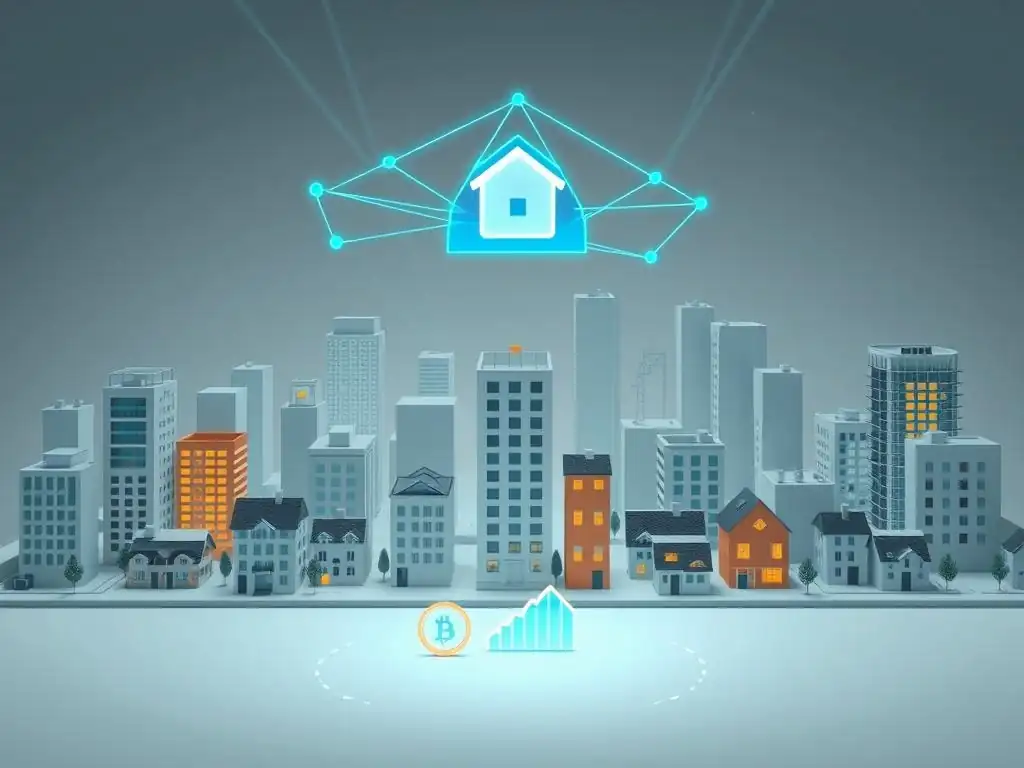
Case Study 1: RealT – Tokenized Real Estate Investment Platform
RealT is a prominent platform that leverages blockchain technology to offer fractional, tokenized ownership of US-based residential real estate. The company acquires properties, primarily single-family homes initially in Detroit, Michigan, and then issues digital tokens on the Ethereum blockchain (and later on other networks like Gnosis Chain) representing equity ownership in the Special Purpose Vehicle (SPV) that holds the property. Investors globally can purchase these tokens, often for prices around $50-$100 per token, effectively owning a small percentage of a physical rental property.
This model directly addresses the high barrier to entry in traditional real estate investment. Instead of needing tens or hundreds of thousands of dollars for a down payment or full purchase, individuals can invest modest amounts, gaining exposure to the real estate market and earning rental income distributed proportionally to their token holdings, paid out in stablecoins weekly. By tokenizing dozens of properties across cities like Detroit, Cleveland, and Chicago, RealT has made real estate investment accessible to a much wider audience, demonstrating a concrete blockchain real estate affordability solution that democratizes access to property wealth building.
Case Study 2: Midas DAO – Community-Driven Affordable Housing Investment
The Midas DAO represents an emerging model for community-led investment in real estate, with a focus on affordable housing. Operating as a decentralized autonomous organization, the DAO pools funds contributed by its members (token holders) to collectively acquire, develop, and manage real estate assets. The specific focus of the Midas DAO affordable housing fund is to invest in properties and projects aimed at increasing the supply of affordable housing units in targeted regions, often through renovations, new construction, or acquiring existing buildings for conversion.
Decisions within the Midas DAO, such as which properties to invest in, how to manage them, and how to potentially offer units at affordable rates, are governed by the DAO's token holders through a transparent voting process. This model allows a distributed group of individuals to collectively impact the affordable housing landscape.
Challenges include navigating complex local housing regulations, ensuring community engagement and consensus on investment decisions, and achieving scalability while maintaining the DAO's decentralized principles. Despite these hurdles, the Midas DAO exemplifies how collective action facilitated by blockchain and DAO structures can be channeled towards creating tangible blockchain real estate affordability solutions.
Overcoming the Challenges of Blockchain Adoption in Real Estate
Regulatory Hurdles and Legal Frameworks
One of the most significant obstacles to widespread blockchain adoption in real estate is the lack of clear and consistent regulatory frameworks. Real estate is heavily regulated at local, state, and national levels, involving complex laws around property ownership, transfers, securities, and taxation.
Tokenizing real estate, for example, raises questions about whether property tokens are considered securities, commodities, or a new asset class, each with different regulatory implications. Jurisdictions are still grappling with how to apply existing laws or create new ones that adequately address the unique characteristics of blockchain-based property transactions and ownership models like fractional tokens or DAOs.
Addressing these regulatory uncertainties requires active engagement between blockchain innovators, legal experts, and government bodies. There is a critical need for clear guidelines on aspects such as token issuance, trading platforms for real estate tokens, know-your-customer (KYC) and anti-money laundering (AML) requirements for token holders, and the legal enforceability of smart contracts in property transactions. Government support and willingness to adapt existing legal frameworks or create new ones are crucial for providing the necessary legal certainty and consumer protection required for blockchain real estate affordability solutions to scale safely and effectively.
Scalability and Interoperability Issues
Technical challenges related to blockchain network scalability and interoperability also pose hurdles for mass adoption in real estate. Public blockchains like Ethereum, while robust, have historically faced issues with transaction speed and high costs (gas fees) during periods of high network congestion.
Processing a large volume of real estate transactions, which could involve millions of property records and frequent token trades, requires a network that can handle high throughput efficiently and at a low cost. While newer blockchain platforms and Layer 2 scaling solutions are improving performance, ensuring the underlying technology can support the demands of a global real estate market remains an ongoing challenge.
Furthermore, for blockchain real estate affordability solutions to become truly seamless, there needs to be greater interoperability between different blockchain platforms and traditional systems. Property data, identity verification, financing, and legal documentation often reside on disparate systems.
Enabling secure and efficient communication and data exchange between different blockchains (e.g., transferring a token from Ethereum to a different chain) and between blockchain systems and legacy databases (like existing land registries or bank systems) is essential. Developing standards and protocols for cross-chain communication and integration with traditional infrastructure is key to creating a unified and efficient real estate ecosystem powered by blockchain.
Public Awareness and Education
A significant barrier to adopting blockchain real estate affordability solutions is the general lack of public awareness and understanding of the technology. Many people associate blockchain primarily with volatile cryptocurrencies and may be skeptical or unfamiliar with its potential applications beyond speculative trading. Real estate transactions are high-value, complex events for most individuals, and trust in the process is paramount. Introducing a relatively new and poorly understood technology like blockchain requires significant effort to build confidence among potential buyers, sellers, investors, and industry professionals.
Educating the public, real estate agents, lawyers, regulators, and financial institutions about the benefits and mechanics of blockchain in real estate is crucial. This includes explaining how tokenization works, the security benefits of immutable ledgers, the efficiency gains from smart contracts, and the regulatory safeguards being put in place. Clear, accessible information and successful pilot projects can help demystify the technology and highlight its potential to create more accessible, affordable, and transparent real estate markets. Increased awareness and education are foundational steps towards widespread acceptance and implementation of blockchain real estate affordability solutions.
The Future of Affordable Housing: A Blockchain-Powered Vision
Potential for Widespread Adoption of Blockchain Real Estate Solutions
The trajectory of blockchain technology suggests a growing potential for its widespread adoption in the real estate sector, particularly as regulatory clarity emerges and technological scalability improves. As pilot projects demonstrate tangible benefits in terms of reduced costs, increased speed, and enhanced transparency, confidence in blockchain-based systems will likely grow among institutional players, governments, and the general public. The inherent advantages of immutable records, automated processes via smart contracts, and the democratization of investment through tokenization align well with the long-term goals of creating more efficient and equitable housing markets.
Looking ahead, it's plausible that blockchain technology could become a standard layer in the real estate infrastructure, much like the internet is today. We could see national or regional blockchain-based land registries becoming the norm, providing instant, verifiable proof of ownership. Tokenized property markets could offer unprecedented liquidity and accessibility for investors of all sizes, fundamentally changing how real estate is bought, sold, and financed. The integration of blockchain real estate affordability solutions could pave the way for innovative financing models, potentially reducing reliance on traditional mortgages and opening up new pathways to homeownership or stable rental opportunities.
The Role of Blockchain in Creating a More Equitable and Accessible Housing Market
Blockchain technology holds significant promise in addressing the equity gap in the real estate market, which has historically favored those with substantial capital. By enabling fractional ownership through tokenization, blockchain allows individuals with limited funds to invest in real estate and participate in its wealth-building potential, diversifying their portfolios beyond traditional stocks and bonds. This democratizing effect can help level the playing field, making real estate investment accessible to a broader segment of the population and potentially contributing to greater financial inclusion.
Furthermore, the transparency and efficiency gains offered by blockchain can reduce the costs and complexities that often exclude lower-income individuals from participating in the market. Lower transaction fees mean less money is lost to intermediaries, potentially freeing up funds for down payments or renovations.
Immutable land records can protect vulnerable populations from fraudulent land grabs or disputes. As blockchain real estate affordability solutions mature, they can be specifically designed to support affordable housing initiatives, perhaps by facilitating community land trusts via DAOs or enabling impact investors to directly fund affordable developments through tokenized securities, ultimately working towards a more equitable distribution of housing wealth and access.
Conclusion: Blockchain as a Key to Unlock Real Estate Affordability
The real estate affordability crisis is a multifaceted problem rooted in supply constraints, rising costs, systemic inefficiencies, and limited access to investment. Traditional systems, burdened by complexity, opacity, and high transaction costs, often exacerbate these issues. However, blockchain technology offers a compelling suite of potential blockchain real estate affordability solutions that could fundamentally change the landscape.
Through innovations like asset tokenization, which democratizes investment via fractional ownership; the use of DAOs for community-driven development; the streamlining of transactions with smart contracts; and the enhancement of security and transparency through blockchain land registries, blockchain has the potential to lower barriers to entry, reduce costs, and increase efficiency in the real estate market. While significant challenges remain, particularly regarding regulation, scalability, and public education, the real-world pilots and platforms emerging today demonstrate the tangible promise of blockchain to contribute significantly to solving the real estate affordability crisis and creating a more accessible, equitable, and efficient housing future.
Further exploration and implementation of these blockchain-powered approaches are essential steps toward unlocking true real estate affordability.
Frequently Asked Questions
How can blockchain technology specifically help with real estate affordability?
Blockchain can help by enabling fractional ownership of properties, reducing the initial investment barrier. It can also streamline transactions, lowering associated costs and fees for buyers and sellers.
What are some examples of blockchain applications in real estate, besides affordability?
Beyond affordability, blockchain is used for secure title management, facilitating faster and more transparent transactions. It also enables smart contracts for automated agreements and rental management.
What are the regulatory challenges facing the implementation of blockchain in real estate?
Regulatory uncertainty surrounding digital assets and smart contracts is a major hurdle. Legal frameworks need to adapt to address ownership verification and data security in blockchain-based real estate systems.
How does DeFi (Decentralized Finance) intersect with blockchain real estate affordability solutions?
DeFi platforms can offer alternative financing options for real estate purchases, potentially bypassing traditional lenders. This can lead to lower interest rates and more accessible loan products for first-time homebuyers.
What is the future outlook for blockchain real estate affordability solutions?
The future involves wider adoption of tokenized real estate assets and decentralized marketplaces. This will likely lead to greater transparency, efficiency, and increased access to affordable housing options.
Final Reflection: Unlocking Homeownership Through Blockchain
The exploration of blockchain's potential to revolutionize real estate affordability is not merely a theoretical exercise; it's a crucial conversation in a world grappling with an increasingly unattainable dream of homeownership. The challenges we've outlined – from fractional ownership and streamlined transactions to increased transparency and reduced costs – represent tangible pathways toward a more equitable and accessible housing market for all.
This technology's influence extends far beyond mere efficiency gains; it touches upon the very fabric of our communities and the aspirations of individuals striving for stability and security. The promise of blockchain lies in its ability to democratize access to real estate, empowering individuals and communities in ways previously unimaginable. The future belongs to those who believe in the beauty of their dreams.
- Eleanor Roosevelt. This quote encapsulates the hope that blockchain offers: a chance to reshape the real estate landscape into one where dreams of homeownership are within reach for more people.
As we conclude this exploration, I invite you to consider the role you can play in shaping this future. Reflect on the potential of blockchain to not only address the affordability crisis but also to foster greater financial inclusion and community empowerment. Let us embrace innovation and work together to build a real estate ecosystem that is truly accessible, transparent, and equitable for all.
Reimagine Affordable Housing: Your Next Move
Thank you for exploring how blockchain technology can revolutionize access to real estate. You've gained valuable insights into potential solutions to the affordability crisis, and now it's time to translate that knowledge into action. Here's how you can contribute to a future where homeownership is within reach for more people:
- Research existing blockchain-based real estate initiatives in your local area. This could include tokenized property investments or decentralized lending platforms.
- Share this article with your network, sparking conversation among friends, colleagues, and even local government officials. Let's amplify the discussion around innovative solutions.
- Contribute your ideas! Visit our forum at blockchaintrends.org and suggest ways blockchain can further address affordability challenges in real estate. You might even inspire the next big innovation!
What concrete steps will you take this week to advocate for blockchain solutions in real estate affordability?
Leave a Reply