
The Evolution of DLT: From Early Concepts to Modern Implementations


Welcome to Blockchain Trends, your compass navigating the evolving landscape of decentralized technologies.
Ever wondered how blockchain technology is revolutionizing industries beyond just cryptocurrencies? Delve into our analysis of enterprise applications, dissect the regulatory environment, and glimpse into the future of decentralized systems. This exploration, starting with "The Evolution of DLT: From Early Concepts to Modern Implementations," is just the beginning of unlocking the transformative potential that awaits. Prepare to explore the innovative world of Blockchain Technology Deep Dive!
The Evolution of DLT: From Early Concepts to Modern Implementations
- Introduction: Understanding the Genesis of Distributed Ledger Technology
- Early Concepts and Precursors to Modern DLT
- The Rise of Blockchain Technology and its Enterprise Applications
- The Emergence of Diverse DLT Implementations
- Modern DLT Implementations: Features and Innovations
- DLT and the Future of Blockchain Technology: Trends and Predictions
- Regulatory Landscape and the Adoption of DLT
- Conclusion: The Ongoing Evolution and Future Potential of DLT
-
Frequently Asked Questions
- What are some key ways blockchain technology is being used in enterprise applications beyond cryptocurrencies?
- How is the future of blockchain technology likely to impact traditional business models?
- What are some regulatory challenges facing the widespread adoption of blockchain technology in enterprise settings?
- What is the relationship between DeFi (Decentralized Finance) and the broader future of blockchain technology?
- How has the evolution of Distributed Ledger Technology (DLT) impacted the development of blockchain technology enterprise applications future?
- Final Reflection: Embracing the Decentralized Future
- Unearth Your DLT Potential!
Introduction: Understanding the Genesis of Distributed Ledger Technology
Defining Distributed Ledger Technology (DLT) and its Core Principles
Distributed Ledger Technology (DLT) represents a revolutionary approach to data recording and sharing, fundamentally altering how information is managed and verified across networks. At its core, DLT is a database replicated and shared across a network of computers. Unlike traditional centralized databases, where a single authority controls the data, DLT distributes data across multiple participants, ensuring no single entity has exclusive control. This decentralization is the bedrock principle of DLT, fostering transparency, security, and resilience.
The technology operates on principles of consensus, cryptography, and immutability. Consensus mechanisms ensure that all participants agree on the validity of transactions before they are added to the ledger. Cryptography, particularly hashing and digital signatures, secures the data and verifies the authenticity of transactions. Immutability means that once data is recorded on the ledger, it is virtually tamper-proof, creating an auditable and reliable record of transactions.
The operational transparency of DLT is a key differentiator. All participants, depending on the network's permission structure, can typically view the shared ledger and the history of transactions. This transparency enhances trust and accountability among participants, reducing the need for intermediaries to validate information. Furthermore, the distributed nature of DLT enhances security.
Because the ledger is replicated across multiple nodes, there is no single point of failure. A successful attack would require compromising a significant portion of the network, making DLT systems inherently more resistant to fraud and cyber threats compared to centralized systems. These core principles of decentralization, transparency, security, and immutability underpin the transformative potential of DLT across various sectors.
DLT's Role in Shaping the Future of Blockchain Technology
Distributed Ledger Technology is not just a component of blockchain; it's the foundational technology upon which blockchain and related decentralized systems are built. Understanding DLT is crucial to grasping the broader impact of blockchain technology enterprise applications future. DLT provides the architectural framework for blockchain, offering the distributed and secure infrastructure necessary for blockchain networks to function effectively.
While blockchain is a specific type of DLT characterized by its block-based structure and chronological ordering of transactions, the term DLT encompasses a broader range of distributed ledger implementations, some of which may not strictly adhere to the blockchain structure. This broader perspective is important as the technology evolves and diversifies.
The future of blockchain technology is inextricably linked to the ongoing development and application of DLT. As businesses and industries explore the potential of decentralized systems, DLT provides the underlying technology to enable a wide array of innovative solutions. From supply chain management to digital identity verification and decentralized finance (DeFi), DLT's versatility allows for tailored implementations that address specific industry needs.
The evolution of DLT is driving the expansion of blockchain beyond its initial cryptocurrency focus, paving the way for widespread adoption of blockchain technology enterprise applications across diverse sectors. By providing a robust and adaptable foundation, DLT is the engine driving the future trajectory of blockchain innovation and its integration into mainstream business processes.
Early Concepts and Precursors to Modern DLT
The Roots of Decentralized Systems: Public-Key Cryptography and Peer-to-Peer File Sharing
The conceptual roots of Distributed Ledger Technology can be traced back to several technological advancements that emerged in the late 20th century, notably public-key cryptography and peer-to-peer (P2P) file sharing. Public-key cryptography, pioneered in the 1970s, provided the fundamental cryptographic tools for secure communication and authentication in decentralized environments.
Algorithms like RSA and ECC enabled the creation of digital signatures, allowing individuals to prove ownership and verify the integrity of digital information without relying on a central authority. This innovation was crucial for establishing trust in distributed systems, as it provided the means to secure transactions and communications across a network of unknown participants.
Peer-to-peer networks, popularized in the late 1990s and early 2000s by file-sharing platforms like Napster and BitTorrent, demonstrated the feasibility and power of decentralized systems in practice. P2P networks enabled direct exchange of data between users without the need for central servers, showcasing the resilience, scalability, and efficiency of distributed architectures. While these early P2P systems often faced legal challenges related to copyright infringement, they fundamentally proved the concept of decentralized data distribution and management.
These early explorations into cryptography and P2P networking laid the groundwork for the development of more sophisticated decentralized technologies, ultimately leading to the emergence of blockchain and modern DLT systems. The lessons learned from securing P2P communications and managing distributed data were instrumental in shaping the design principles of DLT.
The Innovation of the Blockchain: The Foundation for Modern DLT
The true catalyst for the widespread adoption of DLT was the invention of blockchain technology with the launch of Bitcoin in 2009. Bitcoin's innovation lay in its elegant combination of existing technologies – cryptography, P2P networking, and consensus mechanisms – to create a novel system for digital currency. The blockchain structure, characterized by blocks of transactions chained together chronologically and secured cryptographically, provided a robust and tamper-proof ledger. This architecture solved the "double-spending" problem inherent in digital currencies without relying on a central intermediary, a breakthrough that had eluded previous attempts at creating digital cash.
Bitcoin's blockchain demonstrated the practical application of DLT principles on a global scale. The decentralized, permissionless nature of the Bitcoin network allowed anyone to participate in transaction validation and ledger maintenance, fostering a resilient and transparent system. The success of Bitcoin as a digital currency and its underlying blockchain technology sparked immense interest in the broader potential of DLT beyond cryptocurrencies.
It showcased the power of decentralized consensus and cryptographic security in building trust and facilitating secure transactions in a distributed environment. The blockchain architecture became the foundational model for many subsequent DLT implementations, establishing key concepts like immutability, cryptographic hashing, and distributed consensus as core elements of modern DLT.
Key Differences Between Blockchain and General DLT Architectures
While the term "blockchain" is often used interchangeably with DLT, it's important to recognize that blockchain is a specific type of DLT architecture, and not all DLTs are blockchains. The primary distinguishing feature of blockchain is its block-based structure, where transactions are grouped into blocks that are cryptographically linked together in a chain. This chronological and linear structure is fundamental to blockchain's operation and provides a clear, auditable history of transactions. Blockchains typically employ consensus mechanisms like Proof-of-Work or Proof-of-Stake to validate new blocks and maintain network security.
General DLT architectures, on the other hand, can be more flexible and may not always adhere to the strict block and chain structure of blockchain. Some DLTs, for instance, utilize Directed Acyclic Graphs (DAGs) or other data structures that allow for concurrent transaction processing and potentially higher scalability. Furthermore, not all DLTs are permissionless like Bitcoin or Ethereum.
Many enterprise-focused DLTs are permissioned or private, meaning that access to the network and the ledger is controlled and restricted to authorized participants. These permissioned DLTs often prioritize privacy, control, and efficiency, and may employ different consensus mechanisms more suited to closed networks. Understanding these distinctions is crucial when considering blockchain technology enterprise applications future, as different DLT architectures offer varying trade-offs in terms of scalability, security, privacy, and control, making them suitable for different use cases and industries.
The Rise of Blockchain Technology and its Enterprise Applications
Bitcoin's Influence and the Initial Focus on Cryptocurrency
Bitcoin's emergence in 2009 undeniably served as the catalyst for the widespread recognition and exploration of blockchain technology. Initially, the focus was almost exclusively on cryptocurrency applications. Bitcoin demonstrated the potential of a decentralized, digital currency system, sparking a wave of innovation in the cryptocurrency space. Altcoins, or alternative cryptocurrencies, emerged, each attempting to improve upon or differentiate from Bitcoin. This period saw significant investment and hype surrounding cryptocurrencies, driving early adoption and public awareness of blockchain technology. The narrative was largely centered around disrupting traditional financial systems and creating a new paradigm for money and payments.
However, while cryptocurrency remains a significant application of blockchain, the technology's potential extends far beyond digital currencies. The underlying principles of DLT, demonstrated by Bitcoin's blockchain, were recognized as valuable for a much wider range of applications. The focus began to shift towards exploring how blockchain technology enterprise applications could solve real-world problems across various industries. Bitcoin's success in establishing a secure and transparent decentralized system provided a powerful proof of concept, inspiring businesses and researchers to investigate the broader utility of DLT for improving efficiency, security, and transparency in diverse sectors.
Beyond Cryptocurrency: Exploring Early Blockchain Use Cases in Supply Chain and Identity Management
As the initial cryptocurrency hype began to mature, attention turned to exploring blockchain technology enterprise applications beyond finance. Two early areas that showed significant promise were supply chain management and digital identity management. In supply chain, the inherent transparency and immutability of blockchain offered the potential to track goods from origin to consumer, enhancing traceability and combating counterfeiting. For example, companies started experimenting with blockchain to track the provenance of diamonds, pharmaceuticals, and food products, aiming to build trust and accountability in complex supply chains.
In identity management, blockchain offered a way to create self-sovereign identities, giving individuals greater control over their personal data. Early use cases explored blockchain-based systems for managing digital identities, credentials, and access rights, aiming to reduce reliance on centralized identity providers and enhance data privacy. These early explorations into supply chain and identity management demonstrated the versatility of blockchain beyond cryptocurrency, highlighting its potential to address real-world challenges in diverse industries. These initial use cases laid the groundwork for further innovation and development of blockchain technology enterprise applications across a broader spectrum of sectors.
Challenges and Limitations of Early Blockchain Implementations
Despite the early promise and excitement, the initial implementations of blockchain technology faced significant challenges and limitations. Scalability was a major hurdle. Early blockchain networks, like Bitcoin and Ethereum, struggled to handle high transaction volumes, leading to slow transaction speeds and high fees during periods of peak demand.
This scalability bottleneck limited their suitability for enterprise applications requiring high throughput and low latency. Security concerns also persisted, particularly around smart contract vulnerabilities and the risk of 51% attacks in smaller networks. While blockchain is inherently secure in its design, vulnerabilities in smart contract code and potential weaknesses in consensus mechanisms posed real threats.
Furthermore, interoperability between different blockchain networks was lacking, creating silos of data and hindering seamless integration across systems. The nascent regulatory landscape and lack of clear legal frameworks also presented challenges for businesses considering blockchain adoption. Many early blockchain projects were also hampered by a lack of standardization and mature development tools, making implementation complex and costly.
These challenges and limitations highlighted the need for further innovation and development to overcome these hurdles and unlock the full potential of blockchain technology enterprise applications. Addressing scalability, security, interoperability, and regulatory clarity became crucial for the broader adoption of DLT in enterprise settings.
The Emergence of Diverse DLT Implementations
Permissioned vs. Permissionless DLT Networks: A Comparative Analysis
As blockchain technology evolved, a divergence emerged between permissionless and permissioned DLT networks, each catering to different needs and use cases. Permissionless, or public, DLT networks, like Bitcoin and Ethereum, are open to anyone to join and participate in transaction validation and network governance. They are characterized by their decentralization, transparency, and censorship resistance. These networks are ideal for applications where trust is paramount and openness is desired, such as cryptocurrencies and decentralized applications (dApps) aimed at a broad user base.
Permissioned, or private, DLT networks, in contrast, restrict access to the network and require participants to be authorized. These networks are typically governed by a consortium or a single organization and are designed for enterprise use cases where privacy, control, and performance are critical. Permissioned DLTs offer greater control over data access, transaction visibility, and network governance, making them suitable for applications within regulated industries or where sensitive data is involved.
They often achieve higher transaction throughput and lower latency compared to permissionless networks. The choice between permissioned and permissionless DLT depends heavily on the specific application requirements and the trade-offs between openness, control, privacy, and performance. For blockchain technology enterprise applications future, permissioned DLTs have gained significant traction due to their ability to meet the specific needs of businesses and regulated industries.
Hyperledger Fabric: A Prominent Example of Enterprise-Grade DLT
Hyperledger Fabric stands out as a leading example of an enterprise-grade, permissioned DLT platform specifically designed for blockchain technology enterprise applications. Hosted by the Linux Foundation, Hyperledger Fabric is an open-source framework that provides a modular and extensible architecture for building permissioned blockchain networks. It is designed to support confidential transactions, high throughput, and flexible consensus mechanisms, making it well-suited for complex enterprise use cases. Fabric's architecture allows for the creation of channels, which provide private and confidential communication paths between specific network members, enhancing data privacy and security.
Hyperledger Fabric's modular design allows enterprises to customize the platform to their specific needs, choosing components for consensus, membership services, and smart contract execution. It supports smart contracts written in popular programming languages like Go and Java, simplifying development for enterprise developers. Numerous real-world implementations of Hyperledger Fabric demonstrate its applicability across various industries, including supply chain management, finance, and healthcare.
For example, IBM Food Trust, built on Hyperledger Fabric, is used to track food products across the supply chain, enhancing food safety and transparency. The platform's focus on enterprise requirements, coupled with its open-source nature and active community support, has solidified Hyperledger Fabric as a prominent choice for blockchain technology enterprise applications.
Corda: DLT for Financial Services and Complex Business Processes
Corda is another prominent DLT platform, specifically designed for financial services and complex business processes requiring high levels of privacy and security. Developed by R3, Corda differs from traditional blockchains in its approach to data sharing. Corda employs a "need-to-know" principle, meaning that transaction data is only shared with the parties directly involved in the transaction, rather than being broadcast to the entire network. This design prioritizes data privacy and confidentiality, crucial for financial institutions and other industries dealing with sensitive information.
Corda's architecture is optimized for complex financial transactions and contractual agreements. It uses smart contracts, known as "CorDapps," written in Java or Kotlin, to automate and enforce the terms of agreements between parties. Corda's focus on privacy and legal enforceability makes it particularly well-suited for applications like trade finance, securities settlement, and syndicated loans.
Major financial institutions and consortia have adopted Corda for various use cases, including streamlining cross-border payments and improving efficiency in capital markets. Corda's emphasis on privacy, coupled with its robust platform for handling complex business logic, positions it as a leading DLT solution for financial services and other industries with stringent privacy and regulatory requirements in the blockchain technology enterprise applications landscape.
Modern DLT Implementations: Features and Innovations
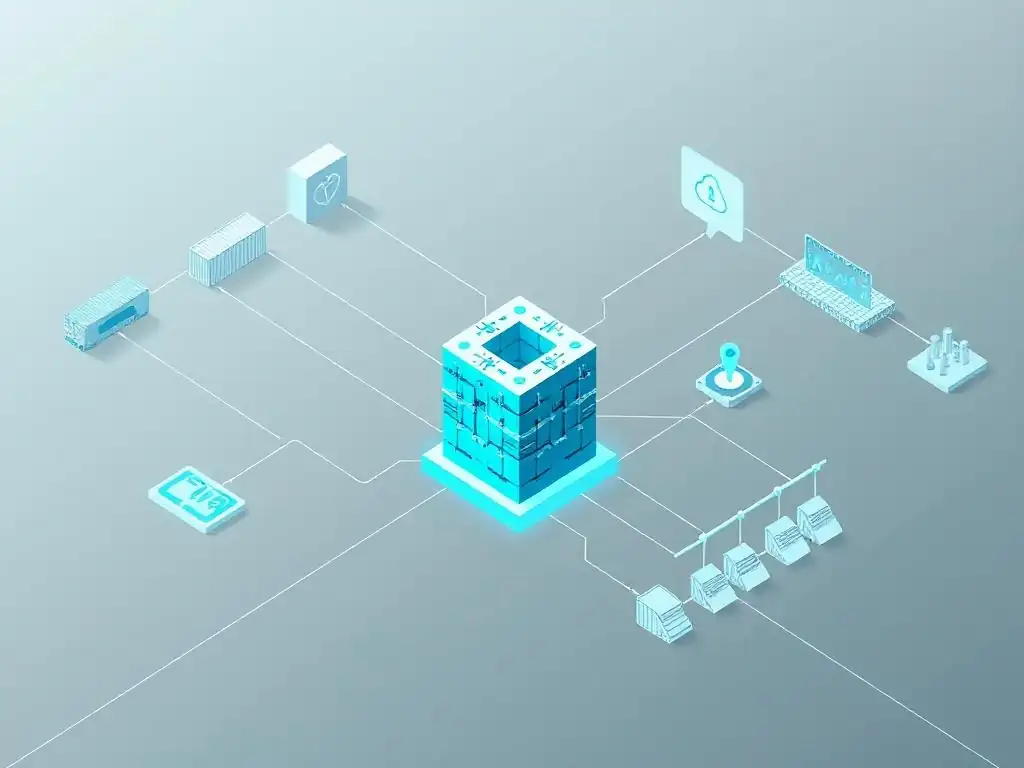
Improved Scalability Solutions in DLT: Sharding and Layer-2 Protocols
Scalability has been a persistent challenge for DLT networks. Modern DLT implementations are addressing this through innovative solutions like sharding and layer-2 protocols. Sharding, a database partitioning technique, is being applied to blockchain to divide the network into smaller, manageable shards. Each shard processes only a subset of transactions, increasing overall transaction throughput and network capacity. Ethereum 2.0, for example, is implementing sharding to significantly improve its scalability. By parallelizing transaction processing across shards, sharding aims to overcome the limitations of traditional monolithic blockchain architectures.
Layer-2 protocols offer another approach to scaling DLT networks. These protocols build on top of a base layer (layer-1) blockchain, offloading transaction processing and computation to secondary layers. Examples include payment channels like Bitcoin's Lightning Network and state channels.
Layer-2 solutions enable faster and cheaper transactions by moving them off the main blockchain, only settling the final state on the layer-1 chain. Rollups, another type of layer-2 solution, batch multiple transactions together and submit them to the layer-1 blockchain as a single transaction, improving efficiency and reducing fees. These scalability solutions, sharding and layer-2 protocols, are crucial for enabling blockchain technology enterprise applications future to handle the demanding transaction volumes and performance requirements of real-world business applications.
Enhanced Security Protocols for DLT Networks: Protecting Against Sybil and 51% Attacks
Security remains paramount for DLT networks. Modern implementations are incorporating enhanced security protocols to protect against various threats, including Sybil attacks and 51% attacks. Sybil attacks, where a malicious actor creates multiple fake identities to gain undue influence over the network, are mitigated through robust identity management and node reputation systems.
Proof-of-Stake (PoS) consensus mechanisms, increasingly adopted in place of Proof-of-Work (PoW), can also reduce the risk of Sybil attacks by tying voting power to staked cryptocurrency rather than computational power. Furthermore, techniques like verifiable random functions (VRFs) are used to ensure fairness and randomness in node selection processes, making it harder for attackers to predict and manipulate network operations.
51% attacks, where a single entity gains control of more than half of the network's hashing power (in PoW) or staking power (in PoS), pose a threat to blockchain immutability. To mitigate this, DLT networks are implementing various strategies, including increasing network decentralization, employing more robust consensus algorithms, and implementing checkpointing mechanisms.
Checkpointing involves periodically finalizing blocks and making them more resistant to reversal, even in the event of a 51% attack. Furthermore, advancements in cryptographic techniques, such as zero-knowledge proofs and multi-party computation, are enhancing data privacy and security within DLT networks, making them more resilient and secure for sensitive blockchain technology enterprise applications.
Interoperability Challenges and Solutions for Connecting Different DLTs
The proliferation of different DLT platforms has created interoperability challenges, hindering the seamless exchange of data and value between disparate DLT networks. Addressing interoperability is crucial for realizing the full potential of blockchain technology enterprise applications future, as businesses often need to interact with multiple DLT systems. Several solutions are emerging to tackle this challenge. Interoperability protocols, like Polkadot and Cosmos, aim to create a network of interconnected blockchains, enabling cross-chain communication and asset transfers. These protocols often utilize relay chains or hubs to facilitate communication between different blockchains while maintaining security and trust.
Cross-chain bridges provide another approach to interoperability, allowing for the transfer of assets and data between two specific blockchains. Bridges typically involve locking assets on one chain and minting equivalent representations on another chain, enabling cross-chain transactions. Standardization efforts are also underway to promote interoperability at the data and protocol levels.
Initiatives like the InterWork Alliance are working to develop common frameworks and standards for tokenization and cross-chain interactions, fostering greater compatibility between different DLT systems. Overcoming interoperability challenges is essential for creating a more connected and integrated DLT ecosystem, enabling seamless data exchange and value transfer across different blockchain technology enterprise applications and platforms.
DLT and the Future of Blockchain Technology: Trends and Predictions
DLT's Impact on Decentralized Finance (DeFi) Ecosystems
Distributed Ledger Technology is the bedrock of Decentralized Finance (DeFi), revolutionizing traditional financial systems. DeFi leverages DLT to create open, permissionless, and transparent financial services, eliminating intermediaries and empowering users with greater control over their assets. DLT enables the creation of decentralized exchanges (DEXs), lending and borrowing platforms, stablecoins, and other financial instruments that operate without central authorities. Smart contracts, deployed on DLT platforms like Ethereum, automate financial processes and enforce agreements, reducing counterparty risk and increasing efficiency.
The growth of DeFi has been exponential, with billions of dollars in value locked in DeFi protocols. DLT's inherent transparency and auditability enhance trust and security in DeFi ecosystems. However, challenges remain, including scalability, security vulnerabilities in smart contracts, and regulatory uncertainty.
Despite these challenges, DeFi is poised to reshape the future of finance, offering more inclusive and accessible financial services globally. DLT will continue to be the driving force behind DeFi innovation, enabling new financial models and empowering individuals and businesses with decentralized financial tools. The future of blockchain technology enterprise applications will see increasing integration with and influence from the rapidly evolving DeFi landscape.
DLT in Supply Chain Management: Enhancing Transparency and Traceability
DLT is transforming supply chain management by enhancing transparency, traceability, and efficiency. Traditional supply chains are often opaque and fragmented, making it difficult to track goods and verify their authenticity. DLT provides a shared, immutable ledger that records every step in the supply chain, from origin to consumer. This transparency enables businesses to track products in real-time, verify provenance, and combat counterfeiting. For example, DLT can be used to track the journey of food products, pharmaceuticals, or luxury goods, providing consumers with verifiable information about their origin and authenticity.
DLT also streamlines supply chain processes by automating workflows and reducing paperwork. Smart contracts can automate payments, trigger alerts for delays or deviations, and facilitate efficient logistics management. Furthermore, DLT can improve collaboration and trust among supply chain participants by providing a shared, trusted platform for data exchange. Companies like Walmart and Maersk are already leveraging DLT to improve their supply chain operations. The adoption of DLT in supply chain management is expected to grow significantly, enhancing efficiency, reducing costs, and building more resilient and transparent supply chains for blockchain technology enterprise applications future.
DLT and the Internet of Things (IoT): Securing Data and Devices
The Internet of Things (IoT) is generating massive amounts of data from connected devices. Securing this data and ensuring the integrity of IoT devices is a critical challenge. DLT offers a robust solution for securing IoT ecosystems. DLT can provide a decentralized and secure platform for managing IoT device identities, authenticating data, and facilitating secure communication between devices. By leveraging DLT, IoT data can be immutably recorded and verified, preventing tampering and ensuring data integrity.
DLT can also enable microtransactions between IoT devices, facilitating new business models for IoT services. For example, IoT devices can autonomously pay for services or data using micropayments enabled by DLT.
Furthermore, DLT can enhance the security and resilience of IoT networks by decentralizing control and reducing reliance on centralized servers, making them less vulnerable to single points of failure. The combination of DLT and IoT has the potential to create more secure, efficient, and autonomous IoT ecosystems, driving innovation in various sectors, including smart cities, industrial automation, and connected vehicles, and shaping the future of blockchain technology enterprise applications in the IoT domain.
The Role of DLT in Data Management and Data Sovereignty
DLT is playing an increasingly important role in revolutionizing data management and empowering data sovereignty. Traditional data management models often rely on centralized databases, giving control over data to a single entity. DLT enables decentralized data management, distributing data across multiple participants and giving individuals and organizations greater control over their data. Self-sovereign identity (SSI) solutions, built on DLT, empower individuals to control their digital identities and personal data, granting them data sovereignty. Individuals can manage their credentials and selectively share their data with verifiers without relying on intermediaries.
DLT also enhances data security and privacy by distributing data and employing cryptographic techniques. Data breaches in centralized systems can have widespread consequences. DLT's decentralized nature reduces the risk of large-scale data breaches, and cryptographic techniques like zero-knowledge proofs enable privacy-preserving data sharing and computation. Furthermore, DLT can improve data provenance and auditability, enabling organizations to track data lineage and ensure data integrity. As data becomes increasingly valuable, DLT's role in enabling data sovereignty and secure data management will become even more critical for blockchain technology enterprise applications future and in empowering individuals in the digital age.
Regulatory Landscape and the Adoption of DLT
Legal Considerations for Implementing DLT Solutions in Enterprise
Implementing DLT solutions in enterprise settings involves navigating a complex and evolving regulatory landscape. Legal considerations vary significantly across jurisdictions and depend on the specific application of DLT. Data privacy regulations, such as GDPR in Europe and CCPA in California, impact how personal data is handled on DLT networks.
Enterprises must ensure compliance with these regulations when using DLT to process personal data, particularly in permissioned DLT networks where data access and control are managed. Smart contracts, which automate agreements on DLT, raise legal enforceability questions. The legal status of smart contracts and their enforceability in different jurisdictions are still being clarified.
Financial regulations are particularly relevant for DLT applications in the financial sector. Regulations related to anti-money laundering (AML), know your customer (KYC), and securities laws apply to DLT-based financial services. Enterprises must comply with these regulations when implementing DLT solutions for payments, securities trading, or other financial applications. Furthermore, legal frameworks for digital assets and cryptocurrencies are still developing, creating uncertainty for businesses operating in this space. Clear legal frameworks and regulatory clarity are crucial for fostering wider adoption of blockchain technology enterprise applications and providing businesses with the confidence to invest in and deploy DLT solutions.
The Impact of Regulations on the Future of DLT Adoption
Regulations will significantly shape the future of DLT adoption. Well-designed regulations can provide clarity, build trust, and foster innovation in the DLT space. Conversely, poorly conceived or overly restrictive regulations can stifle innovation and hinder adoption. Balancing innovation with consumer protection and financial stability is a key challenge for regulators. Regulatory sandboxes and pilot programs are being used in some jurisdictions to test and evaluate DLT applications in a controlled environment, allowing regulators to gain a better understanding of the technology and its implications before implementing full-scale regulations.
The global nature of DLT poses challenges for regulators, as regulations can vary significantly across countries. International cooperation and harmonization of regulations are needed to create a consistent and predictable regulatory environment for DLT adoption. Industry engagement and collaboration between regulators, businesses, and technology providers are essential for developing effective and balanced regulations that promote responsible innovation and address potential risks associated with DLT. The future trajectory of blockchain technology enterprise applications will be heavily influenced by the evolving regulatory landscape and the ability of regulators to create a supportive and enabling environment for DLT innovation.
Discuss potential future regulations regarding smart contracts and data privacy
Future regulations are likely to focus increasingly on smart contracts and data privacy within DLT ecosystems. Regarding smart contracts, regulations may address issues of legal enforceability, liability for smart contract errors, and dispute resolution mechanisms. Standardization of smart contract languages and development practices could also be considered to improve security and reduce vulnerabilities. Regulations may require audits and certifications for smart contracts, particularly for high-value or critical applications, to ensure their reliability and security.
Data privacy regulations will continue to evolve and become more stringent. Regulations may mandate stronger data protection measures for DLT networks, including enhanced encryption, access control, and data minimization techniques. Privacy-enhancing technologies (PETs), such as zero-knowledge proofs and homomorphic encryption, may be promoted or mandated to enhance data privacy in DLT applications.
Regulations may also address data sovereignty and cross-border data transfers in DLT networks, ensuring individuals have greater control over their data and that data transfers comply with applicable privacy laws. The development of clear and comprehensive regulations for smart contracts and data privacy will be crucial for building trust and fostering responsible innovation in the blockchain technology enterprise applications future.
Conclusion: The Ongoing Evolution and Future Potential of DLT
Key Takeaways: DLT's Journey and its Transformative Power
The journey of Distributed Ledger Technology, from its early conceptual roots to modern implementations, has been marked by significant innovation and transformative potential. DLT has evolved from the foundational technology behind Bitcoin to a versatile platform with applications spanning diverse industries. Its core principles of decentralization, transparency, security, and immutability offer compelling advantages over traditional centralized systems.
Blockchain, as a specific type of DLT, has demonstrated the power of decentralized consensus and cryptographic security, paving the way for broader DLT adoption. The emergence of diverse DLT architectures, including permissioned and permissionless networks, and platforms like Hyperledger Fabric and Corda, reflects the adaptability of DLT to different use cases and enterprise requirements.
Modern DLT implementations are addressing key challenges like scalability and security through innovative solutions like sharding, layer-2 protocols, and enhanced security protocols. Interoperability solutions are also emerging to connect different DLT networks and foster a more integrated ecosystem. DLT is driving innovation in areas like DeFi, supply chain management, IoT, and data management, offering solutions for enhancing efficiency, transparency, and security. While regulatory challenges remain, the ongoing evolution of DLT and the development of clear legal frameworks are crucial for realizing its full transformative power and enabling widespread adoption of blockchain technology enterprise applications across various sectors.
The Future of Blockchain Technology Enterprise Applications: DLT's Central Role
Looking ahead, Distributed Ledger Technology will continue to play a central role in shaping the future of blockchain technology enterprise applications. DLT provides the fundamental infrastructure for building decentralized solutions that address real-world business challenges. As businesses increasingly recognize the benefits of transparency, security, and efficiency offered by DLT, adoption is expected to accelerate across various industries.
The focus will likely shift towards developing more sophisticated and scalable DLT platforms, enhancing interoperability, and addressing regulatory considerations. The convergence of DLT with other emerging technologies, such as AI, IoT, and cloud computing, will unlock new possibilities and drive further innovation in blockchain technology enterprise applications future. DLT's ability to foster trust, transparency, and efficiency positions it as a foundational technology for the next generation of enterprise systems and decentralized solutions, driving a paradigm shift in how businesses operate and interact in the digital age.
Frequently Asked Questions
What are some key ways blockchain technology is being used in enterprise applications beyond cryptocurrencies?
Blockchain is revolutionizing supply chain management with immutable tracking, enhancing data security with decentralized record-keeping, and streamlining identity verification through secure digital identities.
How is the future of blockchain technology likely to impact traditional business models?
Blockchain's decentralized nature will foster greater transparency and trust, leading to more efficient processes and potentially disrupting existing hierarchical structures with autonomous organizations.
What are some regulatory challenges facing the widespread adoption of blockchain technology in enterprise settings?
Lack of clear regulatory frameworks and concerns about data privacy regulations like GDPR are hindering adoption. Furthermore, the cross-border nature of blockchain presents jurisdictional complexities.
What is the relationship between DeFi (Decentralized Finance) and the broader future of blockchain technology?
DeFi showcases blockchain's potential to disrupt traditional financial services by offering decentralized lending, trading, and investment platforms, illustrating the power of permissionless innovation.
How has the evolution of Distributed Ledger Technology (DLT) impacted the development of blockchain technology enterprise applications future?
The shift from simple crypto applications to sophisticated DLT platforms has enabled more complex enterprise use cases, improving scalability and data management which are crucial for business adoption.
Final Reflection: Embracing the Decentralized Future
The journey of Distributed Ledger Technology (DLT), as we've explored, is far from over. The convergence of blockchain technology with enterprise applications is no longer a futuristic fantasy, but a tangible reality reshaping industries today. From its nascent conceptualization to the sophisticated implementations we see emerging, DLT's evolution underscores the power of innovation and the relentless pursuit of secure, transparent, and efficient systems.
This evolution has profoundly impacted the cultural and social landscape, fostering a new era of trust and collaboration. The potential for DLT to democratize access to information and resources is immense, and its continued development hinges on our ability to navigate the ethical and practical challenges it presents. The future of finance is decentralized, and the future of the internet is decentralized. It's about putting power back in the hands of the people.
- Vitalik Buterin. This quote encapsulates the core ethos driving the DLT revolution, a shift towards empowering individuals and fostering greater transparency in all aspects of our lives.
As we stand on the cusp of this decentralized future, I invite you to reflect on the implications of DLT in your own sphere of influence. How can you leverage the principles of transparency, security, and collaboration to build a more equitable and efficient world? Embrace the potential of blockchain technology and its enterprise applications, and become an active participant in shaping the future we want to see.
Unearth Your DLT Potential!
Thank you for exploring the fascinating evolution of distributed ledger technology. We hope you've gained valuable insights into how far this technology has advanced and where it's headed. Now, it's time to turn that knowledge into action.
Here are a few ways to dive deeper into the world of DLT:
- Identify a real-world problem where DLT could offer a better solution and develop a strategy for its implementation. This is your chance to apply what you've learned and think critically about the future of distributed ledger technology.
- Explore and compare different DLT platforms beyond Bitcoin and Ethereum. Consider platforms like Hyperledger Fabric, Corda, or Hedera Hashgraph and their specific use cases.
- Share this article with a colleague or friend interested in blockchain and start a discussion about the future of DLT.
Which current industry, in your opinion, stands to benefit most from a DLT revolution and why? Let's discuss in the comments below!
Leave a Reply