
How Blockchain is Enabling CrossPlatform PlaytoEarn Games

Welcome to Blockchain Trends, your go-to source for unraveling the real-world impact of blockchain technology!
Ever wondered how blockchain is revolutionizing the gaming landscape, creating entirely new economies and immersive experiences? Dive in to discover how blockchain playtoearn crossplatform games are breaking down barriers and paving the way for a decentralized future of gaming. Prepare to explore the innovative solutions, exciting opportunities, and potential challenges that lie ahead in this fascinating intersection of technology and entertainment. What secrets does the blockchain hold for the future of gaming? Let's find out!
How Blockchain is Enabling Cross-Platform Play-to-Earn Games
- Introduction: The Convergence of Blockchain, P2E, and Cross-Platform Gaming
- The Challenges of Traditional Cross-Platform Game Development
- Blockchain's Solution: Unlocking Seamless Cross-Platform P2E
- Benefits of Blockchain-Based Cross-Platform Play-to-Earn Games
- Key Features of Successful Blockchain Cross-Platform P2E Games
- Examples of Promising Blockchain Cross-Platform P2E Games
- Overcoming Challenges in Blockchain Cross-Platform P2E Development
- The Future of Blockchain Play-to-Earn Games Across Platforms
- Conclusion: Blockchain's Transformative Impact on Cross-Platform P2E Gaming
-
Frequently Asked Questions
- What are Blockchain playtoearn crossplatform games and how do they differ from traditional games?
- How does blockchain technology facilitate crossplatform play in these games?
- What are the potential benefits of Blockchain playtoearn crossplatform games for players?
- What are the challenges facing the widespread adoption of Blockchain playtoearn crossplatform games?
- How is the regulatory landscape evolving for Blockchain playtoearn crossplatform games?
- Final Reflection: Embracing the Decentralized Gaming Future
- Unearth Your Play-to-Earn Potential!
Introduction: The Convergence of Blockchain, P2E, and Cross-Platform Gaming
Defining Blockchain Play-to-Earn (P2E) Games
Blockchain play-to-earn (P2E) games represent a revolutionary shift in the gaming industry, moving away from traditional models where players spend money and time without tangible returns, towards systems where players can earn cryptocurrency and non-fungible tokens (NFTs) through gameplay. These games leverage blockchain technology to create in-game economies where digital assets have real-world value. For instance, players might earn tokens by winning battles, completing quests, or trading in-game items.
These tokens can often be exchanged for other cryptocurrencies or fiat money on exchanges, effectively allowing players to monetize their gaming skills and time investment. The core concept revolves around giving players true ownership of in-game assets and enabling them to participate in a game's economy in a meaningful and rewarding way.
This paradigm shift is significantly different from conventional free-to-play games that dominate the market, where in-game purchases primarily benefit the game developers, and players have limited to no control over the digital assets they acquire. In P2E games, players are not just consumers but also stakeholders in the game's ecosystem. Consider a game like Axie Infinity, one of the pioneers in this space.
Players breed, battle, and trade digital creatures called Axies, represented as NFTs on the blockchain. These Axies can be bought and sold on open marketplaces, and players can earn Smooth Love Potion (SLP) tokens by playing the game, which can then be exchanged for other cryptocurrencies. This real economic incentive fundamentally alters the player's relationship with the game, turning it into a potentially income-generating activity.
The Rise of Cross-Platform Gaming Experiences
Cross-platform gaming, the ability to play the same game across different devices and operating systems, has become increasingly popular and expected in the modern gaming landscape. Players today own a diverse array of devices, from powerful PCs and consoles to smartphones and tablets. They expect to be able to access their favorite games regardless of the device they are using at any given moment.
This trend is driven by several factors, including the increasing portability of gaming devices, the desire for seamless gaming experiences, and the social aspect of gaming, where players want to connect and play with friends regardless of their chosen platform. Games like Fortnite and Genshin Impact have demonstrated the massive appeal and commercial success of cross-platform play, allowing players on PlayStation, Xbox, PC, and mobile to interact and compete within the same game world.
The benefits of cross-platform gaming are multifaceted. For players, it offers convenience and flexibility, enabling them to continue their progress and engage with their gaming communities wherever they are. For game developers, cross-platform support expands their potential player base, reduces platform fragmentation, and can lead to increased revenue opportunities.
Moreover, it fosters larger and more vibrant online communities, as players are no longer restricted by platform barriers. The technical challenges of developing and maintaining cross-platform games are significant, requiring careful consideration of different hardware capabilities and operating systems. However, the demand for seamless, platform-agnostic gaming experiences is undeniable and continues to shape the direction of the industry.
Why Blockchain is Crucial for the Future of Cross-Platform P2E Games
Blockchain technology is emerging as a critical enabler for the future of cross-platform play-to-earn games by addressing fundamental challenges related to asset ownership, interoperability, and economic systems within these interconnected gaming environments. Traditional cross-platform games often struggle with issues like fragmented player data, platform-specific in-game currencies, and limited transferability of in-game assets between platforms. Blockchain offers solutions to these problems by providing a unified, transparent, and decentralized ledger for managing digital assets. This means that in-game items, characters, and currencies can be represented as NFTs or tokens on a blockchain, making them inherently cross-platform compatible.
The decentralized nature of blockchain ensures that ownership of these digital assets is not tied to a specific gaming platform or company. Instead, players truly own their in-game assets and can potentially use them across different games and platforms within the blockchain ecosystem. Imagine owning a rare sword in one game and being able to use or trade it in another game built on the same blockchain network – this level of interoperability and asset portability is a key promise of blockchain in gaming. Furthermore, blockchain facilitates the creation of robust and transparent in-game economies for cross-platform P2E games. Smart contracts, self-executing agreements written in code on the blockchain, can automate game mechanics, manage token distribution, and ensure fair and transparent gameplay across all platforms. This combination of asset ownership, interoperability, and economic transparency is why blockchain is becoming increasingly vital for realizing the full potential of cross-platform play-to-earn gaming.
The Challenges of Traditional Cross-Platform Game Development
Data Silos and Interoperability Issues
Traditional cross-platform game development often grapples with the problem of data silos, where player data, progress, and in-game assets are locked within the ecosystem of each specific platform. For example, a player might have a character and inventory on the PC version of a game that is entirely separate from their progress on the mobile version, even if it's the same game.
This fragmentation arises because each platform (e.g., Steam, PlayStation Network, App Store) typically operates its own user account systems, databases, and infrastructure. Developers must invest significant resources to build and maintain separate data management systems for each platform, leading to inefficiencies and complexities.
This data siloing directly hinders interoperability. In traditional systems, in-game items or currencies acquired on one platform are generally not transferable or usable on another, even within the same game. This lack of interoperability creates a disjointed player experience and limits the potential for cross-platform economies.
Players are effectively walled off within their chosen platform's ecosystem, unable to truly leverage their achievements or assets across different devices. For instance, if a player earns a rare skin in a console version of a game, they cannot typically use or trade that skin in the PC or mobile version. This fragmented approach undermines the concept of a unified cross-platform gaming experience and restricts the potential for richer, more interconnected game worlds.
Monetization and Revenue Sharing Complexities
Monetization in traditional cross-platform games becomes significantly complex due to varying platform policies and revenue sharing models. Each platform (like Apple App Store, Google Play Store, Steam, and console marketplaces) has its own rules regarding in-app purchases, transaction fees, and revenue splits with game developers. Apple and Google, for instance, typically take a 30% cut of in-app purchase revenue, while console platforms also have their own fee structures. This fragmented landscape makes it challenging for developers to implement consistent monetization strategies across all platforms and optimize revenue generation.
Furthermore, revenue sharing agreements can become intricate in cross-platform scenarios. If a player purchases an item in a cross-platform game, determining which platform and developer receives what share of the revenue can be a complex accounting and contractual process. This complexity is amplified when dealing with in-game currencies and economies that are not natively cross-platform. Developers often have to manage multiple payment gateways, track transactions across different platforms, and navigate diverse regulatory environments. This adds overhead and administrative burden, potentially reducing profitability and hindering the seamless integration of monetization features across all platforms in a traditional gaming setup.
Security Concerns and the Potential for Cheating
Security concerns are amplified in traditional cross-platform gaming environments, particularly regarding cheating and account security. When games operate across multiple platforms with varying security protocols and player bases, the attack surface for exploits and cheating increases. For example, PC platforms are generally more susceptible to cheating due to their open nature and the availability of third-party software and tools. If a game is cross-platform with PC and console, and the PC version is vulnerable to cheats, this can negatively impact the fairness and competitive integrity of the game for all players, regardless of their platform.
Account security also becomes a significant challenge. Players often use different accounts and credentials across various platforms, increasing the risk of compromised accounts and unauthorized access. If a player's account is hacked on one platform, it could potentially affect their progress and in-game assets across all linked platforms.
Traditional centralized account management systems can be single points of failure, making them attractive targets for hackers. Moreover, detecting and preventing cheating across diverse platforms requires sophisticated anti-cheat measures and constant vigilance from game developers. The lack of a unified and transparent security framework in traditional cross-platform gaming can lead to a less secure and less enjoyable experience for players.
Blockchain's Solution: Unlocking Seamless Cross-Platform P2E
Blockchain for Secure and Transparent Asset Ownership
Blockchain technology provides a robust solution for secure and transparent asset ownership in cross-platform play-to-earn games. By representing in-game assets as NFTs on a blockchain, players gain verifiable and immutable ownership of these digital items. Unlike traditional in-game assets that are controlled and stored by game developers on centralized servers, blockchain-based assets are recorded on a distributed ledger, making them resistant to censorship, manipulation, and single points of failure. Each NFT is unique and its ownership history is publicly auditable on the blockchain, ensuring transparency and trust.
This secure and transparent ownership is fundamental for cross-platform P2E games because it decouples asset ownership from specific gaming platforms. Players truly own their digital assets, regardless of the platform they use to access the game. For example, if a player earns a rare weapon NFT in a blockchain-based game, that weapon is not tied to a particular game version or platform.
The player can prove ownership of the NFT using their blockchain wallet, and the game can verify this ownership on the blockchain, regardless of whether the player is accessing the game on PC, mobile, or console. This shift to player-owned assets is a core principle of blockchain gaming and a key enabler for seamless cross-platform experiences.
NFTs as Universal Game Assets Across Platforms
Non-fungible tokens (NFTs) serve as universal game assets across platforms in blockchain-based games, providing a standardized and interoperable format for digital ownership. NFTs are unique cryptographic tokens that represent ownership of a specific digital item, in this case, in-game assets like characters, items, land, or virtual currency. Because NFTs are based on open blockchain standards, they are inherently platform-agnostic. An NFT created on one blockchain network can be recognized and utilized by any application or platform that supports the same standard. This universality is crucial for cross-platform P2E gaming as it allows in-game assets to transcend platform boundaries.
In practice, this means that a player who owns an NFT character in a blockchain game could potentially use that same character across different games and platforms that are part of the same blockchain ecosystem. For instance, if multiple games are built on the Ethereum blockchain and utilize the ERC-721 NFT standard, an NFT character from one game could theoretically be compatible and usable in another game.
This interoperability is a significant advancement over traditional gaming, where in-game assets are typically locked within a single game and platform. NFTs unlock the potential for a more interconnected and player-centric gaming ecosystem where digital assets have real utility and value across multiple virtual worlds.
Enabling Interoperability with Standardized Protocols (ERC-721, ERC-1155)
Standardized blockchain protocols, such as ERC-721 and ERC-1155 on the Ethereum network, are critical for enabling interoperability in blockchain-based cross-platform P2E games. ERC-721 is a standard for NFTs, designed for unique digital assets, making it suitable for representing individual in-game items like characters, rare weapons, or unique collectibles.
ERC-1155 is a more versatile standard that can represent both fungible tokens (like in-game currency) and non-fungible tokens within a single smart contract, allowing for efficient management of diverse asset types. These standards provide a common framework for developers to create and manage blockchain-based assets, fostering interoperability between different games and platforms.
By adhering to these widely adopted standards, game developers can ensure that their in-game assets are compatible with various blockchain wallets, marketplaces, and potentially other games that also utilize the same standards. For example, an NFT created using the ERC-721 standard can be traded on NFT marketplaces like OpenSea or Rarible, regardless of the game it originated from. Furthermore, as more games and platforms adopt these standards, the potential for true cross-game interoperability increases.
Imagine a future where players can seamlessly transfer their NFT assets between different blockchain games, creating a richer and more interconnected metaverse of gaming experiences. The adoption of standardized protocols is a fundamental step towards realizing this vision of interoperable and cross-platform blockchain gaming.
Benefits of Blockchain-Based Cross-Platform Play-to-Earn Games
Enhanced Player Ownership and Control
Blockchain-based cross-platform play-to-earn games significantly enhance player ownership and control over their in-game assets and gaming experience. In traditional gaming models, players essentially license digital assets; they don't truly own them. Game developers retain ultimate control and can modify, remove, or shut down in-game items and accounts at their discretion. Blockchain fundamentally shifts this paradigm by granting players verifiable ownership of their in-game assets through NFTs. Once a player acquires an NFT, it is theirs, recorded immutably on the blockchain, and not subject to the whims of a centralized game company.
This true ownership translates to greater control. Players can trade, sell, or even lend their NFT assets to other players outside of the game's direct control, fostering player-driven economies and marketplaces. Furthermore, blockchain can empower players with more influence over game governance and development decisions.
Some blockchain games are exploring decentralized autonomous organizations (DAOs) to allow token holders to vote on game updates, rule changes, and even the future direction of the game. This enhanced ownership and control not only benefits players financially but also fosters a stronger sense of community and investment in the game's ecosystem, leading to more engaged and loyal player bases.
Increased Player Engagement and Retention
Blockchain-based cross-platform P2E games are designed to increase player engagement and retention by offering tangible economic incentives and fostering a sense of real ownership. The play-to-earn model itself is a powerful motivator, as players are not just playing for entertainment but also for the potential to earn cryptocurrency or valuable NFTs. This financial aspect adds a new dimension to gameplay, making it more rewarding and engaging for many players. The cross-platform accessibility further enhances engagement by allowing players to access the game and their assets anytime, anywhere, on their preferred devices.
The combination of P2E mechanics and cross-platform accessibility creates a more persistent and immersive gaming experience. Players are incentivized to spend more time in the game, contributing to the in-game economy and community, knowing that their efforts can translate into real-world value. Moreover, the scarcity and tradability of NFT assets can create a sense of urgency and competition, driving player engagement.
For example, limited edition NFTs or rare in-game items become highly sought after, encouraging players to actively participate in the game to acquire and trade these valuable assets. Studies in behavioral economics suggest that ownership and the potential for reward are strong drivers of motivation and engagement, and blockchain P2E games are effectively leveraging these principles to create more captivating and sticky gaming experiences.
New Revenue Streams for Game Developers
Blockchain-based cross-platform P2E games unlock new and potentially more sustainable revenue streams for game developers beyond traditional monetization models like upfront game sales or in-app purchases. While these traditional models can still be incorporated, blockchain enables developers to tap into new revenue sources related to NFT sales, transaction fees within in-game marketplaces, and decentralized autonomous organization (DAO) governance. Initial NFT sales, especially for limited edition or early access assets, can generate significant upfront revenue for game developers. Furthermore, developers can earn royalties on secondary NFT sales in marketplaces, creating a continuous revenue stream as the in-game economy grows.
The transparent and decentralized nature of blockchain also allows for more innovative revenue sharing models with players and the community. For example, developers can distribute a portion of in-game token supply or NFT revenue to early adopters, active players, or content creators, fostering a more collaborative and community-driven ecosystem.
This shift towards shared ownership and revenue can align the incentives of developers and players, creating a more sustainable and mutually beneficial gaming ecosystem. Moreover, the global reach of blockchain and cryptocurrencies can open up new markets and player demographics for game developers, expanding their potential revenue base beyond geographical limitations.
Expanding the Play-to-Earn Ecosystem
Blockchain-based cross-platform P2E games are playing a crucial role in expanding the overall play-to-earn ecosystem and driving the adoption of blockchain technology within the broader gaming industry and beyond. By demonstrating the potential of P2E mechanics and cross-platform accessibility, these games are attracting a new wave of players and developers to the blockchain space.
The success of games like Axie Infinity and Splinterlands has shown that P2E can be a viable and engaging model, particularly in regions where earning even small amounts of cryptocurrency can have a significant economic impact. This success is inspiring more game developers to explore blockchain and P2E, leading to a rapid growth in the number and variety of blockchain games available.
The cross-platform aspect further broadens the reach of the P2E ecosystem by making these games accessible to a wider audience across different devices. Players who may not have access to high-end gaming PCs or consoles can still participate in P2E games through their smartphones or tablets. This inclusivity is crucial for democratizing access to gaming and economic opportunities within the metaverse.
Furthermore, the interoperability potential of blockchain and NFTs is paving the way for a more interconnected and expansive P2E ecosystem. As more games and platforms adopt blockchain standards, the vision of a metaverse where players can seamlessly move their assets and identities between different virtual worlds becomes increasingly tangible, driving the evolution and expansion of the entire play-to-earn landscape.
Key Features of Successful Blockchain Cross-Platform P2E Games
Cross-Platform Compatibility and Accessibility
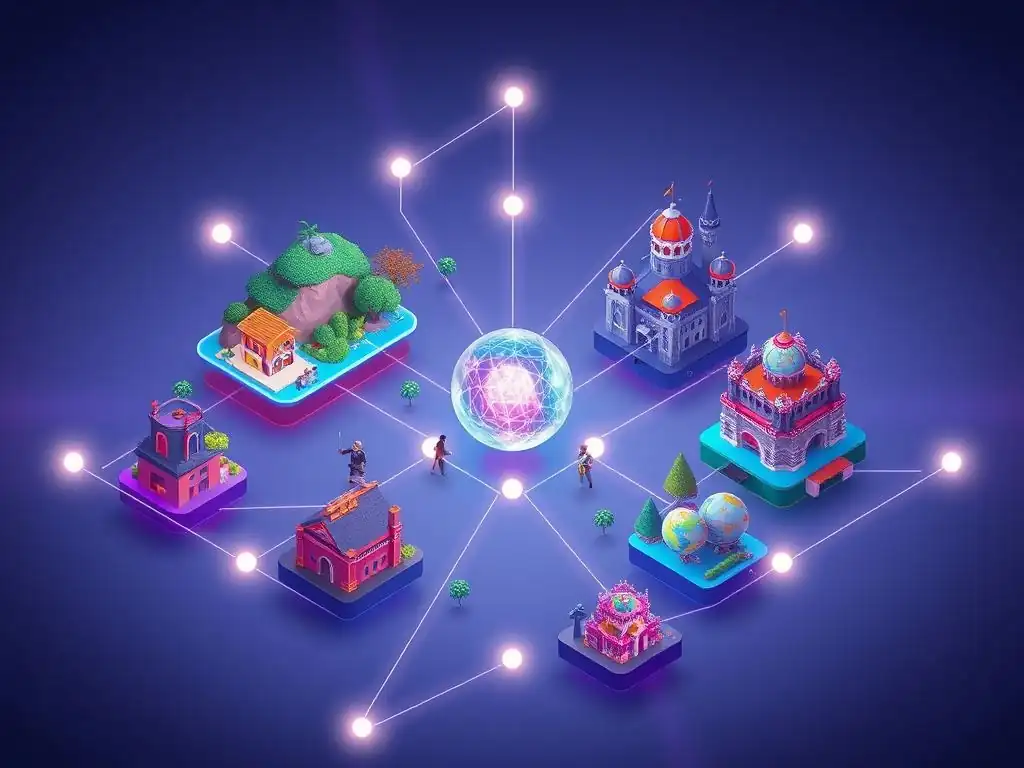
Successful blockchain cross-platform P2E games prioritize seamless cross-platform compatibility and accessibility to cater to a diverse player base and maximize engagement. This means ensuring that the game is playable and fully functional across various devices and operating systems, including PC, mobile (iOS and Android), and potentially consoles or web browsers.
Compatibility goes beyond simply launching on different platforms; it involves optimizing the gameplay experience for each device, considering screen sizes, input methods, and performance capabilities. For example, mobile versions may need simplified controls and optimized graphics compared to PC versions, while maintaining feature parity in terms of core gameplay and P2E mechanics.
Accessibility is equally important. Successful cross-platform P2E games aim to lower the barriers to entry for players, regardless of their technical expertise or financial resources. This can involve offering web browser-based versions for instant play, providing clear and user-friendly onboarding processes for new players, and ensuring that the initial investment required to start playing and earning is reasonable.
Furthermore, accessibility includes localization efforts to support multiple languages and regions, catering to a global player base. Games that achieve true cross-platform compatibility and accessibility are better positioned to attract a larger audience, foster a thriving community, and ultimately succeed in the competitive blockchain gaming market.
Engaging Gameplay and Sustainable Tokenomics
Engaging gameplay and sustainable tokenomics are paramount for the long-term success of any blockchain cross-platform P2E game. While the P2E aspect is a significant draw, players will only stay and invest their time and resources if the game itself is fun, challenging, and intrinsically rewarding. Successful P2E games prioritize core gameplay mechanics, compelling narratives, and enjoyable player experiences, rather than solely relying on financial incentives. This means focusing on game design principles that create engaging loops, offer meaningful progression systems, and foster social interaction and competition among players.
Sustainable tokenomics is equally crucial. The in-game economy must be carefully designed to balance token supply and demand, prevent inflation, and ensure that the P2E mechanics are viable over time. This involves implementing mechanisms to burn tokens, control token issuance, and create sinks for tokens within the game ecosystem.
For instance, games might introduce item crafting systems, character upgrades, or cosmetic purchases that require players to spend tokens, creating demand and supporting the token's value. A well-designed token economy should incentivize both playing and investing in the game, creating a virtuous cycle that benefits both players and developers in the long run. Games that fail to balance engaging gameplay with sustainable tokenomics risk losing players once the initial hype fades, regardless of their cross-platform capabilities.
Strong Community Building and Governance
Strong community building and governance are essential ingredients for successful blockchain cross-platform P2E games, fostering player loyalty, participation, and long-term sustainability. Blockchain games thrive on community interaction, as players are not just consumers but also stakeholders in the game's ecosystem. Successful games actively cultivate a vibrant and supportive community through various channels, including in-game social features, online forums, social media groups, and dedicated community managers. Encouraging player feedback, hosting community events, and recognizing player contributions are key aspects of community building.
Governance plays an increasingly important role in blockchain games, particularly in P2E models. Decentralized governance, often through DAOs, can empower players to participate in decision-making processes related to game updates, tokenomics adjustments, and even the future direction of the game. This shared governance model fosters a sense of ownership and responsibility within the community, leading to greater player engagement and long-term commitment. Games that prioritize community building and decentralized governance are more likely to create a loyal player base, adapt to player needs, and build a thriving and sustainable ecosystem for their cross-platform P2E game.
Secure and Scalable Blockchain Infrastructure (Layer-2 Solutions)
Secure and scalable blockchain infrastructure is a fundamental requirement for successful blockchain cross-platform P2E games, ensuring smooth gameplay, low transaction costs, and robust security. Blockchain networks like Ethereum, while popular, can face scalability challenges and high transaction fees (gas fees), especially during periods of high network activity. These limitations can negatively impact the user experience in P2E games, where frequent transactions for in-game actions and asset trading are common. Therefore, successful games often leverage Layer-2 scaling solutions or alternative blockchains to address these issues.
Layer-2 solutions, such as Polygon, Arbitrum, or Optimism, are designed to improve the scalability and reduce transaction costs of Layer-1 blockchains like Ethereum. They achieve this by processing transactions off-chain while still benefiting from the security and decentralization of the main blockchain. By utilizing Layer-2 solutions, P2E games can offer faster transaction speeds and significantly lower gas fees, making gameplay more affordable and accessible for players, especially for microtransactions and frequent in-game actions.
Alternatively, some games opt to build on alternative blockchains that are designed for scalability and lower fees from the outset, such as Solana or Flow. Choosing the right blockchain infrastructure is a critical technical decision that directly impacts the performance, cost-effectiveness, and overall success of blockchain cross-platform P2E games.
Examples of Promising Blockchain Cross-Platform P2E Games
Axie Infinity: A Case Study in Cross-Platform NFT Integration
Axie Infinity stands as a prominent case study in successful blockchain cross-platform NFT integration, demonstrating the potential of P2E gaming and cross-platform accessibility. Initially gaining traction primarily on PC, Axie Infinity expanded its reach significantly by launching a mobile version, making the game accessible to a much broader audience, particularly in regions with high mobile penetration.
This cross-platform approach was crucial to Axie Infinity's rapid growth, allowing players from diverse backgrounds and device preferences to participate in the Axie ecosystem. The game's core mechanics revolve around collecting, breeding, and battling digital creatures called Axies, which are represented as NFTs on the Ethereum blockchain.
The seamless integration of NFTs is central to Axie Infinity's cross-platform success. Players own their Axies as NFTs, which are portable and tradable across different platforms and marketplaces. Whether a player breeds an Axie on their PC or battles with it on their mobile device, the ownership and value of the Axie NFT remain consistent.
This cross-platform NFT integration provides a unified and consistent player experience, regardless of the device used. Axie Infinity's success highlights the power of combining P2E mechanics with cross-platform accessibility and robust NFT integration to create a thriving blockchain gaming ecosystem, reaching millions of players globally and pioneering the concept of play-to-earn.
Splinterlands: Leveraging Blockchain for Player-Owned Economies
Splinterlands, a collectible card game built on the Hive blockchain, provides another compelling example of leveraging blockchain for player-owned economies in a cross-platform P2E setting. Splinterlands is designed to be accessible across various platforms, including web browsers and mobile devices, ensuring broad accessibility for players. The game's core gameplay involves collecting and battling with digital trading cards, and crucially, these cards are represented as NFTs on the blockchain, granting players true ownership and control over their in-game assets.
Splinterlands has successfully built a player-owned economy by empowering players to trade, rent, and sell their NFT cards on open marketplaces. This player-driven economy is a key feature of Splinterlands' cross-platform P2E model. Players can earn cryptocurrency (DEC) and NFT rewards through gameplay, which they can then use to further enhance their card collections or trade with other players.
The blockchain foundation ensures transparency and security in these transactions, fostering trust and participation in the in-game economy. Splinterlands demonstrates how blockchain can enable robust and player-centric economies in cross-platform games, empowering players and creating a more engaging and rewarding gaming experience across different devices.
Gods Unchained: Combining PC and Mobile Gaming with P2E Rewards
Gods Unchained, a tactical trading card game, exemplifies the combination of PC and mobile gaming with play-to-earn rewards in the blockchain space. Gods Unchained initially launched as a PC-centric game, focusing on providing a high-quality, competitive trading card game experience. Recognizing the importance of cross-platform accessibility, the developers expanded the game to mobile platforms, allowing players to engage with Gods Unchained on the go. This cross-platform expansion broadened the game's reach and player base, making it accessible to a wider audience.
Gods Unchained integrates blockchain and P2E mechanics by representing its game cards as NFTs on the Ethereum blockchain. Players earn these NFT cards through gameplay and can trade them on marketplaces, creating a P2E economy.
The game's cross-platform nature ensures that players can access their NFT card collections and participate in the P2E ecosystem regardless of whether they are playing on PC or mobile. Gods Unchained showcases how blockchain can enhance traditional PC gaming experiences by adding P2E elements and extending gameplay to mobile platforms, creating a more versatile and rewarding cross-platform gaming ecosystem for players who enjoy strategic trading card games.
Overcoming Challenges in Blockchain Cross-Platform P2E Development
Scalability Issues and Transaction Costs
Scalability issues and transaction costs remain significant challenges in blockchain cross-platform P2E development, particularly when using blockchains like Ethereum. While Layer-2 solutions and alternative blockchains offer improvements, scalability and cost-effectiveness are still ongoing concerns. High transaction fees (gas fees) on congested blockchains can deter players from engaging in frequent in-game transactions, such as trading items or claiming rewards, especially for microtransactions which are common in many P2E games. Scalability limitations can also lead to network congestion and slower transaction processing times, impacting the real-time gameplay experience, especially in fast-paced or competitive games.
Developers are actively exploring various strategies to mitigate these challenges. Optimizing smart contract code to reduce gas consumption, implementing batch transactions to process multiple actions in a single transaction, and carefully selecting the most appropriate blockchain infrastructure for their game are all crucial considerations. Layer-2 scaling solutions, sidechains, and alternative blockchains with lower fees and higher throughput are becoming increasingly popular choices for blockchain game developers. Furthermore, research and development in blockchain technology are continuously advancing, with new scaling solutions and more efficient consensus mechanisms emerging, promising to alleviate scalability and cost concerns in the future of blockchain gaming.
Regulatory Uncertainty and Compliance
Regulatory uncertainty and compliance pose ongoing challenges for blockchain cross-platform P2E games, as the legal and regulatory landscape surrounding cryptocurrencies and NFTs is still evolving globally. Different jurisdictions have varying approaches to regulating digital assets and blockchain-based activities, creating a complex web of compliance requirements for game developers operating internationally. Issues such as classifying in-game tokens and NFTs, complying with securities laws, and navigating anti-money laundering (AML) and know-your-customer (KYC) regulations are critical considerations for blockchain game developers.
The lack of clear and consistent regulations can create uncertainty and risks for both developers and players. Game developers need to carefully consider the legal implications of their P2E mechanics, token distribution, and NFT sales in different jurisdictions. Compliance with regulations can be costly and time-consuming, potentially hindering innovation and slowing down the development of blockchain games.
Furthermore, regulatory actions in certain regions could potentially impact the accessibility and operations of blockchain games. Engaging with legal experts, staying informed about regulatory developments, and adopting proactive compliance measures are essential for navigating the evolving regulatory landscape and ensuring the long-term sustainability of blockchain cross-platform P2E games.
Educating Players About Blockchain Technology
Educating players about blockchain technology and its implications for gaming is a crucial challenge for the mass adoption of blockchain cross-platform P2E games. Many mainstream gamers are unfamiliar with concepts like blockchain, NFTs, cryptocurrency wallets, and decentralized finance (DeFi). The technical jargon and perceived complexity of blockchain can be a barrier to entry for new players who are accustomed to traditional gaming models. Therefore, effective player education is essential to onboard mainstream gamers into the world of blockchain gaming and realize the full potential of P2E.
Game developers need to prioritize user-friendly onboarding experiences that simplify the interaction with blockchain technology. This includes providing clear and concise explanations of blockchain concepts within the game itself, offering intuitive wallet integration processes, and creating educational resources that are accessible and engaging for non-technical users.
Focusing on the benefits of blockchain for players, such as true asset ownership and P2E opportunities, can be more effective than overwhelming them with technical details. Furthermore, community-driven education initiatives, such as tutorials, guides, and player support forums, can play a vital role in demystifying blockchain and fostering wider adoption of blockchain cross-platform P2E games.
The Future of Blockchain Play-to-Earn Games Across Platforms
Metaverse Integration and Immersive Experiences
The future of blockchain play-to-earn games across platforms is inextricably linked to metaverse integration and the creation of more immersive gaming experiences. The metaverse envisions a network of interconnected virtual worlds where users can interact, socialize, and transact using digital avatars and assets. Blockchain technology, with its ability to enable true digital ownership and interoperability, is a foundational building block for the metaverse. Cross-platform P2E games are poised to play a central role in this evolving metaverse, offering players opportunities to earn, own, and utilize digital assets across multiple virtual environments.
Imagine a future where players can seamlessly move their NFT characters and items between different blockchain games and metaverse platforms, creating a persistent digital identity and inventory that transcends individual games. Cross-platform P2E games can become gateways to these interconnected metaverse experiences, offering immersive gameplay, social interactions, and economic opportunities within these virtual worlds.
Integration with virtual reality (VR) and augmented reality (AR) technologies can further enhance the immersiveness of these metaverse-connected P2E games, creating richer and more engaging experiences for players. The convergence of blockchain, cross-platform gaming, and the metaverse is expected to drive the next wave of innovation in the gaming industry, creating new forms of entertainment and digital economies.
Decentralized Autonomous Organizations (DAOs) in Game Governance
Decentralized Autonomous Organizations (DAOs) are likely to play an increasingly prominent role in the governance of blockchain play-to-earn games across platforms, empowering players and fostering more community-driven game development. DAOs are community-led entities with rules encoded on a blockchain, enabling decentralized and transparent decision-making processes. In the context of P2E games, DAOs can be used to govern various aspects of the game, including tokenomics adjustments, game updates, treasury management, and even the future roadmap of the game.
By implementing DAO governance, blockchain game developers can shift away from centralized control and empower players to have a direct say in the game's evolution. Token holders within the game's ecosystem can participate in voting on proposals and shaping the direction of the game, fostering a sense of ownership and shared responsibility.
DAOs can also enhance transparency and accountability in game governance, as all decisions and transactions are recorded on the blockchain and auditable by the community. The adoption of DAOs in cross-platform P2E games is expected to lead to more democratic and player-centric game ecosystems, where the community plays a more active and influential role in shaping the gaming experience.
The Evolution of Game Economies and Player Incentives
The game economies and player incentives within blockchain play-to-earn games across platforms are expected to evolve significantly in the future, moving beyond simple P2E models towards more complex and sustainable economic systems. Early P2E games often focused primarily on rewarding players with tokens for basic gameplay actions, which can sometimes lead to inflationary tokenomics and unsustainable economies. Future blockchain games are likely to adopt more sophisticated economic models that balance earning opportunities with intrinsic gameplay rewards, skill-based progression, and diverse player motivations.
This evolution may involve incorporating elements of decentralized finance (DeFi) into game economies, such as staking, yield farming, and decentralized lending, to create more robust and dynamic financial systems within games. Furthermore, games may explore new forms of player incentives beyond purely financial rewards, such as social status, recognition, creative expression, and community contribution.
The focus is shifting towards creating sustainable game economies that are not solely dependent on new player influx but are also driven by intrinsic gameplay value, player creativity, and long-term community engagement. As blockchain gaming matures, we can expect to see more innovative and sophisticated game economies emerge, creating more engaging and rewarding experiences for players across platforms.
Conclusion: Blockchain's Transformative Impact on Cross-Platform P2E Gaming
The Potential for Mass Adoption of Blockchain Games
Blockchain technology holds immense potential to drive the mass adoption of games, particularly through the cross-platform play-to-earn model. By addressing key limitations of traditional gaming, such as lack of player ownership and fragmented ecosystems, blockchain offers a compelling value proposition for both players and developers.
The P2E mechanic provides a tangible economic incentive for players to engage with games, potentially attracting a new wave of gamers who are drawn to the opportunity to earn while playing. Cross-platform accessibility further broadens the reach of blockchain games, making them available to a wider audience across various devices, breaking down platform barriers and fostering inclusivity.
As blockchain technology matures and becomes more user-friendly, and as player education improves, the barriers to entry for mainstream gamers will continue to decrease. The success of early blockchain P2E games has demonstrated the viability and appeal of this model, paving the way for wider adoption. With ongoing advancements in scalability solutions, regulatory clarity, and user experience design, blockchain-based cross-platform P2E games are poised to transition from a niche market to a mainstream segment of the gaming industry, attracting millions of players globally and transforming the way people play and engage with games.
The Future of Gaming is Decentralized and Cross-Platform
The trajectory of the gaming industry points towards a future that is increasingly decentralized and cross-platform, and blockchain technology is a key catalyst in driving this transformation. Decentralization, enabled by blockchain, empowers players with true ownership of digital assets, greater control over their gaming experience, and participation in game governance. Cross-platform accessibility ensures that players can access their favorite games and assets seamlessly across different devices, breaking down platform silos and fostering a more unified and interconnected gaming ecosystem.
The convergence of decentralization and cross-platform gaming is creating a new paradigm where players are not just consumers but also active participants and stakeholders in the games they play. This shift towards player-centric gaming is expected to reshape the industry, leading to more engaging, rewarding, and sustainable gaming ecosystems. Blockchain-based cross-platform P2E games are at the forefront of this evolution, pioneering new models of game development, monetization, and player interaction that are setting the stage for the future of gaming.
Embracing the Innovation of Blockchain in Play-to-Earn
Embracing the innovation of blockchain in play-to-earn gaming is crucial for the continued growth and evolution of the gaming industry. Blockchain technology offers transformative solutions to long-standing challenges in gaming, unlocking new possibilities for player empowerment, economic models, and cross-platform experiences. Game developers, players, and the broader gaming community should actively explore and support the development of blockchain-based cross-platform P2E games, recognizing their potential to revolutionize the way games are created, played, and experienced.
The journey of blockchain gaming is still in its early stages, and there are challenges to overcome, such as scalability, regulation, and player education. However, the potential benefits of blockchain in gaming are undeniable. By embracing innovation, fostering collaboration, and addressing these challenges proactively, the gaming industry can unlock the full transformative impact of blockchain and usher in a new era of decentralized, player-owned, and cross-platform gaming experiences that benefit both players and developers alike.
Frequently Asked Questions
What are Blockchain playtoearn crossplatform games and how do they differ from traditional games?
Blockchain playtoearn crossplatform games allow players to earn real-world rewards, often in the form of cryptocurrency or NFTs, for their in-game achievements. They also enable seamless gameplay across different devices and platforms, unlike traditional games which are often restricted to a single platform and don't offer monetary rewards to players.
How does blockchain technology facilitate crossplatform play in these games?
Blockchain provides a decentralized and immutable ledger for tracking in-game assets. This allows players to own and transfer assets across different platforms that integrate with the same blockchain network, creating a unified and interoperable gaming experience.
What are the potential benefits of Blockchain playtoearn crossplatform games for players?
Players can earn income while playing, have true ownership of their in-game assets, and experience seamless gameplay across multiple devices. This creates a more engaging and rewarding gaming experience.
What are the challenges facing the widespread adoption of Blockchain playtoearn crossplatform games?
Challenges include the complexity of blockchain technology, regulatory uncertainty surrounding cryptocurrencies and NFTs, and the potential for high transaction fees on some blockchain networks. Scalability issues and the need for user-friendly interfaces are also important considerations.
How is the regulatory landscape evolving for Blockchain playtoearn crossplatform games?
The regulatory environment is still developing and varies significantly across different jurisdictions. Issues being addressed include the legal status of cryptocurrencies and NFTs, consumer protection, and the potential for money laundering and other illicit activities.
Final Reflection: Embracing the Decentralized Gaming Future
The promise of true ownership and interoperability within the gaming world, once a distant dream, is rapidly becoming a reality thanks to blockchain technology. The rise of blockchain playtoearn crossplatform games isn't just a trend; it's a fundamental shift in how we perceive and interact with virtual worlds, empowering players in unprecedented ways and reshaping the very fabric of the gaming industry.
This shift resonates deeply because it addresses a core desire: the desire for control and agency over our digital assets and experiences. The ability to earn, trade, and utilize in-game items across different platforms fosters a sense of belonging and investment that traditional gaming models often lack. As the legendary game designer Shigeru Miyamoto once said, Video games are bad for you? That's what they said about rock 'n' roll.
This sentiment rings true today, as blockchain gaming challenges conventional norms and paves the way for a more equitable and engaging future.
Now, consider the implications of this decentralized revolution. How can you, as a player, developer, or investor, contribute to this evolving landscape? Embrace the potential of blockchain playtoearn crossplatform games. Explore the possibilities, support innovative projects, and advocate for a future where gaming is not just entertainment, but a pathway to ownership, community, and shared prosperity. The future of gaming is decentralized, and it's waiting for you to join the adventure.
Okay, I'm ready to craft a Call to Action (CTA) for a web article on Blockchain Trends (blockchaintrends.org) titled: "How Blockchain is Enabling CrossPlatform PlaytoEarn Games." Here it is:
Unearth Your Play-to-Earn Potential!
Thanks for exploring how blockchain is revolutionizing cross-platform gaming! Now that you understand the power of Play-to-Earn, it's time to jump in and become a part of this exciting movement. Let's turn knowledge into action!
- Dive into a Play-to-Earn Game: Explore the vast landscape and select a cross-platform game to begin earning crypto and building your collection today. This is the most direct way to experience the potential of blockchain gaming.
- Follow Blockchain Trends on social media. Stay up-to-date on the newest trends and exciting new games.
- Share this article with your gamer friends who haven't discovered the potential of crypto gaming!
What innovative play-to-earn game will you dive into first, and what are your biggest hopes for the future of cross-platform gaming?
Leave a Reply