
The Potential of Blockchain for Enhancing Game Longevity

Welcome to Blockchain Trends, your compass in the rapidly evolving world of decentralized innovation. Beyond the headlines of cryptocurrency, we delve into the transformative potential of blockchain across industries. Curious about how this revolutionary technology can reshape sectors beyond finance? Our focus today is on Blockchain and Gaming and specifically, exploring Blockchain game longevity strategies. Discover how blockchain's unique attributes can revitalize and extend the lifespan of your favorite games – and perhaps even create entirely new gaming experiences. Intrigued? Let's dive in and uncover the secrets to sustainable success in the burgeoning world of blockchain-powered gaming!
The Potential of Blockchain for Enhancing Game Longevity
- Introduction: Blockchain's Role in Extending Game Lifespans
- Understanding the Challenges to Traditional Game Longevity
- How Blockchain Technology Addresses Game Longevity Issues
- Blockchain Game Longevity Strategies: Key Applications
- Case Studies: Blockchain Games Demonstrating Enhanced Longevity
- Overcoming Barriers to Blockchain Game Adoption for Longevity
- The Future of Game Longevity: Blockchain as a Catalyst
- Conclusion: Securing the Future of Games with Blockchain
-
Frequently Asked Questions
- How can blockchain technology contribute to the long-term success of video games?
- What are some specific examples of how blockchain improves game economies?
- How does blockchain address concerns about centralized control in the gaming industry?
- What role does blockchain play in preventing game abandonment or server shutdowns?
- What are some of the regulatory challenges associated with implementing blockchain in games?
- Final Reflection: Embracing Decentralized Game Futures
- Ignite Your Gaming Future!
Introduction: Blockchain's Role in Extending Game Lifespans
The gaming industry is a dynamic and rapidly evolving sector, constantly pushing the boundaries of technology and entertainment. Yet, despite its innovative spirit, the longevity of video games remains a persistent challenge. Many beloved games, even those that once boasted thriving communities, eventually fade away due to server shutdowns, lack of updates, or waning player interest.
Blockchain technology, initially recognized for its revolutionary impact on finance through cryptocurrencies, presents a compelling paradigm shift with the potential to significantly enhance game longevity. By decentralizing game assets, economies, and even governance, blockchain offers novel solutions to the traditional pitfalls that shorten the lifespan of video games.
This article delves into the potential of blockchain to transform game longevity strategies, exploring how it addresses the inherent limitations of centralized game models. We will examine the challenges faced by traditional games, how blockchain technology provides solutions, key blockchain game longevity strategies, real-world case studies, and the future prospects of blockchain in ensuring the enduring legacy of video games. The goal is to provide a comprehensive understanding of how blockchain is not just changing the gaming landscape, but also paving the way for games that can thrive for decades to come, driven by player ownership and community governance.
Understanding the Challenges to Traditional Game Longevity
The Problem of Centralized Control and Content Ownership
Traditional video games operate under a centralized model where game developers and publishers retain complete control over the game world, its assets, and its economy. This centralized authority, while necessary for initial development and operation, inherently limits player ownership and long-term game viability. Players invest countless hours and sometimes significant financial resources into games, acquiring in-game items and progressing through the narrative.
However, these assets and achievements are ultimately tied to the game company's servers and terms of service. If the company decides to shut down the game, players lose access to everything they have accumulated, effectively erasing their investment and contributions.
This lack of true ownership also extends to content creation. While some games offer modding tools or user-generated content platforms, the intellectual property and control still reside with the game company. Players are essentially renters in these digital worlds, subject to the decisions and lifespan dictated by the central authority.
This centralized control can lead to situations where player-created content is removed, in-game economies are manipulated, or core game mechanics are altered without player consent, directly impacting player engagement and the long-term health of the game. For example, numerous massively multiplayer online role-playing games (MMORPGs) have been shut down over the years, leaving dedicated player communities stranded and their in-game investments worthless.
Limitations of Traditional Game Economies
Traditional in-game economies, often based on closed-loop systems managed by game developers, face inherent limitations that impact game longevity. These economies frequently rely on in-game currencies that have no value outside the game ecosystem. While developers attempt to balance these economies, they are susceptible to inflation, deflation, and manipulation, often requiring constant intervention and updates. Furthermore, the lack of real-world value for in-game assets limits player incentives for long-term engagement and investment. Players understand that their in-game wealth and achievements are confined to the game's lifespan, reducing the perceived value of their time and effort.
The centralized nature of these economies also means that developers can unilaterally alter the rules, impacting the value of in-game items and currencies. For instance, a game company might introduce new, more powerful items, devaluing older items and disrupting the established economy. This can lead to player dissatisfaction and a decline in participation.
Moreover, the absence of interoperability between game economies creates walled gardens. Assets earned in one game cannot be used or traded in another, further limiting their perceived value and hindering the potential for player-driven, cross-game economies that could contribute to the overall longevity of the gaming ecosystem.
The Impact of Server Shutdowns on Game Preservation
Server shutdowns represent the most definitive end to a traditional online game's lifespan. When a game's servers are taken offline, the entire game world becomes inaccessible, erasing years of player progress, community building, and digital history. This is a significant loss not only for players but also for game culture and preservation. Countless classic online games have been lost to server shutdowns, leaving behind only memories and fragmented online archives. The decision to shut down servers is often driven by economic factors – dwindling player bases making the cost of maintaining servers outweigh the revenue generated.
This economic reality highlights a fundamental flaw in the traditional model. Games that might still have dedicated player communities or historical significance are sacrificed because the centralized operational model is no longer profitable for the game company. The loss extends beyond just gameplay. The social fabric of online communities built around these games is disrupted, and the cultural heritage embodied in player-created content, strategies, and shared experiences vanishes. Server shutdowns underscore the precarious nature of digital game ownership in a centralized environment and emphasize the need for more sustainable and player-centric models to ensure game preservation and longevity.
How Blockchain Technology Addresses Game Longevity Issues
Decentralized Game Assets: Ownership and Transferability
Blockchain technology offers a fundamental shift in game asset ownership by enabling decentralization. Through Non-Fungible Tokens (NFTs), blockchain allows for the creation of unique, verifiable digital assets that players truly own. Unlike traditional in-game items that reside on company servers, blockchain-based assets are recorded on a distributed ledger, granting players provable ownership and control. This ownership extends beyond the confines of a single game, as NFTs can be traded and transferred on open marketplaces, creating a secondary market and real-world value for in-game items.
This paradigm shift empowers players by allowing them to accumulate digital assets that retain value even if a game shuts down. For example, a rare sword acquired in a blockchain game could be sold or traded on an NFT marketplace, potentially recouping some of the player's investment or even generating profit. The transferability of these assets also fosters interoperability between games.
Imagine earning a unique character skin in one game and being able to use it, or trade it for assets, in another game within the same ecosystem. This cross-game utility enhances the value and longevity of digital assets, incentivizing players to engage with blockchain-based games and build lasting digital collections.
Blockchain-Based In-Game Economies: Sustainable and Player-Driven
Blockchain technology facilitates the creation of more sustainable and player-driven in-game economies through the use of cryptocurrencies and decentralized financial (DeFi) mechanisms. Instead of relying on closed-loop in-game currencies controlled by developers, blockchain games can utilize cryptocurrencies that have real-world value and are traded on open exchanges. This introduces a layer of transparency and decentralization, reducing the risk of developer manipulation and fostering a more robust and player-centric economy.
DeFi tools, such as decentralized exchanges and yield farming, can be integrated into game economies to provide players with opportunities to earn and manage their in-game assets in new and engaging ways. For instance, players could earn cryptocurrency rewards for completing in-game tasks, stake their in-game tokens to earn passive income, or participate in decentralized autonomous organizations (DAOs) to influence the game's economy and development. This shift towards player-driven economies can create more dynamic and engaging gameplay loops, as players become active participants in the economic ecosystem of the game, contributing to its long-term sustainability and vibrancy.
Enhanced Game Security and Anti-Cheat Measures Using Blockchain
Blockchain's inherent security features can be leveraged to enhance game security and combat cheating, contributing to a fairer and more enjoyable gaming experience that supports game longevity. The immutability and transparency of blockchain can be used to verify the authenticity of in-game assets and prevent fraud. By recording asset ownership and transaction history on the blockchain, developers can create tamper-proof records, making it significantly harder for cheaters to duplicate or illegally acquire in-game items.
Furthermore, blockchain can be used to implement decentralized anti-cheat systems. Traditional anti-cheat solutions are often centralized and can be bypassed or circumvented. A blockchain-based system could distribute the responsibility of cheat detection and prevention across a network, making it more resilient and difficult to compromise. Smart contracts can be used to automate the enforcement of game rules and penalties for cheating, ensuring a fairer playing field for all participants. By reducing cheating and enhancing security, blockchain can contribute to a more positive and trustworthy game environment, encouraging player retention and extending the game's lifespan.
Blockchain Game Longevity Strategies: Key Applications
Tokenized In-Game Assets and NFTs for Long-Term Value
Creating Scarcity and Collectibility
Tokenized in-game assets, particularly NFTs, are foundational for blockchain game longevity strategies due to their ability to create verifiable scarcity and enhance collectibility. Unlike traditional digital assets that can be infinitely duplicated, NFTs are unique and limited in supply, recorded permanently on the blockchain. This inherent scarcity drives value and creates a sense of ownership and prestige for players who acquire rare or limited-edition NFTs. Developers can strategically design in-game items, characters, or land parcels as NFTs with varying levels of rarity and utility, fostering a thriving collector's market and incentivizing player engagement.
For example, consider a blockchain game that releases a limited number of legendary swords as NFTs. The scarcity of these swords, combined with their in-game power and unique visual design, will naturally increase their desirability and value within the player community. Players are motivated to acquire and trade these scarce assets, building a robust secondary market that extends beyond the game itself. This collectibility aspect not only drives engagement during the game's active lifecycle but also ensures that these digital assets retain value and potentially appreciate over time, even after the game's initial popularity might wane.
Enabling Cross-Game Asset Interoperability
NFTs unlock the potential for cross-game asset interoperability, a key strategy for enhancing blockchain game longevity. By establishing open standards and protocols for NFT assets, developers can create ecosystems where in-game items can be used across multiple games and platforms. This interoperability breaks down the walled gardens of traditional gaming, allowing players to build digital collections that have utility and value across a wider range of experiences. Imagine owning a character skin as an NFT that can be used in a fantasy MMORPG, a futuristic shooter, and a metaverse social platform.
This cross-game utility significantly increases the long-term value proposition of blockchain game assets. Players are no longer investing in items that are confined to a single game's lifespan. Instead, they are building a portfolio of digital assets that can be used and traded across a growing ecosystem of interoperable games and metaverses. This interconnectedness fosters a more vibrant and sustainable blockchain gaming ecosystem, where games can benefit from shared player bases and asset economies, contributing to the overall longevity and appeal of blockchain gaming as a whole.
Decentralized Autonomous Organizations (DAOs) for Community Governance
Empowering Players in Game Development and Direction
Decentralized Autonomous Organizations (DAOs) are emerging as a powerful tool for empowering players in game development and direction, fostering a sense of ownership and participation that can significantly enhance game longevity. DAOs are community-led organizations that operate based on rules encoded in smart contracts on the blockchain. In the context of gaming, DAOs can be used to give players a direct voice in game development decisions, such as voting on new features, balancing game mechanics, or even shaping the game's narrative and lore.
By decentralizing governance, DAOs shift control away from centralized game companies and into the hands of the player community. This empowers players to become active stakeholders in the game's future, fostering a stronger sense of community and shared ownership. Players are more likely to remain engaged with a game where they feel their opinions are valued and they have a direct impact on its evolution. This participatory governance model can lead to more player-centric game development, aligning game direction with community desires and contributing to long-term player satisfaction and game longevity.
Fostering Long-Term Community Engagement
DAOs are instrumental in fostering long-term community engagement, a critical factor in blockchain game longevity strategies. By giving players a meaningful voice in game governance and development, DAOs create a sense of shared responsibility and investment in the game's success. Players who are part of a DAO are more likely to be actively involved in the game community, contributing to its growth and sustainability. DAOs can utilize token-based voting mechanisms, where players who hold in-game tokens gain voting rights, incentivizing participation and rewarding active community members.
Furthermore, DAOs can facilitate community-driven initiatives such as content creation, event organization, and player support. By decentralizing these functions, DAOs empower players to take ownership of the game's ecosystem and contribute to its ongoing development and vibrancy. This collaborative and community-centric approach can create a strong sense of belonging and shared purpose among players, fostering long-term loyalty and ensuring a vibrant and active community that sustains the game over time.
Persistent Game Worlds and Data Storage on the Blockchain
Ensuring Game Data Integrity and Accessibility
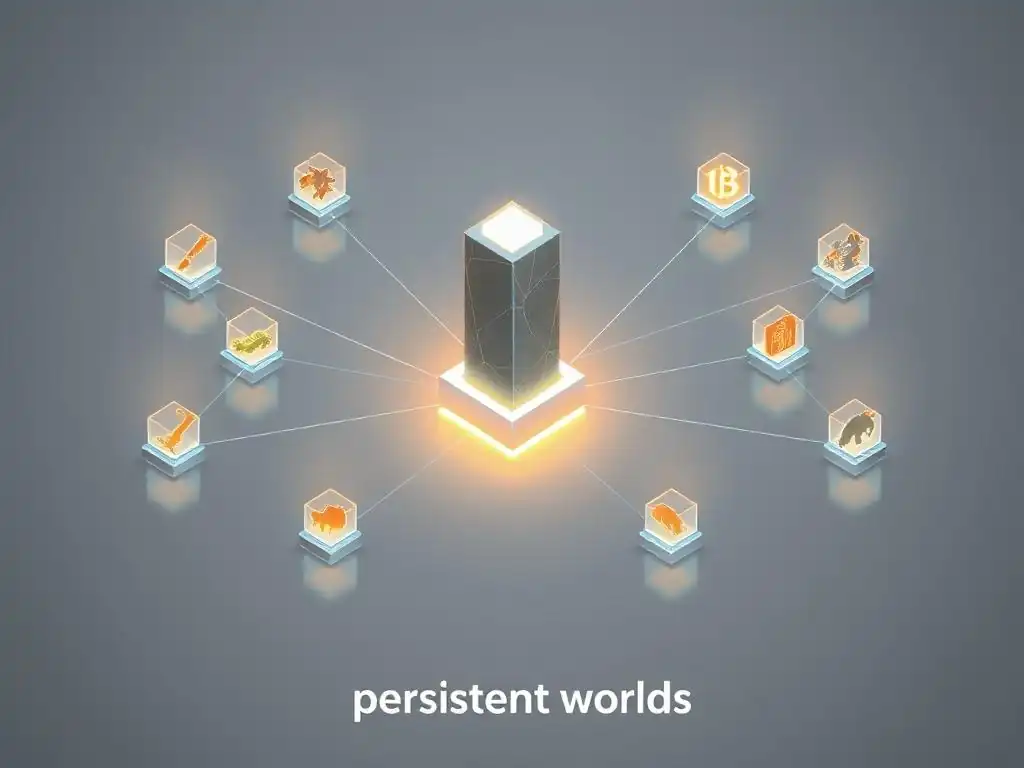
Blockchain technology offers solutions for creating persistent game worlds and ensuring game data integrity and accessibility, vital components of blockchain game longevity strategies. By storing critical game data, such as player profiles, game state, and asset ownership, on the blockchain, developers can create a tamper-proof and transparent record that is resistant to manipulation or data loss. This decentralized data storage enhances game security and reliability, ensuring that player progress and achievements are preserved over time.
Moreover, blockchain-based data storage can improve game accessibility. Traditional games rely on centralized servers, which can be vulnerable to outages or shutdowns. By distributing game data across a decentralized network, blockchain can create a more resilient and accessible game world. Even if individual nodes in the network fail, the game data remains accessible and available, ensuring continuous gameplay and preventing data loss. This enhanced data integrity and accessibility are crucial for building persistent game worlds that can endure for years, even decades, contributing to the long-term longevity of blockchain games.
Reducing Reliance on Centralized Servers
Blockchain technology can significantly reduce reliance on centralized servers, addressing a major vulnerability in traditional game longevity. Centralized servers are costly to maintain and represent a single point of failure. When a game company decides to shut down servers, the game becomes inaccessible. Blockchain offers the potential to decentralize game server infrastructure, distributing the computational load across a network of nodes. This decentralized approach can reduce the cost of server maintenance and increase game resilience.
While fully decentralized game servers are still under development, blockchain can be used to decentralize key aspects of game infrastructure, such as asset management, data storage, and game logic. By reducing reliance on centralized servers, blockchain games can become more resistant to shutdowns and more sustainable in the long run. This shift towards decentralized infrastructure is a crucial step in ensuring the long-term accessibility and preservation of video games, moving away from the centralized model that has historically limited game longevity.
Case Studies: Blockchain Games Demonstrating Enhanced Longevity
Axie Infinity: A Success Story in Player Ownership
Axie Infinity stands as a prominent case study demonstrating the potential of blockchain to enhance game longevity through player ownership. This play-to-earn game, built on the Ethereum blockchain, features creatures called Axies represented as NFTs. Players own their Axies and can breed, battle, and trade them, creating a player-driven economy where in-game assets have real-world value. Axie Infinity's success is partly attributed to this player ownership model, which incentivizes long-term engagement and investment in the game.
The game's robust NFT marketplace and tokenized economy have fostered a vibrant community and sustained player interest for years. Players are not just consumers but also stakeholders in the Axie Infinity ecosystem, earning cryptocurrency (AXS and SLP) through gameplay and contributing to the game's economy. This ownership and earning potential have created a strong sense of community and driven long-term player retention, showcasing how blockchain-based ownership models can contribute to the longevity of games. Axie Infinity's early success provided a compelling example for other developers exploring blockchain game longevity strategies.
Decentraland: Leveraging DAOs for Sustainable Development
Decentraland offers a compelling example of leveraging DAOs for sustainable development and enhanced game longevity within a metaverse context. Decentraland is a decentralized virtual world built on the Ethereum blockchain where users can buy, sell, and develop virtual land represented as NFTs. Governance of Decentraland is managed by a DAO, giving LAND holders and MANA token holders voting rights on key decisions related to the platform's development and direction.
This DAO-based governance model empowers the Decentraland community to shape the metaverse's future, ensuring its long-term relevance and sustainability. Decisions regarding content moderation, LAND policies, and platform upgrades are made through community proposals and voting, fostering a sense of shared ownership and responsibility. By decentralizing governance, Decentraland has created a metaverse that is driven by its users, promoting long-term engagement and innovation, and demonstrating how DAOs can be a powerful tool for ensuring the longevity of blockchain-based virtual worlds.
Gods Unchained: Utilizing NFTs for Enduring Asset Value
Gods Unchained exemplifies the strategy of utilizing NFTs for enduring asset value, contributing to blockchain game longevity. This trading card game, built on the Ethereum blockchain, features collectible cards represented as NFTs. Players own their cards and can trade them on open marketplaces, creating a secondary market where card values fluctuate based on rarity, utility, and player demand. Gods Unchained's focus on NFT-based asset ownership provides players with verifiable scarcity and long-term value for their in-game collections.
The game's NFT cards are designed to be interoperable within the Gods Unchained ecosystem and potentially beyond, enhancing their long-term utility. Even if the game's popularity ebbs and flows, the NFT cards retain their scarcity and tradability, ensuring that player investments are not entirely lost. This enduring asset value model incentivizes players to collect and trade Gods Unchained NFTs, fostering a sustained community and demonstrating how NFT-based ownership can contribute to the long-term viability and longevity of collectible card games and similar blockchain game genres.
Overcoming Barriers to Blockchain Game Adoption for Longevity
Addressing Scalability Challenges of Blockchain Networks
Scalability challenges of blockchain networks present a significant barrier to widespread blockchain game adoption for longevity. Many popular blockchains, particularly Ethereum in its earlier iterations, have faced limitations in transaction throughput and high gas fees, which can hinder the performance and user experience of complex blockchain games. High transaction costs can make microtransactions, a common feature in many games, economically unviable and create friction for players interacting with in-game blockchain features.
Layer-2 scaling solutions, such as sidechains, rollups, and state channels, are being developed to address these scalability limitations. These solutions aim to increase transaction throughput and reduce gas fees, making blockchain networks more suitable for high-performance gaming applications. As blockchain technology continues to evolve and scaling solutions mature, the scalability barrier to blockchain game adoption for longevity is gradually being overcome, paving the way for more complex and immersive blockchain gaming experiences.
Improving User Experience and Onboarding for New Players
Improving user experience (UX) and onboarding for new players is crucial for broader blockchain game adoption and realizing the full potential of blockchain game longevity strategies. The technical complexities of blockchain, such as cryptocurrency wallets, gas fees, and NFT marketplaces, can be daunting for players unfamiliar with the technology. A steep learning curve and cumbersome onboarding processes can deter mainstream gamers from embracing blockchain games, limiting their potential for long-term success.
Game developers are actively working to simplify the user experience of blockchain games. This includes integrating user-friendly wallet solutions directly into games, abstracting away the complexities of gas fees, and providing intuitive interfaces for managing blockchain assets. Streamlining the onboarding process and making blockchain games accessible to players of all technical backgrounds is essential for attracting a wider audience and fostering the mass adoption necessary for blockchain games to achieve long-term sustainability and longevity.
Navigating regulatory uncertainty in the blockchain gaming space is a significant challenge that can impact the long-term prospects of blockchain game longevity strategies. The legal and regulatory landscape for cryptocurrencies, NFTs, and blockchain technology is still evolving globally. Governments and regulatory bodies are grappling with how to classify and regulate these new technologies, leading to uncertainty and potential compliance hurdles for blockchain game developers.
Regulatory clarity is essential for fostering a stable and predictable environment for blockchain game development and adoption. Developers need clear guidelines on issues such as token classification, taxation, and player protection to ensure compliance and mitigate legal risks. Industry advocacy groups and regulatory engagement are crucial for shaping favorable regulatory frameworks that support innovation in blockchain gaming while addressing legitimate concerns. Navigating regulatory uncertainty effectively is paramount for the long-term growth and sustainability of the blockchain gaming sector and its potential to enhance game longevity.
The Future of Game Longevity: Blockchain as a Catalyst
Predictions for Blockchain's Impact on Game Preservation
Blockchain technology is poised to revolutionize game preservation, addressing the historical challenges of server shutdowns and content loss that have plagued traditional gaming. Blockchain's decentralized nature and ability to facilitate player ownership offer a pathway to create games that can endure beyond the lifespan of centralized game companies. NFT-based asset ownership ensures that player investments are not lost when games shut down, and decentralized data storage can preserve game data and even game logic for future generations.
In the future, we can expect to see the emergence of community-driven game preservation initiatives leveraging blockchain. DAOs could be formed to take over the maintenance and operation of legacy blockchain games, ensuring their continued accessibility and preventing their digital extinction. Blockchain could also facilitate the creation of decentralized game archives and libraries, preserving game assets, code, and historical data for posterity, transforming how we think about game preservation and ensuring that digital game history is not lost to time.
Emerging Trends in Blockchain Gaming and Long-Term Sustainability
Emerging trends in blockchain gaming are further reinforcing the potential for long-term sustainability and enhanced game longevity. The rise of interoperable metaverses, where blockchain-based assets and identities can be used across multiple virtual worlds, is creating a more interconnected and persistent gaming ecosystem. The integration of DeFi mechanisms into game economies is empowering players with new earning opportunities and creating more robust and player-driven economic models. Advancements in blockchain scaling solutions are making blockchain technology more suitable for complex and immersive gaming experiences.
These trends are converging to create a future where blockchain games are not just games but also digital economies and social platforms. The emphasis on player ownership, community governance, and decentralized infrastructure is fostering a new paradigm of game development and operation that is inherently more sustainable and longevity-focused than traditional centralized models. As blockchain technology matures and these trends continue to evolve, the potential for blockchain gaming to revolutionize game longevity will only become more pronounced.
The Potential for a New Era of Player-Owned and Controlled Games
Blockchain technology is ushering in a new era of player-owned and controlled games, fundamentally shifting the power dynamics in the gaming industry. By decentralizing asset ownership, game economies, and governance, blockchain is empowering players to become active participants and stakeholders in the games they play. This shift towards player-centric models has profound implications for game longevity. Games that are truly owned and controlled by their communities are more likely to thrive and endure over the long term.
In this new era, game developers will transition from being centralized authorities to facilitators and enablers, providing the tools and infrastructure for player communities to build and sustain their own game worlds. Players will have greater agency in shaping game direction, managing game economies, and preserving game legacies. This player-owned and controlled gaming paradigm represents a fundamental shift in the industry, paving the way for games that are not just entertainment products but also vibrant, evolving digital ecosystems that can flourish for generations, driven by the passion and dedication of their player communities.
Conclusion: Securing the Future of Games with Blockchain
Blockchain technology presents a transformative opportunity to secure the future of games and enhance their longevity. By addressing the inherent limitations of centralized control, unsustainable economies, and server shutdowns, blockchain offers innovative solutions for creating games that are more resilient, player-centric, and enduring. Strategies such as tokenized assets, DAOs, and decentralized infrastructure, as well as real-world case studies like Axie Infinity, Decentraland, and Gods Unchained, demonstrate the tangible benefits of blockchain for extending game lifespans.
While challenges remain in areas like scalability, UX, and regulation, the ongoing development and adoption of blockchain technology in gaming are steadily overcoming these barriers. The emerging trends point towards a future where blockchain games are not just a niche but a mainstream force, driving a new era of player-owned and controlled gaming. Blockchain is not merely a technological upgrade for the gaming industry; it is a catalyst for a fundamental shift towards more sustainable, community-driven, and ultimately, longer-lasting game experiences, securing the future of games for players and generations to come.
Frequently Asked Questions
How can blockchain technology contribute to the long-term success of video games?
Blockchain offers features like immutable asset ownership and player-driven economies, which can enhance player engagement and retention, key components for game longevity. This also allows for cross-game asset use, boosting value.
What are some specific examples of how blockchain improves game economies?
Blockchain enables true digital scarcity of in-game items, allowing players to trade and own assets. This creates a more dynamic and rewarding economy that is not controlled solely by the game developer.
How does blockchain address concerns about centralized control in the gaming industry?
Blockchain allows for decentralized governance models, giving players a greater say in game development and direction. This increases community ownership and reduces reliance on a single entity.
What role does blockchain play in preventing game abandonment or server shutdowns?
By allowing players to own their in-game assets, blockchain reduces the risk associated with game closures. Assets can potentially be transferred to other games or used in different ways, preserving their value.
What are some of the regulatory challenges associated with implementing blockchain in games?
Issues surrounding digital asset ownership, securities laws, and data privacy need to be addressed to ensure compliance. Clear regulatory frameworks are essential for widespread adoption of blockchain gaming.
Final Reflection: Embracing Decentralized Game Futures
The exploration of blockchain game longevity strategies reveals a profound truth: the future of gaming hinges on empowering players and fostering genuine ownership. The potential for blockchain to reshape game economies, reward player contributions, and ensure lasting value is no longer a distant dream, but a tangible reality reshaping the landscape of interactive entertainment.
The shift towards decentralized gaming models has already begun to influence the cultural landscape, moving away from centralized control and towards community-driven ecosystems. This transition represents a fundamental shift in how we perceive digital ownership and the value of our time spent within virtual worlds. The best way to predict the future is to create it.
- Peter Drucker. This quote encapsulates the proactive role we, as players and developers, must embrace to cultivate sustainable and engaging blockchain-based games.
As we stand at the cusp of this new era, let us reflect on the power of decentralized technologies to redefine the relationship between creators and consumers. Consider how you can support and participate in the development of games that prioritize player empowerment and long-term value. The future of gaming is not just about playing; it's about owning, contributing, and shaping the worlds we inhabit.
Ignite Your Gaming Future!
Thank you for exploring how blockchain technology can revolutionize game longevity. We hope you've gained valuable insights into the exciting possibilities for both gamers and developers. Now, it's time to take action and be part of this transformation!
Here’s how you can get started:
- Try out blockchain-based games! Download and play a game that incorporates blockchain technology to experience the benefits of true ownership and decentralized economies firsthand.
- Join the conversation! Share this article with friends and fellow gamers to spark discussions about the future of gaming.
- Explore blockchain game development! Consider learning programming languages like Solidity or other tools used in blockchain development.
Are you ready to lead the way in the next era of gaming? What feature related to blockchain would you love to see in your favorite game?
Leave a Reply