
The Building Blocks of Web3: Protocols, Platforms, and Possibilities


Welcome to Blockchain Trends, your gateway to understanding the revolutionary impact of blockchain technology beyond the hype. Delve into the exciting world of decentralized finance, enterprise solutions, and the regulatory landscape shaping this groundbreaking innovation. Are you ready to explore Blockchain’s future: decentralized applications growth? Uncover the protocols, platforms, and possibilities that are building the very foundation of Web3 and discover where this transformative technology is headed next.
- Understanding the Foundation: Web3 Protocols
-
Frequently Asked Questions
- What are the key differences between Web2 and Web3, and how does blockchain enable the transition?
- How is blockchain technology being utilized beyond just cryptocurrencies in the enterprise sector?
- What role do protocols and platforms play in the development of Web3 applications?
- What are some of the main regulatory challenges facing the growth of decentralized applications (dApps)?
- How is the growth of decentralized applications (dApps) shaping the future of the internet and digital interactions?
- Final Reflection: Embracing the Decentralized Dawn
- Unleash Your Web3 Potential!
Understanding the Foundation: Web3 Protocols
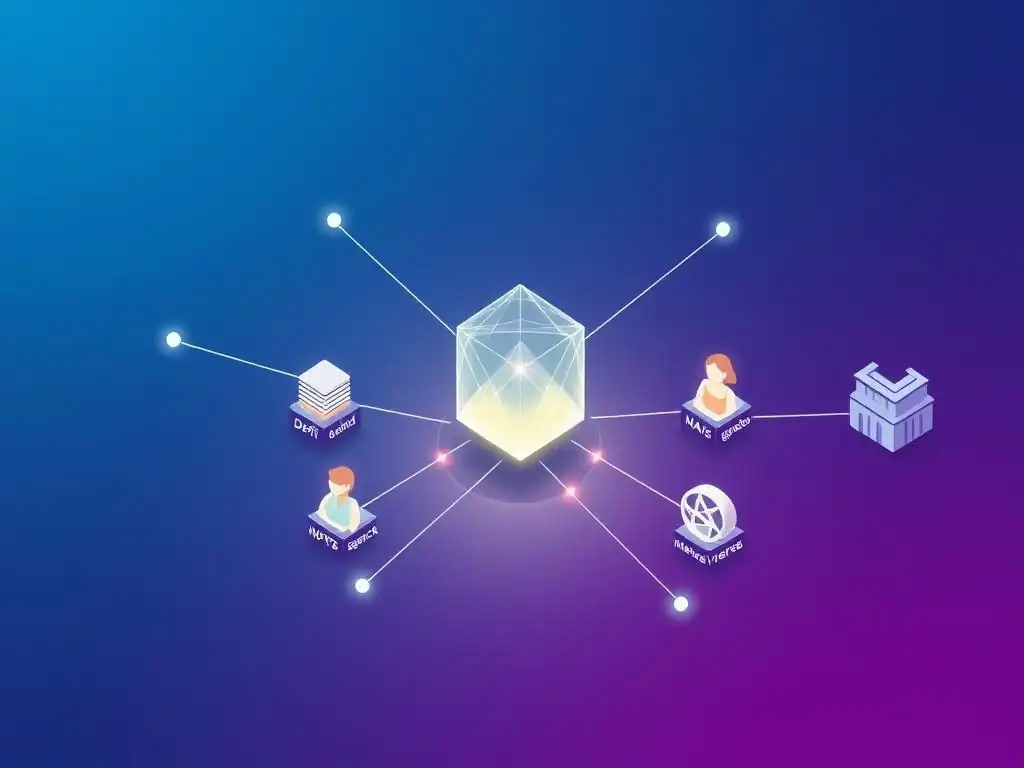
What are Web3 Protocols and Why Are They Important for Decentralized Applications?
Web3 protocols represent the fundamental building blocks of the next generation of the internet, moving away from centralized control towards decentralized, open, and permissionless systems. Unlike Web2, where data and services are typically hosted on large, proprietary servers owned by tech giants, Web3 leverages decentralized networks, primarily powered by blockchain technology.
These protocols define the rules and standards by which different components of the decentralized web interact, enabling everything from data storage and identity management to communication and computation in a distributed manner. Their importance lies in providing the necessary infrastructure for decentralized applications (dApps) to function autonomously and without single points of failure or censorship.
The significance of Web3 protocols for driving Blockchain’s future: decentralized applications growth cannot be overstated. They provide the core functionalities that allow dApps to be truly decentralized. For instance, a social media dApp requires a way to store user posts and media without relying on a single company's server (decentralized storage), a method for users to prove their identity without a central authority (decentralized identity), and a means for users to communicate peer-to-peer (decentralized communication).
Without robust, interoperable protocols governing these functions, dApps would either remain tethered to centralized components, undermining their core value proposition, or be impossible to build at scale. These foundational layers enable the development of novel applications that were previously unfeasible or highly vulnerable in a centralized paradigm.
Key Web3 Protocols Driving Blockchain’s Future: Decentralized Applications Growth
A diverse ecosystem of protocols is emerging to support the various needs of decentralized applications, each addressing a specific layer or function within the Web3 stack. These protocols are crucial catalysts for Blockchain’s future: decentralized applications growth, providing developers with the tools and standards needed to build more sophisticated and user-friendly dApps. By abstracting away complex blockchain interactions and providing standardized interfaces for common tasks like data storage or identity verification, these protocols lower the barrier to entry for developers and foster innovation across the ecosystem.
The development and adoption of these key protocols are directly contributing to the expansion and maturation of the decentralized application landscape. As these protocols become more efficient, scalable, and interconnected, they unlock new possibilities for dApp functionality and performance. This allows for the creation of dApps that can handle larger user bases and more complex operations, moving beyond early use cases like simple token transfers to encompass areas such as decentralized finance, supply chain management, and even decentralized social networks, thereby significantly impacting Blockchain’s future: decentralized applications growth.
Decentralized Storage Protocols: IPFS and Arweave
Decentralized storage protocols are vital for ensuring that the data underpinning dApps is resilient, censorship-resistant, and permanently accessible. The InterPlanetary File System (IPFS) is a peer-to-peer network for storing and sharing data in a distributed file system. Instead of locating information by where it's stored (like a URL pointing to a server), IPFS locates content by what it is, using a content-addressable system.
This makes data immutable and verifiable. For example, many NFT platforms use IPFS to store the metadata and image files associated with NFTs, ensuring that the digital asset's representation isn't dependent on a single company's server. IPFS has seen significant adoption, with millions of pieces of content pinned across its network.
Arweave offers another approach to decentralized storage, focusing specifically on permanent data storage. It uses a mechanism called "Proof of Access" alongside a modified blockchain structure (a "blockweave") to incentivize miners to store data indefinitely. Users pay a single upfront fee to store data permanently. This is particularly useful for archiving important information, hosting permanent websites, or ensuring that historical data for dApps remains accessible forever. Projects building decentralized social archives or permanent digital libraries often leverage Arweave's unique guarantee of perpetual storage, highlighting its role in securing data for long-term Blockchain’s future: decentralized applications growth.
Decentralized Identity Protocols: Ceramic and SpruceID
Decentralized identity protocols are crucial for building dApps that allow users to control their own digital identities and data, rather than relying on centralized identity providers. Ceramic is a decentralized data network that enables developers to build applications with composable data, allowing users to own and manage their personal information across different platforms using decentralized identifiers (DIDs).
It provides a flexible data layer on top of blockchains, allowing users to link various pieces of information (like social profiles, credentials, or activity logs) to their DID, which is typically anchored on a blockchain like Ethereum. This allows for rich, user-controlled profiles without needing permission from a central entity.
SpruceID focuses on enabling secure, user-controlled digital identity and data sharing using open standards like DIDs and Verifiable Credentials. They build tools and protocols that allow individuals and organizations to issue, hold, and verify digital credentials cryptographically. For instance, a university could issue a verifiable degree credential to a student's decentralized identity wallet.
The student could then share this credential selectively with an employer, who could cryptographically verify its authenticity without needing to contact the university directly. This paradigm shift in identity management is fundamental for privacy-preserving and user-centric dApps, contributing significantly to the ethical and secure growth of decentralized applications.
Decentralized Communication Protocols: Matrix and Waku
Decentralized communication protocols are essential for enabling peer-to-peer messaging and data exchange within dApps without relying on central servers to route or store messages. Matrix is an open standard and protocol for decentralized, real-time communication. It facilitates secure, interoperable messaging, VoIP, and video conferencing.
Conversations are stored across a network of servers, and participants can join rooms hosted on any server, while still interacting with users on other servers. This federation model ensures no single point of control or censorship over communications. Many Web3 communities and dApps use Matrix for their chat functionalities, appreciating its open nature and end-to-end encryption capabilities.
Waku is a family of decentralized messaging protocols specifically designed for resource-restricted environments, such as mobile or browser-based dApps. Developed as part of the Status network, Waku focuses on providing censorship-resistant, privacy-preserving communication that is lightweight and efficient. It uses mechanisms like topic-based routing and rate limiting to manage message traffic effectively in decentralized networks.
Waku is particularly relevant for mobile dApps where bandwidth and battery life are concerns, enabling features like decentralized chat within wallets or other mobile-first Web3 applications. Both Matrix and Waku are pivotal in allowing dApps to incorporate robust, private, and decentralized communication features, supporting the expansion of use cases and bolstering Blockchain’s future: decentralized applications growth.
The Role of Interoperability in Web3 Protocol Development
Interoperability is a critical factor for the success and widespread adoption of Web3 protocols and, consequently, for accelerating Blockchain’s future: decentralized applications growth. In a fragmented ecosystem where different protocols specialize in different functions (storage, identity, communication, computation), the ability for these protocols to seamlessly interact and exchange data is paramount. Without interoperability, dApps would be siloed, limited to the capabilities of a single protocol or blockchain, significantly hindering their complexity and reach. Achieving interoperability involves developing standards, bridges, and middleware that allow protocols and blockchains to communicate and share assets or information securely and efficiently.
Projects like Polkadot and Cosmos are explicitly building frameworks to enable cross-chain interoperability, allowing assets and data to flow between different blockchains, each potentially leveraging a different set of Web3 protocols. Furthermore, efforts are underway to standardize how decentralized identifiers (DIDs) issued via one identity protocol can be recognized and used by applications built on different platforms or interacting with different storage protocols.
This interconnectedness allows developers to pick and choose the best protocols for specific tasks and compose them into powerful, multi-functional dApps. Enhanced interoperability reduces friction for users and developers alike, creating a more cohesive and robust Web3 ecosystem, which is essential for realizing the full potential of decentralized applications and driving their future growth.
Frequently Asked Questions
What are the key differences between Web2 and Web3, and how does blockchain enable the transition?
Web2 is largely centralized, while Web3 aims for decentralization using blockchain. Blockchain provides the trust and transparency needed for secure, decentralized applications. This shift reduces reliance on intermediaries.
How is blockchain technology being utilized beyond just cryptocurrencies in the enterprise sector?
Enterprises are leveraging blockchain for supply chain management, data security, and identity verification. These applications improve efficiency, transparency, and trust within business operations.
What role do protocols and platforms play in the development of Web3 applications?
Protocols define the rules and standards for Web3 interactions, while platforms provide the infrastructure and tools for developers. Both are crucial for building a robust and interoperable decentralized ecosystem.
What are some of the main regulatory challenges facing the growth of decentralized applications (dApps)?
Regulatory uncertainty surrounding data privacy, security, and jurisdiction are major challenges. Clear guidelines are needed to foster innovation while protecting users and preventing illicit activities.
How is the growth of decentralized applications (dApps) shaping the future of the internet and digital interactions?
dApps are fostering a more user-centric and transparent internet. They are enabling new forms of digital ownership and governance, potentially disrupting traditional centralized models.
Okay, here's a final reflection designed to close your article "The Building Blocks of Web3: Protocols, Platforms, and Possibilities," optimized for the keyword "Blockchain's future: decentralized applications growth," and following the structure you provided:
Final Reflection: Embracing the Decentralized Dawn
The exploration of Web3's protocols and platforms reveals a crucial truth: decentralized applications are no longer a distant dream, but a rapidly evolving reality shaping Blockchain's future. The building blocks are in place, the infrastructure is maturing, and the potential for transformative change across industries is undeniable. This isn't just about technology; it's about a fundamental shift in power dynamics, ownership, and control.
The ongoing development and adoption of decentralized applications profoundly influences our digital landscape, promising a more equitable and transparent future. Witnessing this evolution firsthand underscores the importance of understanding and contributing to this space. The future is already here – it's just not evenly distributed.
- William Gibson. This quote perfectly encapsulates the current state of Web3; while the potential is immense, widespread adoption requires continued education, innovation, and collaboration.
Now, as you stand at the precipice of this decentralized dawn, consider your role in shaping Blockchain's future. Reflect on the possibilities presented by decentralized applications and how you can contribute to their growth. Explore, experiment, and engage with the Web3 ecosystem. The future is not something that happens to us; it's something we build together, one decentralized application at a time.
Unleash Your Web3 Potential!
Thank you for exploring the world of Web3 with us! We hope you now have a clearer understanding of the key protocols, platforms, and the exciting possibilities this revolutionary technology offers. Are you ready to take the next step?
Here are some actions you can take right now to advance your Web3 journey:
- Learn about a specific Web3 protocol. Pick a protocol like IPFS, Filecoin, or Ceramic, and spend some time researching its use cases and developer resources. Gaining a deeper understanding of the underlying technology is essential.
- Explore various Web3 platforms. Experiment with decentralized applications to see blockchain technology in action. Try out a decentralized social network or a DeFi platform to experience their practical applications firsthand.
- Share this article with a friend or colleague who is also interested in Web3. Help spread the knowledge and inspire others to explore this exciting space!
Which Web3 platform are you most eager to explore first, and what draws you to it? Share your thoughts in the comments below!
Leave a Reply