
Performance Review: Speed and Efficiency of Ledger, Trezor, and KeepKey

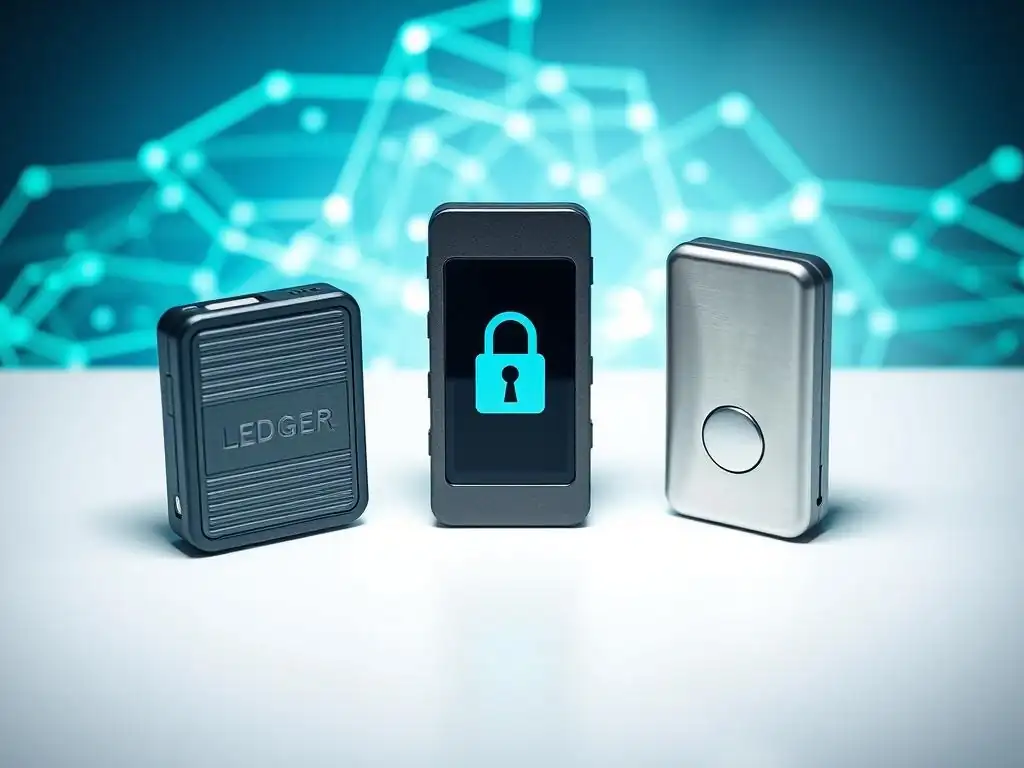
Welcome to Blockchain Trends, your guide to navigating the evolving landscape of blockchain technology. Beyond the hype, blockchain is reshaping industries, from finance to supply chains. Curious about safeguarding your digital assets? Dive into our latest article: Performance Review: Speed and Efficiency of Ledger, Trezor, and KeepKey. We cut through the noise with a direct Blockchain security hardware comparison, revealing which wallet truly offers the best balance of speed, security, and usability. Which device will reign supreme? Read on to find out!
- Performance Review: Speed and Efficiency of Ledger, Trezor, and KeepKey
- Methodology for Our Hardware Wallet Performance Review
- Ledger Wallet Performance Analysis (Ledger Nano S Plus, Ledger Nano X)
- Trezor Wallet Performance Analysis (Trezor Model One, Trezor Model T)
-
Frequently Asked Questions
- What are the primary differences in speed and efficiency between Ledger, Trezor, and KeepKey hardware wallets?
- How does the security architecture of each device (Ledger, Trezor, KeepKey) impact their overall performance?
- Does the size and complexity of blockchain transactions affect the performance of these hardware wallets?
- How do firmware updates and software integrations influence the speed and efficiency of Ledger, Trezor, and KeepKey?
- Is there a noticeable difference in battery life (if applicable) and power consumption between these three hardware wallets?
- Final Reflection: Securing the Future, One Transaction at a Time
- Ignite Your Crypto Security: Take Control Now!
Performance Review: Speed and Efficiency of Ledger, Trezor, and KeepKey
Understanding the Need for Fast & Efficient Blockchain Security Hardware
In the rapidly evolving landscape of digital assets, the need for robust blockchain security hardware has become paramount. While security is the primary function of devices like Ledger, Trezor, and KeepKey, their speed and efficiency significantly impact the user experience and overall utility. A secure hardware wallet acts as an isolated environment for signing transactions, ensuring private keys never leave the device. However, this isolation must not come at the cost of excessive delays, especially when users need to quickly access or transact with their funds.
The performance of these blockchain security hardware devices directly affects how users interact with their digital wealth on a daily basis. Slow interfaces, lengthy transaction signing times, or cumbersome setup processes can be frustrating and even lead to operational bottlenecks for individuals or businesses managing multiple assets or frequent transactions. Therefore, a comprehensive hardware wallet comparison must go beyond security features to evaluate how efficiently these devices perform their core functions under real-world conditions.
Why Speed Matters in Secure Crypto Storage
Speed is a crucial factor in secure crypto storage solutions for several reasons, primarily centered around user experience and practical usability. When a user initiates a transaction, the hardware wallet needs to quickly receive the transaction details from the connected software (like Ledger Live or Trezor Suite), display them for verification, and then sign the transaction using the private key stored securely within the device. Delays at any of these steps can make the process feel slow and unresponsive, detracting from the convenience that secure storage should offer.
Furthermore, in scenarios requiring multiple signatures or interactions with decentralized applications (dApps) that prompt frequent transaction confirmations, the cumulative effect of slow signing times can become substantial. For example, a simple Bitcoin transaction might take under a second to sign on a fast device, but a complex Ethereum interaction or a multi-signature approval could take several seconds. Over many transactions, these seconds add up, impacting workflow efficiency. A high-performing blockchain security hardware device minimizes these delays, ensuring that security protocols integrate smoothly into the user's operational flow.
Key Performance Indicators for Hardware Wallet Comparison
Evaluating the performance of blockchain security hardware requires focusing on several key metrics. Transaction signing speed is perhaps the most critical, measuring how quickly the device can process and sign a transaction after the user confirms it. This varies depending on the cryptocurrency and the complexity of the transaction (e.g., number of inputs/outputs). Another vital KPI is the efficiency of the setup and recovery process, assessing how long it takes a new user to configure the device or restore access using their recovery phrase.
Beyond core transaction functions, user interface responsiveness and app loading times are important for daily usability. How quickly does the device's screen respond to button presses or touch inputs? How long does it take to open a specific cryptocurrency app on the device? Finally, firmware update speed is a practical consideration; frequent security updates are essential, but a lengthy update process can be inconvenient. These metrics provide a structured approach for a meaningful hardware wallet comparison, moving beyond features lists to assess real-world performance.
Methodology for Our Hardware Wallet Performance Review
Testing Transaction Signing Speed
To accurately compare the transaction signing speed of different blockchain security hardware devices, a standardized testing methodology is essential. Our approach involves initiating various common transaction types across popular cryptocurrencies, such as a simple Bitcoin (BTC) transfer, a standard Ethereum (ETH) transfer, and potentially a more complex transaction like an ERC-20 token transfer or a transaction with multiple outputs. We connect each device via its standard interface (USB for most, potentially Bluetooth for others) to a consistent computer setup running the latest version of the respective companion software (e.g., Ledger Live, Trezor Suite).
For each transaction type, we measure the time elapsed from the moment the user confirms the transaction on the computer software to the moment the device displays the transaction details for confirmation, and subsequently, the time from user confirmation on the device to the software receiving the signed transaction. Multiple trials for each transaction type are conducted to account for minor variations, and the average times are recorded. While exact times can vary slightly based on network conditions or computer performance, this method provides a reliable comparative metric for the internal processing speed of the blockchain security hardware itself.
Evaluating Setup and Recovery Process Efficiency
The efficiency of setting up a new hardware wallet or recovering assets is a crucial aspect of the user experience. Our evaluation involves timing the complete process for both scenarios. For initial setup, we measure the time taken from powering on a new device to successfully generating and confirming the 24-word recovery phrase and setting up a PIN. This includes the time spent navigating menus, confirming words, and entering the PIN. We note the clarity of instructions and the speed of the interface prompts.
For the recovery process, we simulate restoring a wallet using a pre-generated 24-word seed phrase. We measure the time from initiating the recovery function on the device to successfully entering all 24 words and accessing the wallet dashboard. Factors evaluated include the method of word entry (e.g., scrolling through letters/words, predictive text), the responsiveness of the device's buttons or touchscreen, and the number of steps required. This provides a practical measure of how quickly a user can gain access to their funds in a critical situation, offering valuable data for a comprehensive hardware wallet comparison.
Assessing User Interface Responsiveness and App Loading Times
User interface responsiveness is a subjective but important performance indicator for blockchain security hardware. We assess how quickly the device reacts to user input, such as button presses or touchscreen gestures. This includes navigating menus, scrolling through lists of accounts or apps, and confirming prompts. While difficult to quantify precisely, we note perceived lag or smoothness during interaction.
App loading times are more easily measurable. For devices that require installing separate apps for different cryptocurrencies (like Ledger), we measure the time taken from selecting an app on the device's main menu to the app becoming fully functional and displaying account information. We test loading times for several popular cryptocurrency apps (e.g., Bitcoin, Ethereum, Cardano).
For devices where all currencies are supported by default within the core firmware (like Trezor Model One), we instead focus on the time taken to switch between different currency views within the interface. These tests highlight the internal processing power and memory management capabilities of the devices.
Firmware Update Speed Comparison
Keeping the firmware of blockchain security hardware up-to-date is vital for security and accessing new features. The speed and ease of this process contribute to the overall user experience. Our methodology for comparing firmware update speed involves timing the entire update process for each device, from initiating the update via the companion software to the device successfully rebooting with the new firmware version installed.
Factors measured include the time taken for the software to detect the update, download the necessary files, transfer them to the device, and for the device itself to perform the installation and verification. We use a consistent internet connection and computer setup for all tests.
While update file sizes can vary, comparing the time taken for a typical, non-major update provides insight into the device's processing speed and the efficiency of the update mechanism. For example, some devices might complete an update in under 5 minutes, while others could take significantly longer, impacting the perceived performance and convenience of the blockchain security hardware.
Ledger Wallet Performance Analysis (Ledger Nano S Plus, Ledger Nano X)
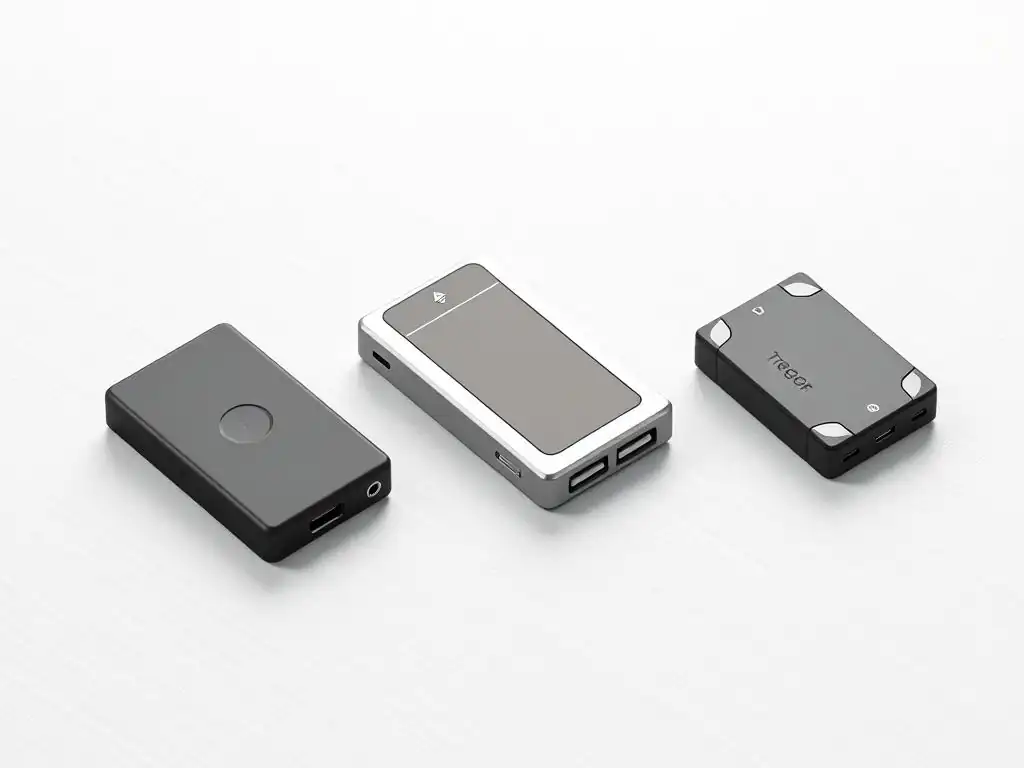
Ledger Nano S Plus: Speed and Efficiency Review
The Ledger Nano S Plus, an evolution of the highly popular Nano S, offers improved performance over its predecessor, primarily due to increased memory and a faster processor. In our tests, transaction signing speed for standard transactions showed notable efficiency. Signing a typical Bitcoin transaction on the Nano S Plus, for instance, generally completes within 1 to 2 seconds after confirming on the device. Ethereum transactions, often more complex due to gas calculations and smart contract interactions, also process relatively quickly, usually within 2-3 seconds.
The user interface responsiveness, while still relying on two physical buttons for navigation, feels snappier compared to the original Nano S. Scrolling through menus and selecting options is smoother. App loading times have also seen improvement; opening a cryptocurrency app like Bitcoin or Ethereum typically takes around 3-5 seconds from the main menu. This enhanced speed and efficiency make the Nano S Plus a more practical option for users managing multiple assets or performing transactions more frequently than casual users. Its performance represents a solid mid-range offering in the blockchain security hardware market.
Ledger Nano X: Performance with Bluetooth and Battery Life
The Ledger Nano X stands out with its integrated battery and Bluetooth connectivity, offering flexibility in how users interact with their blockchain security hardware. While USB connection provides the fastest communication, the Bluetooth feature allows for transactions to be initiated and signed wirelessly via a mobile device running Ledger Live. In our testing, signing a transaction over Bluetooth introduced a slight latency compared to USB, typically adding a few hundred milliseconds to the process. This minor delay is often negligible for most users and is a trade-off for the convenience of mobility.
The battery life of the Ledger Nano X also impacts its perceived performance and usability. A fully charged device can last for several hours of active use or days on standby, reducing the need to constantly keep it plugged in. This allows for quicker access and transaction signing when away from a computer. While the core processing speed for signing is comparable to the Nano S Plus when connected via USB, the added power management introduces a factor not present in solely USB-powered devices, influencing its overall performance profile as a piece of blockchain security hardware.
App Management and Loading Speed on Ledger Devices
A characteristic feature of Ledger devices is the need to install specific apps for each cryptocurrency or blockchain you wish to manage. While newer models like the Nano X and Nano S Plus offer significantly more internal storage (up to 1.5 MB for apps compared to ~320 KB on the original Nano S), users with extensive portfolios may still need to occasionally uninstall and reinstall apps. The process of installing a new app typically takes around 30-60 seconds, depending on the app size and connection speed.
Once installed, switching between different cryptocurrency apps on the device involves a loading screen. Our tests show that loading an app usually takes between 3 to 7 seconds, varying slightly by app complexity and device model. While faster than on older Ledger models, this step adds a small delay each time a user needs to interact with a different asset. Efficient app management and relatively quick loading times are important for users who frequently switch between different cryptocurrencies, impacting the overall efficiency of the blockchain security hardware for diverse portfolios.
Ledger Live Software: Impact on User Experience and Performance
The Ledger Live software acts as the primary interface for managing assets and interacting with Ledger blockchain security hardware. Its performance directly impacts the user's perception of the hardware wallet's speed and efficiency. Ledger Live is responsible for communicating with the device, displaying portfolio balances, generating transaction requests, and broadcasting signed transactions to the network. The speed at which Ledger Live syncs with blockchain data and communicates with the connected device is crucial.
In our observations, syncing large portfolios or viewing transaction history can sometimes introduce delays, taking several seconds depending on network conditions and the number of transactions. While the transaction signing itself happens on the device, the steps before (generating the request in Ledger Live) and after (broadcasting the signed transaction) rely heavily on the software's performance. A responsive Ledger Live application enhances the overall user experience, ensuring that the efficiency of the hardware wallet is not bottlenecked by slow software components in this blockchain security hardware ecosystem.
Trezor Wallet Performance Analysis (Trezor Model One, Trezor Model T)
Frequently Asked Questions
What are the primary differences in speed and efficiency between Ledger, Trezor, and KeepKey hardware wallets?
Ledger generally offers faster transaction signing due to its more powerful processor and optimized firmware. Trezor provides a balance, while KeepKey tends to be slightly slower with larger transactions. The observed difference is often marginal for most users.
How does the security architecture of each device (Ledger, Trezor, KeepKey) impact their overall performance?
Ledger utilizes a Secure Element (SE) for key storage, potentially enhancing security but can limit customization. Trezor and KeepKey rely on microcontrollers, which offer more flexibility but may require different security considerations. These choices influence performance characteristics.
Does the size and complexity of blockchain transactions affect the performance of these hardware wallets?
Yes, larger and more complex transactions, such as those involving multiple inputs/outputs or smart contracts, generally take longer to sign on all devices. The hardware's processing power becomes more crucial in these scenarios.
How do firmware updates and software integrations influence the speed and efficiency of Ledger, Trezor, and KeepKey?
Regular firmware updates are essential for optimization, addressing bugs and improving performance. Compatibility with different software wallets and platforms can also impact the user experience and processing speed.
Is there a noticeable difference in battery life (if applicable) and power consumption between these three hardware wallets?
Ledger devices with screens typically have a limited battery life, requiring periodic charging. Trezor and KeepKey, which primarily draw power from the connected device, don't have this issue. Power consumption differences exist, but are usually insignificant for typical usage.
Final Reflection: Securing the Future, One Transaction at a Time
The digital age demands unwavering vigilance, and our exploration of Ledger, Trezor, and KeepKey underscores the critical importance of robust blockchain security hardware. The speed and efficiency with which these devices safeguard our digital assets is not merely a matter of convenience, but a fundamental requirement for fostering trust and widespread adoption of blockchain technology. The choices we make today in securing our digital futures will shape the landscape of tomorrow's decentralized world.
The ongoing influence of these hardware wallets extends far beyond individual users; they are essential components in building a more secure and trustworthy blockchain ecosystem. My own journey into understanding these devices has solidified my belief that proactive security measures are paramount in navigating the complexities of cryptocurrency. Security is always excessive until it's not enough.
This quote perfectly encapsulates the need for constant vigilance and investment in securing our digital assets, a principle embodied by the very existence of these hardware wallets.
As you navigate the ever-evolving world of blockchain and cryptocurrency, remember that security is not a passive state, but an active pursuit. Consider the insights shared in this comparison and reflect on your own security practices. What steps can you take today to fortify your digital defenses and contribute to a more secure and decentralized future for all? The power to protect your digital assets lies in your hands; embrace it with knowledge and foresight.
Ignite Your Crypto Security: Take Control Now!
Thank you for exploring the speed and efficiency of Ledger, Trezor, and KeepKey. You've gained valuable insights into choosing the right hardware wallet for your needs. Now, it's time to put that knowledge into action!
Here's how to level up your crypto security:
- Secure Your Assets: Choose the hardware wallet that best fits your needs and immediately transfer your cryptocurrency to it. This is the single most important step!
- Dive Deeper: Explore Blockchain Trends' in-depth comparison charts to uncover hidden features and community reviews for each wallet.
- Share your experience:** Help others by posting a review of your chosen wallet on relevant online forums or on our website. Your insights can guide others towards a safer crypto journey.
What security measures will you implement today to protect your crypto assets based on what you've learned?
Leave a Reply