
The Metaverse as a Decentralized Social Network: Building Communities in Virtual Worlds

Welcome to Blockchain Trends, your guide to understanding the revolutionary power of blockchain beyond the headlines.
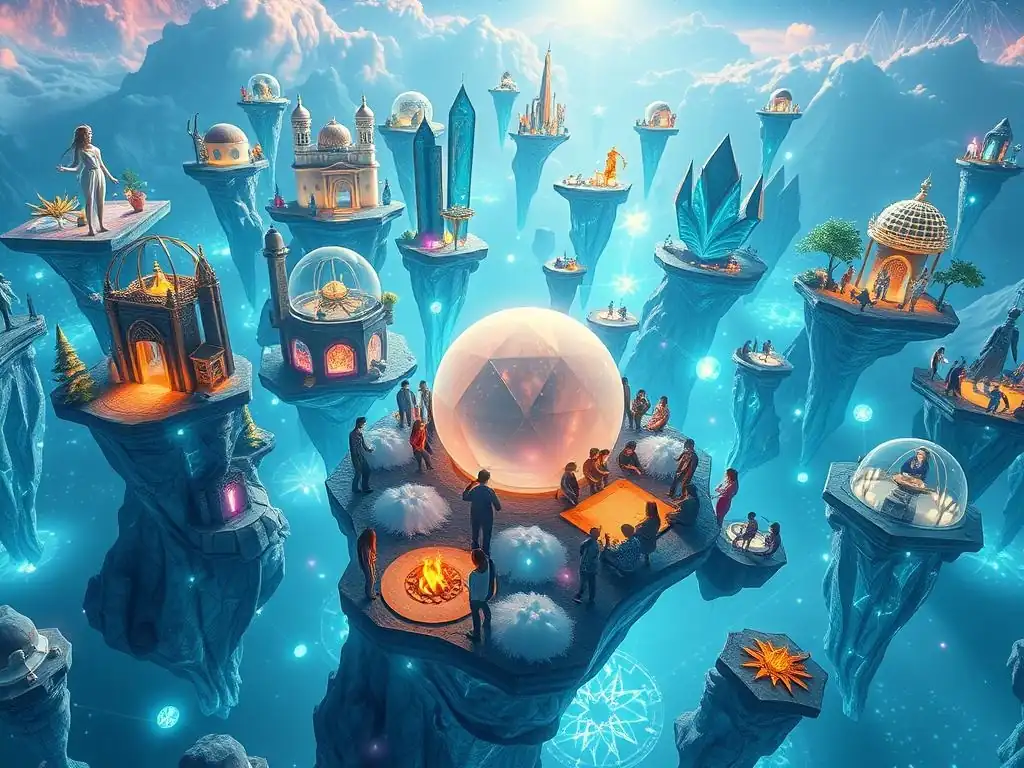
Dive deep into the evolving landscape of decentralized technology and discover its impact across various industries. Are you ready to explore how blockchain is shaping the future of digital interaction? In this article, we unravel the intricate connection between blockchain and the Metaverse decentralized social communities, exploring how they're merging to create immersive, user-governed virtual worlds. What possibilities await in these decentralized social spaces, and how will they redefine our online interactions? Read on to find out!
- Introduction: The Convergence of Metaverse, Decentralization, and Social Interaction
- The Promise of Decentralized Social Communities in the Metaverse
- Key Features of Decentralized Metaverse Social Platforms
- Building Blocks: Technologies Enabling Decentralized Metaverse Social Experiences
- Use Cases: Examples of Thriving Decentralized Metaverse Social Communities
- Challenges and Considerations for Metaverse Decentralized Social Communities
- The Future of Social Interaction: Metaverse Decentralized Social Communities and Beyond
- Conclusion: Embracing the Potential of Metaverse Decentralized Social Communities
-
Frequently Asked Questions
- How does blockchain technology contribute to creating decentralized social communities in the Metaverse?
- What are the key benefits of decentralized social communities in the Metaverse compared to traditional social media platforms?
- How can NFTs (Non-Fungible Tokens) be used to foster a sense of community and belonging in the Metaverse?
- What role does DeFi (Decentralized Finance) play in supporting the economies of decentralized social communities within the Metaverse?
- What are some of the current challenges and potential risks associated with building and participating in decentralized social communities in the Metaverse?
- Final Reflection: Embracing Decentralized Connection in the Metaverse
- Unveil Your Metaverse Potential: Connect, Build, Thrive!
Social networks have undergone a dramatic transformation since their inception. From early platforms focused on simple text-based communication to today's multimedia-rich environments, the evolution has been driven by technological advancements and changing user needs. Web 1.0 offered static websites and forums, creating initial online communities. Web 2.0 ushered in the era of interactive platforms like Facebook, Twitter, and Instagram, characterized by user-generated content, centralized control, and data monetization. These platforms, while connecting billions globally, have also raised concerns regarding data privacy, algorithmic bias, and centralized power.
The current trajectory points towards Web 3.0, a decentralized internet built on blockchain technology. This new iteration promises to redistribute power back to users, offering greater control over data, content, and online experiences. The metaverse, envisioned as immersive, interconnected virtual worlds, stands as a key component of Web 3.0. It represents the next frontier for social interaction, potentially revolutionizing how we connect, communicate, and build communities online. As we transition into this new digital landscape, understanding the evolution of social networks is crucial for grasping the significance of decentralized metaverse social communities.
The decentralized metaverse represents a departure from the centralized control structures of current online platforms. Unlike metaverses owned and operated by single corporations, a decentralized metaverse is built on blockchain technology, distributing ownership and control across its users. This foundational shift introduces a new paradigm for social connection, emphasizing user autonomy, community governance, and transparent systems. Decentralization in the metaverse implies that no single entity dictates the rules or profits from user interactions and data.
This new paradigm leverages blockchain's inherent properties of immutability, transparency, and security to create virtual worlds where users truly own their digital identities, assets, and experiences. Smart contracts automate governance and transactions, fostering trust and reducing the need for intermediaries. Decentralized metaverse social platforms empower individuals to participate in community building with a greater sense of agency and ownership, fostering more equitable and democratic virtual environments. This contrasts sharply with Web 2.0 social networks where user data is often exploited for profit, and platform decisions are made behind closed doors.
The keyword "Metaverse decentralized social communities" encapsulates the core concept of this article. It highlights the intersection of three transformative trends: the metaverse, decentralization, and social community building. The potential of these communities is immense, spanning from revolutionizing social interaction to creating new economic models and forms of governance. By focusing on this keyword, we aim to explore how blockchain-based virtual worlds are fostering novel forms of social connection, moving beyond the limitations of traditional social media platforms.
The potential of metaverse decentralized social communities lies in their ability to create more equitable and user-centric online experiences. Imagine virtual spaces where individuals can freely express themselves, build meaningful relationships, and participate in community governance without fear of censorship or data exploitation. These communities can foster innovation by allowing creators to directly monetize their work and engage with their audiences in new ways.
Furthermore, they can empower users to collectively shape the direction of their virtual worlds, creating more democratic and participatory digital societies. This shift toward decentralized social communities within the metaverse represents a significant evolution in how we interact and build relationships in the digital age.
One of the most compelling promises of decentralized social communities in the metaverse is enhanced user control and data privacy. In contrast to Web 2.0 platforms where user data is a commodity, decentralized systems empower individuals to own and control their personal information. Blockchain technology allows users to manage their digital identities and data through cryptographic keys, granting them granular control over who can access and utilize their information within metaverse environments.
This shift towards user-centric data management is crucial in an era where data breaches and privacy violations are rampant. Decentralized metaverse social networks can leverage technologies like zero-knowledge proofs and homomorphic encryption to further enhance data privacy, enabling secure interactions and transactions without revealing sensitive information. By putting users back in control of their data, these platforms foster trust and empower individuals to participate in the digital economy with greater confidence and security. This fundamental change addresses a critical pain point of current social media platforms, where users often feel like products rather than empowered participants.
Fostering Transparency and Open Governance in Virtual Communities
Decentralized metaverse social communities have the potential to foster unprecedented levels of transparency and open governance. Built upon blockchain, these platforms inherently offer transparent and auditable records of transactions and community decisions. Smart contracts can automate governance processes, ensuring fairness and predictability, and reducing the potential for manipulation or arbitrary rule changes. This transparency extends to the platform's code itself, often being open-source, allowing the community to verify its integrity and contribute to its development.
Open governance models, such as Decentralized Autonomous Organizations (DAOs), enable community members to participate directly in decision-making processes, from platform upgrades to content moderation policies. Voting mechanisms powered by blockchain ensure fair and transparent decision-making, empowering users to collectively shape the direction of their virtual communities. This participatory approach to governance stands in stark contrast to the opaque and top-down decision-making processes of centralized social media giants, fostering a sense of ownership and collective responsibility within metaverse communities. Transparency and open governance are essential for building trust and ensuring the long-term sustainability of these virtual social ecosystems.
Exploring Economic Opportunities for Creators and Participants
Decentralized metaverse social communities unlock a plethora of new economic opportunities for both creators and participants. Blockchain technology facilitates the creation of tokenized economies within these virtual worlds, allowing creators to directly monetize their content, experiences, and digital assets through NFTs and cryptocurrencies. Unlike traditional platforms that take a significant cut of creator revenue, decentralized systems can enable peer-to-peer transactions, maximizing earnings for creators and fostering a more equitable creator economy.
Participants in these communities can also benefit from new economic models. "Play-to-earn" mechanisms reward users for their engagement, contributions, and in-world activities, creating opportunities for income generation within the metaverse. Digital land ownership and virtual real estate within these platforms can become valuable assets, creating new investment opportunities and virtual economies.
The combination of creator monetization, play-to-earn models, and digital asset ownership opens up a vast landscape of economic possibilities within decentralized metaverse social communities, potentially transforming how individuals earn, interact, and build wealth in the digital age. For example, in platforms like Decentraland, creators can sell virtual land, NFTs, and event tickets, directly benefiting from their creations and community engagement.
Blockchain-Based Identity and Authentication for Metaverse Avatars
Blockchain-based identity and authentication are fundamental features of decentralized metaverse social platforms. These systems utilize cryptographic keys to establish unique and verifiable digital identities for metaverse avatars, empowering users to control their online presence and reputation across different virtual worlds. Self-sovereign identity solutions built on blockchain eliminate the need for centralized identity providers, giving users complete ownership and control over their personal data and digital credentials.
This approach enhances security and privacy, reducing the risk of identity theft and data breaches. Users can selectively share information with different platforms and applications, maintaining control over their personal data. Blockchain-based identities can also facilitate interoperability across different metaverse environments, allowing users to seamlessly move their avatars and digital assets between virtual worlds while maintaining a consistent identity.
This feature is crucial for building a truly interconnected and user-centric metaverse experience, moving away from siloed and platform-dependent identities prevalent in Web 2.0. For instance, projects are emerging that aim to create universal metaverse passports based on blockchain, enabling seamless identity management across various virtual platforms.
Tokenized Incentives and Rewards for Community Engagement
Tokenized incentives and rewards are key mechanisms for fostering active and engaged communities within decentralized metaverse social platforms. These platforms utilize cryptocurrencies and tokens to incentivize user participation, contribution, and value creation within the virtual world. Tokenized rewards can be distributed for various activities, such as content creation, community moderation, participation in events, and contributing to platform development.
This system aligns incentives between the platform and its users, encouraging active participation and community growth. Tokens can represent ownership or governance rights within the platform, further empowering users and aligning their interests with the long-term success of the metaverse social community. The use of tokens creates a circular economy within the metaverse, where users are rewarded for their contributions and can use these tokens to access premium features, purchase digital assets, or participate in governance decisions.
This model contrasts sharply with traditional social media platforms that extract value from user engagement without directly rewarding users for their contributions. Platforms like Axie Infinity have demonstrated the power of tokenized incentives in driving user engagement and creating thriving virtual economies.
Decentralized Autonomous Organizations (DAOs) for Community Governance in the Metaverse
Decentralized Autonomous Organizations (DAOs) are emerging as a powerful tool for community governance in the metaverse. DAOs are organizations governed by code and smart contracts, operating autonomously and transparently on a blockchain. In the context of metaverse social platforms, DAOs empower community members to collectively govern the platform, make decisions about its development, and manage shared resources.
DAO governance structures can encompass various aspects of metaverse operations, including content moderation policies, platform upgrades, treasury management, and the allocation of resources. Voting mechanisms within DAOs ensure that decisions are made democratically by token holders, giving users a direct voice in shaping the future of their virtual communities. This decentralized governance model promotes transparency, fairness, and community ownership, contrasting with the centralized and often opaque governance structures of traditional platforms.
DAOs are still in their early stages of development but hold immense potential for creating more democratic and user-centric metaverse environments. Projects like Aragon and DAOhaus provide infrastructure and tools for creating and managing DAOs, making decentralized governance more accessible.
NFT Integration for Unique Digital Assets and Virtual Ownership
NFT (Non-Fungible Token) integration is a crucial feature for establishing unique digital assets and virtual ownership within decentralized metaverse social platforms. NFTs are unique cryptographic tokens that represent ownership of a specific digital asset, such as virtual land, avatars, in-game items, or digital art. By integrating NFTs, metaverse platforms enable users to truly own their digital creations and assets, creating scarcity and provable ownership within the virtual world.
NFTs facilitate the creation of vibrant digital economies within the metaverse, allowing users to buy, sell, and trade unique digital assets. This fosters a creator economy where artists, designers, and developers can monetize their digital creations and build businesses around virtual assets. NFTs also enable new forms of social expression and identity within the metaverse, as users can showcase their unique digital collections and express their individuality through virtual possessions.
The integration of NFTs is fundamental for building a metaverse where digital ownership is recognized and valued, creating new economic and social opportunities within virtual worlds. Platforms like OpenSea and Rarible serve as marketplaces for trading NFTs, showcasing the growing ecosystem around digital asset ownership.
Blockchain Infrastructure for Secure and Transparent Transactions
Blockchain infrastructure forms the foundational layer for secure and transparent transactions within decentralized metaverse social experiences. Blockchains provide a distributed and immutable ledger for recording transactions, ensuring transparency and preventing fraud. Smart contracts, self-executing agreements coded on the blockchain, automate transactions and governance processes, reducing the need for intermediaries and fostering trust between users.
The security of blockchain networks, achieved through cryptographic techniques and decentralized consensus mechanisms, is crucial for protecting user assets and data within the metaverse. Different blockchain platforms, such as Ethereum, Solana, and Polygon, offer varying levels of scalability, transaction speed, and cost-effectiveness, each contributing to the development of diverse metaverse ecosystems.
The choice of blockchain infrastructure is a critical factor in determining the performance, security, and scalability of decentralized metaverse social platforms. Ethereum, with its robust smart contract capabilities and large developer community, has been a popular choice for many metaverse projects, while newer blockchains like Solana offer faster transaction speeds and lower fees, addressing scalability concerns.
Interoperability Standards for Seamless Metaverse Experiences
Interoperability standards are essential for creating seamless metaverse experiences across different platforms and virtual worlds. Currently, many metaverse platforms operate in silos, limiting the ability of users to move their avatars, assets, and identities between different virtual environments. Interoperability standards aim to address this fragmentation by establishing common protocols and frameworks that enable different metaverse platforms to communicate and interact with each other.
These standards can encompass various aspects of interoperability, including avatar representation, asset transfer, communication protocols, and identity management. Achieving interoperability is crucial for realizing the vision of a truly interconnected metaverse, where users can seamlessly navigate between different virtual worlds and experiences. Efforts are underway within the industry to develop and promote interoperability standards, such as the Metaverse Standards Forum, which aims to foster collaboration and standardization across the metaverse ecosystem. The success of these efforts will be crucial in shaping the future of the metaverse as a unified and interconnected digital realm.
Decentralized Storage Solutions for User-Generated Content
Decentralized storage solutions are vital for securely and efficiently managing the vast amounts of user-generated content within metaverse social platforms. Traditional centralized storage systems are vulnerable to censorship, data breaches, and single points of failure. Decentralized storage networks, like IPFS and Filecoin, offer a distributed and resilient alternative, allowing users to store and access content in a censorship-resistant and secure manner.
These solutions distribute data across a network of nodes, eliminating reliance on central servers and enhancing data availability and durability. Decentralized storage empowers users to own and control their content, reducing the risk of platform censorship or data loss. In the metaverse context, decentralized storage can be used to host virtual assets, user-generated environments, and social interactions, ensuring the longevity and accessibility of metaverse experiences. The integration of decentralized storage solutions is crucial for building a truly open and user-centric metaverse, where content ownership and data sovereignty are paramount.
Virtual Reality (VR) and Augmented Reality (AR) Integration for Immersive Interactions
Virtual Reality (VR) and Augmented Reality (AR) integration are key technologies for enabling immersive interactions within metaverse social platforms. VR technology provides fully immersive virtual environments, allowing users to step into and interact with digital worlds as if they were physically present. AR technology overlays digital content onto the real world, blending the physical and digital realms and creating augmented social experiences.
The combination of VR and AR technologies with decentralized metaverse platforms can revolutionize social interaction, creating more engaging and realistic virtual communities. VR headsets and AR glasses provide the hardware interface for accessing and interacting with these immersive environments, enabling users to experience social presence and engage in virtual activities in a more natural and intuitive way.
The ongoing advancements in VR and AR technologies are driving the evolution of the metaverse towards more immersive and socially rich experiences. Companies like Meta (formerly Facebook), HTC, and Apple are investing heavily in VR and AR hardware, signaling the growing importance of these technologies in shaping the future of social interaction and the metaverse.
Decentraland: A User-Owned Virtual World with Community-Driven Events
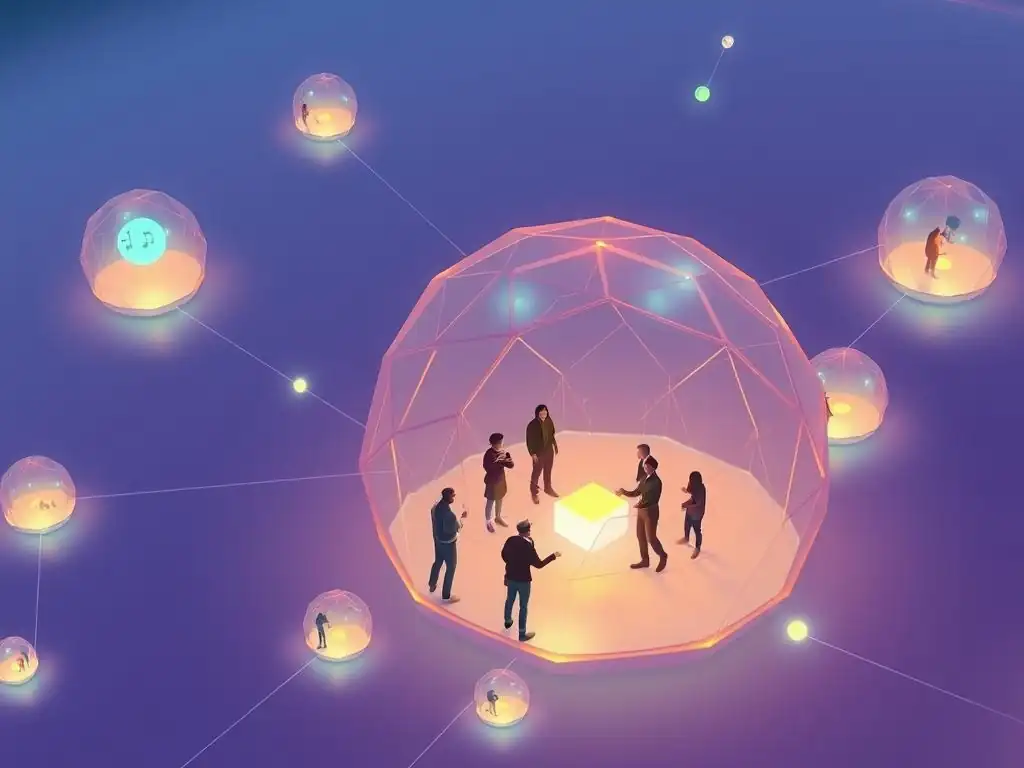
Decentraland stands as a prominent example of a thriving decentralized metaverse social community. Built on the Ethereum blockchain, Decentraland is a user-owned virtual world where users can purchase, develop, and monetize virtual land represented by NFTs. The platform is governed by a Decentralized Autonomous Organization (DAO), empowering LAND holders to vote on policy updates, land auctions, and other platform decisions.
Decentraland hosts a diverse range of community-driven events, including virtual concerts, art exhibitions, gaming tournaments, and social gatherings. Brands and creators are increasingly establishing a presence in Decentraland, creating virtual experiences and engaging with users in novel ways. For example, major brands like Samsung and Adidas have launched virtual stores and experiences within Decentraland.
The platform's open and decentralized nature has fostered a vibrant and creative community, making it a leading example of a metaverse decentralized social community in action. In 2021, virtual land parcels in Decentraland sold for millions of dollars, demonstrating the growing value and demand for digital real estate within decentralized metaverses.
Somnium Space is another compelling example of a persistent, open, and social VR world built on blockchain technology. Somnium Space emphasizes virtual land ownership, allowing users to purchase and develop parcels of virtual land as NFTs on the Ethereum and Solana blockchains. The platform is designed for immersive VR experiences, offering users a persistent virtual world to explore, socialize, and build.
Somnium Space fosters a strong sense of community through regular virtual events, social gatherings, and user-created experiences. The platform supports a wide range of user-generated content, from virtual homes and businesses to interactive games and art installations. Somnium Space distinguishes itself with its focus on persistence and openness, allowing users to access the virtual world through VR headsets, web browsers, and desktop clients.
The platform's integration with both Ethereum and Solana blockchains provides users with flexibility and choice in terms of blockchain infrastructure. Somnium Space has seen significant growth in its user base and virtual land sales, attracting individuals and businesses seeking to establish a presence in a decentralized and immersive metaverse environment.
Cryptovoxels: A Virtual World Built on the Ethereum Blockchain with User-Created Content
Cryptovoxels is a virtual world built on the Ethereum blockchain that emphasizes user-created content and virtual land ownership. Parcels of virtual land in Cryptovoxels are NFTs, allowing users to own, develop, and trade virtual real estate. The platform is characterized by its voxel art style and focus on user creativity and expression.
Cryptovoxels hosts a diverse range of user-created content, including virtual art galleries, shops, event spaces, and interactive experiences. The platform's simplicity and ease of use have attracted a large and active community of creators and users. Cryptovoxels events range from art exhibitions and music performances to virtual meetups and community gatherings.
The platform's open and accessible nature, combined with its blockchain-based ownership model, has made it a popular choice for individuals and artists looking to build and showcase their creations in a decentralized metaverse environment. Cryptovoxels has witnessed consistent growth in its virtual land market and user activity, demonstrating the appeal of user-generated content and blockchain-based ownership in virtual worlds.
Scalability and Performance Limitations of Blockchain Technology
Scalability and performance limitations of blockchain technology pose significant challenges for the widespread adoption of metaverse decentralized social communities. Current blockchain networks often struggle to handle the high transaction volumes and low latency required for seamless and real-time interactions in immersive virtual worlds. Transaction processing speeds and gas fees on some blockchains can become bottlenecks, hindering the user experience and limiting scalability.
Layer-2 scaling solutions, such as rollups and sidechains, are being developed to address these limitations and improve the scalability of blockchain networks. However, these solutions are still evolving, and their effectiveness in handling the demands of massive metaverse environments remains to be fully demonstrated. Ongoing research and development efforts are focused on improving blockchain scalability and performance to enable the seamless operation of large-scale metaverse decentralized social communities. For example, advancements in sharding and consensus mechanisms are being explored to increase transaction throughput and reduce latency on blockchain networks.
Ensuring Security and Preventing Malicious Activities
Ensuring security and preventing malicious activities are critical considerations for metaverse decentralized social communities. Decentralized platforms, while offering benefits in terms of user control and transparency, can also be vulnerable to security threats and malicious actors. Smart contract vulnerabilities, phishing attacks, and scams are potential risks in decentralized metaverse environments.
Robust security measures, including smart contract audits, multi-factor authentication, and community moderation systems, are necessary to mitigate these risks and protect users. Educating users about security best practices and fostering a culture of security awareness within metaverse communities are also crucial. As metaverse platforms evolve, continuous monitoring and adaptation of security protocols are essential to stay ahead of emerging threats and maintain a safe and secure virtual environment for users. The decentralized nature of these platforms requires a community-driven approach to security, where users actively participate in reporting suspicious activities and contributing to platform security.
Addressing Regulatory Uncertainties and Legal Compliance
Addressing regulatory uncertainties and legal compliance is a complex and evolving challenge for metaverse decentralized social communities. The legal and regulatory landscape surrounding blockchain technology, cryptocurrencies, and virtual worlds is still developing, creating uncertainties for platform operators and users. Issues such as data privacy, intellectual property rights, virtual asset ownership, and cross-border regulations need to be addressed to ensure legal clarity and compliance.
Collaboration between metaverse platforms, legal experts, and regulatory bodies is crucial to navigate these uncertainties and establish clear legal frameworks for decentralized virtual worlds. Self-regulation and industry standards can also play a role in promoting responsible development and operation of metaverse decentralized social communities. As the metaverse ecosystem matures, proactive engagement with regulators and a commitment to legal compliance are essential for fostering trust and ensuring the long-term sustainability of these virtual environments. The lack of clear regulatory frameworks in many jurisdictions poses a significant challenge to the widespread adoption and mainstream acceptance of metaverse decentralized social communities.
Promoting Inclusivity and Accessibility for All Users
Promoting inclusivity and accessibility for all users is a crucial ethical and practical consideration for metaverse decentralized social communities. Ensuring that these virtual worlds are accessible to individuals with disabilities, diverse backgrounds, and varying levels of technological literacy is essential for creating truly inclusive and equitable metaverse experiences. Accessibility considerations include designing interfaces and experiences that are compatible with assistive technologies, providing multilingual support, and addressing digital literacy gaps.
Efforts to promote inclusivity should also extend to addressing issues of representation and diversity within metaverse communities, fostering welcoming and respectful environments for all users. Community moderation policies and inclusive design principles can play a role in creating more diverse and equitable metaverse spaces. Making metaverse decentralized social communities truly accessible and inclusive requires ongoing effort and commitment from platform developers, community members, and policymakers. The potential of the metaverse to be a truly global and inclusive social space can only be realized if accessibility and inclusivity are prioritized from the outset.
Predicting the Growth and Adoption of Decentralized Metaverse Platforms
Predicting the growth and adoption of decentralized metaverse platforms is a complex but crucial task for understanding the future of social interaction. While the metaverse is still in its early stages of development, various factors suggest significant growth potential. Advancements in VR/AR technology, increasing internet penetration, and growing interest in blockchain and NFTs are driving momentum towards metaverse adoption.
Industry analysts predict substantial growth in the metaverse market in the coming years, with estimates ranging from hundreds of billions to trillions of dollars in market value by the end of the decade. The adoption of decentralized metaverse platforms is likely to be influenced by factors such as user experience, accessibility, security, and the development of compelling use cases.
As these platforms mature and overcome current challenges, they are poised to become increasingly integral to social interaction, entertainment, commerce, and various other aspects of daily life. The rate of adoption will likely accelerate as interoperability standards are established and the user experience becomes more seamless and intuitive.
Blockchain technology is poised to play a transformative role in shaping the future of social connection within the metaverse and beyond. Its inherent properties of decentralization, transparency, and security offer a compelling alternative to the centralized models of current social media platforms. Blockchain can empower users with greater control over their data, identities, and online experiences, fostering more equitable and user-centric social ecosystems.
The integration of blockchain into social platforms can enable new forms of social interaction, community governance, and economic models. Decentralized social networks built on blockchain have the potential to address many of the challenges associated with Web 2.0 social media, such as data privacy concerns, algorithmic bias, and centralized control.
As blockchain technology matures and becomes more scalable and user-friendly, its role in shaping the future of social connection is expected to become increasingly significant. The shift towards decentralized social platforms represents a fundamental change in the power dynamics of online social interaction, moving towards a more user-empowered and community-driven model.
The Rise of AI-Powered Avatars and Personalized Metaverse Experiences
The rise of AI-powered avatars and personalized metaverse experiences is another significant trend shaping the future of social interaction in virtual worlds. Artificial intelligence (AI) is being increasingly integrated into metaverse platforms to create more realistic, responsive, and personalized avatars. AI can enable avatars to exhibit more natural behaviors, emotions, and interactions, enhancing the sense of social presence and immersion in virtual environments.
AI algorithms can also be used to personalize metaverse experiences based on user preferences, behaviors, and social interactions. Personalized avatars, customized environments, and AI-driven recommendations can create more engaging and relevant metaverse experiences for individual users. The combination of AI and metaverse technologies has the potential to revolutionize social interaction, creating more immersive, personalized, and ultimately more human-centered virtual worlds. Advancements in natural language processing, computer vision, and machine learning are driving the development of increasingly sophisticated AI-powered avatars and personalized metaverse experiences.
Metaverse decentralized social communities represent a paradigm shift in how we build and experience social interaction in the digital age. By leveraging blockchain technology, these platforms offer enhanced user control, data privacy, transparency, and new economic opportunities. While challenges related to scalability, security, regulation, and inclusivity remain, the potential of these virtual worlds to foster more equitable, democratic, and user-centric online communities is immense.
As the metaverse continues to evolve, embracing the principles of decentralization and community governance will be crucial for realizing its transformative potential. Metaverse decentralized social communities are not just about creating virtual worlds; they are about building a new future for social connection, one where users are empowered, communities are self-governing, and the digital experience is more human and meaningful. The journey towards realizing this vision is ongoing, but the foundations are being laid, and the potential for a more decentralized and user-centric digital future is within reach.
Frequently Asked Questions
Blockchain provides a secure and transparent infrastructure for verifying identities, managing digital assets, and governing community interactions. This allows for user-owned content and more democratic decision-making.
Decentralized platforms offer greater data privacy, resistance to censorship, and economic empowerment for creators through tokenization and NFTs. This contrasts sharply with centralized platforms.
How can NFTs (Non-Fungible Tokens) be used to foster a sense of community and belonging in the Metaverse?
NFTs can represent ownership of virtual land, avatars, or unique community assets, creating exclusive access and shared experiences. This promotes community identity and engagement.
DeFi enables peer-to-peer lending, staking, and other financial services within the Metaverse, allowing community members to earn and manage their digital assets directly.
Challenges include regulatory uncertainty, scalability issues, and the potential for scams and fraud. User education and robust governance models are crucial for mitigating these risks.
Final Reflection: Embracing Decentralized Connection in the Metaverse
The exploration of the Metaverse as a decentralized social network reveals a profound shift in how we understand community and connection. The potential for truly user-owned and governed virtual spaces is no longer a futuristic fantasy, but a rapidly approaching reality. This article has highlighted the key elements required to build thriving Metaverse decentralized social communities, and their importance is amplified by the growing desire for alternatives to centralized platforms that often prioritize profit over genuine interaction.
The promise of the Metaverse lies not just in its immersive experiences, but in its capacity to empower individuals and foster authentic relationships free from the constraints of traditional social media. This vision resonates deeply, as it speaks to a fundamental human need for belonging and self-expression within a supportive community. The best way to predict the future is to create it.
- Peter Drucker. This quote encapsulates the spirit of innovation driving the development of decentralized Metaverse communities, where users actively shape their digital environments and social interactions.
As we stand on the cusp of this new era, let us consider the role we can play in shaping the Metaverse into a space that truly reflects our values. Let us champion decentralization, prioritize user empowerment, and cultivate communities built on trust, respect, and shared purpose. The future of social connection is being written now, and it is up to each of us to ensure that it is a future worth inhabiting.
Unveil Your Metaverse Potential: Connect, Build, Thrive!
Thank you for exploring the exciting possibilities of decentralized social networks within the metaverse. You've gained valuable insights into creating vibrant virtual communities, and now it's time to turn that knowledge into action. Are you ready to take the next step?
Here's how you can deepen your involvement and help shape the future of the metaverse:
- Jump in and explore! Create your avatar and participate actively in at least one virtual community that interests you. This hands-on experience is the best way to understand the dynamics and possibilities firsthand.
- Share your insights! Post about your vision for decentralized metaverse communities on your favorite social media platform and tag the publication. Let’s start a meaningful conversation!
- Contribute to open-source metaverse projects! Explore initiatives related to virtual world development and consider offering your skills, whether through coding, documentation, or idea sharing.
What kind of community are you most excited to see in the metaverse, and how do you envision helping bring it to life? Share your thoughts in the comments below!
Leave a Reply