
Security in the Interoperable Metaverse: Blockchain's Role in Protecting User Data


Welcome to Blockchain Trends, your compass in the rapidly evolving world of decentralized technology. Dive in as we explore the groundbreaking applications of blockchain, moving beyond cryptocurrency to uncover its true potential. Are you ready to understand how blockchain is revolutionizing the digital landscape? Our feature article tackles a critical question: how can we ensure the security of user data within the burgeoning blockchain metaverse? Uncover the innovative strategies and challenges in our deep dive into Blockchain metaverse data security and discover how this technology is shaping a safer, more decentralized future.
Security in the Interoperable Metaverse: Blockchain's Role in Protecting User Data
- Introduction: The Metaverse Interoperability Challenge and Data Security
- Blockchain's Fundamental Role in Metaverse Security
- Addressing Key Metaverse Security Risks with Blockchain
- Blockchain Solutions for Specific Interoperable Metaverse Security Challenges
- Case Studies: Blockchain-Based Security Solutions in Metaverse Projects
- The Future of Blockchain-Based Security in the Interoperable Metaverse
- Conclusion: Blockchain as a Cornerstone of a Secure and Trustworthy Interoperable Metaverse
-
Frequently Asked Questions
- How does blockchain enhance data security in the metaverse, particularly concerning interoperability?
- What are the primary data security threats in a metaverse environment, and how can blockchain address them?
- What role does blockchain play in ensuring user privacy within the metaverse, given the potential for extensive data collection?
- How can blockchain-based solutions mitigate the risks associated with data manipulation and fraud in the metaverse?
- What are the regulatory considerations surrounding blockchain and data security in the metaverse, and how might they impact its adoption?
- Final Reflection: Securing Tomorrow's Realities
- Unlock Your Metaverse Security Potential
Introduction: The Metaverse Interoperability Challenge and Data Security
Understanding Metaverse Interoperability and its Significance
Metaverse interoperability refers to the ability of users to seamlessly move between different virtual worlds, platforms, and experiences while retaining their avatars, digital assets, and data. This interconnectedness is crucial for realizing the full potential of the metaverse, transforming it from a collection of isolated digital islands into a unified and immersive digital universe.
Imagine a user purchasing a digital artwork in one metaverse platform and being able to display it in their virtual home in another, or utilizing the same avatar and digital identity across various virtual environments without friction. This level of interoperability promises a richer, more engaging, and ultimately more useful metaverse experience.
The significance of metaverse interoperability extends beyond user convenience. It fosters a more dynamic and competitive metaverse ecosystem. By breaking down silos, interoperability encourages innovation and collaboration among different platforms and developers. Users are no longer locked into a single ecosystem, promoting platform diversity and preventing monopolies. This open and interconnected environment is vital for the long-term growth and evolution of the metaverse, enabling a truly decentralized and user-centric digital future. Interoperability also unlocks new economic opportunities, allowing for seamless digital asset exchange and the creation of interconnected virtual economies.
The Growing Concerns Regarding User Data Security in the Metaverse
As the metaverse evolves towards greater interoperability, concerns about user data security are escalating. The very nature of interoperability, which involves sharing user data across multiple platforms, inherently increases the attack surface and potential vulnerabilities. In a highly interconnected metaverse, a data breach on one platform could have cascading effects, compromising user data across numerous linked environments. Furthermore, the vast amounts of personal and sensitive data expected to be generated and stored within the metaverse, including biometric data, financial information, and social interactions, make it a highly attractive target for malicious actors.
The lack of standardized security protocols and data governance frameworks across different metaverse platforms further exacerbates these concerns. Currently, each platform often operates with its own security measures and data handling policies, creating inconsistencies and potential loopholes. This fragmented landscape makes it challenging for users to understand and control how their data is being used and protected as they navigate across different virtual worlds. The potential for data misuse, unauthorized access, and privacy violations in an interoperable metaverse environment is significant and requires urgent attention to establish robust security solutions.
How Blockchain Technology Addresses Data Security Issues in Interoperable Metaverse Environments
Blockchain technology offers a compelling solution to address the critical data security challenges inherent in an interoperable metaverse. Its fundamental characteristics – decentralization, immutability, and cryptographic security – are uniquely suited to create a more secure and trustworthy metaverse ecosystem. By leveraging blockchain, we can move away from centralized data silos that are vulnerable to single points of failure and towards a distributed and resilient infrastructure for managing user data and digital assets.
Blockchain's decentralized nature ensures that no single entity controls all metaverse data, reducing the risk of large-scale data breaches and censorship. Immutability, a core feature of blockchain, guarantees the integrity of data records, preventing tampering and ensuring a verifiable history of transactions and interactions within the metaverse.
Cryptographic security, through techniques like hashing and encryption, safeguards user identities and digital assets, making it significantly more difficult for malicious actors to compromise accounts or steal valuable items. Therefore, blockchain technology is not just an incremental improvement but a foundational shift in how we can approach blockchain metaverse data security, paving the way for a safer and more user-empowering interoperable metaverse.
Blockchain's Fundamental Role in Metaverse Security
Blockchain's Decentralized Nature: A Foundation for Secure Metaverse Data
The decentralized nature of blockchain technology is paramount to establishing secure blockchain metaverse data security. Unlike traditional centralized systems where data is stored in a single location under the control of one entity, blockchain distributes data across a network of computers. This distribution eliminates single points of failure, making the system significantly more resilient to attacks. If one node in the network is compromised, the integrity of the overall system remains intact because the data is replicated across numerous other nodes. This inherent redundancy is crucial for safeguarding metaverse data, which is expected to be vast and highly valuable.
Furthermore, decentralization fosters greater transparency and trust. In a blockchain network, transaction records are publicly auditable, meaning anyone can verify the history of data and asset ownership. This transparency reduces the potential for hidden manipulations or unauthorized data alterations. For the metaverse, this translates to users having greater confidence in the security and integrity of their digital identities, assets, and interactions. By distributing control and data, blockchain empowers users and mitigates the risks associated with centralized authorities, laying a solid foundation for blockchain metaverse data security.
Immutable Ledgers: Ensuring Data Integrity and Preventing Tampering in the Metaverse
Immutable ledgers, a defining feature of blockchain, are critical for ensuring data integrity and preventing tampering within the metaverse. Once data is recorded on a blockchain, it becomes virtually impossible to alter or delete it retrospectively. This immutability is achieved through cryptographic hashing, which links each block of data to the previous one, creating a tamper-proof chain. Any attempt to modify data in a previous block would require altering all subsequent blocks, a computationally infeasible task for malicious actors.
In the context of the metaverse, immutable ledgers provide an unparalleled level of data security. Consider digital asset ownership, for instance. When an NFT representing a virtual land parcel or a digital artwork is recorded on a blockchain, its ownership history is permanently and verifiably recorded. This immutability prevents fraud and disputes over ownership, ensuring that users can confidently trade and manage their digital assets within the metaverse. Immutable ledgers also enhance trust in metaverse interactions by providing an auditable record of events, contributing significantly to blockchain metaverse data security and overall user confidence.
Cryptographic Security: Protecting User Identities and Assets in the Metaverse
Cryptographic security is the bedrock of blockchain's ability to protect user identities and assets in the metaverse. Blockchain leverages advanced cryptographic techniques, such as hashing and public-key cryptography, to secure data and transactions. Hashing ensures data integrity by creating unique fingerprints of data blocks, making any unauthorized modification immediately detectable. Public-key cryptography, on the other hand, enables secure and private transactions. Each user possesses a pair of keys: a public key, which is shared and used to verify transactions, and a private key, which is kept secret and used to authorize transactions.
In the metaverse, cryptographic security is essential for safeguarding user identities and digital assets. Public-key cryptography allows for the creation of secure digital identities, ensuring that only the rightful owner can access and control their metaverse avatars and accounts. It also underpins the secure transfer of digital assets, such as NFTs and virtual currencies.
When a user initiates a transaction to transfer an asset, it is cryptographically signed using their private key and verified by the network using their public key. This process ensures that transactions are authentic and cannot be forged or tampered with, playing a vital role in strengthening blockchain metaverse data security and protecting users from identity theft and asset theft.
Addressing Key Metaverse Security Risks with Blockchain
Identity Management and Authentication in the Metaverse using Blockchain
Blockchain technology offers revolutionary solutions for identity management and authentication within the metaverse, addressing critical security risks associated with traditional centralized systems. Current identity management systems often rely on usernames and passwords, which are vulnerable to phishing, hacking, and data breaches. Blockchain-based identity solutions, however, leverage decentralization and cryptography to provide users with greater control and security over their digital identities. By utilizing blockchain, the metaverse can transition towards self-sovereign identity, where users own and manage their own identity data without relying on intermediaries.
Blockchain-based identity management systems enhance privacy and security by minimizing the reliance on centralized identity providers. Users can create and control their digital identities, deciding what information to share and with whom. This is particularly crucial in the interoperable metaverse, where users interact with numerous platforms and services. Blockchain enables the creation of portable and verifiable digital identities that can be used across different virtual environments, streamlining user experience and improving blockchain metaverse data security through enhanced control and reduced reliance on vulnerable centralized systems.
Decentralized Identifiers (DIDs) for Secure Metaverse Avatars
Decentralized Identifiers (DIDs) are a cornerstone of blockchain-based identity management in the metaverse, offering a secure and user-centric approach to managing metaverse avatars. DIDs are unique, globally resolvable identifiers that do not rely on centralized registries or authorities. They are controlled by the DID subject, meaning the user has sole ownership and control over their identifier and associated data. This contrasts sharply with traditional usernames or social media logins, which are controlled by centralized platforms.
In the metaverse, DIDs can be used to represent user avatars and their associated digital identities. When a user creates a metaverse avatar linked to a DID, they gain complete control over their virtual representation and the data associated with it. This empowers users to manage their metaverse presence across different platforms while maintaining privacy and security. DIDs facilitate secure authentication and authorization, allowing users to prove their identity to metaverse applications and services without revealing unnecessary personal information. The use of DIDs for metaverse avatars is a significant step towards enhancing blockchain metaverse data security and user empowerment.
Verifiable Credentials for Secure Access to Metaverse Experiences
Verifiable Credentials (VCs) complement DIDs by enabling secure and privacy-preserving access to metaverse experiences. VCs are digital credentials that are cryptographically signed and verifiable, allowing users to prove specific attributes or qualifications without revealing the underlying data. For example, a user could possess a VC verifying their age or professional certification without disclosing their birthdate or full educational history. This selective disclosure is crucial for enhancing privacy in the metaverse.
In the context of metaverse access, VCs can be used to grant users permission to specific virtual spaces or experiences based on verified attributes. Imagine accessing an age-restricted metaverse event by presenting a VC that proves you are over 18, without having to share your full date of birth with the event organizer. VCs enhance security by reducing the reliance on passwords and centralized authentication systems. They also improve user privacy by allowing for selective disclosure of information, making them a powerful tool for achieving secure and privacy-respecting access control within the metaverse and strengthening blockchain metaverse data security.
Data Privacy and Ownership in the Metaverse: A Blockchain-Based Solution
Blockchain technology offers a paradigm shift in data privacy and ownership within the metaverse. In traditional web environments, user data is often collected, stored, and monetized by centralized platforms, with limited user control or transparency. Blockchain, however, enables a more user-centric approach to data ownership and privacy, empowering individuals to control their data and how it is used within the metaverse. By leveraging blockchain, the metaverse can move towards a model where users have greater agency over their personal information and can benefit from the value generated by their data.
Blockchain-based solutions for data privacy and ownership in the metaverse focus on principles of data minimization, transparency, and user consent. Through cryptographic techniques and decentralized data storage, blockchain can minimize the amount of personal data collected and stored centrally, reducing the risk of mass data breaches. Transparency is enhanced through the auditable nature of blockchain, allowing users to track how their data is being used and shared.
User consent is paramount, with blockchain enabling mechanisms for users to grant and revoke permissions for data access and usage. These principles are crucial for establishing blockchain metaverse data security and fostering a more ethical and user-empowering metaverse.
Smart Contracts for Transparent Data Usage Agreements
Smart contracts, self-executing agreements encoded on a blockchain, provide a mechanism for establishing transparent and enforceable data usage agreements within the metaverse. Smart contracts automatically execute the terms of an agreement when predefined conditions are met, eliminating the need for intermediaries and ensuring that data usage is governed by pre-agreed rules. This transparency and automation are particularly valuable in the metaverse, where complex interactions and data exchanges between users and platforms are expected to be commonplace.
In the context of data privacy, smart contracts can be used to define the terms under which metaverse platforms can access and use user data. For example, a smart contract could specify the types of data a platform is allowed to collect, the purposes for which it can be used, and the duration of data retention. Users can interact with these smart contracts to understand and agree to data usage policies before engaging with metaverse services. Smart contracts ensure that data usage agreements are transparent, auditable, and automatically enforced, enhancing blockchain metaverse data security and user trust.
User Control Over Data Sharing and Monetization in the Metaverse
Blockchain empowers users with greater control over data sharing and monetization within the metaverse. Traditional platforms often control user data and reap the benefits of its monetization, leaving users with little agency. Blockchain-based solutions, however, can shift this paradigm, enabling users to decide who can access their data and potentially benefit directly from its value. This user-centric approach to data ownership is fundamental to creating a fairer and more equitable metaverse ecosystem.
Blockchain facilitates user control over data sharing through mechanisms such as data access control lists and decentralized data marketplaces. Users can define granular permissions for who can access their data and for what purposes. Furthermore, blockchain can enable new models for data monetization, where users can directly participate in the value creation process.
For example, users could be rewarded for contributing their data to research or training AI models, creating new economic opportunities and incentivizing data sharing in a privacy-preserving manner. This enhanced user control over data sharing and monetization is a key aspect of strengthening blockchain metaverse data security and empowering metaverse users.
Preventing Fraud and Scams in the Metaverse with Blockchain Technology
The metaverse, with its burgeoning digital economies and virtual asset markets, is increasingly susceptible to fraud and scams. Traditional centralized systems often struggle to effectively combat these threats, leading to financial losses and erosion of user trust. Blockchain technology, with its inherent security features, offers robust solutions for preventing fraud and scams within the metaverse. By leveraging blockchain, the metaverse can establish a more secure and transparent environment, fostering greater user confidence and participation.
Blockchain's immutability and transparency are particularly effective in combating fraud and scams. Immutable transaction records provide an auditable history of asset ownership and transfers, making it difficult for fraudsters to manipulate records or engage in illicit activities undetected. Transparency allows users to verify the legitimacy of transactions and asset provenance, reducing the risk of falling victim to scams. Furthermore, blockchain-based identity solutions can help prevent identity theft and impersonation, which are common tactics used in metaverse fraud schemes. These features collectively contribute to enhancing blockchain metaverse data security and mitigating the risks of fraud and scams.
Secure NFT Ownership and Verification
Non-Fungible Tokens (NFTs), often built on blockchain, are revolutionizing digital ownership in the metaverse. NFTs represent unique digital assets, such as virtual land, avatars, and digital art, and their ownership is securely recorded on a blockchain. This blockchain-based ownership provides a verifiable and transparent record of who owns which digital asset, significantly reducing the risk of fraud and disputes over ownership. Unlike traditional digital assets that can be easily copied or counterfeited, NFTs are unique and their authenticity can be cryptographically verified on the blockchain.
Secure NFT ownership and verification are crucial for preventing scams related to counterfeit or stolen digital assets in the metaverse. When a user purchases an NFT, they can be confident that they are acquiring a genuine and unique digital item, and their ownership is securely recorded and protected. Blockchain-based NFT marketplaces further enhance security by providing platforms for trading NFTs with transparency and accountability. The secure ownership and verification capabilities of NFTs are fundamental to building trust and combating fraud in the metaverse's digital asset ecosystem, reinforcing blockchain metaverse data security.
Immutable Transaction Records for Transparency and Accountability
Immutable transaction records, inherent to blockchain technology, are indispensable for fostering transparency and accountability in metaverse transactions, thereby preventing fraud and scams. Every transaction within a blockchain-based metaverse is permanently recorded on the ledger, creating an auditable history of all activities. This immutability ensures that transaction records cannot be altered or deleted, providing a reliable source of truth for verifying transactions and resolving disputes.
In the metaverse, immutable transaction records enhance transparency by allowing users to track the flow of digital assets and verify the legitimacy of transactions. For example, users can trace the ownership history of an NFT to ensure it is not stolen or counterfeit. Accountability is strengthened because all transactions are permanently recorded, making it easier to identify and investigate fraudulent activities. This transparency and accountability deter malicious actors and provide users with greater confidence in the security and integrity of metaverse transactions, contributing significantly to blockchain metaverse data security and a safer metaverse environment.
Blockchain Solutions for Specific Interoperable Metaverse Security Challenges
Securing Cross-Platform Asset Transfers in the Metaverse
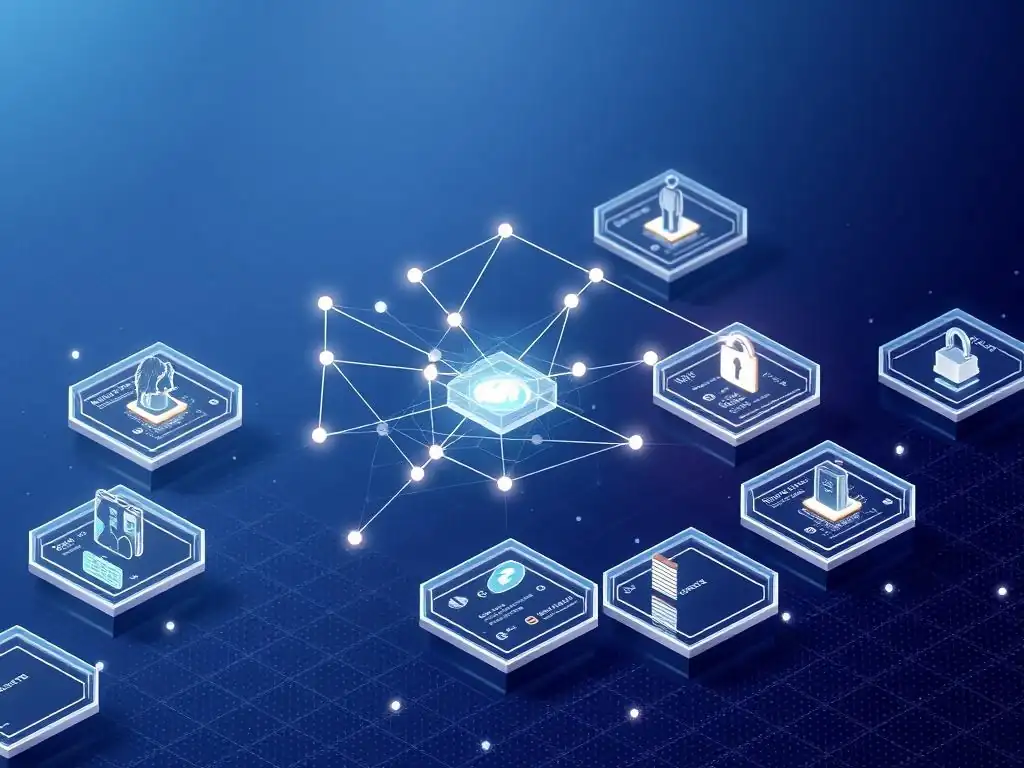
Interoperability in the metaverse necessitates secure and seamless cross-platform asset transfers. Users should be able to move their digital assets, such as avatars, NFTs, and virtual currencies, between different metaverse platforms without compromising security or encountering friction. Traditional centralized systems often struggle to facilitate secure cross-platform transfers due to platform silos and differing security protocols. Blockchain technology, however, offers innovative solutions to enable secure and interoperable asset transfers across the metaverse.
Blockchain's inherent interoperability features, coupled with its security mechanisms, make it well-suited for addressing the challenges of cross-platform asset transfers. Techniques like atomic swaps and cross-chain bridges, built on blockchain, enable secure and decentralized asset transfers between different blockchain networks and, by extension, different metaverse platforms. These solutions minimize the need for trusted intermediaries and enhance security by leveraging cryptographic verification and decentralized consensus. Secure cross-platform asset transfers are crucial for realizing the full potential of an interoperable metaverse and for enhancing blockchain metaverse data security in a multi-platform environment.
Atomic Swaps and Cross-Chain Bridges for Seamless Interoperability
Atomic swaps and cross-chain bridges are key blockchain technologies that enable seamless interoperability and secure asset transfers across different metaverse platforms. Atomic swaps allow for the direct exchange of cryptocurrencies or digital assets between two parties on different blockchains without the need for a centralized exchange. This is achieved through smart contracts that ensure that either both legs of the swap are executed, or neither occurs, eliminating the risk of one party being cheated.
Cross-chain bridges, on the other hand, facilitate the transfer of assets and data between different blockchain networks. These bridges act as secure conduits, allowing users to move assets from one blockchain to another while maintaining their security and provenance. In the metaverse context, atomic swaps and cross-chain bridges can enable users to seamlessly transfer their digital assets, such as NFTs or virtual currencies, between different metaverse platforms built on different blockchains. These technologies are vital for achieving true metaverse interoperability and for ensuring blockchain metaverse data security during cross-platform asset movements.
Preventing Double-Spending and Fraudulent Transactions across Metaverse Platforms
Preventing double-spending and fraudulent transactions is paramount in an interoperable metaverse environment where digital assets are transferred across multiple platforms. Double-spending, the risk of using the same digital asset in multiple transactions simultaneously, is a significant concern in digital currencies and asset transfers. Blockchain technology inherently addresses the double-spending problem through its consensus mechanisms and immutable ledger. However, ensuring this protection across interoperable metaverse platforms requires specific solutions.
Blockchain-based cross-chain solutions, such as bridges and interoperability protocols, are designed to prevent double-spending and fraudulent transactions across different metaverse platforms. These solutions employ cryptographic verification and consensus mechanisms to ensure that asset transfers are legitimate and that the same asset is not spent multiple times. For example, when an asset is transferred from one metaverse platform to another via a cross-chain bridge, the bridge verifies the transaction on both source and destination platforms, preventing double-spending. These mechanisms are essential for maintaining the integrity of digital economies within the interoperable metaverse and for reinforcing blockchain metaverse data security.
Protecting Intellectual Property Rights in the Metaverse using Blockchain
Protecting Intellectual Property (IP) rights in the metaverse is crucial for fostering creativity and innovation. The metaverse, as a digital realm where users create and share content, faces unique challenges in IP protection. Traditional copyright and patent systems may not be easily applicable or enforceable in virtual environments. Blockchain technology, particularly NFTs, offers novel solutions for protecting IP rights of metaverse creators and ensuring they are fairly compensated for their work.
Blockchain-based IP protection in the metaverse leverages NFTs to represent ownership of digital creations, such as virtual art, music, and virtual world designs. NFTs provide a verifiable and transparent record of IP ownership, making it easier for creators to prove their rights and combat copyright infringement. Furthermore, blockchain can enable decentralized marketplaces for IP licensing and distribution, empowering creators to control how their work is used and monetized in the metaverse. These blockchain-based solutions are vital for fostering a thriving creative ecosystem in the metaverse and for strengthening blockchain metaverse data security in the context of IP protection.
NFT-Based Copyright Protection for Metaverse Creators
NFT-based copyright protection offers a powerful tool for metaverse creators to safeguard their intellectual property. When a creator mints their digital artwork, music, or virtual design as an NFT, they establish a clear and verifiable record of ownership on the blockchain. This NFT serves as a digital certificate of authenticity and ownership, making it significantly more difficult for others to copy or claim ownership of the creator's work without permission. NFTs provide creators with greater control over their IP and enable them to enforce their copyright in the digital realm.
In the metaverse, NFT-based copyright protection empowers creators to monetize their creations through direct sales, licensing, or royalties. NFT marketplaces provide platforms for creators to showcase and sell their NFTs, reaching a global audience of potential buyers. Smart contracts embedded within NFTs can automate royalty payments to creators whenever their work is resold or used in certain ways. This system of NFT-based copyright protection fosters a more equitable and sustainable ecosystem for metaverse creators, incentivizing innovation and contributing to overall blockchain metaverse data security for creative assets.
Decentralized Marketplaces for Secure IP Licensing and Distribution
Decentralized marketplaces, built on blockchain, offer a secure and transparent platform for IP licensing and distribution within the metaverse. Traditional centralized marketplaces often act as intermediaries, taking a significant cut of creator earnings and potentially limiting creator control over their IP. Decentralized marketplaces, however, connect creators directly with consumers, reducing intermediary fees and empowering creators to manage their IP licensing and distribution on their own terms.
Blockchain-based decentralized marketplaces leverage smart contracts to automate IP licensing agreements and royalty payments. Creators can define the terms of use for their IP, such as licensing fees and usage restrictions, within smart contracts. When a user wishes to license or use the creator's IP, the smart contract automatically executes the agreement and distributes payments to the creator. These decentralized marketplaces enhance transparency, reduce costs, and empower creators to control their IP and its monetization within the metaverse, contributing to a more secure and creator-centric IP ecosystem and reinforcing blockchain metaverse data security in IP management.
Ensuring Data Sovereignty and Compliance in a Global Metaverse
Data sovereignty and compliance are critical considerations for a global metaverse that transcends geographical boundaries and regulatory jurisdictions. Data sovereignty refers to the principle that individuals and organizations have control over their data and where it is stored and processed. Compliance with data privacy regulations, such as GDPR and CCPA, is essential for ensuring user rights and building trust in the metaverse. Blockchain technology, with its decentralized and privacy-enhancing features, can play a crucial role in ensuring data sovereignty and compliance in the metaverse.
Blockchain-based data governance frameworks can empower metaverse users with greater control over their data and ensure compliance with data privacy regulations. Decentralized data storage solutions, built on blockchain, can allow users to choose where their data is stored, supporting data sovereignty principles. Privacy-enhancing technologies, such as zero-knowledge proofs and secure multi-party computation, can enable data processing and analysis while minimizing data disclosure, facilitating compliance with privacy regulations. Addressing data sovereignty and compliance is essential for building a responsible and trustworthy global metaverse and for ensuring blockchain metaverse data security in a globally interconnected digital space.
Blockchain-Based Data Governance Frameworks
Blockchain-based data governance frameworks offer a decentralized and transparent approach to managing data within the metaverse, supporting data sovereignty and compliance. Traditional data governance models are often centralized and opaque, giving users limited control over their data. Blockchain, however, enables the creation of data governance frameworks that are distributed, auditable, and user-centric. These frameworks can define rules for data access, usage, and sharing within the metaverse, ensuring transparency and accountability.
Blockchain-based data governance frameworks can incorporate mechanisms for user consent management, data access control, and dispute resolution. Smart contracts can be used to automate data governance policies and ensure they are consistently enforced. Decentralized autonomous organizations (DAOs) can be established to govern data usage and policies within metaverse communities, empowering users to participate in data governance decisions. These blockchain-based frameworks promote data sovereignty by giving users greater control over their data and facilitate compliance with data privacy regulations by providing transparent and auditable data management practices, enhancing overall blockchain metaverse data security and user trust.
Meeting Regulatory Requirements for Data Privacy and Security
Meeting regulatory requirements for data privacy and security is a paramount concern for metaverse platforms operating in a global landscape with diverse legal frameworks. Regulations like GDPR, CCPA, and others impose strict requirements on data collection, processing, and storage, aiming to protect user privacy and data rights. Metaverse platforms must adopt technologies and practices that ensure compliance with these regulations to avoid legal penalties and maintain user trust. Blockchain technology offers several tools and approaches to facilitate regulatory compliance in the metaverse.
Blockchain's privacy-enhancing features, such as encryption, zero-knowledge proofs, and differential privacy, can help metaverse platforms comply with data minimization and data anonymization requirements of privacy regulations. Decentralized identity solutions, based on DIDs and VCs, can empower users with greater control over their personal data, aligning with data subject rights provisions in regulations like GDPR. Auditable and transparent data management practices, enabled by blockchain, can demonstrate compliance to regulators and build user confidence. By strategically leveraging blockchain technologies, metaverse platforms can proactively address regulatory requirements and enhance blockchain metaverse data security in a legally compliant and ethically responsible manner.
Case Studies: Blockchain-Based Security Solutions in Metaverse Projects
Decentraland: Utilizing Blockchain for Land Ownership and Governance
Decentraland, one of the pioneering metaverse platforms, exemplifies the practical application of blockchain for land ownership and governance, significantly enhancing security and user empowerment. Built on the Ethereum blockchain, Decentraland utilizes NFTs to represent ownership of virtual land parcels, known as LAND. This blockchain-based land ownership system provides users with verifiable and immutable proof of ownership, preventing fraud and disputes over virtual real estate. The use of NFTs for LAND ownership is a core element of blockchain metaverse data security in Decentraland.
Decentraland's governance is also deeply rooted in blockchain principles. The Decentraland DAO, a decentralized autonomous organization, governs the platform's policies and development, using MANA, Decentraland's native cryptocurrency, for voting rights. This decentralized governance model empowers LAND owners and MANA holders to collectively shape the future of Decentraland, fostering a community-driven and transparent governance system. The combination of blockchain-based land ownership and decentralized governance showcases a real-world example of how blockchain can enhance security, transparency, and user control within a metaverse environment, solidifying blockchain metaverse data security through decentralized mechanisms.
The Sandbox: Empowering User-Generated Content with NFT-Based Ownership
The Sandbox, another leading metaverse platform, leverages blockchain and NFTs to empower user-generated content and establish provable ownership for digital creations. In The Sandbox, users can create, own, and monetize in-game assets, such as avatars, virtual items, and even entire game experiences, as NFTs. This NFT-based ownership model gives creators full control over their digital creations and enables them to participate in a vibrant creator economy within the metaverse. The emphasis on NFT-based ownership is central to blockchain metaverse data security in The Sandbox ecosystem.
The Sandbox Marketplace facilitates the trading of these user-generated NFTs, providing a secure and transparent platform for creators to sell and monetize their assets. The platform's use of NFTs ensures that creators retain verifiable ownership of their work and can benefit from the value generated by their creations. This focus on empowering user-generated content through NFT ownership fosters a dynamic and creative metaverse environment while simultaneously ensuring blockchain metaverse data security for user-created assets through blockchain's inherent security features and verifiable ownership records.
Somnium Space: Implementing Blockchain for Secure Virtual Land Transactions
Somnium Space, a virtual world focused on immersive experiences, utilizes blockchain to secure virtual land transactions and establish transparent ownership within its metaverse. Similar to Decentraland, Somnium Space represents virtual land parcels as NFTs on the Ethereum blockchain. This blockchain-based land ownership system provides users with secure and verifiable proof of ownership, facilitating transparent and trustworthy virtual land transactions. The implementation of blockchain for land transactions is a key component of blockchain metaverse data security in Somnium Space.
Somnium Space's integration of blockchain extends beyond land ownership to include other aspects of its virtual economy and user interactions. The platform leverages blockchain for in-world transactions and asset management, ensuring transparency and security throughout its ecosystem. By prioritizing blockchain-based security for virtual land transactions and in-world interactions, Somnium Space demonstrates a commitment to building a secure and trustworthy metaverse environment for its users, emphasizing blockchain metaverse data security as a core principle of its platform.
The Future of Blockchain-Based Security in the Interoperable Metaverse
Emerging Trends in Blockchain Metaverse Data Security
The landscape of blockchain metaverse data security is constantly evolving, with several emerging trends poised to shape the future of secure interoperable metaverse environments. Zero-knowledge proofs and multi-party computation are gaining traction as promising technologies for enhancing privacy and security in the metaverse. These advanced cryptographic techniques offer the potential to unlock new levels of data protection and user empowerment within interconnected virtual worlds.
Advancements in blockchain scalability solutions and interoperability protocols are also crucial for the future of blockchain metaverse data security. As the metaverse grows and becomes more interconnected, the underlying blockchain infrastructure must be able to handle increasing transaction volumes and data flows efficiently and securely. Layer-2 scaling solutions and cross-chain interoperability protocols are essential for ensuring that blockchain can support the demands of a large-scale, interoperable metaverse while maintaining robust security and performance.
Zero-Knowledge Proofs for Enhanced Privacy
Zero-knowledge proofs (ZKPs) are an emerging cryptographic technique with significant potential to enhance privacy in the metaverse. ZKPs allow one party to prove to another party that a statement is true without revealing any information beyond the validity of the statement itself. In the metaverse context, ZKPs can be used to verify user identity or attributes without disclosing sensitive personal data. For example, a user could prove they are over 18 to access an age-restricted metaverse space without revealing their actual age or date of birth.
The application of ZKPs in the metaverse can revolutionize data privacy by enabling privacy-preserving authentication, authorization, and data sharing. ZKPs can minimize the amount of personal data that needs to be shared or stored, reducing the risk of data breaches and privacy violations. As metaverse platforms increasingly prioritize user privacy, ZKPs are likely to become a crucial technology for enhancing blockchain metaverse data security and building privacy-respecting virtual environments.
Multi-Party Computation for Secure Data Analysis
Multi-Party Computation (MPC) is another advanced cryptographic technique that holds promise for secure data analysis in the metaverse while preserving privacy. MPC allows multiple parties to jointly compute a function over their private data without revealing their individual inputs to each other. In the metaverse, MPC can be used for various applications, such as secure data aggregation, privacy-preserving analytics, and collaborative decision-making, without compromising user privacy.
For instance, MPC could enable metaverse platforms to analyze user behavior patterns across different platforms to improve user experience or detect fraudulent activities, without collecting and centralizing sensitive user data. MPC can also facilitate secure data sharing between metaverse platforms for interoperability purposes, while ensuring that each platform retains control over its own data. As the metaverse evolves towards greater data-driven experiences, MPC is poised to play a vital role in enabling secure and privacy-preserving data analysis, strengthening blockchain metaverse data security and fostering trust in data processing within virtual worlds.
Scalability Challenges and Potential Solutions for Blockchain in the Metaverse
Scalability remains a significant challenge for blockchain technology to fully support the demands of a large-scale, interoperable metaverse. Traditional blockchain networks can face limitations in transaction throughput and processing speed, which could hinder the seamless operation of a metaverse with millions or billions of users and countless daily transactions. Addressing scalability challenges is crucial for ensuring that blockchain can effectively underpin a robust and performant blockchain metaverse data security infrastructure.
Layer-2 scaling solutions and sharding techniques are among the most promising approaches to address blockchain scalability challenges in the metaverse context. Layer-2 solutions, such as rollups and sidechains, process transactions off-chain and then batch them onto the main blockchain, significantly increasing transaction throughput. Sharding techniques divide the blockchain network into smaller partitions, or shards, allowing for parallel processing and data storage, further enhancing scalability. These scalability solutions are essential for enabling blockchain to handle the massive scale and transaction volume expected in the future metaverse while maintaining robust blockchain metaverse data security.
Layer-2 Scaling Solutions for Efficient Transaction Processing
Layer-2 scaling solutions offer a practical and effective way to enhance blockchain scalability for efficient transaction processing in the metaverse. Layer-2 solutions operate on top of the main blockchain (Layer-1), processing transactions off-chain and then periodically submitting batches of transactions to the main chain for finality and security. This off-chain processing significantly reduces the load on the main blockchain, enabling much higher transaction throughput and faster transaction speeds. Rollups and sidechains are prominent examples of Layer-2 scaling solutions.
Rollups aggregate multiple transactions into a single batch and submit a summary of the batch to the main chain, significantly reducing the gas fees and processing time per transaction. Sidechains are independent blockchains that run parallel to the main chain and are connected to it through bridges, allowing for faster and cheaper transactions while still benefiting from the security of the main chain. Layer-2 scaling solutions are crucial for enabling blockchain to handle the high transaction volume expected in the metaverse, ensuring efficient transaction processing and supporting robust blockchain metaverse data security at scale.
Sharding Techniques for Distributing Data Storage and Processing
Sharding techniques provide another powerful approach to enhance blockchain scalability by distributing data storage and processing across multiple nodes in the network. Sharding divides the blockchain into smaller, independent partitions called shards, each of which processes only a subset of transactions and stores only a portion of the blockchain data. This parallel processing and distributed data storage significantly increase the overall capacity and throughput of the blockchain network.
In the context of the metaverse, sharding can enable blockchain to handle the massive amounts of data and transactions generated by a large number of users and virtual environments. By distributing the workload across shards, sharding prevents network congestion and maintains fast transaction speeds even as the metaverse scales. Sharding techniques are essential for ensuring that blockchain can effectively support the data storage and processing demands of a large and growing metaverse, contributing to scalable and resilient blockchain metaverse data security infrastructure.
The Role of Regulation in Shaping Blockchain Metaverse Security Practices
Regulation will play a crucial role in shaping blockchain metaverse security practices and ensuring a safe and trustworthy metaverse environment for users. As the metaverse evolves and becomes more integrated into daily life, regulatory bodies are increasingly关注ing its potential risks and challenges, particularly in areas of data privacy, security, and consumer protection. Clear and well-defined regulations are needed to establish standards for metaverse security practices, protect user rights, and foster responsible innovation.
Regulatory frameworks for the metaverse are likely to address various aspects of security, including data privacy regulations, identity management standards, digital asset regulations, and measures to combat fraud and illicit activities. Collaboration between regulatory bodies, industry stakeholders, and technology developers is essential to create effective and balanced regulations that promote innovation while mitigating risks. The development of appropriate regulations will be crucial for fostering user trust and ensuring the long-term success of the metaverse as a secure and beneficial digital space, underscoring the importance of regulatory influence on blockchain metaverse data security practices.
Conclusion: Blockchain as a Cornerstone of a Secure and Trustworthy Interoperable Metaverse
Recap of Blockchain's Key Benefits for Metaverse Data Security
Blockchain technology offers a multitude of key benefits that position it as a cornerstone of blockchain metaverse data security. Its decentralized nature eliminates single points of failure and enhances resilience. Immutable ledgers ensure data integrity and prevent tampering, fostering trust in metaverse interactions and asset ownership. Cryptographic security safeguards user identities and digital assets, protecting against unauthorized access and theft. Blockchain-based identity solutions empower users with self-sovereign identity and control over their personal data. These fundamental benefits collectively contribute to a more secure, transparent, and user-empowering metaverse environment.
Furthermore, blockchain facilitates secure cross-platform asset transfers, protects intellectual property rights through NFTs, and enables data sovereignty and regulatory compliance. Case studies from metaverse projects like Decentraland, The Sandbox, and Somnium Space demonstrate the practical application and effectiveness of blockchain-based security solutions in real-world metaverse environments. Emerging trends like zero-knowledge proofs and multi-party computation, coupled with scalability solutions, promise to further enhance blockchain metaverse data security in the future.
The Importance of Collaboration and Standardization for a Secure Metaverse Ecosystem
Building a truly secure and trustworthy interoperable metaverse requires collaboration and standardization across various stakeholders. Metaverse platforms, blockchain developers, security experts, regulatory bodies, and users must work together to establish common security standards, protocols, and best practices. Standardization is crucial for ensuring interoperability and security across different metaverse platforms and for creating a seamless and secure user experience.
Collaboration is essential for addressing the complex security challenges of the metaverse effectively. Sharing knowledge, expertise, and resources among different stakeholders can accelerate the development and adoption of robust blockchain metaverse data security solutions. Open-source initiatives and industry consortia can play a vital role in fostering collaboration and standardization, driving the evolution of a secure and interoperable metaverse ecosystem that benefits all participants.
Looking Ahead: Building a Future of Trust and Security in the Metaverse through Blockchain
Looking ahead, blockchain technology will continue to be a critical enabler for building a future of trust and security in the metaverse. As the metaverse evolves and becomes more deeply integrated into our lives, ensuring data security and user privacy will be paramount. Blockchain's inherent security features and its capacity to empower users with greater control over their data make it an indispensable technology for creating a secure and trustworthy metaverse environment.
By embracing blockchain-based security solutions and fostering collaboration and standardization, we can pave the way for a future metaverse that is not only immersive and engaging but also secure, private, and user-centric. Building this future of trust and security in the metaverse through blockchain is essential for realizing the full potential of this transformative technology and for creating a digital world that benefits all of humanity, ensuring that blockchain metaverse data security remains a top priority in the metaverse's ongoing development.
Frequently Asked Questions
How does blockchain enhance data security in the metaverse, particularly concerning interoperability?
Blockchain provides immutable records of transactions and data ownership, enhancing security. Its decentralized nature reduces the risk of single points of failure and unauthorized data alteration. Interoperability is improved through standardized protocols and smart contract functionality.
What are the primary data security threats in a metaverse environment, and how can blockchain address them?
Common threats include data breaches, identity theft, and unauthorized access. Blockchain addresses these by offering encrypted data storage, secure identity management using digital wallets, and access control mechanisms based on smart contracts.
What role does blockchain play in ensuring user privacy within the metaverse, given the potential for extensive data collection?
Blockchain allows users to have more control over their data, including what information they share. Features like zero-knowledge proofs and selective disclosure enable privacy-preserving data sharing. Decentralized identity solutions also contribute to enhanced user privacy.
How can blockchain-based solutions mitigate the risks associated with data manipulation and fraud in the metaverse?
Blockchain's immutability and transparent audit trails make data manipulation more difficult. Smart contracts automate processes and enforce rules, reducing the potential for fraudulent activities. Consensus mechanisms also ensure the integrity of data stored on the blockchain.
What are the regulatory considerations surrounding blockchain and data security in the metaverse, and how might they impact its adoption?
Regulations are evolving, focusing on data privacy, security standards, and interoperability. Clarity in these areas is crucial for widespread adoption. Businesses will need to comply with regulations like GDPR and other data protection laws to ensure user trust.
Final Reflection: Securing Tomorrow's Realities
The exploration of Blockchain metaverse data security reveals not just a technological necessity, but a fundamental requirement for building trust in the burgeoning digital frontier. As we stand on the cusp of widespread metaverse adoption, the security measures we implement today will irrevocably shape the user experience and determine the long-term viability of these interconnected virtual worlds.
The promise of the metaverse hinges on seamless interoperability and the free flow of data, yet this very characteristic presents unprecedented security challenges. My own growing awareness of these challenges underscores the critical importance of blockchain technology in providing a secure and transparent foundation for this new reality. Data is the new oil, but in the metaverse, it's the lifeblood. Protecting it is not just about security; it's about preserving the integrity of the entire ecosystem.
As we move forward, let us not only embrace the innovative potential of the metaverse, but also commit to prioritizing Blockchain metaverse data security. Consider how you can contribute to building a safer, more trustworthy digital future, whether through advocating for robust security protocols, supporting blockchain-based solutions, or simply becoming a more informed and responsible metaverse citizen. The future of the metaverse, and the security of our digital identities within it, rests in our collective hands.
Unlock Your Metaverse Security Potential
Thank you for exploring the vital role of blockchain in protecting the interconnected digital universe. We hope you now feel equipped with the knowledge to confidently navigate this exciting and complex digital frontier. Are you ready to take control of your metaverse security?
Here are some practical steps you can take today:
- Research available blockchain-based security solutions designed specifically for metaverse environments. Understanding your options is the first step toward effective protection.
- Share this article with colleagues and friends interested in the metaverse and blockchain technology. Together, we can build a more informed and secure community.
- Start brainstorming innovative ways to leverage blockchain for enhanced data security within virtual worlds. Even small ideas can lead to significant progress.
What security challenges do you anticipate in the metaverse, and how might blockchain provide effective solutions? Share your thoughts in the comments below!
Leave a Reply